

Over 80 percent of american law firms now use social media as part of their marketing efforts. In a profession where trust and reputation shape every client relationship, the ways attorneys connect with the public have changed dramatically. Knowing how to use social media well can help lawyers stand out, attract quality cases, and build lasting professional credibility in a crowded marketplace.
Table of Contents
- Defining Social Media In Legal Marketing
- Major Social Media Platforms For Law Firms
- Best Practices For Legal Content Creation
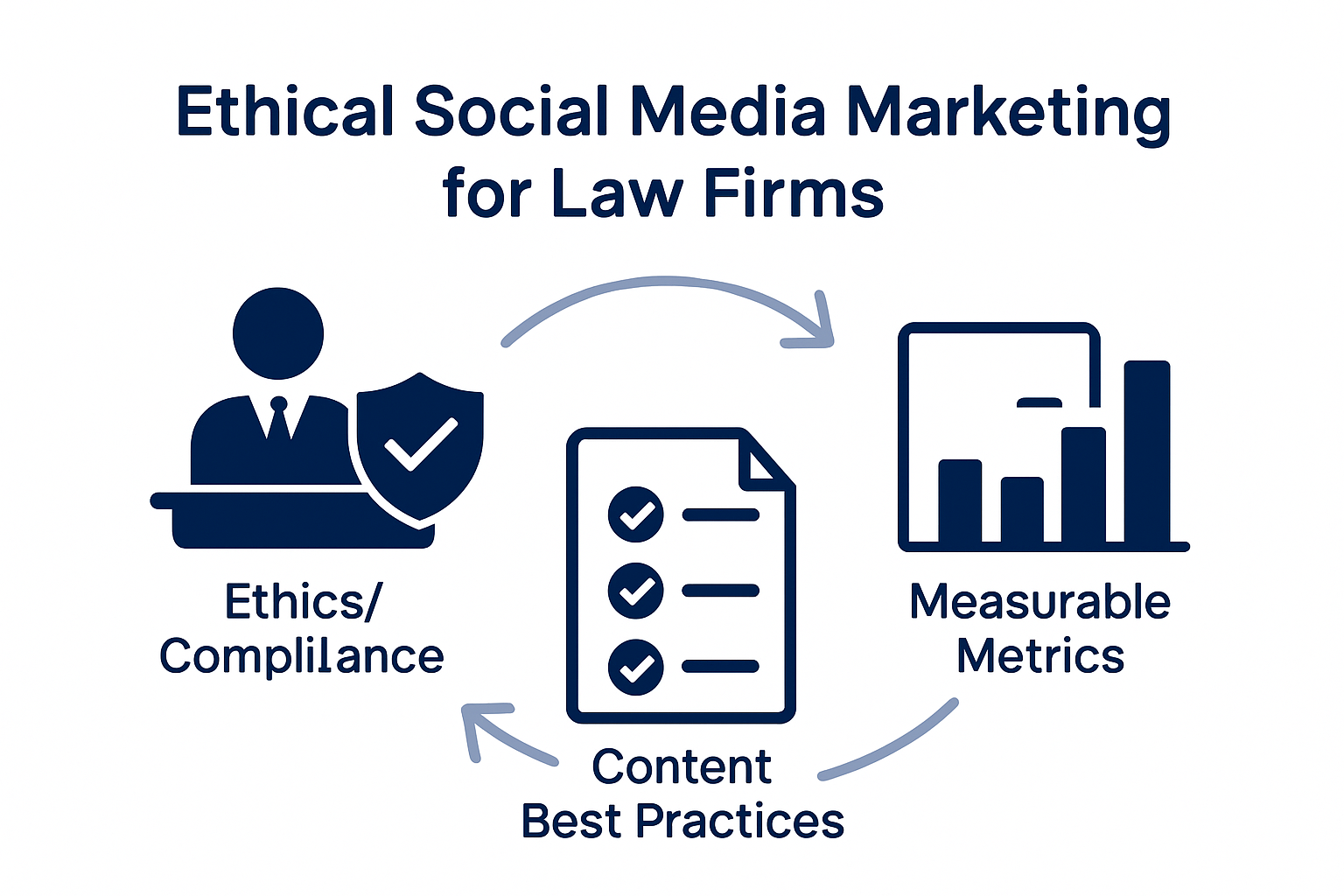
- Compliance, Ethics, And Advertising Rules
- Measuring Social Media Roi And Performance
Key Takeaways
| Point | Details |
|---|---|
| Social Media Strategy | Attorneys should leverage social media to humanize their practice and engage directly with potential clients by sharing valuable insights. |
| Platform Selection | Choosing the right social media platforms like LinkedIn for networking or Instagram for storytelling is crucial to reaching the target audience effectively. |
| Content Creation Best Practices | Legal content must be simplified for broader understanding while ensuring compliance with ethical guidelines to maintain professionalism. |
| Measuring Success | Law firms should track key performance metrics such as engagement rates and lead generation to assess and optimize their social media marketing ROI. |
Defining Social Media in Legal Marketing
Social media in legal marketing represents a strategic digital communication approach where attorneys and law firms leverage online platforms to build professional reputation, engage potential clients, and showcase legal expertise. Unlike traditional marketing channels, social media offers lawyers unprecedented opportunities to humanize their practice, share valuable insights, and directly connect with individuals seeking legal guidance.
According to Georgetown Law, effective social media marketing for lawyers requires understanding both strategic communication techniques and professional ethical guidelines. This means attorneys must carefully craft content that demonstrates legal knowledge while maintaining professional boundaries and client confidentiality.
Key components of social media in legal marketing include:
- Professional Branding: Creating consistent visual and messaging strategies across platforms
- Content Marketing: Sharing informative legal insights, case studies, and industry trends
- Audience Engagement: Responding to comments, participating in legal discussions
- Targeted Networking: Connecting with potential clients, referral sources, and legal professionals
Successful legal social media strategies recognize that potential clients seek more than just legal services—they want trustworthy advisors who communicate clearly, demonstrate expertise, and show genuine understanding of their legal challenges. By strategically utilizing platforms like LinkedIn, Twitter, and Facebook, attorneys can transform digital interactions into meaningful professional relationships that ultimately drive client acquisition and firm growth.
Major Social Media Platforms for Law Firms
Law firms seeking to maximize their digital marketing potential must strategically select social media platforms that align with their professional goals and target client demographics. Each platform offers unique opportunities for attorneys to showcase expertise, build professional networks, and attract potential clients through tailored content strategies.
LinkedIn stands out as the premier professional networking platform for legal marketing. Attorneys can leverage LinkedIn Profiles and Company Pages to highlight professional credentials, share thought leadership content, and connect with potential clients, referral sources, and industry peers. The platform’s robust professional context makes it ideal for sharing in-depth legal insights, case studies, and firm achievements.
Key social media platforms for law firms include:
- LinkedIn: Professional networking, thought leadership, B2B marketing
- Twitter: Real-time legal updates, quick insights, industry commentary
- Facebook: Community engagement, storytelling, local client targeting
- Instagram: Visual storytelling, firm culture, personal branding
- YouTube: Long-form educational content, video testimonials, legal explanations
For attorneys looking to expand their digital presence, social media for law firms guide provides comprehensive strategies for navigating these platforms effectively. By understanding each platform’s unique strengths and audience expectations, law firms can create targeted content that demonstrates legal expertise, builds trust, and ultimately converts online interactions into meaningful client relationships.
Best Practices for Legal Content Creation
Creating effective legal content requires a delicate balance between demonstrating professional expertise and making complex legal concepts accessible to a broader audience. Attorneys must craft content that is informative, engaging, and compliant with ethical guidelines while avoiding overly technical language that might alienate potential clients.
According to Georgetown Law, successful legal content strategies involve tailoring communication approaches to specific social media platforms while maintaining professional integrity. This means understanding each platform’s unique audience and adapting content to meet their specific information needs and communication preferences.
Key best practices for legal content creation include:
- Simplify Complex Concepts: Translate legal jargon into clear, understandable language
- Provide Practical Value: Focus on actionable insights and real-world legal guidance
- Maintain Confidentiality: Avoid sharing specific client details or sensitive information
- Demonstrate Expertise: Share nuanced insights that showcase deep legal understanding
- Use Multimedia: Incorporate videos, infographics, and interactive content to enhance engagement
For attorneys looking to refine their content marketing approach, content marketing for law firms guide offers comprehensive strategies for creating compelling digital content. By combining professional credibility with approachable communication, law firms can effectively use social media to build trust, educate potential clients, and establish themselves as go-to legal resources in an increasingly digital marketplace.

Compliance, Ethics, and Advertising Rules
Social media marketing for attorneys requires a nuanced understanding of professional ethical standards that protect client confidentiality, maintain professional integrity, and prevent potentially misleading communications. Legal professionals must navigate a complex landscape of regulations that govern how they represent their services and interact with potential clients online.
According to Georgetown Law, ethical considerations in legal social media marketing involve carefully balancing professional communication with strict regulatory requirements. This means attorneys must be hypervigilant about the content they share, ensuring that all digital communications adhere to strict professional conduct guidelines.
Key ethical considerations for legal social media marketing include:
- Client Confidentiality: Never disclose specific client information or case details
- Accurate Representation: Avoid making guarantees or promises about legal outcomes
- Professional Conduct: Maintain respectful and truthful communication
- Advertising Disclosures: Clearly identify content as attorney advertising when required
- Platform-Specific Compliance: Understand unique rules for different social media platforms
Navigating Rule 7.2: A Guide to Ethical Attorney Advertising in California provides critical insights into the specific regulatory landscape for legal marketing. By understanding and meticulously following these ethical guidelines, law firms can build trust, maintain professional standards, and effectively leverage social media as a powerful marketing tool without compromising their professional integrity.
Measuring Social Media ROI and Performance
Measuring return on investment (ROI) in social media marketing for law firms requires a strategic approach that goes beyond simple vanity metrics. Attorneys must develop sophisticated tracking mechanisms that connect digital engagement to tangible business outcomes, such as client consultations, case acquisitions, and revenue generation.
Effective social media performance measurement for law firms involves tracking multiple interconnected metrics that provide a comprehensive view of digital marketing success. These metrics range from engagement indicators like likes and shares to more substantive measures such as website traffic, lead generation, and direct client conversions.
Key performance metrics law firms should monitor include:
- Engagement Rate: Likes, comments, shares, and overall interaction
- Website Traffic: Visitors driven from social media platforms
- Lead Generation: Contact form submissions and consultation requests
- Conversion Rate: Percentage of social media leads becoming actual clients
- Cost Per Acquisition: Total marketing spend divided by new client conversions
Social Media Marketing for Law Firms That Wins Clients provides advanced strategies for tracking and interpreting these critical performance indicators. By systematically analyzing these metrics, law firms can refine their social media strategies, optimize marketing spend, and demonstrate the tangible business value of their digital marketing efforts.
Transform Your Law Firm’s Social Media Into a Powerful Client Magnet
Navigating the complexities of social media marketing in the legal field can feel overwhelming. You want to build trustworthy relationships while staying fully compliant with ethical guidelines. You need to simplify your message, connect authentically, and show your expertise without risking confidentiality or professionalism. That is exactly where strategic, tailored marketing solutions make a difference.
At Case Quota, we specialize in helping Southern California law firms overcome these challenges with proven digital strategies focused on legal marketing. Whether it is creating SEO-optimized websites, launching AI-powered pay-per-click campaigns, or developing engaging social media content that resonates, we deliver customized solutions designed to grow your client base and enhance your professional reputation.

Ready to elevate your social media presence and convert online engagement into real clients today Visit Case Quota to discover how our expertise in social media marketing for law firms and content marketing strategies can give your firm the competitive edge it deserves. Take the first step toward meaningful growth now.
Frequently Asked Questions
What is social media marketing in the context of legal services?
Social media marketing in legal services involves attorneys using online platforms to build their professional reputation, engage with potential clients, and showcase their legal expertise through strategic communication and content sharing.
Which social media platforms are most effective for law firms?
The most effective social media platforms for law firms include LinkedIn for professional networking, Twitter for real-time updates, Facebook for community engagement, Instagram for visual storytelling, and YouTube for educational video content.
How can attorneys ensure compliance with ethical guidelines in social media marketing?
Attorneys can ensure compliance by maintaining client confidentiality, accurately representing their services without making guarantees, conducting professional communication, and adhering to advertising disclosure requirements.
What metrics should law firms track to measure the success of their social media marketing?
Law firms should track metrics such as engagement rate, website traffic from social media, lead generation, conversion rate, and cost per acquisition to evaluate the effectiveness of their social media marketing efforts.
Recommended
- Complete Guide to Digital Marketing for Legal Firms: Strategies That Drive Results – Case Quota
- Social Media Marketing for Attorneys Guide
- Social Media Marketing for Law Firms That Wins Clients
- A Guide to Law Firm Social Media Marketing
- Social Media Marketing Strategies for Small Businesses – Hexrate
- Definitive Guide To Social Media Forensics