

Outdated law firm websites in Southern California can quietly sabotage client trust and business growth. When design, accessibility, and security standards lag, your site risks falling into digital decay—a widespread problem that leads to broken links and missing content according to Pew Research Center. Firms with obsolete online experiences risk lower search visibility, lost leads, and damaged reputation. This article pinpoints what outdated sites miss and reveals actionable fixes that keep your firm competitive.
Table of Contents
- What Outdated Law Firm Websites Miss
- Modern Website Features Clients Expect
- The Role of Seo and Mobile Optimization
- Compliance, Accessibility, and Security Updates
- Brand Reputation and Competitive Advantages
Key Takeaways
| Point | Details |
|---|---|
| Website Modernization is Crucial | An outdated website undermines client trust and can lead to lost business to more modern competitors. |
| SEO and Mobile Optimization are Essential | Proper SEO and mobile-friendly design are necessary for visibility and user experience in online legal searches. |
| Compliance and Security are Non-Negotiable | Failing to meet legal accessibility and security standards poses serious risks to reputation and potential legal action. |
| Brand Reputation Affects Client Acquisition | A contemporary website enhances the firm’s credibility, attracting clients and top talent in a competitive market. |
What Outdated Law Firm Websites Miss
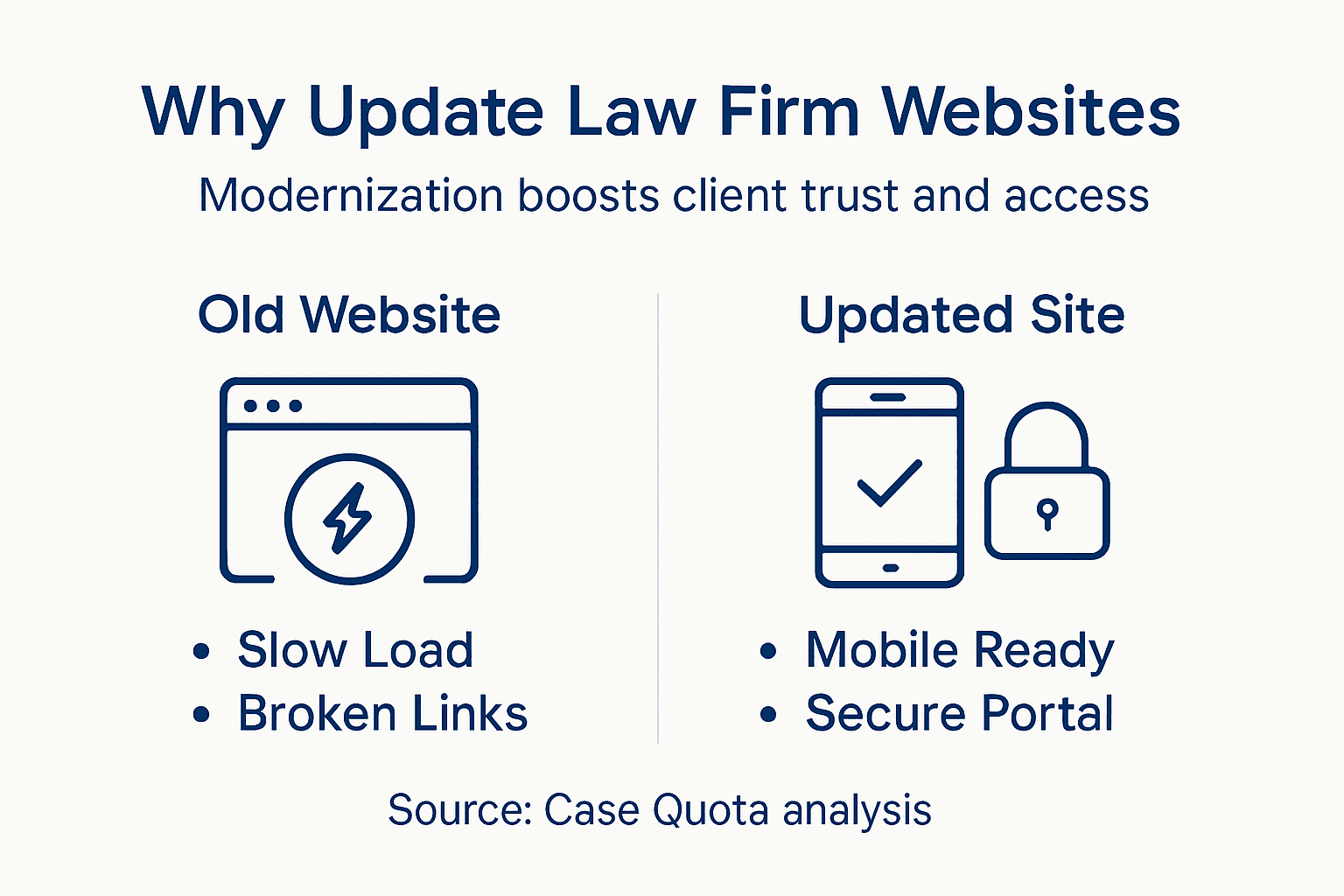
Your website is often the first impression potential clients have of your firm. An outdated site doesn’t just look stale—it actively works against you. When a prospect lands on a site with design elements from 2015, slow load times, and broken links, they’re making an instant judgment about your firm’s competence and reliability. That split-second decision often determines whether they call you or click to a competitor’s modern site.
Outdated websites suffer from what experts call digital decay with broken links and removed content that erodes trust and function. For law firms specifically, this creates concrete problems. Client intake information may be outdated or hard to find. Case results from 2018 still dominate your homepage while recent wins sit buried. Practice area descriptions don’t match what you actually do now. Contact forms time out or fail to submit. Your staff directories list people who left years ago. Potential clients hunting for information about your DUI defense or estate planning services can’t navigate your site clearly because the structure made sense in 2010 but not today.
Beyond aesthetics, outdated sites create serious accessibility and security gaps. Many law firm websites remain poorly designed, inaccessible to clients using screen readers, and fail to display properly on mobile devices—exactly where most people research attorneys today. Your firm could face compliance issues if your site doesn’t meet accessibility standards like WCAG guidelines. Search engines penalize slow, non-mobile-responsive sites by ranking them lower, meaning fewer prospects find you when searching for “family law attorney near me” or “employment discrimination lawyer.” Security vulnerabilities in old code put client data at risk, which carries both legal and reputational consequences. You’re building doubt instead of confidence.
The competitive disadvantage becomes obvious when Southern California law firms with modern sites capture your prospects. Those firms offer online appointment booking, clear practice area pages with relevant keywords, mobile-responsive design, fast load speeds, and updated client testimonials. They show up higher in search results. They convert website visitors into calls at higher rates. Effective website design specifically crafted for law firm needs demonstrates that you understand modern client expectations. Your outdated site communicates the opposite—that you’re not invested in meeting clients where they actually are.
Here’s how outdated and modern law firm websites compare in key business areas:
| Aspect | Outdated Website | Modern Website |
|---|---|---|
| First Impression | Suggests neglect and stagnation | Signals competence and client focus |
| Navigation | Confusing, hard to find info | Logical, effortless access to services |
| Accessibility | Poor, excludes some prospects | Meets ADA standards, inclusive |
| Lead Conversion | Low due to broken elements | High with working forms and fast load |
| Search Visibility | Penalized by search engines | Ranks higher, attracts more leads |
| Data Security | Vulnerable, legal risks | Strong encryption, protects client data |
| Talent Recruitment | Deters young professionals | Attracts top candidates |
| Brand Reputation | Erodes trust and credibility | Enhances professional image |
Pro tip: Start by auditing your current site through a potential client’s eyes. Visit it on your phone, check if forms actually work, and time how long pages take to load. That experience shows you exactly what’s costing you business.
Modern Website Features Clients Expect
Prospective clients come to your website with specific needs in mind. They want to find information fast, understand your services clearly, and take action without friction. When your site lacks modern features, you’re essentially telling them to go elsewhere. What separates firms that attract clients from those that struggle comes down to the specific features clients now expect as standard.

Clients expect clear service descriptions, mobile optimization, and fast loading times as baseline requirements. Beyond that, they want practical tools that reduce friction. Online appointment scheduling lets someone book a consultation at 10 p.m. without calling your office. A comprehensive FAQ section answers common questions about your process, fees, and timeline so prospects feel informed before even contacting you. Client portals allow existing clients to access documents, check case status, and communicate securely instead of playing phone tag. A regularly updated blog or news section signals that your firm stays current with legal developments affecting their situations.
Modern clients also expect transparency and personalization. They want to see your team, understand your experience, read real client reviews, and know upfront what services cost. Many firms still hide pricing information, forcing prospects to call just to get a number. That’s a dealbreaker for busy professionals comparing options. Your website should make it obvious why they should choose your firm over competitors. Legal directories integration helps with credibility and discoverability. Real client testimonials build trust far more effectively than generic marketing copy. When someone researches a family law attorney, they want to hear from actual clients who’ve gone through divorce proceedings, not just your firm’s claims about competence.
Security and compliance matter too, though they’re less visible. Clients handling sensitive personal information need assurance that their data is protected. Your site should have SSL encryption, secure contact forms, and privacy policies that are easy to understand. Accessibility features like proper heading structure, alt text for images, and keyboard navigation ensure that prospects with disabilities can use your site. These aren’t nice-to-haves anymore. They’re expectations. When you implement website design tips that prioritize user experience and client engagement, you’re matching what clients have learned to expect from modern professional services.
Below are essential features of modern law firm websites and their business impacts:
| Feature | Purpose | Impact on Firm |
|---|---|---|
| Online Appointment Booking | Enables clients to schedule anytime | Increases lead conversion, efficiency |
| Client Portal | Secure client communication, document sharing | Boosts trust and retention |
| Comprehensive FAQ | Answers process, fees, timelines | Reduces friction, builds confidence |
| Legal Directories Integration | Improves credibility and visibility | Enhances discoverability |
| Regular Blog Updates | Shares current legal insights | Shows expertise, improves SEO |
| Transparent Pricing | Shows clear cost upfront | Builds trust, attracts more clients |
| Accessibility Tools | Supports users with disabilities | Expands client base, avoids lawsuits |
| SSL Encryption | Secures sensitive data | Prevents breaches, maintains reputation |
Pro tip: Review three competitor websites in your practice area and note which features each one includes. That competitive audit reveals what clients in your market have come to expect, giving you a clear roadmap for what to prioritize first.
The Role of SEO and Mobile Optimization
When someone in Southern California needs a lawyer, they don’t pull out the Yellow Pages. They open their phone and search. That single behavior shift makes SEO and mobile optimization the difference between thriving and disappearing. Most clients begin their hunt for legal services online, which means your website needs to show up when they search for your practice area in your location. A firm without proper SEO optimization is essentially invisible to the exact people actively seeking your services right now.
SEO for law firms works differently than general business SEO. Your prospects use specific search phrases like “employment discrimination attorney San Diego” or “estate planning lawyer Long Beach,” not generic terms. Effective SEO requires keyword research focused on your practice areas combined with local search optimization since most clients want someone nearby. On-page optimization including meta tags, quality content, and website speed directly impacts both search rankings and client experience. When your site ranks higher for these targeted legal searches, you’re capturing prospects actively seeking representation. Without SEO work, even a beautifully designed site sits on page five of search results, collecting digital dust.
Mobile optimization is equally critical and often overlooked. Over 60% of legal research now happens on smartphones and tablets. When a prospect finds your website on their phone and it displays poorly, loads slowly, or requires pinching and zooming to navigate, they bounce instantly to a competitor’s mobile-friendly site. Mobile-optimized responsive design improves user experience significantly while also affecting your search engine rankings since Google prioritizes mobile-friendly sites. This means mobile optimization serves dual purposes. It keeps prospects on your site longer and helps you rank higher in search results. Your contact forms should work smoothly on mobile. Your practice area pages should be readable without horizontal scrolling. Your appointment booking should function flawlessly on a tiny screen.
The real power comes from combining SEO and mobile optimization together. A website that ranks perfectly but doesn’t work on mobile converts poorly. A site that works great on mobile but doesn’t rank in search results never gets visited. When you update your website with both elements working in harmony, you attract more prospects through search and convert more of them into clients. This is why complete SEO strategies for law firms matter so much for firms competing in Southern California’s dense legal market.
Pro tip: Check your current website rankings by searching your key practice area plus your city in Google on both desktop and mobile. Note which competitors appear on page one and review their mobile experience. That competitive snapshot shows you exactly what search visibility and mobile standards you need to match.
Compliance, Accessibility, and Security Updates
Updating your law firm website isn’t just about aesthetics or functionality. Legal compliance and security sit at the core of what makes a modern website essential. Many firms operate with outdated sites that carry real legal risk. Under Title III of the ADA, your website must be accessible to people with disabilities. That’s not optional. It’s law. An inaccessible site exposes your firm to litigation, damages your reputation, and excludes potential clients. When you fail to meet accessibility standards, you’re essentially telling disabled individuals that your firm doesn’t want their business.
Accessibility requirements include alternative text for images, keyboard navigation, and perceivable content that meets Web Content Accessibility Guidelines. This means your website structure needs proper heading hierarchies so screen readers can navigate it logically. Images need descriptive alt text. Forms must work with keyboard input alone. Videos should have captions. Colors shouldn’t be the only way to convey information. These aren’t nice features. They’re legal requirements. Compliance reduces your legal exposure while expanding your market reach to clients who use assistive technologies. Regular audits catch problems before they become lawsuits.
Security matters just as much, perhaps more. Law firms handle some of the most sensitive information people possess. Social Security numbers, financial records, family details, criminal history. Your website is often the entry point where clients submit this information. Security requires encryption, secure communication channels, staff training, and regular vulnerability assessments to protect against breaches. Your outdated site likely runs on old software versions with known security flaws. Hackers target law firms specifically because they know valuable data sits there. A single breach doesn’t just expose clients. It exposes your firm to malpractice claims, regulatory sanctions, and destroyed reputation.
The practical reality is that these updates require ongoing attention. Compliance standards evolve. New security vulnerabilities emerge constantly. Your website isn’t something you build once and forget. It needs regular software updates, security monitoring, and accessibility audits. When you update your site with modern infrastructure, you’re building in the capacity for these ongoing requirements. An outdated site makes compliance nearly impossible because the underlying technology can’t support current standards. You’re choosing between updating the site or facing legal exposure. The choice is clear.
Pro tip: Run your current website through the WAVE Web Accessibility Evaluation Tool, a free resource that identifies accessibility violations. This shows you exactly what compliance gaps exist and what fixes cost the least to implement first.
Brand Reputation and Competitive Advantages
Your website is your firm’s digital storefront. It’s where prospective clients form their first impression. An outdated site communicates that your firm is behind the times, unwilling to invest in client experience, or simply not serious about competing. A modern, well-maintained website does the opposite. It signals competence, stability, and client focus. That perception difference directly impacts whether prospects choose you or a competitor.
Brand reputation in the legal market depends heavily on how clients perceive your firm’s professionalism and forward-thinking approach. Adopting modern technologies and updating websites significantly enhances brand reputation and competitive advantage by demonstrating commitment to client-centric innovation. When your website reflects current design standards, offers seamless user experience, and integrates modern tools like online scheduling or secure client portals, you’re telling the market that you invest in your clients. Firms that ignore these updates appear stagnant by comparison. In Southern California’s crowded legal market, that perception difference determines who gets the call.
Your website also influences your ability to recruit and retain talented attorneys and staff. Young lawyers expect to work at firms that operate with current technology. They want to work somewhere their professional reputation isn’t damaged by association with outdated systems. When you walk into your office and everything feels stuck in 2012, it affects morale and your ability to attract top talent. Conversely, a modern office supported by modern technology signals that your firm values efficiency and professional growth. That matters when competing for the best people in your market.
Effective brand reputation management through websites requires consistent value delivery, ethical standards, and responsive communication to capitalize on reputation-driven market differentiation. Your website demonstrates these qualities every single day. When forms work, pages load fast, and information is current and relevant, you’re reinforcing trust. When a prospect tries to contact you and the contact form is broken, you’ve damaged trust. The stakes are real. Firms with strong digital presence and modern websites attract better clients, convert leads at higher rates, and command stronger referral networks. Your competitors with updated sites are capturing your market share right now.
Pro tip: Ask three of your best current clients what they remember about discovering your firm online. Their answers reveal which website elements actually influenced their decision, showing you what reputation signals matter most in your specific market.
Transform Your Law Firm Website Into a Client Magnet Today
If your law firm is struggling with an outdated website that creates digital decay or deters clients because of poor accessibility and security issues you are not alone. Many Southern California firms lose valuable leads due to slow load times confusing navigation and low search visibility. This article highlights the critical need to meet modern client expectations like online appointment booking transparent pricing and SEO-optimized mobile design to stand out and build trust.

Case Quota specializes in helping law firms overcome these exact challenges by providing tailored SEO-optimized web design and comprehensive marketing solutions designed specifically for legal practices. With over 15 years of digital marketing experience and six years focused on California legal marketing we empower small to mid-size firms to compete with larger competitors through sophisticated client acquisition strategies. Visit Case Quota now to explore how our modern website design and targeted marketing can elevate your firm’s digital presence and convert more visitors into clients. Don’t risk losing prospects to competitors with better websites act today and secure your firm’s future growth.
Frequently Asked Questions
Why is it important to update a law firm website?
Updating a law firm website is crucial as it enhances first impressions, improves user experience, ensures accessibility, boosts lead conversion rates, and enhances security. An outdated site may deter potential clients and hurt credibility.
What key features should modern law firm websites include?
Modern law firm websites should include clear service descriptions, mobile optimization, fast loading times, online appointment scheduling, client portals, comprehensive FAQ sections, and transparent pricing.
How does SEO impact the effectiveness of a law firm website?
SEO helps law firm websites rank higher in search results, making them more visible to potential clients. Effective SEO strategies focus on local search optimization and keyword research specific to legal services.
What are the security risks of keeping a law firm website outdated?
An outdated website can have security vulnerabilities that expose client data to breaches, resulting in legal repercussions and damage to the firm’s reputation. Regular updates and security measures are essential to protect sensitive information.