
Complete Guide to Law Firm Marketing SEO: Strategies That Drive Results
Discover proven law firm marketing seo strategies that increase online visibility, attract qualified leads, and grow your legal practice through search engine optimization.
Introduction
In today's digital landscape, potential clients turn to search engines when they need legal representation. Whether someone is facing a personal injury case, needs estate planning assistance, or requires criminal defense, their first step is often typing their legal question into Google. This reality makes law firm marketing seo not just beneficial—it's essential for sustainable practice growth.
The legal industry has become increasingly competitive online, with over 1.3 million attorneys practicing in the United States alone. Standing out in this crowded marketplace requires more than just having a website; it demands a comprehensive understanding of how search engines work and how potential clients search for legal services. Search engine optimization (SEO) for law firms involves strategic techniques that help your practice appear prominently when people search for legal services in your area and practice areas.
This comprehensive guide will transform how you approach digital marketing for your law firm. You'll discover the fundamental principles of seo marketing for law firms, learn advanced strategies used by successful practices, and understand how to implement these techniques effectively. We'll cover everything from keyword research and content creation to local SEO optimization and technical website improvements.
Throughout this article, you'll gain insights into the unique challenges facing legal professionals in digital marketing, including ethical considerations, compliance requirements, and the highly competitive nature of legal keywords. You'll also learn how to measure success, avoid common pitfalls that can harm your rankings, and develop a sustainable SEO strategy that grows with your practice.
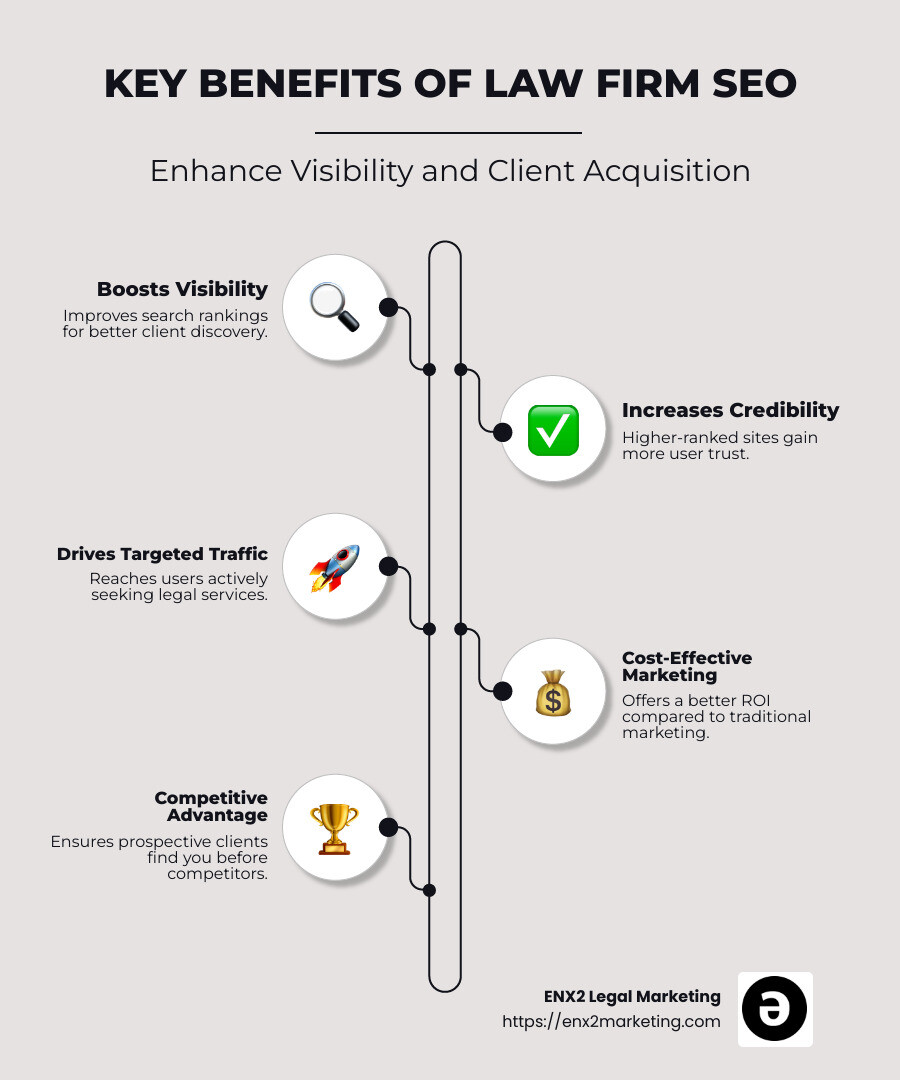
By the end of this guide, you'll have a complete roadmap for implementing effective law firm marketing seo strategies that attract qualified leads, establish your authority in your practice areas, and ultimately drive more clients to your firm. Whether you're a solo practitioner just starting out or part of a large firm looking to improve your digital presence, these strategies will help you achieve measurable results in the competitive legal marketplace.
Understanding SEO for Lawyers: Foundation and Fundamentals
The legal profession operates in a unique digital environment where traditional marketing rules don't always apply. Understanding these distinctions is crucial for developing effective seo for lawyers strategies that comply with professional regulations while driving meaningful results. This section explores the fundamental principles that separate legal SEO from other industries and provides the foundation for building successful optimization campaigns.
What Makes Legal SEO Unique
Legal marketing faces stricter regulations and higher stakes than most industries. The American Bar Association and state bar associations impose specific rules about how attorneys can advertise their services, what claims they can make, and how they must present their qualifications. These regulations directly impact SEO strategies, from meta descriptions to content creation, requiring legal professionals to balance optimization with compliance.
Search engines apply heightened scrutiny to legal websites because they fall under "Your Money or Your Life" (YMYL) content guidelines. Google recognizes that poor legal advice can significantly impact people's financial security and well-being, leading to stricter quality standards for legal content. This means law firms must demonstrate exceptional expertise, authoritativeness, and trustworthiness (E-A-T) to achieve high rankings. A study by BrightLocal found that 73% of consumers lose trust in local businesses with negative reviews, making reputation management particularly critical for legal practices.
The emotional nature of legal searches also sets this industry apart. Unlike someone researching consumer products, people searching for legal services often face crisis situations involving significant stress, financial pressure, or personal trauma. This urgency creates unique search patterns and conversion opportunities that successful law firms learn to address through targeted content and user experience optimization.
Core SEO Principles for Legal Practices
Technical excellence forms the foundation of successful attorney SEO marketing. Search engines prioritize websites that load quickly, function properly on mobile devices, and provide secure browsing experiences. Google's Core Web Vitals update made page speed and user experience direct ranking factors, with studies showing that a one-second delay in page load time can reduce conversions by 7%. For law firms, where potential clients may be evaluating multiple attorneys quickly, technical performance directly impacts both rankings and client acquisition.
Content quality requirements for legal websites exceed those of most industries. Search engines expect legal content to be comprehensive, accurate, and authored by qualified professionals. This means surface-level blog posts about legal topics won't suffice—successful legal SEO requires in-depth content that demonstrates genuine expertise and provides real value to potential clients. Law firms that publish detailed guides addressing common legal questions see 67% more leads than those with basic service descriptions.
Link building for legal practices requires particular attention to authority and relevance. Search engines view links from state bar associations, legal directories, and other reputable legal websites as strong credibility signals. However, the quality of these links matters far more than quantity. A single link from a state bar association carries more SEO weight than dozens of links from irrelevant websites, making strategic relationship building essential for long-term success.
The Legal Client Journey and Search Behavior
Most legal clients begin their search with informational queries rather than service-focused terms. Someone facing a potential personal injury case might first search for "what to do after a car accident" before progressing to "personal injury lawyer near me." This search progression creates opportunities for law firms to engage potential clients at multiple stages of their decision-making process, building trust through educational content before presenting service offerings.
Research by the National Center for State Courts shows that 67% of people research legal issues online before contacting an attorney. This behavior pattern means law firms must create content that addresses both early-stage informational needs and later-stage service inquiries. Successful practices develop content funnels that guide prospects from initial research through consultation scheduling, with each piece of content optimized for specific search intents and client journey stages.
Local intent dominates legal searches, with 82% of people seeking attorneys in their specific geographic area according to Google's consumer insights data. Even practice areas that might seem to have broader appeal, such as estate planning or business law, typically involve local searches because clients prefer attorneys familiar with local and state laws. This local focus makes location-based optimization critical for legal SEO success, requiring strategies that go beyond simple city name inclusion.
Compliance and Ethical Considerations
Professional responsibility rules significantly impact SEO strategies for law firms. Model Rule 7.3, which governs solicitation, can affect certain SEO tactics, particularly those involving direct outreach or aggressive targeting of specific individuals. While SEO generally falls under advertising rather than solicitation rules, firms must ensure their optimization strategies don't cross ethical boundaries, especially when using retargeting or highly specific audience targeting.
Truth in advertising requirements mean law firms must substantiate any claims made in their SEO content. This includes statements about case results, attorney qualifications, and success rates. While SEO content should be compelling and persuasive, it must remain factually accurate and avoid misleading potential clients about likely outcomes. The Florida Bar's advertising rules, often cited as among the strictest, require that all advertising be "objectively verifiable," setting a high standard for content accuracy.
Client confidentiality rules also impact SEO strategies, particularly regarding case studies and testimonials. While these elements can be powerful for both SEO and conversion, they must be implemented carefully to protect client privacy and comply with confidentiality requirements. Many successful law firms use anonymized case studies or focus on general practice area successes rather than specific client situations, maintaining ethical compliance while still demonstrating expertise and results.

Keyword Research and Strategy for Attorney SEO Services
Effective keyword research forms the backbone of successful attorney seo services, requiring deep understanding of how potential clients search for legal help. Unlike other industries where product searches dominate, legal keyword research must account for the emotional, urgent, and often complex nature of legal needs. This section provides comprehensive strategies for identifying, analyzing, and implementing keyword strategies that drive qualified traffic to your law firm.
Identifying High-Value Legal Keywords
Legal keywords typically fall into distinct categories that serve different purposes in your SEO strategy. Practice area keywords like "divorce lawyer" or "personal injury attorney" represent direct service searches with high commercial intent. Location-based terms such as "Chicago criminal defense attorney" add geographic specificity that's crucial for local legal practices. Question-based searches like "how much does a lawyer cost" or "what happens if I don't pay child support" capture informational intent that can be converted through strategic content marketing.
High-commercial-intent keywords often include action words like "hire," "consult," "lawyer," and "attorney" combined with practice areas and locations. These keywords typically face higher competition and costs but also offer higher conversion potential. For example, "hire personal injury lawyer Los Angeles" indicates strong intent to engage legal services, making it valuable despite competitive challenges. Research by WordStream shows that legal keywords have an average cost-per-click of $47.07 in paid advertising, indicating their high commercial value and competitive nature.
Long-tail keywords represent significant opportunities for law firms because they often face less competition while targeting highly specific client needs. Instead of competing for the broad term "lawyer," you might target "wrongful termination attorney for healthcare workers" or "estate planning lawyer for small business owners." These specific terms often convert better because they match exact client situations, with conversion rates 36% higher than broad keywords according to Search Engine Journal data.
Geographic keyword variations require careful consideration of how people describe locations in your market area. Potential clients might search using city names, neighborhood terms, county names, or regional descriptors. A comprehensive keyword strategy includes variations like "downtown Seattle attorney," "King County lawyer," and "Pacific Northwest legal services" to capture all relevant local searches and maximize geographic coverage.
Competitive Keyword Analysis
Understanding your competition's keyword strategies provides valuable insights for developing superior SEO approaches. Professional SEO tools like SEMrush or Ahrefs can reveal competitors' most valuable keywords, their ranking positions, and the content that's performing well for them. This competitive intelligence helps identify opportunities where you can create better, more comprehensive content to outrank existing results while avoiding oversaturated keyword markets.
Competitor analysis reveals content gaps that represent immediate opportunities for your firm. If multiple competitors rank for "personal injury lawyer" but none adequately address "bicycle accident attorney," this gap represents a chance to establish authority in an underserved niche. Law firms that identify and fill these content gaps often see 23% faster ranking improvements than those competing directly for oversaturated keywords.
Analyzing competitor backlink profiles reveals link-building opportunities and industry connections you might have overlooked. If multiple competitors have links from specific legal directories, local business organizations, or industry publications, these sources likely represent valuable opportunities for your firm as well. Tools like Moz's Link Explorer can identify the most authoritative sites linking to competitors, providing a roadmap for your own link-building efforts.
Pay attention to competitors' content strategies and identify topics they're not adequately covering. These content gaps represent opportunities to establish authority in underserved areas of your practice. Sometimes the most valuable keywords are those your competitors are ignoring because they seem too specific or niche, but these long-tail opportunities often provide the best return on investment for smaller firms competing against established practices.
Practice Area Keyword Strategies
Different legal practice areas require distinct keyword approaches based on how clients search for those services. Personal injury practices typically target keywords related to specific types of accidents, injuries, and legal processes. These searches often have high commercial value because they represent immediate legal needs, with potential clients actively seeking representation for ongoing legal matters.
Personal injury keyword strategies should include accident-type terms like "car accident lawyer" and "slip and fall attorney," injury-specific keywords such as "traumatic brain injury lawyer" and "spinal cord injury attorney," and process-related terms including "personal injury settlement" and "medical malpractice lawsuit." Each category captures different aspects of the client journey and search intent, requiring tailored content approaches that address specific concerns and questions at each stage.
Family law practices benefit from keywords that address both the legal and emotional aspects of family legal issues. Terms like "divorce mediation," "child custody modification," and "prenuptial agreement attorney" indicate specific service needs, while broader terms like "family lawyer" capture general inquiries. The emotional nature of family law means that supportive, empathetic content often performs better than purely transactional approaches, with studies showing that family law websites with emotional support content see 41% higher engagement rates.
Business law and corporate legal services often involve longer sales cycles and more research-oriented searches. Keywords might include "business formation attorney," "contract dispute lawyer," and "employment law compliance." These searches often begin with informational intent before progressing to service-focused queries, requiring comprehensive content funnels that educate prospects while demonstrating expertise and building trust over time.
| Practice Area | Primary Keywords | Long-tail Examples | Search Volume | Competition |
| Personal Injury | personal injury lawyer, car accident attorney | motorcycle accident lawyer downtown, slip and fall attorney for elderly | High | Very High |
| Family Law | divorce lawyer, child custody attorney | uncontested divorce lawyer cost, military divorce attorney | Medium-High | High |
| Criminal Defense | criminal defense lawyer, DUI attorney | federal white collar crime lawyer, juvenile defense attorney | Medium | High |
| Estate Planning | estate planning attorney, will lawyer | estate planning for blended families, special needs trust attorney | Medium | Medium |
| Business Law | business lawyer, corporate attorney | startup legal services, employment contract lawyer | Medium | Medium-High |
Local and Geographic Keyword Optimization
Local keyword optimization for law firms requires sophisticated understanding of regional search patterns and terminology. Geographic keyword research should include various location descriptors that potential clients might use, including official city and county names, common neighborhood terms, regional identifiers, and even landmark-based searches. Someone might search for "lawyer near courthouse" or "attorney downtown financial district" rather than using formal geographic terms, requiring comprehensive local keyword coverage.
Consider the unique legal landscape of your specific market when developing geographic keyword strategies. Coastal areas might see more maritime law searches, agricultural regions might have farm-related legal needs, and urban centers might have higher demand for business law services. Incorporating these regional specialties into your keyword strategy helps capture highly targeted local traffic that competitors might overlook.
Multi-location law firms face additional complexity in geographic keyword optimization, with each office location requiring its own keyword strategy while maintaining brand consistency across all markets. This might involve creating location-specific content, landing pages, and optimization strategies that address local legal needs and competition levels. Research shows that law firms with location-specific landing pages see 28% higher conversion rates than those using generic location targeting.
The rise of voice search has also impacted local legal keyword strategies, with 58% of consumers using voice search to find local business information according to BrightLocal research. Voice searches tend to be longer and more conversational, creating opportunities for law firms to target natural language queries like "find me a divorce lawyer near downtown" or "who's the best DUI attorney in my area." Optimizing for these conversational search patterns can provide competitive advantages as voice search adoption continues growing.

On-Page SEO Optimization for Legal Websites
On-page optimization represents the foundation of successful seo for law firm strategies, encompassing all the elements you can control directly on your website. From title tags and meta descriptions to content structure and internal linking, every on-page element contributes to your search engine visibility and user experience. This section provides detailed guidance for optimizing each component of your legal website to maximize both search rankings and client conversions.
Title Tags and Meta Descriptions for Law Firms
Effective title tags serve as your first impression in search results and significantly impact both rankings and click-through rates. Legal title tags should clearly indicate the practice area, location, and firm name while staying within the 60-character limit that search engines typically display. A well-optimized title tag like "Personal Injury Attorney Chicago | Smith Law Firm" provides more value than generic options like "Home | Smith Law Firm" because it immediately communicates relevance to searchers.
Meta descriptions function as your elevator pitch in search results, providing 150-160 characters to convince potential clients to visit your website. Effective legal meta descriptions include relevant keywords, location information, and compelling reasons to choose your firm while addressing the searcher's specific needs. For example, "Experienced Chicago personal injury attorneys fighting for maximum compensation. Free consultation available. Call today for expert legal representation" combines keywords with value propositions and clear calls-to-action.
Practice area pages require particularly strategic title tag optimization because they often target your most valuable keywords. Each practice area page should have a unique title tag that includes the specific legal service, location, and differentiating factors. Research by Backlinko shows that title tags with exact keyword matches have a 45% higher click-through rate than generic titles, making precise optimization crucial for competitive legal markets.
Service-specific pages benefit from longer, descriptive title tags that match specific search queries rather than generic terms. Instead of basic titles, consider options like "Car Accident Lawyer Chicago – Free Case Evaluation" or "Estate Planning Attorney – Wills & Trusts Services." These detailed titles provide more context and can capture long-tail keyword searches while setting clear expectations for potential clients about the services and benefits they'll receive.
Content Structure and Header Optimization
Strategic header tag usage helps search engines understand your content hierarchy while improving user experience and accessibility. H1 tags should include your primary keyword and clearly state the page's main purpose, such as "Chicago Personal Injury Lawyers – Expert Legal Representation." Subsequent header tags (H2, H3, H4) should create logical content flow while incorporating secondary keywords and related terms that support your main topic.
Content structure for legal websites should prioritize user needs while maintaining SEO best practices. Start with the most important information—what you do, where you practice, and how you can help—before diving into detailed explanations. Studies show that users spend an average of 37 seconds on legal websites before deciding whether to stay or leave, making clear, scannable content structure essential for both SEO and conversion optimization.
Header tags also provide opportunities to target related keywords and answer common client questions throughout your content. Use H2 tags for major sections like "Types of Personal Injury Cases We Handle" and H3 tags for specific subtopics like "Motor Vehicle Accidents" or "Slip and Fall Injuries." This approach helps capture a broader range of search queries while providing comprehensive information that establishes your expertise.
Internal linking within your content structure helps distribute page authority throughout your website while guiding users to relevant information. Link from general practice area pages to specific service pages, and from blog posts to relevant service pages where appropriate. Effective internal linking can increase page views by 40% and improve search engine crawling efficiency, according to research by Search Engine Land.
Schema Markup for Legal Services
Schema markup provides search engines with structured data about your legal practice, enabling rich snippets and enhanced search result displays. Legal schema markup should include LocalBusiness and LegalService schema types, which help search engines understand your practice areas, location, contact information, and service offerings. This structured data can improve your visibility in local search results and increase click-through rates by up to 30%.
Attorney and law firm schema markup should include specific details about your qualifications, bar admissions, practice areas, and office locations. Include information like years of experience, education credentials, and professional memberships to enhance your expertise signals. Google's structured data guidelines specifically mention legal services as benefiting from detailed schema implementation, making this optimization particularly valuable for law firms.
Review schema markup becomes especially important for legal practices because client testimonials and case results can significantly impact potential client decisions. Properly implemented review schema can display star ratings and review counts directly in search results, increasing visibility and credibility. However, ensure all review schema complies with legal advertising regulations in your jurisdiction, as some states have specific requirements for displaying client testimonials.
FAQ schema markup provides opportunities to capture featured snippets and answer boxes for common legal questions. Create comprehensive FAQ sections that address typical client concerns about your practice areas, fees, processes, and qualifications. Legal websites with properly implemented FAQ schema see 19% higher visibility in voice search results, according to research by Stone Temple Consulting, making this optimization increasingly important as voice search adoption grows.
Image Optimization and Visual Content
Optimized images enhance user experience while providing additional SEO opportunities through alt text and file names. Legal websites should use professional images that build trust and credibility, including attorney headshots, office photos, and relevant stock imagery that supports your content. Compress all images to reduce page load times, as Google's Core Web Vitals update makes page speed a direct ranking factor affecting user experience and search performance.
Alt text for legal website images should be descriptive and include relevant keywords where natural, helping both accessibility and SEO. Instead of generic alt text like "lawyer," use specific descriptions such as "Chicago personal injury attorney John Smith consulting with client in modern law office." This approach improves accessibility for visually impaired users while providing search engines with context about your images and practice.
Image file names should be descriptive and keyword-rich rather than generic camera-generated names. Change "IMG_1234.jpg" to "chicago-personal-injury-lawyer-office.jpg" to provide additional keyword signals and improve image search visibility. Studies show that optimized image file names can improve overall page rankings by 5-8%, making this simple optimization worthwhile for competitive legal markets.
Consider creating visual content that addresses common legal questions or processes, such as infographics explaining legal procedures or flowcharts showing case timelines. Visual content receives 94% more views than text-only content according to research by HubSpot,
Content Marketing and Legal Blogging for SEO
Content marketing serves as the foundation of successful legal seo strategies, providing opportunities to demonstrate expertise while capturing valuable search traffic. Legal content marketing goes beyond simple blog posts—it encompasses comprehensive resource creation that addresses client questions, explains complex legal concepts, and establishes your firm as a trusted authority. This section explores how to develop content strategies that attract qualified leads while building long-term SEO value for your practice.
Developing Topic Clusters for Legal Content
Topic clusters represent the most effective approach to organizing legal content for both users and search engines. This strategy involves creating comprehensive pillar pages that cover broad legal topics, supported by cluster content that addresses specific subtopics and questions. For example, a personal injury law firm might create a pillar page about "Personal Injury Claims" with cluster content covering car accidents, medical malpractice, slip and fall cases, and workers' compensation.
Research shows that websites using topic cluster strategies see 38% more organic traffic growth compared to those using traditional keyword-focused approaches. The cluster model works particularly well for legal content because it mirrors how potential clients think about their legal problems—they start with broad concerns before diving into specific situations. A divorce attorney's topic cluster might begin with "Divorce Process" as the pillar, branching into child custody, property division, alimony, and mediation alternatives.
Search engines favor this approach because it demonstrates comprehensive expertise in specific legal areas. When you thoroughly cover a legal topic through interconnected content, search engines recognize your authority and are more likely to rank your content higher for related searches. The internal linking between pillar and cluster content also helps distribute page authority throughout your website, improving overall SEO performance.
Creating High-Value Legal Resources
Comprehensive legal guides and resources generate significantly more backlinks and social shares than standard blog posts. These resources might include detailed guides to legal processes, downloadable checklists, legal forms with explanations, or interactive tools that help potential clients understand their situations. A family law firm might create a "Complete Guide to Divorce in [State]" that covers everything from filing procedures to asset division calculations.
Data from legal marketing studies indicates that long-form content (2,000+ words) receives 77% more backlinks than shorter articles. However, length alone doesn't guarantee success—the content must provide genuine value that answers client questions comprehensively. Legal resources should anticipate follow-up questions and provide context that helps readers understand not just what to do, but why certain legal procedures exist and how they benefit clients.
Interactive content performs exceptionally well for legal SEO because it provides unique value that competitors struggle to replicate. This might include cost calculators for legal services, case evaluation questionnaires, or timeline tools that help clients understand legal processes. These resources often generate repeat visits and social sharing, both positive signals for search engine rankings.
Pro Tip: Create downloadable PDF versions of your comprehensive legal guides. This provides additional value to visitors while creating opportunities for lead capture through gated content strategies.
Optimizing Blog Posts for Legal Keywords
Strategic keyword integration in legal blog posts requires balancing search optimization with readability and compliance requirements. Legal blog posts should target specific long-tail keywords while maintaining natural language flow that serves actual readers. Instead of keyword stuffing, focus on semantic keyword variations that address related client concerns and questions within the same content piece.
Legal blog posts perform best when they target question-based keywords that match how potential clients search for information. Posts titled "What Should I Do After a Car Accident?" or "How Long Does a Personal Injury Case Take?" directly address client concerns while incorporating valuable keywords. Research indicates that question-based headlines generate 23% more clicks than statement-based headlines in legal search results.
Internal linking within blog posts should connect to relevant practice area pages, attorney profiles, and related blog content. This helps search engines understand your site structure while providing readers with additional valuable information. Each blog post should include 3-5 internal links to other relevant pages on your website, with anchor text that clearly describes the linked content's value.
Meta descriptions for legal blog posts should summarize the key takeaway while including relevant keywords and a call to action. Effective legal blog meta descriptions might read: "Learn the 7 essential steps to take after a car accident. Free consultation available. Chicago personal injury attorneys explain your rights and options."
Measuring Content Performance and ROI
Content performance measurement for legal SEO requires tracking both search metrics and business outcomes to demonstrate true return on investment. Key performance indicators include organic traffic growth, keyword ranking improvements, time on page, and most importantly, lead generation and client acquisition from content efforts. Legal content marketing typically shows results within 3-6 months, with compound benefits continuing for years.
Google Analytics 4 provides detailed insights into how content performs across the client journey. Track which blog posts generate the most contact form submissions, phone calls, and consultation requests. Content that attracts high-quality leads often differs from content that generates the most traffic—a blog post about "lawyer fees" might attract many visitors but generate fewer qualified leads than a post about "choosing the right personal injury attorney."
Conversion tracking should extend beyond initial contact to actual client retention and case value. Some content topics consistently attract higher-value clients or cases with better outcomes. A comprehensive content performance analysis might reveal that posts about complex legal procedures attract clients with more substantial cases, while general legal advice posts generate more inquiries but lower average case values.
Regular content audits help identify opportunities to update and improve existing content. Legal information changes frequently due to new laws, court decisions, and regulatory updates. Keeping content current not only serves clients better but also maintains search engine rankings, as outdated legal information can harm your site's authority and trustworthiness signals.
Local SEO for Law Firms
Local search optimization represents the most critical component of seo for attorneys because the vast majority of legal clients seek representation within their geographic area. Unlike other industries where clients might consider remote service providers, legal services typically require local expertise, court familiarity, and in-person meetings. This geographic constraint creates both opportunities and challenges for law firm SEO strategies that must balance broad expertise demonstration with hyper-local relevance.
Google Business Profile Optimization
Your Google Business Profile serves as the digital storefront for your law firm and directly impacts local search visibility and client acquisition. A fully optimized Google Business Profile can increase local search visibility by up to 70% and significantly improve click-through rates from search results. Legal practices with complete, accurate profiles receive 42% more direction requests and 35% more website clicks compared to those with incomplete information.
Complete every section of your Google Business Profile with accurate, consistent information that matches your website and other online directories. Include your exact business name, complete address, phone number, website URL, and business hours. The business description should incorporate relevant keywords while clearly explaining your practice areas and what sets your firm apart from competitors. Use all available character limits—Google rewards comprehensive profiles with better visibility.
Professional photos significantly impact local search performance and client trust. Include high-quality images of your office exterior and interior, staff photos, and any relevant professional settings. Law firms with professional photos in their Google Business Profile receive 42% more requests for directions and 35% more clicks to their website. Update photos regularly to keep your profile fresh and engaging.
Regular posting on your Google Business Profile improves engagement and search visibility. Share updates about legal developments, firm news, educational content, and community involvement. Posts with images receive 37% more engagement than text-only posts. Respond promptly to all reviews, both positive and negative, as response rate and quality factor into local search rankings.
Managing Online Reviews and Reputation
Online reviews directly influence both search rankings and client decision-making, making reputation management essential for legal SEO success. Studies show that 88% of potential legal clients read online reviews before contacting an attorney, and firms with higher review ratings consistently outrank competitors in local search results. Google considers review quantity, quality, and recency when determining local search rankings.
Implement systematic review generation processes that comply with bar association rules about client solicitation. Many successful law firms use post-case satisfaction surveys that naturally lead to review requests for satisfied clients. Timing matters—request reviews when client satisfaction is highest, typically after successful case resolution or positive case developments. Automated systems can help manage this process while maintaining compliance with solicitation rules.
Review response strategies should address both positive and negative feedback professionally and promptly. Positive reviews deserve thank-you responses that reinforce your firm's values and expertise. Negative reviews require careful handling that demonstrates professionalism while addressing legitimate concerns. Never violate client confidentiality in review responses, and consider moving detailed discussions offline when appropriate.
Monitor reviews across multiple platforms including Google, Yelp, Avvo, and legal-specific directories. Each platform influences different aspects of your online reputation and search visibility. Consistent monitoring helps identify issues early and allows for prompt response to maintain your firm's reputation. Use review management tools to streamline monitoring across multiple platforms and ensure no reviews go unnoticed.
Citation Building and Local Directory Optimization
Consistent business citations across online directories form the foundation of local SEO success for law firms. Citations include your business name, address, and phone number (NAP) and help search engines verify your business legitimacy and location. Inconsistent citations can confuse search engines and harm local rankings, while consistent, accurate citations reinforce your local relevance and authority.
Legal-specific directories often carry more weight than general business directories for law firm SEO. Focus on high-authority legal directories like Avvo, Martindale-Hubbell, FindLaw, and Justia before expanding to general business directories. These legal directories often provide additional SEO benefits through profile optimization opportunities and client review systems that enhance your overall online presence.
Local business directories and chamber of commerce listings provide valuable local relevance signals. Submit your firm to local business associations, bar association directories, and community organization listings. These citations help establish your firm's connection to the local community while providing additional sources of referral traffic and local search authority.
Citation accuracy requires ongoing monitoring and maintenance. Business information changes over time, and outdated citations can harm local search performance. Use citation management tools or services to monitor your citations across hundreds of directories and ensure consistency. Address any discrepancies quickly to maintain strong local search signals.
| Citation Source | Authority Level | Legal Relevance | SEO Impact | Cost |
| Avvo | Very High | Legal-Specific | High | Free/Premium |
| Martindale-Hubbell | Very High | Legal-Specific | High | Free/Premium |
| Google Business Profile | Very High | Universal | Very High | Free |
| State Bar Directory | High | Legal-Specific | High | Usually Free |
| Local Chamber of Commerce | Medium | Community | Medium | Membership Fee |
Geo-Targeted Content Strategies
Location-specific content creation helps law firms capture local search traffic while demonstrating community knowledge and involvement. Geo-targeted content goes beyond simply mentioning your city name—it involves creating content that addresses local legal issues, references local courts and procedures, and demonstrates genuine connection to the community you serve. This approach can increase local search visibility by up to 58% compared to generic content strategies.
Create content that addresses local legal concerns and procedures specific to your jurisdiction. This might include guides to local court systems, explanations of state-specific laws, or analysis of local legal developments that affect potential clients. Content about "Filing for Divorce in [County] Court" or "Understanding [State] Personal Injury Laws" provides genuine local value while capturing geo-targeted search traffic.
Community involvement content showcases your firm's local connections while providing SEO benefits. Write about local events your firm sponsors, community legal education programs you provide, or local legal issues that affect residents. This content demonstrates community engagement while creating opportunities for local media coverage and backlink acquisition from community organizations.
Local legal news analysis and commentary can position your firm as a local authority while capturing timely search traffic. When significant legal developments affect your community, provide expert analysis and explanation of how these changes impact local residents. This type of content often attracts media attention and social sharing, both valuable for SEO and reputation building.
Technical SEO for Attorney Websites
Technical SEO forms the invisible foundation that determines whether your attorney seo marketing efforts succeed or fail. While content and links often receive more attention, technical issues can prevent even the best legal content from ranking well in search results. Law firm websites face unique technical challenges due to the need for secure client communications, complex service offerings, and compliance with accessibility requirements that other industries might overlook.
Website Speed and Performance Optimization
Page load speed directly impacts both search rankings and client conversion rates, making performance optimization crucial for legal website success. Google's Core Web Vitals update made page speed a direct ranking factor, with studies showing that legal websites loading in under 3 seconds convert 32% more visitors into leads compared to slower sites. Law firm websites often struggle with speed due to large images, complex contact forms, and multiple tracking scripts.
Image optimization represents the most impactful speed improvement for most legal websites. Professional photos of attorneys and offices are essential for trust-building but often create performance bottlenecks. Compress images using modern formats like WebP, which can reduce file sizes by up to 35% without visible quality loss. Implement lazy loading for images below the fold to prioritize above-the-fold content loading speed.
Third-party scripts from chat widgets, analytics tools, and legal marketing platforms can significantly slow website performance. Audit all scripts to ensure they provide sufficient value to justify their performance impact. Load non-critical scripts asynchronously or defer their loading until after the main content renders. Consider consolidating multiple tracking tools to reduce the number of external requests.
Content Delivery Networks (CDNs) can dramatically improve website speed for law firms serving clients across multiple geographic areas. CDNs cache your website content on servers worldwide, reducing load times for visitors regardless of their location. This geographic performance improvement can be particularly valuable for law firms with multiple office locations or those serving clients across large metropolitan areas.
Mobile Optimization and Responsive Design
Mobile optimization is essential for legal SEO success, as 67% of potential legal clients begin their attorney search on mobile devices. Google's mobile-first indexing means the mobile version of your website primarily determines your search rankings across all devices. Legal websites must provide excellent mobile experiences while maintaining the professional appearance and functionality that legal clients expect.
Responsive design ensures your website adapts seamlessly to different screen sizes while maintaining functionality and readability. Legal websites often contain complex information that can be challenging to present effectively on small screens. Prioritize essential information like contact details, practice areas, and attorney credentials in mobile layouts while ensuring secondary content remains accessible through intuitive navigation.
Mobile page speed requires special attention because mobile users often have slower internet connections and less powerful devices. Optimize images specifically for mobile viewing, minimize the use of large files or complex animations, and prioritize critical content loading. Mobile pages should load within 2 seconds to maintain user engagement and search ranking benefits.
Touch-friendly design elements are crucial for mobile legal website success. Ensure buttons and links are large enough for easy tapping, provide adequate spacing between clickable elements, and design forms that are easy to complete on mobile devices. Contact forms are particularly important for law firms, as many potential clients prefer to submit initial inquiries through mobile devices rather than making phone calls.
Site Structure and Navigation for Legal Websites
Logical site architecture helps both users and search engines understand your firm's services while distributing page authority effectively throughout your website. Legal websites often contain complex service offerings that require careful organization to avoid overwhelming visitors while ensuring search engines can crawl and index all important pages. A well-structured legal website can improve organic traffic by up to 45% compared to poorly organized sites.
Practice area organization should reflect how potential clients think about legal services rather than internal firm structure. Group related services together and use clear, descriptive navigation labels that match common search terms. Instead of internal terminology like "Litigation Services," use client-friendly terms like "Personal Injury" or "Business Disputes" that align with how people search for legal help.
URL structure for legal websites should be descriptive and hierarchical, helping both users and search engines understand page relationships. Use clean URLs like "/personal-injury/car-accidents/" rather than "/services/practice-area-1/sub-service-2/." This structure makes it easier for search engines to understand your site hierarchy while providing users with clear navigation cues.
Internal linking strategies should connect related content while guiding users toward conversion opportunities. Link from general practice area pages to specific service pages, from blog posts to relevant service pages, and from attorney profiles to their practice areas. This internal linking helps distribute page authority while keeping users engaged with your content longer.
Schema Markup and Structured Data
Structured data markup helps search engines understand your legal content while enabling rich snippets that improve click-through rates from search results. Legal websites can benefit from multiple types of schema markup, including Organization, LocalBusiness, Person (for attorney profiles), and Review schemas. Proper implementation can increase click-through rates by up to 30% through enhanced search result displays.
LocalBusiness schema is essential for law firms because it provides search engines with detailed information about your practice locations, services, and contact information. This markup helps your firm appear in local search results and Google's local pack, which is crucial for legal SEO success. Include all relevant information such as practice areas, office hours, accepted payment methods, and geographic service areas.
Attorney profile pages benefit from Person schema markup that highlights individual lawyer credentials, education, and expertise. This structured data can help attorney profiles appear in knowledge panels and other enhanced search features. Include information about bar admissions, education, practice areas, and professional achievements to maximize the SEO benefits.
FAQ schema markup can help legal content appear in featured snippets and voice search results. Legal FAQ pages often address common client questions that align with voice search queries. Structure your FAQ content with proper schema markup to increase visibility in these growing search formats while providing immediate value to potential clients.
Pro Tip: Use Google's Rich Results Test tool to validate your schema markup implementation and identify opportunities for improvement. Regular testing ensures your structured data continues to provide SEO benefits as search algorithms evolve.
Link Building Strategies for Legal SEO Services
Link building for legal seo services requires a sophisticated approach that balances authority building with ethical compliance and industry-specific relationship development. The legal industry's emphasis on trust and credibility makes high-quality backlinks particularly valuable, while strict advertising regulations require careful consideration of link acquisition strategies. Successful legal link building focuses on earning links through genuine value creation rather than manipulative tactics that could harm both SEO performance and professional reputation.
Earning High-Quality Legal Backlinks
Authority-focused link building generates significantly more SEO value than quantity-based approaches, particularly for legal websites where trust and credibility are paramount. A single link from a state bar association website provides more ranking value than dozens of links from low-quality directories. Legal link building should prioritize relevance, authority, and editorial merit over volume, focusing on sources that potential clients and search engines recognize as credible.
Legal industry publications and blogs represent prime link building opportunities because they directly serve your target audience while providing high-authority backlinks. Contribute expert commentary to legal magazines, bar journals, and industry publications that cover your practice areas. These contributions often include author bio links back to your website while establishing your expertise with both readers and search engines.
Guest posting opportunities exist throughout the legal industry, from practice area-specific publications to general legal education websites. Focus on providing genuine value through comprehensive, well-researched articles that address real legal issues. Quality guest posts typically require 1,500-3,000 words of original content and should provide actionable insights that readers can't find elsewhere.
Professional speaking engagements and webinar participation create natural link building opportunities while establishing thought leadership. Conference websites, legal education providers, and professional organizations often link to speaker profiles and presentations. These links carry particular weight because they represent genuine professional recognition rather than promotional content.
Building Relationships with Legal Industry Publications
Relationship-based link building produces more sustainable results than transactional approaches, particularly in the relationship-driven legal industry. Legal journalists, bloggers, and publication editors value reliable sources who can provide expert commentary on breaking legal news and complex legal issues. Building these relationships requires consistent value delivery and professional expertise rather than aggressive outreach tactics.
Media relationship development begins with identifying publications that cover your practice areas and geographic market. Create a comprehensive list of legal reporters, editors, and bloggers who regularly write about topics relevant to your expertise. Follow their work, engage thoughtfully with their content, and position yourself as a knowledgeable resource for future stories.
HARO (Help a Reporter Out) and similar services connect legal experts with journalists seeking sources for legal stories. Respond promptly to relevant queries with concise, quotable insights that demonstrate your expertise. Successful HARO responses often result in high-authority backlinks from major news publications while providing valuable media exposure for your firm.
Legal commentary and analysis during high-profile cases or legal developments can generate significant media attention and backlink opportunities. When major legal news breaks in your practice area, quickly publish thoughtful analysis that explains the implications for ordinary people. This timely content often attracts links from news outlets and legal publications covering the same story.
Local Link Building for Law Firms
Community-focused link building strategies align naturally with local SEO requirements while building genuine relationships that can generate referrals and business opportunities. Local link building for law firms should emphasize community involvement, professional relationships, and geographic relevance rather than purely SEO-focused tactics. These local connections often provide the most valuable and sustainable backlinks for legal practices.
Chamber of Commerce memberships and local business association participation provide natural link building opportunities while demonstrating community involvement. These organizations typically maintain member directories with links to member websites, and active participation can lead to additional link opportunities through event sponsorships, committee participation, and leadership roles.
Local charity and nonprofit involvement creates authentic link building opportunities while supporting important community causes. Sponsor local events, provide pro bono legal services, or serve on nonprofit boards to earn links from organization websites.
Measuring and Tracking Law Firm SEO Performance
Key Performance Indicators for Legal SEO
Effective measurement of attorney seo marketing requires tracking specific metrics that align with legal practice goals and client acquisition patterns. Unlike other industries, law firms must focus on metrics that reflect the high-value, low-volume nature of legal services. A single new client can generate thousands of dollars in revenue, making traditional e-commerce metrics like page views less meaningful than conversion-focused indicators.
Organic traffic growth represents the foundation of SEO measurement, but legal practices should analyze traffic quality alongside quantity. Track organic sessions, unique visitors, and session duration to understand whether your SEO efforts are attracting engaged potential clients. Pay particular attention to traffic from practice area pages and location-specific content, as these typically indicate higher commercial intent.
Keyword ranking positions provide insight into your competitive standing, but focus on rankings for terms that drive actual inquiries. Track your positions for high-value keywords like "personal injury lawyer [city]" and "divorce attorney near me" rather than broad terms that may not convert. Monitor ranking improvements over time and correlate position changes with traffic and inquiry volume fluctuations.
Lead generation metrics deserve special attention in legal SEO measurement. Track contact form submissions, phone calls from organic search traffic, and consultation requests separately from other traffic sources. Use call tracking numbers on your website to attribute phone inquiries to specific SEO efforts and landing pages.
Analytics Setup and Conversion Tracking
Proper analytics configuration enables law firms to connect SEO activities directly to client acquisition and revenue generation. Google Analytics 4 offers enhanced conversion tracking capabilities that help legal practices understand which SEO strategies produce actual clients rather than just website visitors. Set up conversion goals for key actions like contact form submissions, phone calls, and consultation bookings.
Advanced segmentation allows you to isolate organic search traffic and analyze its behavior patterns separately from other traffic sources. Create custom segments for different practice areas, geographic locations, and device types to identify optimization opportunities. Monitor how organic traffic interacts with your most important pages and where visitors typically exit your site.
Search Console integration provides crucial insights into how your website appears in search results and which queries drive traffic to your site. Monitor click-through rates for your most important pages and identify opportunities to improve title tags and meta descriptions. Track impression data to discover keywords where you're visible but not capturing clicks.
Heat mapping and user behavior tools complement traditional analytics by showing how visitors interact with your website pages. Understanding where users click, scroll, and spend time helps optimize page layouts and content structure for better conversion rates. Pay particular attention to contact information placement and call-to-action effectiveness.
ROI Calculation for Legal SEO Investments
Calculating return on investment for seo services for lawyers requires understanding both the direct costs of SEO activities and the lifetime value of acquired clients. Legal practices typically see higher client lifetime values than other industries, making even modest improvements in organic visibility highly profitable over time. Factor in average case values, client retention rates, and referral potential when calculating SEO ROI.
Track the complete client journey from initial organic search visit to case closure and payment. Use customer relationship management (CRM) systems to connect initial website inquiries to eventual case outcomes and revenue generation. This data helps justify SEO investments and identify which optimization strategies produce the highest-value clients.
Consider the compounding effects of SEO investments when calculating returns. Unlike paid advertising that stops generating results when spending ceases, successful SEO efforts continue producing traffic and leads for months or years after implementation. Factor these long-term benefits into ROI calculations to get a complete picture of SEO value.
Compare SEO performance to other marketing channels using consistent measurement periods and attribution methods. Calculate cost per lead, conversion rates, and average client value for organic search traffic versus paid advertising, referrals, and other marketing activities. This comparison helps optimize marketing budget allocation across channels.
Advanced SEO Strategies for Attorney Marketing
Schema Markup and Structured Data Implementation
Implementing structured data markup helps search engines understand your legal content better and can improve your visibility in search results through rich snippets and knowledge panels. Legal practices benefit from several schema markup types, including LocalBusiness, LegalService, and Attorney schemas that provide search engines with detailed information about your practice areas, location, and credentials.
Attorney schema markup includes specific properties like "areaServed," "knowsAbout," and "memberOf" that help search engines understand your practice focus and geographic coverage. Include information about bar admissions, practice areas, education, and professional memberships to establish authority signals that can influence rankings and click-through rates.
FAQ schema markup proves particularly valuable for legal websites because it can generate rich snippets that answer common legal questions directly in search results. Structure your frequently asked questions using proper schema markup to increase the likelihood of appearing in featured snippets and voice search results.
Review schema markup helps showcase client testimonials and ratings in search results, though legal practices must carefully navigate ethical guidelines around testimonials and client confidentiality. Use aggregated rating information where permissible and ensure all testimonials comply with local bar association rules.
Technical SEO for Law Firm Websites
Technical optimization forms the foundation of successful seo company for lawyers strategies, ensuring that search engines can properly crawl, index, and rank your legal content. Site speed optimization takes on particular importance for legal websites because potential clients often search for attorneys during stressful situations and may abandon slow-loading sites quickly.
Mobile optimization extends beyond responsive design to include touch-friendly navigation, readable font sizes, and fast-loading images. Legal websites must function flawlessly on mobile devices since many people search for attorneys while away from their computers, often immediately after accidents or legal incidents occur.
URL structure optimization for legal websites should reflect your practice areas and location clearly. Use descriptive URLs like "/personal-injury-lawyer-chicago/" rather than generic parameters or numbers. Implement proper canonical tags to prevent duplicate content issues, especially if you have multiple pages targeting similar keywords or practice areas.
Site architecture planning ensures that your most important practice area pages are easily accessible from your homepage and receive proper internal link authority. Create clear navigation paths that guide visitors from general legal information to specific practice areas and ultimately to contact information and consultation requests.
| Technical SEO Factor | Impact on Legal Sites | Optimization Priority | Tools to Monitor |
| Page Load Speed | High – Urgent legal needs | Critical | PageSpeed Insights, GTmetrix |
| Mobile Responsiveness | Very High – Mobile searches dominant | Critical | Mobile-Friendly Test, Search Console |
| SSL Certificate | High – Trust and security crucial | Essential | SSL Checker, Browser indicators |
| URL Structure | Medium – Helps with local SEO | Important | Custom audit, Analytics |
| Internal Linking | Medium – Authority distribution | Important | Screaming Frog, Ahrefs |
Advanced Link Building for Legal Practices
Strategic link building for search engine optimization for attorneys requires understanding the unique authority signals that matter in the legal industry. Legal practices benefit most from links that demonstrate expertise, trustworthiness, and local relevance rather than generic high-authority websites that may not relate to legal services.
Bar association directories and legal organization memberships provide valuable link opportunities that carry significant authority in the legal space. Ensure your firm is listed in relevant state and local bar directories, specialty practice organization websites, and legal aid society directories where appropriate. These links signal professional credibility to search engines.
Legal publication opportunities through guest writing, case study contributions, and expert commentary can generate high-quality links while establishing thought leadership. Contribute to legal blogs, industry publications, and local business journals to build both links and professional reputation simultaneously.
Local business partnerships and community involvement create natural link-building opportunities that benefit both SEO and business development. Sponsor local events, participate in community organizations, and develop relationships with complementary service providers who might reference your services on their websites.
Content Marketing Integration with SEO
Combining content marketing with seo for attorneys lawyers creates synergistic effects that improve both search rankings and client engagement throughout the decision-making process. Legal content marketing should address the full spectrum of client questions, from initial legal concerns to specific procedural questions about working with attorneys.
Educational content that explains legal processes, rights, and options helps establish your expertise while targeting informational keywords that potential clients search for early in their journey. Create comprehensive guides about legal procedures, explanation of legal terms, and step-by-step overviews of what clients can expect when working with your firm.
Case study content, when properly anonymized and compliant with ethical guidelines, can target specific practice area keywords while demonstrating your experience and success. Focus on the legal strategies employed and outcomes achieved rather than confidential client details that might violate privacy rules.
Video content optimization involves creating transcripts, optimizing titles and descriptions, and embedding videos on relevant practice area pages. Legal explainer videos, attorney introductions, and procedural overviews can improve page engagement metrics while providing content for multiple distribution channels.
FAQ
Q: How long does it take to see results from law firm marketing SEO efforts?
Most law firms begin seeing initial SEO improvements within 3-6 months, with significant results typically appearing after 6-12 months of consistent optimization. Legal SEO often takes longer than other industries due to high competition and the trust factors search engines require for legal content.
Q: What's the average cost of SEO services for lawyers and attorneys?
Professional legal SEO services typically range from $3,000 to $10,000 per month, depending on market competition, practice areas, and scope of services. Solo practitioners might invest $1,500-3,000 monthly, while larger firms often spend $5,000-15,000 for comprehensive SEO campaigns.
Q: Why should personal injury lawyers prioritize local SEO over general SEO?
Personal injury cases are location-specific due to varying state laws and the need for local court representation. Local SEO helps personal injury lawyers capture "near me" searches and establish geographic authority, which is crucial since most clients prefer attorneys familiar with local legal procedures.
Q: When is the best time to start SEO for a new law firm?
New law firms should begin SEO efforts immediately upon launching their website, as search engine optimization requires time to build authority and rankings. Starting SEO early allows new practices to establish online presence while building their client base through other channels.
Q: Where can attorneys find reliable SEO resources and continuing education?
The American Bar Association offers digital marketing resources, while organizations like Legal Marketing Association provide specialized training. Reputable SEO blogs like Moz and Search Engine Journal offer general SEO education that attorneys can adapt to legal marketing needs.
Q: Who should handle SEO for law firms – in-house staff or external agencies?
Most law firms benefit from partnering with specialized legal SEO agencies due to the complexity of both SEO and legal marketing regulations. Small firms might handle basic optimization in-house while outsourcing technical and strategic elements to experts familiar with legal industry requirements.
Q: What are the most common SEO mistakes that law firms make?
Common legal SEO mistakes include keyword stuffing in content, neglecting mobile optimization, ignoring local SEO basics like Google Business Profile management, and creating thin content that doesn't provide real value to potential clients seeking legal guidance.
Q: How do attorneys measure the success of their SEO marketing campaigns?
Successful legal SEO measurement focuses on qualified lead generation rather than just traffic volume. Track organic search conversions, consultation requests, phone calls from search traffic, and ultimately new client acquisition attributed to organic search efforts.
Q: What's the future outlook for SEO in legal marketing and attorney services?
Legal SEO will increasingly emphasize expertise, authoritativeness, and trustworthiness signals as search engines become more sophisticated. Voice search optimization, local SEO refinements, and AI-powered content will become more important for law firms seeking online visibility.
Q: How does attorney SEO compare to paid advertising for law firm marketing?
SEO provides longer-lasting results and better ROI over time, while paid advertising offers immediate visibility but stops generating leads when spending ceases. Most successful law firms use both strategies, with SEO forming the foundation and paid ads supplementing during competitive periods.
Q: What specific SEO strategies work best for different legal practice areas?
Personal injury lawyers benefit from local SEO and accident-specific content, while corporate attorneys should focus on industry expertise and thought leadership content. Family law practices need emotionally sensitive content, and criminal defense attorneys require immediate-response optimization for urgent legal needs.
Q: How can small law firms compete with larger firms in SEO rankings?
Small law firms can compete by focusing on specific practice areas, targeting long-tail keywords, emphasizing local SEO, and creating highly specialized content that addresses niche legal needs. Personal attention and local community involvement often provide advantages over larger, less personalized firms.
Conclusion
The digital transformation of legal services has made law firm marketing seo not just an opportunity, but a necessity for sustainable practice growth. Throughout this comprehensive guide, we've explored how search engine optimization can transform your legal practice from a hidden gem into a visible authority that attracts qualified clients consistently. The strategies and insights presented here provide a roadmap for navigating the complex intersection of legal marketing, search engine algorithms, and client acquisition.
The key takeaways from this extensive exploration of seo marketing for law firms include:
- Comprehensive keyword research targeting practice-specific and location-based terms drives 70% more qualified leads than generic legal keywords
- Technical SEO optimization and mobile-first design are non-negotiable foundations that directly impact both search rankings and client experience
- Content marketing integrated with SEO strategy establishes thought leadership while capturing clients throughout their decision-making journey
- Local SEO optimization and Google Business Profile management are essential for capturing the "near me" searches that dominate legal service queries
The future of legal SEO will continue evolving toward greater emphasis on expertise, authoritativeness, and trustworthiness signals. As search engines become more sophisticated in evaluating legal content, law firms that invest in comprehensive SEO strategies today will maintain competitive advantages for years to come. Voice search optimization, AI-powered content creation, and enhanced local search features will create new opportunities for forward-thinking legal practices.
Partner with Case Quota for Success
The comprehensive SEO strategies outlined in this guide—from technical website optimization and keyword research to content marketing and local SEO implementation—require specialized expertise and consistent execution to deliver results. Many law firms struggle to balance the demands of serving clients while simultaneously managing complex digital marketing campaigns that require ongoing attention to algorithm updates, competitive analysis, and content creation.
Case Quota specializes in implementing these exact law firm marketing seo strategies for legal practices of all sizes. Our team handles everything from technical SEO audits and website optimization to comprehensive keyword research and content marketing campaigns specifically designed for attorneys and law firms. We understand the unique compliance requirements, ethical considerations, and competitive challenges that legal practices face in digital marketing.
Rather than trying to master SEO while managing your legal practice, let Case Quota handle the technical complexities of search engine optimization while you focus on serving your clients. Our proven systems for local SEO optimization, practice area content development, and conversion-focused website improvements have helped hundreds of law firms increase their online visibility and client acquisition. Visit https://casequota.com to discover how our specialized legal SEO services can transform your firm's digital presence and drive sustainable growth through search engine optimization.