

Over 80 percent of American legal clients say they judge a law firm’s credibility based on its website. In a world where first impressions are digital, a firm’s online presence can decide whether a potential client reaches out or moves on. By understanding what makes an effective law firm website, you can learn strategies that set your practice apart from the crowd while building instant trust and confidence.
Table of Contents
- Core Principles Of Effective Law Firm Websites
- How Website Design Builds Client Trust
- Local Seo And Search Visibility For Attorneys
- Balancing User Experience With Legal Ethics
- Costly Mistakes In Law Firm Website Design
Key Takeaways
| Point | Details |
|---|---|
| Effective Law Firm Websites Must Prioritize User Experience | Clear navigation and intuitive pathways are crucial in helping potential clients find information quickly and easily. |
| Design Plays a Key Role in Building Trust | A professional visual aesthetic, combined with high-quality content, instills confidence and communicates competence to visitors. |
| Local SEO is Essential for Client Acquisition | Optimizing Google My Business and creating location-specific content helps law firms improve visibility and attract local clients. |
| Avoid Common Design Mistakes | Cluttered layouts, poor mobile responsiveness, and outdated designs can deter potential clients, emphasizing the need for a user-friendly, professional website. |
Core Principles of Effective Law Firm Websites
Creating an exceptional website for a law firm requires strategic design that goes far beyond aesthetic appeal. Modern legal websites must function as powerful communication and conversion tools that immediately establish credibility and trust. Professional design communicates your firm’s competence before a potential client reads a single word of content.
The foundation of an effective law firm website begins with understanding user experience. Potential clients typically arrive seeking quick answers and reassurance about their legal challenges. Your website should provide clear navigation, showcase practice area expertise, and create intuitive pathways for visitors to learn about your attorneys and contact methods. Winning web design for attorney websites requires thoughtful layout that anticipates user needs and removes friction from the consultation process.
Key principles of successful law firm websites include:
- Clear, professional visual hierarchy
- Mobile-responsive design
- Fast page loading speeds
- Compelling attorney biographies
- Strategic calls-to-action
- High-quality, practice-specific content
Navigating the complex world of legal website design demands technical skill and strategic insight. Your online presence must simultaneously communicate professionalism, approachability, and specialized expertise. While aesthetics matter, substance drives conversions. A well-crafted law firm website transforms digital visitors into potential clients by speaking directly to their legal concerns with confidence and clarity.
How Website Design Builds Client Trust
Website design is far more than aesthetic decoration for law firms. It serves as a critical trust-building mechanism that communicates professionalism, competence, and reliability within seconds of a potential client’s first interaction. Emotional design features of websites significantly influence users’ perceptions and initial trust assessments, making visual appeal and usability paramount for legal practices.

Trust signals in law firm web design emerge through strategic visual elements and user experience considerations. Clean, intuitive layouts demonstrate organizational skill, while professional typography and color schemes subconsciously communicate credibility. High-resolution photographs of attorneys, well-structured practice area descriptions, and easy-to-navigate contact forms all contribute to building immediate confidence. Potential clients seek reassurance that your firm is competent, accessible, and understanding of their specific legal challenges.
Key trust-building design strategies include:
- Professional, modern visual aesthetic
- Clear, readable typography
- High-quality professional photography
- Transparent attorney credentials
- Simple, straightforward navigation
- Mobile-responsive design
The digital representation of your law firm must balance approachability with professional expertise. Role of web design in legal marketing reveals that potential clients make split-second judgments about your firm’s competence based on visual presentation. An intelligently designed website transforms digital interactions into opportunities for meaningful client connections, demonstrating your firm’s commitment to communication, transparency, and client-focused service.
Local SEO and Search Visibility for Attorneys
Local search engine optimization represents a critical lifeline for attorneys seeking to attract clients within their geographical market. Consumer psychology insights in website design reveal that strategic digital positioning goes far beyond simple keyword placement, requiring nuanced understanding of how potential clients discover and evaluate legal services online.
Successful local SEO for law firms hinges on multiple interconnected strategies. Google My Business optimization, location-specific content development, and consistent digital citations play pivotal roles in improving search rankings. Attorneys must craft website content that speaks directly to local legal needs, incorporating region-specific practice area details, community references, and geo-targeted keywords that signal relevance to search algorithms. Understanding the fundamentals of SEO for law firms provides attorneys with the critical framework for developing a robust online presence.
Key local SEO strategies for attorneys include:
- Claiming and optimizing Google My Business profile
- Generating location-specific content
- Collecting authentic client reviews
- Creating localized service area pages
- Implementing structured schema markup
- Maintaining consistent contact information across platforms
Mastering local search visibility requires ongoing commitment and strategic digital marketing. Attorneys who invest in sophisticated, targeted online strategies can effectively compete in crowded legal markets, transforming their website from a passive online brochure into a dynamic client acquisition engine that consistently attracts and converts potential local clients.
Balancing User Experience With Legal Ethics
Website design for law firms requires a delicate balance between creating an engaging user experience and maintaining the stringent ethical standards of the legal profession. Usability testing frameworks in institutional website design demonstrate that effective digital platforms must simultaneously meet technical requirements and professional ethical guidelines.
Ethical considerations in law firm website design extend far beyond visual aesthetics. Attorneys must carefully navigate complex rules regarding client confidentiality, professional representation, and transparent communication. This means crafting websites that provide meaningful information while scrupulously avoiding potential ethical pitfalls such as inadvertent case disclosure, misleading service representations, or inappropriate client solicitation. Digital marketing strategies for legal firms offer sophisticated approaches to maintaining these critical ethical boundaries.
Key ethical design principles for law firm websites include:
- Protecting client confidentiality
- Avoiding misleading performance claims
- Maintaining professional communication standards
- Implementing robust privacy protections
- Ensuring transparent service descriptions
- Respecting advertising regulations
The intersection of user experience and legal ethics demands a nuanced approach. Successful law firm websites transform complex ethical guidelines into seamless digital experiences that build trust, communicate expertise, and provide genuine value to potential clients while maintaining the highest professional standards of the legal profession.
Costly Mistakes in Law Firm Website Design
Website design mistakes can devastate a law firm’s online reputation and client acquisition potential. Emotional design features that influence user trust reveal that potential clients make instantaneous judgments about a firm’s credibility based on digital first impressions, making design errors particularly costly.
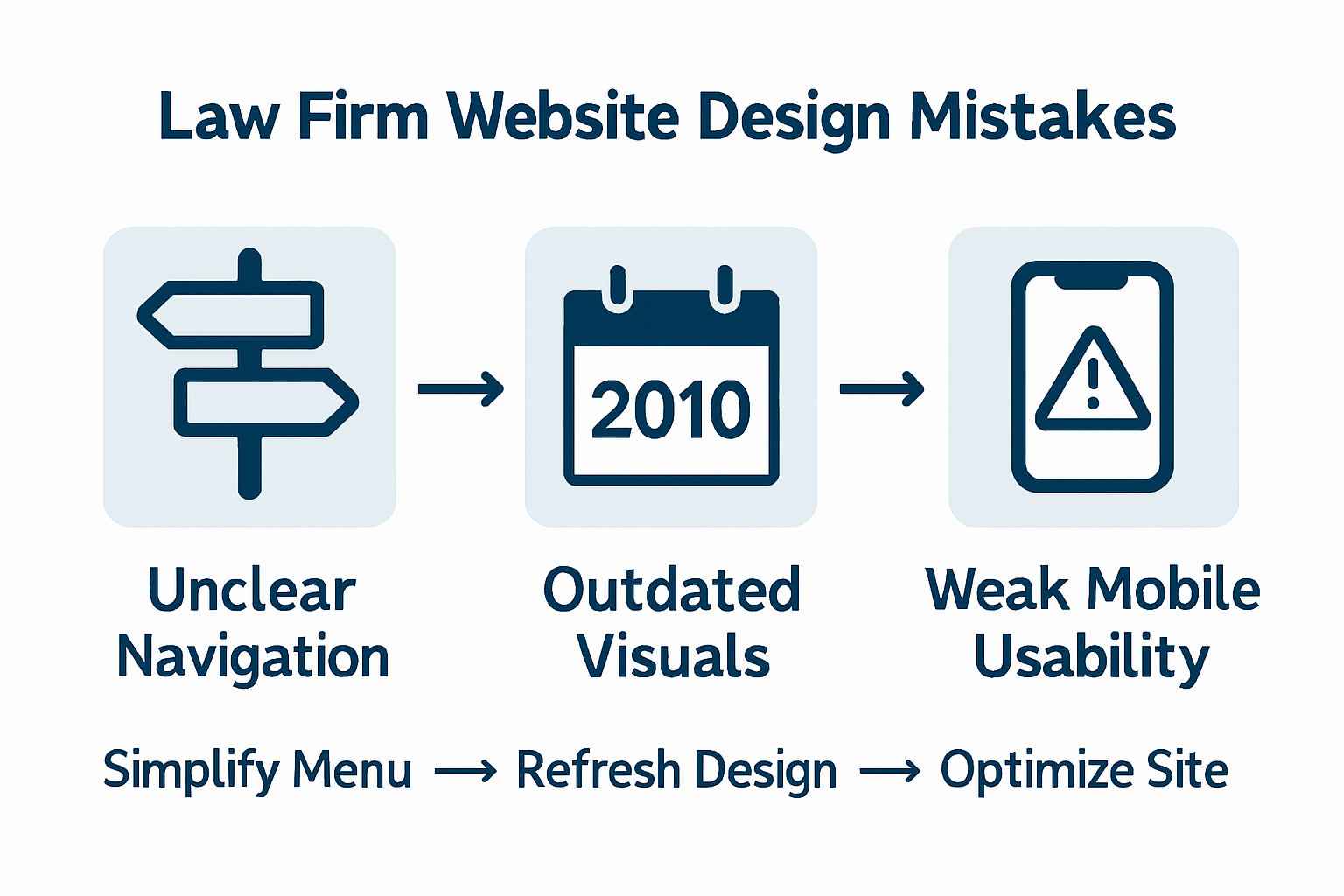
Common pitfalls in law firm website design often stem from fundamental misunderstandings about digital user experience. Overcrowded layouts, outdated visual aesthetics, non-responsive mobile design, and unclear navigation can instantly repel potential clients seeking professional legal representation. 8 Essential Law Firm Website Design Tips for 2025 highlights the critical importance of creating a digital platform that communicates competence and accessibility.
Most critical website design mistakes include:
- Cluttered, confusing page layouts
- Poor mobile responsiveness
- Outdated visual design
- Lack of clear practice area information
- Complicated contact processes
- Missing professional credentials
- Slow page loading times
- Generic stock photography
Transforming website weaknesses into strategic strengths requires a holistic approach. Successful law firms recognize their website as more than a digital brochure—it’s a sophisticated client acquisition tool that must balance aesthetic appeal, user-friendly functionality, and professional credibility.
Transform Your Law Firm Website Into a Powerful Client Magnet
The article highlights key challenges law firms face with website design today including building trust instantly, balancing user experience with legal ethics, and mastering local SEO to reach clients effectively. Many firms struggle with outdated designs, lack of clear navigation, and missing targeted online strategies that turn visitors into clients. At Case Quota, we understand these pain points and specialize in crafting SEO-optimized web designs tailored specifically for law firms in Southern California. Our approach addresses your unique legal marketing needs by combining professional, mobile-responsive websites with powerful local SEO and transparent attorney profiles that build credibility quickly.
Elevate your firm beyond common mistakes with proven strategies that attract and convert potential clients online. Leverage our 15 years of digital marketing experience and 6 years focused exclusively on California legal marketing to gain an edge over bigger competitors. Learn more about the role of web design in legal marketing and how to avoid costly website design mistakes.
Ready to build a website that communicates expertise while driving client growth?

Visit Case Quota today to discover tailored solutions that align with your firm’s goals. Take the first step in turning your online presence into your most effective client acquisition tool.
Frequently Asked Questions
Why is professional design important for law firm websites?
Professional design establishes credibility and trust before potential clients even read the content, effectively communicating your firm’s competence.
How does website design influence client trust in legal services?
Website design serves as a critical trust-building mechanism, utilizing visual appeal and usability to convey professionalism, competence, and reliability to potential clients.
What are key elements to include in a law firm website for effective SEO?
Key elements include optimizing your Google My Business profile, generating location-specific content, collecting authentic client reviews, and implementing structured schema markup for improved local search visibility.
What common mistakes should law firms avoid in their website design?
Common mistakes include cluttered layouts, poor mobile responsiveness, outdated visuals, complicated contact processes, and slow page loading times, all of which can detract from user experience and client acquisition potential.
Recommended
- Website Design for Law Firms That Wins Clients
- Winning Web Design for Attorney Websites
- Role of Web Design in Legal Marketing Explained | Case Quota
- 8 Essential Law Firm Website Design Tips for 2025
- Responsive Design: Why It’s Crucial for Small Business Websites – Digital Marketing Agency – Market Link Solutions
- Website Legal Pages Explained: Essential Guide for 2025 – seo analytic