

Over eighty percent of American adults now begin their search for legal services online. For small and mid-sized law firms in Southern California, standing out digitally is no longer optional when competing against larger, resource-rich rivals. This guide breaks down the essentials of digital advertising so your firm can reach the right clients, measure every dollar spent, and build a smarter strategy for meaningful growth.
Table of Contents
- Core Concepts Of Digital Advertising For Attorneys
- Essential Types Of Legal Digital Advertising
- How Digital Advertising Delivers Results
- Advertising Ethics And Regulatory Compliance
- Managing Costs, Risks, And ROI Effectively
Key Takeaways
| Point | Details |
|---|---|
| Effective Targeting is Essential | Attorneys should utilize digital advertising to specifically reach potential clients based on their demographic and legal needs. |
| Measure Performance Metrics Carefully | Key metrics like click-through rates and conversion rates must be tracked to maximize return on investment. |
| Diversify Advertising Channels | A mixed approach using search engine ads, social media, and display ads is crucial for broadening client outreach and enhancing brand visibility. |
| Ensure Compliance with Ethical Standards | Attorneys must adhere to ethical guidelines that govern digital advertising to maintain transparency and professionalism. |
Core Concepts of Digital Advertising for Attorneys
Digital advertising represents a strategic approach for attorneys to connect with potential clients precisely where they spend significant time: online. Understanding core digital advertising concepts allows law firms to develop targeted marketing strategies that effectively reach their ideal client base. Digital advertising fundamentals emphasize the importance of precise audience targeting and paid online placement to generate meaningful client engagement.
The landscape of digital advertising encompasses several critical platforms and techniques. Search engine advertising allows attorneys to appear prominently when potential clients search for legal services. Social media advertising enables precise demographic targeting, helping law firms connect with individuals experiencing specific legal challenges. Display advertising offers visual brand recognition across websites frequented by potential clients. Each platform requires a nuanced approach tailored to the legal industry’s unique communication standards and ethical considerations.
Successful digital advertising for attorneys hinges on understanding key performance metrics. Click-through rates, conversion rates, cost per acquisition, and audience engagement provide crucial insights into campaign effectiveness. Attorneys must track these metrics meticulously, adjusting strategies to maximize return on investment. Geographic targeting becomes particularly important for local law practices seeking clients within specific regions or communities.
The following table highlights essential digital advertising metrics and their impact on law firm growth:
| Metric | What It Measures | Business Impact |
|---|---|---|
| Click-Through Rate | Ad traffic effectiveness | Reveals audience interest |
| Conversion Rate | Leads or clients gained | Reflects campaign results |
| Cost per Acquisition | Average client cost | Guides budget allocation |
| Geographic Targeting | Regional ad performance | Enhances local outreach |
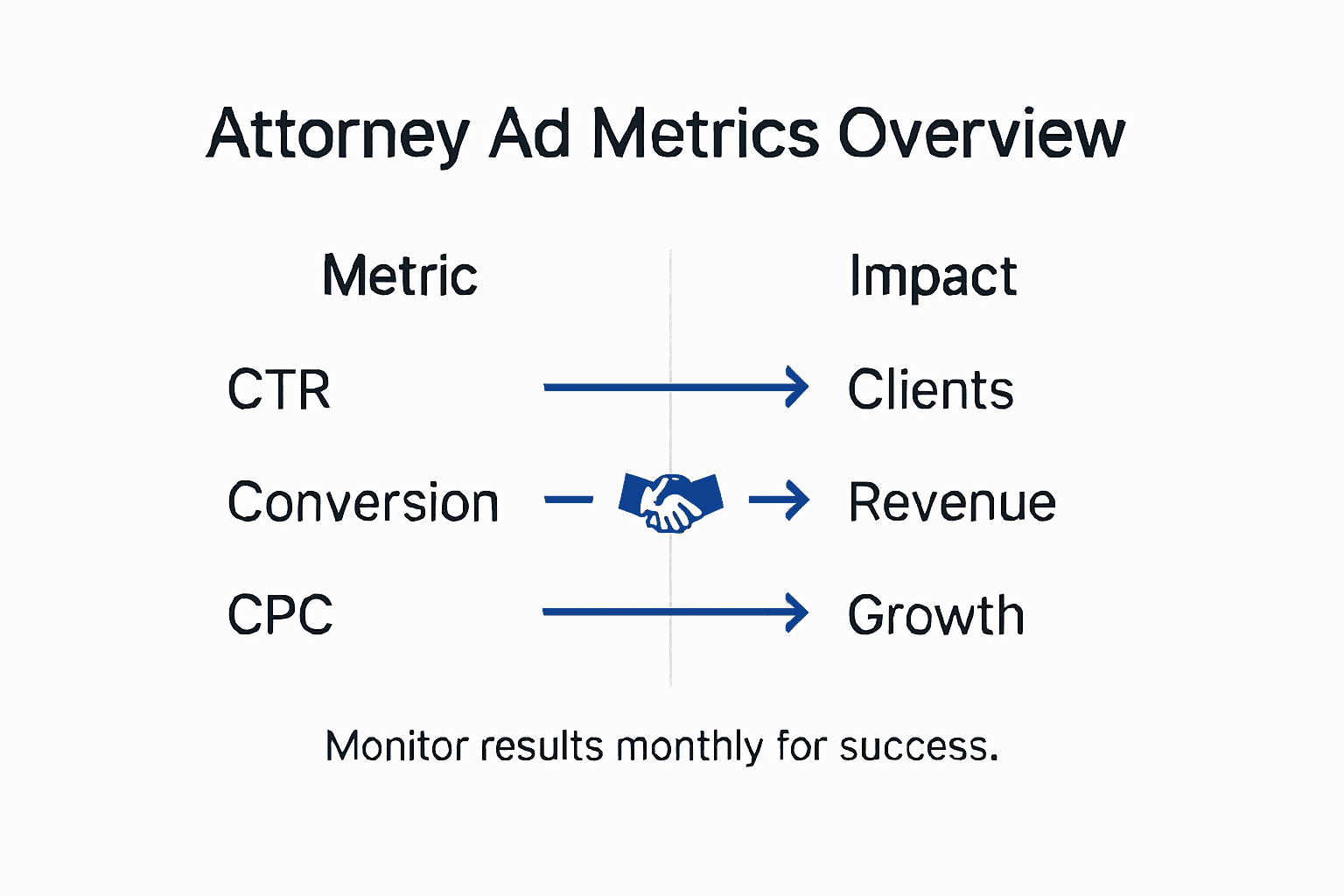
Pro tip: Develop a comprehensive tracking system that monitors not just advertising metrics, but also tracks how different digital advertising channels convert into actual client consultations and retained cases.
Essential Types of Legal Digital Advertising
Law firms today leverage multiple digital advertising channels to expand their client reach and build brand recognition. Advertising and marketing communication strategies have evolved to include sophisticated online approaches that allow attorneys to target potential clients with unprecedented precision. These digital advertising methods range from search engine marketing to social media campaigns, each offering unique advantages for legal practices seeking to grow their client base.
Search engine advertising stands as a primary digital marketing strategy for attorneys. By purchasing targeted keywords related to specific legal services, law firms can appear prominently when potential clients search for legal assistance. Google Ads and Bing Ads platforms enable attorneys to display text-based advertisements directly in search results, connecting with individuals actively seeking legal solutions. Social media advertising offers another powerful channel, allowing lawyers to create highly targeted campaigns on platforms like Facebook, LinkedIn, and Instagram that reach specific demographic groups based on age, location, interests, and potential legal needs.

Display advertising and retargeting provide additional sophisticated methods for legal digital marketing. These techniques involve placing visual advertisements on websites frequented by potential clients, maintaining brand visibility even after initial website visits. Video advertising has also emerged as a compelling medium, enabling attorneys to share client testimonials, explain complex legal concepts, and build trust through engaging multimedia content. Programmatic advertising technologies now allow for real-time bidding and placement of ads, ensuring maximum efficiency and targeted reach for law firms.
Here is a summary comparing leading digital advertising platforms for attorneys:
| Platform Type | Key Benefit | Common Use Case | Primary Challenge |
|---|---|---|---|
| Search Engine Ads | High-intent audience | Capturing active legal searches | Cost of competitive keywords |
| Social Media Ads | Demographic targeting | Reaching specific client segments | Creative compliance needs |
| Display Ads | Visual brand building | Maintaining firm visibility | Ad fatigue over time |
| Video Advertising | Trust and engagement | Explaining legal concepts visually | Production resource demands |
Pro tip: Develop a comprehensive digital advertising strategy that combines multiple channels, tracking conversion rates and client acquisition costs to optimize your marketing investment and maximize potential client engagement.
How Digital Advertising Delivers Results
Digital advertising provides law firms with a powerful mechanism for generating measurable client acquisition results through sophisticated tracking and targeting technologies. Comprehensive legal marketing research demonstrates that strategic digital campaigns can dramatically enhance a law firm’s ability to connect with potential clients and drive meaningful business growth. By leveraging data-driven approaches, attorneys can transform their marketing efforts from traditional guesswork to precise, quantifiable client engagement strategies.
The core of digital advertising’s effectiveness lies in its robust measurement capabilities. Advanced analytics platforms enable law firms to track key performance indicators such as click-through rates, conversion rates, cost per lead, and actual client acquisitions. Unlike traditional marketing methods, digital advertising provides granular insights into campaign performance, allowing attorneys to understand exactly how potential clients interact with their marketing materials. Attorneys can now see precisely which advertisements generate consultations, which keywords attract the most qualified leads, and how different demographic targeting strategies impact overall client acquisition.
Moreover, digital advertising delivers results through hyper-targeted messaging that speaks directly to specific legal needs. By utilizing sophisticated audience segmentation techniques, law firms can create highly personalized advertising experiences that resonate with individuals experiencing particular legal challenges. Retargeting technologies enable repeated exposure to potential clients who have already demonstrated interest, dramatically increasing the likelihood of converting website visitors into actual clients. Machine learning and artificial intelligence have further enhanced these capabilities, allowing for increasingly precise audience targeting and more efficient marketing spend allocation.
Pro tip: Implement a comprehensive tracking system that connects your digital advertising metrics directly to client intake data, enabling you to calculate the precise return on investment for each marketing channel and advertisement.
Advertising Ethics and Regulatory Compliance
Attorneys must navigate a complex landscape of ethical and legal requirements when engaging in digital advertising. Advertising substantiation guidelines establish critical standards that law firms must follow to ensure their marketing practices remain transparent, truthful, and compliant with professional regulations. These guidelines mandate that all advertising claims be verifiable, avoiding misleading statements or unsubstantiated promises about legal services or potential case outcomes.
The legal profession maintains stringent ethical standards that extend directly into digital marketing practices. State bar associations and professional ethics committees have developed specific rules governing attorney advertising, which typically require complete transparency about services, clear identification of advertising content, and strict prohibitions against false or deceptive messaging. This means that digital advertisements must not only be legally accurate but also provide genuine, verifiable information about the attorney’s qualifications, areas of practice, and potential client services.
Digital advertising for attorneys involves multiple layers of regulatory compliance beyond simple truthfulness. Lawyers must carefully manage client confidentiality, avoid solicitation that could be considered inappropriate, and ensure that all marketing materials respect individual privacy rights. Geographic targeting, testimonial usage, and claims about past case results require meticulous attention to detail. Professional conduct rules often mandate that advertisements clearly indicate they are promotional materials, maintain the dignity of the legal profession, and avoid creating unrealistic expectations about potential legal outcomes.
Pro tip: Develop a comprehensive legal review process for all digital advertising content, involving both your marketing team and a compliance-focused attorney to ensure every advertisement meets ethical and regulatory standards.
Managing Costs, Risks, and ROI Effectively
Law firms must approach digital advertising with a strategic financial mindset, carefully balancing potential client acquisition with budgetary constraints. Digital advertising investment strategies require attorneys to develop sophisticated approaches that maximize marketing effectiveness while minimizing unnecessary spending. Understanding the nuanced economics of online advertising allows law firms to allocate resources more intelligently and track their marketing investments with precision.
Risk management plays a critical role in digital advertising for attorneys. Firms must implement robust tracking systems that monitor not just monetary expenditures, but also qualitative performance metrics such as lead quality, conversion rates, and client acquisition costs. Advanced digital marketing platforms now offer granular analytics that enable attorneys to understand exactly how each advertising dollar translates into potential client consultations. This data-driven approach helps law firms continuously refine their marketing strategies, eliminating underperforming campaigns and doubling down on high-performing channels.
The return on investment for digital advertising depends on creating a holistic strategy that integrates multiple marketing channels. Pay-per-click advertising, social media marketing, search engine optimization, and targeted display ads each play unique roles in attracting potential clients. Successful law firms develop a diversified marketing approach that spreads risk across different platforms while maintaining a consistent brand message. By setting clear performance benchmarks, regularly analyzing campaign data, and remaining flexible enough to pivot strategies quickly, attorneys can transform digital advertising from a cost center into a predictable client acquisition engine.
Pro tip: Implement a monthly review process that analyzes your digital advertising performance, calculating the precise cost per acquired client and comparing it against your firm’s average client lifetime value to ensure sustainable marketing investments.
Boost Your Local Client Acquisition with Targeted Digital Advertising
The article highlights how essential precise audience targeting and robust tracking are for law firms aiming to grow locally through digital advertising. If you find managing complex platforms and compliance challenges overwhelming, or if you want to reduce the cost per acquisition while increasing quality leads, your law firm needs a partner who understands the unique demands of legal marketing. Concepts like geographic targeting, conversion tracking, and multi-channel strategies are critical yet often difficult to execute without specialized expertise.
At Case Quota, we specialize in empowering small to mid-size law firms in Southern California with tailored digital advertising solutions. Our services include SEO-optimized web design, AI-powered pay-per-click campaigns, and expert social media and video marketing techniques designed to overcome the exact pain points discussed—such as maximizing ROI and ethical compliance in advertising. With our deep knowledge of legal marketing and 15 years of delivering client growth, we help you track meaningful metrics and convert clicks into consultations and retained cases.
Take control of your firm’s growth today with proven digital marketing strategies built for attorneys.
Elevate your local presence and get measurable results faster with help from proven experts.

Ready to gain clients where they search? Visit Case Quota and start transforming your digital advertising into a predictable client acquisition engine. Learn more about our full range of legal marketing solutions and discover how our fractional CMO services can provide high-level leadership for your strategies. Don’t wait to turn insight into action—connect with us now to see results that matter.
Frequently Asked Questions
How can digital advertising help attorneys gain clients locally?
Digital advertising allows attorneys to target specific demographics and local audiences, enhancing their visibility to potential clients actively seeking legal services in their area. By utilizing platforms like search engine ads and social media, attorneys can directly reach individuals with specific legal needs.
What are key performance metrics to track for law firm digital advertising?
Important metrics include click-through rates, conversion rates, cost per acquisition, and geographic targeting effectiveness. Tracking these metrics helps attorneys evaluate campaign success and optimize their marketing strategies to improve client acquisition results.
What types of digital advertising are most effective for law firms?
The most effective types of digital advertising for law firms include search engine marketing, social media advertising, display advertising, and video advertising. Each offers unique benefits for reaching potential clients and building brand recognition in the legal industry.
How can attorneys ensure their digital advertising complies with ethical standards?
Attorneys should familiarize themselves with advertising substantiation guidelines and ensure all claims in their ads are verifiable. It’s also essential to maintain transparency regarding services and adhere to professional regulations to avoid misleading prospects.
Recommended
- Facebook Advertising for Attorneys A Growth Guide
- facebook advertising for lawyers: Guide to Facebook Ads
- Attorney Advertising on Facebook A Practical Guide
- Social Media Marketing for Lawyers Done Right
- There Will be Consequenses for Settling Behind an Attorney’s Back if You Have a Contingency Basis Retainer | Serendib Law Firm