

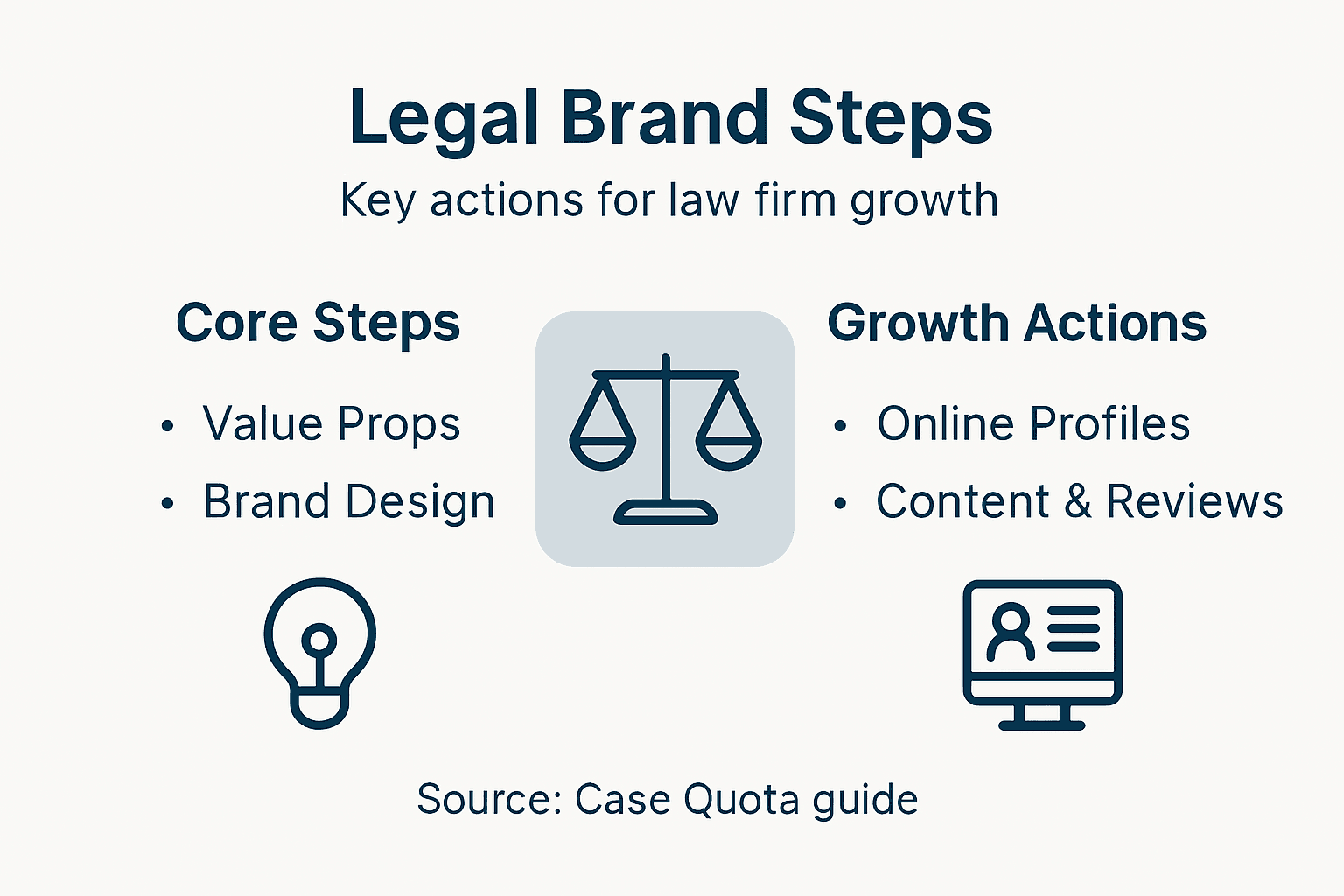
Competing with larger Southern California law firms means having more than just years of experience or a busy office. For managing partners at small to mid-sized firms, digital marketing is no longer optional if you want to attract clients who expect speed, expertise, and personal service. A clear value proposition combined with professional branding and credible online profiles lets your firm stand out meaningfully and wins trust from those searching for legal help.
Table of Contents
- Step 1: Clarify Your Law Firm’s Unique Value Proposition
- Step 2: Design A Professional Legal Website And Branding Package
- Step 3: Optimize Online Profiles For Search And Credibility
- Step 4: Launch Targeted Content And Social Media Campaigns
- Step 5: Leverage Client Reviews And Measure Brand Performance
Quick Summary
| Key Insight | Explanation |
|---|---|
| 1. Define Your Unique Value Proposition | Clearly articulate what sets your firm apart, focusing on specific problems you solve better than competitors. |
| 2. Develop Professional Branding | Create a cohesive visual identity and website that communicate professionalism and trustworthiness to potential clients. |
| 3. Optimize Online Profiles | Ensure consistency and thoroughness in your Google Business Profile and legal directories to enhance visibility and credibility. |
| 4. Create Targeted Content | Produce relevant content that addresses potential clients’ concerns, establishing your expertise and keeping you top-of-mind. |
| 5. Actively Seek Client Reviews | Regularly request and respond to client feedback to build trust and refine your branding strategy based on actual client experiences. |
Step 1: Clarify your law firm’s unique value proposition
Your unique value proposition is the answer to a question every potential client asks before hiring you: why should I choose this firm over another one? This isn’t just marketing fluff. It’s the core reasoning that informs every decision you make about your practice, from the practice areas you focus on to the clients you pursue to the way you deliver service. Without clarity here, your marketing efforts scatter in ten different directions, and your team doesn’t even know what you’re actually trying to stand out for. Getting this right shapes everything that follows.
Start by identifying what genuinely makes your firm different. Look beyond surface-level factors like having been in business for 20 years or having five attorneys. Those details matter less than the actual problems you solve better than competitors. Are you the firm that handles complex real estate transactions in Southern California faster than anyone else? Are you known for getting results in employment disputes that other firms settle too quickly? Do you specialize in specific industries where you’ve built deep relationships and insider knowledge? The key is understanding what truly differentiates your firm beyond generic claims about experience or client service.
Then examine this from your clients’ perspective. What problem brings them to you? What frustration were they experiencing before they found you? A small firm competing against larger competitors can’t win on size or budget, but you can win on understanding. You know your clients’ specific challenges. You respond quickly. You don’t shuffle cases to junior associates. When you center your firm’s strategy around client needs rather than your own capabilities, your value proposition becomes compelling because it addresses real pain points. Document what your current clients actually value most about working with you. Don’t guess. Ask them directly. Their answers reveal your genuine competitive edge.
Now combine these observations into a clear statement. It doesn’t need to be fancy or tagline-worthy. Something like “We handle complex commercial litigation for manufacturing companies who need counsel that understands their industry” works perfectly. The goal is internal clarity first. Your team should be able to explain why your firm exists and why someone would choose you. Once everyone internally agrees on this positioning, you can develop external messaging around it. This clarity prevents you from chasing every lead that comes through the door and keeps your marketing focused on the right audiences.
Pro tip: Write your value proposition down and share it with your team. If they can’t explain it back to you consistently, it’s not clear enough yet. Refine it until everyone from your senior partners to your office manager can articulate why your firm matters.
Step 2: Design a professional legal website and branding package
Your website and branding are often the first impression potential clients have of your firm. They’re making judgments in seconds about whether you’re trustworthy, competent, and worth hiring. This step brings together your value proposition from the previous section and packages it into a cohesive visual identity and digital home. You’re not just building something that looks nice. You’re building a tool that communicates professionalism, builds trust, and guides visitors toward becoming clients.
Start with your visual branding, which includes your logo, color palette, typography, and overall design system. Your logo should be clean and memorable, not overcomplicated with too many fonts or effects. Small to mid-sized firms often make the mistake of trying to look impressive through complexity, but sophisticated design is actually the opposite. Choose two or three colors that will appear consistently across all your materials, from your website to your business cards to your social media profiles. These colors should align with the type of law you practice. A probate firm might use warmer, more traditional tones, while a tech law practice might use contemporary colors that signal innovation. Typography and visual identity choices matter more than you probably realize because they communicate your firm’s personality before anyone reads a word. Document all these decisions in a branding guide so everyone on your team uses them consistently. When a client sees the same colors and fonts everywhere, it reinforces that you’re organized and professional.
Now design your website with the user experience in mind. Your site needs to work smoothly on mobile devices since most people searching for attorneys are on their phones. Each page should load quickly and have a clear purpose. Your homepage should immediately answer what you do and who you serve. Your practice area pages should explain what clients experience when they hire you for that specific issue, not just list statutes and case law. About pages should be about your clients’ confidence in you, not your personal biography. Professional website design puts your clients’ needs first rather than focusing on what impresses peers. Make sure your contact information is easy to find on every page and that visitors can reach you through multiple channels. Many firms bury their phone number or contact form, which is a missed opportunity. Include client testimonials on relevant pages to build trust. A potential client facing a DUI charge wants to see what happened to someone else in that situation, not generic praise about your firm’s excellence.

Your branding should extend beyond your website to every touchpoint. Your email signature should match your website design. Your social media profiles should use the same logo and color scheme. Business cards, letterhead, and any printed materials should reflect the same visual identity. This consistency builds recognition and makes your firm feel established and intentional, which is exactly what small firms need to compete against larger operations with bigger marketing budgets. When managing partners from Southern California firms see that a competitor has thoughtful, consistent branding everywhere, they notice. Your clients notice too.
Here’s a comparison of branding elements and their impact on law firm perception:
| Branding Element | Intended Impact | Example for Law Firms |
|---|---|---|
| Logo | Signals professionalism | Simple, modern logo reassures clients |
| Color Palette | Sets firm personality | Blue for trust, gray for sophistication |
| Typography | Communicates reliability | Clean serif fonts suggest authority |
| Consistent Imagery | Reinforces recognition | Team photos add approachability |
| Website UX | Builds user confidence | Fast, mobile-friendly site impresses |
Pro tip: Don’t try to design this yourself unless you have genuine design skills. A professional designer or design-focused agency will create something that actually represents your firm well and pays dividends for years. The investment in good branding now prevents the expense and embarrassment of rebranding in two years when you realize your DIY logo looks unprofessional.
Step 3: Optimize online profiles for search and credibility
Your online profiles are where potential clients search for you, and they’re also where competitors are being found. This step focuses on making sure your firm shows up in those searches and that when people find you, your profiles immediately communicate trustworthiness and expertise. You’re optimizing across Google Business Profile, legal directories, social media, and your own website so that every digital touchpoint reinforces your credibility and makes it easy for prospects to choose you over competitors.
Start with your Google Business Profile, which is the free listing that appears when someone searches for your firm by name or searches for attorneys in your area. This profile directly impacts your visibility in local search results, which matters tremendously for small to mid-sized Southern California firms competing against larger operations. Complete every field thoroughly. Your business name should match exactly what appears on your website and business cards. Add your full address, phone number, and business hours. Upload high-quality photos of your office, your team, and any other images that show your real organizational presence. Google rewards profiles that feel authentic and well-maintained. Add your practice areas and descriptions that match your value proposition from step one. When someone searches “DUI attorney near me” or “family law in San Diego,” your complete profile with clear practice area information increases the chance they find you. Respond to reviews quickly, both positive and negative, because Google’s algorithm notices engagement and potential clients trust firms that actually interact with feedback.
Next, optimize your presence on legal directories like Avvo, Martindale-Hubbell, and State Bar directories. These platforms function as trust signals because they feature verified information about your firm. Clients often use these directories to confirm that you’re licensed and in good standing. Fill out every section completely, including your biography, practice areas, education, and case results when appropriate. Use consistent information across all directories. If your phone number differs on Avvo versus your website versus Google, that inconsistency signals disorganization. When optimizing your profiles, think about how potential clients are searching. Someone looking for help with a specific problem types keywords into Google. Your profiles should include those same words naturally throughout your descriptions. Instead of vague language like “provides legal services,” be specific about what credible online profiles demonstrate about your expertise. Say “represents clients in contested custody matters” or “handles commercial real estate transactions up to 2 million dollars.” Specificity builds trust. Include client testimonials on your profiles when possible. Real quotes from actual clients are far more persuasive than any claim you could make about yourself.
Finally, make sure your contact information appears consistently and prominently everywhere. A potential client who’s ready to hire you shouldn’t have to hunt for your phone number or figure out how to contact you. Your email should be professional and monitored regularly. Many smaller firms use shared mailboxes or let emails pile up unanswered for days, which damages credibility faster than almost anything else. If you’re using social media, make sure your profiles clearly state you’re a law firm and link back to your main website. An optimized online presence across all these platforms signals that you’re established, professional, and worth trusting with important legal matters. When managing partners from competing Southern California firms realize you’ve done this work thoroughly while they haven’t, you’ve already won the visibility battle.
Pro tip: Audit your online profiles quarterly. Check that all information is current, that client testimonials are still appropriate, and that your contact information matches everywhere. This ongoing maintenance prevents the credibility damage that happens when potential clients find outdated or conflicting information about your firm.
Step 4: Launch targeted content and social media campaigns
Content and social media are where you build relationships with potential clients before they’re ready to hire you. This step focuses on creating a consistent flow of valuable content that demonstrates your expertise, positions your firm as trustworthy, and keeps you visible in the feeds and search results of people who need your services. You’re not just posting randomly. You’re launching strategic campaigns designed to reach the right people with the right message at the right time, which is exactly what allows smaller firms to compete effectively against larger competitors with bigger budgets.
Start by identifying the content topics your ideal clients actually care about. If you practice family law, potential clients are searching for information about custody rights, divorce processes, and how to protect assets. If you handle employment law, they’re looking for answers about wrongful termination, wage disputes, and workplace discrimination. Create content around these pain points and questions. Write blog posts, create videos, or record podcast episodes that answer the questions people are typing into Google. Well-crafted targeted content establishes authority and generates leads while reaching wider audiences than your traditional networking ever could. A single blog post about DUI penalties in California might rank in search results for months, bringing in qualified prospects long after you publish it. Social media content works differently. It’s less about ranking and more about staying top-of-mind with people who already know about you. Share client success stories anonymously, post legal updates relevant to your practice areas, and engage in conversations about current events affecting your clients. Southern California managing partners often underestimate how much their LinkedIn presence matters. Potential clients and referral sources check your profile before contacting you. A profile with regular activity and thoughtful content signals that you’re engaged and current. A dormant profile suggests you’re coasting.
When launching campaigns, use targeting features available on platforms like LinkedIn, Facebook, and Google Ads to reach specific audiences. LinkedIn lets you target by job title, industry, and company size. Facebook lets you target by location, interests, and behaviors. This precision matters because you’re spending money to reach people most likely to need your services. A family law firm in San Diego wastes budget showing ads to people in Los Angeles or to people interested in topics unrelated to their practice. However, remember that targeted advertising requires careful attention to legal and ethical compliance, especially when handling sensitive client data or making claims about legal services. Stay within advertising rules set by your state bar and platforms. Consistency beats perfection in content marketing. Post regularly, even if it’s just once or twice weekly. Update your content to reflect current laws and circumstances. Set a realistic schedule you can maintain without burning out. Many firms launch ambitious campaigns and then go silent for three months, which damages credibility more than not posting at all. Your audience needs to know they can rely on hearing from you consistently.
Measure what’s working. Track which posts get engagement. Monitor which content pieces generate inquiries. Use platform analytics to see where your audience is and when they’re most active. A post about a recent court ruling might generate ten times more engagement than a generic post about your practice area. Over time, these patterns reveal what resonates and help you focus your efforts on content that actually moves the needle. Small to mid-sized firms don’t need to do everything, but they need to do a few things really well. Pick one or two platforms where your clients actually spend time, create consistent content for those platforms, and measure the results.
Pro tip: Repurpose your content across platforms. A blog post becomes a LinkedIn article, social media snippets, an email to your contact list, and maybe even a short video. This maximizes the return on the effort you invest in creating the content and ensures your message reaches people through multiple channels where they might not see it the first time.
Step 5: Leverage client reviews and measure brand performance
Client reviews are your most powerful marketing asset because they come from people with no stake in promoting you. This step shows you how to actively gather reviews, respond to them strategically, and use the data they contain to understand whether your branding efforts are actually working. You’re not just collecting testimonials for vanity. You’re building a feedback loop that reveals how clients actually perceive your firm and where you need to improve to strengthen your brand.
Start by systematically asking satisfied clients for reviews. Don’t wait passively for them to post something online. After you’ve successfully resolved a case or delivered strong service, ask the client directly if they’d be willing to leave a review. Make it easy by providing a link to Google, Avvo, Martindale-Hubbell, or whichever platforms matter most for your practice. The best time to ask is when the client is most satisfied, typically right after you’ve delivered results. Send a follow-up email a week after case closure with a simple message and direct links. You’ll be surprised how many clients are willing to help if you make the process painless. Some firms offer a small incentive like a discount on future services, though check your state bar rules on this first. Consistency matters here. If you ask for reviews from every satisfied client, you’ll build a steady stream of feedback. If you only ask occasionally, you won’t get the volume needed to make meaningful assessments.
When reviews come in, respond to all of them, positive and negative. Thank clients for positive reviews specifically by referencing details from their feedback. This shows potential clients that you actually read and care about feedback. For negative reviews, respond professionally without being defensive. Acknowledge the client’s concern, explain your perspective if appropriate, and offer to discuss the issue further offline. Many potential clients judge your firm not by the existence of negative reviews, but by how you respond to them. A firm that handles criticism gracefully appears more trustworthy than a firm with only five-star reviews, which can look fake. Marketing analytics reveal how client reviews and feedback affect engagement, satisfaction, and conversion rates, helping you understand what actually moves the needle for your brand.
Now analyze the patterns in your reviews. Are clients consistently praising your responsiveness but criticizing your pricing? That tells you something important about your value proposition. Are they mentioning specific outcomes or results? Use that language in your marketing because it resonates with potential clients. Do certain practice areas get better reviews than others? That might indicate where you should focus your marketing budget. Read reviews to find the phrases clients use to describe what they valued. A client might write “they explained everything in plain language,” which becomes a core part of your messaging. This qualitative feedback is gold for refining your brand positioning.
Measure your overall brand performance through metrics that matter. Track your average rating across platforms. Monitor how many reviews you’re receiving monthly. Track which review platforms are sending you inquiries. Look at your website traffic and conversion rates. Are more people visiting your website than last quarter? Are more of those visitors contacting you? Google Analytics and platform analytics show you these patterns. Systematic brand research using client feedback helps law firms evaluate and enhance their brand equity and guide future marketing decisions. Set quarterly goals. Maybe your target is to reach a 4.8 average rating across all platforms or to collect 12 new reviews monthly. Having specific metrics keeps you accountable and reveals whether your branding strategy is working or needs adjustment.
To help you implement a review strategy, see key feedback metrics and their business value:
| Metric | What It Reveals | Example Action Based on Insight |
|---|---|---|
| Average Rating | Overall client satisfaction | Improve weak areas if under 4.5 |
| Number of Reviews | Volume of public feedback | Increase requests if count is low |
| Key Review Themes | Client-valued strengths/issues | Emphasize praised strengths in marketing |
| Review Response Rate | Engagement and responsiveness | Train team to reply within 24 hours |
Pro tip: Create a simple tracking spreadsheet that records the date, platform, rating, and key themes from each review. Over time, you’ll see patterns that reveal what’s resonating with clients and what needs improvement in your actual service delivery or brand messaging.
Elevate Your Law Firm’s Online Brand with Targeted Digital Marketing
Building a strong legal brand online requires more than just a polished website or sporadic content posts. This article highlights the challenges small to mid-size law firms face when competing against larger firms with deeper marketing budgets. Common pain points include establishing a clear value proposition, maintaining consistent branding, optimizing online profiles for search visibility, and launching strategic content and social media campaigns that engage and convert potential clients. Without the right expertise, law firms risk wasting time and resources on efforts that do not produce meaningful growth or client inquiries.
Case Quota specializes in solving these exact challenges for Southern California law firms by crafting customized online strategies that amplify your unique strengths and connect you directly with your ideal clients. Our SEO-optimized web design services ensure your website communicates professionalism and ranks highly in local searches. With AI-powered pay-per-click advertising and Google Local Services Ads, we target precise audiences ready to hire. Plus, our social media and video marketing campaigns build trust and authority while you focus on delivering exceptional legal services. Trust our 15 years of digital marketing experience combined with six years devoted to California legal marketing to give your firm the competitive edge it deserves.
Discover how Case Quota can transform your law firm’s online presence and start growing your client base today.

Ready to build a compelling legal brand that attracts clients and outshines competitors? Contact Case Quota now to learn how our specialized marketing solutions help law firms stand out and succeed in today’s digital landscape.
Frequently Asked Questions
What is a unique value proposition for a law firm?
A unique value proposition is a clear statement that explains why potential clients should choose your law firm over others. To define yours, identify what truly differentiates your firm, such as specific expertise or client service approaches. Write this down and ensure your team can articulate it consistently.
How can I improve my law firm’s online branding?
To improve your law firm’s online branding, start by designing a professional website and branding package that reflects your unique value proposition. Use consistent visuals and messaging across all platforms, ensuring every touchpoint reinforces your firm’s professionalism. Aim for a cohesive look that resonates with your target audience.
What is the importance of client reviews for a law firm?
Client reviews are critical for building trust and credibility online, as they provide authentic feedback from real clients. Systematically ask satisfied clients for reviews right after successful case resolutions to create a steady stream of positive testimonials. Actively engage with all reviews to demonstrate responsiveness and care.
How do I optimize my firm’s online profiles for search?
To optimize your firm’s online profiles for search, complete every section of listings such as Google Business Profile and legal directories. Ensure your business name, address, and contact information are consistent across platforms, and include relevant practice areas in your descriptions. Update these profiles regularly to maintain credibility and visibility.
What type of content should my law firm focus on creating?
Your law firm should focus on creating content that addresses the specific pain points and questions your ideal clients have. This could include blog posts about legal issues relevant to your practice areas or informative videos that clearly explain complex topics. Aim to publish content regularly, like once a week, to keep your audience engaged.
How can I measure the effectiveness of my law firm’s branding efforts?
To measure the effectiveness of your law firm’s branding efforts, track key metrics such as average client reviews, engagement rates on social media, and website traffic analytics. Set specific quarterly goals, like achieving a 4.8-star average across review platforms or increasing inquiries by 20% within three months, to gauge your brand’s performance.
Recommended
- Complete Guide to Digital Marketing for Legal Firms: Strategies That Drive Results – Case Quota
- Website Design for Law Firms That Wins Clients
- Social Media for Law Firms a Strategic Guide
- Social Media Marketing for Law Firms That Wins Clients
- IT INNOVE : développement web et mobile | React, React Native et Ruby on Rails