

Nearly ninety percent of American consumers turn to online searches before contacting a law firm. For small and mid-sized practices in Southern California, standing out against bigger competition can feel daunting. However, a targeted SEO strategy transforms your website into a magnet for local clients seeking trusted legal help. This guide breaks down actionable steps any partner can implement, positioning your firm as a premier choice for Southern California legal services.
Table of Contents
- Step 1: Audit Your Legal Website For SEO Weaknesses
- Step 2: Enhance Site Structure And Navigation
- Step 3: Optimize Content For Legal Search Intent
- Step 4: Implement Local SEO For Southern California
- Step 5: Test Results And Refine Optimization Efforts
Quick Summary
| Key Insight | Explanation |
|---|---|
| 1. Conduct Regular SEO Audits | Perform quarterly audits to identify and address SEO vulnerabilities affecting visibility and performance. |
| 2. Optimize Site Structure | Create a clear, user-friendly website layout to enhance navigation and improve client engagement. |
| 3. Focus on Legal Content | Develop content that meets specific legal queries to demonstrate expertise and attract potential clients. |
| 4. Enhance Local SEO Strategies | Utilize local optimization techniques, such as maintaining accurate Google My Business listings, to target regional clientele. |
| 5. Monitor and Refine Efforts | Continuously track performance metrics and adjust strategies based on data-driven insights to enhance online presence. |
Step 1: Audit Your Legal Website for SEO Weaknesses
Building a powerful online presence for your law firm starts with a comprehensive website audit that pinpoints SEO vulnerabilities. By systematically examining your current digital infrastructure, you can uncover hidden performance barriers preventing potential clients from finding your legal services.
Start your audit by utilizing advanced SEO performance tracking tools that help identify critical website crawlability and indexing issues. These sophisticated analysis platforms can reveal technical problems like broken links, slow page load times, missing metadata, and structural inconsistencies that undermine your search engine rankings. Specialized legal marketing tools will help you assess how search engines currently perceive and rank your website, providing actionable insights into optimization opportunities.
Your website audit should comprehensively examine multiple performance dimensions including technical infrastructure, content relevance, mobile responsiveness, and user experience. Focus on evaluating page speed, internal linking structures, header tag hierarchies, and ensuring your website effectively communicates your practice areas and legal expertise. Pay special attention to metadata quality, schema markup implementation, and how well your site content matches potential client search intent.
Pro tip: Run your website audit quarterly to stay ahead of emerging technical SEO challenges and maintain peak digital performance for your law firm.
Here’s a summary of key website audit dimensions and their impact on law firm SEO:
| Audit Dimension | What to Review | Impact on SEO |
|---|---|---|
| Technical Infrastructure | Site speed, errors, security | Influences search rankings, trust |
| Content Relevance | Practice area detail, keyword use | Attracts relevant client searches |
| Mobile Responsiveness | Layout on phones & tablets | Improves user experience, rankings |
| User Experience | Navigation, calls to action | Boosts engagement and conversions |
| Metadata & Schema | Meta tags, structured data | Enhances visibility, rich snippets |
Step 2: Enhance Site Structure and Navigation
Creating a clear and intuitive website structure is essential for helping potential clients navigate your law firm’s online presence and improving overall search engine performance. Your goal is to design a logical, user friendly architecture that guides visitors seamlessly through your legal services and practice areas.
Implement a strategic approach to website navigation by utilizing semantic HTML document structures that clearly define content regions and improve accessibility. This means creating logical hierarchies with well labeled navigation menus, consistent page layouts, and intuitive pathways that help users quickly find the information they need. Your main navigation should include primary practice area categories, attorney profiles, contact information, and resources like case studies or legal guides. Ensure each page connects logically to related content and maintains a clear visual and structural hierarchy.
Consider the user experience across different devices by developing a responsive design that adapts smoothly to mobile phones, tablets, and desktop computers. Pay close attention to header elements, footer information, and navigation menus to ensure they remain readable and functional regardless of screen size. Implement clear calls to action, use descriptive link text, and create a site map that allows both users and search engines to understand your website’s structure and content relationships.

Pro tip: Test your website navigation with real users to identify potential confusion points and streamline your site architecture for maximum user engagement.
Compare how mobile-responsive and desktop-focused website designs affect legal client interactions:
| Design Focus | User Experience | Lead Generation Potential |
|---|---|---|
| Mobile-Responsive | Adapts to all devices | Maximizes outreach on mobile |
| Desktop-Focused | Optimized for computers | May miss mobile opportunities |
| Hybrid Approach | Consistent on all screens | Best engagement overall |
Step 3: Optimize Content for Legal Search Intent
Successfully attracting potential legal clients online requires a strategic approach to content creation that directly addresses their specific search needs and legal questions. Your content must demonstrate expertise while precisely matching the information potential clients are seeking when researching legal services.
Develop content that aligns with legal research database standards by using precise legal terminology and addressing common client inquiries with authoritative information. This means creating comprehensive practice area pages that explain complex legal concepts in clear, accessible language. Focus on answering specific questions potential clients might type into search engines such as details about legal processes, potential case outcomes, and preliminary guidance for different types of legal situations. Structure your content with clear headings, concise paragraphs, and detailed explanations that demonstrate your firm’s expertise while remaining approachable and understandable to individuals without legal training.
Understand that legal content optimization goes beyond simple keyword placement. It requires a deep understanding of user intent, creating content that not only ranks well in search results but genuinely helps potential clients understand their legal challenges. Use semantic language that reflects how people actually discuss legal problems, incorporate frequently asked questions, and provide actionable insights that showcase your firm’s unique approach to solving legal issues.
Pro tip: Regularly update your content with recent legal developments and case studies to maintain relevance and demonstrate ongoing expertise.
Step 4: Implement Local SEO for Southern California
Targeting local clients in Southern California requires a strategic approach to digital marketing that goes beyond traditional search engine optimization. Your goal is to position your law firm as the go-to local legal resource for potential clients searching within your specific geographic area.
Optimize your online presence by mastering local search engine optimization techniques that help your firm stand out in regional search results. This means creating Google My Business profiles with complete and accurate information, including precise location details, business hours, contact information, and service descriptions specific to Southern California. Incorporate location-specific keywords throughout your website content, such as mentioning cities like Los Angeles, San Diego, Orange County, and other key Southern California regions where you practice. Ensure your name, address, and phone number remain consistent across all online platforms, including legal directories, social media profiles, and review sites.
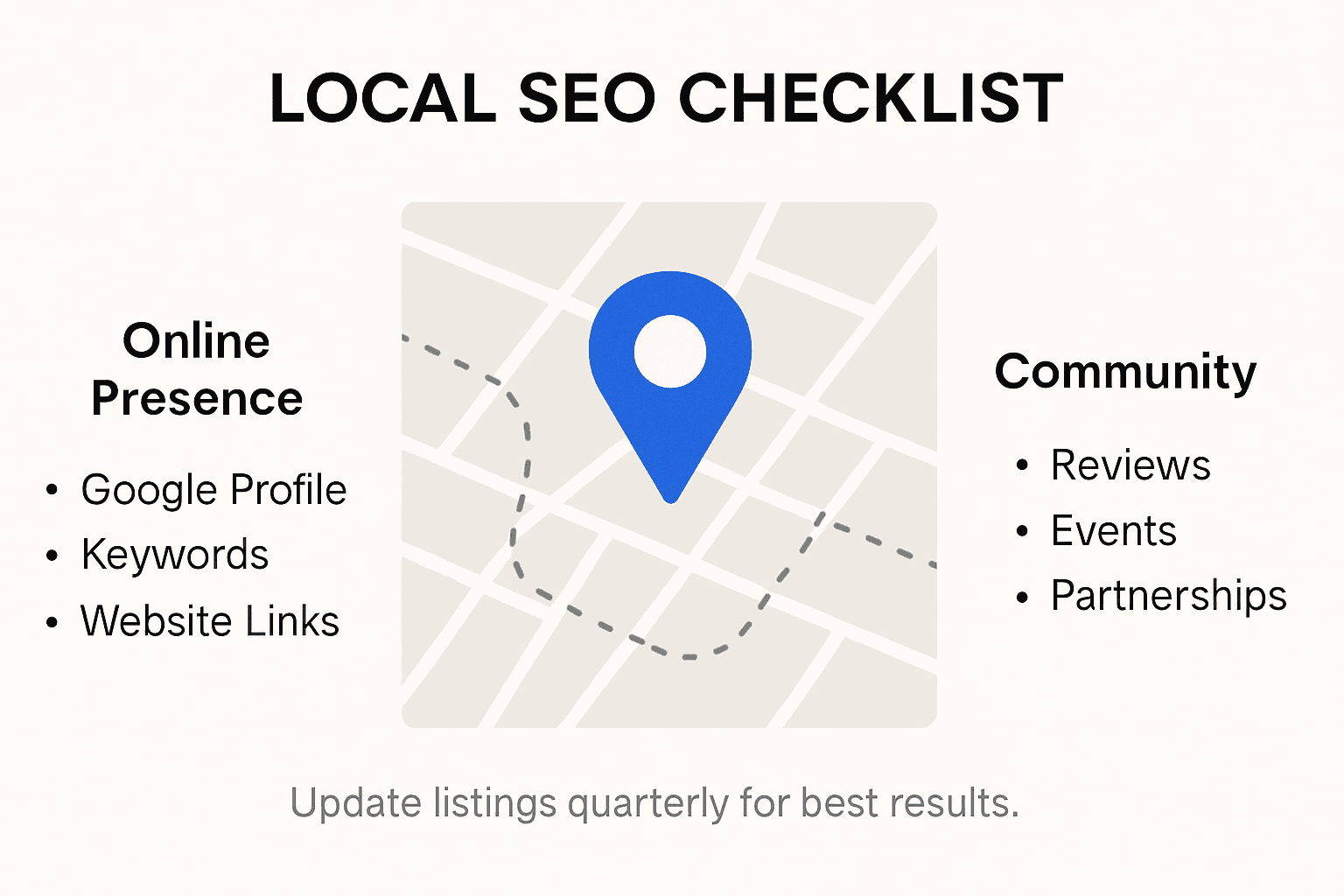
Build a robust local reputation by generating authentic client reviews, participating in local community events, and creating content that demonstrates your understanding of Southern California legal landscapes. Focus on developing hyperlocal content that addresses specific legal challenges relevant to the region, such as personal injury claims related to California traffic laws, employment issues specific to Southern California industries, or real estate legal matters unique to the area. Leverage local backlinks from reputable Southern California businesses, legal associations, and community organizations to strengthen your regional digital presence and signal relevance to search engines.
Pro tip: Regularly update your local business listings and monitor your local search rankings to maintain a competitive edge in the Southern California legal market.
Step 5: Test Results and Refine Optimization Efforts
Successful law firm marketing requires a dynamic approach of continuous performance evaluation and strategic refinement. Your goal is to transform raw data into actionable insights that systematically improve your online visibility and client acquisition strategies.
Leverage comprehensive SEO audit tools to track and analyze your website’s performance metrics with precision. Monitor key indicators such as organic search traffic, keyword rankings, user engagement rates, and conversion percentages. Implement a disciplined approach to tracking performance by establishing baseline measurements and creating comparative reports that reveal trends, strengths, and potential improvement areas. Pay particular attention to metrics specific to law firms, including page views for practice area sections, time spent on attorney profile pages, and click through rates for contact forms.
Develop an iterative optimization process that responds dynamically to performance data. This means regularly updating website content, adjusting keyword strategies, improving site loading speeds, and refining your local search presence based on real world performance insights. Conduct periodic technical SEO audits, analyze user behavior through heat mapping tools, and be prepared to make data driven adjustments to your digital marketing approach. Remember that search engine algorithms continuously evolve, so your optimization strategy must remain equally flexible and responsive.
Pro tip: Schedule monthly performance reviews and quarterly comprehensive SEO audits to maintain a competitive digital marketing strategy.
Elevate Your Law Firm Growth with Expert Legal Website Optimization
The challenges highlighted in the “Legal Website Optimization Guide for Law Firm Growth” reveal common obstacles that many Southern California law firms face. From uncovering technical SEO weaknesses to mastering local search strategies and refining user experience, these pain points demand a tailored and expert approach. If you are looking to turn these SEO vulnerabilities into strengths and attract the right clients, you need more than just theory—you need proven digital marketing expertise focused exclusively on legal practices.
At Case Quota, we specialize in transforming these exact challenges into growth opportunities for your firm. With over 15 years of digital marketing experience and six years dedicated to California’s legal market, we provide customized solutions including SEO-optimized web design, AI-powered pay-per-click advertising, and Google Local Services Ads. Our team understands the critical importance of content alignment with legal search intent and flawless site structure to convert visitors into clients. Discover how our targeted strategies and comprehensive marketing leadership can give your small or mid-size law firm a real competitive edge.

Ready to resolve SEO issues and boost your online visibility with a trusted legal marketing partner? Explore our tailored suite of legal digital marketing solutions at Case Quota and make your law firm the top choice for clients in Southern California. Learn more about how we build success through SEO-optimized web design and get started today to secure lasting growth.
Frequently Asked Questions
How can I audit my law firm’s website for SEO weaknesses?
Start by using advanced SEO performance tracking tools to identify aspects like broken links, slow load times, and missing metadata. Conduct a comprehensive review focused on technical infrastructure, content relevance, mobile responsiveness, and user experience to uncover hidden performance barriers.
What steps should I take to enhance my law firm’s website structure and navigation?
Create a clear and intuitive website structure by utilizing logical hierarchies and well-labeled navigation menus. Ensure that your main navigation includes easy access to practice areas and contact information, making information readily available for users.
How can I optimize content for my law firm’s target audience?
Focus on creating content that directly addresses potential clients’ legal questions and needs by using precise legal terminology. Regularly update your content to match current legal developments and ensure it remains relevant and approachable for individuals without legal training.
What local SEO strategies should I implement for my law firm?
Optimize your online presence by creating a complete Google My Business profile and using location-specific keywords throughout your website. Consistently manage your practice’s name, address, and phone number across all platforms to enhance your visibility in local search results.
How do I measure the success of my law firm’s SEO efforts?
Track performance metrics such as organic search traffic, keyword rankings, and conversion rates using comprehensive SEO audit tools. Establish baseline measurements and conduct regular reviews to identify trends and make data-driven adjustments to your digital marketing strategies.