

More than eighty percent of American legal clients now start their search for attorneys online, pushing California law firms to rethink how they compete for attention and trust. For small to mid-size practices, breaking through the digital noise of larger competitors can feel daunting. Unpacking the true power of digital marketing reveals how targeted tactics and smart content can draw in quality clients and help your firm build a strong, lasting reputation in the Southern California market.
Table of Contents
- Defining Digital Marketing for Law Firms
- Essential Digital Channels and Strategies
- How Digital Marketing Drives Client Growth
- Risks, Regulations, and Common Pitfalls
- Comparing Digital and Traditional Marketing
Key Takeaways
| Point | Details |
|---|---|
| Comprehensive Digital Strategy | Law firms should adopt a holistic digital marketing strategy leveraging various online channels such as SEO, content marketing, and social media to connect with potential clients effectively. |
| Data-Driven Insights | Utilizing advanced analytics allows firms to understand client behavior, optimize marketing efforts, and improve acquisition strategies based on measurable outcomes. |
| Content Quality and Relevance | Creating high-quality, practice-area specific content is essential for establishing expertise, improving SEO, and addressing potential clients’ legal concerns directly. |
| Ethical Considerations | Firms must maintain compliance with professional conduct rules and ensure accuracy in digital marketing content to avoid common pitfalls associated with legal advertising. |
Defining Digital Marketing for Law Firms
Digital marketing has transformed how law firms connect with potential clients, moving far beyond traditional advertising approaches. At its core, digital marketing represents a comprehensive strategy of leveraging online channels to promote legal services, build brand recognition, and attract new clientele through targeted digital communications. Legal marketing professionals understand this approach requires strategic multichannel engagement across various digital platforms.
Digital marketing for law firms encompasses multiple online strategies designed to reach potential clients where they actually spend time researching legal services. These strategies include search engine optimization (SEO), content marketing, social media engagement, targeted online advertising, email campaigns, and website development. The goal is not just visibility, but creating meaningful connections that transform online interactions into consultations and retained cases.
Unlike traditional marketing methods, digital approaches offer precise targeting and measurable outcomes. Law firms can now track website visitor behaviors, understand client acquisition costs, analyze engagement metrics, and continuously refine their marketing strategies. This data-driven approach allows smaller California law firms to compete effectively against larger practices by creating highly strategic, cost-efficient marketing campaigns that speak directly to potential clients’ specific legal needs.
Pro tip: Invest in creating high-quality, practice-area specific content that answers potential clients’ most pressing legal questions, which simultaneously improves SEO and establishes your firm’s expertise.
Essential Digital Channels and Strategies
Law firms in California must strategically leverage multiple digital channels to effectively reach and engage potential clients. Digital technologies are transforming legal services, creating opportunities for sophisticated online marketing approaches that go well beyond traditional advertising methods. Key digital channels include search engine optimization (SEO), targeted social media marketing, content marketing, email campaigns, and strategic online advertising platforms.
Website development and optimization form the cornerstone of digital marketing for law firms. A professionally designed website that showcases expertise, provides valuable legal insights, and offers clear pathways for client engagement can significantly improve conversion rates. AI technologies enhance law firm marketing by enabling more personalized content strategies, automated client communication, and data-driven marketing decisions that help firms allocate resources more effectively.

Search engine marketing represents another critical digital strategy for California law firms. This includes both organic SEO tactics to improve website rankings and paid search advertising that targets specific legal service searches. Google Local Services Ads, Google My Business optimization, and practice area-specific content marketing can help smaller firms compete effectively against larger competitors by demonstrating specialized expertise and local relevance.
Pro tip: Develop a consistent content strategy that addresses common client questions and legal challenges, using targeted keywords and providing genuine value to potential clients seeking legal guidance.
Here’s a summary of key digital marketing channels used by law firms in California:
| Channel | Primary Function | Typical Impact on Client Acquisition |
|---|---|---|
| SEO | Improve search engine ranking | Increases visibility among local clients |
| Social Media | Engage audiences on relevant platforms | Builds trust and firm reputation |
| Online Advertising | Targeted paid ads for legal services | Drives specific inquiries from prospects |
| Email Campaigns | Nurture leads with valuable insights | Supports long-term relationships |
| Website Optimization | Showcase expertise and enable contact | Boosts conversion and consultation requests |
How Digital Marketing Drives Client Growth
AI-driven digital marketing strategies have fundamentally transformed how law firms acquire and retain clients in today’s competitive legal marketplace. By leveraging advanced digital technologies, law firms can create targeted, personalized marketing approaches that directly address potential clients’ specific legal needs and concerns. This strategic approach goes beyond traditional advertising, enabling firms to demonstrate expertise, build trust, and establish meaningful connections with prospective clients before they even make initial contact.
Digital marketing channels provide unprecedented opportunities for precise client targeting and engagement. Advanced analytics and data-driven marketing techniques allow law firms to understand client behaviors, preferences, and pain points with remarkable accuracy. By creating content that addresses specific legal challenges, firms can position themselves as trusted advisors who genuinely understand their potential clients’ unique situations. Social media platforms, targeted email campaigns, and search engine optimization enable law firms to reach individuals precisely when they are seeking legal guidance.
The most effective digital marketing strategies for law firms focus on building credible, authoritative online presences that showcase specialized expertise. Legal marketing insights demonstrate that firms which develop comprehensive, informative content across multiple digital platforms can significantly enhance their client acquisition potential. This approach involves creating practice area-specific blogs, developing educational video content, maintaining active professional social media profiles, and ensuring consistently high-quality, searchable online information that addresses potential clients’ most pressing legal questions.
Pro tip: Develop a robust content strategy that provides genuine value to potential clients, focusing on answering their most common legal questions while subtly demonstrating your firm’s unique expertise and approach.
Risks, Regulations, and Common Pitfalls
Legal innovation and digital marketing present substantial challenges for California law firms. While digital strategies offer tremendous growth potential, they also introduce complex ethical and regulatory considerations that can quickly derail marketing efforts. Law firms must navigate a sophisticated landscape of professional conduct rules, client confidentiality requirements, and technological compliance standards that demand meticulous attention to detail and proactive risk management.
Cybersecurity represents a critical concern for law firms expanding their digital marketing footprint. Law firm cybersecurity protocols must address multiple dimensions of digital risk, including protecting sensitive client information, preventing unauthorized data access, and maintaining robust technological safeguards. California law firms must comply with stringent privacy regulations like the California Consumer Privacy Act, which imposes significant penalties for data breaches and inappropriate information handling.
Common digital marketing pitfalls for law firms include creating content that inadvertently violates professional advertising guidelines, misrepresenting legal capabilities, or failing to maintain clear boundaries between marketing communication and legal advice. Attorneys must ensure all digital marketing materials are accurate, verifiable, and strictly compliant with State Bar regulations. This requires ongoing training, regular content reviews, and developing comprehensive communication protocols that balance marketing effectiveness with ethical considerations.
Pro tip: Implement a rigorous review process for all digital marketing content, involving both legal professionals and marketing experts to ensure compliance, accuracy, and ethical standards.
Comparing Digital and Traditional Marketing
Marketing strategy comparisons reveal fundamental differences between digital and traditional approaches that significantly impact law firm client acquisition. Traditional marketing methods like print advertisements, billboards, and television commercials offer broad but imprecise audience reach, while digital marketing provides targeted, measurable, and highly adaptable communication strategies. For California law firms, this means the ability to connect with potential clients more efficiently and effectively than ever before.
Integrated marketing approaches demonstrate that digital and traditional channels can complement each other strategically. Digital platforms enable precise audience targeting, real-time performance tracking, and cost-effective engagement, whereas traditional media continues to provide emotional resonance and broader demographic reach. Law firms can leverage this synergy by using digital analytics to refine traditional marketing efforts and vice versa, creating a comprehensive marketing ecosystem that maximizes client outreach.
The core advantages of digital marketing for law firms include unprecedented levels of audience insight, lower customer acquisition costs, and the ability to rapidly adjust marketing strategies based on real-time data. Unlike traditional marketing’s one-way communication model, digital channels facilitate interactive, two-way engagement that allows law firms to build trust, demonstrate expertise, and directly address potential clients’ specific legal concerns. This approach transforms marketing from a passive broadcast to an active, responsive conversation.
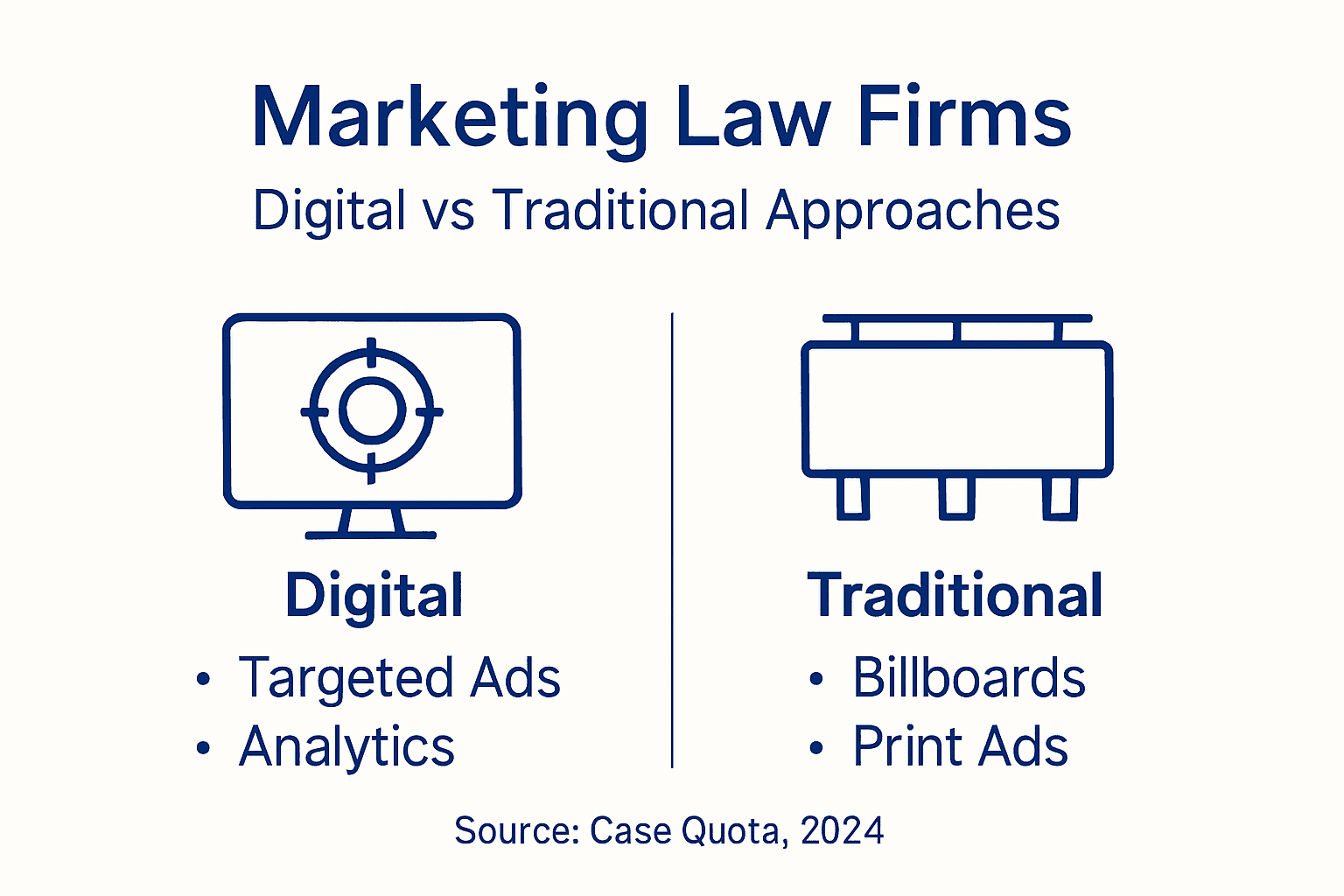
Below is a concise comparison of digital and traditional marketing approaches for law firms:
| Aspect | Digital Marketing | Traditional Marketing |
|---|---|---|
| Targeting Accuracy | Highly targeted, data-driven | Broad, less precise |
| Measurement | Real-time analytics and tracking | Difficult to measure impact |
| Adaptability | Rapid strategy adjustments | Slow to change |
| Engagement Style | Interactive, two-way communication | One-way messaging |
Pro tip: Develop a balanced marketing strategy that integrates digital precision with traditional media’s emotional depth, using data-driven insights to continuously optimize your approach.
Unlock Your Law Firm’s Growth Potential with Expert Digital Marketing
California law firms often face intense competition, especially smaller and mid-size practices competing against larger firms with bigger budgets. This article highlights the critical challenge of navigating digital marketing channels like SEO, Google Local Services Ads, and targeted social media campaigns to attract and convert prospective clients effectively. Key pain points include understanding complex legal marketing regulations, creating specialized content that builds trust, and leveraging AI-driven tools to optimize campaigns while maintaining compliance.
Case Quota specializes in addressing these exact challenges by offering tailored digital marketing solutions designed exclusively for law firms in Southern California. With over six years of dedicated experience in legal marketing and a strong 15-year foundation in digital results, Case Quota helps your firm stand out through strategies such as AI-enhanced pay-per-click advertising, SEO-optimized web design, and strategic fractional CMO leadership. These services empower firms to generate high-quality leads, improve online visibility, and build lasting client relationships, all while staying compliant with legal advertising regulations.
Ready to transform your law firm’s digital presence and capture more client cases? Take the next step with Case Quota and explore how our specialized SEO services and targeted Google Local Services Ads solutions can give your firm the competitive edge it deserves.

Elevate your legal marketing strategy today and position your practice for measurable client growth. Visit Case Quota to learn more and start growing your client base now.
Frequently Asked Questions
What is digital marketing for law firms?
Digital marketing for law firms refers to leveraging online channels and strategies to promote legal services, build brand awareness, and attract clients. This includes SEO, content marketing, social media engagement, and targeted online advertising.
How can digital marketing improve client acquisition for law firms?
Digital marketing enhances client acquisition by allowing law firms to target specific audiences, measure outcomes, and refine marketing strategies based on data analytics. This makes it possible to connect with potential clients during their search for legal assistance.
What are the key components of a successful digital marketing strategy for law firms?
Key components include website optimization, search engine marketing, social media marketing, email campaigns, and creating high-quality content that addresses common legal questions and challenges.
What risks should law firms consider when implementing digital marketing?
Law firms must navigate ethical guidelines, client confidentiality, and cybersecurity issues. They should ensure compliance with regulations and avoid creating content that misrepresents their legal capabilities or violates advertising standards.