

Most American clients now check at least three sources before trusting a law firm. For managing partners of small to mid-size firms in Southern California, every online review and peer endorsement can tip the balance against much larger competitors. With reputation so closely tied to growth and retention, clear strategies for building trust and minimizing risk are critical for any firm aiming to stand out in a crowded American legal market.
Table of Contents
- Defining Reputation Management for Law Firms
- Types of Reputation Management Strategies
- How Online Reputation Systems Work
- Legal and Ethical Compliance Requirements
- Risks and Common Mistakes to Avoid
Key Takeaways
| Point | Details |
|---|---|
| Reputation Management Is Strategic | Law firms must actively monitor and influence their professional image across both digital and traditional platforms. |
| Proactive and Reactive Strategies Are Essential | A balanced approach that includes proactive reputation building and reactive risk management is crucial for maintaining credibility. |
| Legal Compliance Is Critical | Firms must adhere to legal and ethical standards in their reputation management efforts to avoid potential violations. |
| Regular Audits Enhance Management | Conducting systematic reviews of online reputations and communication strategies helps identify emerging threats and maintain a positive image. |
Defining Reputation Management for Law Firms
Reputation management for law firms represents a strategic approach to monitoring, influencing, and protecting the professional image and credibility of legal practices in both digital and traditional spaces. At its core, this process involves actively shaping how clients, potential clients, peers, and the broader legal community perceive a law firm’s expertise, reliability, and professional standards.
Legal reputation management has evolved significantly with the rise of digital platforms, transforming from traditional word-of-mouth referrals to a complex ecosystem of online reputation dynamics. Modern law firms must now carefully curate their online presence, managing everything from client reviews and search engine results to social media interactions and professional network profiles. This comprehensive approach goes beyond simple marketing tactics and requires a nuanced understanding of how professional reputation impacts client trust and business development.
The fundamental components of reputation management for attorneys typically include proactive reputation building, responsive reputation maintenance, and strategic reputation recovery. Proactive building involves showcasing professional achievements, client testimonials, and thought leadership through channels like professional websites, legal publications, and speaking engagements. Responsive maintenance means quickly addressing negative feedback, managing online reviews, and ensuring accurate professional representations across digital platforms. Reputation recovery focuses on mitigating potential damage from negative publicity or client complaints through transparent communication and strategic reputation repair techniques.
Pro Tip: Implement a systematic monthly audit of your firm’s online presence, tracking and responding to new reviews, updating professional profiles, and monitoring search results to stay ahead of potential reputation challenges.
Types of Reputation Management Strategies
Reputation management for law firms encompasses multiple strategic approaches that address the complex landscape of professional perception and digital representation. These strategies can be broadly categorized into proactive and reactive methods, each designed to protect and enhance a law firm’s professional standing across different platforms and stakeholder interactions.
In the digital realm, online reputation management strategies play a critical role in shaping a law firm’s image. These strategies include search engine optimization, careful management of professional review sites, strategic social media engagement, and proactive content creation that highlights the firm’s expertise. Law firms must meticulously curate their digital footprint, ensuring that search results, professional profiles, and online testimonials accurately reflect their professional capabilities and ethical standards.
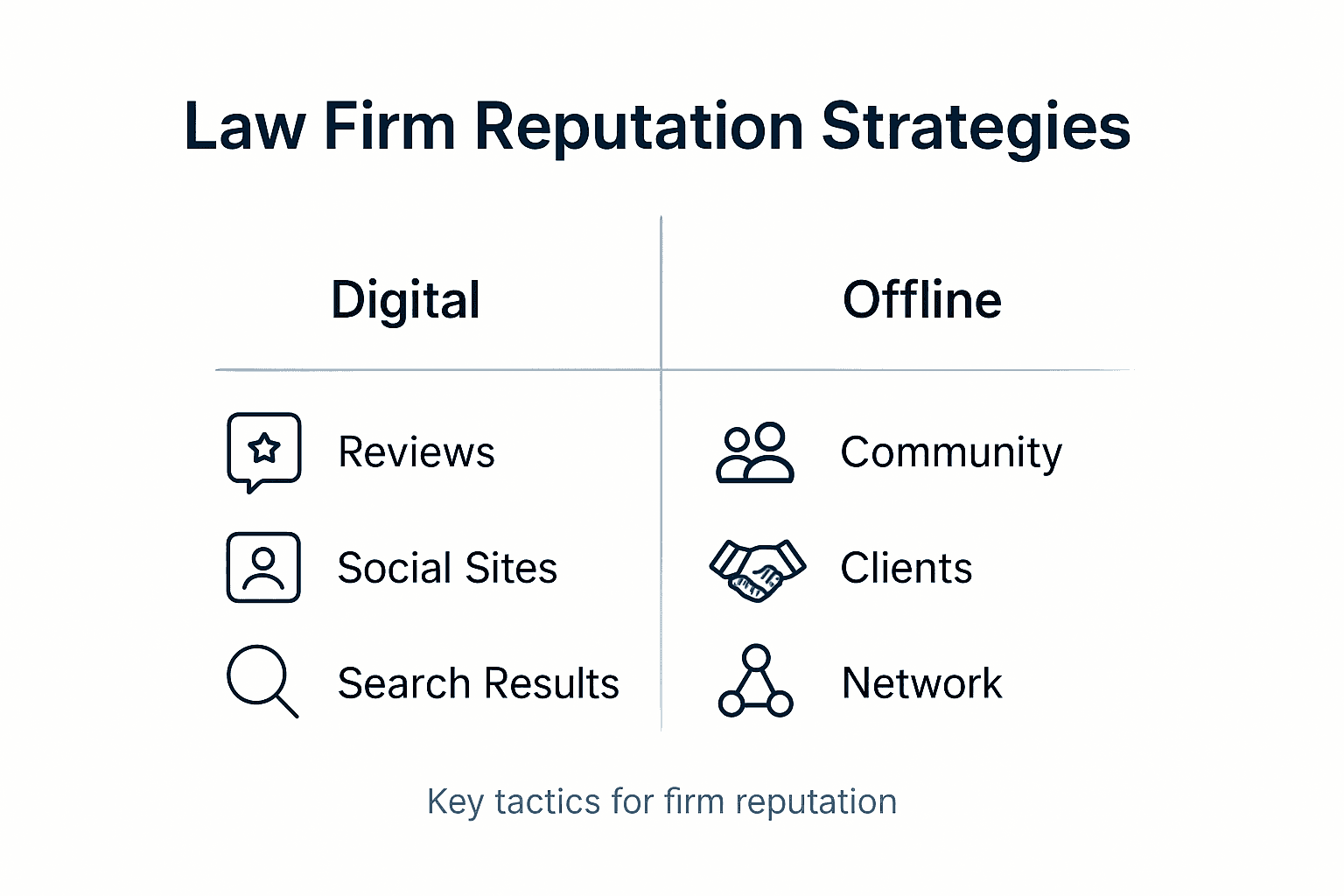
Offline reputation management remains equally crucial, focusing on building relationships with key stakeholders through strategic communication and professional visibility. This approach involves networking at legal conferences, publishing thought leadership articles in professional journals, participating in community service initiatives, and maintaining robust professional relationships with clients, peers, and industry leaders. By creating a multifaceted reputation management strategy that balances digital presence with traditional professional engagement, law firms can develop a comprehensive and authentic professional brand that resonates with potential clients and establishes credibility within the legal community.
Pro Tip: Develop a consistent narrative across all professional platforms by creating a comprehensive reputation management playbook that outlines your firm’s communication guidelines, response protocols, and brand messaging strategy.
Here’s a comparison of proactive and reactive reputation management strategies for law firms:
| Approach Type | Main Focus | Key Tactics | Typical Outcomes |
|---|---|---|---|
| Proactive | Building a strong image | Publishing articles, positive client testimonials, networking | Enhanced credibility, increased trust |
| Reactive | Managing negative events | Responding to reviews, crisis communication, correcting misinformation | Minimized damage, restored reputation |
How Online Reputation Systems Work
Online reputation systems for law firms represent sophisticated digital ecosystems designed to collect, aggregate, and transparently communicate professional credibility through multiple interconnected channels. These complex platforms function as dynamic reputation assessment mechanisms that aggregate feedback, client experiences, professional ratings, and digital interactions to create a comprehensive digital profile of a law firm’s professional standing.
The core mechanics of online reputation systems involve intricate algorithms that evaluate and synthesize information from diverse sources, including client reviews, professional network recommendations, legal directory rankings, and social media interactions. These systems employ sophisticated filtering mechanisms that validate feedback authenticity, prevent manipulation, and provide nuanced representations of a law firm’s professional capabilities. By creating transparent and accountable digital representations, these platforms enable potential clients to make informed decisions based on aggregated professional performance data.
Modern online reputation systems for attorneys incorporate multiple evaluation dimensions beyond traditional client reviews. They analyze factors such as professional expertise, communication responsiveness, case success rates, peer recommendations, and overall client satisfaction. Advanced systems integrate machine learning algorithms that can detect patterns in feedback, identify emerging reputation trends, and provide law firms with actionable insights for continuous professional improvement. This multifaceted approach transforms reputation management from a reactive process into a strategic, data-driven approach for enhancing professional credibility.
Pro Tip: Implement a systematic monthly review of your digital reputation metrics, tracking changes in review scores, analyzing feedback patterns, and developing targeted strategies to address any emerging reputation challenges.
Below is a summary of core factors evaluated by online reputation systems for attorneys:
| Evaluation Factor | Business Impact | Example Data Source |
|---|---|---|
| Client Satisfaction | Higher client retention | Online reviews |
| Professional Expertise | Enhanced marketability | Legal directory rankings |
| Communication Speed | Improved client relations | Social media interactions |
| Peer Endorsements | Increased credibility | Professional networks |
Legal and Ethical Compliance Requirements
Reputation management for law firms involves navigating a complex landscape of legal and ethical obligations that extend far beyond simple marketing practices. These requirements demand meticulous attention to professional standards, ensuring that every aspect of a firm’s reputation management strategy remains within the boundaries of legal and ethical guidelines established by professional regulatory bodies.

Legal ethics for attorneys represent a comprehensive framework of professional responsibility that governs how law firms communicate, represent themselves, and interact with potential clients. The American Bar Association’s Model Rules of Professional Conduct provide the foundational guidelines that dictate the ethical boundaries of reputation management, addressing critical areas such as client confidentiality, professional integrity, truthful advertising, and potential conflicts of interest. Law firms must carefully craft their reputation management strategies to ensure they do not inadvertently violate these fundamental ethical standards.
Compliance with legal and ethical requirements involves a multifaceted approach that goes beyond mere technical adherence. It requires a proactive culture of transparency, accountability, and professional integrity. This means developing robust internal policies that guide all communication channels, implementing strict review processes for marketing materials, ensuring all client testimonials and professional representations are accurate and verifiable, and maintaining a consistent commitment to representing the firm’s capabilities honestly and ethically. Law firms must also stay current with evolving regulations, as legal advertising and professional communication standards continue to adapt to changing technological and professional landscapes.
Pro Tip: Conduct a quarterly comprehensive audit of your firm’s reputation management materials and communication strategies, consulting with legal ethics professionals to ensure ongoing compliance with current professional conduct standards.
Risks and Common Mistakes to Avoid
Reputation management for law firms involves navigating a complex landscape of potential risks that can quickly undermine years of professional credibility. Understanding and anticipating these risks is crucial for maintaining a robust and positive professional image in an increasingly transparent digital environment.
Reputational risks emerge from multiple potential failure points, including governance lapses, ethical missteps, poor communication strategies, and ineffective crisis management. Law firms are particularly vulnerable due to the high-stakes nature of legal practice, where client trust forms the foundation of professional success. Common mistakes include reactive rather than proactive risk management, inconsistent communication across digital platforms, and failing to develop comprehensive monitoring systems for emerging reputation threats.
The most significant risks stem from digital and social media vulnerabilities, where a single negative interaction or poorly managed client experience can rapidly escalate into a broader reputation challenge. Law firms must develop sophisticated digital risk management strategies that incorporate real-time monitoring, rapid response protocols, and transparent communication mechanisms. This requires investment in advanced digital reputation tracking tools, establishing clear communication guidelines, training staff on reputation management best practices, and creating robust internal policies that prioritize client confidentiality, professional integrity, and proactive reputation protection.
Pro Tip: Develop a comprehensive digital reputation risk assessment protocol that includes quarterly external audits, continuous online monitoring, and a predefined crisis communication strategy to address potential reputation challenges quickly and effectively.
Elevate Your Law Firm’s Reputation with Targeted Digital Strategies
Reputation management for law firms demands more than reactive fixes and occasional monitoring. It requires a proactive and strategic approach to building trust, showcasing expertise, and responding promptly to client feedback. If you are facing challenges such as maintaining a consistent online image, managing client reviews effectively, or navigating the complex ethical standards of legal marketing, you are not alone. Law firms today must master both digital and traditional reputation management tactics to stay competitive.
At Case Quota, we specialize in empowering Southern California law firms with comprehensive digital marketing solutions tailored specifically for legal practices. Leveraging over 15 years of digital marketing experience and six years dedicated to legal marketing, we combine SEO-optimized web design, AI-powered pay-per-click campaigns, Google Local Services Ads, and strategic social media marketing to help your firm elevate its professional image and attract more clients. We understand the nuances of law firm reputation management so you can focus on delivering exceptional legal services.

Discover how partnering with Case Quota can transform your online presence and reinforce your credibility across the digital landscape. Don’t wait for reputational risks to impact your firm. Visit Case Quota today and explore how our specialized marketing strategies safeguard and grow your professional reputation. Take control now by accessing expert insights and tailored campaigns from Case Quota’s Homepage and see the difference a focused legal marketing partner can make.
Frequently Asked Questions
What is reputation management for law firms?
Reputation management for law firms is a strategic process that involves monitoring, influencing, and protecting the professional image and credibility of legal practices. It encompasses both digital and traditional methods to shape how clients and peers perceive a firm’s expertise and reliability.
Why is online reputation management important for law firms?
Online reputation management is crucial for law firms as it helps them maintain a positive digital presence. With the rise of online client reviews and social media, law firms must ensure that their online image accurately reflects their professional standards and builds trust with potential clients.
What are the main components of reputation management for attorneys?
The fundamental components include proactive reputation building, which showcases achievements and testimonials; responsive reputation maintenance, which addresses negative feedback; and strategic reputation recovery, which mitigates damage from potential negative publicity.
What risks should law firms consider in reputation management?
Law firms should be aware of reputational risks that may arise from governance lapses, poor communication, and digital vulnerabilities. Proactive management and monitoring are essential to mitigate these risks and maintain a strong professional image.