

Bold competition from larger firms can leave smaller law practices in Southern California searching for new ways to stand out and connect with potential clients. Legal website optimization unlocks strategies that transform online platforms into powerful tools for client acquisition and professional credibility. Drawing on advances from Stanford Law School’s CodeX Center and American Bar Association recommendations, this guide highlights actionable techniques that drive visibility, engagement, and growth for your firm.
Table of Contents
- Legal Website Optimization Explained
- Core Pillars Of Law Firm Website Optimization
- Key Strategies For Optimizing Legal Websites
- Compliance And Ethical Standards For Attorneys
- Risks, Mistakes, And Performance Tracking
Key Takeaways
| Point | Details |
|---|---|
| Legal Website Optimization is Essential | Law firms need to adopt tailored digital marketing strategies to effectively attract and convert potential clients. |
| Focus on User Experience | Ensure websites are mobile-responsive, fast-loading, and easy to navigate to enhance client engagement. |
| Monitor Performance and Compliance | Implement performance tracking and regular audits to identify risks and ensure adherence to ethical standards. |
| Leverage Advanced Technologies | Utilize data-driven approaches and AI-enhanced techniques to create more personalized user experiences that meet client needs. |
Legal website optimization explained
Legal website optimization is the strategic process of improving a law firm’s online presence to attract, engage, and convert potential clients through targeted digital marketing techniques. Unlike generic website design, legal website optimization requires a nuanced approach tailored specifically to law firms’ unique client acquisition needs.
Law firms can enhance their online performance by implementing several critical strategies, including:
- Technical SEO optimization for faster website loading
- Mobile-responsive design for seamless user experience
- Content strategy focused on practice-specific keywords
- Local SEO targeting for geographically relevant client acquisition
- Conversion-oriented page layouts that encourage client contact
Legal technology research from Stanford Law School’s CodeX Center demonstrates that computational approaches are transforming how law firms approach digital marketing. These technological innovations enable attorneys to create more sophisticated, data-driven websites that directly address potential clients’ needs.
The American Bar Association emphasizes that modern legal website optimization goes beyond traditional search engine rankings. SEO strategies for law firms now incorporate AI-enhanced techniques that analyze user behavior, predict client interests, and create more personalized web experiences.
Pro tip: Invest in professional website analytics tools that provide granular insights into how potential clients interact with your online platforms, allowing continuous optimization of your digital presence.
Core pillars of law firm website optimization
Effective law firm website optimization requires a comprehensive approach that goes beyond simple design and incorporates strategic digital marketing techniques. Modern legal websites must balance technical performance, user experience, and client engagement to stand out in a competitive digital landscape.
The core pillars of successful law firm website optimization include:
- Technical infrastructure ensuring fast, reliable performance
- Mobile-responsive design adaptable to multiple devices
- Intuitive user navigation that guides potential clients
- Compelling content strategy demonstrating legal expertise
- Conversion-focused page layouts that encourage client interactions
Website requirements from the U.S. Department of Health and Human Services highlight the critical importance of creating websites that are accessible, user-friendly, and compliant with current digital standards. These guidelines are equally applicable to law firm digital platforms.
The American Bar Association emphasizes that website optimization is not just about aesthetics, but about creating comprehensive client management systems that support the entire client journey. This means integrating lead generation tools, secure communication channels, and transparent information presentation.

Pro tip: Conduct quarterly website audits to ensure your digital platform remains aligned with evolving client expectations and technological advancements.
Key strategies for optimizing legal websites
Effective legal website optimization demands a strategic approach that combines technical expertise, user-centered design, and targeted digital marketing techniques. Law firms must create digital platforms that not only showcase their professional capabilities but also provide seamless, intuitive experiences for potential clients seeking legal representation.
Key strategies for optimizing legal websites include:
- Responsive design ensuring accessibility across all devices
- Fast loading speeds that reduce user frustration
- Clear, compelling content demonstrating legal expertise
- Intuitive navigation guiding potential clients effortlessly
- Strategic call-to-action placement encouraging client interactions
- Search engine optimization to improve online visibility
Website optimization best practices from Digital.gov emphasize the importance of creating websites that are not just visually appealing, but functionally superior. These principles translate directly to law firm digital platforms, where user experience can significantly impact client acquisition.
The Department of Health and Human Services recommends comprehensive website performance strategies that include mobile compatibility, accessibility compliance, and continuous performance monitoring. For law firms, this means developing websites that are both technically robust and legally compliant.
Pro tip: Implement Google Analytics and user heat mapping tools to gain deep insights into how potential clients interact with your website and identify areas for continuous improvement.
Compliance and ethical standards for attorneys
Legal marketing ethics represent a complex landscape where professional responsibility intersects with digital communication strategies. Attorneys must navigate a nuanced terrain of regulatory requirements that govern how they represent themselves, their services, and interact with potential clients online.
Key ethical considerations for attorneys include:
- Confidentiality protection in all digital communications
- Avoiding misleading advertising claims
- Maintaining professional boundaries on social platforms
- Transparent representation of legal capabilities
- Respecting client privacy in all marketing materials
- Compliance with state bar regulations
Ethical constraints for lawyers using social media highlight the critical importance of understanding professional conduct rules in digital spaces. These guidelines ensure attorneys maintain integrity while leveraging modern marketing techniques.
Duke University Law School emphasizes that comprehensive legal ethics standards extend far beyond traditional communication channels, requiring attorneys to apply the same rigorous professional standards to their online presence that they would in direct client interactions.
Pro tip: Develop a comprehensive digital communication policy that aligns with Model Rules of Professional Conduct and have it reviewed annually by your state bar association.
Risks, mistakes, and performance tracking
Website performance tracking is crucial for law firms seeking to minimize digital risks and maximize online client engagement. Understanding potential pitfalls and implementing robust monitoring strategies can significantly reduce the likelihood of costly mistakes that might compromise professional reputation and client trust.
Common risks law firms encounter in digital marketing include:
- Data security vulnerabilities
- Client confidentiality breaches
- Slow website performance
- Inaccurate content representation
- Inconsistent user experience
- Non-compliance with bar association guidelines
Law firm data security challenges highlight the critical importance of comprehensive digital risk management. These risks extend beyond simple technical issues and directly impact a firm’s professional credibility and legal ethical standards.
Here’s how common digital risks impact law firm websites:
| Risk Type | Example Impact | Mitigation Strategy |
|---|---|---|
| Data security vulnerability | Exposure of client data | Use encrypted data storage |
| Slow website performance | Potential client frustration | Optimize images and hosting speed |
| Non-compliance with rules | Disciplinary action from bar | Regular review of compliance |
| Inaccurate content | Misleading client expectations | Content review by legal experts |
Performance tracking requires monitoring critical metrics such as website responsiveness and user engagement. By systematically analyzing website performance, law firms can identify potential issues before they become significant problems that might deter potential clients.
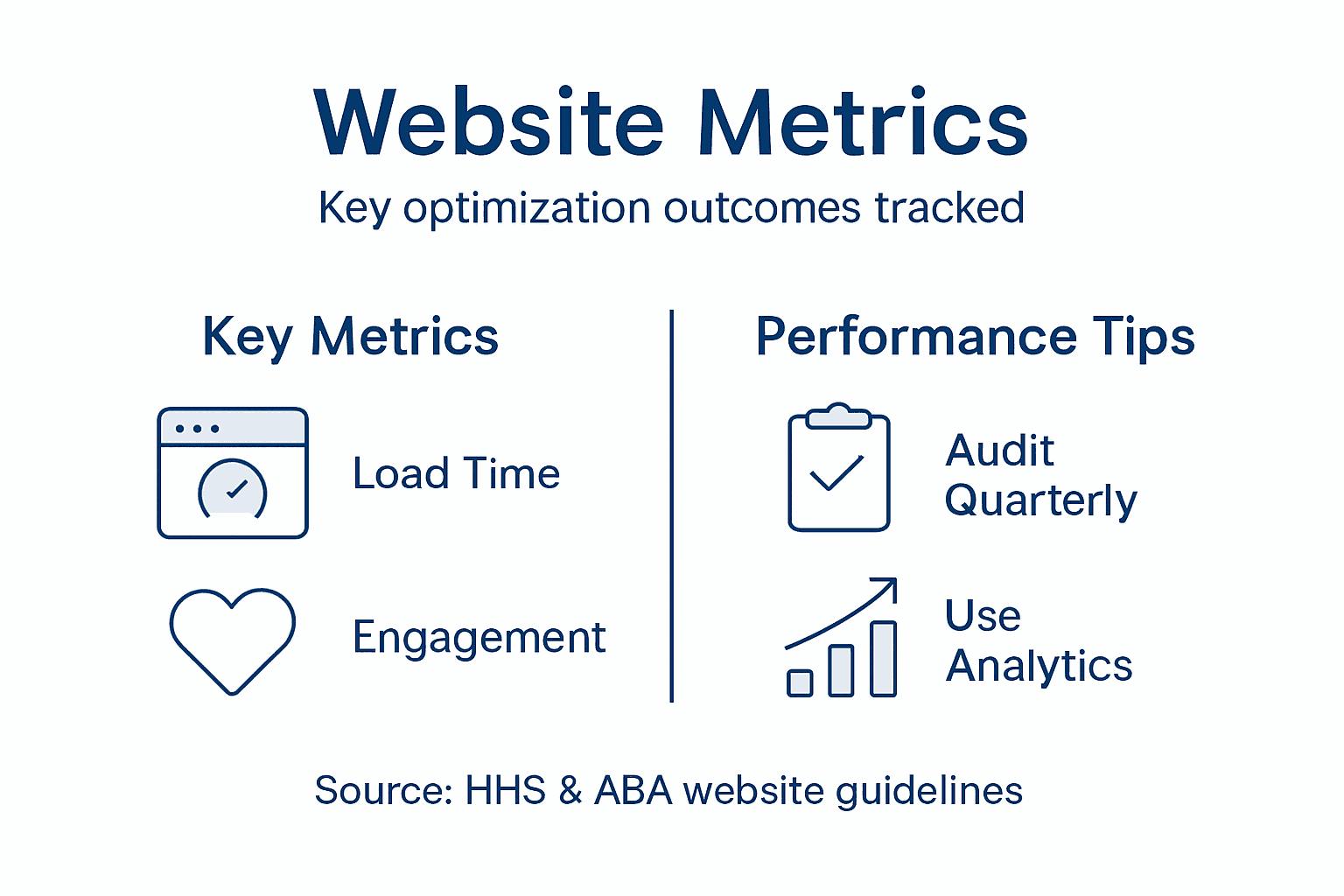
The following table summarizes how different website metrics inform ongoing optimization efforts:
| Metric | What it Measures | Optimization Insight |
|---|---|---|
| Bounce Rate | Visitors leaving after one page | Improve content relevance |
| Page Load Time | Seconds to display site content | Enhance technical performance |
| Conversion Rate | Contacts/forms from visitors | Refine calls-to-action |
| Mobile Traffic Share | Visits from mobile devices | Optimize design for mobile |
Pro tip: Implement quarterly comprehensive website audits using professional analytics tools to proactively identify and address potential performance and security risks.
Elevate Your Law Firm’s Growth With Expert Legal Website Optimization
The article highlights the critical challenge law firms face in optimizing their websites for fast performance, mobile responsiveness, and conversion-focused design while maintaining legal marketing ethics and compliance. These factors directly impact client acquisition and trust in a highly competitive legal landscape. If you are frustrated by slow site speeds, confusing navigation, or unclear calls to action that lose potential clients, you are not alone. Effective legal website optimization requires a strategic, data-driven approach tailored to your practice area and local market.
At Case Quota, we understand these specific pain points and goals from years of focused experience helping Southern California law firms overcome digital marketing challenges. Our services include SEO-optimized web design, AI-powered pay-per-click campaigns, and comprehensive marketing leadership that turns your website into a client-attracting engine. We emphasize compliance, client privacy, and clear messaging to align with the ethical standards discussed in the article while driving measurable growth.
Enhance your law firm’s online presence now with proven strategies designed for your unique needs.
Unlock your firm’s potential today with Case Quota.

Ready to transform your legal website into a powerful client generation tool Visit Case Quota to discover how our dedicated digital marketing expertise can give your practice the competitive edge it deserves Reach out for a personalized consultation and start growing your client base with targeted, ethical, and performance-driven legal marketing solutions.
Frequently Asked Questions
What is legal website optimization?
Legal website optimization is the strategic process of enhancing a law firm’s online presence using targeted digital marketing techniques, specifically designed to attract and convert potential clients.
Why is technical SEO important for law firms?
Technical SEO is crucial because it ensures a fast and reliable website performance, which is essential for user experience and impacts search engine rankings, ultimately influencing potential client engagement.
How can local SEO benefit a law firm?
Local SEO helps law firms attract geographically relevant clients by optimizing their online presence for location-based searches, making it easier for potential clients in the area to find their services.
What are key considerations for compliance in legal marketing?
Key considerations for compliance in legal marketing include maintaining client confidentiality, avoiding misleading advertising claims, respecting client privacy, and adhering to state bar regulations.