

Most American law firms now spend nearly 65 percent of their ad budgets on digital platforms. For small and mid-size practices in Southern California, this shift matters more than ever as competition with larger firms intensifies. Understanding how modern digital advertising works can level the playing field, giving you data-driven tools to attract the right clients and track every campaign’s impact. Discover what truly drives results for your firm in an increasingly online market.
Table of Contents
- What Digital Advertising Really Means
- Major Types and Tools of Digital Advertising
- How Digital Campaigns Drive Law Firm Growth
- Legal and Ethical Responsibilities for Attorneys
- Managing Costs, Risks, and Common Pitfalls
Key Takeaways
| Point | Details |
|---|---|
| Understanding Digital Advertising | Digital advertising is a sophisticated ecosystem encompassing targeted promotional strategies that rely on data algorithms to reach precise audience segments. |
| Types of Advertising Tools | Law firms can utilize various digital advertising tools such as search engine ads and social media ads for precise targeting and real-time engagement. |
| Ethical Responsibilities | Attorneys must ensure that digital marketing is truthful and transparent, adhering to professional conduct rules to protect client interests. |
| Cost Management | Successful digital advertising requires strategic media selection and continuous performance tracking to optimize return on investment and mitigate risks. |
What Digital Advertising Really Means
Digital advertising represents a sophisticated ecosystem of targeted promotional strategies designed specifically for online platforms. At its core, digital advertising goes far beyond traditional banner ads or simple website promotions. Instead, it involves strategically placed digital promotions that leverage complex data algorithms to reach precise audience segments across multiple digital channels.
The landscape of digital advertising has transformed dramatically in recent years. Today, it encompasses a wide range of formats including social media ads, search engine marketing, display advertising, video promotions, and programmatic ad placements. Law firms can now utilize these tools to precisely target potential clients based on specific demographics, search behaviors, geographic locations, and even legal service needs. The advanced targeting capabilities mean attorneys can reach individuals actively seeking legal representation in their specific practice areas.
Modern digital advertising operates on sophisticated data aggregation principles. Digital platforms now represent about 65% of total advertising expenditure, reflecting a massive shift in how businesses communicate with potential customers. For law firms, this means moving beyond traditional marketing methods like Yellow Pages or local newspaper ads to more dynamic, measurable, and cost-effective digital strategies that provide real-time performance tracking and immediate audience engagement.
Pro Tip: When exploring digital advertising for your law firm, start by understanding your specific client demographic and selecting platforms that align most closely with where those potential clients spend their online time.
Major Types and Tools of Digital Advertising
Digital advertising for law firms encompasses a diverse array of sophisticated marketing strategies designed to reach potential clients precisely where they spend their online time. Digital marketing includes multiple strategic channels that enable attorneys to target specific demographics with unprecedented accuracy. These tools range from search engine marketing to highly targeted social media advertising, each offering unique advantages for legal professionals seeking to expand their client base.
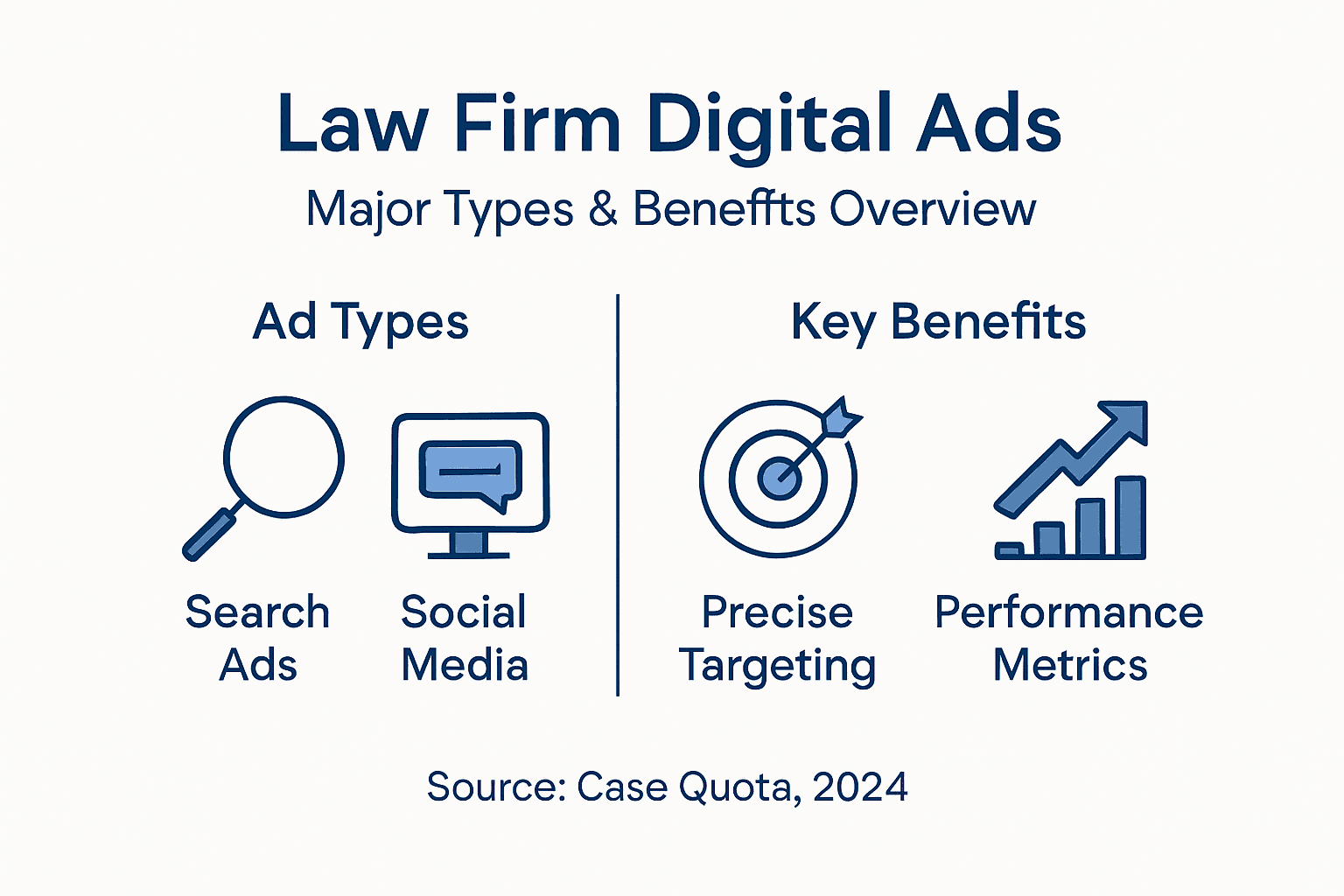
The primary types of digital advertising tools for law firms include search engine ads, which appear alongside organic search results, social media advertising on platforms like Facebook and LinkedIn, display advertising that uses visual banners across websites, and video promotions on platforms such as YouTube. Interest-based advertising strategies allow firms to segment audiences based on specific legal service needs, search behaviors, and demographic characteristics. This means a personal injury attorney can target individuals who have recently searched for accident-related information, while a family law practice can reach users showing interest in divorce or child custody topics.
Advanced digital advertising tools now provide granular targeting capabilities that traditional marketing could never achieve. Law firms can leverage pay-per-click (PPC) advertising, remarketing campaigns, content marketing, and email marketing to create comprehensive digital strategies. These approaches allow for real-time performance tracking, immediate audience engagement, and the ability to adjust marketing strategies based on precise analytics. The goal is not just visibility, but meaningful connection with potential clients who are actively seeking legal representation.
Pro Tip: Create a comprehensive digital advertising strategy that combines multiple channels, continuously test and refine your approach, and always track your return on investment to optimize your marketing spend.
Here’s how popular digital advertising channels differ for law firms:
| Channel | Targeting Ability | Typical Use Cases | Cost Structure |
|---|---|---|---|
| Search Engine Ads | Highly keyword-driven | Reach clients searching for help | Pay-per-click model |
| Social Media Ads | Demographic & behavioral | Build brand, target local users | CPC or CPM options |
| Display Advertising | Interest-based targeting | Visibility on niche websites | CPM or CPC formats |
| Video Promotions | Engagement-focused | Explain services, educate viewers | Variable; video-based |
How Digital Campaigns Drive Law Firm Growth
Digital campaigns have transformed the way law firms acquire and engage potential clients, creating unprecedented opportunities for targeted growth and visibility. AI-powered marketing strategies enable attorneys to reach precisely the right audience at the right moment, breaking through traditional marketing limitations. By leveraging data-driven approaches, law firms can now connect with potential clients more effectively than ever before, turning digital visibility into tangible business growth.

The core mechanism of digital campaign growth involves sophisticated targeting and performance tracking. Unlike traditional advertising, digital platforms provide real-time insights into campaign performance, allowing law firms to adjust their strategies instantly. Search engine marketing, social media advertising, and content marketing work together to create a comprehensive approach that builds brand awareness, demonstrates expertise, and generates qualified leads. Each digital touchpoint becomes an opportunity to showcase the firm’s unique value proposition and connect with potential clients who are actively seeking legal solutions.
Artificial intelligence integration is revolutionizing how law firms approach client acquisition and service delivery. By analyzing client interaction data, firms can develop more personalized marketing strategies, predict client needs, and optimize their digital campaigns for maximum impact. This technology enables smaller firms to compete with larger competitors by providing sophisticated, targeted marketing capabilities that were previously accessible only to well-resourced practices. The result is a more efficient, data-driven approach to client development that can significantly accelerate firm growth.
Pro Tip: Develop a comprehensive digital marketing strategy that balances automated targeting with authentic, personal messaging to create meaningful connections with potential clients.
Legal and Ethical Responsibilities for Attorneys
Digital advertising introduces complex ethical considerations for attorneys that go far beyond traditional marketing practices. Professional conduct rules govern lawyer advertising with stringent requirements designed to protect public trust and maintain the integrity of legal professional communications. These regulations mandate absolute transparency, prohibit misleading statements, and establish clear boundaries for how attorneys can promote their services across digital platforms.
The fundamental ethical obligations in digital advertising center on truthfulness and avoiding potential client manipulation. Attorneys must ensure that all digital marketing materials accurately represent their qualifications, experience, and areas of legal expertise. This means avoiding exaggerated claims, providing verifiable information about past case results, and clearly disclosing any potential limitations or disclaimers. Specialization claims require explicit certification from recognized legal organizations, and compensation for client referrals is strictly regulated to prevent unethical solicitation practices.
Legal advertising ethics involve complex regulatory frameworks that vary by state and jurisdiction. Digital platforms introduce additional complexity, requiring attorneys to navigate challenges such as maintaining client confidentiality, avoiding conflicts of interest, and ensuring that targeted advertising does not compromise professional standards. Attorneys must continuously monitor their digital marketing strategies to ensure compliance with evolving professional responsibility guidelines, balancing marketing effectiveness with ethical considerations that protect both the legal profession’s reputation and potential clients’ interests.
Pro Tip: Consult with your state bar association’s professional ethics committee before launching any digital advertising campaign to ensure full compliance with current regulations.
Below is a summary of key ethical responsibilities in digital advertising for attorneys:
| Responsibility | Importance | Enforcement Mechanism |
|---|---|---|
| Truthful Representation | Preserves client trust | Bar association review |
| Disclosure of Specialties | Prevents misrepresentation | Certification verification |
| Confidentiality | Protects client data | Regulatory audits |
| Transparency in Claims | Maintains professionalism | Mandatory disclaimers |
Managing Costs, Risks, and Common Pitfalls
Digital advertising for law firms involves navigating a complex landscape of financial and operational challenges. Online advertising risks include multiple vulnerabilities, ranging from budget mismanagement to potential security breaches that can compromise both marketing effectiveness and client data protection. Law firms must develop sophisticated strategies to minimize financial waste while maintaining robust digital marketing performance.
The financial considerations of digital advertising are particularly critical for law firms operating with limited marketing budgets. Legal services advertising costs continue to rise, demanding strategic media selection and precise targeting to ensure optimal return on investment. Common pitfalls include overspending on ineffective channels, failing to track meaningful performance metrics, and neglecting the nuanced differences between various digital advertising platforms. Successful firms develop comprehensive tracking mechanisms that measure not just click-through rates, but actual client acquisition and case conversion rates.
Risk management in digital advertising extends beyond financial considerations to include regulatory compliance, data privacy, and reputational protection. Law firms must implement rigorous screening processes for advertising content, ensure complete transparency in marketing claims, and continuously monitor digital campaigns for potential ethical or legal violations. This requires a multifaceted approach that combines technological solutions, ongoing staff training, and proactive compliance strategies to mitigate potential risks associated with digital marketing efforts.
Pro Tip: Develop a monthly digital advertising audit process that reviews spending, performance metrics, compliance adherence, and potential security vulnerabilities to maintain a robust and efficient marketing strategy.
Unlock the True Potential of Digital Advertising for Your Law Firm
The article highlights challenges like managing complex digital advertising channels, targeting the right legal clients precisely, and navigating strict ethical obligations. Law firms, especially small to mid-size ones, face the struggle of competing against larger competitors with bigger marketing budgets while needing to ensure every dollar spent delivers measurable growth. You want a data-driven, transparent, and highly targeted marketing strategy that aligns with client acquisition goals and respects legal advertising ethics.
That is where Case Quota can help. With over 15 years of digital marketing experience and six years dedicated exclusively to legal marketing in Southern California, Case Quota offers tailored online strategies including AI-powered pay-per-click advertising, SEO-optimized web design, and Google Local Services Ads designed specifically for law firms. Their expertise in balancing sophisticated targeting with compliance ensures your campaigns drive real growth without risking costly ethical pitfalls.
Ready to elevate your firm’s digital presence and outsmart bigger competitors? Discover proven tactics and personalized digital solutions with Case Quota’s expert team. Start building a measurable, cost-effective campaign today to turn your online visibility into a steady flow of qualified clients.
See how digital advertising can work for your practice now.
Harness strategic legal marketing with Case Quota and gain the competitive edge your firm deserves.

Explore specialized law firm marketing solutions at Case Quota and take the first step toward dynamic client growth.
Frequently Asked Questions
What is digital advertising for law firms?
Digital advertising for law firms encompasses a variety of online promotional strategies aimed at attracting potential clients through targeted digital channels like social media, search engines, and display ads.
Why is digital advertising important for law firms?
Digital advertising allows law firms to reach a precise audience, engage potential clients actively seeking legal assistance, and replace outdated methods like traditional print ads with measurable and cost-effective strategies.
How can law firms effectively target their advertising campaigns?
Law firms can effectively target their campaigns by using digital tools that analyze client demographics, search behaviors, and specific legal service needs, allowing for personalized and relevant marketing.
What are common pitfalls to avoid in digital advertising for attorneys?
Common pitfalls include overspending on ineffective channels, failing to track meaningful performance metrics, and not ensuring compliance with ethical guidelines and regulations in advertising.