

Standing out in the crowded Southern California legal market is never simple, especially when large firms seem to capture most of the visibility. For many small law firm partners, the difference often comes down to more than just delivering results—it’s about building authentic trust through a consistent and distinctive professional brand. When reputation, unique expertise, and client-focused messaging take center stage, smaller practices can attract the right clients and compete confidently against firms with bigger budgets.
Table of Contents
- Defining Branding For Small Law Firms
- Types Of Law Firm Brand Strategies
- Key Elements Of A Strong Legal Brand
- Branding And Legal Ethics In U.S. Practice
- Practical Steps For Building Your Brand
- Common Branding Mistakes For Small Firms
Key Takeaways
| Point | Details |
|---|---|
| Effective Branding is Crucial | Small law firms must establish a clear, consistent brand identity to build client trust and differentiate themselves from competitors. |
| Understand Your Target Clients | Tailor your branding strategies based on the specific needs and preferences of your target demographics to enhance relevance and connection. |
| Leverage Digital Presence | An active online presence, including a professional website and social media, is essential for building credibility and attracting potential clients. |
| Avoid Common Branding Mistakes | Inconsistent messaging and focusing solely on price can undermine a firm’s reputation; maintaining a unified brand and emphasizing unique value is critical. |
Defining Branding for Small Law Firms
Branding for small law firms represents a strategic approach to establishing professional identity and client trust. It goes far beyond creating a simple logo or designing business cards. Effective legal branding requires deliberately communicating a firm’s unique value proposition, professional credibility, and core mission.
At its core, law firm branding involves creating a consistent narrative that distinguishes your practice from competitors. This means developing a clear message that resonates with your target clients, reflecting your firm’s expertise, approach, and professional values. Small law firms have a particular advantage in branding because they can craft more personalized, authentic messaging compared to large corporate practices. The key is understanding your specific strengths and communicating them transparently.
Successful legal branding encompasses multiple dimensions. Visual elements like color schemes, typography, and design are important, but equally critical are less tangible aspects like communication style, client interaction approach, and demonstrated professional expertise. Law firms build trust by presenting a cohesive image that reflects competence, reliability, and genuine commitment to client success.
Understanding your target client demographic becomes crucial in developing an effective brand strategy. Different practice areas and client types require nuanced messaging and presentation. A family law practice will brand differently from a corporate litigation firm, tailoring their visual and verbal communication to match client expectations and needs.
Pro tip: Conduct a comprehensive brand audit every 18 months to ensure your firm’s messaging remains aligned with evolving market dynamics and client preferences.
Types of Law Firm Brand Strategies
Small law firms have several strategic approaches to developing a distinctive brand that attracts and retains clients. Legal branding strategies encompass multiple dimensions, ranging from digital presence to specialized messaging that communicates a firm’s unique value proposition.
The first key strategy involves niche specialization, where law firms differentiate themselves by focusing on specific practice areas or client demographics. This approach allows firms to position themselves as experts in particular legal domains, such as intellectual property for tech startups, employment law for small businesses, or family law for complex custody cases. By narrowing their focus, firms can develop deeper expertise and more targeted marketing messages that resonate with specific client segments.
Thought leadership represents another powerful branding strategy for law firms. This involves creating and sharing high-quality content that demonstrates professional knowledge and insight. Competitive brand positioning can be achieved through techniques like publishing in-depth articles, hosting webinars, speaking at industry conferences, and maintaining an informative blog that addresses complex legal issues relevant to potential clients.
Digital branding strategies have become increasingly important for small law firms. This includes developing a professional website, maintaining active social media profiles, collecting and showcasing client testimonials, and creating a consistent visual identity across all digital platforms. The goal is to build trust and credibility by presenting a professional, approachable online presence that reflects the firm’s values and expertise.
Pro tip: Create a comprehensive brand guideline document that outlines your firm’s visual identity, communication style, and core messaging to ensure consistent branding across all marketing channels.
Here’s a summary of key brand strategy options for small law firms:
| Brand Strategy | Main Focus | Recommended For | Example Tactic |
|---|---|---|---|
| Niche Specialization | Specific practice area or client | Firms with unique expertise | Targeted legal content for niches |
| Thought Leadership | Showcasing legal knowledge | Building firm authority | Publishing insightful articles |
| Digital Branding | Robust online presence | Expanding market reach | Consistent website and social |
| Client-Centricity | Personalized service approach | Firms valuing close client ties | Custom client communications |
Key Elements of a Strong Legal Brand
Building a robust legal brand requires a comprehensive approach that goes beyond superficial marketing tactics. Defining a law firm’s brand identity involves creating a strategic framework that communicates the firm’s core values, unique capabilities, and professional commitment.
The first critical element is developing a clear mission statement that articulates the firm’s purpose and distinguishes it from competitors. This mission should transcend basic legal services and highlight the firm’s specific approach to solving client problems. For instance, a family law practice might emphasize compassionate guidance through difficult transitions, while a corporate litigation firm could stress strategic problem-solving and aggressive client representation.
Visual identity plays a crucial role in brand perception. Legal brand consistency requires carefully selecting color palettes, typography, and design elements that reflect the firm’s professional personality. These visual components should be consistently applied across all platforms, from business cards and letterhead to websites and social media profiles, creating a recognizable and professional image that builds client trust.

A compelling brand also requires a deep understanding of the ideal client profile. This means going beyond demographic data to comprehend the specific needs, challenges, and expectations of potential clients. Successful law firms develop detailed client personas that inform their marketing strategies, communication style, and service delivery. By demonstrating a nuanced understanding of client pain points, firms can position themselves as not just legal service providers, but as trusted advisors who genuinely understand and can resolve complex legal challenges.
Pro tip: Conduct annual brand audits to ensure your firm’s visual and messaging strategies remain aligned with evolving client expectations and market dynamics.
Branding and Legal Ethics in U.S. Practice
Legal branding requires a delicate balance between effective marketing and strict adherence to professional ethical standards. Legal marketing ethics demand that attorneys maintain absolute transparency, accuracy, and integrity in all communications, ensuring that marketing efforts never compromise professional responsibilities.
The core ethical principles governing legal branding center on truthfulness and transparency. This means every marketing message, website content, and client communication must be factually accurate, avoiding any potentially misleading statements about the firm’s capabilities, experience, or potential case outcomes. Attorneys must carefully craft their brand messaging to highlight genuine strengths without making exaggerated claims that could be interpreted as guaranteeing specific results or misrepresenting the complexity of legal processes.
Confidentiality and privacy represent another critical ethical consideration in legal branding. California State Bar guidelines emphasize that marketing materials and digital communications must rigorously protect client information. This involves implementing robust data protection measures, obtaining proper client consents, and ensuring that any testimonials or case references are carefully anonymized to maintain client privacy and trust.
Technology has introduced new ethical challenges for legal branding. Emerging tools like artificial intelligence and social media platforms require attorneys to exercise heightened professional judgment. This means thoroughly vetting any marketing technologies, ensuring that automated systems do not generate misleading content, and maintaining direct oversight of all digital communications. Attorneys must remain personally responsible for the accuracy and ethical standards of their marketing materials, regardless of the technological tools used in their creation.
Pro tip: Develop a comprehensive internal review process for all marketing materials, involving both legal and marketing professionals to ensure complete compliance with ethical standards.
Practical Steps for Building Your Brand
Building a distinctive law firm brand requires a strategic and systematic approach that goes beyond superficial marketing efforts. Law firm branding strategies start with establishing a clear foundational understanding of your firm’s unique value proposition and professional identity.
The first critical step involves defining your firm’s core mission and values. This means articulating what sets your practice apart from other legal service providers. For example, a family law practice might emphasize compassionate client support, while a criminal defense firm could highlight aggressive client advocacy and rigorous legal defense. Your mission statement should communicate not just what legal services you provide, but the distinctive approach and philosophy that guide your work.
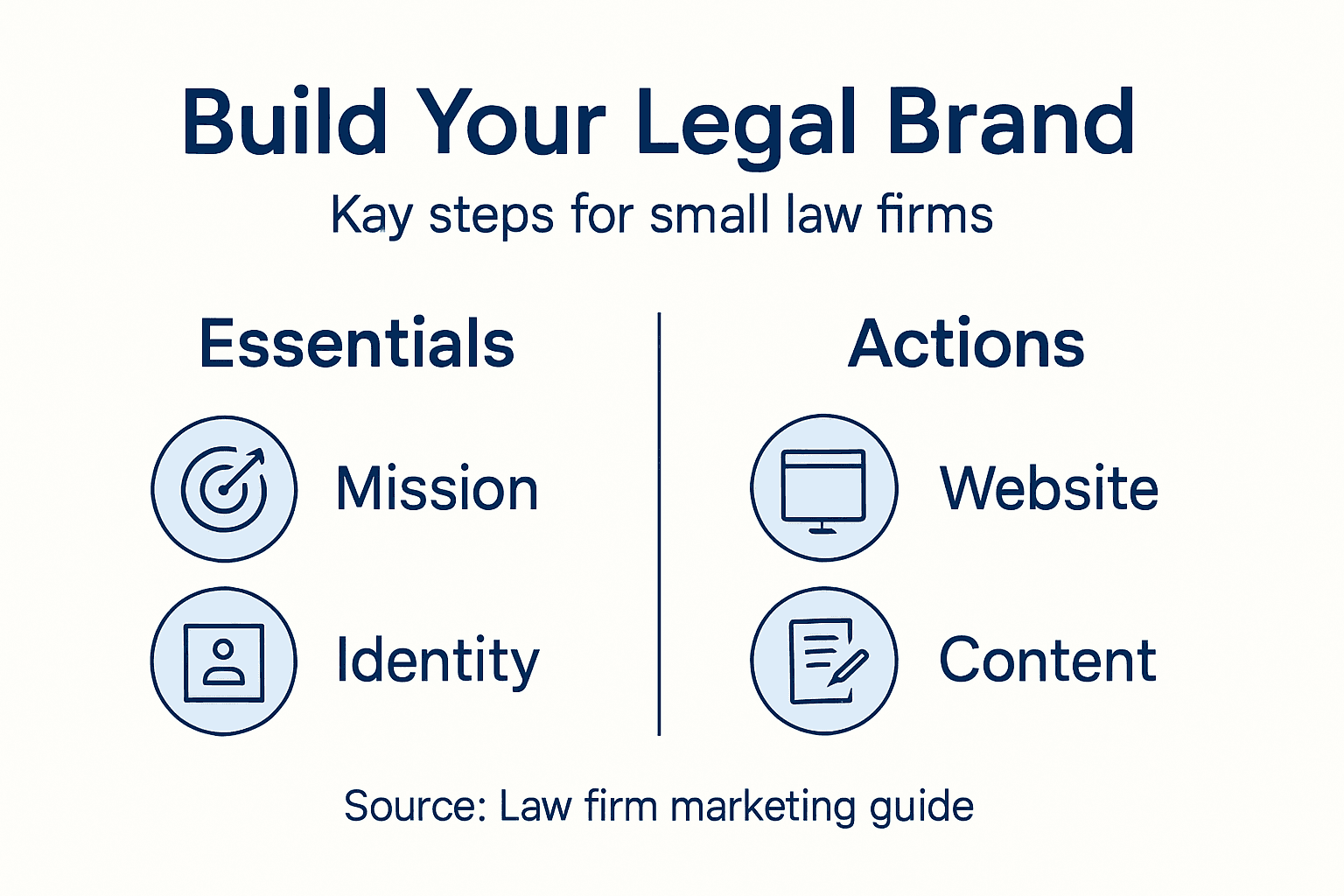
Visual branding and digital presence play a crucial role in establishing professional credibility. This involves creating a cohesive visual identity that includes a professional logo, consistent color palette, and carefully designed website that reflects your firm’s personality. Digital branding techniques require thoughtful integration of design elements that communicate professionalism, expertise, and approachability. Your digital platforms should tell a consistent story about your firm’s capabilities and client commitment.
Developing thought leadership content represents another powerful branding strategy. This means creating and sharing valuable insights through blog posts, articles, webinars, and social media content that demonstrate your legal expertise. By consistently producing high-quality, informative content, your firm can establish itself as a trusted resource in your specific practice areas. The goal is to showcase your knowledge and provide genuine value to potential clients, positioning your firm as an authoritative and reliable legal partner.
Pro tip: Create a comprehensive brand style guide that documents your firm’s visual and messaging standards, ensuring consistency across all marketing and communication channels.
Common Branding Mistakes for Small Firms
Small law firms frequently encounter critical branding challenges that can undermine their professional reputation and client attraction efforts. Typical branding pitfalls can significantly hinder a firm’s ability to establish a compelling market presence and attract ideal clients.
One of the most significant strategic errors involves inconsistent messaging across different platforms. This means presenting different professional personas on websites, social media, and marketing materials that fail to communicate a unified brand identity. For instance, a firm might present itself as a compassionate family law practice on its website, but use aggressive and impersonal language on social media platforms. Such inconsistencies confuse potential clients and erode trust in the firm’s professional capabilities.
Digital reputation management represents another critical area where small firms often make substantial mistakes. Law firm branding challenges frequently stem from neglecting online reputation and failing to actively manage client reviews and digital visibility. Many small firms underestimate the importance of maintaining a professional online presence, which includes regularly updating websites, responding to client feedback, and ensuring that digital platforms reflect the firm’s core values and expertise.
Overemphasizing price over value is a particularly dangerous branding mistake for small law firms. Instead of highlighting their unique expertise, specialized knowledge, and personalized client service, some firms resort to competing solely on hourly rates. This approach commoditizes legal services and undermines the sophisticated professional value that experienced attorneys bring to complex legal challenges. Successful firms differentiate themselves by showcasing their deep understanding of specific practice areas and demonstrating a commitment to achieving optimal client outcomes.
Pro tip: Conduct a comprehensive brand audit every six months to ensure your firm’s messaging, visual identity, and online presence remain consistent and aligned with your strategic objectives.
Compare the common branding mistakes small law firms face:
| Branding Mistake | Impact on Firm | How to Avoid |
|---|---|---|
| Inconsistent Messaging | Erodes client trust | Maintain a unified brand guideline |
| Ignoring Online Reputation | Missed client opportunities | Monitor reviews and update online assets |
| Competing on Price Only | Undervalues firm expertise | Emphasize unique value and specialization |
Elevate Your Small Law Firm’s Brand to Win Client Trust
Branding for small law firms demands more than just a logo or website design. Your firm’s challenge is to communicate a unique value proposition, build authentic trust, and maintain consistent messaging that resonates deeply with your ideal clients. From developing a clear mission statement to establishing a strong digital presence, every detail matters when positioning your practice as a confident and compassionate legal authority.
At Case Quota, we understand these critical pain points and goals. Our specialized legal marketing services help small to mid-size firms craft and execute tailored branding strategies. With expertise in SEO-optimized web design, AI-powered pay-per-click advertising, and engaging social media and video marketing, we ensure your firm projects a cohesive, trustworthy, and professional image that stands out against larger competitors. Discover how our digital marketing solutions reinforce your firm’s core messaging and connect authentically with your target audience.
Unlock the full potential of your law firm brand today

Elevate your firm’s branding strategy with proven digital marketing tools designed specifically for legal practices. Visit Case Quota now to explore how strategic online marketing can grow your client base and establish lasting trust in Southern California’s competitive legal market. Don’t wait to gain the competitive edge your firm deserves.
Frequently Asked Questions
What are the key elements of branding for small law firms?
Key elements include a clear mission statement, consistent visual identity, understanding the ideal client profile, and developing a strong online presence through digital branding strategies.
How can small law firms build client trust through branding?
Small law firms can build client trust by establishing a cohesive brand image that reflects professionalism, reliability, and genuine commitment to client success, along with transparent communication and thought leadership content.
What common branding mistakes should small law firms avoid?
Common mistakes include inconsistent messaging across platforms, neglecting online reputation management, and competing solely on price rather than showcasing unique expertise and services.
How often should a small law firm conduct a brand audit?
Small law firms should conduct a brand audit every 18 months to ensure their messaging and visual identity align with market dynamics and client preferences.
Recommended
- Legal Marketing for Small Firms A Complete Guide
- How to Get More Clients as a Lawyer in a Digital World
- Effective Attorney Brand Building Steps for Law Firms
- Building a Legal Brand Online for Law Firm Success
- Building Customer Loyalty for Logistics Success – Worldwide Express, Inc.
- Cómo proteger tu reputación online de reseñas injustas y fortalecer tu marca – YellowRock Marketing: Posicionamiento Local TOP 3 en Google