

If you want to bring more clients through the door, you need a modern, multi-channel marketing approach that blends smart digital strategy with old-school relationship building.
The core idea is to master three things: owning your local online search results, building a referral machine that runs on its own, and creating content that proves you're the expert. This is how you stop waiting for the phone to ring and start creating a predictable flow of high-quality cases.
Your Blueprint for Sustainable Client Growth
Let’s be honest, the old ways of getting clients aren't enough anymore. In today's legal market, just being a great lawyer isn't enough to guarantee growth. It’s too competitive.
But here's the good news: you don't need to completely overhaul your practice. What you need is a focused, strategic plan that combines the right digital tools with the timeless principles of trust and authority. This guide is your roadmap.
Forget about the stressful lulls and unpredictable nature of relying on word-of-mouth alone. The goal is to build a system—a reliable engine that consistently brings in new clients. This means shifting from passively hoping for referrals to actively creating them. It’s about moving from having a basic website to truly dominating your local digital space.
The Core Pillars of Client Acquisition
To get the best results without burning out, you have to focus your energy on the marketing channels that actually deliver. We'll dive deep into each one, but they really boil down to a few key areas:
- Digital Dominance: Think of your online presence as your firm's digital storefront. This starts with a professional, optimized website and a strong local SEO strategy to make sure potential clients find you the second they search for legal help.
- Referral Systems: The best cases almost always come from referrals. The trick is to build a structured network—not just with former clients, but with non-competing professionals who will consistently send business your way. We'll show you how.
- Content Authority: You build trust by proving you know your stuff. Creating valuable content that answers the most urgent questions your potential clients have positions you as the definitive expert in your practice area.
To really get this engine humming, you need to understand what makes a potential client pick up the phone. There are many powerful lead generation examples you can adapt for your firm, from downloadable guides on what to do after an accident to hyper-targeted local ads.
The most successful law firms don't just practice law; they proactively market their expertise. They understand that visibility and trust are the currencies of client acquisition in the modern era.
Putting these pieces together isn't as daunting as it sounds, but it does require a clear plan. For a complete, step-by-step framework to organize your strategy and track your progress, grab our law firm marketing plan template. This blueprint is designed to be actionable, helping you turn abstract goals into tangible results and sustainable growth for your practice.
To give you a bird's-eye view, here's a breakdown of where lawyers should be focusing their marketing efforts.
Key Client Acquisition Channels for Lawyers
| Channel | Primary Benefit | Key Action |
|---|---|---|
| Local SEO | High-Intent Leads | Optimize your Google Business Profile and website for local search terms. |
| Referral Networking | High-Quality Cases | Build relationships with accountants, realtors, and other professionals. |
| Content Marketing | Builds Authority & Trust | Publish blog posts and videos that answer your ideal clients' questions. |
| Paid Ads (PPC) | Immediate Visibility | Run targeted Google Ads campaigns for bottom-of-funnel keywords. |
| Email Marketing | Nurtures Leads | Stay top-of-mind with past clients and referral partners through a newsletter. |
Focusing on these core channels will give you the best return on your time and investment, creating a robust system that fuels your firm's growth for years to come.
Mastering Your Digital Presence to Attract Clients
Let's be blunt: your law firm's website is no longer an online brochure. It’s your digital storefront, your 24/7 rainmaker, and the most powerful client acquisition tool you have. When someone needs a lawyer, they don't reach for the phone book; they pull out their phone.
If your firm isn't visible online, it might as well be invisible.
This is about more than just having a website. It’s about building a powerful digital ecosystem designed to attract, engage, and convert potential clients who are actively looking for the exact legal help you provide.
Your Website: The Digital Cornerstone
Every single marketing effort—from a Google Ad to a referral—will eventually lead back to your website. It's the one piece of digital real estate you truly own and control. A slow, outdated, or confusing site will send a potential client running to your competitor in seconds.
To make sure your site is an asset, not a liability, it must have:
- A Professional, Modern Design: Your site's look and feel must reflect the caliber of your firm. Think clean layouts, high-quality photos, and sharp branding that builds instant trust.
- Flawless Mobile Experience: A huge chunk of your visitors will find you on their smartphones. Your site has to be fast and easy to navigate on a small screen. No exceptions.
- Crystal-Clear Calls-to-Action (CTAs): Don't make people hunt for how to contact you. Big, bold buttons like "Request a Free Consultation" or "Call Us Now" should be impossible to miss.
- An Unrelenting Focus on Conversion: The entire experience, from the moment someone lands on your site, should guide them toward one thing: contacting your firm. Our guide on website optimization for law firms is a deep dive into turning your website into a case-generating machine.
Dominate Local Search with SEO
For most law firms, your best clients are right in your backyard. This is why Local Search Engine Optimization (SEO) isn't just important—it's everything. Local SEO is the art and science of getting your firm to show up when people search for lawyers in your area.
The goal? Land in the coveted "Map Pack"—that box with a map and three business listings that appears right at the top of Google for searches like "divorce attorney near me."
Getting here means instant visibility and credibility with people who are ready to hire.

Your first move is to claim and obsessively optimize your Google Business Profile (GBP). This free listing is your most powerful local SEO weapon. Fill out every single field: your services, hours, photos, and a detailed description packed with the keywords potential clients are using.
Your Google Business Profile is your digital handshake. It's often the very first interaction a potential client has with your firm. Make it count.
The Power of Online Reviews
Reviews are the new word-of-mouth. They are a massive trust signal, not just for potential clients but for Google's algorithm, too. A steady stream of fresh, positive reviews on your GBP and other sites like Avvo or Yelp can be the difference-maker.
You have to be proactive. Systematically ask satisfied clients for a review. Make it ridiculously easy for them by sending a direct link to your review page. It’s just as crucial to respond to all reviews, good and bad. It shows you’re engaged and that you care about client feedback.
For a broader look at boosting your firm's visibility online, this guide on digital marketing for local businesses is a great resource.
Building a Powerful Referral and Networking System
Digital marketing is a fantastic engine for bringing in a steady stream of leads, but let's be honest—nothing beats a good referral. A referral-based case often closes faster, with less friction, and at a higher value.
Why? Because a referral doesn't just come with a name and a phone number; it comes with built-in trust. The potential client is already warmed up because someone they know and respect pointed them your way.
The problem is, most firms treat referrals like a happy accident. The key is to stop waiting for them to happen and start building a deliberate system to generate them consistently.

Identify Your Ideal Referral Partners
Your first move is to think beyond the usual bar association mixers. While networking with other lawyers is fine, the real gold is in building relationships with non-competing professionals who serve the exact same clients you do.
Ask yourself: who does my ideal client talk to before or during their legal matter? These people are your prime targets for a powerful referral network.
Some of the best, most overlooked partners include:
- Accountants and CPAs: Absolutely essential for anyone in business law, estate planning, or high-asset divorce cases.
- Financial Advisors: They're often the first to know about major life events—inheritance, a business sale, divorce—that require legal help.
- Therapists and Counselors: Invaluable allies for family law and divorce attorneys.
- Real Estate Agents: A treasure trove of leads for real estate law, probate, and even divorces where property needs to be sold.
The trick is to make it a two-way street. When you connect with a potential partner, don't just pitch your firm. Ask them about their ideal client so you can send quality business their way, too. That's how real relationships are built.
Systematize Your Client Referral Process
Your happiest clients are walking, talking billboards for your firm. But they're busy, and they won't think to refer you unless you gently prompt them.
You need to bake this "ask" right into your case-closing process. It’s not pushy; it's just good business. The perfect moment is right after a successful outcome when the client is thanking you.
You can say something as simple as, "I'm so glad we got this result for you. My practice really grows through clients like you. If you know any friends or family who could use my help, I'd be honored if you sent them my way."
Remember, a staggering 62% of people find their lawyer through a friend or family recommendation. If you're not systematically asking, you're leaving your best marketing channel completely up to chance.
That one sentence plants a seed. Follow it up with a handwritten thank-you card a week later. It’s a small touch that leaves a huge, lasting impression and keeps you top-of-mind.
Nurture Your Network with Value
Building a referral pipeline isn't a "set it and forget it" task. It requires ongoing attention. Your partners are busy professionals, and if they don't hear from you, they'll forget you.
The golden rule? Provide value before you ask for it.
- Be a Connector: Your network is valuable. Use it. If you know a CPA who could use a great financial advisor, make the introduction. This builds massive goodwill.
- Share Intelligence: Read an article about a new tax law that impacts local businesses? Forward it to your CPA contacts with a quick note. It shows you're thinking about their success, not just your own.
- Work LinkedIn: Connect with every single one of your referral partners. Don't just be a name in their network—actively engage with their content. A thoughtful comment or a simple "like" keeps you visible and reinforces the connection.
When you consistently offer value without an immediate ask, you stop being just another lawyer. You become a trusted resource—the first person they call when a client has a legal need. This is how you build a powerful, self-sustaining referral machine.
Creating Content That Establishes Your Authority
Content is, without a doubt, the modern lawyer's best tool for building trust at scale. Long before a potential client thinks about calling your office, they’re online, trying to make sense of their problem. If your articles and videos are there to answer their questions, you instantly become a credible authority in their mind.
This isn’t about drafting dense, jargon-filled legal analysis. It's about creating genuinely helpful resources that speak directly to the real-world fears and urgent questions of the people you want to represent.
When you consistently provide clear answers, you flip the script. You stop chasing clients and start attracting them. You transform yourself from just another name in a legal directory into the go-to expert in your practice area.
The mission is simple: be the most helpful lawyer online for your specific niche.
Finding Topics That Actually Attract Clients
The best content ideas aren’t found in a fancy marketing tool—they come directly from your clients' mouths. You just have to listen.
Think about the questions you hear again and again during initial consultations. Every single "what if" and "how do I" is a golden opportunity for a blog post, a short video, or a detailed FAQ page.
- Common Client Questions: If one person asks, "What are the first steps after a car accident in California?" you can bet hundreds more are typing that exact phrase into Google every month.
- Keyword Research Basics: You can use a free tool like Google's Keyword Planner to see what people are searching for. Look for phrases that show someone is ready to take action, like "how to choose a divorce lawyer" instead of a broad term like "divorce."
- A Peek at the Competition: See what your successful competitors are writing about. Don't ever copy them. Instead, use their work to spot gaps. Can you cover a topic in more detail? Can you offer a unique perspective they missed?
By grounding your content in real-world problems, it will naturally connect with the people you’re trying to reach and be far more effective at bringing qualified leads to your door.
Practical Content Formats for Lawyers
Not all content is created equal. The trick is to pick formats that play to your strengths and make complex legal information easy for a non-lawyer to understand. You don’t have to do it all. Just pick one or two and do them exceptionally well.
A smart content plan usually mixes a few formats to keep things interesting. While blog posts are the foundation, branching out can seriously expand your reach. For a deeper dive on putting this all together, check out this comprehensive guide to law firm content marketing.
Here are a few of the most effective options for lawyers:
- "How-To" Blog Posts: These are the workhorses of any law firm's content strategy. Write articles that walk a reader through a specific legal process or answer a common question. Think titles like, "How to File for a No-Fault Divorce in Los Angeles."
- Short Explainer Videos: Video is incredibly powerful for building a personal connection before you ever meet. A simple, two-minute video explaining a concept like "Understanding the Probate Process" can be far more engaging than a 2,000-word article on the same topic.
- Case Studies (Framed Ethically): Showcasing your wins is crucial, but you have to do it without breaching confidentiality. Focus on the client's problem, the strategy you used to solve it, and the positive outcome. For example, "How We Helped a Small Business Resolve a Complex Contract Dispute."
The goal of your content is not to give away free legal advice. It's to demonstrate your expertise so effectively that a potential client feels confident picking up the phone to hire you for that advice.
Distributing Your Content for Maximum Impact
Hitting "publish" is just the start. If no one sees your brilliant content, it can't possibly get you more clients. A solid distribution plan ensures your hard-earned insights actually reach the right people.
Think of it like this: content creation is the investment, but distribution is where you get the return.
- On Your Website: Your blog should be the home base for everything you create. This is fantastic for your site's SEO and gives visitors a reason to stick around and see what you're all about.
- Email Newsletters: Don't forget your past clients and referral network. Sharing your latest articles in a simple newsletter keeps you top-of-mind and constantly reinforces your authority.
- Social Media: Post your content on platforms where your clients hang out, like LinkedIn or Facebook. Share a link to a blog post with a compelling hook, or upload a video clip directly. This is how you reach an audience beyond your immediate network.
When you systematically create and distribute valuable content, you're building a library of digital assets that works for you 24/7, establishing your expertise and attracting a steady flow of your ideal clients.
Optimizing Your Client Intake and Conversion Process
All the marketing in the world—stellar SEO, a powerful referral network, and authoritative content—means absolutely nothing if your leads disappear into a black hole. Attracting potential clients is just the first half of the battle. The real magic happens in your client intake process, where a curious inquiry becomes a signed retainer.
This is arguably the most critical junction in your entire marketing system. A clunky, slow, or unprofessional intake experience can undo all your hard work in minutes, sending a high-value case straight to your competitor down the street.
Every Second Counts in Client Conversion
When a potential client is in distress, they're looking for immediate reassurance. Speed isn't just a courtesy; it's a powerful conversion tool. The urgency of their situation means they will almost always hire the first competent and responsive firm that answers their call or email.
The data backs this up. Research shows that law firms responding to a lead within five minutes are a staggering 21 times more likely to convert them than firms that take 30 minutes. Despite this, a shocking 67% of firms fail to respond to email inquiries at all, and 48% don't answer or return phone calls.
That's not a typo. It's a massive opportunity. By simply being faster and more organized than the competition, you gain an enormous advantage in signing new clients.
Building a Flawless Intake System
Creating a seamless intake process doesn't require a huge budget, but it does demand a strategic, disciplined approach. Your goal is to make every potential client feel heard, valued, and confident from their very first interaction with your firm. A well-structured system ensures no lead is ever forgotten.
Here's an infographic that visualizes this high-level strategy, which you can easily apply to your intake workflow: understand their needs, create a communication plan, and then execute efficiently.
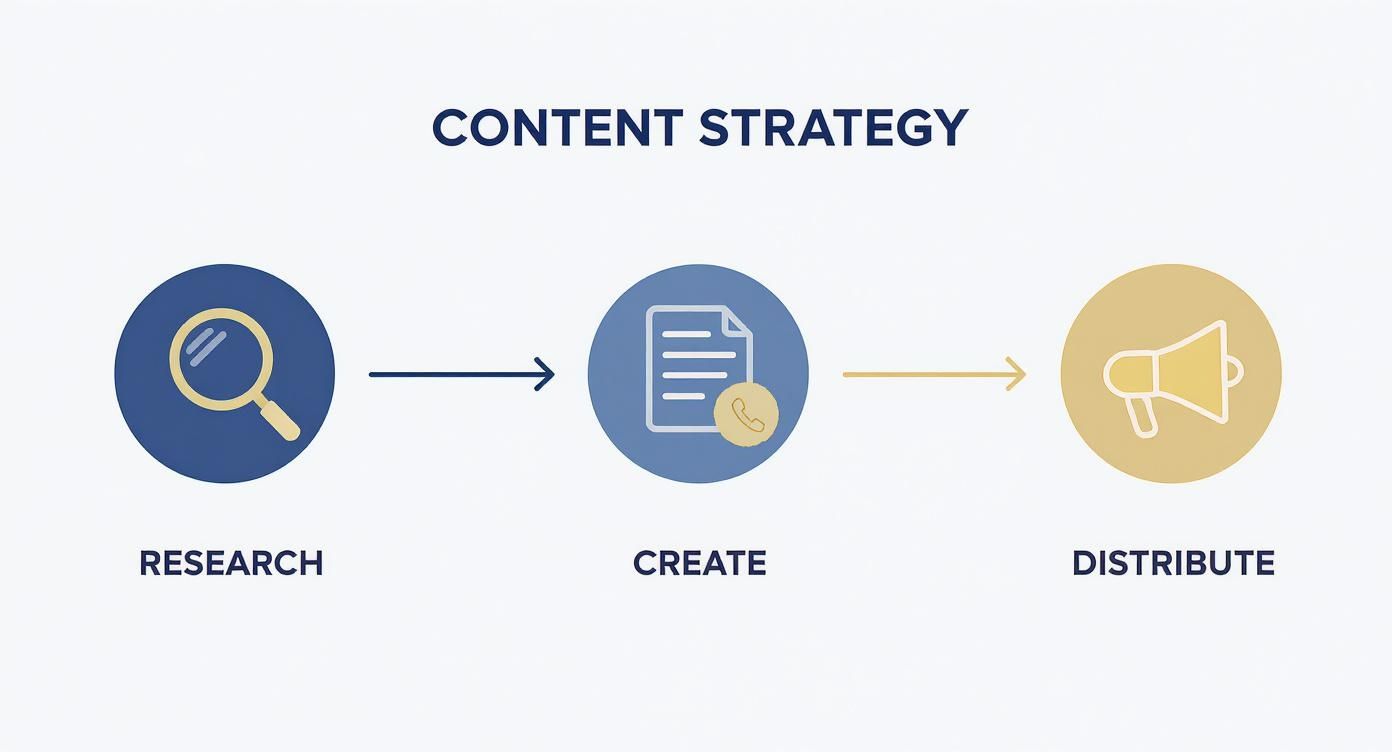
The key takeaway? A successful process is systematic. It moves from understanding the initial need to creating a response and then executing it without delay.
Here are a few actionable ways to optimize your system right now:
- Implement a Simple CRM: A Customer Relationship Management (CRM) tool is non-negotiable, even a basic one. Think of it as a central hub to track every lead, conversation, and follow-up. Nothing falls through the cracks.
- Use Automated Responses: Set up an immediate, automated email reply for all web form submissions. A simple message—"Thank you for contacting us. A member of our team will be in touch shortly."—manages expectations and provides instant confirmation that you received their message.
- Train Your Entire Team: Anyone who might answer the phone or see an email inquiry—from paralegals to receptionists—must be trained on your intake protocol. They need to know how to show empathy, gather essential information, and schedule a consultation with a lawyer, fast.
Your intake process is the first tangible experience a potential client has with your firm's professionalism and competence. A fast, empathetic, and organized response sets the stage for a successful attorney-client relationship.
By optimizing this final, crucial step in your marketing funnel, you directly impact your bottom line. You stop leaking valuable leads and start converting more of the high-quality inquiries your marketing efforts are already generating. For more strategies on filling your pipeline, explore our detailed guide on law firm lead generation.
Deciding When to Partner with a Legal Marketing Agency
Doing all your own marketing works—until it doesn't. There's a tipping point for every successful law firm where the time spent tweaking campaigns, writing blog posts, and deciphering SEO reports starts to cannibalize the time you should be spending on your real job: practicing law.
When you hit that wall, hiring a professional agency isn't just another expense. It's a strategic investment in growth. Recognizing that moment is the key to scaling your practice without burning yourself out.
If you feel like you’re constantly buried under marketing tasks or your client growth has stalled out, it’s a massive sign you need an expert in your corner. This isn’t a failure; it’s a natural and smart next step for a firm on the rise.
The Tell-Tale Signs It's Time to Outsource
You don't have to wait for a full-blown crisis to make the call. The best partnerships are proactive, not reactive.
It might be time to bring in the pros if you're experiencing:
- Time Scarcity: Your most valuable asset is your billable hour. If you're spending more of it fiddling with Google Ads than you are on casework, something is wrong.
- Expertise Gaps: You're a brilliant lawyer, not a specialist in keyword research, conversion rate optimization, or technical SEO. An agency brings a whole team of people who live and breathe this stuff.
- Stagnant Growth: The strategies that got you here have stopped working. You've hit a plateau, and you’re not sure how to kickstart that momentum again.
A specialized legal marketing agency doesn't just check boxes. They bring a strategic framework built on deep industry knowledge, ensuring your marketing is not only powerful but also ethically compliant.
Vetting and Choosing the Right Agency
Making the leap to an agency is a big decision, and finding the right fit is everything. Not all marketing firms get the unique challenges, regulations, and ethical lines that govern legal marketing.
The trend is clear: about 83% of legal firms now bring in agencies to run their campaigns, according to recent legal marketing statistics from Amra & Elma. It just makes sense. It lets attorneys focus on their clients while dedicated professionals handle the outreach.
When you start talking to potential partners, you need to ask the right questions. Go deeper than the sales pitch. Ask about their direct experience with firms of your size and in your specific practice area.
Demand to see case studies with real, measurable results—things like lead volume growth, cost-per-acquisition, and intake rates. A transparent, confident agency will have this data ready to go.
For a head start, our guide on the best marketing firms for attorneys can be a seriously valuable resource. Do your homework now, and you’ll build a partnership that drives predictable, long-term growth for your firm.
Answering Your Top Questions About Law Firm Growth
Even with a great strategy, the day-to-day realities of marketing bring up a lot of questions. I hear them from lawyers all the time. Let's tackle some of the most common ones head-on with some straight answers.
How Much Should My Small Firm Actually Budget for Marketing?
This is the big one, isn't it? For a solo or small firm just getting started, a good rule of thumb is to set aside 5% to 10% of your gross revenue. That’s a realistic number that gives you enough fuel to make an impact without putting the firm in a tight spot.
Now, if you're in a dog-eat-dog practice area like personal injury, or you're aggressively trying to scale, you’ll need to be more assertive. In those cases, pushing the budget closer to 12% to 15% is often what it takes to get real traction. The mindset shift is key: stop seeing marketing as an expense and start treating it as an investment in future cases.
How Do I Know If My Marketing Is Actually Working?
You can’t afford to just throw money at the wall and hope something sticks. Measuring your return on investment (ROI) is everything, but it doesn't have to be complicated. Forget vanity metrics and focus on what really moves the needle.
Start by tracking these two numbers religiously:
- Cost Per Lead (CPL): Simple math. Divide your total monthly marketing spend by the number of new inquiries you got. If you spent $2,000 on Google Ads and your phone rang 20 times, your CPL is $100.
- Cost Per Acquisition (CPA): This is the one that really matters. Divide that same marketing spend by the number of new clients you actually signed. If that $2,000 campaign landed you 2 new retainers, your CPA is $1,000.
When you know these numbers, you know exactly which channels are goldmines and which are money pits.
The most important marketing metric isn't clicks or traffic—it's your Cost Per Acquisition. If your CPA for a specific channel is significantly lower than the average value of a case from that channel, you've found a winner.
What Are the Big Ethical Rules I Need to Watch for Online?
Navigating the ethical minefield of attorney advertising is absolutely non-negotiable. The rules can vary from state to state, but a few universal principles always apply when you're marketing online:
- No False Promises: You can't ever guarantee a specific result or outcome. Period.
- Be Scrupulously Truthful: Don't exaggerate your experience, credentials, or past successes.
- Label Your Ads: If it's an ad, say so. Many jurisdictions require you to clearly label promotional content with "Advertising Material" or similar language.
Before you spend a single dollar on a campaign, do yourself a favor and double-check your state bar’s specific guidelines on advertising. It’s the one step you can’t afford to skip.
Ready to stop wondering where your next case will come from and start building a predictable client pipeline? The team at Case Quota has over 15 years of experience helping firms like yours dominate their market. Schedule your free strategy session today.