

Almost ninety percent of American law firms now use digital technologies to increase efficiency and client satisfaction. For small and mid-size firm partners in Southern California, keeping up with rapid advancements is crucial to remain competitive against bigger rivals. This article spotlights game-changing digital strategies that drive client growth, streamline operations, and help your firm stand out in a crowded American legal marketplace.
Table of Contents
- Defining Digital Strategies For Law Firms
- Core Components Of Legal Digital Marketing
- SEO, Local Search, And Online Visibility Impact
- AI-Powered Tools And Data-Driven Decision Making
- Risks Of Ignoring Digital Transformation
- Maximizing ROI With Performance Marketing
Key Takeaways
| Point | Details |
|---|---|
| Adoption of Digital Strategies | Law firms must leverage digital strategies, including advanced technologies, to enhance operational efficiency and client acquisition. |
| Importance of SEO | Effective SEO practices are essential for law firms to improve online visibility and attract potential clients. |
| AI Integration | Implementing AI tools can optimize legal research, case management, and financial operations, thus enhancing overall productivity. |
| Risks of Stagnation | Failing to embrace digital transformation can lead to operational inefficiencies and a loss of competitive edge in the legal marketplace. |
Defining Digital Strategies for Law Firms
Digital strategies for law firms represent a comprehensive approach to leveraging technology and online platforms to enhance practice management, client acquisition, and operational efficiency. In today’s competitive legal landscape, these strategies go far beyond simple website creation, encompassing advanced technological integrations that transform how legal services are delivered and marketed.
At the core of digital strategies lies the integration of sophisticated technologies that streamline legal workflows. Computational law technologies are revolutionizing how law firms approach research, case management, and predictive analysis. These tools enable attorneys to mechanize complex legal processes, reduce administrative overhead, and provide more precise, data-driven legal insights to clients.
Modern digital strategies for law firms typically include several key components: advanced practice management software, AI-powered legal research tools, targeted digital marketing approaches, data analytics platforms, and secure client communication systems. By implementing AI tools in financial workflows, firms can dramatically improve budgeting accuracy, billing efficiency, and overall financial decision-making.

Successful digital strategies require a holistic approach that considers technological integration, cybersecurity, client experience, and continuous adaptation to emerging digital trends. Law firms must view these strategies not as optional enhancements but as fundamental requirements for maintaining competitiveness in an increasingly digital legal marketplace.
Here’s a concise comparison of key digital technologies for law firms and their benefits:
| Technology Type | Main Function | Business Impact |
|---|---|---|
| Practice Management | Automates daily workflows | Increases efficiency and reduces errors |
| AI Legal Research | Accelerates case research | Enables data-driven legal insights |
| Secure Client Portals | Facilitates client communication | Builds trust and ensures data privacy |
| Marketing Analytics | Tracks campaign performance | Optimizes client acquisition strategies |
Pro tip: Begin your digital transformation by conducting a comprehensive technology audit to identify current workflow inefficiencies and potential areas for technological integration.
Core Components of Legal Digital Marketing
Legal digital marketing represents a sophisticated blend of strategic communication, technological innovation, and targeted outreach designed specifically for law firms seeking to expand their client base and enhance professional visibility. Unlike traditional marketing approaches, digital strategies enable attorneys to connect with potential clients through multiple sophisticated channels and data-driven methodologies.
The core components of effective legal digital marketing encompass several critical elements. AI-enabled content strategies are transforming how law firms generate and distribute marketing materials, leveraging artificial intelligence to create authentic, compliant, and engaging content that resonates with target audiences. These strategies involve using advanced algorithms to analyze audience preferences, optimize messaging, and create personalized communication approaches that build trust and credibility.
Comprehensive digital marketing for law firms must also prioritize strict adherence to regulatory guidelines. Federal Trade Commission marketing standards mandate that all legal advertising remain truthful, transparent, and evidence-based. This means carefully crafting marketing messages that provide accurate representations of legal services, managing online reviews responsibly, and ensuring all promotional materials meet rigorous ethical and legal standards.
Successful digital marketing strategies for law firms typically integrate multiple channels, including professional websites, targeted social media campaigns, search engine optimization, content marketing, email newsletters, and strategic online advertising. The key is creating a cohesive digital presence that demonstrates professional expertise, builds client trust, and effectively communicates the unique value proposition of the law firm.
Pro tip: Develop a comprehensive digital marketing playbook that outlines your firm’s specific communication guidelines, brand voice, and compliance protocols to ensure consistent and professional online representation.
SEO, Local Search, and Online Visibility Impact
Search engine optimization (SEO) has become an indispensable strategy for law firms seeking to establish a robust online presence and attract potential clients in an increasingly digital marketplace. Local search optimization strategies are crucial for making legal services easily discoverable across various jurisdictional landscapes, enabling attorneys to connect with clients who are actively searching for specialized legal assistance.
The impact of strategic SEO extends far beyond simple website ranking. By carefully crafting content that addresses specific legal needs, law firms can demonstrate expertise, build credibility, and create targeted pathways for potential clients to find their services. This involves developing comprehensive web content that not only includes relevant keywords but also provides genuine value through informative articles, practice area explanations, and detailed insights into complex legal processes.
Balancing SEO with authentic engagement represents a sophisticated approach to digital marketing for law firms. Successful strategies integrate local community connections, transparent communication, and targeted messaging that resonates with specific client demographics. This means going beyond mere search engine manipulation and creating a genuine digital presence that reflects the firm’s professional values, expertise, and commitment to client service.
Modern law firms must recognize that local search optimization involves a multifaceted approach. This includes maintaining accurate Google My Business listings, generating positive client reviews, creating location-specific content, and developing a network of local digital references that enhance online credibility and search visibility. The goal is to position the law firm as a trusted, accessible, and authoritative resource within its specific geographical and practice area marketplace.
Pro tip: Conduct a comprehensive audit of your online presence quarterly, systematically updating local listings, reviewing keyword performance, and refining your digital content strategy to maintain optimal search visibility.
AI-Powered Tools and Data-Driven Decision Making
Artificial intelligence is revolutionizing how law firms approach strategic decision making, offering unprecedented capabilities for analyzing complex legal data, predicting outcomes, and optimizing operational efficiency. Responsible AI implementation has become critical for law firms seeking to leverage technological advances while maintaining professional integrity and client trust.
The transformative potential of AI extends across multiple dimensions of legal practice. Financial operations represent a prime example of data-driven technological integration. AI tools in law firm finance are enabling more precise budgeting, accurate billing processes, and strategic resource management. These intelligent systems can analyze historical financial data, predict future trends, and provide actionable insights that help firms make more informed strategic decisions.
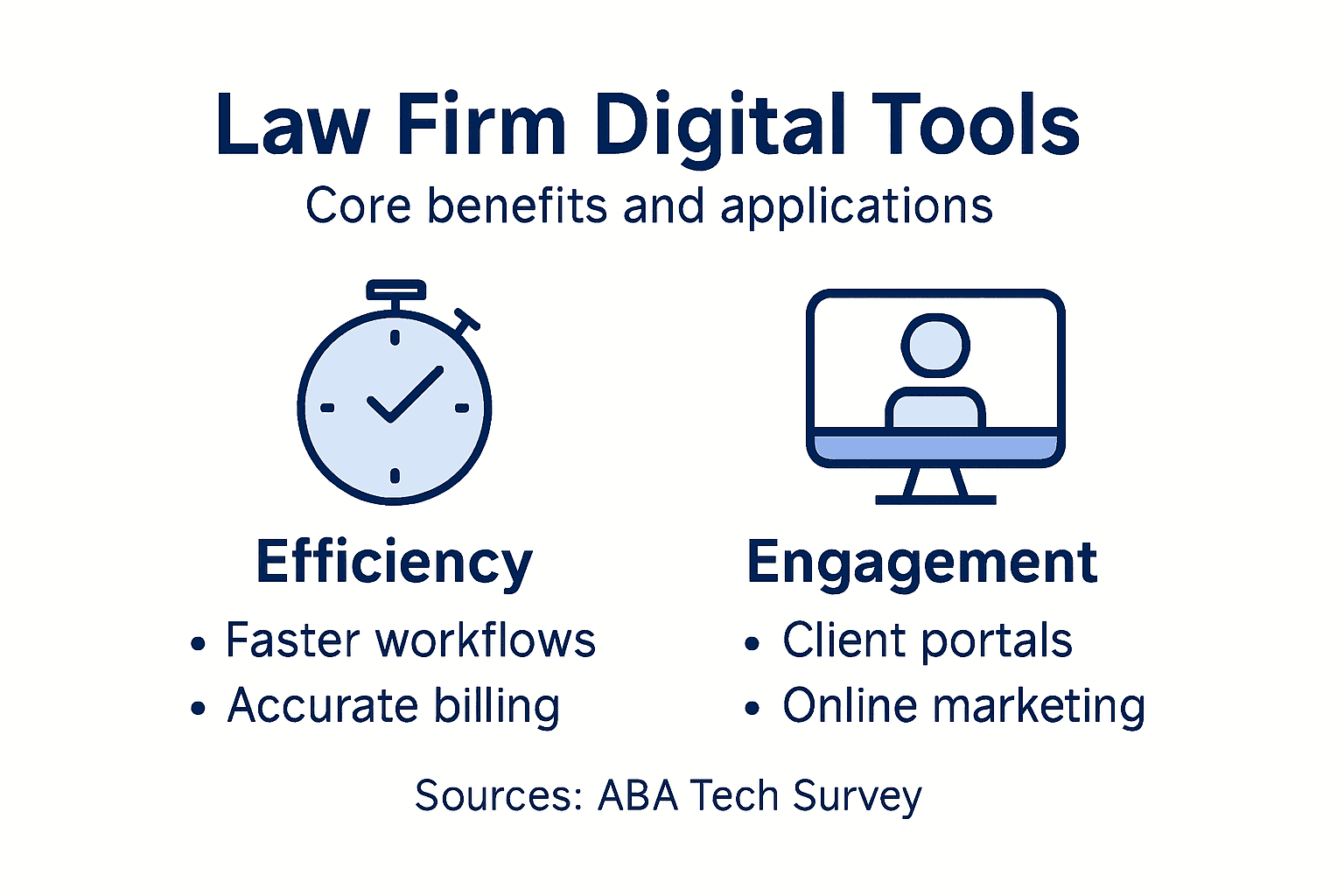
Beyond financial applications, AI-powered tools are enhancing legal research, case management, and client communication. Advanced algorithms can now rapidly analyze vast legal databases, identify relevant precedents, predict potential case outcomes, and even draft preliminary legal documents with remarkable accuracy. This technological capability allows attorneys to focus on higher-level strategic thinking, client relationships, and complex legal reasoning that requires nuanced human judgment.
However, successful AI integration requires a balanced approach. Law firms must carefully select legal-specific AI solutions, maintain rigorous data security protocols, and ensure consistent human oversight. The goal is not to replace legal professionals but to augment their capabilities, providing intelligent tools that support more efficient, accurate, and client-focused legal services.
Pro tip: Develop a comprehensive AI governance framework that establishes clear guidelines for technology adoption, emphasizing ethical use, continuous training, and maintaining the primacy of professional legal judgment.
Risks of Ignoring Digital Transformation
Law firms that resist digital transformation are placing themselves at significant strategic risk, potentially compromising their long-term viability and competitiveness in an increasingly technology-driven legal marketplace. AI’s impact on legal careers demonstrates how technological disruption is fundamentally reshaping legal service delivery, challenging traditional practice models and creating unprecedented pressures for adaptation.
The consequences of digital stagnation extend beyond mere technological inefficiency. Firms that fail to embrace digital strategies risk substantial financial and operational disadvantages, including decreased productivity, higher operational costs, and diminished client attraction capabilities. Legal innovation challenges highlight how technological reluctance can erode client trust, reduce competitive positioning, and create vulnerabilities in an increasingly sophisticated legal services landscape.
Moreover, digital transformation is not simply about adopting new technologies but fundamentally reimagining legal service delivery. Junior lawyers and emerging legal professionals are increasingly expecting technologically integrated work environments that leverage artificial intelligence, data analytics, and advanced communication platforms. Law firms that cannot provide such technologically advanced workspaces will struggle to attract top talent, creating a recursive cycle of diminishing capability and relevance.
The risks of digital transformation neglect are particularly acute in practice areas requiring rapid information processing, complex data analysis, and precision. Advanced AI tools can now perform research, draft documents, and predict case outcomes with remarkable speed and accuracy, creating a significant performance gap between technologically adaptive and resistant law firms.
Below is a summary of common risks law firms face by neglecting digital transformation:
| Risk Area | Effect on Law Firms | Long-Term Consequence |
|---|---|---|
| Operational Inefficiency | Slower workflows, costly mistakes | Loss of productivity |
| Client Attraction | Weaker digital presence, less leads | Reduced revenue opportunities |
| Talent Recruitment | Outdated work environment | Struggle to attract top lawyers |
| Competitive Positioning | Falling behind tech-savvy firms | Diminished market relevance |
Pro tip: Create a structured technology adoption roadmap that includes quarterly technological assessment, skills training programs, and incremental digital integration strategies to mitigate transformation risks.
Maximizing ROI With Performance Marketing
Performance marketing represents a strategic approach that transforms traditional marketing expenditures into measurable, accountable investments for law firms. Return on Marketing Investment provides law firms with a critical framework for evaluating and optimizing their marketing strategies, ensuring that every dollar spent generates tangible business outcomes.
AI-driven marketing analytics have revolutionized how law firms track and enhance their marketing performance. These advanced technologies enable precise measurement of client acquisition costs, engagement rates, and conversion metrics, allowing firms to move beyond intuition-based marketing toward data-driven decision making. By leveraging artificial intelligence, law firms can develop increasingly sophisticated targeting strategies that maximize marketing efficiency and minimize wasted resources.
Successful performance marketing for law firms requires a comprehensive approach that integrates multiple strategic elements. This includes developing targeted content that resonates with specific client demographics, utilizing sophisticated tracking mechanisms, and continuously refining marketing strategies based on real-time performance data. The most effective approaches combine granular audience segmentation, personalized messaging, and agile campaign management to create marketing initiatives that consistently deliver measurable results.
Ultimately, performance marketing is about creating a systematic approach to understanding and improving marketing effectiveness. Law firms must develop robust analytics frameworks, invest in advanced tracking technologies, and cultivate a culture of continuous optimization. This means regularly reviewing marketing performance, identifying high-performing channels and tactics, and rapidly adapting strategies to changing market dynamics.
Pro tip: Implement a quarterly marketing performance audit that comprehensively reviews all digital marketing channels, analyzing cost per lead, conversion rates, and return on investment to systematically refine your marketing strategy.
Elevate Your Law Firm with Tailored Digital Strategies Today
The article reveals the critical need for law firms to adopt comprehensive digital strategies that include AI-powered tools, local search optimization, and performance marketing to stay competitive and attract more clients. If your firm is struggling with operational inefficiencies, poor online visibility, or lagging behind tech-savvy competitors, these challenges can feel overwhelming. You deserve more than just basic marketing—you need a partner who understands the unique pressures law firms face and can implement sophisticated, compliant, and results-driven digital solutions.
At Case Quota, we specialize in empowering small to mid-size law firms in Southern California with customized online marketing that delivers measurable client growth. Our expertise ranges from SEO-optimized web design and Google Local Services Ads to AI-enhanced pay-per-click advertising. We help you harness digital tools to improve client acquisition and streamline your marketing budget for maximum impact. Discover firsthand how our dedicated legal marketing strategies can transform your firm’s digital presence by exploring our services directly at Case Quota.
Are you ready to stop falling behind and start leading your market with proven digital marketing strategies built for law firms?

Take the first step toward a powerful, compliant, and adaptive digital marketing strategy that builds trust, enhances visibility, and grows your client base. Visit Case Quota now and see how our tailored solutions can help you thrive in a technology-driven legal landscape.
Frequently Asked Questions
What are digital strategies for law firms?
Digital strategies for law firms involve leveraging technology and online platforms to enhance practice management, client acquisition, and operational efficiency. These strategies include implementing advanced technologies, automating workflows, and improving marketing efforts to remain competitive in the digital legal landscape.
Why do law firms need to implement digital transformation?
Law firms need to implement digital transformation to avoid operational inefficiencies, maintain competitiveness, and adapt to the changing expectations of clients and legal professionals. Embracing technology allows firms to streamline processes and attract top talent while providing better client service.
How can AI tools benefit law firms?
AI tools can benefit law firms by improving budgeting accuracy, streamlining legal research, and enhancing client communication. These tools enable faster data analysis and reduce administrative tasks, allowing attorneys to focus on more strategic aspects of legal practice.
What role does SEO play in digital strategies for law firms?
SEO plays a crucial role in digital strategies for law firms by optimizing online visibility and making legal services easily discoverable. Effective SEO helps firms attract potential clients through localized strategies and content that address specific legal needs.
Recommended
- Complete Guide to Digital Marketing for Legal Firms: Strategies That Drive Results – Case Quota
- Why Law Firms Need Digital Marketing for Growth | Case Quota
- Why Digital Marketing Matters for California Law Firms
- Digital Advertising for Law Firms—Why It Matters
- La rivoluzione digitale nell’Osteopatia: come la tecnologia sta cambiando il gioco – KinBu Gestione Appuntamenti Terapisti