

A single misstep in website design could cost an American law firm dozens of new clients each month. The majority of Southern California clients judge credibility within seconds of landing on a law firm’s homepage. Thoughtful, professional web design instantly signals trust while confusing layouts turn potential cases away. This guide highlights practical strategies that help Southern California law firms craft standout online identities and strengthen client connections from the very first click.
Table of Contents
- 1. Prioritize Clear and Professional Branding
- 2. Optimize Navigation for Easy User Access
- 3. Highlight Attorney Credentials and Trust Signals
- 4. Use Mobile-Responsive Design Best Practices
- 5. Incorporate Client Testimonials and Case Results
- 6. Streamline Contact Options for Quick Inquiries
- 7. Ensure Legal Content Is SEO-Friendly and Accurate
Quick Summary
| Takeaway | Explanation |
|---|---|
| 1. Establish Strong Branding | Define your firm’s unique identity through colors, typography, and visuals to build client trust and convey professionalism. |
| 2. Optimize Website Navigation | Create intuitive navigation that allows potential clients to find legal services easily and without frustration. |
| 3. Highlight Attorney Credentials | Showcase attorney achievements and trust signals such as headshots, educational background, and client testimonials to build credibility. |
| 4. Implement Mobile-Responsive Design | Ensure your website functions well on all devices with flexible layouts and readable content to enhance user experience. |
| 5. Streamline Contact Options | Provide clear, accessible communication channels like phone numbers and contact forms to facilitate quick inquiries from potential clients. |
1. Prioritize Clear and Professional Branding
Your law firm’s online presence starts with a powerful first impression. Branding isn’t just about a slick logo or fancy color scheme it’s about communicating your firm’s unique professional identity and building immediate client trust.
Establishing a strong visual identity goes far beyond superficial design. When potential clients land on your website, they’re subconsciously evaluating your credibility, expertise, and approach. Effective attorney brand building requires strategic visual communication that reflects your firm’s core values and professional personality.
Start by defining your firm’s fundamental mission. What sets you apart? Are you compassionate advocates for workers’ rights? Aggressive defenders of personal injury victims? Strategic corporate legal advisors? Your branding should visually and verbally communicate this distinctive positioning.
Key branding elements include:
- Consistent Color Palette: Choose 2-3 professional colors that convey your firm’s personality
- Professional Typography: Select clean, readable fonts that communicate competence
- Authentic Photography: Use genuine team photos that feel approachable yet professional
- Clear Messaging: Develop concise taglines and descriptions that instantly communicate your value
Remember that modern clients want transparency and connection. Your branding should feel authentic professional and approachable simultaneously.
Pro tip: Conduct a brand audit every 18 months to ensure your visual identity remains current and resonates with your target client demographic.
2. Optimize Navigation for Easy User Access
In the digital world, your law firm’s website is often the first point of contact for potential clients. A confusing or cluttered navigation system can instantly drive away visitors who are seeking legal help during stressful times.
User experience design transforms how potential clients interact with your online presence. Think of your website navigation like a welcoming reception area where visitors can quickly find exactly what they need without frustration.
Effective navigation means creating a clear, intuitive pathway through your website. Your menu structure should reflect how potential clients actually think about seeking legal services. Most visitors arrive with specific needs like finding practice area details, understanding attorney expertise, or locating contact information.
Key navigation principles include:
- Logical Menu Structure: Group related services and information clearly
- Descriptive Labels: Use straightforward language that clients understand
- Mobile Responsiveness: Ensure menus work seamlessly on smartphones and tablets
- Strategic Placement: Position critical information within 2 3 clicks from homepage
- Search Functionality: Include a robust search bar for quick information retrieval
Remember that potential clients are often experiencing stress or uncertainty. Your website navigation should feel like a helpful guide not a complex puzzle.
Pro tip: Conduct periodic user testing by asking friends or colleagues unfamiliar with your site to navigate and provide honest feedback about their experience.
3. Highlight Attorney Credentials and Trust Signals
Potential clients want more than just legal expertise they want proof of your firm’s competence and reliability. Attorney credentials and trust signals are the digital equivalent of a firm handshake and impressive resume.
In the legal world trust is everything. Your website should transform abstract professional achievements into compelling narratives that demonstrate your attorneys’ capabilities. This means going beyond basic biographical information and creating rich professional profiles that showcase expertise and build confidence.
Effective trust signals communicate your firm’s professional standing through multiple channels:
- Professional Headshots: High quality photographs that look professional yet approachable
- Detailed Educational Background: Clear display of law school credentials and academic honors
- Bar Certifications: Prominently featured state bar memberships and specialized certifications
- Case Victories: Anonymized summaries of significant legal wins
- Professional Awards: Recognition from legal associations or industry publications
- Client Testimonials: Authentic quotes that highlight successful outcomes
Think of your attorney profiles as storytelling opportunities. Each section should answer potential clients’ unspoken questions about competence credibility and commitment.
Pro tip: Update attorney bios quarterly to reflect recent achievements and maintain a dynamic professional narrative that reflects your team’s ongoing growth and success.
4. Use Mobile-Responsive Design Best Practices
More than 60% of legal website visitors now arrive through mobile devices, making mobile-first responsive design an absolute necessity for law firms. Your website must look and function perfectly whether someone is searching on a smartphone during their lunch break or reviewing case details on a tablet.
Responsive design goes beyond simply shrinking content to fit smaller screens. It requires a strategic approach that prioritizes user experience across all device types. This means creating flexible layouts that adapt seamlessly while maintaining readability and professional appearance.
Critical mobile design considerations include:
- Flexible Grid Systems: Create layouts that automatically adjust to screen sizes
- Scalable Typography: Ensure text remains legible on devices of all dimensions
- Touch Friendly Navigation: Design larger buttons and intuitive menu structures
- Compressed Image Files: Optimize graphics for faster mobile loading
- Simplified Content Hierarchy: Prioritize most important information for smaller screens
Remember that mobile users have less patience and smaller attention spans. Your goal is to deliver critical information quickly and elegantly.
Pro tip: Regularly test your website on multiple devices and screen sizes to ensure consistent performance and user experience.
5. Incorporate Client Testimonials and Case Results
Potential clients want proof that your law firm delivers real results not just impressive promises. Case studies and testimonials transform abstract legal services into tangible success stories that build immediate trust.
Testimonials are more than marketing fluff they are powerful narratives that demonstrate your firm’s problem solving capabilities. When potential clients see authentic stories of how you’ve helped others navigate complex legal challenges they can envision themselves receiving similar support.
Strategic testimonial and case result presentation includes:
- Anonymized Client Stories: Protect privacy while showcasing meaningful outcomes
- Quantifiable Results: Include specific settlements or case resolution details
- Diverse Case Representations: Show expertise across multiple practice areas
- Video Testimonials: Add human emotion and authenticity to written accounts
- Professional Design: Integrate testimonials seamlessly into website layout
Remember that potential clients are seeking reassurance. Your testimonials should feel genuine personal and compelling.
Pro tip: Rotate testimonials quarterly and obtain written permission to maintain fresh social proof that reflects your most recent successful cases.
6. Streamline Contact Options for Quick Inquiries
Potential clients evaluating legal services want instant access without complicated communication barriers. Streamlined contact options transform website visitors into potential clients by reducing friction in initial interactions.
Your contact strategy should feel like an open door rather than a maze. This means providing multiple accessible channels that accommodate different client communication preferences and urgency levels.
Effective contact strategies include:
- Prominent Phone Number: Visible in header and footer of every page
- Simple Contact Forms: Minimal fields requiring essential information
- Live Chat Options: Instant response capabilities
- Online Scheduling Tools: Allow direct booking of initial consultations
- Clear Call to Action Buttons: Strategically placed throughout website
- Mobile Friendly Contact Methods: Clickable phone and email links
Remember that potential clients seeking legal help are often experiencing stress. Your contact approach should feel supportive and straightforward.
Pro tip: Configure contact forms to automatically route inquiries to appropriate practice area specialists based on selected topic or case type.
7. Ensure Legal Content Is SEO-Friendly and Accurate
Search engine optimization for law firm websites is a delicate balance between technical strategy and authentic content creation. Legal content SEO requires understanding both search engine algorithms and professional ethical guidelines.
Your website content must simultaneously serve two critical audiences: potential clients seeking clear information and search engines evaluating your site’s relevance. This means crafting informative practice area descriptions attorney bios and blog posts that are simultaneously comprehensive engaging and technically optimized.
Key SEO content strategies include:
- Keyword Research: Target location and practice area specific terms
- Natural Language: Write conversationally while incorporating strategic keywords
- Comprehensive Practice Pages: Detailed explanations of legal services
- Regular Content Updates: Maintain fresh relevant information
- Accurate Citations: Link to authoritative legal sources
- Local SEO Optimization: Include precise geographic information
Remember that search engines prioritize content demonstrating genuine expertise and user value. Your goal is educational transparency not keyword stuffing.
Pro tip: Conduct quarterly content audits to ensure all legal information remains current and aligns with latest search engine quality guidelines.
Below is a comprehensive table summarizing the strategies and principles outlined in the article for enhancing a law firm’s online presence and client engagement.
| Principle | Description | Key Actions |
|---|---|---|
| Clear Branding | Establish a professional and trustworthy visual identity. | Define mission, use consistent colors, professional typography, authentic photography, and clear messaging. Conduct brand audits regularly. |
| Optimized Navigation | Create intuitive and streamlined website navigation. | Logical menu structure, descriptive labels, responsive design, strategic placement, and robust search functionality. Conduct user testing for improvements. |
| Showcasing Expertise | Highlight attorney credentials and trust signals effectively. | Include professional headshots, detailed educational backgrounds, certifications, victories, awards, and testimonials. Update profiles quarterly. |
| Mobile Responsiveness | Ensure seamless functionality across all devices. | Utilize flexible layouts, scalable typography, touch-friendly navigation, optimized images, and prioritized content hierarchy. Test performance on various devices. |
| Client Testimonials | Present compelling case studies and client feedback. | Use anonymized stories, quantifiable results, diverse cases, video testimonials, and integrate them into website design. Rotate testimonials periodically. |
| Efficient Contact Methods | Streamline communication channels for potential clients. | Provide visible phone numbers, simple forms, live chat, scheduling tools, and clear call-to-action buttons. Optimize mobile-friendly contact options. |
| SEO Best Practices | Optimize website content for search engines and client utility. | Conduct keyword research, use natural language, maintain updated content, provide accurate citations, and target local SEO. Conduct content audits quarterly. |
Elevate Your Law Firm Website with Proven Digital Marketing Strategies
Building a law firm website that truly connects with potential clients requires more than just good design. The article “7 Essential Legal Website Design Tips for Law Firms” highlights critical challenges such as creating clear branding, optimizing navigation, showcasing attorney credentials, and ensuring mobile responsiveness. These factors directly impact client trust and contact conversion during stressful decision-making moments.
At Case Quota, we understand these pain points and have crafted specialized digital marketing solutions that help Southern California law firms stand out despite limited resources. From SEO-optimized web design designed to boost your online authority to AI-powered pay-per-click campaigns targeting clients ready to act, our tailored strategies address every key element discussed in the article.
Do not let website confusion or lack of client engagement hold your firm back. Discover how our proven approach enhances your practice with focused results that generate real cases. Visit Case Quota to explore our legal marketing services and learn how to transform your firm’s online presence. For trusted guidance on attorney brand building, check out Effective attorney brand building. To improve your website’s client experience, explore User experience design insights.
Ready to attract the right clients and grow your practice now
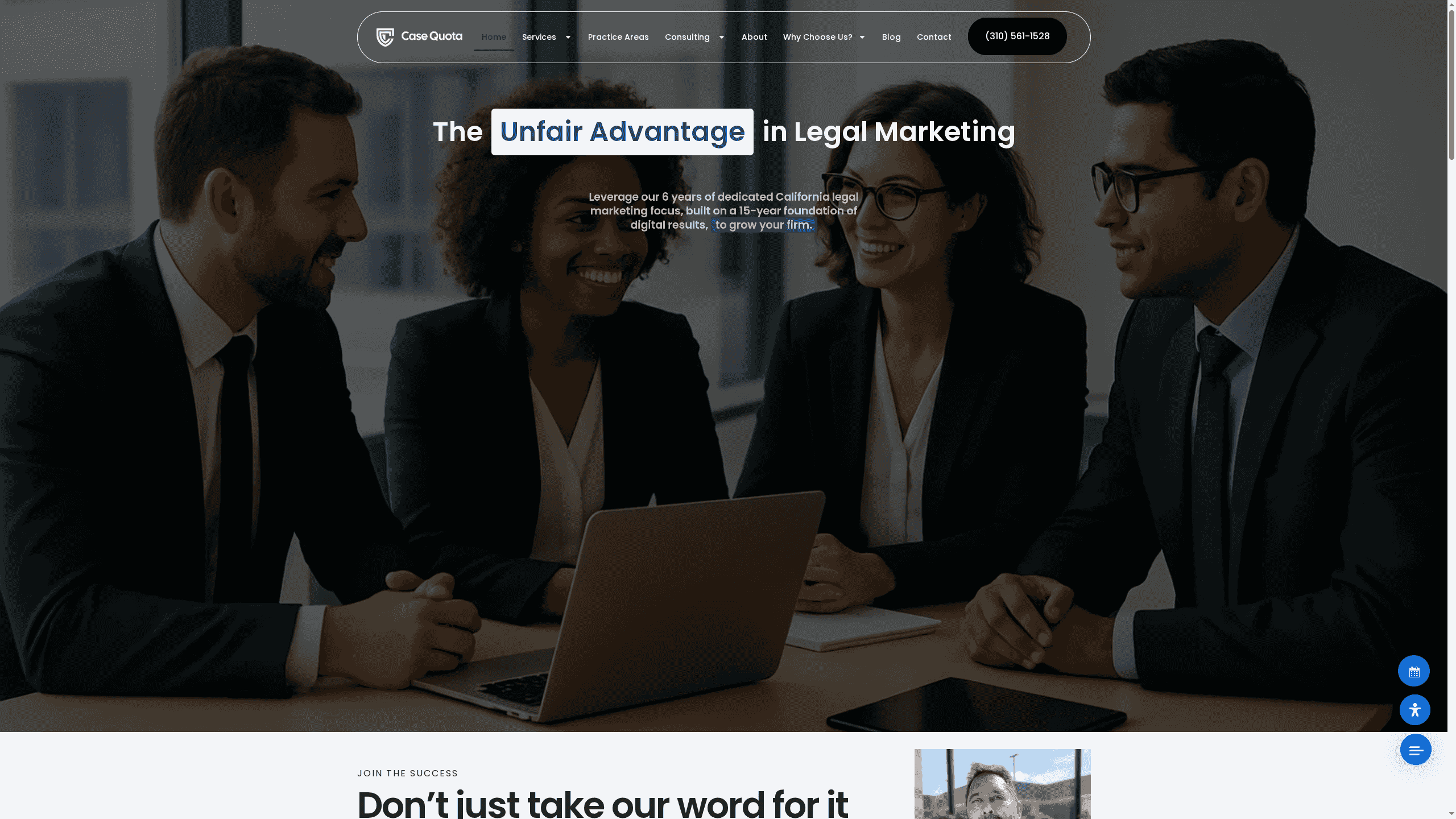
Contact Case Quota today for a personalized consultation and take the first step to winning clients with a high-impact legal website and digital marketing plan.
Frequently Asked Questions
How can I establish clear and professional branding for my law firm?
To establish clear and professional branding, define your firm’s unique mission and values. Choose a consistent color palette, select professional typography, use genuine team photography, and craft concise messaging that reflects your identity.
What are key principles for optimizing website navigation for my law firm’s site?
Key principles for optimizing website navigation include creating a logical menu structure and using descriptive labels that clients understand. Ensure your navigation can be accessed with no more than 2 to 3 clicks from the homepage for a smoother user experience.
How do I highlight my attorneys’ credentials effectively on our website?
Highlight attorney credentials by presenting high-quality professional headshots, detailed educational backgrounds, and client testimonials. Update bios quarterly to keep them fresh and reflective of your team’s ongoing achievements.
What are the best practices for making my law firm’s website mobile responsive?
Best practices for a mobile-responsive design include using flexible grid systems and ensuring all text is legible on various devices. Regularly test your site on multiple devices to ensure a seamless user experience.
How should I incorporate client testimonials and case results on my law firm’s website?
Incorporate client testimonials and case results by sharing anonymized success stories and quantifiable outcomes that showcase your expertise. Aim to rotate these testimonials every quarter for updated social proof that resonates with potential clients.
What should I focus on to ensure my legal content is SEO-friendly?
To ensure your legal content is SEO-friendly, conduct keyword research and incorporate those terms naturally in practice area descriptions and blog posts. Regularly update your content to keep it fresh and relevant, aligning with search engine best practices.