

Most american law firms miss out on significant client opportunities by overlooking key digital strategies. With over 90 percent of clients now searching for attorneys online, understanding legal marketing terminology is more critical than ever. The right knowledge makes the difference between simply having an online presence and actually connecting with those who need legal help. This guide breaks down the most important terms and concepts so every firm can engage confidently and compliantly in a fast-changing market.
Table of Contents
- Defining Legal Marketing Terminology And Concepts
- Types Of Legal Marketing Services For Law Firms
- Key Terms In Digital Legal Marketing
- Compliance And Ethical Considerations In Legal Marketing
- Common Misconceptions And Costly Mistakes
Key Takeaways
| Point | Details |
|---|---|
| Understanding Legal Marketing | Legal marketing involves strategic communication and digital outreach to attract potential clients, utilizing techniques such as SEO, PPC, and content strategies. |
| Critical Marketing Strategies | Successful law firms must employ a comprehensive approach, including SEO, PPC, content marketing, and social media to gain visibility and generate leads. |
| Ethical Considerations | Legal marketing requires adherence to stringent ethical guidelines, ensuring truthful representation, client confidentiality, and transparent fee structures. |
| Avoiding Common Pitfalls | Law firms should avoid misconceptions like overreliance on paid advertising and neglecting SEO, focusing instead on creating specialized content and tracking performance metrics. |
Defining Legal Marketing Terminology and Concepts
Legal marketing represents a specialized approach to attracting and converting potential clients for law firms through strategic communication and digital outreach. According to Justia, legal marketing encompasses sophisticated techniques like search engine optimization (SEO), pay-per-click (PPC) advertising, and content strategies designed to establish attorney authority and visibility.
The core objective of legal marketing is transforming online interactions into meaningful client relationships. LegalMatch highlights how modern legal marketing leverages digital channels to connect attorneys with potential clients through strategic online lead generation. This involves creating targeted content, optimizing digital presence, and understanding precise client acquisition methodologies.
Key legal marketing strategies typically include:
- Search Engine Optimization (SEO) for law firm websites
- Pay-Per-Click (PPC) Advertising targeting specific legal service searches
- Content Marketing through attorney blogs and informative resources
- Social Media Marketing to build professional reputation
- Online Reputation Management tracking client reviews and digital perception
Successful legal marketing requires understanding these nuanced strategies and implementing them with precision. Law firms must recognize that digital marketing is no longer optional but a critical component of sustainable client acquisition.
 Choosing the right marketing approach can significantly impact a firm’s growth and competitive positioning in an increasingly digital legal marketplace.
Types of Legal Marketing Services for Law Firms
Justia highlights the comprehensive landscape of legal marketing services that modern law firms can leverage to enhance their client acquisition and digital presence. These services range from technical digital strategies to strategic communication approaches designed to position attorneys as authoritative professionals in their respective practice areas.
The primary categories of legal marketing services include several critical components that work synergistically to attract and convert potential clients. According to LegalMatch, these services typically encompass:
- Website Design and Development creating professional, responsive platforms
- Search Engine Optimization (SEO) to improve online visibility
- Pay-Per-Click (PPC) Advertising for targeted client acquisition
- Content Marketing including blogs, whitepapers, and legal guides
- Social Media Marketing to build professional reputation
- Online Lead Generation through strategic digital channels
- Reputation Management monitoring and enhancing digital presence
Law firms seeking sustainable growth must recognize that these comprehensive digital marketing strategies are no longer optional but essential.
By integrating multiple marketing services, attorneys can effectively reach potential clients, demonstrate expertise, and differentiate themselves in an increasingly competitive legal marketplace.
Key Terms in Digital Legal Marketing
Justia provides crucial insights into the essential terminology that defines digital legal marketing, highlighting how specialized language helps law firms navigate the complex online landscape. Understanding these key terms is fundamental for attorneys seeking to effectively promote their practices and connect with potential clients in the digital realm.
The core digital marketing terminology for law firms encompasses several critical concepts that drive online visibility and client engagement. According to LegalMatch, these key terms include:
- SEO (Search Engine Optimization): Strategies to improve website ranking in search results
- PPC (Pay-Per-Click): Targeted advertising where firms pay for specific online ad clicks
- Conversion Rate: Percentage of website visitors who become actual clients
- Lead Generation: Process of attracting and capturing potential client interest
- Content Marketing: Creating valuable information to attract and retain clients
- Social Proof: Using client testimonials and case results to build credibility
- Geo-Targeting: Focusing marketing efforts on specific geographic locations
Law firms looking to master their digital presence can explore proven marketing strategies that transform these technical terms into actionable marketing approaches.
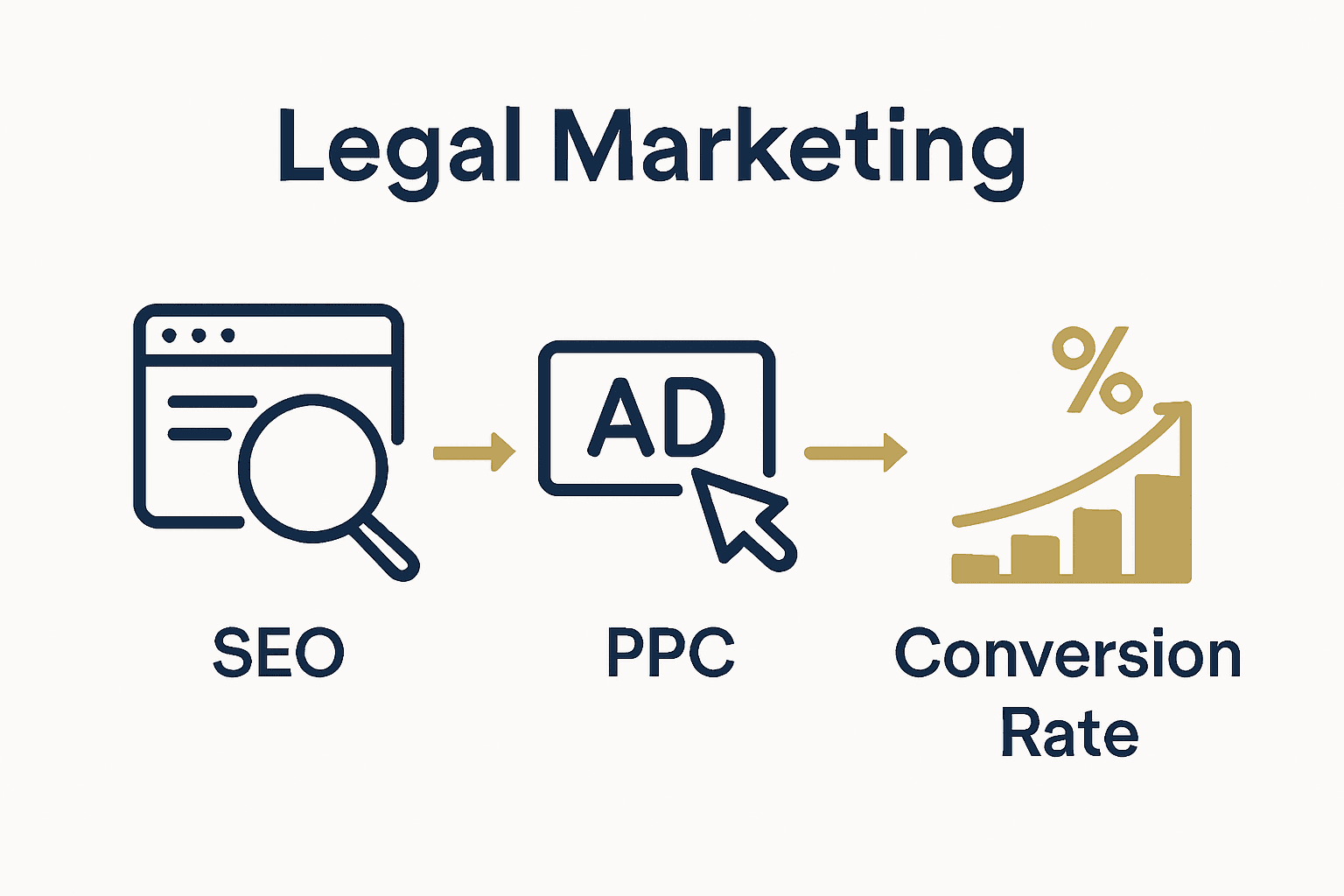 The most successful attorneys recognize that understanding this terminology is not just about vocabulary, but about creating meaningful connections with potential clients in an increasingly digital legal marketplace.
Compliance and Ethical Considerations in Legal Marketing
Legal marketing exists within a complex framework of ethical guidelines that demand rigorous adherence and professional integrity. Wikipedia highlights the intricate legal landscape, noting that attorney marketing practices are subject to stringent regulatory oversight, particularly in how firms represent their services and engage with potential clients.
Ethical marketing in the legal profession involves several critical considerations that protect both attorneys and potential clients. Key ethical principles include:
- Truthful Representation: Avoiding misleading or exaggerated claims about legal services
- Client Confidentiality: Protecting sensitive information in all marketing materials
- Transparent Fee Structures: Clearly communicating potential costs and service expectations
- Professional Conduct: Maintaining dignity and respect in all promotional activities
- Avoiding Direct Solicitation: Respecting legal restrictions on client recruitment
Wikipedia’s entry on legal ghostwriting reveals additional nuanced ethical challenges, particularly around transparency in legal service delivery. The practice raises important questions about how attorneys represent their expertise while maintaining professional standards. Navigating complex advertising regulations becomes crucial for law firms seeking to market effectively without compromising ethical standards. Successful legal marketing requires a delicate balance between aggressive promotion and maintaining the highest professional integrity.
Common Misconceptions and Costly Mistakes
LinkedIn’s comprehensive analysis reveals that many law firms fall prey to critical misconceptions that can dramatically undermine their marketing effectiveness and waste valuable resources. Understanding these pitfalls is crucial for attorneys seeking to build a robust and strategic digital presence.
Marketing misconceptions in the legal industry often stem from outdated strategies or misunderstandings about digital engagement. The most common costly mistakes include:
- Overreliance on Paid Advertising: Investing heavily in PPC without a solid organic strategy
- Neglecting SEO: Failing to develop a comprehensive search engine optimization approach
- Inconsistent Branding: Using fragmented messaging across different marketing channels
- Ignoring Analytics: Not tracking and measuring marketing performance metrics
- Generic Content Creation: Producing bland, non-specialized content that fails to differentiate the firm
Law firms can learn proven strategies to avoid these marketing pitfalls by developing a holistic, data-driven approach. Success requires understanding that effective legal marketing is not about aggressive advertising, but about building trust, demonstrating expertise, and creating meaningful connections with potential clients through strategic, targeted communication.
Master Legal Marketing Terminology and Transform Your Firm’s Growth
Understanding critical terms like SEO, PPC, and lead generation is the first step toward overcoming common marketing challenges law firms face today. This guide highlights how many attorneys struggle with inconsistent branding, ineffective advertising, and missed opportunities in client engagement. If you want to rise above these hurdles and build a thriving practice with clear, targeted strategies, you need a partner who specializes in legal marketing nuances.
At Case Quota, we bring 15 years of digital marketing expertise tailored specifically for law firms competing in Southern California. Our proven approach combines AI-powered pay-per-click advertising, SEO-optimized web design, and professional social media marketing to generate authentic leads and boost your online reputation. We understand how to convert complex legal marketing terminology into actionable campaigns that drive real results.
Take the next step to elevate your client acquisition and avoid costly marketing mistakes. Discover how our customized, performance-driven strategies can provide your law firm with a competitive edge now.

Unlock your firm’s potential with Case Quota’s legal marketing solutions. Visit us today and start turning your knowledge into measurable growth through expert digital marketing tailored just for attorneys.
Frequently Asked Questions
What is legal marketing?
Legal marketing is a specialized approach that involves strategies to attract and convert potential clients for law firms through digital outreach and communication.
What are the key strategies used in legal marketing?
Key strategies include Search Engine Optimization (SEO), Pay-Per-Click (PPC) advertising, content marketing, social media marketing, and online reputation management.
How does SEO benefit law firms?
SEO helps law firms improve their online visibility by optimizing their websites, making it easier for potential clients to find them through search engines.
Why is reputation management important in legal marketing?
Reputation management is crucial as it helps law firms track client reviews and manage their online perception, fostering trust and credibility with potential clients.