

Most American law firms struggle to stand out in a crowded market where clients can choose from thousands of options at their fingertips. Without a clear value proposition and cohesive branding, your strengths can get lost in the noise. By taking steps to define what sets your legal practice apart and consistently communicating that to prospective clients, you can become the go-to choice. Discover strategies to craft a memorable identity that truly resonates with those seeking legal expertise.
Table of Contents
- Step 1: Define Your Unique Legal Value Proposition
- Step 2: Develop Consistent Branding Assets And Messaging
- Step 3: Optimize Your Online Presence And Legal Profiles
- Step 4: Engage Target Clients With Strategic Content
- Step 5: Monitor Results And Refine Branding Efforts
Quick Summary
| Key Message | Explanation |
|---|---|
| 1. Define Your Unique Value Proposition | Identify and articulate what sets your law firm apart to attract potential clients. |
| 2. Consistent Branding Enhances Recognition | Develop unified branding assets and messaging to reinforce your unique value across platforms. |
| 3. Optimize Online Presence for Credibility | Maintain comprehensive and professional online profiles to establish expertise and attract clients. |
| 4. Engage Clients with Strategic Content | Provide educational and relevant content that addresses client needs and demonstrates your expertise. |
| 5. Monitor and Refine Branding Efforts | Regularly track performance metrics to adjust your branding strategy based on client engagement and effectiveness. |
Step 1: Define your unique legal value proposition
Defining your law firm’s unique value proposition transforms how potential clients perceive your legal services. A powerful value proposition clearly communicates the specialized benefits and distinct advantages you offer compared to other attorneys in your market.
To craft a compelling value proposition, start by understanding what truly differentiates your legal practice. This means going beyond generic statements about legal expertise and identifying the specific ways you solve client problems. Consider your firm’s strengths: Are you exceptionally responsive? Do you have specialized knowledge in a niche practice area? Do you offer more personalized service than larger firms? Analyze your current client base and look for patterns in the types of cases you excel at handling and the unique approaches you take.
Develop a concise statement that captures your firm’s distinctive qualities and the specific value you deliver to clients. This statement should answer three key questions: What legal services do you provide? Who are your ideal clients? What makes your approach different from other attorneys? The goal is to create a clear, memorable description that instantly communicates why a potential client should choose your firm over competitors.
Pro Tip: Practice your value proposition statement with actual clients. Ask them to provide feedback on whether it resonates and accurately reflects the experience they have working with your firm.
Here’s how a law firm’s value proposition differs from generic legal messaging:
| Aspect | Generic Messaging Example | Unique Value Proposition Example |
|---|---|---|
| Focus | Broad legal expertise claims | Niche specialization or unique method |
| Client Orientation | One-size-fits-all | Tailored to ideal client needs |
| Distinction | Hard to distinguish from competitors | Immediately highlights firm’s advantage |
| Emotional Impact | Neutral, standard phrasing | Compelling, inspires client confidence |
Step 2: Develop consistent branding assets and messaging
Establishing consistent branding assets and messaging is crucial for creating a recognizable and professional law firm identity that resonates with potential clients. Your goal is to create a unified visual and communication strategy that reinforces your unique value proposition across all platforms.
Start by developing a comprehensive branding framework that includes a precise color palette, typography, and visual style guide. Select colors and design elements that reflect your firm’s personality and professionalism. Consider how your logo will appear across different mediums such as business cards, websites, social media profiles, and legal documents. Ensure your visual elements create a cohesive and memorable representation of your firm.
Craft clear and specific messaging that communicates your firm’s unique mission. Move beyond generic legal language and develop communication that highlights your firm’s distinctive approach. This includes creating consistent language for your website, marketing materials, client communications, and professional networking platforms. Your messaging should clearly articulate what sets your law firm apart and why potential clients should choose you over competitors.

Pro Tip: Create a comprehensive brand style guide that documents all your branding elements and provides clear guidelines for maintaining consistency across all communication channels.
Step 3: Optimize your online presence and legal profiles
Optimizing your online presence and legal profiles is essential for attracting potential clients and establishing credibility in the digital marketplace. Your goal is to create a comprehensive and professional digital footprint that showcases your firm’s expertise and unique value proposition.
Clients engage with law firms through multiple digital touchpoints, so it is crucial to maintain a consistent and professional image across all platforms. Begin by conducting a comprehensive audit of your existing online profiles. This includes your law firm website, LinkedIn professional profile, legal directory listings, Google Business Profile, and social media accounts. Ensure that all information is current, accurate, and aligned with your firm’s branding and messaging strategy.
Focus on creating robust and compelling online profiles that highlight your firm’s unique strengths. Update your professional bios to include specific practice areas, notable case successes, professional certifications, and any specialized expertise. Use professional headshots and include keywords that potential clients might use when searching for legal services in your specialty. Regularly publish high quality content such as blog posts, legal insights, or case studies that demonstrate your knowledge and reinforce your positioning as an expert in your field.
Pro Tip: Set up a quarterly review process to update and refresh your online profiles, ensuring they always reflect your most current professional achievements and practice focus.
Step 4: Engage target clients with strategic content
Engaging target clients through strategic content is a powerful method for building trust, demonstrating expertise, and attracting potential legal clients. Your content strategy should position your law firm as a knowledgeable and approachable resource for individuals seeking legal guidance.
Provide educational content on legal topics that helps clients feel informed and confident, focusing on addressing the specific legal challenges your target audience faces. Create content that goes beyond basic legal information by offering practical insights, explaining complex legal concepts in accessible language, and demonstrating your firm’s unique approach to solving client problems. Consider developing diverse content formats such as blog posts, explanatory videos, podcasts, infographics, and comprehensive guides that showcase your expertise across different practice areas.
Ensure your content marketing maintains consistent messaging across all channels to reinforce your firm’s core brand message. This means aligning the tone, style, and key themes across your website, social media platforms, email newsletters, and downloadable resources. Track your content’s performance using analytics to understand which topics and formats resonate most with your target audience, and continuously refine your strategy to improve engagement and attract potential clients.
Pro Tip: Develop a content calendar that plans topics at least three months in advance, allowing you to create a strategic and consistent flow of valuable legal insights for your target audience.
Step 5: Monitor results and refine branding efforts
Monitoring and refining your law firm’s branding efforts is a critical ongoing process that ensures your marketing strategy remains effective and aligned with your business goals. By systematically evaluating your performance, you can make data driven adjustments that continuously improve your market positioning.
Track specific metrics to gauge your messaging effectiveness across multiple channels. Key performance indicators to monitor include website conversion rates, average time visitors spend on your site, search engine rankings for relevant legal keywords, client referral rates, and the quality of incoming leads. Use analytics tools to gather comprehensive data that provides insights into how potential clients interact with your brand and where opportunities for improvement exist.
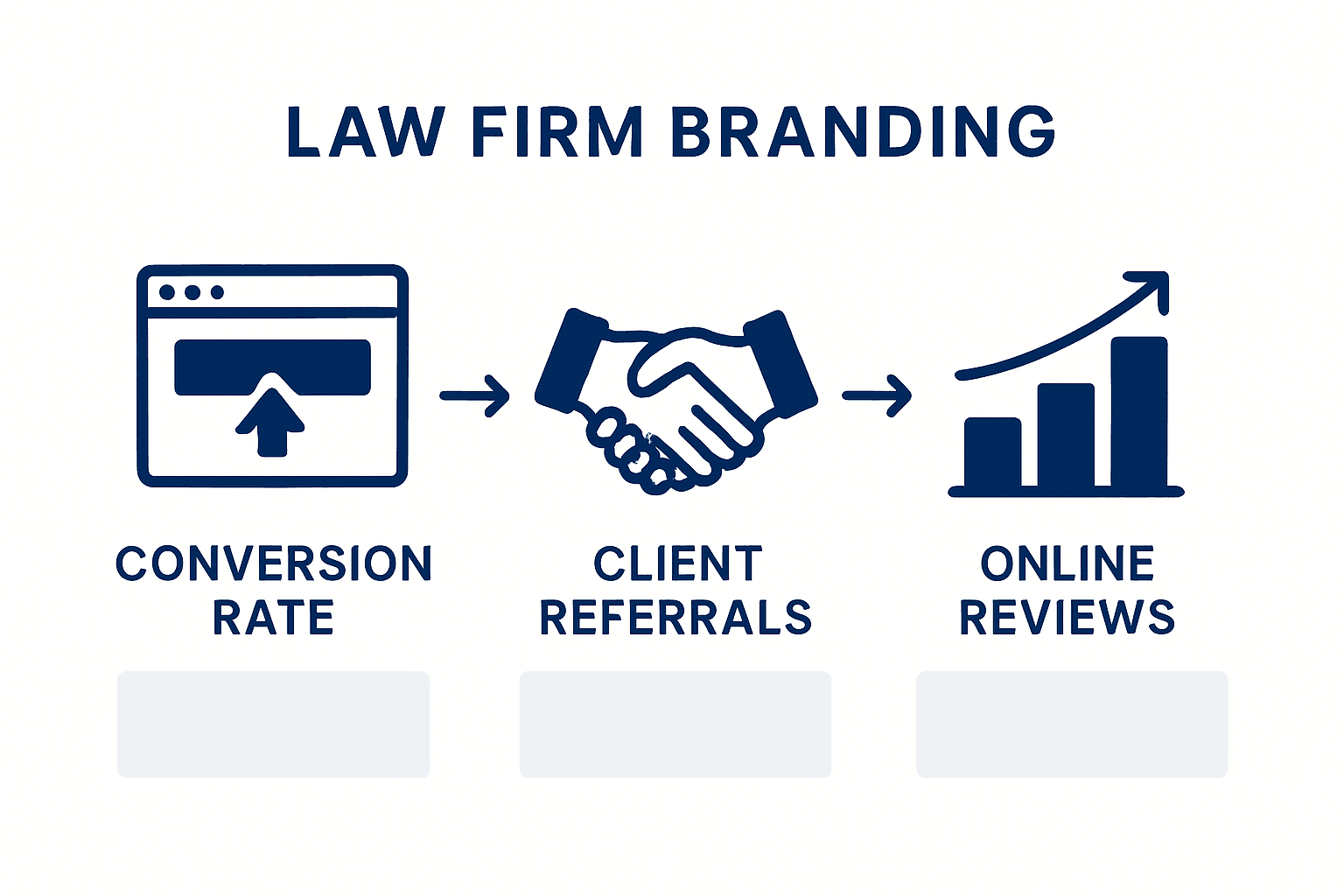
Establish a regular review process where you analyze these metrics quarterly and make strategic adjustments to your branding and marketing approach. Look for patterns in client acquisition, identify which content resonates most with your target audience, and be prepared to pivot your strategy based on real world performance data. This iterative approach allows your law firm to remain agile and responsive to changing market dynamics while continuously refining your brand message and client engagement strategies.
Pro Tip: Create a performance dashboard that consolidates your key branding metrics, making it easy to quickly assess your firm’s marketing effectiveness and track progress over time.
Below is a summary of key branding metrics and their business purpose:
| Metric | What It Measures | Business Impact |
|---|---|---|
| Website Conversion Rate | Percentage of visitors becoming leads | Reveals marketing effectiveness |
| Time on Site | Average minutes per visit | Indicates client engagement |
| Google Rankings | Search result positions | Drives visibility and new leads |
| Client Referral Rate | Percentage of new clients via referral | Measures client satisfaction |
Elevate Your Law Firm Brand with Targeted Digital Marketing Solutions
Building a compelling attorney brand requires more than just a unique value proposition and consistent messaging. The challenges of maintaining a strong online presence, engaging your ideal clients with strategic content, and continuously refining your branding efforts demand expert guidance. If you are striving to stand out in a competitive Southern California legal market, you need tailored marketing strategies that deliver measurable results.
At Case Quota, we specialize in empowering law firms to overcome these exact hurdles. With over 15 years of digital marketing experience and six years dedicated solely to California legal marketing, our services include SEO-optimized web design, AI-powered pay-per-click advertising, Google Local Services Ads, and high-impact social media campaigns. We work alongside your team to translate your unique brand identity into a powerful digital footprint that attracts and converts the right clients.
Ready to transform your law firm’s brand and maximize your client growth?

Discover how partnering with Case Quota can sharpen your messaging, amplify your online presence, and deliver consistent engagement. Take the next step toward superior law firm marketing success at Case Quota. Explore our proven approach to attorney brand building and performance-driven campaigns designed for small to mid-size firms competing against larger competitors. Start growing your client base today by visiting Case Quota’s main page and learn why we are the trusted marketing partner for Southern California law firms.
Frequently Asked Questions
What is a unique value proposition for a law firm?
A unique value proposition for a law firm defines what sets your legal services apart from competitors. To create one, analyze your strengths, such as specific expertise or personalized service, and articulate these in a concise statement that resonates with your ideal clients.
How can I develop consistent branding for my law firm?
To develop consistent branding for your law firm, create a comprehensive branding framework that includes a visual style guide with color palettes, typography, and messaging. Ensure all your marketing materials, online profiles, and client communications align with this framework to build a memorable brand identity.
What steps should I take to optimize my law firm’s online presence?
To optimize your law firm’s online presence, audit all your digital profiles, including your website and social media accounts. Update them to ensure information is accurate, professional, and consistent with your branding and unique value proposition within a timely manner.
How can strategic content engage potential legal clients?
Engaging potential legal clients with strategic content involves providing educational content that addresses their specific legal challenges. Create a variety of content formats, such as blog posts or videos, that demonstrate your expertise and resonate with your target audience, ideally publishing regularly to maintain engagement.
How do I monitor and refine my law firm’s branding efforts?
To monitor and refine your law firm’s branding efforts, track key metrics such as website conversion rates and client referral rates. Establish a quarterly review process to analyze these metrics and adjust your branding strategy based on insights, ensuring continuous improvement.
What key performance indicators should I track for my law firm’s brand?
Key performance indicators to track for your law firm’s brand include website conversion rates, average time spent on your site, and search engine rankings for relevant keywords. Focus on these metrics to gauge your branding effectiveness and inform necessary adjustments over time.