

Effective lead generation for attorneys isn't just about getting your name out there. It's about building a reliable, predictable system that attracts the right kind of potential clients, guides them toward your firm, and turns them into paying cases.
This means moving away from random, one-off advertising and creating a sustainable pipeline of high-quality prospects. It’s a blend of smart digital strategies, like SEO and paid ads, fused with the essential groundwork of knowing exactly who you want to help.
Build Your Foundational Client Growth Strategy
Before you put a single dollar into ads or spend an hour crafting a blog post, you need to build the engine that will power all your client acquisition.
Too many law firms jump straight into tactics without a clear roadmap. They know their practice area, but they haven't truly pinpointed who they serve. Moving beyond a generic label like "personal injury lawyer" is the first, and most critical, step.
Successful lead generation is a cohesive system, not a collection of isolated actions. This foundational work makes sure everything you do is intentional and aimed directly at tangible growth for your firm.
Define Your Ideal Client Persona
Who is the exact person you want to walk through your door?
Creating an ideal client persona means painting a detailed picture of them. Go beyond the basics and really dig into what makes them tick. Think about:
- Demographics: Age, location, occupation, and family status. A 35-year-old construction worker with a family has vastly different concerns than a 65-year-old retiree.
- Pain Points: What specific legal problem are they up against? What are their biggest fears and frustrations keeping them up at night?
- Online Behavior: Where do they turn for answers? Are they furiously searching on Google, asking for recommendations in a local Facebook group, or scanning legal directories like Avvo?
For example, an estate planning attorney might target "Proactive Planners." This persona could represent married couples aged 45-60 who own a home and have minor children. Their core pain point is the fear of leaving their family's future uncertain. You'll likely find them on Google searching for "how to create a will in California" or "setting up a trust for children."
Knowing this lets you speak directly to their fears and needs in every piece of marketing you create.
Set Measurable and Realistic Goals
A lead generation strategy without clear, measurable goals is just wishful thinking. Vague ambitions like "get more clients" are impossible to track and tell you nothing about what's actually working.
Instead, you need to set specific, quantifiable targets that align with your firm's capacity and growth plans.
A goal without a measurement is just a dream. Setting concrete targets—like a 20% increase in qualified consultations within six months—transforms your marketing from an expense into a measurable investment in your firm's future.
Good goals sound like this:
- Generate 15 qualified consultations per month directly from our website.
- Reduce our average cost-per-case acquisition to under $1,000.
- Increase website traffic from organic search by 30% over the next quarter.
This data-driven approach allows you to see what's delivering a return and where to focus your budget. You can see how these goals fit into a larger strategy by exploring this guide on creating a comprehensive law firm marketing plan template.
Understand Your Numbers and Budget
Marketing that works is driven by data, not guesswork.
On average, a law firm might see between 60 to 80 leads per month. But the cost for those leads can swing wildly, from $50 to over $300 each, depending on the channel and your practice area. For highly competitive keywords, SEO leads can cost an average of $456.
This chart puts that number into perspective.
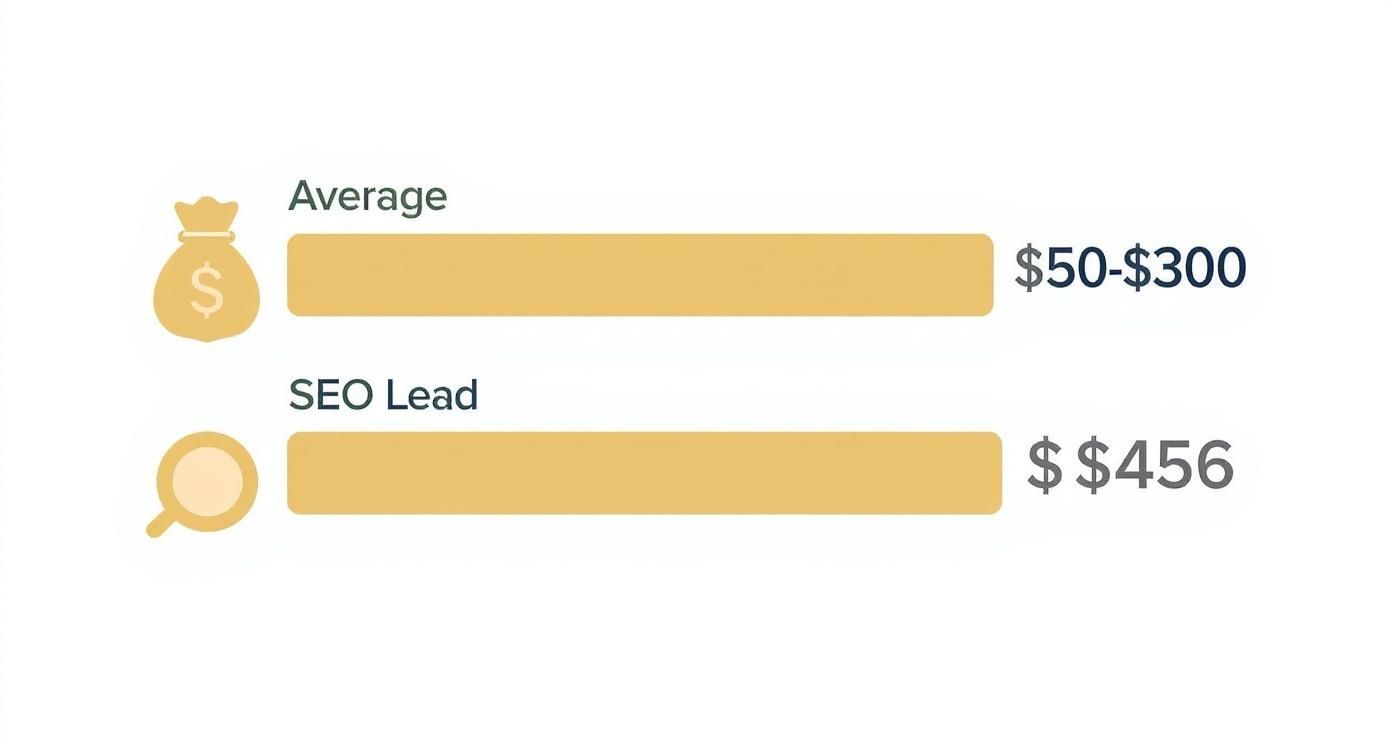
The data is pretty clear: while SEO leads are a significant investment, they often represent a much higher level of intent, justifying the cost for many firms.
Knowing these numbers is absolutely critical for building a budget that supports your goals without breaking the bank. By defining your client, setting goals, and understanding the costs, you create a powerful foundation for every single tactic you deploy.
Comparing Common Lead Generation Channels for Law Firms
So, where should you start? Here's a high-level overview of the most popular channels, comparing their typical cost, lead quality, and time to see meaningful results.
| Channel | Average Cost Per Lead | Typical Lead Intent | Time to Results |
|---|---|---|---|
| SEO | High ($150-$500+) | Very High | 6-12 months |
| PPC (Google Ads) | High ($100-$400+) | High | Immediate |
| Social Media Ads | Low to Medium ($30-$150) | Low to Medium | 1-3 months |
| Referrals | Very Low | Very High | Ongoing |
| Content Marketing | Medium (Time-intensive) | High | 4-8 months |
Each channel has its place. PPC can bring in cases this week, while SEO and content marketing are long-term investments that build a powerful, lasting asset for your firm. The key is finding the right mix for your goals and budget.
Dominate Search Results with Attorney SEO
If you want a sustainable, long-term asset for attracting high-intent clients, you need to get serious about Search Engine Optimization (SEO). Forget constantly paying for every single click. SEO is about building a digital foundation that brings in potential clients who are right now actively searching for legal help.
Think of it like buying prime real estate. It takes an upfront investment and consistent upkeep, but over time, it becomes an incredibly valuable asset that generates a steady stream of qualified leads.
This whole process is about much more than just stuffing keywords onto a page. It's about sending clear signals to Google that your firm is the most trusted and relevant authority for a specific legal need in your city.

Optimize Your Core Service Pages
Your website's service pages are the digital front door to your practice. They have one job: to clearly and persuasively communicate what you do, who you help, and why you’re the best choice. This starts by targeting the exact phrases your ideal clients are typing into Google.
Let’s be real—a potential client isn't just searching for "lawyer." They have an urgent problem and need a specific solution. Your pages have to reflect that reality with terms like:
- "Wrongful termination lawyer in Dallas"
- "Child custody attorney near me"
- "DUI defense for first offense in Orange County"
To turn these pages into client magnets, they need to be comprehensive. Don't just list your services. Explain the process, answer the questions they’re already asking in their heads, and showcase testimonials from past clients. This is how you build trust while giving Google the rich, relevant content it loves to rank.
Master Local SEO for Attorneys
For the vast majority of law firms, clients come from the surrounding community. That makes Local SEO the single most powerful tool for capturing them. It’s all about making your firm impossible to miss in location-based searches, especially on Google Maps and in the "local pack" that shows up at the top of the results.
Your Google Business Profile (GBP) is the absolute cornerstone of this strategy. It's often the very first impression a potential client gets.
A fully optimized Google Business Profile isn't just a listing; it's a dynamic advertisement that works for you 24/7. It builds credibility through reviews, provides immediate contact options, and directly influences your visibility in local searches.
Here’s how to make your profile a client-generating machine:
- Nail Your NAP Consistency: Your firm's Name, Address, and Phone number must be identical everywhere—your website, GBP, and every other online directory. No exceptions.
- Go All-In on Client Reviews: Actively encourage happy clients to leave reviews. A steady stream of positive, recent feedback is a massive ranking factor.
- Use Google Posts: Don't let your profile get stale. Regularly share updates, case results, or blog posts to show both Google and potential clients that you're active and relevant.
These local signals are critical. They tell Google you’re a prominent, trusted legal authority in your specific service area. For a deeper dive, check out these essential law firm SEO tips to gain more clients.
Build Authority with Strategic Backlinks
If your website's content is the engine, backlinks are the fuel. A backlink is simply a link from another website to yours. In Google’s eyes, high-quality backlinks are votes of confidence, signaling that other reputable sources trust your expertise.
But I have to be clear: this is all about quality over quantity. A single link from a respected legal association's website is worth a hundred links from spammy, low-quality directories.
Focus your efforts here:
- Legal Directories: Get listed on the big players like Avvo, FindLaw, and Justia, plus your state and local bar association sites.
- Local Press: A feature or even a quote in a local news story about a legal issue can land you a hugely powerful backlink.
- Community Sponsorships: Sponsoring a local charity run or a youth sports team often gets you a link from their website, which powerfully reinforces your local relevance.
Building a strong backlink profile is a marathon, not a sprint. It takes time and consistent effort, but it's this long-term approach that truly establishes your firm's digital authority, making you the obvious choice for both search engines and the clients you want to serve.
Use Content Marketing to Build Unshakeable Trust
In the legal world, content is the currency of trust. It’s your single best tool for showing your expertise, answering a potential client's most pressing questions, and building a genuine connection long before they ever think about picking up the phone. Effective lead generation for lawyers is so much more than just having a blog; it’s about strategically creating resources that solve real-world problems for the exact people you want to represent.
This isn't about a running tally of your case wins. It’s about providing real, tangible value. Picture a family law firm creating a definitive guide on "Navigating Child Custody Mediation in California," or an estate planning attorney producing a quick video series on avoiding probate. You stop being just another lawyer and become the go-to authority.

Go Beyond the Standard Blog Post
A blog is table stakes for any serious law firm, but it’s just the starting line. The firms that are truly winning are diversifying their content to meet potential clients where they already are, using formats that are easy to digest and incredibly practical. The goal is to make your content feel less like marketing and more like a helping hand.
To really build that unshakeable trust and pull in your ideal clients, you have to develop a comprehensive content marketing strategy that’s perfectly aligned with your firm's goals.
Think about adding these powerful formats to your mix:
- Detailed Checklists: A simple "Post-Accident Checklist" from a personal injury firm is the kind of invaluable resource someone prints out and keeps in their glove compartment.
- Client Success Stories: Don't just post a testimonial. Tell the story of a client’s problem (anonymized, of course), the specific steps you took to solve it, and the positive outcome you achieved.
- Video Q&As: Record short, two-minute videos answering the top 5-10 questions you hear in every initial consultation. It’s a fantastic way to let your personality shine through and build instant rapport.
- "How-To" Guides: Write in-depth articles that walk people through a specific legal maze, demystifying complex topics and cementing your expert status.
This approach turns your website from a static brochure into a living, breathing resource library. And when you get it right, the results are powerful. One personal injury law firm, for example, generated over 7,000 high-quality leads and saw a 30% year-over-year jump in conversion rates after implementing a similar strategy.
Answer Questions Before They Are Asked
Your potential clients are on Google right now, typing in specific, often stress-fueled questions. Your entire content strategy should be laser-focused on giving them the absolute best answers. This is where your deep, firsthand knowledge of your clients becomes a secret weapon.
Just think about what they’re searching for:
- "What are my rights if my landlord is evicting me?"
- "How much does a simple will cost in Texas?"
- "First steps to take after a workplace injury."
Every single one of those searches is a golden opportunity for you to create content that speaks directly to their pain point. When your firm’s article or video provides the clearest, most helpful answer, you instantly build credibility and authority.
The goal of legal content marketing isn't just to rank on Google; it's to become the most trusted resource for your ideal client. When you consistently provide valuable answers, you become the only logical choice when they are finally ready to hire an attorney.
Repurpose Your Content for Maximum Reach
As a busy attorney, you don't have time to reinvent the wheel every single day. The real beauty of a solid content strategy is that one big piece of content can be sliced and diced into multiple formats, stretching its reach and saving you an incredible amount of time.
Here’s how that looks in the real world:
- Start with a Pillar Post: You write a comprehensive, 2,000-word guide called "The Complete Guide to Forming an LLC in Florida."
- Break It Down: Turn each major section of that guide into its own shorter blog post (e.g., "Choosing a Registered Agent for Your Florida LLC").
- Create a Visual: Design a simple infographic that visually walks through the key steps of the LLC formation process.
- Record a Video: Film a 5-minute video discussing the three biggest mistakes people make when forming an LLC on their own.
- Develop Social Media Snippets: Pull out key stats and quick tips from the original guide to share as short, punchy posts on LinkedIn or Facebook.
This "create once, distribute many" system ensures you squeeze every last drop of value out of your hard work. For a deeper dive, check out our guide on mastering content marketing for law firms. By consistently putting helpful resources out into the world, you build a foundation of trust that turns curious searchers into your best clients.
Drive Immediate Leads with Paid Advertising
While SEO and content marketing are fantastic long-term investments, sometimes you just need the phone to start ringing this week. This is where paid advertising comes in. It’s the most direct and controllable lever you can pull to generate leads for your law firm, right now.
Pay-Per-Click (PPC) ads, especially on platforms like Google Ads, put your firm directly in front of potential clients the moment they're searching for help. This isn't about slowly building a brand over months; it's about capturing people with high intent who need a lawyer now.
But you have to approach PPC with a scalpel, not a sledgehammer. It's shockingly easy to burn through your budget with nothing to show for it if you don't have a solid strategy. A winning campaign is a well-oiled machine, from the keywords you target to the ad you write and, crucially, the landing page you send them to.
Master Google Ads for High-Intent Keywords
When someone’s life gets turned upside down by an accident or a legal battle, their first stop is almost always Google. Your job is to be the first, best answer they find. That all starts with choosing keywords that signal a real, urgent need for legal help.
Forget broad terms like "lawyer." You need to get into the head of a person in crisis and target the long-tail, high-intent phrases they'd actually type.
For instance:
- A personal injury firm should be bidding on "car accident lawyer for head injury," not just "PI lawyer."
- A family law attorney needs to target "emergency child custody order Texas" instead of the generic "divorce attorney."
These kinds of specific searches show that the user is past the research phase and is ready to hire. Your ad copy has to speak directly to their problem, offering a clear solution and a compelling reason to click. Use action-oriented language—think "Get a Free Case Review Today" or "24/7 Consultation Available"—to push for that immediate click.
Create Landing Pages That Convert
Getting the click is only half the battle. One of the costliest mistakes I see firms make is sending all their expensive ad traffic to their generic homepage. This forces a potential client to hunt for the information they need, and that little bit of friction is often all it takes for them to hit the back button.
Every single ad campaign needs its own dedicated landing page, built for one purpose and one purpose only: conversion.
This page has to be a seamless extension of your ad. It should feature:
- A headline that perfectly matches the ad they just clicked.
- A quick, clear explanation of how you solve their specific problem.
- Social proof, like powerful client testimonials or impressive case results.
- A dead-simple contact form and a phone number that’s impossible to miss.
The sole job of a landing page is to convert a visitor into a lead. Remove all distractions—no navigation bar, no links to other blog posts. Guide them directly to the action you want them to take: contacting your firm.
By building a focused, high-converting landing page, you squeeze the absolute most value out of every ad dollar you spend. The smoother that path is from click to contact, the more cases you'll sign.
Look Beyond Google for Niche Audiences
Google is the undisputed king of search, but other platforms give you incredible opportunities to reach very specific types of clients. This is where you can get hyper-targeted.
If you have a B2B practice, like corporate or intellectual property law, LinkedIn is an absolute goldmine. You can target people by their exact industry, company size, and even their job title. Imagine serving an ad for "IP Protection for SaaS Startups" that only shows up for CEOs and CTOs in the tech space.
Even social media can be a powerhouse for practice areas like estate planning or family law. Using social media for attorneys lets you target users based on precise demographics, life events (like "newly engaged" or "new parents"), and their interests. As you build out your paid strategy, don't underestimate the power of visuals; this guide on creating video ads can show you how to craft compelling content that drives action.
You can dive deeper into these platforms in our detailed guide on attorney advertising on Facebook. The key is matching the right platform to your ideal client. When you get that right, you can run incredibly efficient campaigns that deliver real cases and a measurable return.
Amplify Referrals and Your Online Reputation
SEO and PPC are absolute workhorses for generating leads, but don't ever discount the raw power of word-of-mouth. It's as potent as ever, it just looks a little different these days. Today, a referral isn't just a phone call between two colleagues; it’s a glowing Google review that thousands of potential clients can see.
This is where you blend old-school relationship-building with new-school digital validation.
The goal is to build two things at once: a steady stream of professional referrals and a rock-solid online reputation. When you get these two working together, they create a self-sustaining feedback loop that consistently brings in high-quality cases.

Systematize Your Professional Referrals
Let's be honest, some of your best, most qualified cases will come from other professionals who run into people needing your exact legal skills. These moments aren't just happy accidents; they happen because you’ve intentionally nurtured those relationships.
Think about the professionals whose clients frequently overlap with your practice area.
A strong referral network might look something like this:
- Family Law Attorneys: Therapists, marriage counselors, and financial planners who work with families in transition.
- Estate Planning Attorneys: CPAs, insurance agents, and wealth advisors helping clients plan for their financial future.
- Personal Injury Attorneys: Chiropractors, physical therapists, and family doctors who are on the front lines treating accident victims.
The trick is to treat these relationships with the same strategic focus you give any other marketing channel. Schedule regular check-ins, maybe send a quick monthly email with a helpful legal tidbit, and always, always be ready to send business back their way. A relationship that benefits both sides is one that lasts.
Turn Client Reviews into a Lead Generation Machine
Your online reputation is the social proof that backs up everything else you're doing. When a potential client finds you through an ad or a Google search, what's the very next thing they do? They look you up. They read your reviews. A solid collection of recent, positive feedback is often the final nudge that gets them to call you instead of the firm down the street.
But you can't just cross your fingers and hope for good reviews. You need a system.
A proactive approach to reputation management isn't about vanity; it's about controlling the narrative. By systematically asking satisfied clients for feedback, you build a powerful asset that generates trust and converts prospects on your behalf, 24/7.
The absolute best time to ask for a review is right at the peak of a client's satisfaction—usually just after you've delivered a fantastic outcome for them. Make it dead simple. Send them a direct link to your Google Business Profile or Avvo page. This one small step turns a happy client into one of your most powerful advocates. Building a strong reputation is so important that we've created a complete guide on online reputation management for lawyers.
Managing Your Reputation in a Complex Market
Juggling referrals and online reviews takes consistent effort, which is tough for any busy attorney. It’s a big reason why, as of 2025, a striking 83% of law firms now hire outside marketing agencies to handle this stuff. The truth is, legal marketing has gotten so complex that most firms just don't have the in-house bandwidth to effectively manage these critical pieces of their lead generation strategy.
At the end of the day, a stellar reputation and a steady flow of referrals don't just happen by magic. They're the direct result of doing great legal work and then having a deliberate plan to amplify that success. By nurturing your professional network and making it easy for happy clients to sing your praises, you create a sustainable and incredibly effective system for attracting your next best cases.
Your Top Attorney Lead Generation Questions, Answered
When you’re busy practicing law, the world of marketing can feel like a maze. You're trying to grow your firm, but practical questions about budgets, timelines, and where to even start can bring everything to a halt. Let's cut through the noise and tackle the real-world questions we hear from attorneys every day.
These aren't just abstract ideas; they're the make-or-break details that determine whether a marketing plan actually delivers new cases or just drains your bank account. Getting clear on these points is the first step before you invest another dollar or minute into a new strategy.
What’s a Realistic Marketing Budget for a Small Law Firm?
There's no single magic number, but a solid rule of thumb for a small or solo firm is to earmark 5-10% of your gross revenue for marketing.
Now, if you're in a dog-eat-dog practice area like personal injury in a major city, or you're a brand new firm trying to get your name out there, you'll probably need to push that closer to 12-15% just to get traction.
The most important thing is to stop thinking of it as an expense and start treating it as a strategic investment.
Pick a budget you can actually track and measure. For instance, spending $2,500 a month on Google Ads might sound like a lot, but if it consistently brings in three new cases worth a combined $20,000, the math speaks for itself. Once you find a channel that delivers that kind of positive return, you can scale up with confidence.
Should My Law Firm Focus on SEO or PPC?
This is the classic question, but thinking of it as an "either/or" choice is a trap that slows down so many firms. The smartest approach is to use both, because they play completely different—but complementary—roles.
Think of SEO as buying a valuable piece of commercial real estate. It takes time and upfront investment to build, but it becomes a powerful, long-term asset that generates value for years. PPC is like renting a high-traffic billboard on the busiest highway in town—it gets you immediate visibility and brings clients in the door the second you start paying.
A savvy, integrated strategy often means using PPC to get the phone ringing right now. The revenue you generate from those initial cases can then fund the long-term marathon of building a powerful SEO foundation. While your SEO asset is appreciating in value over the next year, PPC is keeping the lights on this week.
How Long Until I See Real Results from Legal SEO?
Patience is the name of the game with SEO. It is absolutely a marathon, not a sprint. While you might spot some small, encouraging upticks in your local search rankings within 3-4 months of consistent work, SEO is not a quick fix.
For the kind of significant, lead-generating results you're after—especially in a competitive market—you should plan on it taking 6 to 12 months. Why so long? Because you are fundamentally building trust and authority with search engines like Google, and that's a process that simply can't be rushed or faked.
The long-term payoff, however, is a sustainable stream of high-quality, organic leads that almost always outweighs the initial investment. Every piece of content you publish and every backlink you earn is another brick in your firm's digital foundation, creating an asset that will pay dividends for years to come.
Ready to stop guessing and start getting real results? The team at Case Quota has over 15 years of experience building predictable client acquisition systems for law firms just like yours. We combine SEO, AI-powered advertising, and strategic web design to attract the cases you want. Schedule your free strategy session today.