

Nearly 80 percent of American legal clients say a law firm’s online presence directly influences their decision to seek representation. In such a competitive landscape, even the strongest legal expertise can go unnoticed without a clear digital identity. By defining your firm’s branding, website strategy, and technical foundations before you launch, you gain a critical edge that positions your American law practice to capture attention and build lasting trust with prospective clients.
Table of Contents
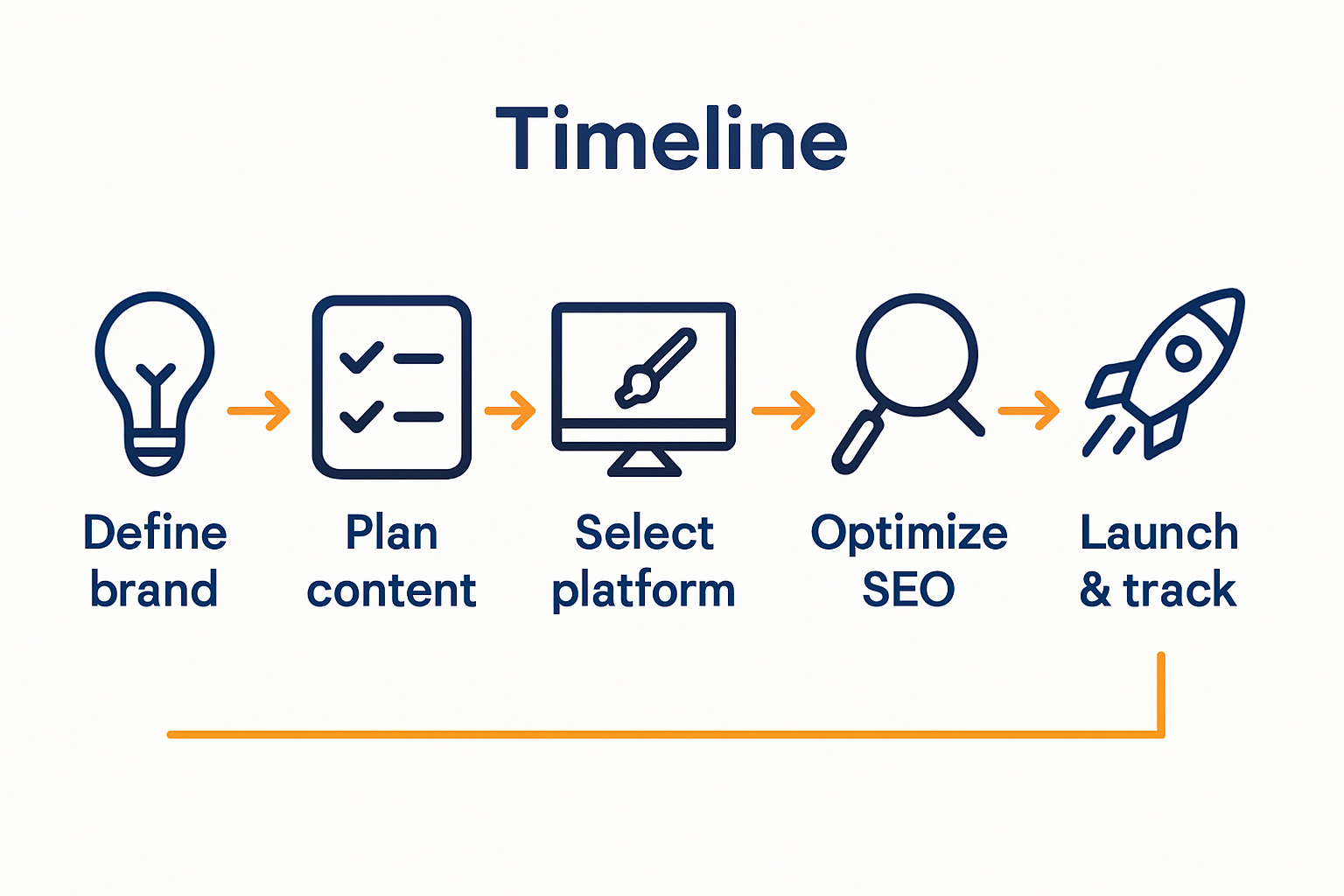
- Step 1: Define Your Law Firm’s Branding And Objectives
- Step 2: Map Out Essential Website Features And Content
- Step 3: Select Design, Platform, And Hosting Solutions
- Step 4: Develop And Optimize Site For Legal SEO
- Step 5: Test Website Functionality And User Experience
- Step 6: Launch Site And Implement Ongoing Performance Tracking
Quick Summary
| Key Point | Explanation |
|---|---|
| 1. Clearly Define Your Brand | Identify your law firm’s unique identity and values to guide your digital marketing efforts effectively. |
| 2. Prioritize Essential Website Content | Develop a website structure including core pages that effectively communicate your services to potential clients. |
| 3. Choose Appropriate Design and Hosting | Select a website platform and hosting solution that support your law firm’s professional image and security needs. |
| 4. Optimize for Legal SEO | Implement targeted SEO strategies to improve online visibility and attract more qualified clients through organic searches. |
| 5. Test and Monitor Website Performance | Conduct thorough testing for functionality and implement ongoing performance tracking to continuously improve your website. |
Step 1: Define your law firm’s branding and objectives
Creating a powerful online presence begins with clearly defining your law firm’s unique brand identity and strategic goals. This foundational step will guide every aspect of your website design and digital marketing approach, helping you stand out in a competitive legal marketplace.
Start by identifying what makes your practice distinctive. Are you a boutique personal injury firm specializing in workplace accidents? A family law practice focused on compassionate divorce mediation? Your brand should communicate your core values, practice areas, and the specific client problems you solve. Consider developing a law firm marketing strategy that articulates your unique value proposition, target client demographics, and professional philosophy.
Your branding elements should extend beyond visual aesthetics to reflect your firm’s professional personality. This means crafting messaging that resonates with potential clients while remaining authentic to your legal practice’s approach. Think about the tone of your communication – whether it feels approachable and empathetic or more formal and authoritative. Your website design should visually reinforce these brand attributes, creating a cohesive representation of your legal practice that builds immediate trust with site visitors.
Quickly audit your current brand perception by asking existing clients what they perceive as your firm’s strengths. These insights can help refine your branding strategy and ensure your website design truly represents your professional identity.
Step 2: Map out essential website features and content
Designing an effective law firm website requires strategic planning of features and content that will attract and convert potential clients. Your website serves as a digital representation of your legal practice, functioning simultaneously as an informational resource, marketing tool, and client engagement platform.

Start by identifying the core pages every law firm website needs. These typically include a homepage, practice area overview pages, attorney biography sections, client testimonials, contact information, and a comprehensive services page. When developing these pages, website design for law firms should prioritize clear navigation and client-focused messaging that addresses potential legal concerns and showcases your firm’s expertise.
Each page should serve a specific purpose in guiding potential clients through their decision making process. Your homepage needs to immediately communicate your firm’s unique value proposition, while practice area pages should provide detailed insights into specific legal services. Include clear calls to action, such as consultation request forms or prominent contact information, to make it easy for prospective clients to reach out. Remember that your website content should balance professional credibility with approachable language that helps potential clients feel understood and supported during their legal challenges.
Step 3: Select design, platform, and hosting solutions
Choosing the right digital infrastructure for your law firm’s website is a critical decision that impacts your online presence, client perception, and marketing effectiveness. This step requires carefully evaluating design aesthetics, technological platforms, and reliable hosting solutions that align with your professional brand and technical requirements.
Begin by exploring website platforms specifically designed for professional services. WordPress remains a popular choice for its flexibility and robust legal theme options, while specialized legal website builders offer more tailored features. When considering design, top attorney website design examples demonstrate that clean, professional layouts with intuitive navigation are essential for building client trust. Look for responsive designs that adapt seamlessly across desktop, tablet, and mobile devices, ensuring potential clients can access your information from any device.
Your hosting solution should prioritize security, speed, and reliability. For law firms handling sensitive client information, choose a hosting provider that offers SSL certificates, regular backups, and robust data protection measures. Consider managed WordPress hosting or specialized legal website hosting services that understand the unique security requirements of legal practices. Budget for ongoing maintenance and potential customization, recognizing that your website is an investment in your firm’s digital representation and client acquisition strategy.
Step 4: Develop and optimize site for legal SEO
Search engine optimization represents a critical strategy for law firms looking to increase online visibility and attract potential clients through organic search results. By implementing targeted SEO techniques specific to legal practices, you can significantly improve your website’s ranking and draw more qualified leads to your firm.
Begin by conducting comprehensive keyword research focused on legal services and practice areas. Complete guide to SEO legal marketing demonstrates that incorporating location specific keywords, practice area terms, and client intent driven phrases can dramatically enhance your search performance. Develop content that addresses specific legal questions potential clients might search for, using natural language that speaks directly to their concerns while strategically integrating relevant keywords throughout your website.
Technical SEO elements are equally crucial for law firm websites. Ensure your site loads quickly, is mobile responsive, and has clean structured data that helps search engines understand your content. Focus on creating detailed practice area pages with unique content, implementing schema markup for legal services, and building authoritative backlinks from reputable legal directories and professional associations. Remember that consistent, high quality content that provides genuine value to potential clients will always outperform keyword stuffing or manipulative SEO tactics.
Step 5: Test website functionality and user experience
Thorough testing is crucial to ensuring your law firm’s website delivers a seamless and professional digital experience for potential clients. This stage involves comprehensive evaluation of technical performance, user interface, and overall website functionality across multiple devices and browsers.
Start by conducting systematic cross platform testing to verify your website performs consistently. Website design for law firms emphasizes the importance of responsive design that adapts perfectly to smartphones, tablets, and desktop computers. Manually check each page for loading speed, mobile responsiveness, form submission functionality, and navigation clarity. Simulate potential client interactions by testing consultation request forms, contact information links, and practice area page transitions to identify any potential user experience friction points.
Prioritize security and accessibility during your testing phase. Verify SSL certificates are correctly installed, contact forms encrypt sensitive information, and all external links function correctly. Consider recruiting a small group of test users who can provide honest feedback about site navigation, readability, and overall user experience. Remember that your website serves as a critical first impression for potential clients, so every technical detail matters in creating a professional and trustworthy online presence.
Step 6: Launch site and implement ongoing performance tracking
Launching your law firm’s website marks the beginning of your digital marketing journey, not the end. This critical phase involves strategic deployment and establishing a robust system for monitoring and continuously improving your online presence to attract and convert potential clients.
Initiate your website launch with a comprehensive checklist that includes final technical verifications and strategic tracking implementations. Complete guide to SEO legal marketing recommends setting up advanced analytics tools like Google Analytics and Google Search Console to track website performance metrics. Configure custom dashboards that monitor key indicators such as website traffic, user engagement, conversion rates, and search engine rankings specific to your legal practice areas.
Develop a consistent monitoring and optimization routine that involves monthly performance reviews. Track which practice area pages generate the most client inquiries, analyze user behavior patterns, and be prepared to make data driven adjustments to your content and design. Implement conversion tracking for consultation request forms, monitor page load speeds, and regularly update your content to maintain relevance and search engine visibility. Your website is a dynamic marketing tool that requires ongoing attention and strategic refinement to effectively represent your law firm’s expertise and attract potential clients.
Elevate Your Small Law Firm Website with Expert Marketing Solutions
Launching and optimizing a law firm website for small practices involves many challenges such as defining clear branding, selecting the right platform, and mastering legal SEO to attract clients effectively. This workflow demands focused expertise to ensure your site not only looks professional but also converts visitors into consultations. If your firm struggles with these steps or wants to accelerate growth while standing out in Southern California’s competitive legal market Case Quota offers tailored digital marketing strategies crafted specifically for small to mid-size legal practices.

Discover how our comprehensive services including SEO-optimized web design, pay-per-click advertising powered by AI, and advanced legal marketing leadership can help your firm build a powerful online presence quickly and confidently. Don’t let limited marketing resources hold you back from getting the client base you deserve. Take the next step today by visiting Case Quota to learn how our proven workflow and customized campaigns turn your website into a client-generating machine.
Frequently Asked Questions
What are the essential steps in the law firm website creation workflow for small practices?
To create an effective law firm website, start by defining your branding and objectives, mapping out essential features, and selecting design and hosting solutions. Then, develop and optimize your site for SEO, thoroughly test its functionality, and finally launch it while implementing ongoing performance tracking.
How can I define my law firm’s branding for website creation?
Identify what makes your practice unique, including your core values and practice areas. Conduct a quick audit by gathering feedback from existing clients to refine your branding strategy and ensure it aligns with your firm’s identity.
What key content should my law firm website include?
Your website should feature a homepage, practice area pages, attorney biographies, client testimonials, and contact information. Ensure each page serves a clear purpose, addressing potential client concerns and providing obvious calls to action.
Why is SEO important for my law firm’s website?
Search engine optimization (SEO) is crucial for increasing your website’s visibility in search results, attracting more qualified leads. Focus on incorporating relevant keywords, improving site speed, and creating high-quality content to enhance your online presence.
How should I test my law firm’s website before launching it?
Conduct cross-platform testing to ensure your website functions well on different devices, including smartphones and tablets. Check for loading speeds, mobile responsiveness, and functionality of contact forms to provide a seamless user experience.
What should I do after launching my law firm’s website?
After launching your website, set up analytics tools to monitor key performance metrics such as website traffic and conversion rates. Plan for monthly performance reviews to assess user behavior and make necessary adjustments to improve client engagement.