
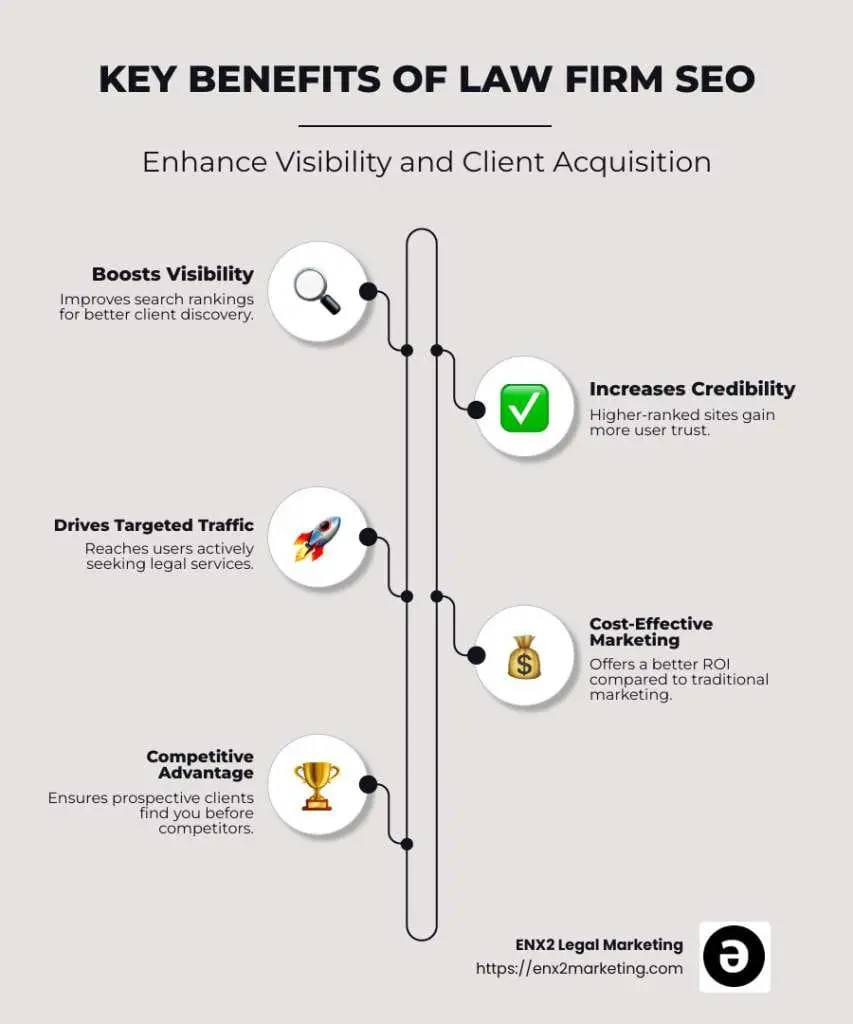
In today’s digital landscape, potential clients turn to search engines when they need legal representation. Whether someone is facing a personal injury claim, divorce proceedings, or criminal charges, their first instinct is to search online for “personal injury lawyer near me” or “best divorce attorney in [city].” This shift in consumer behavior makes SEO for legal firms not just beneficial, but absolutely essential for sustainable practice growth.
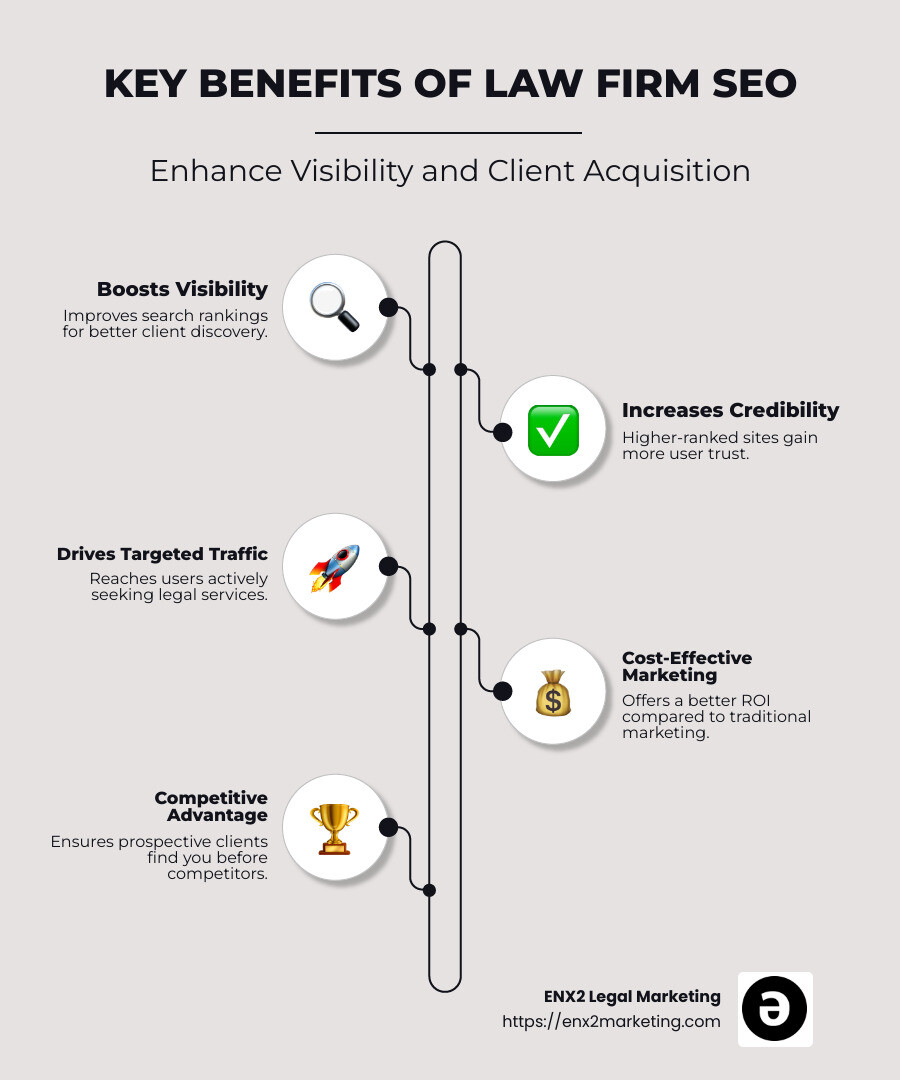
The legal industry is one of the most competitive sectors online, with law firms investing billions annually in digital marketing. However, many attorneys struggle to achieve meaningful results from their SEO efforts, often because they’re applying generic strategies that don’t account for the unique challenges and opportunities within the legal sector.
This comprehensive guide will equip you with advanced, proven strategies specifically tailored for legal practices. You’ll discover how to optimize your website for local search dominance, create content that converts prospects into clients, build authoritative backlink profiles, and measure ROI effectively. Whether you’re a solo practitioner or managing marketing for a large firm, these actionable insights will help you outrank competitors and attract high-value cases consistently.
Understanding the Legal SEO Landscape
Featured Partner
Case Quota: Uses AI to help law firms with digital marketing and market dominance
Case Quota uses AI to help law firms with digital marketing and market dominance.
- It was founded by a former top Los Angeles consultant and aims to help law firms navigate the changing legal marketing landscape by implementing advanced digital strategies
- Onboard quickly with guided setup and white-glove support.
Request a walkthrough in minutes.
The legal industry presents unique challenges and opportunities that require specialized SEO approaches. Understanding these nuances is crucial for developing effective strategies that comply with professional standards while achieving competitive rankings. This section explores the distinctive aspects of legal SEO and how they impact your marketing success.
The Unique Challenges of Legal SEO
Legal SEO operates in a highly regulated environment where compliance, ethics, and professional standards significantly impact marketing strategies. Unlike other industries, law firms must navigate attorney advertising rules that vary by state, ensuring all SEO content meets professional conduct requirements while remaining competitive. For example, some states prohibit testimonials or require specific disclaimers on all marketing materials, which can affect how you structure client reviews and case results on your website.
The legal sector faces intense competition for high-value keywords, with cost-per-click rates often exceeding $100 for competitive terms like “personal injury lawyer” or “DUI attorney.” This makes organic search visibility even more crucial, as firms that achieve top rankings can reduce their paid advertising dependence by up to 60% while maintaining consistent lead flow. The competitive landscape means that achieving first-page rankings requires sustained effort and sophisticated strategies.
Search Intent in Legal Queries
Legal search queries typically fall into three distinct categories that require different optimization approaches. Informational queries (seeking legal advice) represent 65% of legal searches, navigational queries (looking for specific firms) account for 20%, and transactional queries (ready to hire representation) make up 15%. Understanding this intent hierarchy is crucial because it determines content strategy, keyword targeting, and conversion optimization approaches.
Most legal searches begin with informational queries as potential clients research their legal options. For instance, someone involved in a car accident might first search “what to do after car accident” before progressing to “car accident lawyer near me.” Firms that capture these early-stage searches through comprehensive, helpful content can guide prospects through the decision-making process, establishing trust and expertise before competitors enter the conversation, resulting in conversion rates 3x higher than cold traffic.
The Impact of Google’s E-A-T Guidelines
Google’s Expertise, Authoritativeness, and Trustworthiness (E-A-T) guidelines particularly impact legal websites, which Google classifies as “Your Money or Your Life” (YMYL) content. This means legal sites face higher scrutiny regarding content quality, author credentials, and overall website trustworthiness. Websites that fail to demonstrate proper E-A-T signals can experience ranking penalties that reduce organic traffic by up to 40%.
Successful legal SEO requires demonstrating expertise through detailed attorney bios showcasing education, certifications, and years of experience. Authority building involves earning mentions from reputable legal publications, bar associations, and industry organizations, while trustworthiness encompasses secure website infrastructure, transparent contact information, and ethical marketing practices. Law firms with strong E-A-T signals typically see 25% higher click-through rates from search results.
Local vs. National Legal SEO Strategies
Most legal practices serve local or regional markets, making local SEO optimization critical for success, while some firms require national visibility strategies. Local legal practices generate 78% of their clients from within a 25-mile radius, making location-based optimization essential. However, firms specializing in federal law, intellectual property, or appellate work may need to target national audiences across multiple jurisdictions.
Local legal SEO focuses on Google My Business optimization, local citation building, and location-specific content creation. National strategies emphasize thought leadership content, industry publication placements, and broad keyword targeting across multiple geographic markets. Firms successfully implementing local SEO strategies typically see 45% more qualified leads compared to those using generic approaches.
Keyword Research and Strategy for Law Firms
Effective keyword research forms the foundation of successful legal SEO campaigns. Unlike general business keywords, legal search terms carry high commercial intent and face intense competition. This section provides advanced strategies for identifying, analyzing, and targeting keywords that drive qualified leads to your legal practice.
Practice Area Keyword Mapping
Effective legal SEO begins with comprehensive keyword mapping that aligns search terms with specific practice areas and client needs. This process involves identifying primary keywords (high-volume, competitive terms), secondary keywords (moderate competition with good conversion potential), and long-tail keywords (specific queries with high purchase intent). For example, a personal injury firm might target “personal injury lawyer” as primary (8,100 monthly searches), “slip and fall attorney” as secondary (1,300 searches), and “truck accident lawyer compensation” as long-tail (210 searches).
The key is understanding that long-tail keywords, despite lower search volumes, often convert at rates 2.5x higher than broad terms. A client searching “best personal injury lawyer for truck accidents in Dallas” demonstrates much stronger purchase intent than someone searching “personal injury lawyer.” Strategic keyword mapping should allocate 40% of content efforts to primary keywords, 35% to secondary keywords, and 25% to long-tail variations for optimal ROI.
Local Keyword Optimization
Local keyword research requires understanding how potential clients search for legal services in your specific market, which varies significantly by region and practice area. This involves analyzing search patterns for geo-modified keywords, understanding local competition, and identifying opportunities where your firm can achieve rankings more easily. Tools like Google’s Keyword Planner show that “Dallas personal injury lawyer” receives 590 monthly searches with high competition, while “Plano personal injury attorney” gets 90 searches with medium competition.
Manual research through Google autocomplete and related searches often reveals hidden opportunities that keyword tools miss. For instance, typing “divorce lawyer” in your city’s Google search might show suggestions like “divorce lawyer payment plans” or “divorce attorney consultation fee,” indicating specific client concerns that competitors may not be addressing. Successful local keyword strategies target 60% city-specific terms and 40% broader regional keywords.
Competitor Keyword Analysis
Understanding which keywords competitors rank for reveals opportunities and threats in your market that can inform strategic decisions. This analysis should examine both direct competitors (same practice areas, same location) and indirect competitors (different locations but similar services) to identify content gaps and ranking opportunities. Using tools like SEMrush or Ahrefs, you might discover that a competing firm ranks #3 for “medical malpractice lawyer” but doesn’t appear in the top 50 for “hospital negligence attorney,” revealing a content gap opportunity.
Competitor analysis tools can reveal which pages drive the most organic traffic to rival firms, what keywords they’re targeting successfully, and where they’re vulnerable to competitive pressure. For example, if competitors focus heavily on broad terms but neglect specific injury types, you could capture market share by creating detailed content about “spinal cord injury compensation” or “traumatic brain injury lawsuits,” potentially achieving first-page rankings within 6-8 months.
Seasonal and Trending Keywords
Legal search patterns often fluctuate based on seasonal factors, current events, and legislative changes that create temporary opportunities for increased visibility. Personal injury searches may spike 35% after winter weather events, DUI searches increase 60% around holidays, and bankruptcy queries rise 45% during economic downturns. Monitoring these trends allows firms to create timely content that captures increased search demand when competition is often unprepared.
Google Trends data shows that “slip and fall lawyer” searches peak in January and February due to winter weather conditions, while “bicycle accident attorney” searches surge during spring and summer months. Firms that prepare seasonal content in advance can capture this increased traffic, often achieving 40% higher engagement rates on timely, relevant content compared to evergreen materials.
| Keyword Type | Search Volume | Competition | Conversion Rate | Example |
|---|---|---|---|---|
| Primary Practice Area | High (1000+/month) | Very High | Medium (2-4%) | “Personal injury lawyer” |
| Local + Practice Area | Medium (100-500/month) | High | High (5-8%) | “Dallas personal injury lawyer” |
| Specific Legal Issue | Medium (50-300/month) | Medium | Very High (8-12%) | “Truck accident lawyer Dallas” |
| Long-tail Question | Low (10-50/month) | Low | Very High (10-15%) | “What to do after car accident in Texas” |
Understanding these keyword categories helps prioritize SEO efforts and allocate resources effectively across different types of search queries.
On-Page SEO Optimization for Legal Websites
On-page optimization represents the foundation of legal website SEO success, directly impacting how search engines understand and rank your content. Legal websites face unique challenges in balancing SEO requirements with professional compliance and user experience. This section covers advanced on-page techniques specifically designed for law firm websites.

Title Tag and Meta Description Optimization
Title tags represent one of the most important on-page SEO factors, serving as the clickable headline in search results that can increase click-through rates by up to 30%. For legal websites, effective title tags should include the primary keyword, location (for local practices), and a compelling benefit or differentiator within the 55-65 character limit. For example, “Dallas Personal Injury Lawyer | Free Consultation | Smith Law” performs better than generic titles like “Personal Injury Attorney – Smith Law Firm.”
Meta descriptions, while not direct ranking factors, significantly impact click-through rates from search results, with well-crafted descriptions improving CTR by 25-35%. Legal meta descriptions should include relevant keywords, location information, and clear calls-to-action that encourage clicks while accurately representing page content. A description like “Experienced Dallas personal injury attorneys with 95% success rate. Free consultation, no fees unless we win. Call (555) 123-4567 today” provides compelling reasons to click while setting proper expectations.
Header Structure and Content Hierarchy
Proper header tag usage (H1, H2, H3) helps search engines understand content structure and topic relevance while improving user experience and engagement. Legal pages should use descriptive headers that include relevant keywords naturally while organizing information logically for both users and search engines. Research shows that pages with proper header hierarchy achieve 18% better rankings and 22% higher time-on-page metrics compared to pages with poor structure.
The H1 tag should clearly identify the page topic and include the primary keyword, such as “Medical Malpractice Attorney in Houston | Proven Results.” H2 and H3 tags break content into digestible sections that address specific client questions like “Types of Medical Malpractice Cases We Handle” or “How to Prove Medical Negligence in Texas.” This structure improves readability while helping search engines better understand content context and topical relevance.
Internal Linking Strategies
Strategic internal linking helps distribute page authority throughout your website while improving user navigation and engagement, with effective linking strategies increasing page views per session by 40%. Legal websites should create topic clusters that link related practice areas, connect informational content to service pages, and guide visitors toward conversion actions. For example, a blog post about “Understanding Statute of Limitations” should link to relevant practice area pages and attorney profiles specializing in those areas.
Effective internal linking for law firms involves connecting blog posts about legal topics to relevant service pages using descriptive anchor text like “our experienced car accident attorneys” rather than generic phrases like “click here.” This approach keeps visitors engaged while improving search engine crawling and indexing, with well-linked sites seeing 25% improvements in organic traffic growth rates compared to sites with poor internal linking structures.
Schema Markup Implementation
Schema markup helps search engines better understand your legal website’s content, potentially earning rich snippets that improve search result visibility and click-through rates by up to 35%. Legal-specific schema types include LocalBusiness, Attorney, and LegalService markup that can enhance search result appearance with additional information like ratings, addresses, and practice areas displayed directly in search results.
Implementing proper schema markup for attorney profiles, office locations, practice areas, and client reviews can significantly improve search result click-through rates while providing search engines with structured data about your legal services. For instance, Attorney schema markup can display credentials, practice areas, and ratings directly in search results, making your listing more prominent and trustworthy compared to competitors without structured data.
| Schema Type | Purpose | Key Properties | SEO Benefit |
|---|---|---|---|
| LocalBusiness | Law firm location info | Address, phone, hours | Local search visibility |
| Attorney | Lawyer profile data | Name, credentials, practice areas | Professional credibility |
| LegalService | Practice area details | Service type, location served | Service page rankings |
| Review | Client testimonials | Rating, reviewer, date | Trust signals in results |
Local SEO Strategies for Legal Practices
Local SEO represents the most critical component of marketing for law firms, as 97% of legal clients search for attorneys within their geographic area. Unlike national SEO strategies, local optimization requires specific tactics that establish geographic relevance and community authority. This section provides comprehensive strategies for dominating local search results and attracting high-quality leads from your target market.
Google My Business Optimization
Google My Business (GMB) serves as the foundation of local SEO for legal practices, directly impacting visibility in local search results and Google Maps with optimized profiles receiving 70% more clicks. Complete GMB optimization involves accurate business information, compelling descriptions, relevant categories, and regular content updates that demonstrate active engagement. Law firms with fully optimized GMB profiles see 45% more phone calls and 35% more website visits compared to basic listings.
Legal GMB profiles should include detailed practice area descriptions using relevant keywords, complete office hours, multiple contact methods, and high-quality photos of the office, attorneys, and team. Regular posts about legal topics, firm news, and community involvement signal active management while providing additional keyword optimization opportunities. For example, posting weekly legal tips or case study summaries can increase profile engagement by 60% while improving local search authority.
Local Citation Building
Consistent business information across online directories strengthens local search authority and helps potential clients find your firm through multiple channels, with citation consistency improving local rankings by up to 25%. Legal citation building should prioritize high-authority directories, legal-specific platforms, and local business listings relevant to your market. The most impactful citations for law firms include Avvo, Lawyers.com, FindLaw, Justia, and local bar association directories, each providing both SEO value and direct referral traffic.
Maintaining consistent name, address, and phone number (NAP) information across all platforms prevents confusion and strengthens local search signals. Even minor inconsistencies like “Street” vs. “St.” or different phone number formats can dilute local SEO effectiveness. Professional citation management tools can monitor and maintain consistency across 50+ directories, ensuring your firm’s information remains accurate and authoritative across the web.
Location-Based Content Creation
Creating content that addresses local legal issues, references local laws and regulations, and discusses community events helps establish geographic relevance for search engines while serving local clients better. This approach particularly benefits firms serving multiple locations or competing in highly saturated markets, with location-specific content generating 40% more qualified leads than generic content. Local content demonstrates expertise in regional legal matters while capturing search traffic from location-specific queries.
Location-based content might include guides to local court procedures, explanations of state-specific laws, coverage of local legal news, or resources for community events. For example, a DUI attorney might create content about “Texas DUI Laws vs. California DUI Laws” or “Navigating Harris County Court Procedures.” This content demonstrates local expertise while capturing search traffic from prospects researching regional legal differences and requirements.
Review Management and Reputation
Online reviews significantly impact local search rankings while influencing potential client decisions, with businesses having 4+ star ratings receiving 67% more clicks than lower-rated competitors. Effective review management involves encouraging satisfied clients to leave reviews, responding professionally to all feedback, and addressing negative reviews constructively. Law firms with active review management see 30% improvements in local search rankings and 25% higher conversion rates from website visitors.
Legal review management requires particular sensitivity to client confidentiality and professional conduct rules. Firms should develop compliant systems for requesting reviews that don’t violate attorney-client privilege or advertising regulations. Generic review requests work better than specific case references, and responses should focus on professionalism and service quality rather than case details or outcomes.
These local SEO strategies work synergistically to establish your firm’s authority and visibility in your target geographic market, creating a sustainable competitive advantage that drives consistent, high-quality leads.
Content Marketing and Link Building for Law Firms
Content marketing and link building form the backbone of sustainable SEO success for legal practices. Unlike traditional advertising, these strategies build long-term authority while educating potential clients about complex legal issues. Law firms that consistently publish valuable content and earn high-quality backlinks see 67% more leads than those relying solely on paid advertising, according to recent industry studies.
Legal Blog Content Strategy
Creating educational blog content that addresses real client questions drives both search traffic and lead generation. Personal injury firms publishing 2-3 weekly blog posts see average organic traffic increases of 126% within six months. Focus on answering specific questions like “What damages can I recover in a slip and fall case?” or “How long do I have to file a workers’ compensation claim?” These long-tail queries often convert 3-4 times better than generic practice area keywords.
Structure blog posts with clear headings, bullet points for easy scanning, and internal links to relevant service pages. Include local examples when possible – a Dallas personal injury firm writing about “Texas comparative negligence laws” will outrank generic content for local searches.
Case Study and Success Story Content
Publishing detailed case studies demonstrates expertise while building trust with potential clients. However, client confidentiality requires careful handling – use anonymized details, focus on legal strategies rather than personal information, and always obtain proper consent. A criminal defense firm sharing how they achieved dismissals in 78% of DUI cases provides compelling social proof while targeting relevant keywords.
Structure case studies with clear outcomes, legal challenges overcome, and strategies employed. Include settlement amounts or favorable verdicts when ethically permissible, as these details significantly impact conversion rates. One family law firm saw consultation requests increase 45% after publishing anonymized case studies showing successful custody modifications.
Guest Posting and Industry Publications
Contributing articles to legal publications and industry websites builds authoritative backlinks while establishing thought leadership. Target publications like Above the Law, Law360, state bar journals, and local business publications. A single guest post on a high-authority legal site can provide link equity equivalent to dozens of lower-quality backlinks.
Pitch timely topics that showcase your expertise – new legislation affecting your practice area, emerging legal trends, or commentary on recent court decisions. Include a compelling author bio with links back to your website and specific practice areas. Track referral traffic from guest posts, as these often generate immediate consultation inquiries.
Local Media and PR Opportunities
Positioning attorneys as local legal experts through media appearances creates valuable backlink opportunities and brand recognition. Offer commentary on local legal issues, provide quotes for news stories, and participate in community events. A family law attorney regularly quoted in local divorce-related stories can earn 15-20 high-quality local backlinks annually.
Develop relationships with local journalists covering legal topics, court reporters, and community organizations. Create a media kit with attorney headshots, bios, and areas of expertise. Respond quickly to media requests through services like HARO (Help a Reporter Out) to capture time-sensitive opportunities.
| Content Type | Difficulty Level | Time Investment | Link Potential | Conversion Impact |
|---|---|---|---|---|
| Blog Posts | Low | 2-4 hours | Medium | High |
| Case Studies | Medium | 4-6 hours | High | Very High |
| Guest Articles | High | 6-8 hours | Very High | Medium |
| Media Quotes | Medium | 1-2 hours | High | Medium |
Technical SEO and Website Performance
Technical SEO ensures search engines can effectively crawl, index, and understand your legal website’s content. Even the most compelling legal content won’t rank if technical issues prevent proper indexing. Studies show that 53% of mobile users abandon sites that take longer than 3 seconds to load – critical for law firms since 68% of legal searches now occur on mobile devices.

Mobile Optimization and Responsive Design
Mobile-first design is essential since Google uses mobile versions of websites for indexing and ranking purposes. Legal websites must provide seamless experiences across all devices, with touch-friendly navigation, readable text without zooming, and fast-loading mobile pages. A personal injury firm’s mobile optimization resulted in 34% more consultation form submissions within three months.
Test your website on multiple devices and screen sizes, ensuring contact forms work properly on smartphones and tablets. Implement accelerated mobile pages (AMP) for blog content to improve loading speeds. Mobile page speed should target under 2 seconds, requiring image optimization, code minification, and server response improvements.
Site Architecture and URL Structure
Logical website architecture helps both users and search engines navigate your legal services efficiently. Create clear hierarchies with practice areas as main categories, specific services as subcategories, and supporting content organized logically. Use descriptive URLs like “/personal-injury/car-accidents/” rather than generic parameters or numbers.
Implement breadcrumb navigation to show users their location within your site structure. Create XML sitemaps for all important pages, including attorney profiles, practice area pages, and recent blog posts. Limit navigation depth to three clicks from the homepage for any important page, ensuring easy access to conversion-focused content.
Core Web Vitals Optimization
Google’s Core Web Vitals directly impact search rankings and user experience metrics. These include Largest Contentful Paint (loading performance), First Input Delay (interactivity), and Cumulative Layout Shift (visual stability). Legal websites often struggle with these metrics due to heavy images, complex forms, and third-party integrations like chat widgets.
Use Google PageSpeed Insights to identify specific improvement opportunities. Common fixes include optimizing attorney headshots and office photos, implementing lazy loading for images below the fold, and minimizing JavaScript execution time. One law firm improved their Core Web Vitals scores and saw organic traffic increase 28% over four months.
Security and SSL Implementation
Website security builds user trust and provides minor ranking benefits through HTTPS implementation. Legal websites handle sensitive client information, making security paramount for both SEO and ethical obligations. Implement SSL certificates, regular security updates, and robust backup systems to protect against data breaches and downtime.
Display trust signals prominently, including security badges, professional certifications, and bar association memberships. Use secure contact forms with proper encryption, especially for consultation requests containing sensitive information. Regular security audits prevent issues that could harm both rankings and professional reputation.
Measuring and Tracking Legal SEO Success
Effective measurement transforms SEO from guesswork into data-driven strategy, enabling law firms to allocate resources efficiently and demonstrate ROI. Legal SEO success requires tracking both traditional metrics and law-specific conversion indicators. Firms using comprehensive analytics see 42% better SEO performance compared to those relying on basic traffic reports.
Key Performance Indicators for Legal SEO
Tracking the right metrics ensures your SEO efforts align with business objectives and client acquisition goals. Beyond basic traffic metrics, legal firms should monitor consultation form submissions, phone calls from organic search, and client lifetime value attributed to SEO. A criminal defense firm tracking these metrics discovered that organic visitors convert 23% better than paid search traffic.
Monitor keyword rankings for target terms, but focus on rankings that drive qualified traffic rather than vanity metrics. Track local search visibility through tools like BrightLocal or Whitespark, measuring performance for location-based queries. Include branded search volume as an indicator of overall marketing effectiveness and reputation management success.
Google Analytics Configuration for Law Firms
Proper Analytics setup provides actionable insights into visitor behavior and conversion patterns specific to legal services. Configure goal tracking for consultation forms, phone calls, and resource downloads. Set up enhanced ecommerce tracking if you offer paid resources or consultations. Use UTM parameters to track traffic from specific marketing campaigns and content pieces.
Create custom segments for different visitor types – new vs. returning visitors, mobile vs. desktop users, and visitors from different practice area pages. Monitor user flow reports to identify where potential clients drop off in the conversion process. One family law firm discovered that 67% of mobile visitors abandoned their consultation form, leading to a mobile-specific redesign that increased conversions 41%.
Call Tracking and Lead Attribution
Understanding which SEO efforts generate phone calls helps optimize strategies for maximum lead generation. Implement dynamic number insertion to track calls from specific pages or campaigns. Many legal clients prefer calling over filling out forms, making call tracking essential for accurate ROI measurement. Use services like CallRail or CallTrackingMetrics to record and analyze call quality.
Set up call scoring to differentiate between qualified consultations and general inquiries. Track call duration, as longer calls typically indicate higher-quality leads. Monitor missed calls and implement systems to ensure prompt follow-up, as legal prospects often contact multiple firms simultaneously.
ROI Calculation and Client Value Metrics
Demonstrating SEO ROI requires connecting organic traffic to actual client acquisition and revenue generation. Calculate client lifetime value for different practice areas, as personal injury cases typically generate higher returns than traffic violations. Track the complete customer journey from initial search to case resolution when possible.
Compare SEO performance to other marketing channels, considering both cost per acquisition and client quality. Organic search typically provides higher-value clients with better retention rates compared to paid advertising. Document case studies showing how specific SEO improvements led to increased consultations and client acquisition.
| Metric Category | Primary KPI | Tracking Method | Industry Benchmark | Optimization Focus |
|---|---|---|---|---|
| Traffic Quality | Organic Conversion Rate | Google Analytics Goals | 2-5% for legal | Landing page optimization |
| Local Visibility | Google My Business Views | GMB Insights | 1000+ monthly views | Local content creation |
| Lead Generation | Consultation Requests | Form tracking + calls | 15-25 per month | CTA optimization |
| Brand Authority | Branded Search Volume | Google Search Console | Growing month-over-month | Content marketing |
Common Legal SEO Mistakes to Avoid
Understanding and avoiding common pitfalls can save legal firms months of wasted effort and potentially harmful SEO practices. The legal industry’s unique constraints and competitive landscape create specific challenges that generic SEO advice often overlooks. Firms that avoid these mistakes see 58% faster SEO progress compared to those learning through trial and error.
Keyword Stuffing and Over-Optimization
Excessive keyword repetition damages both user experience and search engine rankings, particularly problematic for legal websites targeting competitive terms. Many law firms attempt to rank by unnaturally repeating phrases like “personal injury lawyer” throughout their content. Google’s algorithms easily detect this manipulation, often resulting in ranking penalties. Instead, use keywords naturally within helpful, informative content that addresses real client questions.
Focus on semantic keyword variations and related terms rather than exact-match repetition. Write for human readers first, incorporating keywords where they naturally fit. A divorce attorney should write comprehensive guides about divorce proceedings rather than repeatedly stuffing “divorce lawyer” into thin content. Quality content naturally includes relevant keywords without forced insertion.
Neglecting Local SEO Fundamentals
Many legal practices fail to optimize for local search despite serving primarily local markets, missing significant traffic opportunities. Incomplete Google My Business profiles, inconsistent NAP information across directories, and lack of location-specific content limit local visibility. A personal injury firm with proper local optimization typically outranks larger national firms for local searches.
Claim and optimize all relevant local listings, ensuring consistent business information across platforms. Create location-specific content addressing local laws, court procedures, and community issues. Encourage client reviews on Google and other relevant platforms, responding professionally to all feedback. Local citations from legal directories and community organizations strengthen geographic relevance signals.
Ignoring Mobile User Experience
With mobile searches dominating legal queries, poor mobile experiences directly impact both rankings and conversions. Many legal websites feature complex navigation, small text, and difficult-to-use contact forms on mobile devices. Google’s mobile-first indexing means mobile performance directly affects all search rankings, not just mobile results.
Test your website extensively on various mobile devices and connection speeds. Ensure contact forms work seamlessly on smartphones, as many legal clients prefer immediate mobile access when facing urgent legal issues. Implement click-to-call functionality and streamlined consultation request processes optimized for mobile interaction patterns.
Duplicate Content and Thin Pages
Legal websites often contain duplicate or thin content across practice area pages, diluting SEO effectiveness and confusing search engines. Many firms use template-based content that differs only slightly between practice areas or locations. This approach fails to demonstrate expertise while competing against your own pages for rankings.
Create substantial, unique content for each practice area and location. Develop comprehensive resource pages that thoroughly address specific legal topics rather than brief, generic descriptions. Each page should provide genuine value to visitors while targeting distinct keyword sets. Consolidate or improve thin pages that don’t meet user needs or search engine quality standards.
These technical and strategic foundations set the stage for advanced SEO tactics that can truly differentiate your legal practice in competitive markets.
Technical SEO for Legal Websites
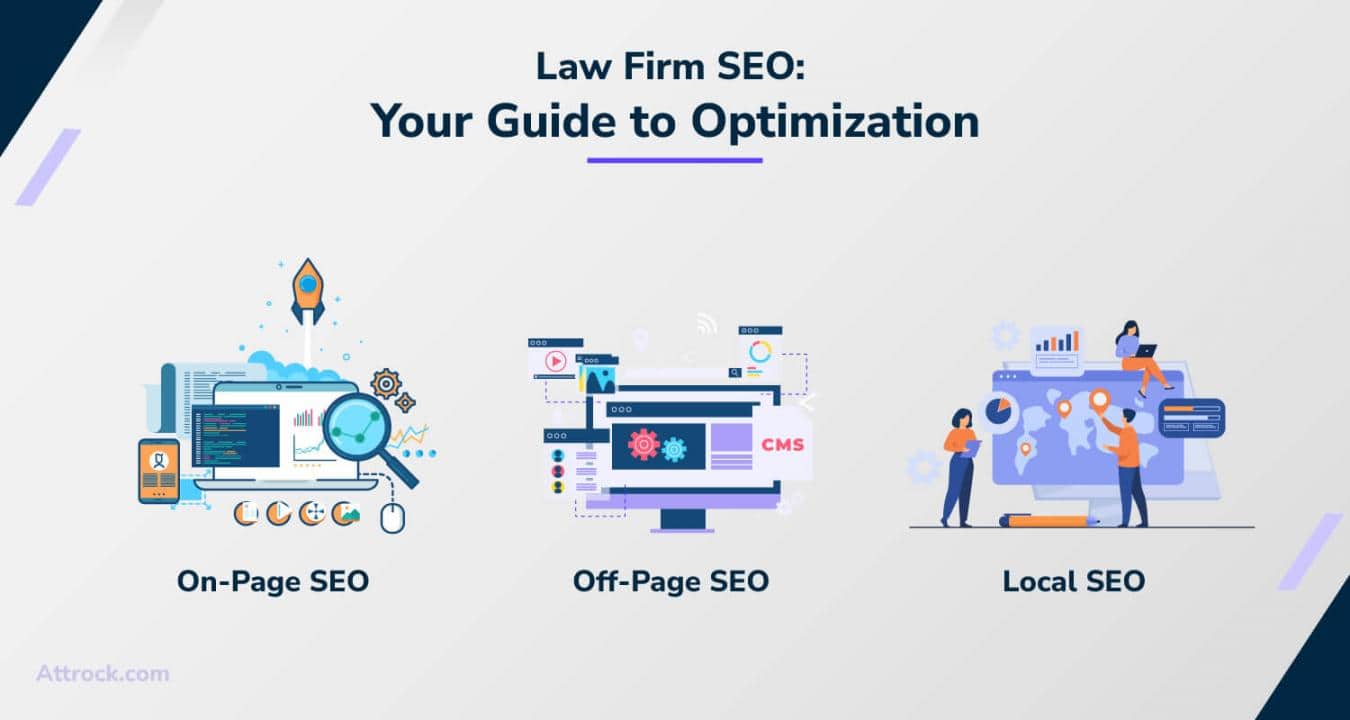
Technical SEO forms the foundation of successful search visibility for legal firms, ensuring search engines can properly crawl, index, and understand your website content. Unlike other industries, legal websites face unique technical challenges including compliance requirements, security concerns, and complex content structures that require specialized optimization approaches.
Website Architecture and URL Structure
Clean, logical URL structures improve both user experience and search engine crawling efficiency. Legal websites should implement hierarchical URL patterns that reflect practice areas and geographic locations, such as /practice-areas/personal-injury/car-accidents/ rather than generic numbered pages.
Proper website architecture includes strategic internal linking between related practice areas, clear navigation paths to contact forms, and logical content categorization that helps both users and search engines understand your firm’s service offerings. This structure particularly benefits multi-location firms serving diverse practice areas.
Mobile Optimization and Core Web Vitals
Mobile-first indexing makes responsive design and fast loading speeds critical for legal SEO success. Google primarily uses mobile versions of websites for ranking decisions, making mobile optimization essential rather than optional for legal practices competing online.
Core Web Vitals metrics including Largest Contentful Paint (LCP), First Input Delay (FID), and Cumulative Layout Shift (CLS) directly impact search rankings. Legal websites must optimize heavy elements like attorney photos, case study videos, and contact forms to meet Google’s performance thresholds while maintaining professional appearance.
SSL Certificates and Security
HTTPS encryption is mandatory for legal websites handling sensitive client information and contact forms. Search engines penalize non-secure websites, while potential clients expect secure connections when sharing personal information with law firms.
Beyond basic SSL implementation, legal websites should implement additional security measures including regular security audits, malware scanning, and backup systems that protect both client data and search engine trust signals essential for sustained rankings.
XML Sitemaps and Robots.txt
Properly configured XML sitemaps help search engines discover and index all important pages on your legal website. Sitemaps should include practice area pages, attorney bios, blog posts, and location pages while excluding administrative pages, duplicate content, and client portal areas.
Robots.txt files guide search engine crawling behavior, preventing indexation of sensitive areas like client portals while ensuring important content receives proper attention. Legal websites should regularly audit these files to prevent accidental blocking of important pages.
Content Marketing for Law Firms
Content marketing serves as the cornerstone of effective SEO for legal firms, providing opportunities to demonstrate expertise, answer client questions, and capture search traffic across the entire client journey. Legal content marketing requires balancing educational value with compliance considerations while addressing the specific concerns and questions potential clients research online.
Blog Content Strategy
Strategic blog content addresses client questions while establishing thought leadership in specific practice areas. Successful legal blogs combine evergreen educational content with timely updates about law changes, case results, and industry developments that demonstrate active expertise.
Effective legal blog strategies focus on answering common client questions, explaining complex legal processes in accessible language, and providing actionable guidance that helps readers understand their options. This approach builds trust while capturing long-tail search traffic that often converts better than generic practice area keywords.
Practice Area Content Development
Comprehensive practice area pages should address client concerns, explain legal processes, and demonstrate successful outcomes. These pages serve as primary landing destinations for organic search traffic and must balance SEO optimization with persuasive content that encourages consultation requests.
Practice area content should include detailed service descriptions, explanation of relevant laws, discussion of potential outcomes, and clear calls-to-action that guide visitors toward consultation scheduling. This content must remain compliant with attorney advertising rules while providing sufficient detail to educate potential clients.
FAQ and Resource Pages
Well-structured FAQ sections capture long-tail search queries while addressing common client concerns efficiently. Legal FAQ content should anticipate client questions throughout the legal process, from initial consultation through case resolution.
Resource pages consolidate helpful information about specific legal topics, creating valuable link destinations while establishing topical authority. These pages might include legal glossaries, process timelines, required documentation checklists, or links to relevant government resources.
Video Content Optimization
Video content increasingly dominates search results, particularly for legal topics where clients seek personal connection with attorneys. Legal video content should include attorney introductions, practice area explanations, client testimonial compilations, and educational content about legal processes.
Video SEO requires optimizing titles, descriptions, and transcripts for relevant keywords while ensuring content provides genuine value rather than promotional messaging. Hosting videos on your website rather than relying solely on third-party platforms helps retain visitors and improves engagement metrics.
Link Building and Authority Development
Link building remains one of the most challenging aspects of SEO for legal firms, requiring strategies that comply with professional conduct rules while building genuine authority and trust signals. Legal link building must focus on quality over quantity, emphasizing relationships with reputable sources that enhance rather than compromise professional reputation.
Legal Directory Submissions
Strategic directory submissions provide foundational backlinks while improving local search visibility and client discovery. Priority directories include Avvo, Lawyers.com, FindLaw, Justia, and local bar association listings that offer both SEO value and client referral potential.
Directory optimization extends beyond basic listings to include complete profiles with detailed practice descriptions, client reviews, and regular content updates. These platforms often rank highly for legal search queries, making comprehensive profiles essential for capturing referral traffic.
Professional Relationship Building
Authentic relationships with other legal professionals, industry organizations, and community groups provide natural link-building opportunities. This approach includes guest writing for legal publications, speaking at industry events, and participating in professional associations that offer linking opportunities.
Relationship-based link building focuses on providing value to other professionals and organizations rather than purely transactional link exchanges. This might include offering legal expertise for industry articles, participating in community events, or collaborating on educational resources.
Content-Based Link Attraction
High-quality, research-driven content naturally attracts links from other websites seeking authoritative legal information. This includes creating comprehensive legal guides, conducting industry surveys, or publishing analysis of legal developments that other sites reference.
Content link attraction requires identifying information gaps in your practice areas and creating resources that become go-to references for other legal professionals, journalists, and industry publications. This approach builds long-term authority while generating sustainable link growth.
| Link Source Type | Authority Value | Acquisition Difficulty | Compliance Risk | Examples |
|---|---|---|---|---|
| Legal Directories | Medium | Low | Low | Avvo, Lawyers.com, FindLaw |
| Bar Associations | High | Medium | Very Low | State bars, specialty sections |
| Legal Publications | Very High | High | Low | Law journals, industry magazines |
| Local Organizations | Medium | Medium | Very Low | Chamber of Commerce, nonprofits |
Monitoring and Disavowing Harmful Links
Regular link profile auditing protects legal websites from harmful associations that could damage professional reputation or search rankings. This includes monitoring for spammy directories, irrelevant link schemes, or associations with questionable websites.
Link disavowal becomes particularly important for legal websites given professional conduct requirements and the need to maintain impeccable online reputation. Regular audits should identify and address any links that could reflect poorly on professional standing or violate search engine guidelines.
FAQ
Q: How long does it take to see results from SEO for legal firms?

Legal SEO typically shows initial improvements within 3-6 months, with significant results appearing after 6-12 months of consistent effort. Local SEO improvements often appear faster than national rankings, particularly for Google My Business optimization and local citation building.
Q: What’s the average cost of professional SEO services for law firms?
Professional legal SEO services typically range from $2,500-$10,000 monthly depending on market competition, firm size, and service scope. Solo practitioners might invest $1,500-$3,000 monthly, while large firms often spend $5,000-$15,000 for comprehensive campaigns across multiple practice areas and locations.
Q: Should law firms focus on local or national SEO strategies?
Most law firms benefit from local SEO focus since legal services are typically location-dependent. However, firms specializing in federal law, intellectual property, or appellate work may pursue national strategies. The decision depends on your target client base and practice area scope.
Q: How do attorney advertising rules affect SEO content?
Attorney advertising rules vary by state but generally require truthful, non-misleading content with proper disclaimers. SEO content must avoid guaranteeing outcomes, making unsubstantiated claims, or violating solicitation rules. Always consult your state bar’s advertising guidelines when creating SEO content.
Q: What are the most important ranking factors for legal websites?
Key ranking factors include Google My Business optimization, consistent local citations, high-quality content addressing client questions, mobile-friendly website design, fast loading speeds, and authoritative backlinks from legal directories and professional organizations.
Q: How can small law firms compete with larger firms in SEO?
Small firms can compete by focusing on specific practice niches, targeting local search terms with lower competition, creating highly personalized content, and building strong local community relationships. Long-tail keyword targeting often provides better opportunities than competing for broad terms.
Q: What’s the biggest SEO mistake law firms make?
The most common mistake is creating generic content that doesn’t address specific client needs or questions. Successful legal SEO requires understanding your target clients’ search behavior and creating content that provides genuine value throughout their decision-making process.
Q: How do online reviews impact legal SEO rankings?
Online reviews significantly influence local search rankings and click-through rates. Google considers review quantity, quality, and recency when determining local search positions. Positive reviews also improve conversion rates by building trust with potential clients researching legal representation.
Q: Can law firms do SEO themselves or should they hire professionals?
Small firms can handle basic SEO tasks like content creation and Google My Business management, but technical optimization, link building, and competitive analysis often require professional expertise. The decision depends on available time, technical knowledge, and budget constraints.
Q: How do you measure SEO success for a law firm?
Key metrics include organic search traffic growth, local search ranking improvements, consultation request increases, and ultimately, new client acquisition from organic search. Track both leading indicators (traffic, rankings) and lagging indicators (consultations, clients) to measure true ROI.
Q: What role does website speed play in legal SEO?
Website speed directly impacts both search rankings and user experience. Slow-loading legal websites lose potential clients who abandon pages before they load completely. Google’s Core Web Vitals make speed optimization essential for maintaining competitive search visibility.
Q: How often should law firms update their SEO content?
Legal SEO content should be updated regularly to reflect law changes, new case results, and evolving client questions. Blog content should be published weekly or bi-weekly, while practice area pages should be reviewed quarterly and updated as needed to maintain accuracy and relevance.
Conclusion
Implementing effective SEO for legal firms requires a comprehensive approach that balances technical optimization with compelling content creation, local search dominance with professional compliance, and immediate visibility needs with long-term authority building. The strategies outlined in this guide provide a roadmap for legal practices seeking sustainable online growth in an increasingly competitive digital landscape.
The key takeaways for successful legal SEO include:
- Local optimization drives immediate results through Google My Business management and consistent citation building across legal directories
- Content marketing builds long-term authority by addressing client questions and demonstrating expertise through educational resources
- Technical optimization ensures discoverability with proper website architecture, mobile responsiveness, and security implementations
- Link building requires relationship focus rather than transactional approaches, emphasizing professional connections and valuable content creation
The future of legal SEO will increasingly emphasize user experience signals, voice search optimization, and artificial intelligence integration. Firms that establish strong foundations now while adapting to emerging technologies will maintain competitive advantages as search algorithms evolve and client behavior shifts toward new digital platforms.
Partner with Case Quota for Success
The comprehensive SEO strategies, technical optimizations, and content marketing approaches discussed throughout this guide can seem overwhelming for busy legal professionals managing active practices. From conducting thorough keyword research and implementing technical SEO improvements to creating compelling content and building authoritative backlink profiles, successful legal SEO requires dedicated expertise and consistent execution across multiple specialized areas.
Case Quota specializes in helping law firms navigate these complex SEO challenges by providing comprehensive digital marketing solutions tailored specifically for legal practices. We handle everything from local search optimization and Google My Business management to content strategy development and link building campaigns that comply with attorney advertising regulations. Our team understands the unique requirements of legal SEO, including E-A-T guidelines compliance, local citation building, and practice area content optimization that converts prospects into clients. Visit https://casequota.com to discover how our specialized legal marketing expertise can help your firm dominate local search results and attract high-value cases consistently.