

Clients today expect more than a one-size-fits-all approach when reaching out to a law firm. For small and mid-size Southern California firms competing with larger competitors, delivering a consistent client experience across every touchpoint is no longer optional. By embracing omnichannel marketing, you position your firm to engage clients seamlessly whether they connect by phone, email, social media, or your website. This guide breaks down what omnichannel marketing really means for law practices and why it is your best tool for building trust and driving sustainable growth.
Table of Contents
- Defining Omnichannel Marketing for Law Firms
- Key Components of Legal Omnichannel Strategies
- Types of Channels Lawyers Should Integrate
- Benefits of an Integrated Client Experience
- Risks and Compliance in Legal Marketing
- Common Mistakes to Avoid in Law Firm Campaigns
Key Takeaways
| Point | Details |
|---|---|
| Omnichannel Marketing Definition | Omnichannel marketing integrates communication channels to create a seamless client experience across digital and traditional platforms. |
| Importance of Client Experience | A consistent and personalized client journey enhances satisfaction, fosters loyalty, and improves the firm’s reputation. |
| Technology Integration | Effective legal omnichannel strategies require advanced technology, including CRM systems and integrated communication tools, to personalize client interactions. |
| Compliance Considerations | Law firms must navigate ethical and regulatory challenges in marketing while ensuring data protection and transparent advertising practices. |
Defining Omnichannel Marketing for Law Firms
Omnichannel marketing represents a sophisticated strategy for law firms to create seamless, integrated client experiences across multiple digital and traditional communication platforms. Unlike traditional multichannel approaches, omnichannel marketing focuses on delivering a unified, consistent brand message and client interaction experience regardless of how or where a potential client first engages with your firm.
At its core, omnichannel marketing means strategically connecting all marketing channels to provide a smooth, interconnected client journey. This approach recognizes that modern clients might first discover your law firm through social media, research your services on your website, schedule a consultation via mobile app, and ultimately communicate through email or phone. The goal is to ensure each touchpoint feels consistent, professional, and tailored to the client’s specific needs and preferences.
Omnichannel marketing strategies go beyond simply being present on multiple platforms. They require deep integration of communication channels, allowing law firms to track client interactions, personalize messaging, and create a cohesive experience that builds trust and demonstrates technological sophistication. This means synchronizing your website, social media profiles, email campaigns, digital advertising, and even traditional marketing materials to present a unified brand narrative.
Here is a comparison of multichannel and omnichannel marketing approaches for law firms:
| Aspect | Multichannel Marketing | Omnichannel Marketing |
|---|---|---|
| Channel Integration | Limited and separate | Fully synchronized |
| Client Experience | Varies by platform | Consistent across all platforms |
| Data Sharing | Fragmented | Unified and accessible |
| Personalization | Minimal | Highly personalized |
| Brand Consistency | May fluctuate | Always consistent |
Pro Tip: Start by auditing your current marketing channels and identifying potential gaps in client communication, then develop a strategic plan to create smoother, more integrated interactions.
Key Components of Legal Omnichannel Strategies
Successful omnichannel marketing for law firms requires a strategic, multifaceted approach that goes beyond traditional marketing techniques. The fundamental goal is creating a seamless, integrated client experience that spans multiple communication platforms and touchpoints, ensuring consistent and personalized interaction at every stage of the client journey.
The core components of effective legal omnichannel strategies involve advanced technological integration, data-driven personalization, and a holistic view of client engagement. Legal operations frameworks play a crucial role in implementing these strategies, encompassing strategic planning, technology deployment, and comprehensive client communication management. This means developing sophisticated systems that allow law firms to track client interactions, anticipate client needs, and deliver tailored communication across digital and traditional channels.
Key technological components include robust customer relationship management (CRM) systems, integrated communication platforms, automated follow-up mechanisms, and analytics tools that provide insights into client behavior and preferences. Law firms must create a unified digital ecosystem where client information is seamlessly shared across platforms, enabling personalized and context-aware interactions. This might involve synchronized email marketing, targeted social media campaigns, responsive website design, and integrated client communication tools that provide a consistent experience regardless of the interaction channel.

Pro Tip: Invest in comprehensive staff training to ensure all team members understand and can effectively implement your omnichannel marketing strategy, creating a unified approach across your entire firm.
Types of Channels Lawyers Should Integrate
Modern law firms must strategically integrate a diverse range of communication channels to meet client expectations and maintain competitive advantage. Digital communication technologies have dramatically transformed how legal professionals connect with clients, requiring a sophisticated and nuanced approach to multichannel engagement.
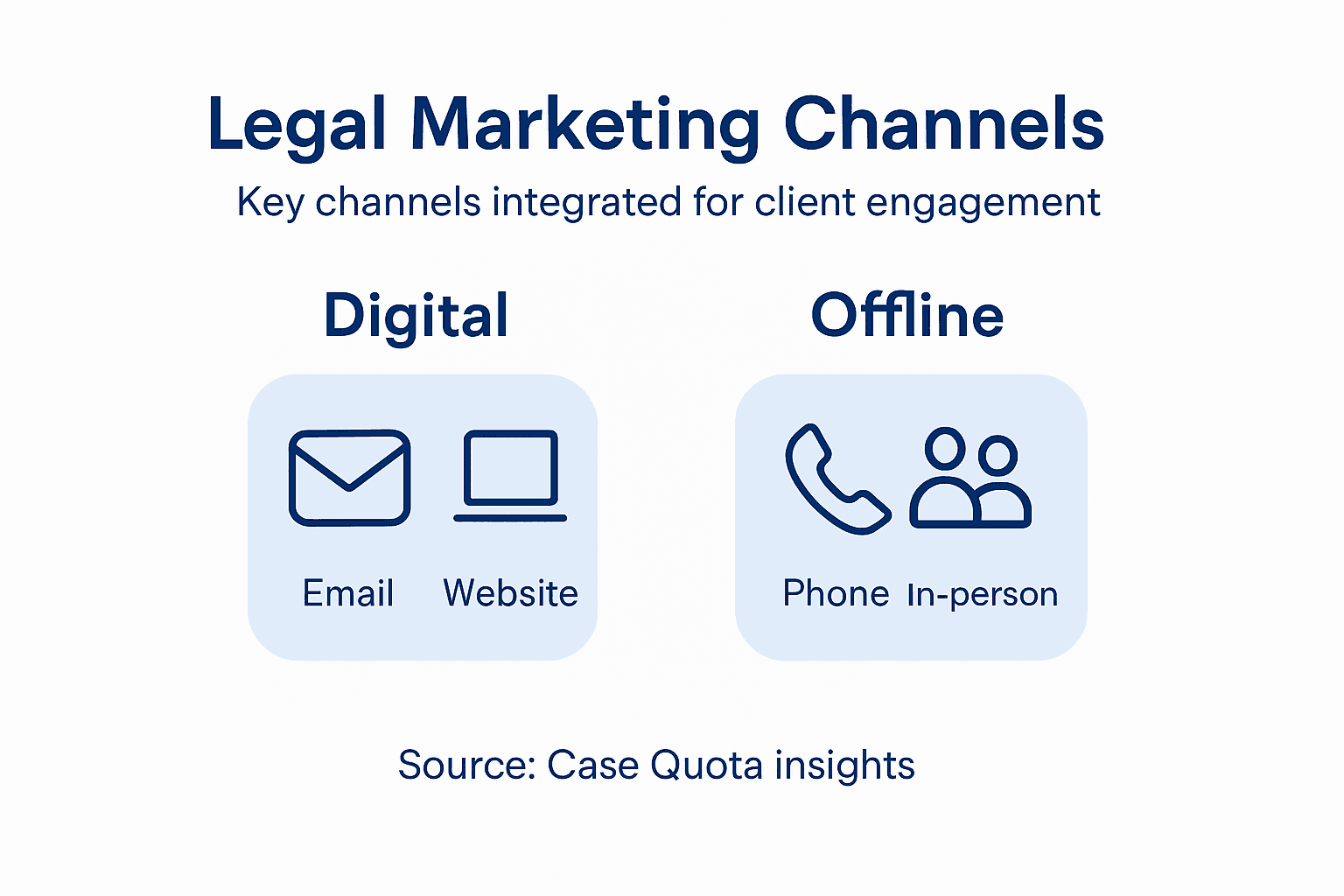
The primary channels lawyers should consider integrating include digital platforms, traditional communication methods, and interactive technologies. Digital channels encompass websites, email marketing, social media platforms, online scheduling systems, and virtual consultation tools. Traditional channels remain critically important and include telephone communications, in-person meetings, physical mail, and printed marketing materials. Interactive technologies such as chatbots, video conferencing, secure client portals, and mobile applications provide additional touchpoints for client interaction and engagement.
Successful channel integration requires careful consideration of client preferences, practice area specialization, and technological capabilities. Personal injury attorneys might prioritize different communication channels compared to corporate legal professionals, with each practice area demanding unique communication strategies. The key is creating a seamless, interconnected experience that allows clients to move effortlessly between channels while receiving consistent, high-quality information and support.
This table summarizes major categories of channels and their business roles in legal marketing:
| Channel Type | Example Platforms | Main Business Role |
|---|---|---|
| Digital | Website, Social Media | Client acquisition |
| Traditional | Phone, Mail, Print | Building trust |
| Interactive | Chatbots, Video Calls | Immediate support |
| Management | CRM, Client Portals | Data-driven service |
Pro Tip: Conduct a quarterly audit of your communication channels to ensure they remain aligned with client needs and technological advancements, removing underperforming platforms and investing in emerging communication technologies.
Benefits of an Integrated Client Experience
Law firms that prioritize an integrated client experience gain significant competitive advantages in today’s complex legal marketplace. Client-centric strategies transform how legal services are perceived, delivered, and experienced by clients, moving beyond traditional transactional relationships to create meaningful, lasting connections.
The primary benefits of an integrated client experience include enhanced client satisfaction, increased loyalty, and improved firm reputation. By providing seamless communication across multiple channels, law firms can reduce client anxiety, demonstrate responsiveness, and create a sense of continuity throughout the legal process. Clients appreciate knowing they can reach their legal team through their preferred communication method, whether that’s a mobile app, email, phone call, or secure client portal, without having to repeat their story or reconstruct their case details.
Moreover, an integrated approach allows law firms to capture and leverage comprehensive client data, enabling more personalized and proactive service delivery. This data-driven approach helps attorneys anticipate client needs, identify potential legal issues before they escalate, and provide tailored guidance that goes beyond standard legal representation. By understanding client preferences, communication patterns, and historical interactions, law firms can create more targeted, efficient, and empathetic legal services that distinguish them in a competitive market.
Pro Tip: Implement a comprehensive client feedback system that tracks satisfaction across all communication channels, using insights to continuously refine and improve your integrated client experience strategy.
Risks and Compliance in Legal Marketing
Legal marketing requires a nuanced approach that balances strategic communication with stringent ethical and regulatory requirements. Compliance risks in digital marketing encompass a complex landscape of legal and ethical challenges that demand careful navigation by law firms seeking to attract and engage potential clients.
Key compliance risks include data privacy protection, transparent advertising practices, and adherence to professional conduct regulations. Law firms must meticulously monitor their marketing materials to ensure they do not make misleading claims, violate client confidentiality, or breach advertising guidelines set by state bar associations. This involves carefully screening content across all marketing channels, including websites, social media platforms, email communications, and traditional advertising media.
Moreover, legal marketing strategies must address emerging risks related to digital communication and client information management. This includes implementing robust data protection protocols, ensuring secure client communication channels, and maintaining strict boundaries around client information use. Law firms must develop comprehensive compliance frameworks that account for evolving regulations around digital marketing, data privacy, and professional conduct, recognizing that marketing practices are increasingly scrutinized by regulatory bodies.
Pro Tip: Develop a comprehensive compliance checklist that includes regular audits of all marketing materials and communication channels, ensuring ongoing alignment with current legal and ethical standards.
Common Mistakes to Avoid in Law Firm Campaigns
Successful legal marketing demands strategic precision and an understanding of potential pitfalls that can undermine campaign effectiveness. Digital marketing challenges reveal numerous critical errors that law firms must proactively address to maintain professional credibility and client engagement.
One of the most significant mistakes law firms make is developing generic, unfocused marketing content that fails to differentiate their practice. This includes using broad, impersonal messaging that does not speak directly to specific client needs or highlight the unique value proposition of the firm. Effective campaigns require laser-focused targeting, demonstrating deep understanding of particular legal challenges, practice area specializations, and the precise client demographics they serve best.
Technical execution errors can also severely compromise marketing campaign performance. Common technical mistakes include poorly designed websites with complex navigation, lack of mobile responsiveness, slow loading times, and ineffective calls-to-action. Law firms must ensure their digital platforms are user-friendly, professionally designed, and optimized for seamless client interaction across multiple devices and communication channels. This means investing in responsive web design, clear messaging, intuitive user interfaces, and strategically placed contact mechanisms that facilitate immediate client engagement.
Pro Tip: Conduct quarterly comprehensive audits of your marketing materials and digital platforms, systematically identifying and eliminating potential communication barriers and user experience friction points.
Elevate Your Law Firm’s Client Engagement with Proven Omnichannel Marketing Solutions
Law firms today face the critical challenge of delivering a truly unified client experience across all communication channels. This article highlights key pain points such as fragmented data sharing, inconsistent messaging, and difficulty personalizing outreach — all obstacles that can undermine client trust and engagement. Concepts like integrated CRM systems, personalized messaging, and synchronized channel strategies are essential to solve these problems but require expert implementation to be effective.
At Case Quota, we specialize in helping Southern California law firms seamlessly integrate omnichannel marketing strategies that connect digital and traditional platforms. With over 15 years of digital marketing expertise and a dedicated focus on legal practices, our tailored SEO-optimized web design, AI-powered pay-per-click campaigns, and strategic social media marketing empower you to build a consistent, client-centered brand experience. We understand how vital it is to transform fragmented client data into actionable insights and ensure your messaging remains sharp and targeted across every platform.
Discover how our comprehensive legal marketing solutions can help you break down communication barriers, boost client satisfaction, and gain a competitive edge. Visit Case Quota to learn more about how we bring omnichannel marketing concepts to life for your firm. Explore our innovative strategies to turn client engagement challenges into growth opportunities with SEO services, paid advertising, and expert marketing leadership.
Take control of your law firm’s marketing future today.
Looking to create a seamless and powerful client experience? Unlock the full potential of your firm’s marketing channels with Case Quota.

Start your journey now by connecting with us at Case Quota and see how customized omnichannel marketing strategies can elevate your law firm’s presence and client engagement.
Frequently Asked Questions
What is omnichannel marketing for law firms?
Omnichannel marketing for law firms is a strategy that integrates various communication channels to create a seamless, consistent client experience. It focuses on ensuring that clients receive a unified message and interaction, regardless of how they engage with the firm.
How does omnichannel marketing differ from multichannel marketing?
While multichannel marketing involves multiple platforms that operate separately, omnichannel marketing connects all channels, creating a synchronized and cohesive experience across all client interactions.
What are the key components of an effective omnichannel marketing strategy for law firms?
Key components include advanced technological integration, data-driven personalization, and a holistic view of client engagement. This often involves using CRM systems, integrated communication platforms, and analytics tools to enhance client interactions.
What benefits does an integrated client experience offer to law firms?
An integrated client experience leads to enhanced client satisfaction, increased loyalty, and improved firm reputation. It allows law firms to offer responsive and personalized services, which can differentiate them in a competitive marketplace.
Recommended
- Complete Guide to Multichannel Marketing for Law Firms – Case Quota
- Complete Guide to Digital Marketing for Legal Firms: Strategies That Drive Results – Case Quota
- How to Get More Clients as a Lawyer in a Digital World
- Digital Marketing Agency for Attorneys: Complete Guide to Growing Your Law Practice Online – Case Quota
- Conversion Rate Optimization 101: Transform Visitors into Customers