

Over 80 percent of American legal clients say ongoing firm communication greatly influences their choice of counsel. For partners at small to mid-sized law firms in Southern California, meeting client expectations has never been more critical. Strengthening client relationships through thoughtful lead nurturing not only sets your practice apart but also drives long-term retention and trust. Discover practical ways to transform initial interest into loyal clients while upholding the professionalism expected of every American attorney.
Table of Contents
- Defining Lead Nurturing in Legal Marketing
- Types of Lead Nurturing for Attorneys
- Lead Nurturing Process and Effective Strategies
- Technology Tools Enhancing Law Firm Lead Nurturing
- Common Pitfalls and Ethical Considerations
Key Takeaways
| Point | Details |
|---|---|
| Lead Nurturing Importance | Engaging potential clients through personalized communication builds trust and strong relationships in legal marketing. |
| Content-Driven Engagement | Educational materials help attorneys position themselves as thought leaders and provide value beyond transactional services. |
| Technology Utilization | CRM and marketing automation tools enhance client engagement and streamline communication workflows, improving lead nurturing efficiency. |
| Ethical Considerations | Maintaining client privacy and adhering to regulatory standards is crucial for preserving professional integrity and trust in legal marketing. |
Defining Lead Nurturing in Legal Marketing
Lead nurturing in legal marketing represents a strategic approach to systematically engaging potential clients through targeted communication and relationship building. Unlike traditional sales tactics, this process focuses on understanding prospective clients’ specific legal needs and guiding them thoughtfully through their decision making journey. Lead management encompasses methodologies that transform initial contacts into meaningful client relationships.
The core objective of lead nurturing for attorneys involves creating personalized interactions that demonstrate professional expertise while addressing individual client concerns. This approach requires attorneys to develop a comprehensive understanding of potential clients’ legal challenges, presenting tailored solutions that build trust and credibility. By implementing strategic communication touchpoints, law firms can effectively showcase their specialized knowledge and differentiate themselves from competitors who rely on generic marketing approaches.
Successful lead nurturing strategies in legal marketing typically involve multiple engagement channels, including personalized email communications, targeted content marketing, informative webinars, and strategic follow up processes. Attorneys must focus on providing value at every interaction, helping potential clients understand complex legal situations and positioning themselves as trusted advisors rather than simply transactional service providers. This means developing a nuanced communication strategy that anticipates client questions, addresses potential concerns, and demonstrates deep understanding of specific legal domains.
Here’s a comparison of lead nurturing channels commonly used by law firms:
| Channel | Level of Personalization | Business Impact |
|---|---|---|
| Email Campaigns | Highly customizable | Builds ongoing engagement |
| Webinars | Interactive content | Positions firm as expert |
| Blog/Guides | Educational focus | Enhances credibility |
| Direct Follow-up Calls | One-to-one approach | Strengthens trust |
Pro tip: Implement a client relationship management system that tracks interaction history and allows for segmented, personalized communication based on potential clients’ specific legal interests and previous engagement levels.
Types of Lead Nurturing for Attorneys
Legal professionals can leverage multiple strategic approaches to lead nurturing that transform potential client interactions into meaningful relationships. Legal marketing education resources highlight several key types of lead nurturing tactics designed to build trust, demonstrate expertise, and systematically guide potential clients through their decision-making process. These approaches range from personalized communication strategies to targeted engagement methods that address specific client needs.
The first critical type of lead nurturing involves content-driven engagement, which includes developing educational materials like blog posts, legal guides, webinars, and informative email newsletters. By sharing insights into complex legal issues, attorneys can position themselves as thought leaders who provide genuine value beyond traditional transactional services. These content strategies help potential clients understand their legal challenges while subtly showcasing the law firm’s expertise and problem-solving capabilities.
Another sophisticated lead nurturing approach centers on segmented communication channels. This method involves tailoring communication strategies to different client segments based on their specific legal interests, demographics, and engagement history. By tracking engagement metrics and leveraging automation, attorneys can create personalized outreach that resonates with individual client needs. This might include targeted email campaigns, personalized follow-up communications, and strategic touchpoints that demonstrate a deep understanding of each potential client’s unique situation.
Pro tip: Develop a comprehensive lead scoring system that allows you to prioritize and personalize communication based on potential clients’ interaction levels, legal interests, and demonstrated engagement with your firm’s content.
Lead Nurturing Process and Effective Strategies
The lead nurturing process for attorneys requires a systematic approach that transforms initial client interactions into sustainable, long-term relationships. Effective strategies involve aligning marketing and client engagement goals through carefully designed communication frameworks that address each stage of the potential client’s decision-making journey. This process demands a nuanced understanding of legal client behaviors, sophisticated communication techniques, and strategic engagement methodologies.
Strategic communication mapping represents a critical component of successful lead nurturing. Attorneys must develop a comprehensive approach that segments potential clients based on their specific legal needs, engagement levels, and demonstrated interests. This involves creating targeted content pathways that guide prospects through complex legal considerations, using educational materials, personalized email sequences, and strategic touchpoints that build credibility and trust. By understanding the unique challenges and concerns of different client segments, law firms can craft more resonant and compelling communication strategies.

Automated lead nurturing tools have emerged as a powerful mechanism for enhancing client engagement, particularly when implemented with precision and human insight. Automated content strategies can significantly increase conversion rates by delivering timely, relevant information that addresses potential clients’ specific legal challenges. However, successful implementation requires a delicate balance between technological efficiency and personalized human interaction. The most effective approaches integrate data-driven insights with empathetic communication, ensuring that automated systems complement rather than replace meaningful professional connections.
Pro tip: Develop a sophisticated lead scoring system that tracks potential clients’ engagement levels, prioritizes high-potential prospects, and enables tailored communication strategies that feel personalized and genuinely attentive.
Technology Tools Enhancing Law Firm Lead Nurturing
Technology tools for legal marketing have revolutionized how law firms approach client engagement and lead nurturing. Modern attorneys can leverage sophisticated software platforms that transform traditional marketing approaches into data-driven, highly personalized client acquisition strategies. These technological solutions provide unprecedented capabilities for tracking, analyzing, and optimizing potential client interactions across multiple communication channels.
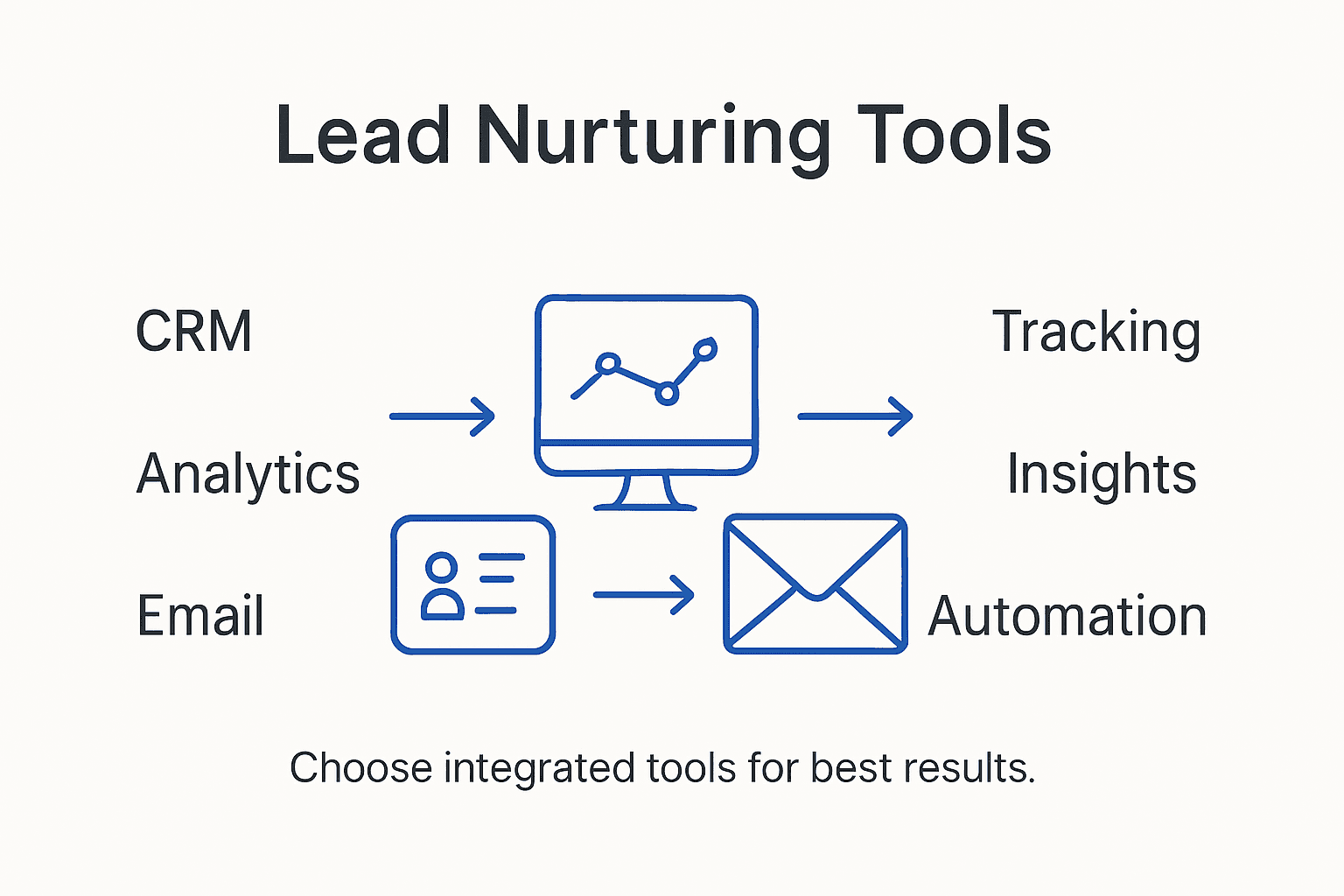
Customer Relationship Management (CRM) systems represent the cornerstone of technological lead nurturing for legal practices. These advanced platforms enable attorneys to segment potential clients based on intricate behavioral patterns, demographic information, and specific legal needs. By integrating detailed contact management with automated communication workflows, CRM tools allow law firms to create targeted, personalized engagement strategies that feel individually crafted. Sophisticated tracking mechanisms help attorneys understand prospect interactions, prioritize high-potential leads, and develop more strategic outreach approaches.
Legal operations technology tools have expanded beyond simple communication platforms to include comprehensive analytics and automation solutions. These integrated systems enable law firms to streamline complex client acquisition processes, providing real-time insights into engagement metrics, communication effectiveness, and potential conversion opportunities. Advanced marketing automation platforms can now trigger personalized email sequences, track website interactions, and generate detailed reports that help attorneys refine their lead nurturing strategies with unprecedented precision and efficiency.
The following table summarizes key technology tools for law firm lead nurturing:
| Tool Type | Primary Function | Benefit for Attorneys |
|---|---|---|
| CRM Systems | Client segmentation, tracking | Enables targeted communication |
| Marketing Automation | Automated outreach | Increases efficiency |
| Analytics Platforms | Engagement measurement | Identifies conversion drivers |
| Legal Ops Solutions | Process streamlining | Improves workflow and reporting |
Pro tip: Invest in a comprehensive CRM system that integrates marketing automation, detailed analytics, and seamless communication tracking to transform your lead nurturing approach from reactive to proactively strategic.
Common Pitfalls and Ethical Considerations
Ethical considerations in digital legal marketing represent a critical foundation for maintaining professional integrity and client trust. Attorneys must navigate a complex landscape of marketing strategies that balance effective lead nurturing with stringent ethical standards. The risks of crossing ethical boundaries extend far beyond potential disciplinary actions, potentially damaging a law firm’s reputation and undermining long-term client relationships.
Client privacy and data protection emerge as paramount concerns in lead nurturing practices. Law firms must implement rigorous protocols that safeguard sensitive information while still developing meaningful client engagement strategies. This delicate balance requires attorneys to develop sophisticated communication approaches that respect individual privacy, obtain proper consent for data usage, and maintain transparent communication about how potential client information will be collected, stored, and utilized. Inappropriate data handling can not only violate professional conduct rules but also erode the fundamental trust that forms the cornerstone of legal professional relationships.
Regulatory compliance in digital legal marketing demands continuous vigilance and proactive management. The digital age has introduced complex challenges that require attorneys to constantly reassess their marketing approaches against evolving professional standards. Potential pitfalls include misleading advertising, inappropriate solicitation, creating unrealistic expectations, and inadvertently establishing unintended attorney-client relationships. Successful lead nurturing strategies must be carefully crafted to provide valuable information and demonstrate expertise without crossing ethical lines or making inappropriate promises about potential legal outcomes.
Pro tip: Develop a comprehensive ethical review process for all lead nurturing communications, involving multiple stakeholders to ensure marketing materials consistently meet professional standards and protect client interests.
Elevate Your Law Firm’s Client Engagement with Strategic Lead Nurturing
Attorneys often face the challenge of building meaningful relationships with potential clients amid intense competition and complex legal marketing demands. This article highlights how effective lead nurturing—through personalized communication, segmented outreach, and smart use of technology—can transform prospects into loyal clients while maintaining ethical standards. If you want to overcome hurdles like tracking engagement, delivering timely legal content, and creating trust without overwhelming your resources, targeted digital strategies are essential.
At Case Quota, we specialize in crafting tailored online marketing solutions designed exclusively for Southern California law firms aiming to boost client engagement and conversion rates. Our expertise in SEO-optimized web design, AI-powered pay-per-click advertising, and refined marketing leadership helps you implement the very lead nurturing strategies discussed here. We combine sophisticated technology tools with personalized attention to ensure your outreach feels authentic and strategic.
Discover how partnering with Case Quota can help you rise above competitors with bigger budgets by leveraging data-driven campaigns that respect client privacy and ethical considerations. Ready to transform your lead nurturing efforts into measurable growth? Visit Case Quota today.
Looking for proven methods to enhance your law firm’s digital marketing? Explore our tailored services focused on legal practices and take the next step toward smart, efficient client acquisition.
Frequently Asked Questions
What is lead nurturing in legal marketing?
Lead nurturing in legal marketing is a strategic approach to engage potential clients through targeted communication, focusing on their specific legal needs and guiding them through their decision-making journey.
Why is personalized communication important for lead nurturing?
Personalized communication is crucial for lead nurturing as it builds trust and demonstrates a law firm’s expertise, helping potential clients feel understood and valued throughout their legal challenges.
How can attorneys utilize technology for lead nurturing?
Attorneys can utilize technology such as CRM systems and marketing automation tools to track client interactions, segment potential clients, and create personalized communication strategies that enhance engagement and conversion rates.
What are some effective lead nurturing strategies for law firms?
Effective lead nurturing strategies for law firms include content-driven engagement, segmented communication channels, strategic follow-up processes, and the use of automated tools to facilitate timely and relevant client interactions.