

Most American law firms underestimate how powerful a well-managed Google local presence can be. For small and mid-sized firms in Southern California, competing with larger firms in online search often comes down to details. A single inconsistency in your business profile can drop your local ranking by over 20 percent. Reviewing and optimizing your digital footprint gives your firm a practical edge and increases visibility where your next clients are already searching.
Table of Contents
- Step 1: Assess Your Current Google Local Presence
- Step 2: Optimize Your Google Business Profile Details
- Step 3: Enhance Local Content And Website Structure
- Step 4: Encourage And Manage Client Reviews
- Step 5: Track Results And Adjust Your Tactics
Quick Summary
| Key Insight | Explanation |
|---|---|
| 1. Conduct a thorough audit | Review your firm’s online presence across Google and other platforms for accuracy and consistency. |
| 2. Optimize Google Business Profile | Ensure your listing contains accurate information, relevant categories, and professional photos. |
| 3. Create local-focused content | Integrate geographic keywords and local issues on your website to improve search rankings. |
| 4. Encourage client reviews | Proactively seek feedback from clients to enhance your firm’s online reputation and visibility. |
| 5. Track and analyze performance | Regularly evaluate local SEO metrics to refine strategies and adapt to changes in client behavior. |
Step 1: Assess your current Google local presence
To improve your law firm’s Google local ranking, you must first understand your current digital footprint. This crucial step involves conducting a comprehensive audit of how your firm appears in local search results and online directories. By understanding local search optimization, you can identify specific areas for improvement.
Start by searching your law firm’s name on Google and examining the current Google Business Profile listing. Check the accuracy of critical information like your firm’s name, address, phone number, business hours, and service areas. Review every detail for precision – even minor inconsistencies can negatively impact local search rankings. Look beyond Google and inspect other platforms such as legal directories, LinkedIn, and industry-specific websites to ensure your professional online presence remains consistent and accurate across all channels.
Documenting these findings will help you create a strategic improvement plan. Take screenshots of your current listings, note any discrepancies, and prepare to make targeted updates that will enhance your local search visibility.
Below is a summary of critical elements to evaluate during a law firm’s initial local presence audit:
| Audit Element | Why It’s Important | Potential Impact on Ranking |
|---|---|---|
| Business Information | Ensures accuracy across platforms | Reduces ranking errors |
| Directory Listings | Expands digital footprint | Increases visibility |
| Consistency | Confirms uniform data everywhere | Boosts trust for search engines |
| Screenshots Evidence | Provides baseline documentation | Tracks improvements over time |
Pro tip: Create a spreadsheet tracking all online listings to systematically verify and update your law firm’s information across multiple platforms.
Step 2: Optimize your Google Business Profile details
Improving your law firm’s local search visibility starts with creating a comprehensive and accurate Google Business Profile. Optimizing your business profile requires meticulous attention to every detail potential clients might seek when searching for legal services in your area.
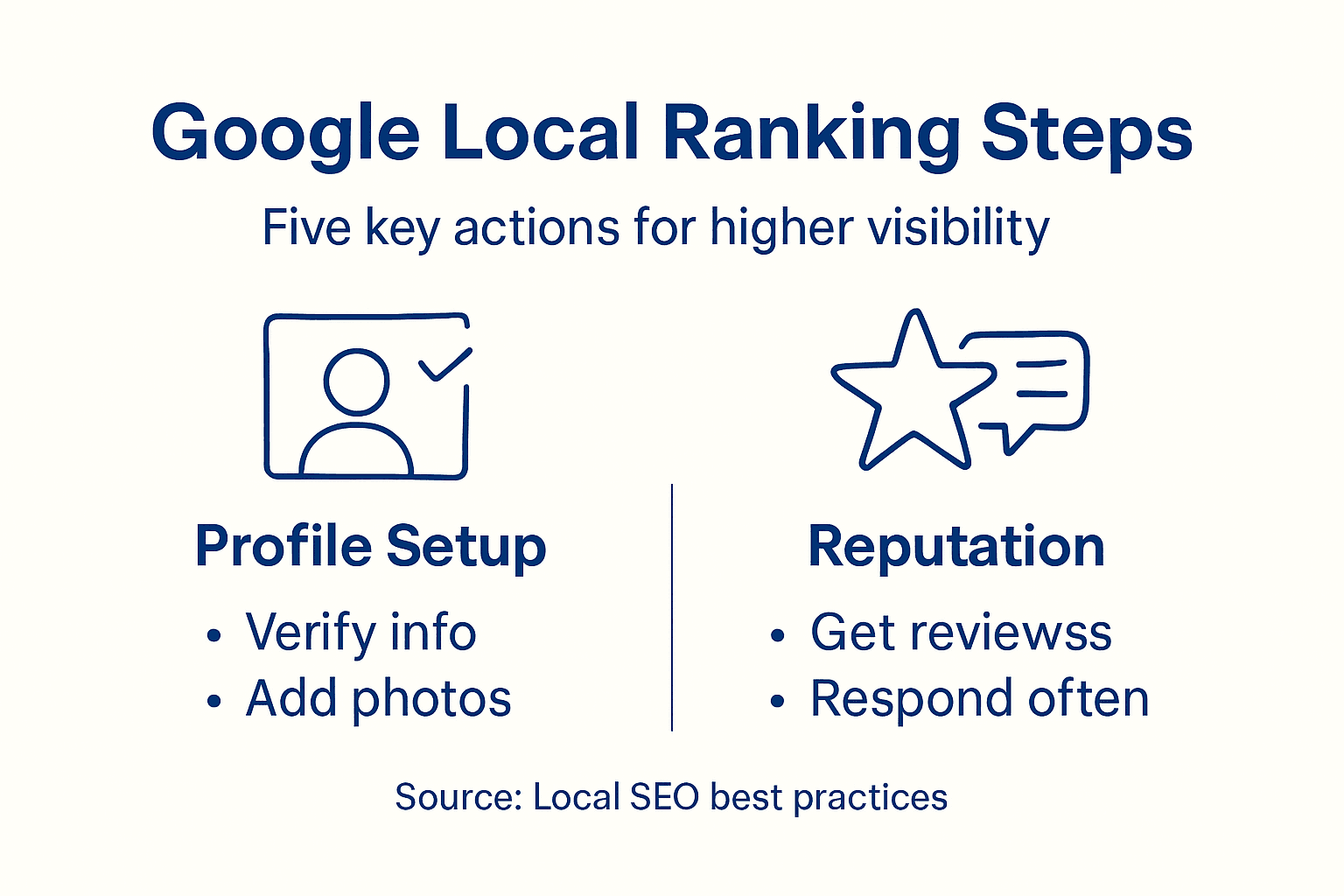
Begin by verifying and updating your firm’s essential information. Ensure your business name, address, phone number, and service hours are precise and match other online listings exactly. Select the most relevant business categories that accurately represent your legal specialties. Upload high quality professional photos showcasing your law office, attorneys, and team. Write a compelling business description that highlights your firm’s unique strengths and practice areas. Incorporate keywords naturally while maintaining a professional tone.

Encouraging and managing client reviews is another critical component of profile optimization. Client endorsements can significantly enhance your profile’s credibility and search ranking. Invite satisfied clients to share their experiences, respond professionally to all reviews, and demonstrate your commitment to client satisfaction.
Pro tip: Schedule a quarterly review of your Google Business Profile to ensure all information remains current and accurately reflects your law firm’s evolving services and achievements.
Step 3: Enhance local content and website structure
Improving your law firm’s local search ranking requires strategic website optimization that speaks directly to potential clients in your geographic area. Local search engine optimization demands thoughtful content creation and technical website structuring that signals your relevance to local search algorithms.
Start by integrating location specific keywords throughout your website content. Develop practice area pages that include city and neighborhood names, create locally focused blog posts addressing regional legal issues, and ensure your metadata includes geographic references. Use structured data markup to help search engines understand your firm’s local context. Implement schema markup for your business address, contact information, and service areas to provide clear signals about your geographic relevance.
Focus on producing high quality content that answers specific legal questions potential clients in your region might ask. Write comprehensive practice area descriptions, develop FAQ sections that address local legal concerns, and showcase client success stories that demonstrate your understanding of community specific legal challenges. Maintain a mobile friendly website with intuitive navigation and fast loading times to improve user experience and support your local search rankings.
Pro tip: Create location specific landing pages for each major service area or city you serve, optimizing them with unique content that directly addresses local legal needs.
Step 4: Encourage and manage client reviews
Building a robust online reputation is critical for law firms seeking to improve their local search rankings and attract potential clients. Proactively seeking client feedback helps your firm demonstrate transparency and commitment to client satisfaction.
Develop a systematic approach to requesting reviews from satisfied clients. Create a follow up email template that makes it easy for clients to share their experiences on platforms like Google, Yelp, and specialized legal review sites. Train your team to ask for reviews at strategic moments such as case completion or successful resolution. When clients provide feedback make sure to respond professionally to every review whether positive or negative. Acknowledge specific details from their experience to show you genuinely value their input.
Strategically curate client testimonials by guiding clients on crafting meaningful reviews. Provide gentle guidance about highlighting specific aspects of their experience such as communication quality problem solving skills or case outcomes. Create a permission process that allows you to showcase the most compelling testimonials across your marketing channels while maintaining client confidentiality and ethical standards.
Here’s a quick comparison of review platforms and their influence on legal SEO:
| Platform | Average Audience Reach | Review Impact on SEO | Ideal Review Frequency |
|---|---|---|---|
| Very high | Highest influence | Weekly or monthly | |
| Yelp | Moderate | Moderate influence | Monthly |
| Legal Sites | Targeted professionals | Niche authority | Case-by-case |
Pro tip: Implement a review management system that automatically tracks and prompts review requests while providing templates for professional follow up responses.
Step 5: Track results and adjust your tactics
Monitoring and adapting your local search strategy is essential for continuously improving your law firm’s online visibility. Tracking local search performance requires systematic analysis of key metrics that reveal your digital marketing effectiveness.
Leverage powerful analytics tools like Google Analytics and Google Business Profile Insights to gain deeper understanding of your local search performance. Monitor critical metrics including website traffic from local searches website engagement rates click through rates and conversion percentages. Pay special attention to which keywords are driving potential clients to your website and analyze user behavior patterns. Look for trends in how visitors interact with your content identifying which practice area pages or blog posts generate the most interest.
Conduct regular strategic audits of your local SEO efforts every 60 to 90 days. During these reviews compare your current performance against baseline metrics and be prepared to make data driven adjustments. If certain keywords are underperforming refine your content strategy. If specific practice area pages show low engagement redesign them to better address potential client needs. Remember that local search optimization is an ongoing process requiring continuous learning and refinement.
Pro tip: Create a monthly performance dashboard that tracks your key local SEO metrics to quickly identify trends and opportunities for improvement.
Take Your Law Firm’s Google Local Ranking to the Next Level
Improving your law firm’s local search ranking can feel overwhelming when facing challenges like inconsistent business information, low client review counts, and underperforming local content. This article highlights how thorough Google Business Profile optimization and strategic review management are key to standing out in competitive local markets. These pain points echo common hurdles for many legal practices aiming to attract more clients and build lasting online credibility.
At Case Quota, we specialize in tailored digital marketing solutions designed specifically for law firms in Southern California. From SEO-optimized web design that highlights your local presence to AI-powered pay-per-click advertising and expert management of Google Local Services Ads, we deliver the tools and strategy your firm needs to compete with larger competitors. Integrating proven tactics like those in the article, we help you consistently update and enhance your online footprint to convert searchers into clients.

Don’t let inconsistent listings or scattered reviews hold your firm back. Visit Case Quota today to discover how our legal marketing expertise can boost your Google local ranking and grow your client base. Take the first step toward a customized digital strategy that delivers measurable results and sustained online growth by exploring our services and seeing the difference dedicated legal marketing leadership makes.
Frequently Asked Questions
How can I assess my law firm’s current Google local presence?
To assess your law firm’s current Google local presence, start by searching your firm’s name on Google and reviewing your Google Business Profile. Check for the accuracy of your name, address, phone number, and business hours, making note of any inconsistencies to address within the next week.
What steps should I take to optimize my Google Business Profile?
To optimize your Google Business Profile, ensure that all essential information, such as your business name and address, is accurate and consistent across platforms. Update your profile with relevant business categories, descriptions, and high-quality photos within the next few days to enhance visibility.
How do I create locally-focused content for my law firm’s website?
To create locally-focused content, incorporate location-specific keywords into your website and develop pages dedicated to each practice area, including local city names. Aim to publish at least two locally relevant blog posts each month to engage potential clients in your community.
What strategies can I use to encourage more client reviews?
To encourage more client reviews, create a follow-up email template prompting satisfied clients to share their experiences on platforms like Google and legal review sites. Aim to request feedback from clients after every case closure, making it part of your standard procedures.
How can I effectively track and adjust my local search tactics?
To effectively track and adjust your local search tactics, utilize analytics tools to monitor key metrics, such as website traffic and engagement rates. Conduct a strategic audit of your local SEO efforts every 60 to 90 days to identify trends and implement necessary adjustments based on your findings.
Recommended
- Complete Guide to SEO Legal Marketing: Proven Strategies for Law Firms – Case Quota
- Complete Guide to Law Firm Marketing SEO: Strategies That Drive Results – Case Quota
- What Is Law Firm SEO? Complete Guide for Attorneys – Case Quota
- 9 Actionable Law Firm SEO Tips for Growth in 2025
- Blauw Vinkje Social Media: Zo Vergroot je Vertrouwen & Zichtbaarheid – Brndpwr