

How do people choose personal injury lawyers? A 2026 guide for law firms
How do people choose personal injury lawyers? This question shapes your marketing, intake, and referral systems. Firms that answer it well win more cases and build lasting referrals. In 2026 the search landscape has changed. Consumers now move between search, social, video, and local maps before calling. Therefore firms must design omni-channel journeys that build familiarity and trust. However, many firms still rely on last-click attribution and single-channel direct response. As a result they underinvest in branding and reputation.
How do people choose personal injury lawyers? What firms need to measure
This introduction explains why the question matters for personal injury law firms. First, it clarifies buyer signals and moments of trust. Next, it frames legal marketing strategies for 2026. Finally, it previews tactical changes to lower cost per client.
Key context and takeaways
- People often start with non-brand queries such as car accident lawyer near me. Then familiarity and reputation drive final choice.
- Brand assets and post-case experience compound over time. Thus referrals increase client lifetime value.
- Private equity backed MSOs change ad buying and scale media. Therefore local firms must adapt channel mix and attribution.
Why this matters now
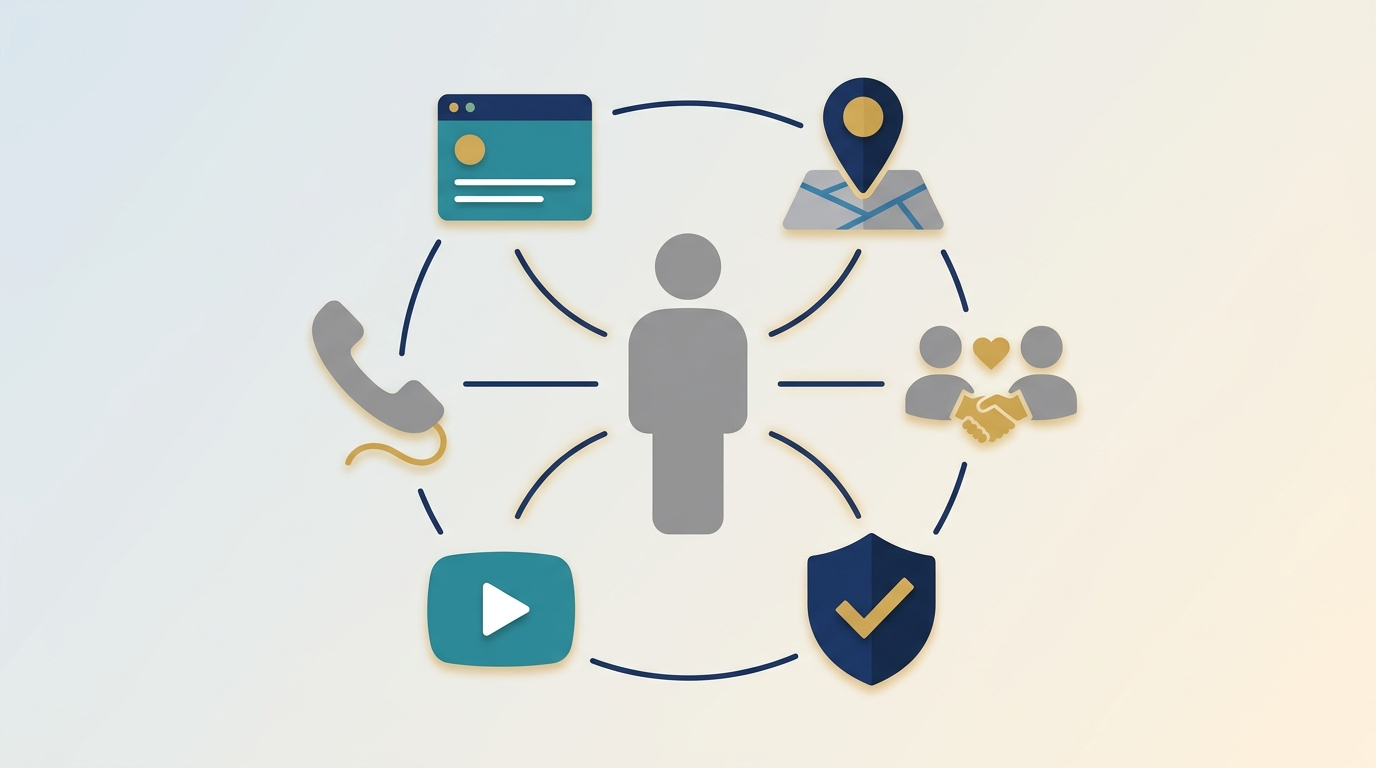
Search engines updated Local Services Ads terms, and platforms refine local results. Moreover user journeys fragment across YouTube and social platforms. Because of that, firms cannot depend only on paid search. They need a data-driven attribution model, omni-channel budgets, and clear brand messaging. This article takes an analytical and instructional tone. It shows how to measure true ad impact, allocate marketing spend, and set up compliant LSAs in 2026.
Local Services Ads (LSAs) in 2026: legal ethics, Google changes, and practical setup
Local Services Ads (LSAs) remain a central channel for high-intent personal injury leads. In 2026, LSAs appear at the top of many Google SERP layouts. Therefore, firms that weigh risk and reward can gain visibility for queries like “car accident lawyer near me.” However, LSAs now require more careful oversight. Recent policy shifts changed how Google can use advertiser content and data. As a result, law firms must combine compliance, ethics, and strategy.
Why LSAs matter in 2026
LSAs pull potential clients from Google search results into direct conversations. Because searchers often prefer the local pack, LSAs can drive better conversion rates. At the same time, LSAs compress the decision window. Consequently, your intake team must respond quickly and track lead sources beyond last-click attribution.
Google’s April 22, 2025 update and the key implications
Google updated its Local Services Ads Additional Terms in April 2025. The update allowed Google to select, modify, and use content from LSA profiles and related communications. This change also clarified that Google may link LSA accounts across its services. For in-depth coverage of the policy and industry reaction, see Search Engine Land. For practitioner-focused ethics analysis, read AttorneySync. Tree Care Marketing Solutions also summarized practical concerns at Tree Care Marketing Solutions.
Legal ethics and confidentiality
LSAs can route calls and messages through Google systems. Thus you must consider confidentiality and model rules. If a prospective client shares sensitive details, you should document how you handle that data. Moreover, counsel must train intake staff on privileged information. Because an LSA call may be subject to Google usage rules, confirm whether sharing case specifics risks disclosure. As a result, consult your ethics counsel when implementing LSAs.
Practical setup checklist for personal injury firms
- Verify and accept LSA terms quickly and document acceptance.
- Audit what profile content you provide because Google may reuse it.
- Configure call routing and tracking with privacy controls in place.
- Train intake teams to capture how leads find the firm and to flag privileged info.
- Integrate LSAs into a multi-touch attribution model to measure true ad impact.
How LSAs fit an omni-channel plan
LSAs perform best when they support brand and referral channels. Therefore, use LSAs to capture high-intent searchers. Then nurture them with brand signals across YouTube, social, and local reputation. This approach lowers cost per client and preserves ethical standards.
| Factor | Omni-channel marketing | Single-channel direct response |
|---|---|---|
| Cost per client | Lower over time because brand trust and referrals compound. Initial spend can be higher. | Lower initial cost per lead but higher lifetime cost per client when brand is weak. |
| Conversion rates | Higher for warmed prospects after exposure across channels. Non-brand searches convert into brands. | Strong for immediate responders. Conversion drops when repeat exposure and familiarity are missing. |
| Brand trust | Builds reputation across search, LSAs, social, and video. Familiarity drives choice. | Little brand building. Relies on short term offers and immediate calls. |
| Marketing resource allocation | Allocate budgets across Google search, Local Services Ads (LSAs), social, video, and referrals. | Concentrate budget on one channel such as paid search or lead providers. |
| Client journey tracking | Requires multi-touch attribution, CRM integration, and call tracking to measure true impact. | Often depends on last-click metrics and gives incomplete attribution. |
| Implementation complexity | Higher setup and analytics needs but more resilient to platform changes. | Easier to launch but vulnerable to platform policy shifts and rising costs. |
Private equity backed MSOs and what local firms should do
Private equity in MSOs has reshaped law firm advertising. In recent years investors poured capital into MSOs that centralize marketing and media buying. As a result these groups buy ads at scale. They also test omni-channel marketing faster than most local firms. Consequently MSOs drive down cost per lead for large portfolios. However that advantage creates pressure on independents.
MSOs streamline media and creative. They standardize messaging and measurement. Therefore they often win on efficiency. For example Vista Consulting and Ben Glass Law appear in industry conversations. They show how brand trust scales when you control media and client experience. Moreover private equity provides working capital. Thus MSOs can outbid small firms for expensive placements like Local Services Ads (LSAs) and top Google SERP slots.
What local firms should do
- Double down on hyperlocal reputation. Because MSOs must standardize, they sometimes miss local nuance. Use community partnerships and local content to build trust. Local reputation compounds into referrals and lower cost per client.
- Prioritize omni-channel marketing that links search, social, video, and referrals. As a result you reduce reliance on a single expensive channel.
- Capture first touch data. Then implement multi-touch attribution and CRM workflows. This shows how non-brand searches turn into brand choices.
- Protect client data and ethics. If you consider partnering with an MSO, contractually preserve client confidentiality and intake controls.
- Negotiate collaboration, not surrender. For example test co-marketing arrangements or limited scope MSO services. This gives you scale without losing brand control.
Strategic plays that work in 2026
First, invest in brand trust because it reduces long term acquisition costs. Remember the phrase Trust is future-proof. Second, use targeted creative that emphasizes outcomes and local presence. Third, outsource tactical ad buying when it saves time, but retain strategic control over messaging and client experience. Finally, measure beyond last-click. Because MSOs often focus on immediate metrics, you gain an edge by proving long term value through referrals and client lifetime measures.
In short, MSOs change the ad buying game. However local firms can compete by leaning into local advantage, omni-channel marketing, smart marketing resource allocation, and uncompromised client trust.
Move beyond last-click: measure the full value of advertising
Last-click hides the truth about how clients find your firm. Relying on last-click attribution data can mislead firms about the impact of their brand. Therefore, personal injury firms must map client journeys and use data-driven attribution. This section shows practical swaps to reduce wasted ad spend.
Last-click assigns all credit to the final touchpoint. However, many prospective clients first see a video or social post. Because of that, brand exposure often does heavy lifting before the conversion.
Data-driven attribution uses multiple models to apportion credit across touches. For example, linear models split value evenly across touchpoints. Time-decay favors recent interactions while position-based weights first and last touches. Algorithmic models use machine learning to estimate real impact.
Practically, integrate CRM, call tracking, and UTMs into one dataset. Then connect offline conversions and intake outcomes to ad exposures. As a result you see which channels build familiarity and which close.
Omni-channel marketing benefits from multi-touch measurement. Because you can track early-stage awareness, you avoid overpaying for single conversions. Use experiments to shift budgets toward channels that lower cost per client. Also, track post-case referrals and lifetime value for full impact.
Build a measurement plan with clear KPIs for awareness and acquisition. Furthermore, routinely audit attribution to catch tracking gaps. ‘data-informed’ decisions will reduce wasted spend and improve resource allocation. Ultimately, moving beyond last-click makes your marketing resilient and measurable.
Start with lightweight tools like Google Analytics 4 and call tracking. Then add a CRM and attribution platform that supports multi-touch modeling. For law firms, tag intake forms and ask “how did you find us” at intake. This input, combined with server side tracking, fills gaps when cookies fail. Finally, report on cost per client, not just cost per lead, for true ROI.
Measure brand lift tests on YouTube or paid social to quantify awareness. Thus you capture the value of non-direct channels that last-click ignores. Then reallocate budgets monthly based on client journeys and revenue outcomes.
Conclusion
Omni-channel marketing delivers lower long-term cost per client and more resilient acquisition. It combines Google search, Local Services Ads, social, video, and referrals to build familiarity and brand trust. Familiar brands win when search begins with non-brand queries. Because familiarity breeds liking, reputation signals shape final choice. Therefore firms must plan budgets and measure multi-touch client journeys.
Ethical use of LSAs requires intake protocols and confidential data controls. After Google’s April 2025 update, firms should audit profile content and consult ethics counsel. Train intake teams to capture how clients found you and to handle privileged details. Also document consent, storage, and data use policies for compliance. Implementing LSAs works best when integrated into omni-channel funnels, not as a standalone tactic.
Move beyond last-click and adopt data-driven attribution models. Track first touch, mid funnel signals, and post-case referrals to measure true ROI. Use lightweight tools to start, then scale to analytics platforms. This reduces wasted spend and improves marketing resource allocation.
For firms that need execution support, Case Quota offers specialized legal marketing services. Case Quota helps small and mid-sized firms deploy ‘Big Law’ level strategies while keeping local control. Case Quota focuses on measurable growth and compliant ad operations. They combine creative, media, and analytics for holistic outcomes. Visit Case Quota to explore services and case studies. Finally, start by aligning omni-channel marketing, ethical LSA setup, and advanced attribution.