
In the competitive legal market, a steady stream of high-quality leads is the lifeblood of a thriving practice. Many firms, however, find themselves in a feast-or-famine cycle, often relying on outdated methods that fail to deliver consistent, predictable results. The challenge isn’t a lack of potential clients; it’s the difficulty in effectively reaching and engaging them amidst a sea of competition. Without a systematic approach to client acquisition, even the most skilled attorneys will struggle to achieve sustainable growth.
This guide cuts through the noise. We have compiled a comprehensive roundup of eight powerful, field-tested strategies specifically for generating leads for lawyers. We will move beyond theory and provide the actionable insights you need to build a robust client acquisition engine. This article is your blueprint for creating a predictable pipeline of qualified prospects, ensuring your firm doesn’t just survive, but flourishes.
You will learn how to implement practical tactics across various channels, including:
- Digital Dominance: Mastering Search Engine Optimization (SEO) and targeted Google Ads campaigns.
- Content & Connection: Leveraging legal blogging, email marketing, and social media outreach.
- Community & Credibility: Building powerful referral networks and managing your online reputation.
Whether you’re a solo practitioner in Southern California specializing in personal injury or a multi-partner business law firm, these strategies will equip you to attract the right clients. By mastering these methods, you can secure a formidable competitive edge and unlock your firm’s true growth potential.
1. Search Engine Optimization (SEO) for Legal Websites
Search Engine Optimization (SEO) is a fundamental, long-term digital marketing strategy designed to increase your law firm’s visibility in search engine results. When potential clients in Southern California search for legal help on Google, SEO ensures your website appears on the first page. This method focuses on attracting “in-market” leads, individuals actively looking for the specific legal services you provide, making it one of the most effective strategies for consistently generating leads for lawyers.
Unlike paid ads, which stop delivering traffic the moment you stop paying, SEO builds a sustainable asset. By creating high-quality content and optimizing your website’s technical structure, you establish authority and trust with search engines, which translates into a steady stream of qualified organic traffic over time.
How to Implement Legal SEO Effectively
Successful SEO for law firms requires a multi-faceted approach. It’s not just about one-time fixes; it’s an ongoing process of refinement and content creation.
- Target High-Intent Local Keywords: Focus on specific, location-based keywords that potential clients use. Instead of the broad term “personal injury lawyer,” target long-tail keywords like “truck accident attorney in Los Angeles” or “workers compensation lawyer near Anaheim.” These phrases attract users with a clear and immediate need for legal services.
- Optimize Your Google Business Profile: For local law firms, your Google Business Profile (formerly Google My Business) is critical. A complete and optimized profile with positive reviews, accurate business information, and regular posts can dramatically improve your visibility in local map-pack results for searches like “estate planning attorney near me.”
- Create In-Depth Practice Area Pages: Develop comprehensive pages for each of your core practice areas. A page on “DUI Defense” should detail California’s laws, potential penalties, and how your firm builds a defense strategy. This positions you as an authority and helps you rank for specific service-related searches.
- Build Local Citations: Ensure your firm’s name, address, and phone number (NAP) are consistent across reputable legal directories like Avvo, FindLaw, and Martindale-Hubbell. These citations act as votes of confidence for search engines.
The following chart illustrates the compounding effect of a consistent SEO strategy on lead generation over a 12-month period.
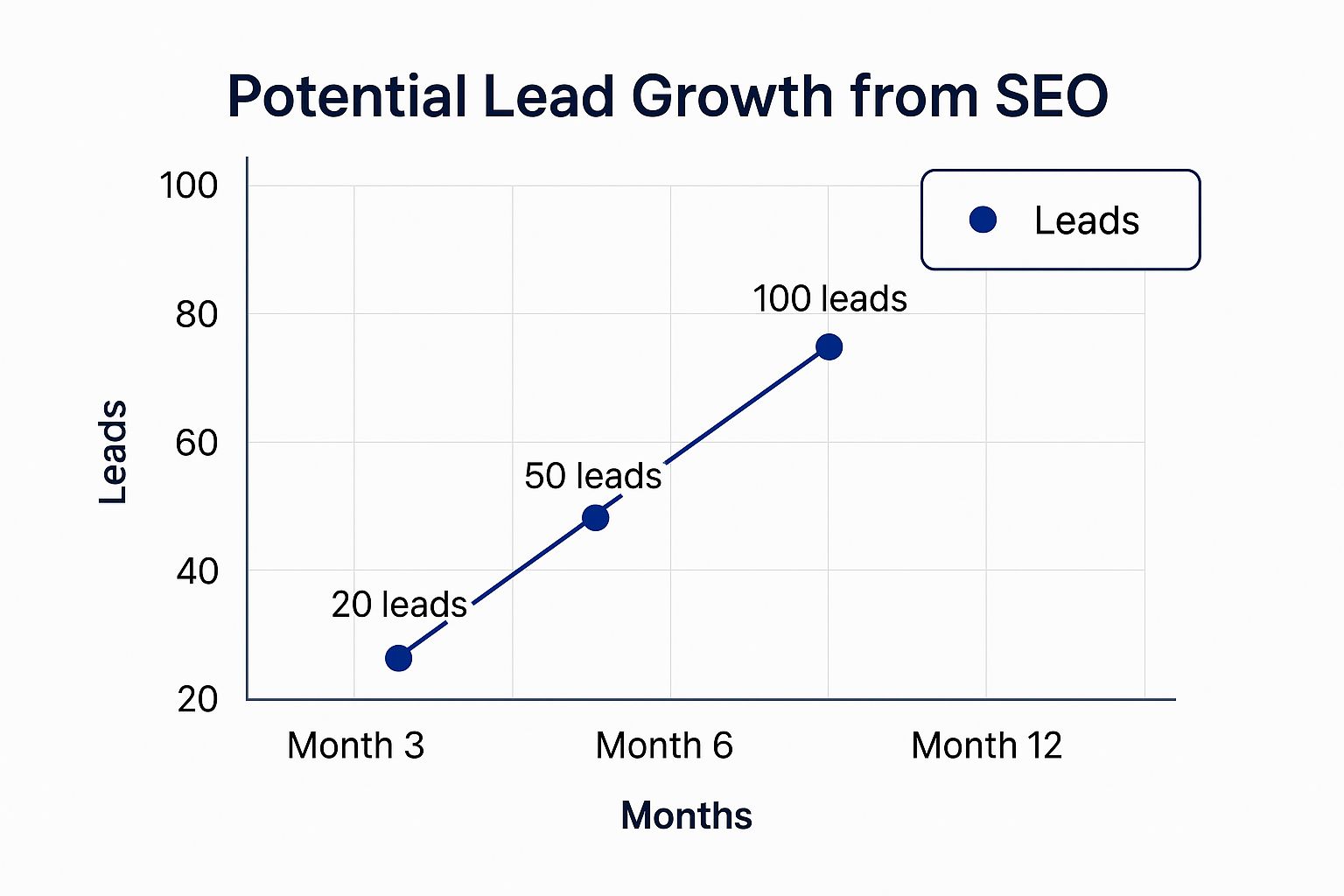
As the data shows, lead growth from SEO is exponential, accelerating significantly after the initial six-month foundation is established. For a deeper dive into this topic, you can learn more about how personal injury firms can dominate a competitive market like Los Angeles with SEO.
2. Google Ads (Pay-Per-Click) Advertising
Google Ads, also known as Pay-Per-Click (PPC) advertising, is a powerful, immediate strategy for placing your law firm at the top of Google search results. Unlike SEO, which takes time to build momentum, PPC allows you to capture the attention of potential clients the moment they search for legal assistance. This method is incredibly effective for generating leads for lawyers because you pay only when a motivated user clicks on your ad, ensuring your budget is spent on individuals actively seeking your services.
For practice areas where clients have urgent needs, such as DUI defense or personal injury after an accident, the instant visibility offered by Google Ads is invaluable. It provides a direct and measurable way to drive high-intent traffic to your website or phone lines, giving you a competitive edge in crowded markets like Southern California.

How to Implement Google Ads Effectively
A successful Google Ads campaign for a law firm requires precision, strategic bidding, and continuous optimization. Simply turning on ads is not enough; you must carefully manage your campaigns to maximize return on investment.
- Create Hyper-Targeted Ad Groups: Don’t lump all your services into one campaign. Build separate campaigns and ad groups for each specific practice area, like “Car Accidents,” “Slip and Fall,” and “Wrongful Death.” This allows you to write highly relevant ad copy and direct users to the most appropriate landing page on your site.
- Utilize Negative Keywords: Aggressively use negative keywords to prevent your ads from showing for irrelevant searches. For example, a personal injury firm should add negative keywords like “free,” “pro bono,” “jobs,” and “paralegal training” to avoid wasting budget on clicks from users who are not potential clients.
- Focus on Compelling Ad Copy: Your ads must speak directly to the user’s pain point and offer a clear solution. Use powerful headlines like “Injured in a Truck Accident? Get a Free Consultation” and include ad extensions like call buttons and location information to make it easy for potential clients to contact you immediately.
- Optimize Landing Pages for Conversion: The user’s experience after clicking your ad is crucial. Ensure your landing pages are clean, professional, and designed for one purpose: conversion. They should feature clear calls-to-action, trust signals like client testimonials, and an easy-to-use contact form.
As the data illustrates, Google Ads provides immediate lead flow, which is crucial for firms needing to acquire cases quickly. However, it’s essential to manage these campaigns ethically, and you can learn more about California’s attorney advertising rules on CaseQuota.com.
3. Content Marketing and Legal Blogging
Content marketing is a strategic approach focused on creating and distributing valuable, relevant, and consistent content to attract and retain a clearly defined audience. For law firms, this means producing articles, guides, and videos that answer the legal questions of potential clients. This method positions your firm as an educational resource and a trusted authority, which is a powerful way of generating leads for lawyers who are in the early stages of their search for legal help.
By addressing common concerns and simplifying complex legal topics, you build a relationship with prospective clients before they even pick up the phone. This proactive strategy attracts leads by demonstrating expertise and providing genuine value, making your firm the obvious choice when they are ready to seek a formal consultation.

How to Implement Legal Content Marketing Effectively
An effective content strategy goes beyond simply publishing articles; it involves understanding your audience’s pain points and providing clear, accessible solutions.
- Answer Frequently Asked Questions: Use your client consultations as a source of inspiration. Create blog posts or short videos answering the most common questions you hear, such as “What are the first steps after a car accident in California?” or “How is child support calculated in Orange County?”. This approach, popularized by Marcus Sheridan’s “They Ask, You Answer” methodology, directly addresses user needs.
- Create Content Around Legal News: When a new law is passed or a significant court decision is made, write an article explaining its impact on the average person. This timely content can attract significant attention and positions you as a knowledgeable, up-to-date expert in your field.
- Explain Complex Legal Concepts Simply: Avoid dense legal jargon. Break down complex topics like the probate process or the elements of a breach of contract claim into easy-to-understand language. This makes your content accessible and useful to a wider audience.
- Include Clear Calls-to-Action (CTAs): Every piece of content should guide the reader on what to do next. End your posts with a clear CTA, such as “Contact our Anaheim office for a free case evaluation” or “Download our free guide to estate planning.”
Content marketing builds a library of assets that work for you 24/7, attracting qualified traffic and nurturing leads over the long term. For more on creating content that converts, you can explore the principles advocated by content marketing expert Ann Handley at MarketingProfs.
4. Referral Programs and Professional Networking
Referral programs and professional networking are time-tested, relationship-driven strategies that leverage your existing connections to create a powerful pipeline of high-quality leads. Unlike cold outreach, referrals come with a built-in layer of trust, as the potential client has been introduced to your firm by someone they already know and respect. This method is exceptionally effective for generating leads for lawyers because it taps into a network of professionals who frequently encounter clients with legal needs.
A systematic approach to networking transforms random encounters into a predictable source of new cases. By formalizing referral relationships with other attorneys, accountants, financial advisors, and medical professionals, you build a community of advocates who understand your expertise and are motivated to send qualified clients your way. This creates a sustainable, often reciprocal, flow of business that complements digital marketing efforts.
How to Implement Referral Programs and Networking Effectively
Building a successful referral network requires proactive effort and consistent maintenance. It’s about building genuine relationships, not just exchanging business cards.
- Create a Formal Referral Program: Don’t leave referrals to chance. Establish clear guidelines for how you handle referred cases, including communication protocols and any ethical referral fees. This structure shows your partners that you value their trust and take the relationship seriously. For example, a business attorney can create a program with local accountants, offering a finders fee for every new retainer client referred.
- Join Local Bar Association Committees: Go beyond simply attending meetings. Join a committee or special interest group in your practice area. This positions you as an engaged expert and allows you to build deeper connections with other attorneys who may have clients with needs outside their own specialization.
- Target Complementary Professionals: Identify professionals who serve your ideal client but don’t compete with you. An estate planning attorney should be networking with financial advisors and insurance agents, while a personal injury lawyer can build strong ties with chiropractors and physical therapists.
- Host Educational Seminars: Provide value to your network by hosting a lunch-and-learn or a short seminar on a legal topic relevant to their clients. A workers’ compensation attorney could present to a group of medical office managers on the proper documentation for work-related injuries, establishing themselves as the go-to expert.
By actively nurturing these professional relationships, you create a robust and reliable system for acquiring new clients. To explore this and other client acquisition strategies further, discover more about how to get new clients for your law practice.
5. Social Media Marketing and LinkedIn Outreach
Social media, particularly professional platforms like LinkedIn, offers a powerful channel for building brand authority and engaging directly with potential clients and referral partners. Unlike traditional advertising, this strategy focuses on relationship-building and showcasing expertise. For law firms, it transforms a digital presence into a dynamic tool for generating leads for lawyers by establishing trust and demonstrating value before a potential client ever makes contact.
This approach is not about chasing viral trends; it’s a strategic effort to share valuable legal insights, connect with industry leaders, and position your firm as the go-to authority in your practice area. Done correctly, it cultivates a network that produces both direct client inquiries and a steady stream of high-quality referrals over time.
How to Implement Social Media and LinkedIn Outreach
Effective social media for law firms requires consistency and a focus on providing value rather than just self-promotion. It’s about starting conversations and building a community around your expertise.
- Target and Engage on LinkedIn: LinkedIn is the premier platform for B2B and professional networking. Corporate attorneys can share commentary on recent M&A deals, while employment lawyers can discuss the implications of new workplace legislation. Use it to connect with C-suite executives, in-house counsel, and other professionals who are either ideal clients or valuable referral sources.
- Share Actionable Legal Insights: Don’t just announce your firm’s wins. Create content that educates your audience. Post brief analyses of recent court rulings, explain complex legal concepts in simple terms, or offer tips for businesses to remain compliant. This demonstrates your expertise and builds credibility.
- Utilize LinkedIn Sales Navigator for Precision Targeting: For more direct outreach, use LinkedIn Sales Navigator to identify and connect with specific decision-makers. You can filter prospects by industry, company size, job title, and geographic location, allowing you to build a highly targeted list for personalized outreach.
- Engage with the Community on Other Platforms: While LinkedIn is key for professional connections, platforms like Facebook are excellent for connecting with the local community. A family law or estate planning attorney can engage with local community groups, share relevant local news, and build a reputation as a trusted local resource.
By consistently sharing expertise and engaging with your target audience, you build a digital reputation that directly supports your lead generation goals. To explore a more comprehensive marketing strategy that incorporates social media, you can discover more about how to market a law firm effectively.
6. Email Marketing and Newsletter Campaigns
Email marketing is a powerful and direct strategy for nurturing relationships and staying top-of-mind with past clients, current leads, and referral sources. By delivering valuable content directly to their inboxes, law firms can build trust and brand recognition over time. This approach moves beyond simple promotion, transforming your firm into a go-to legal resource and making it a highly effective method for generating leads for lawyers.
Unlike strategies focused on attracting new prospects, email marketing excels at reactivating old leads and securing repeat business or referrals from your existing network. A well-executed campaign ensures that when a past client or a contact needs legal help in Southern California, your firm is the first one they think of. This method provides one of the highest returns on investment in digital marketing because you are engaging an audience that already knows you.
How to Implement Email Marketing Effectively
A successful email marketing strategy for law firms is built on segmentation, value, and consistency. It’s about sending the right message to the right person at the right time.
- Segment Your Email Lists: Group your contacts to ensure your content is always relevant. Create separate lists for past personal injury clients, current business law clients, and potential referral partners. This allows you to send targeted information, such as a business law firm sending quarterly regulatory updates to its corporate clients.
- Create Value-Driven Content: Your emails should offer genuine value, not just sales pitches. An estate planning attorney in Orange County could send an annual newsletter with tips on reviewing a will, or a personal injury firm could create an automated series educating new leads on the claims process.
- Use Compelling, Non-Salesy Subject Lines: Craft subject lines that spark curiosity and promise value, such as “3 Common Mistakes to Avoid After a Car Accident in LA” instead of “Free Consultation Available.” The goal is to get the email opened by offering help.
- Maintain a Consistent Schedule: Consistency is key to staying top-of-mind without overwhelming your audience. A monthly newsletter or a quarterly legal update is often the ideal frequency. This regularity builds anticipation and reinforces your firm’s reliability and expertise.
7. Local Directory Listings and Review Management
Local directory listings and online review management are critical components for any law firm targeting clients in a specific geographic area. This strategy involves ensuring your firm’s information is accurate and consistent across key online directories and actively managing your online reputation. When a potential client in Southern California searches for legal help, a strong directory presence combined with positive reviews builds immediate trust and significantly boosts local visibility, directly contributing to generating leads for lawyers.
Unlike broader marketing campaigns, this approach targets clients precisely when and where they are searching. A well-optimized profile on platforms like Google Business Profile or Avvo acts as a digital storefront, providing social proof and essential information that converts searchers into callers. It’s a foundational element of local marketing that builds credibility one review at a time.
How to Implement Directory and Review Management Effectively
A proactive approach to managing your digital presence is essential for attracting local clients. It requires consistency and a commitment to engaging with your client base.
- Claim and Optimize Key Listings: Your first step is to claim and fully optimize your Google Business Profile. This includes adding high-quality photos of your team and office, selecting the correct service categories, writing a detailed business description, and ensuring your name, address, and phone number (NAP) are 100% accurate.
- Build a Strong Review Portfolio: Actively and systematically ask satisfied clients to leave reviews. A steady stream of positive feedback, especially on Google, is one of the most powerful signals for both potential clients and search engines. A criminal defense attorney with over 50 five-star reviews will almost always be chosen over a competitor with only a few.
- Respond to All Reviews Professionally: Engage with every review, both positive and negative. Thank clients for their positive feedback and address negative comments thoughtfully and professionally (while adhering to client confidentiality). This shows you value client feedback and are committed to excellent service.
- Ensure NAP Consistency Across Directories: Beyond Google, make sure your firm’s NAP information is identical across all relevant legal directories like Avvo, FindLaw, Martindale-Hubbell, and Yelp. Inconsistencies can confuse search engines and harm your local search rankings.
These listings are often the first interaction a potential client has with your firm, making a polished and reputable presence non-negotiable. For an even more direct way to appear at the top of local search results, you can explore how Google Local Services Ads can guarantee prominent placement for your law firm.
8. Webinars and Educational Seminars
Hosting webinars and educational seminars positions your firm as an authority while directly engaging potential clients with valuable, free legal information. This strategy moves beyond traditional advertising by offering tangible value upfront, building trust and rapport before a potential client ever needs to sign a retainer. By educating your target audience on complex legal topics, you are effectively generating leads for lawyers who are pre-qualified and already view you as a credible expert.
This approach is particularly powerful for practice areas where clients are often proactive or planning ahead, such as estate planning or business law. Unlike reactive marketing methods, educational events attract individuals who are actively seeking knowledge, allowing you to build a relationship and become their first choice when the need for legal services arises. It is a proactive, trust-based lead generation system.
How to Implement Legal Webinars Effectively
A successful educational event requires strategic planning, from topic selection to post-event follow-up. The goal is to provide immense value and create a clear path for attendees to become clients.
- Choose Topics Based on Client Pain Points: Select topics that answer the most common and pressing questions your potential clients have. An estate planning attorney could host a “Wills and Trusts 101” seminar, while an employment lawyer might present a webinar on “Understanding Your Workplace Rights in California.” These topics attract a highly relevant audience.
- Partner with Complementary Professionals: Co-host events with financial planners, real estate agents, or accountants to tap into their client base. A real estate attorney conducting a first-time homebuyer seminar with a mortgage broker can double their reach and lend additional credibility to the event.
- Offer a Valuable Takeaway: Provide all attendees with a tangible asset, such as a downloadable checklist, an e-book, or a guide. This not-only enhances the value of the seminar but also serves as a continued point of contact and a reason for your firm to follow up.
- Implement a Prompt Follow-Up Sequence: The most critical step is following up with all registrants and attendees within 48 hours. Offer a complimentary, no-obligation consultation to discuss their specific situation, converting interested attendees into qualified leads.
The following video provides further insight into leveraging educational content to attract ideal clients.
By consistently delivering high-value educational content, you create a powerful and scalable lead generation engine. For those looking to master this approach, the strategies outlined by legal marketing consultants who champion educational marketing offer a comprehensive blueprint for success.
Lead Generation Strategies for Lawyers: 8-Point Comparison
| Strategy | Implementation Complexity 🔄 | Resource Requirements ⚡ | Expected Outcomes 📊 | Ideal Use Cases 💡 | Key Advantages ⭐ |
|---|---|---|---|---|---|
| Search Engine Optimization (SEO) | Medium to High – requires technical skills and ongoing content creation | Moderate to High – monthly professional services $2,000-$10,000 | Long-term, sustainable lead growth over 6-12 months | Law firms targeting organic, high-intent search traffic | Cost-effective over time; builds authority; works 24/7 |
| Google Ads (Pay-Per-Click) Advertising | Medium – requires campaign setup and ongoing optimization | High – expensive CPC ($50-$500+ per click) | Immediate leads and visibility | Firms needing fast lead generation with controlled budget | Precise targeting; immediate results; measurable ROI |
| Content Marketing and Legal Blogging | Medium – consistent weekly content creation (5-10 hours weekly) | Moderate – time for content and distribution | Builds trust and SEO support; results take time | Firms aiming to educate, build thought leadership | Establishes expertise; low cost; supports SEO |
| Referral Programs and Professional Networking | Low to Medium – relationship building and maintenance | Low to Moderate – time for networking and follow-up | High-quality leads; higher conversion rates | Firms leveraging existing professional and client networks | High-quality leads; lower acquisition cost; trust-based |
| Social Media Marketing and LinkedIn Outreach | Medium – daily engagement and content posting (1-2 hours daily) | Moderate – time and possible ad spend | Brand building and engagement; hard to track ROI | Firms seeking professional visibility and referral sources | Builds brand; direct outreach; low cost |
| Email Marketing and Newsletter Campaigns | Medium – requires list management and content creation | Low to Moderate – software and content resources | High ROI with nurtured relationships | Firms maintaining contact with prospects and clients | Personalizable; direct communication; cost-effective |
| Local Directory Listings & Review Management | Low to Medium – claiming and maintaining listings | Low to Moderate – time investment | Increased local visibility and credibility | Firms focusing on local client acquisition | Improves local SEO; enhances reputation; usually free |
| Webinars and Educational Seminars | High – significant prep, presentation and follow-up | Moderate to High – time, marketing, and tech platforms | Engaged, high-value leads | Firms positioning as thought leaders through education | Builds trust; interactive; content reusable |
Building a Sustainable Lead Generation Engine
The journey to consistently generating leads for lawyers is not a sprint; it’s a marathon of strategic, sustained effort. We’ve explored eight powerful channels, from the foundational authority-building of Search Engine Optimization and Content Marketing to the immediate, targeted impact of Google Ads. We’ve also delved into the relationship-driven power of referral networks, the professional reach of social media, and the direct engagement of email marketing and educational webinars.
The central theme connecting these diverse strategies is integration. A high-performing lead generation system doesn’t rely on a single channel. Instead, it weaves multiple tactics together into a cohesive, resilient engine that captures potential clients at every stage of their decision-making process. Your SEO-optimized blog post attracts a reader, who then subscribes to your newsletter, sees your firm’s positive reviews on a local directory, and finally converts after receiving a targeted email about an upcoming webinar. This is the multi-touchpoint reality of modern legal marketing.
From Strategy to Execution: Your Actionable Roadmap
Mastering the art of generating leads for lawyers requires moving from knowledge to action. The most critical takeaway is that there is no one-size-fits-all solution. A Southern California personal injury firm will have different priorities and find success with different channels than a business law firm in a smaller market. Your next steps should be deliberate and tailored to your firm’s unique identity.
Here’s a practical framework to get started:
- Audit Your Current Efforts: Before adding new strategies, assess what you’re already doing. Where do your current leads come from? What’s working, and what’s falling flat? Use tools like Google Analytics to find your baseline.
- Prioritize Based on Resources: Be realistic about your budget and time. If you have a larger budget, a robust Google Ads campaign can deliver immediate results. If your budget is tight but you have time, doubling down on local SEO and content marketing can yield significant long-term ROI.
- Select a “Quick Win” and a “Long-Term Play”: To build momentum, choose one strategy for immediate impact and one for foundational growth. For instance, start a targeted LinkedIn outreach campaign (quick win) while simultaneously beginning the consistent work of creating high-value blog content (long-term play).
- Commit to Measurement: You cannot improve what you do not measure. For every strategy you implement, define key performance indicators (KPIs). Track your cost per lead, conversion rates, and client acquisition cost. This data is essential for making informed decisions and optimizing your spend.
The True Value of a Predictable Pipeline
Ultimately, building a sophisticated system for generating leads for lawyers is about more than just getting more calls. It’s about creating predictability and control over your firm’s growth trajectory. When you have a reliable influx of qualified potential clients, you can make strategic hiring decisions, invest in better technology, and focus on delivering exceptional legal services instead of worrying about where the next case will come from.
This strategic approach transforms marketing from a cost center into a powerful investment in your firm’s future. It empowers you to build a practice that is not only profitable but also sustainable, scalable, and resilient in an increasingly competitive legal landscape. The work you put into building this engine today will pay dividends for years to come, establishing your firm as a recognized authority and the go-to choice for clients in your practice area.
Ready to stop guessing and start growing? If you want to implement these advanced strategies without the steep learning curve, the experts at Case Quota specialize in building high-performance lead generation engines specifically for law firms. Visit Case Quota to see how our targeted approach can deliver a predictable stream of exclusive, qualified leads directly to your firm.