

Think of your firm's marketing videos as the modern-day handshake—the most direct way to build the trust that turns a stranger on the internet into a signed client. Videos cut through the noise, making complex legal ideas simple and, most importantly, putting a human face on your firm. This isn’t a nice-to-have anymore; it’s a core tool for growth.
Why Video Is Your Firm's Most Powerful Tool

Let's get one thing straight: video isn't just another box to check in your marketing plan. In the legal world, trust is everything. It's the currency of client acquisition. While a blog post can explain what you do, a video shows potential clients who you are.
That distinction makes all the difference when someone is in a vulnerable spot, looking for more than just a legal expert. They're looking for an advocate they can believe in. Video is the bridge between your firm’s expertise and a client’s need for clarity, breaking down dense legal jargon into something they can actually understand. It positions you as an approachable authority, not an intimidating suit.
The Power of Human Connection
A website can list an attorney's accolades and credentials, but it can't capture their empathy or their drive. A marketing video brings the person behind the degree to life, letting potential clients see and hear the professional they might be entrusting with their future. In a sea of look-alike law firm websites, that human element is your ultimate differentiator.
A well-crafted video does more than inform; it creates an emotional connection. It shows clients you're not just a law firm, but a team of dedicated individuals ready to fight for them.
This isn't just a hunch—the data backs it up. A solid 62% of law firms are already using video in their marketing, and for good reason. On top of that, 84% of consumers say they’re more likely to buy a service after watching a brand's video. Those numbers are too big to ignore.
Building Authority and Trust at Scale
Your videos work for you 24/7. They answer common questions, ease anxieties, and build rapport with potential clients long before they ever pick up the phone to call you. This pre-built trust is a game-changer, warming up leads so the initial consultation is far more productive.
By addressing client pain points directly in your videos, you're not just selling a service; you're proving you understand their situation on a deep level. It's no surprise that this is a key part of learning https://casequota.com/how-to-get-more-clients-as-a-lawyer/, because it lays a foundation of trust that text alone just can't match.
Ultimately, video marketing isn't about being seen—it's about being understood, remembered, and trusted. To really get a handle on this shift, it's worth reading up on why video marketing is taking over the digital space. It gives you an unmatched opportunity to show what makes your firm different and connect with clients on a truly personal level.
Choosing the Right Videos for Your Law Firm
Creating powerful attorney marketing videos isn't about chasing a single, viral hit. It’s about building a strategic video library where every piece has a specific job to do. Think of it like assembling a legal team—you wouldn’t put a corporate lawyer on a criminal case. In the same way, different types of videos are designed to achieve different client acquisition goals.
Not all videos are created equal. The right format depends entirely on what you’re trying to accomplish. Are you looking to build your firm's authority, create a personal connection with potential clients, or deliver the social proof they need to pick up the phone?
Let's break down the most impactful video formats for law firms.
The Firm Overview Video
This is your digital handshake, your firm’s front door. A firm overview video is a short, polished introduction to who you are, what you stand for, and why you do what you do. This isn't just a list of practice areas; it's the story of your firm's mission.
The goal here is to establish your brand and give potential clients a feel for your firm's personality and professionalism. Keep it sharp and under two minutes. This video is a perfect fit for your website’s homepage or "About Us" page, setting the tone for every visitor.
Attorney Profile Videos
While the overview video introduces the firm, attorney profile videos introduce the people. This is how you humanize your practice. At the end of the day, clients hire people, not logos, and these quick videos (60-90 seconds) are your chance to forge a genuine, personal connection.
Each attorney can share their passion for the law, their philosophy on client relationships, and what truly motivates them. That kind of transparency is gold for building trust. When a potential client feels like they "know" an attorney before they've even made a call, you’ve already won half the battle. These are non-negotiable for individual attorney bio pages.
Client Testimonial Videos
Nothing speaks louder than a happy client telling their own story. Client testimonials are the ultimate form of social proof, showing that your firm doesn't just talk the talk—it delivers results. A written review is great, but a video testimonial is a game-changer because it captures real, raw emotion and gratitude.
A prospective client sees themselves in the story of a past client. When they hear someone describe a similar struggle and a successful outcome, it creates a powerful sense of hope and builds immense credibility for your firm.
The key is authenticity. Guide your clients with a few questions, but then get out of the way and let them speak from the heart. Testimonials are incredibly versatile—use them on service pages, share them on social media, and include them in email campaigns to nudge hesitant leads over the finish line.
Educational and FAQ Videos
One of the best ways to prove you're an expert is to share your expertise freely. Educational videos that answer common legal questions or break down complex topics position you as a trusted authority. Just think about the questions you hear over and over again in initial consultations and turn those answers into short, easy-to-digest videos.
These "FAQ" style videos accomplish two critical things:
- They attract clients early in their search. People typing legal questions into Google will discover your content, immediately establishing your firm as the go-to resource.
- They pre-qualify your leads. By educating your audience, you ensure the people who contact you are more informed and ready to move forward.
This strategy is a cornerstone of any solid law firm content marketing strategy, as it builds an audience by providing real, tangible value right from the start.
Case Study Videos
While testimonials are all about the client's emotional journey, case study videos pull back the curtain on your firm’s strategic brilliance. These are perfect for demonstrating your deep expertise in a specific practice area.
Walk viewers through a challenging (but anonymized) case. Lay out the initial problem, the legal strategy you developed, and the successful outcome you achieved for your client. This format is ideal for showcasing your firm’s problem-solving skills and proving you can handle complex legal matters with confidence and precision.
Matching Your Video Format to Your Marketing Goal
Choosing the right video format is crucial. A short, punchy client testimonial won't work where a detailed case study is needed. This table will help you align your video type with your primary objective.
| Video Type | Primary Goal | Best Platforms | Ideal Length |
|---|---|---|---|
| Firm Overview | Brand Authority & Trust | Website Homepage, About Page | 90-120 seconds |
| Attorney Profile | Humanize the Firm & Build Connection | Attorney Bio Pages, LinkedIn | 60-90 seconds |
| Client Testimonial | Social Proof & Credibility | Service Pages, Social Media, Emails | 60-120 seconds |
| Educational/FAQ | Lead Generation & Thought Leadership | Blog, YouTube, Social Media | 2-5 minutes |
| Case Study | Demonstrate Expertise & Results | Practice Area Pages, Webinars | 3-7 minutes |
As you can see, there’s a direct link between the story you want to tell and the format you should use. By building a diverse library of these video assets, you create multiple pathways for potential clients to find, trust, and ultimately hire your firm.
A Practical Blueprint for High-Impact Legal Videos
The thought of creating professional attorney marketing videos can be daunting. It’s easy to picture a full film crew and a budget the size of a Hollywood production. But the reality is, making powerful videos is more accessible than ever. You just need a solid game plan.
Think of it like preparing for trial. You’d never walk into a courtroom without a strategy, your evidence lined up, and a clear argument ready to go. The same discipline applies here. Breaking it down into three simple phases—pre-production, production, and post-production—is the secret to creating compelling content that builds trust and brings in clients.
This infographic lays out the journey perfectly, showing how a video takes a viewer from simply being aware of your brand to becoming a trusted client.
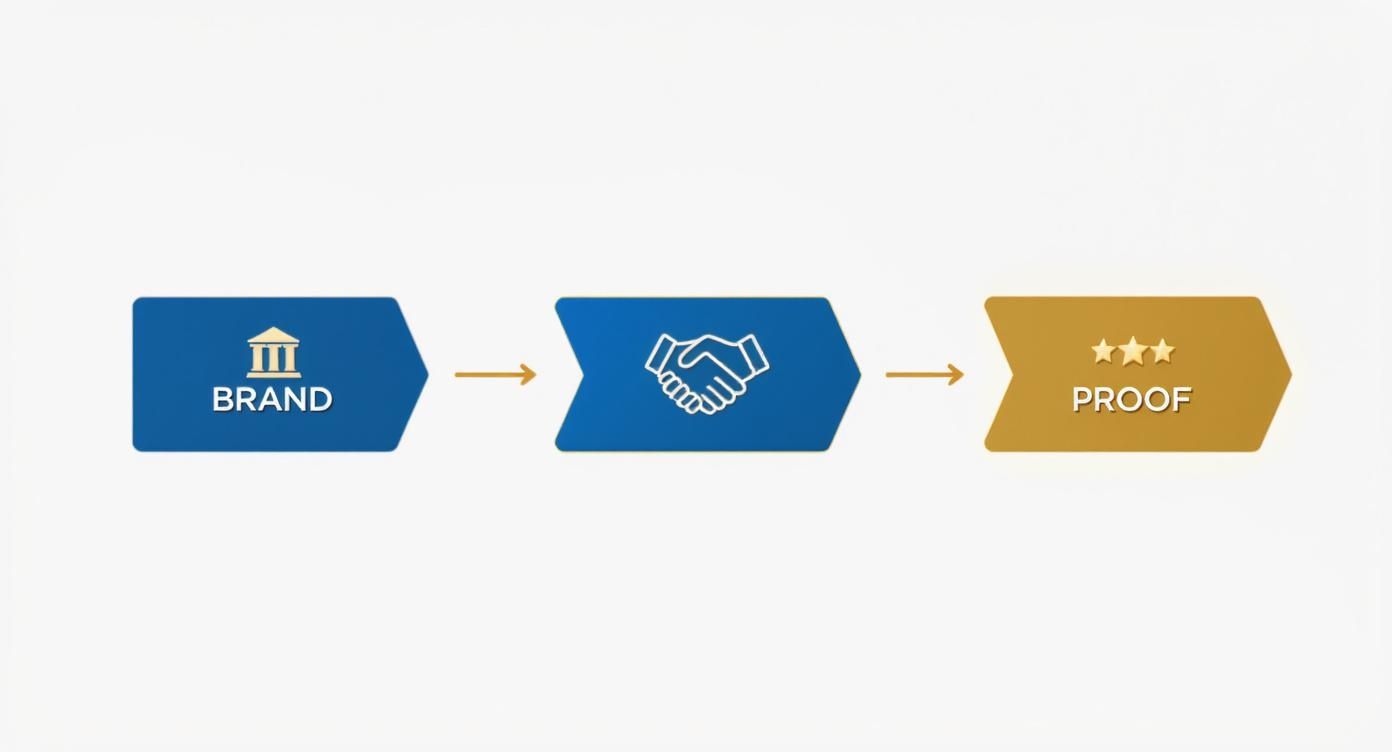
As you can see, each step builds on the last, turning that initial brand awareness into a real, tangible relationship.
Pre-Production: Where Strategy Takes Shape
This is easily the most critical phase, and it all happens before you even think about hitting the "record" button. This is where you figure out why you're making the video and what you want to say. Rushing this stage is the number one reason legal videos fall flat.
Get these steps right, and you're halfway there:
- Define Your Goal: What, exactly, do you want this video to accomplish? Are you trying to generate leads for a specific practice area, build up your firm's reputation, or just answer a common question you get from clients all the time? Get specific.
- Know Your Audience: Who are you trying to reach? A video for a corporate general counsel will have a completely different tone and message than one for a car accident victim. Picture that one person and talk directly to them.
- Write a Script: Please, don't try to wing it. A script keeps you on track, ensuring your message is clear, concise, and professional. The trick is to write it like you talk, as if you're explaining a concept to a client sitting right across from your desk.
Authenticity is everything. The goal is to connect, not to sound like a rehearsed corporate drone. Your script should sound like you.
Production: Bringing Your Vision to Life
Okay, now it’s time to film. While professional gear is nice, you can get fantastic results with a modern smartphone if you nail two non-negotiable elements: lighting and audio.
Poor audio is the fastest way to make an otherwise great video look amateurish. Viewers might forgive a slightly grainy picture, but they absolutely will not tolerate muffled, hard-to-hear sound. An inexpensive lavalier microphone is one of the best investments you can make.
For lighting, keep it simple. Sit facing a window to get great natural light, or use a basic ring light to make sure your face is clearly visible and free of weird shadows. And remember to look directly into the camera lens—not at yourself on the screen. That’s how you create a real connection with the viewer.
Post-Production: Polishing Your Message
Editing is where the magic really happens. This is your chance to trim out any mistakes, add helpful graphics, and turn your raw footage into a polished final product that holds a viewer's attention.
Effective editing boils down to a few key tasks:
- Cut Out the Fluff: Trim any long pauses, "ums," or mistakes to keep the pace energetic and engaging.
- Add On-Screen Text: Use simple text overlays to highlight key points or make sure your contact information is easy to find.
- Include a Call-to-Action (CTA): This is crucial. Never end a video without telling the viewer exactly what to do next, whether it’s "Visit our website" or "Call now for a free consultation."
The quality of your final video directly impacts your credibility. In fact, 87% of people say video quality affects their trust in a brand—and for law firms, trust is everything. For a deeper dive into editing, our guide on social media video editing has some great pointers.
And don't forget, a truly high-impact video is one that everyone can access. That means incorporating things like accurate captions and subtitles, which is a key part of creating accessible content for the hearing impaired.
DIY or Hire a Professional?
Deciding whether to make videos yourself or bring in an agency really comes down to your firm's resources and goals.
- DIY Approach: This is perfect for quick FAQ videos and casual social media content. It’s budget-friendly and lets you be nimble, but it does mean you’ll have to commit some time to learning the basics of filming and editing.
- Hiring Professionals: This is the way to go for your most important videos, like your main firm overview or powerful client testimonials. It costs more, but you get broadcast-level quality, expert strategic guidance, and you save a ton of your own valuable time.
Many firms find that a hybrid approach works best. You can handle the shorter, more informal videos in-house and then invest in a professional crew for the big, brand-defining content that will serve you for years to come.
Getting Your Videos in Front of the Right Clients
Making a great video is just the first step. The most compelling legal argument means nothing in an empty courtroom, and the same goes for your attorney marketing videos. The real magic happens with strategic distribution—that's what turns a video file sitting on a server into a machine that actively brings new cases to your firm.
Think of it this way: your video is a star witness. Your job is to get that witness in front of the right jury at exactly the right time. This means doing more than just tossing it up on YouTube and crossing your fingers. A smart, multi-channel approach is how you connect with potential clients right where they are, when they need you most.
Your Website: The Foundation of Your Video Strategy
Your law firm's website is the most valuable piece of digital real estate you own. It's the central hub where potential clients come to confirm they’re making the right choice by hiring you. Embedding videos here isn't just a nice-to-have; it's a must for grabbing attention and boosting conversions.
Be strategic about where you place them for maximum impact:
- Homepage: This is prime real estate for your Firm Overview video. It's your chance to make a powerful first impression and quickly show visitors what your firm is all about.
- Attorney Bio Pages: The perfect spot for Attorney Profile videos. They put a human face to the name and let potential clients connect with the person behind the credentials.
- Practice Area Pages: Embed relevant client testimonials, case studies, or educational FAQ videos. This provides targeted social proof and shows off your expertise exactly when a client is weighing their options.
YouTube: Your Firm’s Legal Search Engine
Stop thinking of YouTube as just a place to host videos. It's the world's second-biggest search engine, and every single day, people are on there looking for answers to their legal questions. If you optimize your videos for YouTube search, you can get in front of clients at the very beginning of their journey.
Treat every video like a miniature webpage. That means writing descriptive titles packed with relevant keywords, drafting detailed descriptions that explain what the video covers, and using tags to help YouTube’s algorithm understand your content. A simple video answering a common question like, "What happens after a car accident?" can put your firm in front of thousands of local searchers.
Social Media: Connecting with Clients and Colleagues
Social media is your amplifier. It’s where you take your message and share it with the community. Each platform plays a slightly different role in your distribution game plan.
- LinkedIn: This is your network for professional credibility. Share case study videos and expert commentary to build authority among your peers and connect with high-value business clients.
- Facebook: With its incredibly powerful ad targeting, Facebook is perfect for reaching specific local demographics. Client testimonials and educational videos tend to do exceptionally well here. Our in-depth guide on attorney advertising on Facebook can walk you through launching targeted campaigns.
A well-rounded social media presence proves that your firm is active, engaged, and modern. It shows you’re not just a static entity but a dynamic team of professionals ready to help.
The results speak for themselves. Studies show that 71% of lawyers have successfully generated new leads from social media, with video being a huge part of that success. And with about 60% of traffic to legal websites coming from mobile, short, punchy videos are the key to capturing this on-the-go audience. You can discover more insights about law firm marketing and its effectiveness.
Email Marketing: Nurturing Leads with Video
Finally, don't sleep on your email list. Dropping a video into your email newsletters can send your engagement rates through the roof. Instead of just linking to a blog post, embed a clickable thumbnail of your latest educational video. People are far more likely to hit a play button than click a boring text link.
Using video in your emails is a fantastic way to nurture leads over time. You consistently provide value, keep your firm top-of-mind, and build the trust required to turn a subscriber into a signed client.
How to Measure Your Video Marketing Success
You've poured time, energy, and resources into creating powerful attorney marketing videos. But is any of it actually working? A high view count feels good, but it doesn't pay the bills. If you can't connect your videos to new cases, you're just guessing.
To really understand your return on investment, you have to look past those surface-level numbers. Think of it like discovery in a case—you’re gathering the hard evidence to prove your strategy is delivering real, measurable business growth.
Moving Beyond Views to Engagement
The first step is to see what people are actually doing when they watch your videos. A million views mean nothing if everyone clicks away after three seconds. This is where engagement metrics come in, and platforms like YouTube Analytics offer a goldmine of insights.
Start by digging into these key metrics:
- Audience Retention: This is a simple graph that shows you exactly when people stop watching. If there’s a massive drop-off right at the start, your intro isn't working. If people are sticking around, you know your content is hitting the mark.
- Average View Duration: This number tells you, on average, how long people are watching. A longer duration is a strong signal that your videos are genuinely valuable and resonating with your target audience.
- Click-Through Rate (CTR): This tells you how many people who saw your video's thumbnail actually clicked to watch. A low CTR often means your title or thumbnail isn't compelling enough to cut through the noise.
Connecting Video Performance to Business Growth
Engagement is a great starting point, but the ultimate goal is generating new cases for your firm. This is where the rubber meets the road—connecting your video performance directly to your lead intake and client acquisition. You need to follow the trail from a video view to a phone call or a form submission.
The most successful law firms don't just measure how many people watch their videos; they measure how many of those viewers turn into qualified leads and, ultimately, signed clients. This is the only way to prove a positive ROI.
To make this connection, you'll need a tool like Google Analytics to see what's happening on your website. By setting up conversion goals, you can track how many people who watch an embedded video go on to fill out your contact form. This creates an undeniable link between your video content and actual lead generation for attorneys.
Tracking these essential metrics is how you turn your marketing budget from an expense into a strategic investment.
Key Video Marketing Metrics That Matter
To get a clear picture of what's working and what's not, you need to focus on a handful of core metrics. This table breaks down what you should be watching and why it's so important for your firm's growth.
| Metric | What It Measures | Why It Matters for Law Firms |
|---|---|---|
| Audience Retention | The percentage of viewers still watching at each point in your video. | Shows which parts of your message are engaging and where potential clients lose interest. |
| Average View Duration | The average length of time a viewer watches your video. | A strong indicator that your content is valuable and relevant to a potential client's needs. |
| Click-Through Rate (CTR) | The percentage of people who click to watch after seeing your video thumbnail. | A low CTR suggests your title or thumbnail isn't grabbing the attention of your target audience. |
| Website Conversions | The number of viewers who take a desired action (e.g., fill out a form) after watching a video. | This is the most critical metric. It directly connects video views to new business opportunities. |
| Cost Per Lead (CPL) | The total cost of your video campaign divided by the number of leads it generated. | Measures the financial efficiency of your video strategy, helping you justify the investment. |
By tracking these KPIs, you can stop guessing and start making data-driven decisions. You’ll know precisely which videos are resonating, which topics are driving consultations, and where to focus your efforts for the best possible results.
Common Mistakes to Avoid in Legal Video Marketing

Creating attorney marketing videos that actually build trust means you have to sidestep the common pitfalls that can sink your credibility in an instant. The fastest way to get it right is to learn from where others have gone wrong, so your content connects with clients instead of pushing them away.
One of the biggest, most damaging errors is bad audio. Think about it—people will forgive a slightly grainy picture, but they won't stick around for muffled, crackling, or hard-to-hear sound. It immediately screams "amateur" and makes your entire message impossible to follow.
Another huge turn-off is a robotic, over-rehearsed delivery. Yes, a script is vital for keeping your message on track, but reading it word-for-word makes you sound stiff and completely inauthentic. The whole point is to forge a human connection, not to recite a legal brief.
Neglecting the End Goal
This is where so many well-intentioned video strategies completely fall apart. Firms pour time and money into production but forget what the video is supposed to do, leading to two critical mistakes that undermine the entire investment.
First, they fail to include a clear call-to-action (CTA). This is a massive missed opportunity. You have to tell your viewers exactly what you want them to do next.
A video without a CTA is like a closing argument with no request for a verdict. You’ve presented your case, but you haven't told the audience the next logical step.
Whether it’s a simple "Call us for a free consultation" or "Visit our website to learn more," a direct CTA turns a passive viewer into a potential client. Skip this, and people will just click away, wondering what the point was.
Second, many firms create a great video and then do absolutely nothing to promote it effectively.
- Don't just "post and pray." Your video won't find an audience by itself. You need to actively share it on your website, across all your social media channels, and in your email newsletters.
- Optimize it for search. Use descriptive titles and relevant keywords on platforms like YouTube so potential clients find your video when they're searching for legal help.
- Run targeted ads. Put a little budget behind your video to get it in front of the specific local demographics who need your services the most.
By steering clear of these common blunders, you can ensure your video marketing efforts don't just look professional—they'll actually start generating real, tangible results for your firm.
Frequently Asked Questions
When you start looking into attorney marketing videos, a few key questions almost always come up. Getting real, no-nonsense answers is the first step toward building a video strategy that actually moves the needle for your firm.
Let's cut through the noise and tackle the common hurdles most lawyers face. This is all about practical know-how, not abstract marketing theory.
How Much Should My Law Firm Budget for Video?
There’s no magic number here. Video production can cost anywhere from a few hundred bucks to tens of thousands. The real question you should be asking is, "What's the right investment for this specific goal?"
Your budget should match how important the video is to your firm's strategy.
- DIY/Low-Budget (Under $1,000): This is the perfect zone for creating a steady stream of informal Q&A or educational videos. A good smartphone, a quality microphone, and some simple editing software are all you need to produce valuable content that doesn't blow up your budget.
- Professional Production ($2,500 – $10,000+): When it comes to the heavy hitters—like your main firm overview video or powerful client testimonials—hiring a pro is money well spent. This ensures you get broadcast-level quality for the videos that will define your brand for years to come.
The bottom line? Start where you are. Don't let a smaller budget keep you from making simple, genuinely helpful videos right now.
How Often Should We Publish New Videos?
Forget frequency. Focus on consistency. A potential client who sees you sharing useful advice week after week starts to see your firm as a reliable, authoritative voice. Publishing one fantastic, insightful video a month is way more effective than dropping four rushed, low-quality ones.
Think of your video strategy like a client newsletter. The goal is to build a relationship over the long haul by providing steady, dependable value—not to just blast your audience with noise.
Kick off with a schedule you can realistically stick to, like one or two videos a month. Once you get the hang of it, you can always ramp things up.
Do Videos Actually Help with SEO?
Yes, absolutely. Video can give your website's search engine rankings a serious boost in a few different ways. Search engines like Google are obsessed with content that keeps people engaged, and nothing grabs attention quite like video.
First, videos on your website increase dwell time—that’s the amount of time people actually spend on your page. When someone sticks around to watch a video, it sends a huge signal to Google that your page is valuable. That alone can help push you up in the rankings.
Second, when you host your videos on YouTube (which is the #2 search engine in the world), you open up a whole new path for clients to discover you. By optimizing your video titles and descriptions with the right keywords, you can show up in both Google search and YouTube search, effectively doubling your chances of being found.
Ready to build a video marketing strategy that brings in more cases? The team at Case Quota has over 15 years of experience helping law firms like yours stand out. Learn how we can help at https://casequota.com.