

Rivaling large city firms can seem daunting when resources feel stretched, but small and mid-size Southern California law practices have a powerful advantage at their fingertips. By embracing marketing analytics, attorneys shift from gut feelings to evidence-based strategies, uncovering what truly drives clients to engage. This article highlights how harnessing key data points allows your firm to make smarter marketing decisions, enhance client acquisition, and outmaneuver bigger competitors.
Table of Contents
- Defining Analytics In Law Firm Marketing
- Key Types Of Legal Marketing Analytics
- How Analytics Drive Client Acquisition
- Best Practices For Law Firms Using Analytics
- Pitfalls To Avoid And Compliance Risks
Key Takeaways
| Point | Details |
|---|---|
| Leverage Data Analysis | Law firms should use marketing analytics to track critical metrics and make data-driven decisions about resource allocation. |
| Adopt Multiple Analytics Types | Utilizing descriptive, predictive, and prescriptive analytics ensures a comprehensive understanding of marketing effectiveness. |
| Prioritize Data Security | Implement robust data security protocols to protect client information while utilizing marketing insights. |
| Avoid Common Pitfalls | Regularly review marketing strategies to avoid fragmentation, non-compliance, and ensure accurate tracking. |
Defining Analytics in Law Firm Marketing
Marketing analytics transforms how law firms understand and optimize their promotional strategies by systematically analyzing performance data. At its core, analytics provides a scientific approach to measuring marketing effectiveness, moving beyond traditional guesswork.
Law firms can leverage marketing-specific data analysis to track critical metrics like website traffic, email engagement rates, social media interactions, and client conversion pathways. This data-driven methodology enables attorneys to make strategic decisions about where to invest marketing resources, identifying which channels and content types generate the most qualified leads.
The power of analytics in law firm marketing lies in its ability to provide granular insights. By examining metrics such as page views, click-through rates, and audience demographics, firms can create highly targeted marketing campaigns. AI-powered analytics transform marketing strategies from broad, generic approaches to precise, personalized communication that resonates with potential clients.
Pro Tip: Start by tracking 3-5 key performance indicators (KPIs) consistently to build a baseline understanding of your current marketing effectiveness before implementing complex analytics strategies.
Key Types of Legal Marketing Analytics
Law firms can leverage several critical types of marketing analytics to transform their client acquisition and engagement strategies. Descriptive analytics provide historical insights by examining past marketing performance, allowing firms to understand which campaigns and channels have generated the most effective results.
Predictive analytics takes this analysis a step further by forecasting potential client behaviors and trends. By analyzing demographic data, interaction patterns, and previous conversion rates, law firms can anticipate future marketing opportunities and proactively design targeted campaigns that resonate with specific client segments. This approach enables more strategic resource allocation and precise marketing efforts.
Legal marketing metrics track multiple critical dimensions including web traffic analytics, client engagement rates, conversion tracking, and competitive benchmarking. These comprehensive analytics provide granular insights into audience behavior, helping firms understand not just who their potential clients are, but how they interact with marketing materials, which content generates the most interest, and what communication strategies produce the highest engagement.
The most sophisticated legal marketing analytics integrate these different approaches – descriptive, predictive, and prescriptive – to create a holistic view of marketing performance. By combining data points across multiple channels, law firms can develop nuanced, intelligent marketing strategies that continuously adapt and improve.
Here’s a summary of key legal marketing analytics types and their strategic impact:
| Analytics Type | Main Function | Business Impact |
|---|---|---|
| Descriptive | Examines historical data | Identifies past campaign success |
| Predictive | Forecasts future trends | Guides targeted client acquisition |
| Prescriptive | Recommends actionable steps | Improves strategic decision-making |
| Benchmarking | Compares with competitors | Reveals strengths and gaps |
Pro Tip: Invest in a robust analytics platform that can aggregate data from multiple sources, allowing you to create comprehensive dashboards that provide real-time insights into your marketing performance.
How Analytics Drive Client Acquisition
Marketing analytics provides law firms with a strategic approach to understanding and expanding their client base through data-driven insights. Business analytics enable precise client targeting by revealing detailed information about potential legal service consumers, allowing firms to develop more effective marketing strategies.

Through sophisticated tracking mechanisms, analytics help law firms identify and prioritize high-potential leads. Marketing analytics optimize campaign effectiveness by enabling A/B testing of marketing messages, tracking conversion rates, and understanding which communication strategies resonate most strongly with prospective clients. This approach transforms marketing from a speculative activity into a measurable, strategic process.
The most advanced analytics platforms go beyond simple data collection, providing predictive insights that help law firms anticipate client needs and preferences. By analyzing demographic information, online behavior, and engagement patterns, firms can create highly targeted marketing campaigns that speak directly to specific client segments. These precision-targeted approaches significantly increase the likelihood of converting potential leads into retained clients.
Successful client acquisition through analytics requires a comprehensive approach that integrates multiple data sources. This means combining website analytics, social media interactions, email engagement metrics, and client communication records to build a holistic understanding of potential client journeys and preferences.
Pro Tip: Develop a standardized tracking system that captures client interaction data across all marketing channels, creating a unified view of your potential client’s engagement with your firm.
Best Practices for Law Firms Using Analytics
Successful implementation of marketing analytics requires a strategic and comprehensive approach that balances technological capabilities with ethical considerations. Law firms must prioritize data security by establishing robust protocols that protect client confidentiality while leveraging data insights.
Firms should develop a robust analytics strategy that aligns with their specific business objectives. Integrating analytics into decision-making processes involves creating a data-driven culture that empowers team members to make informed choices. This means investing in appropriate technologies, training staff on data interpretation, and establishing clear guidelines for analytics usage.
Comprehensive analytics implementation requires multiple critical components. Key practices include developing standardized data collection processes, ensuring consistent tracking across different marketing channels, maintaining strict data privacy protocols, and regularly auditing analytics systems for accuracy and compliance. Law firms must also invest in visualization tools that transform complex data into actionable insights, enabling more strategic marketing and client acquisition efforts.
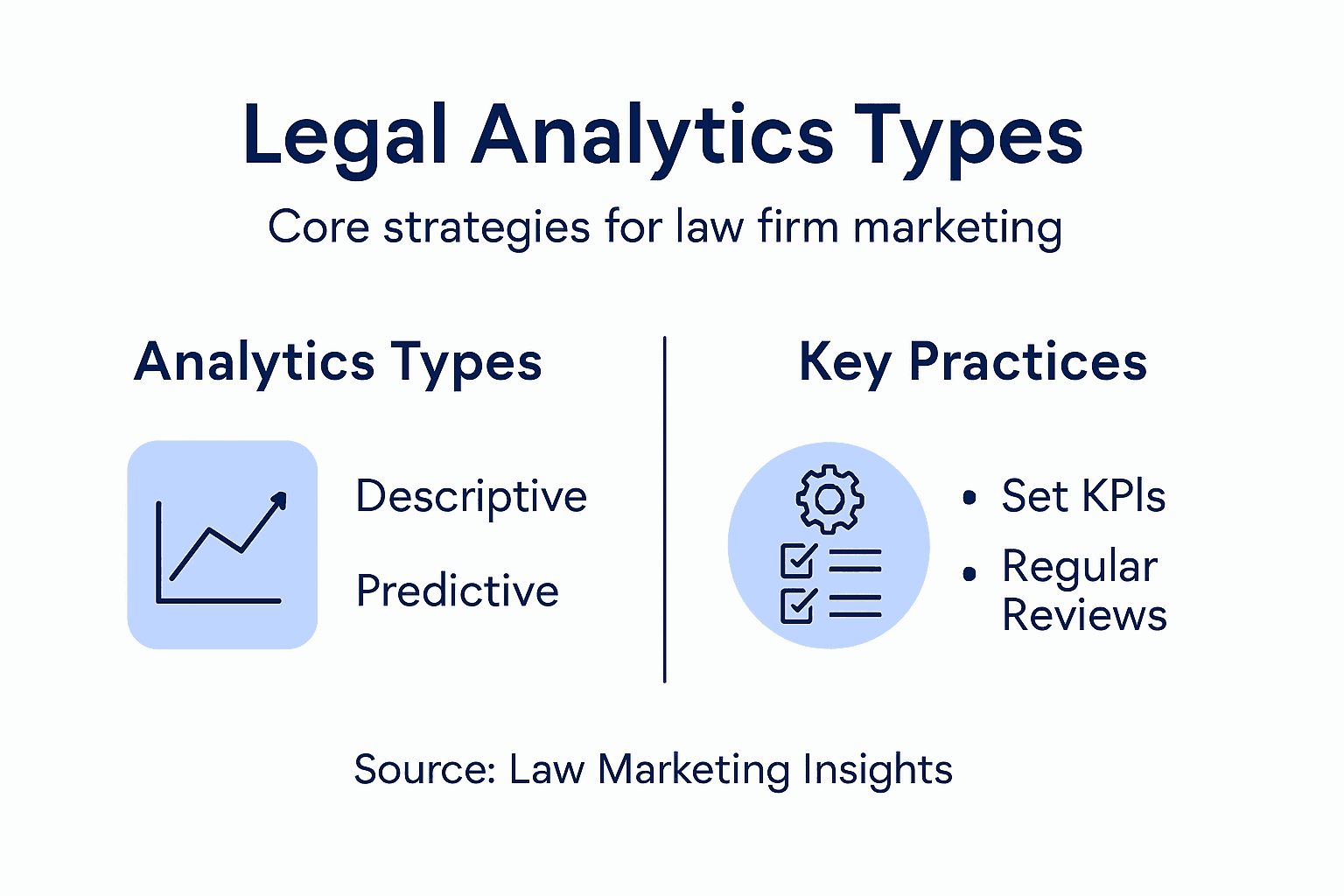
The most effective analytics strategies go beyond mere data collection. They involve continuous learning and adaptation, where firms regularly review their analytics outcomes, refine their approaches, and stay updated on emerging technologies and best practices in legal marketing analytics.
Pro Tip: Create a dedicated analytics review meeting quarterly to assess your marketing data performance, identify trends, and adjust your strategy based on concrete insights.
Pitfalls to Avoid and Compliance Risks
Law firms must navigate a complex landscape of marketing analytics challenges that can significantly impact their digital strategy and legal compliance. Common marketing analytics pitfalls include neglecting critical elements like local search optimization, mobile user experience, and comprehensive return-on-investment tracking.
Compliance represents another crucial dimension of analytics implementation. Marketing claims must adhere to strict guidelines that mandate truthfulness, evidence-based assertions, and transparent communication. This means every data point, client testimonial, and performance metric must be verifiable and represent an accurate representation of the firm’s capabilities.
Technical pitfalls can undermine even the most sophisticated analytics strategies. Law firms frequently encounter challenges such as fragmented data collection, inconsistent tracking methodologies, inadequate data security protocols, and misaligned performance metrics. These issues can lead to misleading insights, wasted marketing resources, and potential legal vulnerabilities that compromise the firm’s reputation and client trust.
Successful analytics implementation requires a holistic approach that balances technological sophistication with ethical considerations. This means developing robust internal processes, continuously training staff on data interpretation, maintaining strict privacy standards, and regularly auditing analytics systems for accuracy, compliance, and potential blind spots.
Below are common pitfalls and compliance risks in law firm marketing analytics:
| Pitfall or Risk | Consequence | Mitigation Strategy |
|---|---|---|
| Fragmented data collection | Misleading campaign insights | Standardize tracking processes |
| Ignoring local optimization | Reduced search visibility | Prioritize local SEO practices |
| Weak data privacy protocols | Data breach, loss of trust | Implement robust security steps |
| Unverified marketing claims | FTC violations, penalties | Ensure all claims are evidence-based |
Pro Tip: Conduct a quarterly comprehensive review of your analytics practices, examining both technical performance and regulatory compliance to proactively identify and mitigate potential risks.
Unlock the Power of Analytics to Grow Your Law Firm
The challenge many small to mid-size law firms face is turning complex marketing data into clear, actionable strategies that truly increase client acquisition and engagement. This article highlights how using marketing analytics like descriptive and predictive metrics can transform your marketing from guesswork into targeted, measurable success. If you struggle to track key performance indicators or build campaigns that resonate with your ideal clients, the solution lies in partnering with experts who specialize in law firm marketing analytics.
Case Quota understands these pain points and offers tailored digital strategies designed specifically for legal practices in Southern California. We combine SEO-optimized web design, AI-powered pay-per-click advertising, and targeted Google Local Services Ads to ensure every marketing dollar works harder for you. With over 15 years of digital experience and six years focused on legal marketing, our team helps firms like yours compete confidently against larger rivals by turning analytics insights into effective client acquisition campaigns.
Explore how Case Quota’s customized marketing solutions can give your firm a competitive edge through performance-driven strategies rooted in analytics.

Take control of your law firm’s growth today by leveraging expert analytics-driven marketing. Visit Case Quota now to start transforming your data into real client results.
Frequently Asked Questions
What is the role of marketing analytics in law firm marketing?
Marketing analytics helps law firms understand and optimize their promotional strategies by systematically analyzing performance data, allowing for data-driven decision-making and effective resource allocation.
How can law firms use predictive analytics?
Predictive analytics allows law firms to forecast potential client behaviors and trends by analyzing demographic data and interaction patterns, enabling targeted marketing campaigns that resonate with specific client segments.
What are some key performance indicators (KPIs) to track in legal marketing analytics?
Firms should consider tracking metrics such as website traffic, email engagement rates, social media interactions, and conversion rates to establish a baseline understanding of marketing effectiveness.
How can law firms ensure data privacy while using marketing analytics?
Law firms should establish robust data security protocols, maintain strict privacy standards, and ensure that their analytics practices comply with relevant legal requirements to protect client confidentiality.