
When you get hurt on the job, your first thought might be about the pain or the medical bills piling up. But your most powerful move? Finding a local attorney who knows the lay of the land.
Hiring a lawyer from your own community isn't just about convenience. It’s about getting a strategic advantage. A local pro understands the state laws, the local court dynamics, and maybe even the specific insurance adjusters you’ll be up against. That home-field advantage can make all the difference.
Why a Local Workers Comp Attorney Matters
After an injury at work, you're suddenly thrown into a confusing, isolating process. Choosing an attorney is a big decision, and grabbing a name from a national firm's TV ad might seem easy. But a local lawyer offers something those big, distant firms can't: a deep connection to your community's legal ecosystem.
Here’s what you get with a local expert:
- Face-to-Face Guidance: There's real power in sitting across the table from your attorney, telling your story, and building genuine trust.
- Local Court Insight: They know the judges. They know the opposing lawyers. They know the unwritten rules of the local courthouse, which helps them anticipate the other side's moves.
- State-Specific Expertise: Workers' comp laws are a patchwork that changes drastically from state to state. Your claim lives or dies by these specific rules, and a local attorney is fluent in them.
The Staggering Reality of Workplace Accidents
The need for a skilled guide becomes crystal clear when you look at the numbers. In 2023 alone, the U.S. saw 5,283 fatal work injuries—that's a worker dying on the job every 99 minutes.
On top of that, private employers reported 2.6 million nonfatal injuries and illnesses that same year. The total price tag for these work injuries in 2022? A stunning $167 billion. These aren't just statistics; they represent families and lives turned upside down, underscoring why having a dedicated advocate is so crucial. You can find more of these eye-opening personal injury law statistics on Clio's blog.
It’s About More Than Just a Law Degree
A great local lawyer is a partner in your recovery. They know the regional job market and are familiar with the best local medical specialists—critical details for building a case that shows the real impact the injury has had on your life. This kind of localized knowledge is a huge factor in settlement talks and courtroom strategy.
Think about it: an attorney's reputation in the local legal community is a powerful tool. When the insurance company sees they're up against a respected, tough local lawyer, they’re far more likely to come to the table with a fair offer from the start.
Ultimately, searching for a "workers compensation attorney near me" is about finding someone who delivers expert legal firepower with personal, accessible support. Getting a peek into the playbook for how local attorneys build their reputation can give you a real edge in finding the right one.
Of course. Here is the rewritten section, crafted to sound completely human-written and natural, following all your specific instructions.
Finding and Vetting Local Attorneys Online
Let’s be honest, your search for a "workers' compensation attorney near me" is going to start on Google. But the trick isn’t just finding a name—it’s about knowing how to look past the ads and find the right advocate for your specific case.
A good first step is to get more specific with your search. Instead of a generic query, try something like "workplace back injury lawyer in [Your City]" or "construction accident attorney near [Your Town]." This simple tweak helps cut through the noise and often brings up firms that have real, hands-on experience with cases just like yours.
Decoding Google Business Profiles
Once you have a few names, their Google Business Profile is your first real piece of intel. It's easy to just glance at the star rating, but the real gold is in the written reviews.
Read what former clients are actually saying. More importantly, see how the law firm responds, especially to negative feedback. A thoughtful, professional reply to a bad review can tell you more about a firm's character than a dozen generic five-star ratings.
Look for recurring themes. Do clients keep mentioning great communication? Do they talk about feeling heard and respected? These are the clues that give you a genuine feel for what it's like to work with them.
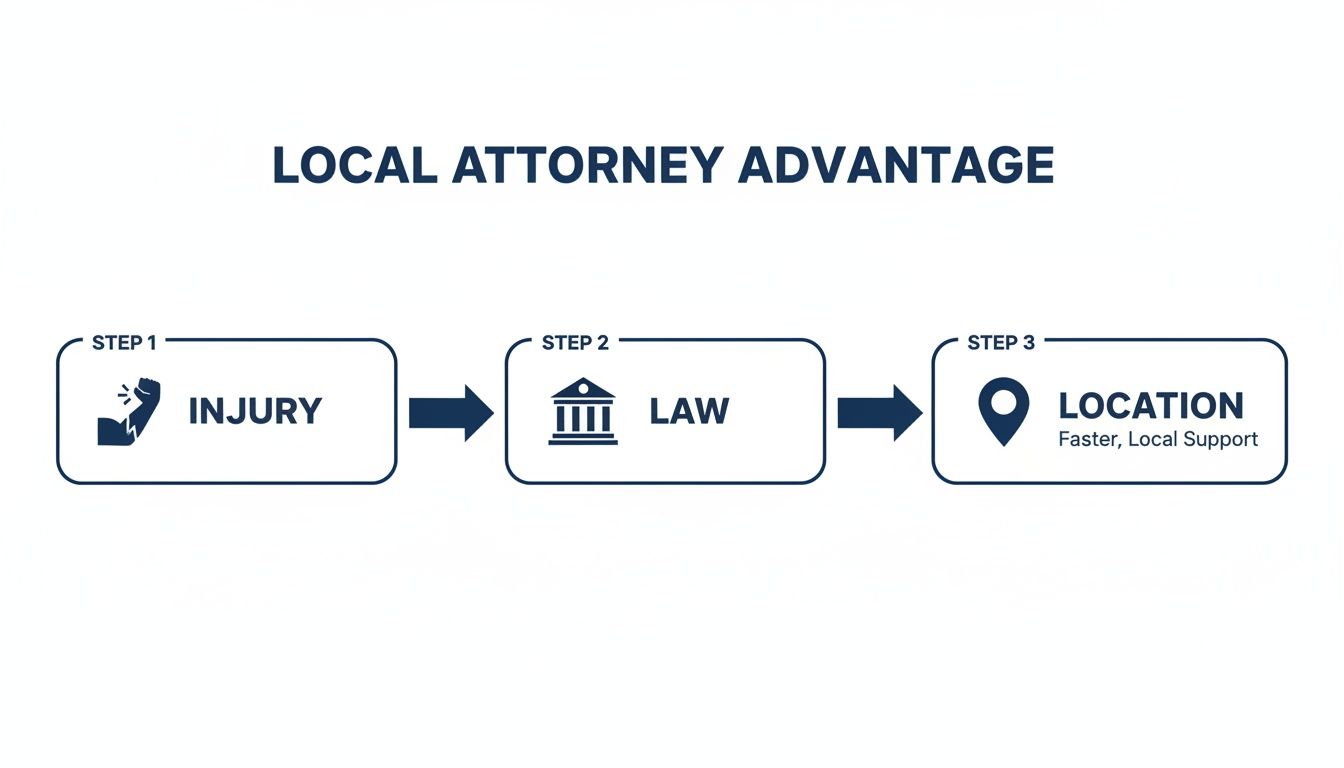
This process is about finding a lawyer who not only understands the law but also understands the local landscape and the specific challenges you're facing.
Comparing Local Attorney Search Platforms
You'll find lawyers listed on several different platforms, each with its own strengths. Knowing where to look and what to focus on can make your search much more effective.
| Platform | What to Look For | Key Advantage |
|---|---|---|
| Google Business Profiles | Recent, detailed reviews and professional responses from the firm. | Unfiltered, real-world client feedback and quick access to contact info. |
| Avvo & FindLaw | Attorney endorsements, disciplinary history, and published articles. | Detailed professional profiles and peer reviews that offer a different perspective. |
| State Bar Website | License status and any public disciplinary actions. | Official, non-negotiable verification of an attorney's credentials. |
Ultimately, a combination of these sources will give you the most complete picture of a potential attorney before you ever pick up the phone.
Beyond Reviews: Verifying Credentials Is a Must
Client reviews tell you about the experience, but official verification is non-negotiable. Every state has a bar association website, and you absolutely need to use it. A quick search for any lawyer you’re considering is critical.
This simple check does two vital things:
- Confirms They're Licensed: It verifies the attorney is in good standing and legally allowed to practice in your state.
- Reveals Their Record: The site will list any public disciplinary actions or sanctions. A clean record here is a basic, mandatory requirement.
While digging around, you might see articles or news stories featuring a lawyer. Understanding the concept of media outreach can help you put this in context and better evaluate a firm’s public image.
Keep in mind that some workplace injuries can get complicated, especially if you think discrimination or wrongful termination was a factor. In those situations, you might also need to find a skilled employment law attorney near you.
The bottom line is this: Your online research isn't about just finding a list of names. It’s about building a file on each potential candidate.
When you combine genuine client reviews with official verification from the state bar, you start to get a clear, well-rounded picture of an attorney’s competence and professionalism. This is how you build a solid shortlist of lawyers you can actually trust.
How to Vet Your Shortlist of Attorneys
Alright, you’ve got a few promising names. Now the real work starts. This is where you go from a simple list to the right choice, digging deep into each attorney's actual credentials, their reputation in the legal community, and their specific expertise. You're separating the generalists from the true specialists who can make or break your case.
One of the most powerful credentials you can find is Board Certified Specialist. This isn't just a fancy plaque on the wall. It's a tough-as-nails certification handed out by the state bar to lawyers who prove they have an exceptional level of skill in one area, like workers' compensation.
To get it, they have to pass another brutal exam, show they have a ton of hands-on experience, and get recognized by their peers. An attorney with this designation lives and breathes workers' comp law.
Looking Beyond the Attorney's Website
An attorney’s website is designed to sell you. For a more objective take, you need to look at third-party platforms. Legal directories like Avvo and Martindale-Hubbell are goldmines because they offer client testimonials and, more importantly, peer reviews. What other lawyers say about an attorney tells you a lot about their skill and how they operate.
The personal injury law sector, which includes workers' compensation, is a massive field. It's expected to be a $61.7 billion industry in 2025, with over 135,000 lawyers specializing in this area. In such a crowded market, proven credentials and a stellar reputation are the only things that make an attorney stand out. You can discover more insights about the personal injury law market at IBISWorld.
When other lawyers vouch for someone, that’s a huge signal of respect. This isn’t just about ego—it matters because the insurance company’s legal team knows who the heavy hitters are. A well-respected attorney often gets taken more seriously from the get-go, which can mean better settlement offers long before you ever see a courtroom. A lawyer's public image is a strategic tool, and knowing a bit about online reputation management for lawyers helps you understand how they build that professional respect.
Matching Experience to Your Specific Injury
Every workers' comp case is different. A lawyer who’s a rockstar at handling catastrophic construction site accidents might not be the best choice for a complex carpal tunnel claim from an office job. You have to be sure their experience lines up with the details of your situation.
As you look into a firm, hunt for proof that they've handled cases just like yours:
- Case Results: Does their website feature case studies or settlement amounts for injuries similar to yours?
- Blog Posts: Are they writing articles about repetitive stress injuries, occupational illnesses, or other issues relevant to your claim?
- The First Call: When you talk to them, don't be shy. Ask them directly about their track record with your specific diagnosis.
This part of the process is about finding a "workers compensation attorney near me" who isn't just qualified, but is the right kind of qualified for your unique injury. Your future is on the line, so don't settle for a jack-of-all-trades when what you really need is a master of one.
What to Ask During Your Initial Consultation
That free consultation isn't just a sales pitch. It’s your interview—your chance to look past the website testimonials and really figure out if this is the right person to handle your case. This is where you gauge their expertise, their communication style, and frankly, if you can trust them.
Walking in with a list of sharp, direct questions is the absolute best way to make the most of this critical meeting. You need to get past the surface-level stuff. Your goal is to understand how they think and how your case will be managed day-to-day. A good lawyer won't just welcome these questions; they'll have clear, confident answers. This first conversation really sets the tone for everything that follows.

Questions About Your Case and Their Strategy
First things first, you need to get a feel for how they see your specific situation. Their initial take on your claim can tell you a lot about their experience with injuries like yours.
- Based on what I’ve told you, what are the biggest strengths and weaknesses you see in my case? This question cuts right to the chase. It tests their honesty and analytical skills. A great attorney won't just paint a rosy picture; they'll give you a realistic preview of the road ahead, bumps and all.
- Have you handled cases with my specific injury and employer before? This is huge. An attorney who already knows the playbook for your type of injury—and maybe even the insurance company your employer uses—has a massive head start.
- What is your strategy for a case like mine? Listen for a clear, logical plan. Are they talking about gathering specific medical evidence, deposing witnesses, or aggressive negotiation? Their answer should show you they’re proactive, not just waiting for the insurance company to make a move. A strong opening often involves a detailed formal document, and you can see helpful examples in this personal injury demand letter template.
Questions About Communication and Firm Operations
Understanding how the firm actually runs is just as important as the legal strategy. You need to know exactly who you'll be talking to and how they’ll protect your sensitive information.
Ask them straight up: "Who will be my primary day-to-day contact?" Are you going to be speaking with the lawyer you're meeting now, or will your case get passed off to a paralegal or a junior associate? There's no single right answer, but you absolutely deserve to know upfront.
Also, ask how they handle documents. Workers' comp cases are filled with sensitive medical records. You should feel comfortable asking about their security measures, like using secure and HIPAA compliant online faxing practices, to make sure your private health information stays private.
Three Non-Negotiable Questions to Ask:
- What percentage of your practice is dedicated specifically to workers' compensation cases?
- Will you be the attorney personally handling my case through settlement or a hearing?
- Can you explain your fee structure and any additional costs I might be responsible for?
Finding the right "workers compensation attorney near me" really comes down to this meeting. Use this time wisely. Get the answers you need to make a confident, informed decision about who will be in your corner, fighting for you.
Understanding Legal Fees and Case Timelines
Let's cut right to it and talk about the two biggest questions on every injured worker's mind: "What's this going to cost me?" and "How long is this going to take?"
The good news is that the money side of things is actually set up to protect you when you’re most vulnerable. You’re out of work, medical bills are piling up, and the last thing you need is another bill from a lawyer.
This is where the contingency fee basis comes in. Almost every workers' comp attorney works this way. In simple terms, it means you don't pay a single dime upfront. Your lawyer only gets paid if they win benefits or a settlement for you. That’s it.
Their success is directly tied to your success, which is exactly how it should be. It removes the financial risk of getting expert legal help when you need it most.
How Contingency Fees Actually Work
When you win your case, the attorney's fee is taken as a percentage of your final settlement or award. That percentage isn't just a random number; it's heavily regulated by state law. For most workers' comp cases, you can expect it to be between 15% to 25%.
Your attorney should be crystal clear about this number in their fee agreement before you ever sign anything.
You also need to talk about case costs. These are different from the legal fee and cover the direct expenses of building your case, such as:
- Court filing fees
- The cost of tracking down and ordering all your medical records
- Fees for hiring a medical expert to testify on your behalf
Typically, the law firm pays for these costs as they come up and then gets reimbursed from the final settlement. Full transparency is everything here. Make sure you understand what those potential costs look like. For anyone dealing with injuries that extend beyond the workplace, looking into how a full-service personal injury law firm structures their agreements can offer a broader perspective.
A clear, written fee agreement is non-negotiable. Before you hire anyone, get a document that spells out the exact contingency fee percentage and how all case-related costs will be handled. This prevents any ugly surprises down the road.
To give you a real-world picture, here’s a basic breakdown:
| Settlement Component | Amount |
|---|---|
| Total Settlement Amount | $50,000 |
| Attorney's Fee (20%) | -$10,000 |
| Case Costs (e.g., records) | -$500 |
| Your Net Payout | $39,500 |
As you can see, after the attorney’s fee and costs are covered, the vast majority of the settlement goes directly to you, where it belongs.
Setting Realistic Timelines for Your Case
While the fee structure is pretty predictable, the timeline is another story. I wish I could give you an "average" time, but the truth is, there isn't one. Every single case moves at its own pace.
How long it takes depends on a ton of factors: how severe your injury is, whether the insurance company is fighting your claim, and frankly, how backed up the state workers' compensation board is.
A straightforward, undisputed claim might wrap up in just a few months. But if you have a complex case—say, a denied claim that requires hearings and multiple medical experts—you could be looking at a year or even longer.
The reality is that these claims are getting more complicated. Thomson Reuters recently pointed out a 3.3% growth in litigation in 2024, showing just how essential lawyers have become to getting a fair outcome. This uptick in cases means the system is busy. While having an expert on your side is critical, it also means patience is part of the process. You can learn more about the drivers behind this demand and why good help is so vital.
A good "workers compensation attorney near me" will give you an honest, no-fluff assessment of the potential timeline during your first meeting. They know the local judges and the system's quirks, and they can help you prepare for the road ahead.
A Few Common Questions We Hear All the Time
Even with all the right information, it’s completely normal to feel a bit overwhelmed. A work injury is stressful enough without having to decipher a complex legal system. Let’s cut through the noise and tackle some of the most common worries we see from injured workers when they're looking for a "workers compensation attorney near me."
Getting straight answers here can give you the confidence you need to move forward and make sure you’re protected.
Do I Have to Pay a Lawyer Upfront for a Workers' Comp Case?
This is easily the biggest source of anxiety for injured workers, so let's put it to rest right now: almost never. The overwhelming majority of workers' comp lawyers work on a contingency fee basis.
What does that mean? Simple. You don't pay a dime out of your own pocket to get started. Their fee is just a percentage of the settlement or benefits they win for you. If they don’t recover any money for you, you owe them nothing for their time. This system is designed to give everyone, regardless of their financial situation, a fair shot at getting quality legal help.
The Insurance Company Made a Quick Settlement Offer. Should I Take It?
It’s incredibly tempting, isn't it? The insurance adjuster calls, sounds sympathetic, and dangles a check in front of you to make the whole problem disappear. You should be extremely cautious about accepting this first offer without talking to an attorney first.
Remember, insurance companies are in the business of minimizing their payouts. Their initial offers are almost always a lowball figure that falls far short of what your claim is actually worth. They are betting you don't know the long-term factors a good lawyer will immediately calculate, such as:
- Future medical care: What happens if you need surgery, physical therapy, or pain management a year from now?
- Permanent disability: If your injury is permanent, how will that impact your ability to earn a living for the rest of your life?
- Vocational rehabilitation: Do you need help with retraining for a new job because you can no longer do your old one?
An experienced attorney isn't just looking at your current medical bills. They are building a case that reflects the total cost of your injury over a lifetime.
A fast payout from the insurer almost always comes with a catch: you sign away your rights to any future benefits. An attorney’s job is to protect those rights and fight for a settlement that is fair and truly covers everything—not just for today, but for tomorrow, too.
How Long Do I Have to File My Workers' Comp Claim?
Every state has what’s called a statute of limitations, which is a strict deadline for reporting your injury and filing a claim. If you miss this window, you can lose your right to benefits forever. The absolute first thing you must do is report your injury to your employer, preferably in writing, as soon as you possibly can.
The exact timing varies from state to state, but the best advice is to act immediately. The clock starts ticking the second you get hurt. A local lawyer will know your state’s specific deadlines down to the day and will make sure every piece of paperwork is filed correctly and on time. Don't risk it.
My Biggest Fear Is Getting Fired for Filing a Claim. Can That Happen?
This is a powerful and very real fear, but you need to know that the law is on your side here. It is absolutely illegal for your employer to fire you or retaliate against you in any way simply because you filed a legitimate workers' compensation claim.
This is called wrongful termination. If you even suspect you were let go because you got hurt on the job and sought the benefits you're entitled to, you might have a completely separate legal case against your employer. If you find yourself in that boat, you need to call a "workers compensation attorney near me" immediately to figure out your next steps.
At Case Quota, we connect injured people with the law firms that can help them. Our focused digital marketing strategies ensure that top-tier workers' compensation attorneys are visible to the clients who need their help the most. Discover more about how we empower law firms to grow at https://casequota.com.