

Most American law firms miss out on potential clients because they are not fully optimizing their online presence. With over 95 percent of people searching for legal services online, ignoring digital visibility can cost firms both credibility and revenue. By understanding where your American firm stands and how modern tools like AI-powered analytics reshape client discovery, you gain a competitive edge that turns web searches into real-world consultations.
Table of Contents
- Step 1: Audit Existing SEO Performance
- Step 2: Implement AI-Driven Keyword Strategies
- Step 3: Optimize For Local And Voice Search
- Step 4: Leverage Legal-Specific Content Marketing
- Step 5: Monitor Progress With Advanced Analytics
Quick Summary
| Key Insight | Explanation |
|---|---|
| 1. Conduct a Comprehensive SEO Audit | Evaluate your current SEO performance to identify strengths and weaknesses that affect your online visibility. |
| 2. Utilize AI for Keyword Research | Leverage AI tools to develop effective keyword strategies tailored to potential clients’ legal needs. |
| 3. Optimize for Local and Voice Search | Ensure consistent business information online and use natural language for better local and voice search results. |
| 4. Create Valuable Legal Content | Focus on educational content that addresses client questions and showcases your expertise in legal matters. |
| 5. Monitor Analytics Regularly | Use advanced analytics tools to track performance and adjust your strategies based on data insights. |
Step 1: Audit existing SEO performance
Understanding your law firm’s current digital performance is crucial for creating an effective strategy. A comprehensive SEO audit helps identify strengths, weaknesses, and opportunities to improve your online visibility and attract more potential clients.
Start by analyzing your website’s current search engine rankings and online presence. Use tools like Google Analytics and Google Search Console to review key metrics such as organic traffic, keyword rankings, and user engagement. Pay special attention to digital footprint inconsistencies that could impact AI recognition, including how your law firm’s name, practice areas, and location are represented across different online platforms.
Examine your website’s technical SEO elements including site speed, mobile responsiveness, and structured data markup. These factors significantly influence your search rankings and user experience. Implement structured authority frameworks to enhance visibility in AI-driven search results, which increasingly prioritize authoritative and well-organized content sources. Look for broken links, duplicate content, and outdated information that could negatively impact your search performance.
Pro tip: Document all findings systematically. Create a spreadsheet tracking current rankings, identified issues, and potential optimization strategies. This will serve as a roadmap for your ongoing SEO improvement efforts.
In the next step, you will transform these audit insights into a targeted SEO enhancement plan.
Step 2: Implement AI-driven keyword strategies
Keyword research is no longer a manual task but a sophisticated process powered by artificial intelligence. By leveraging AI tools, you can develop a more precise and effective keyword strategy that connects directly with potential clients seeking legal services.
AI enhances search engine visibility by analyzing user behavior and identifying the most effective keywords for your law firm. Start by using AI-powered keyword research tools that can process vast amounts of search data and provide insights beyond traditional research methods. These tools can help you understand search intent, discover long-tail keywords specific to your practice areas, and predict emerging search trends in the legal industry.
Utilize AI capabilities to generate content ideas and refine audience targeting. AI can help draft initial content outlines, suggest topic variations, and provide recommendations for improving keyword density and relevance. Focus on keywords that demonstrate high user intent and align closely with the specific legal services your firm offers.
Pro tip: Regularly update your keyword strategy. AI tools continuously learn and adapt, so review and refresh your keyword list every three to four months to stay ahead of changing search patterns and user behaviors.
In the next step, you will learn how to optimize your content with these AI-discovered keywords.
Step 3: Optimize for local and voice search
Local and voice search optimization is critical for law firms looking to capture potential clients in their geographic area. By fine-tuning your digital presence for these emerging search technologies, you can significantly improve your firm’s visibility and accessibility.

Maintaining clean and consistent business information across all online platforms is fundamental to successful local SEO. Ensure your name, address, and phone number are identical on your website, Google Business Profile, legal directories, and social media platforms. This consistency helps AI-driven search algorithms accurately recognize and rank your law firm in local search results.
AI-driven local SEO strategies are particularly powerful for law firms with multiple office locations. Implement structured data markup to help search engines understand your geographic service areas. Optimize your content with location-specific keywords, create unique pages for each office location, and include local landmarks, neighborhood names, and regional legal information to improve local search relevance.
Pro tip: For voice search optimization, focus on natural language and conversational keywords. People using voice search tend to ask complete questions, so incorporate long-tail keywords that mirror how potential clients might verbally describe their legal needs.
In the next step, you will learn how to create content that supports these local and voice search optimization strategies.
Step 4: Leverage legal-specific content marketing
Content marketing has become a powerful strategy for law firms to attract potential clients and establish their expertise in the legal landscape. By creating targeted, valuable content, you can demonstrate your firm’s knowledge while improving your online visibility.
Content marketing through blog posts, videos, and other media is essential for building your firm’s brand and attracting new clients. Focus on creating educational content that addresses common legal questions and challenges your potential clients face. Develop comprehensive guides about specific legal processes, explain complex legal concepts in accessible language, and share insights about recent legal developments in your practice areas.
AI tools can enhance your content strategy by analyzing user behavior and suggesting content updates. Use these technologies to identify trending legal topics, understand user search intent, and optimize your content for better search engine performance. Consider creating different content formats such as case study analyses, client success stories, legal explainer videos, and interactive infographics that provide real value to your audience.
Pro tip: Always prioritize quality over quantity. One well-researched, comprehensive piece of content can be more impactful than multiple shallow articles.
In the next step, you will learn how to distribute and promote your legal content effectively.
Step 5: Monitor progress with advanced analytics
Advanced analytics provide law firms with unprecedented insights into their digital marketing performance, enabling data-driven decision making and continuous improvement of SEO strategies.
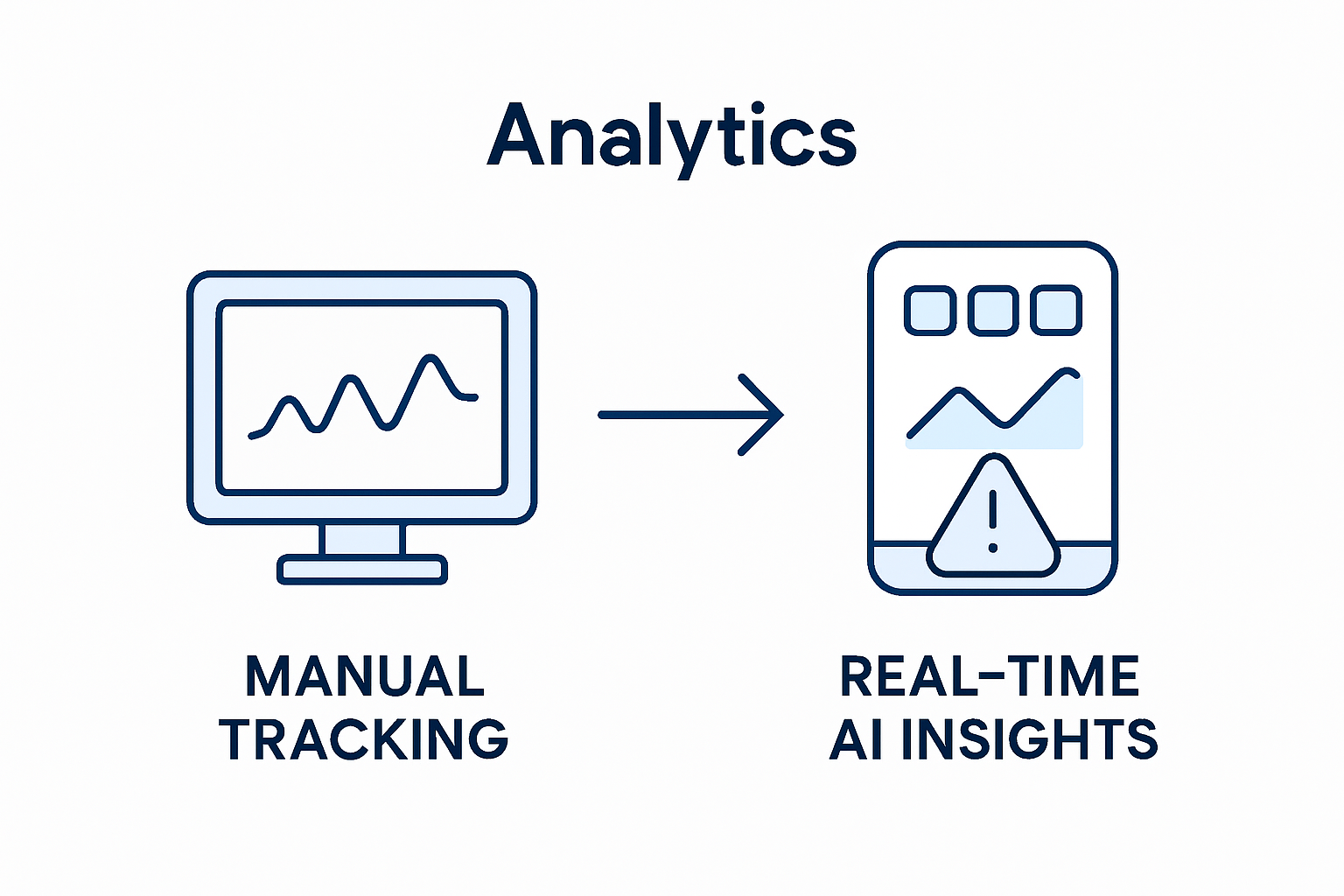
Real-time analytics offer powerful insights into prospect engagement by tracking how potential clients interact with your digital content. Utilize comprehensive analytics platforms that provide detailed metrics such as website traffic, user behavior, conversion rates, keyword performance, and engagement duration. Focus on key performance indicators that directly relate to your law firm’s marketing objectives such as lead generation, consultation requests, and content interaction rates.
AI-powered monitoring solutions can help track and analyze your digital marketing performance with unprecedented accuracy. Set up custom dashboards that provide visual representations of your SEO progress, allowing you to quickly identify trends, strengths, and areas requiring improvement. Compare your performance against benchmarks in the legal industry and track your progress over time.
Pro tip: Review your analytics monthly and be prepared to make agile adjustments to your strategy based on the data insights you discover.
In the next step, you will learn how to continuously refine your SEO approach based on these analytical insights.
Unlock Your Law Firm’s Full Potential with Tailored SEO Strategies
The article highlights the critical challenge law firms face in staying ahead of evolving SEO trends like AI-driven keyword strategies, local and voice search optimization, and legal-specific content marketing. If you find it difficult to translate these complex concepts into actionable growth that attracts quality clients, you are not alone. Building a strong digital presence that wins cases online demands expertise and ongoing adaptation.
Case Quota specializes in helping Southern California law firms overcome exactly these hurdles. We combine proven SEO-optimized web design, AI-powered advertising, and local search mastery to deliver measurable results. With over 15 years of experience and a dedicated focus on legal marketing, our tailored campaigns give smaller firms a competitive edge against larger competitors.
Are you ready to transform your online visibility and win more cases with a strategic approach grounded in the latest SEO trends?

Take the next step toward dominating the digital legal landscape by partnering with experts who understand your unique needs. Visit Case Quota now to explore how our full suite of marketing solutions can drive client growth. Don’t wait—capturing local leads and optimizing your presence for 2025 starts today.
Frequently Asked Questions
How can I conduct an SEO audit for my law firm?
To conduct an SEO audit for your law firm, start by evaluating your website’s current search engine rankings, organic traffic, and user engagement metrics. Utilize tools that track these key performance indicators and systematically document your findings to identify strengths and weaknesses.
What are AI-driven keyword strategies and how can they improve my law firm’s SEO?
AI-driven keyword strategies leverage advanced technology to analyze user behavior and identify high-performing keywords that match potential clients’ needs. Implement tools that can generate long-tail keywords and continuously update your keyword list every few months to stay relevant in changing search patterns.
Why is local search optimization important for law firms?
Local search optimization is essential for law firms to attract clients in their geographic area. Ensure that your business information is consistent across all platforms, and optimize content with location-specific keywords to improve your visibility in local search results.
What type of content should my law firm create for effective marketing in 2025?
Your law firm should create educational and informative content that addresses common legal questions and challenges faced by potential clients. Develop guides, videos, and blog posts that demonstrate your expertise, focusing on quality content that answers specific client needs.
How can I monitor my law firm’s SEO progress effectively?
To monitor your law firm’s SEO progress, use advanced analytics platforms that track crucial metrics like website traffic and conversion rates. Review your analytics monthly to identify trends and make adjustments to your strategy, aiming for measurable improvements in engagement within 30 days.
What is the role of structured data in enhancing my law firm’s search visibility?
Structured data helps search engines better understand your website’s content and improves your visibility in search results. Implement structured data markup on your site to enhance AI-driven search results, ensuring your firm appears prominently when potential clients search for legal services.
Recommended
- Law Firm SEO Guide 2025: Boost Visibility and Case Leads – Case Quota
- What Is Law Firm SEO? Complete Guide for Attorneys – Case Quota
- Law Firm Marketing SEO: The Complete Guide to Dominating Legal Search Rankings in 2025 – Case Quota
- How to Improve Law Firm Website for More Clients Fast – Case Quota
- 5 Organic SEO Strategies your Website needs – Paul Baguley
- Business Development in Law Firms: Key Strategies
- Law Firm SEO: A 5-Step Guide To Getting More Leads And Clients – Appture Digital ~ 855 Get Bizz