
In the competitive legal landscape of Southern California and beyond, standing out requires more than just a static website and a well-written bio. Video has become the single most powerful tool for building trust, demonstrating expertise, and converting prospective clients into retained cases. While many law firms know they should be doing video, executing a strategy that delivers measurable ROI remains a significant hurdle.
This guide cuts through the noise. We are not listing generic tips; we are providing a comprehensive roundup of the top 10 actionable video marketing best practices specifically tailored for law firms. This is the playbook for attorneys who want to see tangible results, not just create content. For a deeper dive into establishing a strong video marketing foundation for your firm, consult this comprehensive ultimate guide to video marketing for small businesses as a complementary resource.
Here, you will find a prioritized plan covering the entire video lifecycle. We will explore how to ethically craft compelling client testimonials that resonate with your target audience, from personal injury victims in Santa Monica to businesses needing corporate counsel. You will learn the technical details of mastering local video SEO to dominate search results for your practice area and how to measure every dollar of your investment to prove its value. Each practice outlined below is designed to be a critical component of a holistic strategy. This is your firm's strategic blueprint to generate high-quality leads, nurture prospects through complex legal journeys, and solidify your authority in 2026 and beyond.
1. Client Testimonial and Success Story Videos
Client testimonial videos are one of the most compelling assets in a law firm's video marketing arsenal. This strategy involves showcasing real clients sharing their authentic experiences and the positive outcomes of their cases. For a potential client facing a stressful legal challenge, seeing a genuine success story provides powerful social proof, building the crucial trust and credibility needed to make a hiring decision. National firms like Morgan & Morgan have built their brand on this very concept, using heartfelt testimonials to connect with audiences on a human level.

This approach goes beyond simply stating you can get results; it proves it through a relatable narrative. A person in a similar situation sees a path to resolution, making your firm seem less like a service and more like a dedicated ally.
How to Implement This Strategy
To create effective testimonial videos, focus on authenticity and strategic storytelling. Don't script your clients; instead, guide them with open-ended questions about their initial problem, their journey, and the ultimate resolution. To maximize the impact of your client testimonials, reviewing powerful testimonial ad examples from leading brands can provide valuable inspiration and strategies for creating high-converting videos.
Here are actionable steps for implementation:
- Obtain Explicit Consent: Always get a signed video release form before recording. This protects both your firm and the client and is essential for legal and ethical compliance.
- Focus on the Emotional Arc: The most impactful stories highlight the client's journey from a state of uncertainty or distress to one of relief and resolution. Capture the emotion, not just the legal jargon.
- Quantify the Success: When appropriate and permitted, mention specific results. Saying "we secured a six-figure settlement" is far more impactful than "we achieved a favorable outcome."
- Create Versatile Content: From a single 15-minute interview, you can edit a full-length 2-3 minute testimonial for your website, a 60-second version for YouTube, and several 15-second clips for social media stories. This is a core tenet of effective video marketing best practices.
2. Local Video SEO Optimization
Optimizing video content for local search is a non-negotiable strategy for law firms serving specific geographic areas. This involves strategically tailoring your video's metadata and surrounding content to appear when potential clients in your city or region search for legal help. When someone in Santa Monica searches for a "personal injury attorney near me," a locally-optimized video can appear directly in Google's search results and Maps, instantly connecting your firm with a highly qualified local lead.
This tactic is powerful because it intercepts clients at their moment of highest intent. By signaling to search engines that your content is relevant to a specific locale, you position your firm as the go-to authority in that community, driving targeted traffic and phone calls from potential clients who are actively seeking representation nearby.
How to Implement This Strategy
Effective local video SEO requires more than just mentioning a city name. It's about building a consistent, location-focused digital footprint that search engines can easily understand and trust. Integrating these video marketing best practices ensures your content reaches the right audience.
Here are actionable steps for implementation:
- Infuse Local Keywords: Embed city, neighborhood, and region-specific keywords naturally into your video titles, descriptions, and tags. For example, use "Riverside DUI Defense Lawyer Explains" instead of a generic title.
- Embed on Location Pages: Host each video on a dedicated, location-specific practice area page on your website (e.g., a page for "Workers' Compensation in Long Beach"). This reinforces the geographic relevance to Google.
- Utilize Schema Markup: Implement
VideoObject,LocalBusiness, andLegalServiceschema on pages where your videos are embedded. This structured data explicitly tells search engines what your video is about and that it serves a specific area. - Leverage Google Business Profile: Regularly upload short, informative videos directly to your Google Business Profile. These videos often appear prominently in the local map pack, providing a direct engagement point for searchers.
3. Educational and Explainer Videos
Educational and explainer videos are a cornerstone of modern content marketing, positioning your firm as an authoritative and trustworthy resource. This strategy involves creating content that answers common legal questions, demystifies complex legal processes, and educates potential clients about their rights. By providing value upfront, you build a relationship with viewers before they ever need to hire an attorney, making your firm the first one they call when that need arises.

This approach directly addresses the initial research phase of a potential client's journey. When someone searches "What are the first steps after a car accident?" or "How does probate work in California?", a clear, helpful video from your firm can provide the answer, capturing a highly motivated lead and improving your website's SEO performance for those crucial search terms.
How to Implement This Strategy
The key to effective educational videos is to prioritize clarity and accessibility over legal complexity. Your goal is to be a helpful guide, not to deliver a law school lecture. Use keyword research tools to identify the most frequently asked questions related to your practice areas and build your content calendar around those topics.
Here are actionable steps for implementation:
- Identify High-Volume Questions: Use tools like Ahrefs or Google's "People Also Ask" feature to find the exact questions your potential clients are searching for online.
- Focus on Clarity: Write scripts that break down complex topics into simple, digestible steps. Avoid overly technical jargon and focus on the viewer's perspective and concerns.
- Use Visual Aids: Incorporate simple animations, on-screen text, or graphics to illustrate multi-step processes like the litigation timeline or the flow of an estate plan.
- Include a Strong Disclaimer: Always include a clear verbal and on-screen disclaimer stating that the video is for informational purposes only and does not constitute legal advice or create an attorney-client relationship. This is a critical component of ethical video marketing best practices.
- Link to Relevant Resources: End your video with a call to action directing viewers to a relevant practice area page on your website or a contact form for a free consultation.
4. YouTube Channel Optimization and Strategy
Creating and maintaining a dedicated YouTube channel is fundamental to building a long-term video marketing asset. It serves as a centralized hub for all your firm's video content, establishing you as a knowledgeable authority in your practice areas. A well-organized channel with consistent branding and regular uploads attracts subscribers, enhances discoverability through YouTube's powerful search engine, and nurtures potential clients over time. Channels like LegalEagle have shown how educational legal content can build a massive, engaged audience.
This strategy transforms your videos from one-off marketing pieces into a comprehensive library of resources. When a potential client searches for a legal question on YouTube, an optimized channel ensures your firm’s content appears, providing value and building trust long before a direct consultation is ever requested.
How to Implement This Strategy
Effective YouTube channel management combines technical SEO with a consistent content strategy. Your goal is to make your channel both easy to find and engaging for visitors. It's about creating a professional and resourceful destination that reflects your firm's expertise and commitment to helping clients. This approach is a core component of sustainable video marketing best practices.
Here are actionable steps for implementation:
- Optimize Channel Metadata: Ensure your channel name includes your firm's name and primary keyword (e.g., "Smith & Jones – Los Angeles Personal Injury Lawyers"). Write a detailed "About" section that explains who you serve, includes a strong call to action, and links back to your website’s service pages.
- Organize with Playlists: Group related videos into playlists organized by practice area (e.g., "Car Accident Claims," "California Workers' Comp Guide," "Estate Planning Basics"). This improves user experience and increases session watch time.
- Create Consistent Branding: Design professional channel art and a channel icon that matches your firm's branding. Use a consistent style for your video thumbnails to create a recognizable and polished look.
- Engage with Your Audience: Post videos on a regular, predictable schedule to build subscriber loyalty. Respond to comments promptly to foster a community and signal to YouTube's algorithm that your content is engaging.
- Use YouTube's Tools: Implement YouTube Cards and End Screens in your videos to direct viewers to other relevant videos, playlists, or your website's contact page, effectively guiding them through your content funnel.
5. Social Media & Mobile-First Video Strategy
A mobile-first video strategy acknowledges a critical reality: the vast majority of your potential clients will first encounter your firm on a smartphone. This approach prioritizes creating short-form, vertical videos optimized for platforms like TikTok, Instagram Reels, and YouTube Shorts. For law firms, this means trading lengthy, horizontal productions for quick, engaging content that captures attention instantly and builds brand personality where audiences are already scrolling.
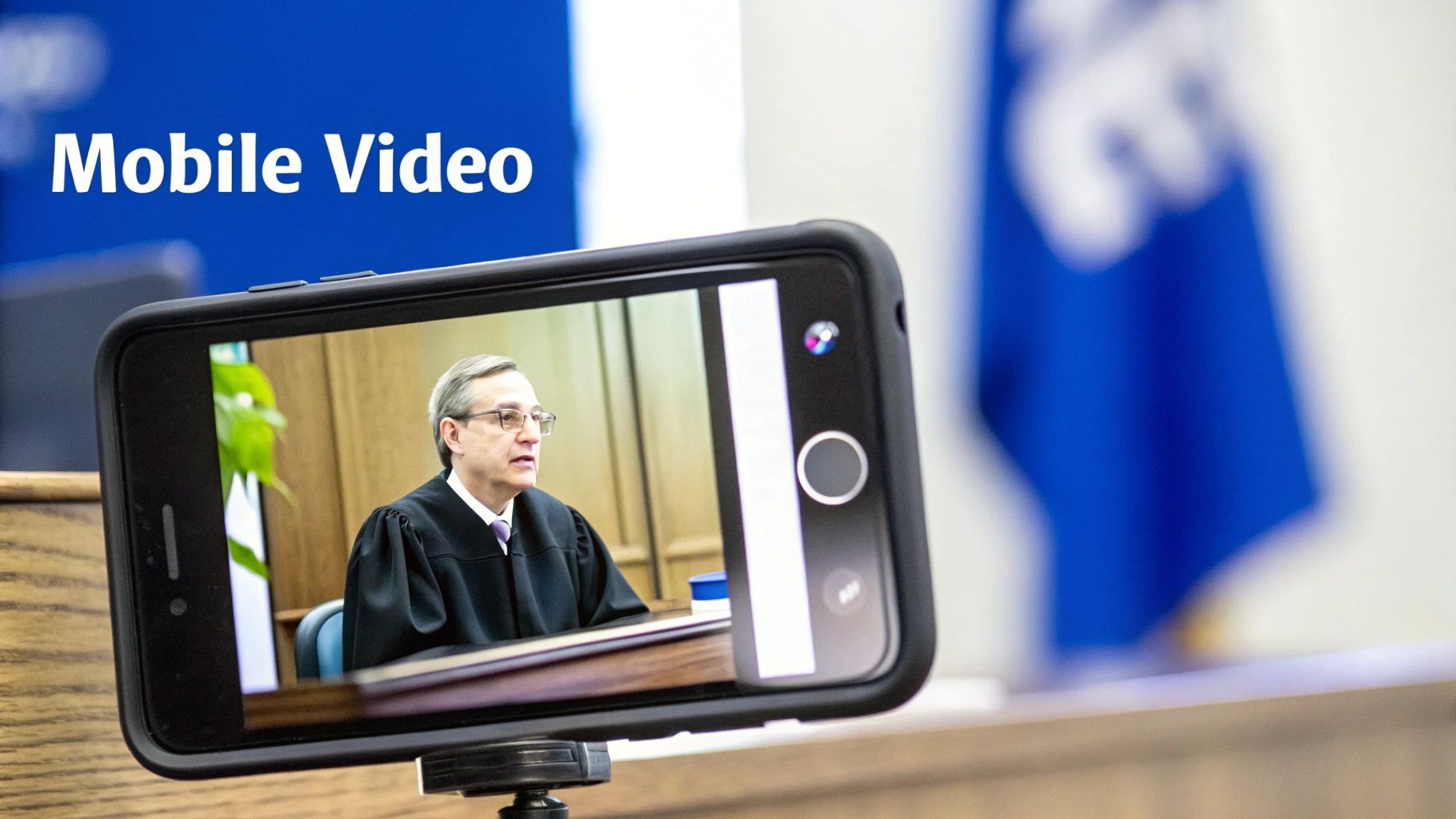
Attorneys like @legaleagle on TikTok have amassed huge followings by breaking down complex legal topics into digestible, entertaining clips. This strategy positions the attorney as an accessible, modern authority, demystifying the law and connecting with a younger demographic that may need legal services now or in the future.
How to Implement This Strategy
Success in mobile-first video hinges on speed, relevance, and authenticity. The goal is to stop the scroll and deliver value in seconds. This requires a different production mindset focused on quick hooks, clear messaging, and native platform features. Implementing these video marketing best practices will ensure your content resonates with a mobile audience.
Here are actionable steps for implementation:
- Hook Within Three Seconds: Start with a compelling question or a bold statement. For example, a personal injury lawyer could begin with, "Three things insurance adjusters don't want you to know after a car accident."
- Optimize for Silent Viewing: Assume the audio is off. Use large, easy-to-read captions or on-screen text overlays to convey your message. This is crucial for accessibility and for users viewing in public spaces.
- Embrace Vertical Framing: Always shoot and edit in a 9:16 aspect ratio. Keep the most important visual information and text within the "safe zone" in the center of the screen to avoid being cut off by platform interface elements.
- Stay Relevant and Consistent: Participate in trending audio or formats when appropriate, and aim to post consistently (3-5 times per week) to build momentum. Repurpose content by editing a single long-form educational video into multiple short, focused clips for social media.
6. Video Email Marketing and Lead Nurturing
Incorporating video into email marketing campaigns can dramatically increase engagement, converting a standard text email into a dynamic, personal touchpoint. This strategy involves embedding or linking to videos within emails to nurture leads, provide case updates, and educate your audience. For a prospective client weighing their options, receiving a personalized video from an attorney can build a powerful connection, making your firm stand out in a crowded inbox and significantly boosting click-through and conversion rates.
This approach transforms your lead nurturing from a passive, text-based process into an active conversation. A short, informative video can convey warmth, expertise, and empathy far more effectively than a block of text, keeping your firm top-of-mind as leads move through their decision-making process. It is a modern tactic that aligns with the best video marketing best practices for direct communication.
How to Implement This Strategy
To execute video email marketing effectively, focus on personalization, brevity, and a clear call to action. The goal is not to send a Hollywood production but a genuine, helpful message that builds rapport. For example, a criminal defense firm could create a three-part email nurture sequence with short videos explaining the arraignment process, the importance of evidence, and what to expect during a consultation.
Here are actionable steps for implementation:
- Use a Video Thumbnail: Since most email clients block auto-playing videos, embed a compelling static image (a thumbnail) with a play button overlay. Link this image directly to the video on your website or a dedicated landing page.
- Keep Videos Short and Focused: Aim for videos under two minutes. Email is a fast-paced medium, so your message must be concise and deliver value immediately, whether it's a welcome message or a complex topic explanation.
- Personalize the Subject Line: Increase open rates by mentioning "video" in your subject line, for example, "A quick video for you from [Attorney Name]" or "[Prospect Name], I recorded this to answer your question."
- Develop Practice-Area Sequences: Create separate 3-5 video email sequences for each key practice area. This allows you to deliver highly relevant, educational content that nurtures leads based on their specific legal needs.
- Include a Clear Call to Action: Always tell the viewer what to do next. End your video and email copy with a clear CTA, such as "Click here to schedule your free consultation" or "Reply to this email with your questions."
7. Google Ads Video (YouTube) Advertising
Google Ads video campaigns on YouTube offer law firms unparalleled precision in reaching high-intent prospective clients. This strategy utilizes the vast reach of YouTube, the world's second-largest search engine, combined with Google's powerful targeting and AI optimization. Firms can serve video ads directly to users based on their search history, demographics, location, and online behavior, ensuring marketing dollars are spent on the most relevant audience. For instance, a personal injury firm can target users in their city who recently searched for "car accident attorney."
This approach captures potential clients at the exact moment they are seeking legal help, transforming video from a brand-building tool into a direct lead-generation engine. It allows a firm to preemptively answer a searcher's query with a compelling video message, establishing authority and trust before the prospect even visits a website.
How to Implement This Strategy
To execute an effective YouTube ad campaign, focus on high-intent targeting and creating ads designed for the platform's unique viewing habits. The goal is to stop the scroll and deliver a clear, compelling message quickly. For instance, a workers' compensation attorney could run short, 6-second bumper ads targeting users who have searched for injury-related terms, keeping the firm top-of-mind.
Here are actionable steps for implementation:
- Hook in the First 5 Seconds: Start your video by directly addressing a viewer's pain point or a key benefit. An opening like "Injured at work in Los Angeles?" immediately qualifies and engages the target audience.
- Target High-Intent Keywords: Build your campaigns around specific, long-tail keywords that indicate a user is ready to hire an attorney, such as "DUI lawyer near me" or "how to set up a living trust."
- Create Multiple Ad Formats: Produce several versions of your ad, including a 6-second bumper, a 15-second skippable ad, and a longer 30-second version to test what performs best across different placements.
- Include a Clear Call-to-Action (CTA): End every video with a direct, clickable instruction like "Call Now for a Free Consultation" or "Visit Our Website to Learn More." Use Google's CTA extensions to make it easy for viewers to take the next step.
- Optimize and A/B Test: Continuously monitor conversion tracking to measure ROI. A/B test different video creatives, headlines, and targeting options to refine your approach and improve performance. This constant refinement is key to successful video marketing best practices.
8. Live Video Streaming (Facebook/YouTube Live)
Live video streaming on platforms like Facebook Live and YouTube Live offers law firms a powerful channel for real-time audience engagement. This strategy humanizes your attorneys by allowing them to connect directly with potential clients, answer pressing questions, and provide timely legal commentary on current events. For a person seeking legal guidance, a live session can demystify complex topics and build immediate trust in an attorney's expertise and approachability.
This format excels at establishing authority and building a community around your firm. A personal injury lawyer could host a live Q&A about a recent major recall, or an estate planning attorney could run a live webinar on setting up a trust. The interactive nature of live video creates an authentic connection that pre-recorded content often cannot match.
How to Implement This Strategy
A successful live stream requires more than just hitting the "Go Live" button; it demands thoughtful planning and promotion to maximize reach and impact. The goal is to create a professional, engaging, and valuable experience that positions your firm as a helpful resource.
Here are actionable steps for implementation:
- Promote in Advance: Schedule your live stream a week ahead and promote it across all your marketing channels, including email newsletters and social media. This builds anticipation and ensures a larger live audience.
- Encourage Pre-Submitted Questions: Ask your audience to submit questions beforehand. This guarantees you have relevant content to discuss and makes participants feel more involved.
- Assign Roles: For a smooth broadcast, have a team: a host (the attorney), a moderator to manage comments and questions from the chat, and someone to handle the technical aspects.
- Use Professional Graphics: Incorporate lower-third graphics that display the attorney's name, the firm's name, and contact information. This reinforces branding and makes it easy for viewers to take the next step.
- Repurpose the Content: A key part of video marketing best practices is maximizing your assets. After the stream, edit the recording into shorter clips highlighting key questions or topics. Post these clips to social media and the full, edited version to your YouTube channel and website.
9. Video Landing Pages and High-Converting Dedicated Pages
A video landing page is a dedicated, standalone web page designed with a single goal: converting visitors into leads. By featuring a prominent video as the primary piece of content, law firms can dramatically increase engagement and drive more consultations. This strategy leverages the persuasive power of video to quickly build trust, explain complex legal services, and guide visitors toward a clear call to action.
Unlike a standard website page with multiple navigation options, a video landing page eliminates distractions. For a personal injury firm, a page featuring a powerful client success story video can capture a visitor's attention far more effectively than text alone, leading to higher form submissions and more qualified inquiries. This focused approach is a cornerstone of advanced video marketing best practices.
How to Implement This Strategy
The key to a high-converting video landing page is a seamless user experience that centers on the video's message. The page should load quickly and immediately present the video and a compelling reason to watch it. Your goal is to make the decision to contact your firm feel like the obvious next step after viewing the content.
Here are actionable steps for implementation:
- Place Video "Above the Fold": The video player must be visible as soon as the page loads, without any need for scrolling. This ensures maximum visibility and play-rate.
- Remove Distractions: Eliminate the main website navigation menu and any unnecessary links. The only clickable options should be your calls to action, such as a "Request a Consultation" button or a click-to-call phone number.
- Craft a Compelling Headline: Use a strong, benefit-driven headline directly above the video that tells the visitor exactly what they will gain from watching it (e.g., "See How We Won a $1.2M Settlement for a Car Accident Victim").
- Optimize the Thumbnail: Create a custom video thumbnail that is professional and intriguing. A still frame of an attorney smiling or a powerful quote can significantly increase the number of people who press play.
- Surround with Trust Signals: Place trust badges, attorney awards, and credentials near the video and contact form to reinforce your firm's credibility and expertise.
10. Video Analytics, Tracking, and Performance Measurement
Creating compelling video content is only half the battle; measuring its performance is essential for optimizing your strategy and proving return on investment (ROI). This practice involves using analytics tools to track key metrics like view count, watch time, click-through rates (CTR), and, most importantly, conversions. For a law firm, a "conversion" could be a phone call, a form submission, or a scheduled consultation directly attributable to a video.
Without tracking, your video marketing efforts operate in the dark. Analytics illuminate what resonates with your audience, allowing you to refine your approach and allocate your marketing budget more effectively. Platforms like YouTube Analytics, Google Ads, and Wistia provide deep insights, showing not just who is watching, but how they engage and what actions they take next.
How to Implement This Strategy
Effective measurement begins with defining clear goals for each video. Is the objective to build brand awareness, educate potential clients on a specific legal topic, or drive immediate consultation requests? Your goals will determine which metrics matter most. Implementing a robust analytics framework is a cornerstone of successful video marketing best practices.
Here are actionable steps for implementation:
- Set Up Conversion Tracking: Work with your web developer to configure goal tracking in Google Analytics. This allows you to directly attribute website form submissions and clicks on your phone number to specific video sources.
- Use UTM Parameters: When sharing videos in email newsletters, social media posts, or ads, use unique UTM tracking codes. This helps you identify exactly which channels are driving the most engaged traffic to your site.
- Analyze Audience Drop-Off Points: Pay close attention to viewer retention graphs in YouTube or Wistia. If a large percentage of viewers drop off at the same point, that section of the video may need to be re-edited or removed from future content.
- Create Monthly Performance Reports: Consolidate key data (views, watch time, leads, cost per lead) into a simple monthly report. Share these insights with your team to celebrate wins and identify areas for improvement.
10-Point Video Marketing Best Practices Comparison
| Item | 🔄 Implementation Complexity | ⚡ Resources & Speed | 📊 Expected Outcomes | Ideal Use Cases | ⭐ Key Advantages |
|---|---|---|---|---|---|
| Client Testimonial and Success Story Videos | High 🔄 — client coordination, consent & legal review | Medium ⚡ — professional production; moderate turnaround | High 📊 — trust, conversion uplift, SEO benefits | Personal injury, criminal defense, workers' comp, employment law | Builds credibility and emotional connection ⭐ |
| Local Video SEO Optimization | Medium-High 🔄 — schema, metadata, GBP integration | Low-Medium ⚡ — SEO expertise; ongoing maintenance | Medium-High 📊 — improved local visibility and high-intent traffic | Firms targeting city/region-specific searches | Boosts local discoverability and maps visibility ⭐ |
| Educational and Explainer Videos | Medium 🔄 — scripting, legal accuracy, possible animation | Medium ⚡ — production or animation; recurring schedule | High 📊 — authority, organic traffic, lead nurturing | Estate planning, criminal defense, business law, PI | Establishes expertise and generates evergreen traffic ⭐ |
| YouTube Channel Optimization and Strategy | Medium 🔄 — branding, metadata, playlists, cadence | Medium ⚡ — consistent content production; long-term growth | High 📊 — search visibility, subscriber growth, referral traffic | Firms building a content hub and long-term brand | Centralized discoverability and community building ⭐ |
| Social Media & Mobile-First Video Strategy | Medium 🔄 — platform-specific formats and trends | Low ⚡ — fast, lower-cost production; high frequency | Medium-High 📊 — engagement, shareability, brand awareness | TikTok, Instagram Reels, YouTube Shorts; younger audiences | High engagement and rapid audience reach ⭐ |
| Video Email Marketing and Lead Nurturing | Low-Medium 🔄 — integration with ESPs; thumbnail fallbacks | Low ⚡ — short personalized videos; quick to produce | High 📊 — higher open/CTR and improved conversions | Follow-ups, nurture sequences, client updates | Personalizes outreach and boosts email performance ⭐ |
| Google Ads Video (YouTube) Advertising | Medium 🔄 — campaign setup, targeting, ongoing optimization | Medium-High ⚡ — production plus ad spend; fast visibility | High 📊 — targeted leads, measurable ROI when optimized | Immediate lead generation for high-intent searches | Precise targeting and scalable paid reach ⭐ |
| Live Video Streaming (Facebook/YouTube Live) | Medium 🔄 — live tech, moderation, scheduling | Low ⚡ — low-cost setup; real-time publishing | Medium 📊 — strong live engagement; repurposable content | Q&A, webinars, timely commentary, community events | Authentic interaction and immediate feedback ⭐ |
| Video Landing Pages and High-Converting Pages | Medium 🔄 — UX, mobile optimization, analytics | Medium ⚡ — web dev + video; measurable conversion impact | High 📊 — longer sessions, higher form/phone conversion rates | PPC campaigns, single-service conversion funnels | Conversion-focused design that qualifies leads ⭐ |
| Video Analytics, Tracking, and Performance Measurement | Medium-High 🔄 — tracking setup, attribution, privacy compliance | Low ⚡ — analytics tools; ongoing monitoring | High 📊 — proves ROI, identifies top content, guides strategy | Any program requiring measurement and optimization | Delivers actionable insights and justifies investment ⭐ |
Putting Your Video Strategy into Action
The journey from understanding to implementation is where potential transforms into profit. We have explored an extensive toolkit of video marketing best practices, moving from the foundational power of client testimonials and local SEO to the sophisticated strategies of video email nurturing and data-driven analytics. Each practice represents a distinct opportunity for your law firm to connect, persuade, and convert prospective clients in a crowded digital marketplace.
The true takeaway is not to implement all ten strategies overnight. Instead, the goal is to build a cohesive, sustainable video ecosystem. Your firm's journey begins with strategic selection. Start by identifying the tactics that align most closely with your immediate goals. Are you focused on building trust and social proof? Prioritize client testimonial videos. Need to attract more local searches? Double down on local video SEO and optimizing your Google Business Profile.
From Blueprint to Results: Your Actionable Roadmap
Mastering these video marketing best practices is about more than just pressing "record." It's about strategically integrating video into every stage of your client acquisition funnel. Think of it as a continuous cycle of creation, distribution, measurement, and refinement.
Here are your immediate next steps to turn this guide into a tangible growth engine:
- Conduct a Content Audit: Review your existing marketing assets. Which topics from your most popular blog posts or FAQs can be repurposed into powerful educational videos? This is your low-hanging fruit.
- Choose Your "First-Mover" Strategy: Select one or two practices from this list to master first. A focused approach on creating high-quality testimonial videos or a targeted YouTube Ads campaign will yield better results than a scattered, surface-level attempt at everything.
- Establish Key Performance Indicators (KPIs): Before launching, define what success looks like. Is it video views, click-through rates to your website, form submissions on a video landing page, or direct phone calls? Use the analytics practices we discussed to build a dashboard and track your progress from day one.
- Commit to Consistency: Whether you decide to publish one high-quality video per month or a series of short social clips per week, consistency is crucial. A predictable publishing schedule builds audience anticipation and signals to search engine algorithms that your channels are active and valuable.
The Lasting Impact of a Superior Video Strategy
Ultimately, a well-executed video marketing plan does more than just generate leads. It builds a powerful, lasting brand asset for your firm. It humanizes your attorneys, demystifies complex legal processes, and establishes an undeniable foundation of trust and authority. Each video you create is a digital ambassador, working 24/7 to articulate your firm’s value, compassion, and expertise.
By embracing these advanced video marketing best practices, you are not just keeping pace with modern marketing trends. You are building a formidable competitive advantage that will attract higher-quality cases, streamline your intake process, and solidify your reputation as a leading legal authority in Southern California for years to come. The time to press play on your firm's growth is now.
Ready to transform these best practices into a powerful engine for new cases? The team at Case Quota specializes in implementing data-driven video marketing strategies tailored specifically for ambitious law firms. Partner with us to leverage expert production, AI-powered advertising, and proven tactics that turn views into clients. Visit Case Quota to schedule your complimentary strategy session today.