
In today’s digital landscape, potential clients search online for legal services before making any contact with law firms. With over 1.3 million lawyers practicing in the United States and countless firms competing for visibility, SEO marketing for law firms has become not just advantageous—it’s essential for survival and growth.
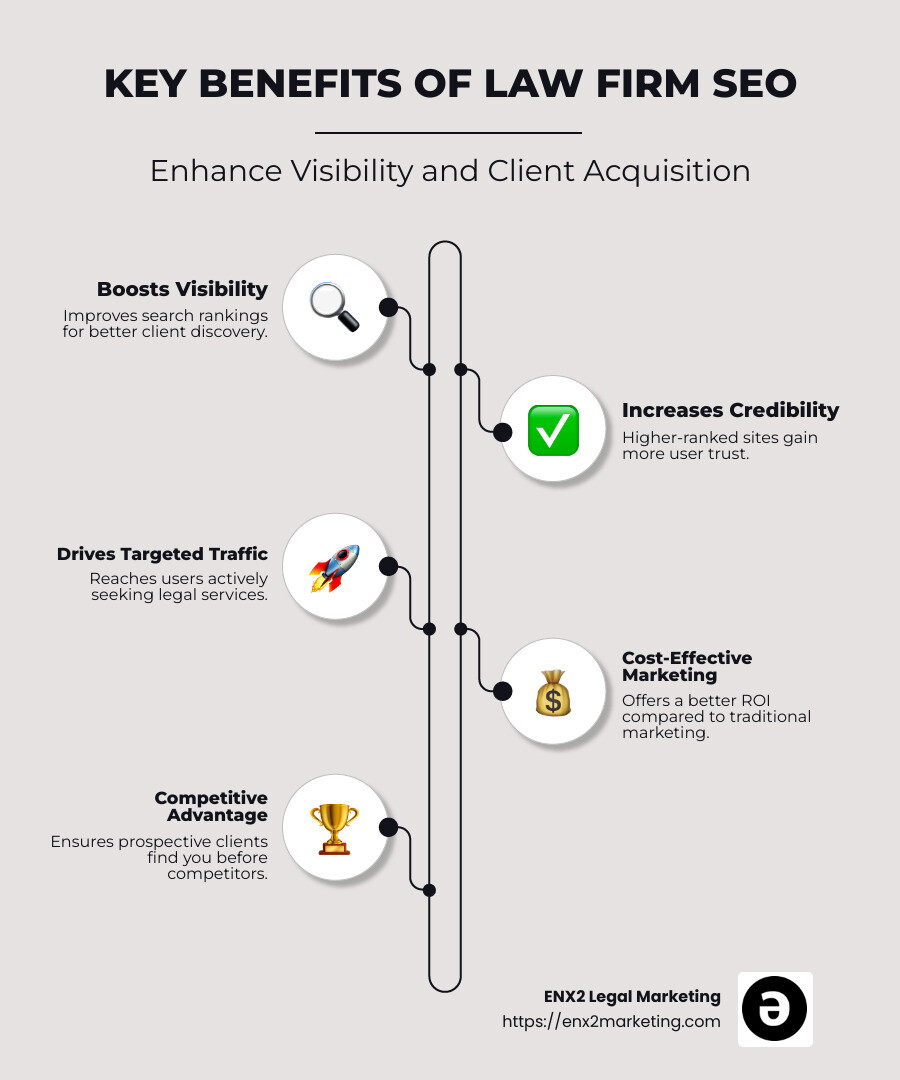
The legal industry faces unique challenges in digital marketing. Strict ethical guidelines, intense competition for high-value keywords, and the need to establish trust with potential clients who are often facing their most difficult life circumstances all contribute to making legal SEO particularly complex. Yet firms that master these strategies consistently outperform their competitors, often seeing 300-500% increases in qualified leads within the first year of implementation.
This comprehensive guide will equip you with everything needed to dominate local search results, attract high-value clients, and build a sustainable online presence. You’ll discover advanced keyword strategies specifically tailored for legal practices, technical optimization techniques that improve search rankings, content marketing approaches that establish authority, and local SEO tactics that capture clients in your geographic area.
Understanding the Legal SEO Landscape in 2025
Featured Partner
Case Quota: Uses AI to help law firms with digital marketing and market dominance
Case Quota uses AI to help law firms with digital marketing and market dominance.
- It was founded by a former top Los Angeles consultant and aims to help law firms navigate the changing legal marketing landscape by implementing advanced digital strategies
- Onboard quickly with guided setup and white-glove support.
Request a walkthrough in minutes.
The legal industry represents one of the most competitive digital marketing environments, where understanding current trends and challenges becomes crucial for sustainable growth. This section explores the unique dynamics shaping legal SEO today and provides insights into navigating this complex landscape effectively.
The Current State of Legal Search Competition
Legal SEO represents one of the most competitive sectors in search engine marketing, with average cost-per-click rates exceeding $50 for many practice areas. Personal injury, criminal defense, and family law practices face particularly intense competition, with major metropolitan areas seeing hundreds of firms targeting identical keywords. Some high-value keywords like “mesothelioma lawyer” command over $1,000 per click in paid advertising, making organic visibility crucial for sustainable growth.
Search behavior patterns have evolved significantly, with 96% of people seeking legal advice now using search engines during their research process. Mobile searches account for 60% of all legal queries, while voice search continues growing at 35% annually. These trends demand sophisticated SEO strategies that address multiple search contexts and user intents, from immediate emergency legal needs to long-term legal planning.
Unique Challenges in Legal SEO
Bar association rules regarding advertising and solicitation create compliance requirements that don’t affect other industries. Attorney-client privilege considerations affect content creation, testimonials, and case study development. Many states prohibit certain types of client testimonials or require specific disclaimers, limiting traditional marketing approaches that work well in other sectors.
The high-stakes nature of legal services means potential clients conduct extensive research, often visiting 5-7 websites before making contact. Geographic restrictions add complexity, as most legal practices serve specific jurisdictions, requiring highly targeted local SEO strategies. Multi-location firms must balance broad brand awareness with location-specific optimization, often competing against their own offices in search results.
Google’s E-A-T and Legal Content
Google’s Expertise, Authoritativeness, and Trustworthiness guidelines particularly impact legal websites, as legal advice falls under “Your Money or Your Life” content categories. Search engines apply stricter quality standards to legal content, requiring demonstrated expertise through author credentials, comprehensive coverage of topics, and authoritative backlink profiles. This creates opportunities for firms investing in high-quality content creation and thought leadership.
Lawyers who consistently publish insightful analysis, case updates, and educational content often achieve better rankings than firms relying solely on technical optimization. Google’s algorithms increasingly recognize and reward genuine expertise, making attorney credentials, bar admissions, and published legal work important ranking factors. Firms must demonstrate their expertise through comprehensive author bios, case results, and peer recognition.
Emerging Technologies and Legal SEO
Artificial intelligence and machine learning algorithms increasingly influence search results, with Google’s BERT and MUM updates better understanding natural language queries. This makes conversational content and FAQ sections more valuable than traditional keyword-stuffed pages. Featured snippets capture 35% of clicks for legal queries, making structured content optimization essential for visibility.
Local search continues evolving with enhanced Google My Business features, review integration, and proximity-based ranking factors. Virtual reality and augmented reality technologies are beginning to impact how law firms showcase their offices and build trust with potential clients before initial consultations. Voice search optimization becomes increasingly important as smart speakers and mobile voice searches grow in popularity.
Comprehensive Keyword Research Strategies for Law Firms
Effective keyword research forms the foundation of successful legal SEO campaigns, requiring specialized approaches that account for legal terminology, client search behavior, and competitive dynamics. This section provides detailed strategies for identifying and targeting the most valuable keywords for your practice.
Identifying High-Intent Legal Keywords
High-intent legal keywords typically include phrases indicating immediate need, such as “lawyer near me,” “attorney for [specific issue],” and “[practice area] lawyer [city].” These searches demonstrate higher conversion potential compared to informational queries like “what is a lawsuit” or “types of legal cases.” Research shows that location-based legal searches convert at rates 3-5 times higher than general informational queries.
Long-tail keywords offer significant opportunities in legal SEO, with phrases like “what happens if I don’t pay child support in [state]” or “how long does a DUI stay on your record” attracting users seeking specific answers. These queries face less competition while often converting better than broad terms. Tools like AnswerThePublic reveal common question patterns that can guide content creation and keyword targeting strategies.
Practice Area Keyword Mapping
Different practice areas require distinct keyword strategies based on client urgency, search patterns, and competitive landscapes. Personal injury searches often spike during winter months due to increased accidents, while family law queries typically increase around holidays and new school years. Understanding these patterns helps optimize content timing and advertising budgets for maximum impact.
| Practice Area | Primary Keywords | Long-tail Opportunities | Seasonal Trends |
|---|---|---|---|
| Personal Injury | personal injury lawyer, accident attorney | car accident lawyer fees, slip and fall settlement | Winter spike (ice/snow accidents) |
| Criminal Defense | criminal defense lawyer, DUI attorney | first time DUI penalties, expungement process | Holiday periods (DUI arrests) |
| Family Law | divorce lawyer, child custody attorney | uncontested divorce cost, custody modification | January (New Year resolutions) |
| Business Law | business attorney, corporate lawyer | LLC formation requirements, contract disputes | Year-end (tax planning) |
Competitor Keyword Analysis
Analyzing competitor keyword strategies reveals gaps and opportunities in your market, with tools like SpyFu and Ahrefs showing which keywords drive traffic to competing firms. Focus on identifying keywords where competitors rank on page two or three—these represent opportunities where improved content and optimization could capture traffic. Pay attention to local competitors’ Google My Business optimization and review strategies, as firms ranking highly in local pack results often target specific neighborhood names and landmark-based searches.
Competitor content gap analysis reveals topics your competitors haven’t covered thoroughly. Use tools like Ahrefs’ Content Gap feature to identify keywords that multiple competitors rank for but your site doesn’t. These represent immediate opportunities for content creation that can capture existing search demand in your market.
Seasonal and Trending Keyword Opportunities
Legal search patterns follow predictable seasonal trends that savvy firms can capitalize on for increased visibility and lead generation. Tax law searches peak from January through April, estate planning queries increase during end-of-year planning periods, and employment law searches often spike during economic uncertainty. Tracking Google Trends data for your practice areas helps identify optimal timing for content creation and advertising campaigns.
Current events create temporary keyword opportunities that can generate significant traffic. Changes in legislation, high-profile legal cases, or local news events can create search volume spikes for related terms. Firms that quickly create relevant, helpful content around trending topics often capture significant traffic and establish thought leadership positions that benefit long-term SEO efforts.
Technical SEO Fundamentals for Legal Websites
Technical SEO provides the foundation that enables all other optimization efforts to succeed, with legal websites requiring specific technical considerations to perform well in search results. This section covers essential technical elements that directly impact search rankings and user experience.
Site Architecture and URL Structure
Law firm websites require logical, hierarchical structures that support both user navigation and search engine crawling for optimal performance. The ideal structure places practice area pages at the top level, with specific service pages and location pages organized beneath relevant categories. This approach distributes link equity effectively while creating clear topical relevance signals that help search engines understand your firm’s expertise areas.
URL structures should be descriptive and keyword-rich without being overly long or complex. Examples of effective legal URLs include “/personal-injury/car-accidents/” and “/criminal-defense/dui-attorney/.” Avoid generic parameters, session IDs, or cryptic folder names that provide no context to users or search engines. Clean, readable URLs improve click-through rates from search results and make it easier for users to understand page content before visiting.
Page Speed Optimization for Legal Sites
Page speed directly impacts both search rankings and user experience, with studies showing that 40% of users abandon websites taking longer than three seconds to load. Legal websites often struggle with speed due to heavy graphics, video content, and complex contact forms. Implementing technical improvements like image compression, browser caching, and content delivery networks can significantly improve performance and reduce bounce rates.
Critical rendering path optimization ensures above-the-fold content loads quickly, even if other page elements take longer to appear. This technique particularly benefits law firm homepages that need to immediately establish credibility and encourage contact form submissions. Tools like Google PageSpeed Insights and GTmetrix provide specific recommendations for improving load times and Core Web Vitals scores.
Mobile Optimization Requirements
With mobile searches accounting for 60% of legal queries, responsive design and mobile optimization have become essential ranking factors. True mobile optimization goes beyond responsive layouts to consider mobile-specific user behaviors and needs. Mobile users often seek immediate contact information, directions, or emergency legal assistance, requiring streamlined navigation and prominent call-to-action buttons that are easily tappable on smaller screens.
Accelerated Mobile Pages can improve mobile page speed and search visibility, though implementation requires careful consideration of tracking and conversion optimization. Many law firms find that standard mobile optimization provides sufficient performance improvements without AMP’s restrictions. Focus on optimizing form fields for mobile input, ensuring phone numbers are clickable, and providing clear paths to contact information.
Schema Markup for Law Firms
Structured data markup helps search engines understand law firm content and can improve search result appearance through rich snippets and enhanced listings. Legal organizations should implement Organization schema with detailed information about the firm, including founding date, areas of practice, contact information, and social media profiles. Attorney schema can highlight individual lawyer credentials, bar admissions, and specializations in search results.
Local Business schema becomes crucial for firms serving specific geographic areas, including precise address information, service areas, hours of operation, and review aggregation data. FAQ schema can help law firm content appear in featured snippets, capturing additional search visibility for common legal questions. Proper schema implementation can increase click-through rates by 20-30% through enhanced search result displays.
| Schema Type | SEO Benefits | Implementation Priority | Common Mistakes |
|---|---|---|---|
| Organization | Brand recognition, knowledge panel eligibility | High | Incomplete contact information |
| Local Business | Local pack visibility, map results | High | Incorrect service area markup |
| Attorney | Professional credentials display | Medium | Missing bar admission details |
| FAQ | Featured snippet opportunities | Medium | Non-legal specific questions |
Content Marketing Excellence for Legal Practices
Content marketing serves as the cornerstone of successful legal SEO, establishing expertise while providing value to potential clients and search engines. This section outlines strategies for creating authoritative content that drives both rankings and client acquisition.
Creating Authority-Building Legal Content
High-quality legal content serves multiple purposes: establishing expertise, attracting backlinks, and providing genuine value to potential clients seeking legal guidance. The most effective legal content addresses specific client questions while demonstrating deep knowledge of relevant law and procedure. This approach builds trust with potential clients while signaling expertise to search engines through comprehensive coverage and authoritative writing.
Successful legal content strategies balance evergreen topics with timely updates that capture immediate search interest. Evergreen content like “How to Choose a Personal Injury Lawyer” provides consistent search traffic over time, while timely pieces about recent court decisions or legislative changes position the firm as current with legal developments. Content depth matters significantly, with comprehensive guides often outranking shorter pieces even when those shorter pieces are well-optimized.
Blog Strategy and Editorial Calendar Development
Consistent publishing schedules help establish authority and provide fresh content for search engine crawling, with most successful law firms publishing 2-4 high-quality posts monthly. This approach allows for thorough research, legal accuracy review, and comprehensive coverage rather than attempting daily publication with lower-quality content. Editorial calendars should incorporate seasonal trends, upcoming legal deadlines, and legislative changes that affect your practice areas.
Content planning should address the entire client journey, from initial awareness of legal issues through decision-making and post-engagement follow-up. Create content clusters around major practice areas, with pillar pages covering broad topics and supporting content addressing specific questions and scenarios. This structure helps establish topical authority while providing multiple entry points for potential clients at different stages of their legal journey.
Video Content and Multimedia Integration
Video content increasingly dominates search results and social media engagement, with legal explainer videos receiving 300% more engagement than text-only posts. Create educational videos addressing common legal questions, explaining complex procedures, and introducing your attorneys’ expertise and personalities. YouTube optimization becomes crucial, as legal videos often appear in both YouTube and Google search results for relevant queries.
Multimedia content including infographics, charts, and interactive tools can attract backlinks while providing shareable resources for potential clients. Legal process flowcharts, timeline templates, and cost calculators provide practical value while demonstrating your firm’s expertise and attention to client needs. These resources often generate natural backlinks from other websites and social media shares.
Content Distribution and Amplification
Creating excellent content represents only half the equation—effective distribution ensures your content reaches its intended audience and maximizes SEO impact. Develop relationships with legal publications, local news outlets, and industry blogs that might republish or reference your content. Guest posting on relevant websites can provide valuable backlinks while expanding your audience reach beyond your own website visitors.
Social media distribution should focus on platforms where your target clients spend time, with LinkedIn particularly effective for business law content and Facebook valuable for family law and personal injury topics. Email newsletters help maintain relationships with past clients who might provide referrals, while also driving repeat traffic to your website that signals content quality to search engines.
Local SEO Mastery for Legal Practices
Local SEO represents the cornerstone of successful digital marketing for law firms, as 78% of legal searches include geographic modifiers. Potential clients actively seek attorneys within their immediate vicinity, making local search visibility crucial for capturing qualified leads. This section explores comprehensive strategies to dominate local search results, optimize Google Business Profile listings, and build location-based authority that drives consistent client acquisition.
Google Business Profile Optimization
Your Google Business Profile serves as the digital storefront for your law firm, directly impacting local pack rankings and client trust.
Complete optimization requires attention to every profile element, starting with accurate NAP (Name, Address, Phone) information that matches your website exactly. Inconsistent information across platforms can reduce local rankings by up to 23%. Include comprehensive business descriptions that incorporate primary keywords naturally while highlighting unique value propositions. For example, “Experienced personal injury attorneys serving downtown Chicago for over 15 years, specializing in car accident and slip-and-fall cases with a 95% success rate.” Upload high-quality photos of your office exterior, interior, team members, and local landmarks to increase engagement by 42% compared to profiles without images.
Local Citation Building and Management
Strategic citation building across authoritative directories establishes geographic relevance and improves local search authority.
Focus on legal-specific directories like Avvo, FindLaw, and Martindale-Hubbell alongside general business directories such as Yelp, Yellow Pages, and Better Business Bureau. Maintain consistent NAP information across all 50+ major citation sources, as discrepancies can negatively impact rankings. Local citations from chamber of commerce websites, bar associations, and community organizations carry additional weight due to their geographic relevance. Monitor citations monthly using tools like BrightLocal or Whitespark to identify and correct inconsistencies that could harm local visibility.
Review Management Strategies
Positive reviews directly influence local rankings, with businesses having 50+ reviews seeing 25% higher local pack visibility.
Implement systematic review generation processes that comply with bar association guidelines while encouraging satisfied clients to share their experiences. Send follow-up emails 2-3 days after case resolution with direct links to your Google Business Profile. Respond to all reviews professionally within 24-48 hours, addressing concerns and thanking clients publicly. Negative reviews present opportunities to demonstrate professionalism and client service commitment, often converting skeptical prospects when handled appropriately.
Location-Based Content Creation
Geographic-specific content captures long-tail local searches and establishes community connections that improve local authority.
Develop neighborhood-specific landing pages targeting areas within your service radius, incorporating local landmarks, schools, and community events. Create content addressing local legal issues, such as “Understanding DUI Laws in [County Name]” or “Property Tax Appeals in [City Name].” Partner with local businesses and organizations for content collaboration opportunities that generate natural backlinks from geographically relevant sources. This approach can increase local organic traffic by 35-50% within six months of consistent implementation.
Multi-Location SEO Strategies
Law firms with multiple offices require sophisticated location-based optimization to avoid keyword cannibalization while maximizing visibility.
Create separate landing pages for each office location with unique content, local phone numbers, and specific address information. Implement location-specific schema markup to help search engines understand geographic service areas. Develop location-based content calendars that address regional legal differences, local court procedures, and area-specific legal concerns. Use consistent branding across all locations while customizing content to reflect local community connections and legal expertise relevant to each jurisdiction.
| Local SEO Factor | Impact Level | Implementation Time | Difficulty | ROI Timeline |
|---|---|---|---|---|
| Google Business Profile | High | 2-4 hours | Low | 2-4 weeks |
| Citation Building | Medium | 8-12 hours | Medium | 6-8 weeks |
| Review Generation | High | Ongoing | Medium | 4-6 weeks |
| Local Content | Medium | 4-6 hours/piece | High | 8-12 weeks |
Successful local SEO requires consistent execution across all elements, with most firms seeing significant improvements in local visibility within 90 days of comprehensive implementation.
Link Building Strategies for Legal Authority
Link building in the legal industry demands a sophisticated approach that balances aggressive growth with ethical considerations and bar association compliance. High-quality backlinks from authoritative sources can increase organic traffic by 200-300%, but legal professionals must navigate strict advertising rules while building domain authority. This section outlines proven strategies for acquiring valuable links that enhance search rankings while maintaining professional integrity.
Legal Directory and Association Links
Strategic placement in legal directories provides foundational link equity while establishing professional credibility.
Prioritize listings in established legal directories such as Avvo, Martindale-Hubbell, FindLaw, and Super Lawyers, which carry significant domain authority and industry relevance. State and local bar association websites offer valuable backlink opportunities through member directories, committee participation, and event listings. These links typically provide nofollow attributes but still contribute to overall link profile diversity and local relevance signals. Maintain consistent profile information across all directories and regularly update listings to reflect current practice areas, achievements, and contact information.
Professional Networking and Speaking Opportunities
Industry events, conferences, and speaking engagements generate natural backlinks while positioning attorneys as thought leaders.
Actively participate in legal conferences, continuing education seminars, and industry panels to earn speaker bio links from event websites. These opportunities often result in multiple backlinks from event pages, sponsor listings, and attendee resources. Legal education providers frequently link to speaker websites and materials, creating valuable educational backlinks. Document all speaking engagements and presentations to leverage for future link building outreach, as event organizers often reference previous speakers when promoting similar events.
Content-Based Link Earning
High-quality legal content naturally attracts backlinks from journalists, bloggers, and other legal professionals seeking authoritative sources.
Develop comprehensive legal guides, research studies, and analysis pieces that provide unique insights into complex legal topics. Create linkable assets such as legal process flowcharts, statute summaries, and jurisdiction comparison tools that other websites naturally reference. Monitor legal news and current events to quickly produce timely commentary that positions your firm as a go-to source for media outlets. This reactive content strategy can generate 15-20 high-authority backlinks per piece when executed effectively.
Local Community and Business Partnerships
Community involvement and business partnerships create natural linking opportunities while building local authority.
Partner with local businesses, nonprofits, and community organizations on events, sponsorships, and educational initiatives that generate backlinks from their websites. Offer free legal workshops or seminars to community groups, often resulting in event listings and resource page links. Join local business associations, chambers of commerce, and networking groups that provide member directory listings and event participation opportunities. These local links significantly boost geographic relevance signals and improve local pack rankings.
Media Relations and PR Strategies
Proactive media outreach positions attorneys as expert sources while generating high-authority backlinks from news outlets.
Develop relationships with legal reporters, journalists, and bloggers who cover your practice areas by providing timely expert commentary and analysis. Create a media kit with attorney bios, headshots, and areas of expertise to facilitate quick journalist responses. Monitor legal news platforms like Law360, American Lawyer, and local business journals for opportunities to contribute expert opinions. Successful media relations can generate 5-10 high-authority backlinks monthly from established news sources, significantly boosting domain authority and search visibility.
This strategic approach to link building ensures sustainable growth in search authority while maintaining the professional standards required in legal marketing.
Measuring and Optimizing SEO Performance
Effective SEO measurement goes beyond basic traffic metrics to focus on business-critical indicators that directly correlate with client acquisition and revenue growth. Legal practices require sophisticated tracking systems that account for long sales cycles, multiple touchpoints, and conversion paths that often span weeks or months. This comprehensive approach to SEO analytics ensures marketing investments generate measurable returns while identifying optimization opportunities that drive continuous improvement.
Essential Legal SEO Metrics and KPIs
Tracking the right metrics provides actionable insights that guide strategic decisions and demonstrate ROI to firm leadership.
Focus on qualified lead generation rather than raw traffic volume, as legal services typically require fewer, higher-quality prospects. Monitor organic click-through rates for practice area pages, with successful legal websites achieving 8-12% CTR for branded terms and 3-5% for competitive keywords. Track conversion rates from organic traffic to consultation requests, aiming for 2-4% conversion rates on service pages and 1-2% on blog content. Average session duration should exceed 3 minutes for legal content, indicating genuine interest and thorough evaluation of services.
Advanced Analytics Setup for Law Firms
Comprehensive analytics configuration captures the complete client journey from initial search to consultation booking.
Implement Google Analytics 4 with enhanced ecommerce tracking to monitor consultation requests as conversion events, assigning monetary values based on average case worth. Set up goal funnels that track user progression from initial page view through contact form completion, identifying drop-off points that require optimization. Configure UTM parameters for all marketing channels to accurately attribute organic search performance versus other traffic sources. Use Google Search Console to monitor keyword performance, click-through rates, and technical issues that impact search visibility.
ROI Calculation and Business Impact Assessment
Quantifying SEO return on investment requires connecting organic traffic performance to actual client acquisition and revenue generation.
Calculate cost per acquisition by dividing total SEO investment by qualified leads generated through organic search, with successful legal SEO campaigns achieving $200-500 cost per lead depending on practice area. Track lifetime client value to understand long-term ROI, as personal injury clients may generate $50,000+ in revenue while estate planning clients average $2,000-5,000. Monitor organic traffic growth month-over-month, targeting 15-25% increases during active optimization periods. Benchmark performance against competitors using tools like SEMrush or Ahrefs to identify market share opportunities.
Continuous Optimization Strategies
Ongoing optimization based on performance data ensures sustained growth and competitive advantage in search results.
Conduct monthly SEO audits focusing on technical issues, content gaps, and competitive analysis to identify improvement opportunities. A/B test page elements including headlines, call-to-action buttons, and contact forms to optimize conversion rates from organic traffic. Regularly update and expand high-performing content pieces, as refreshed content can see 20-30% traffic increases within 60 days. Monitor local pack rankings weekly and adjust Google Business Profile optimization based on competitor movements and algorithm updates.
| Metric Category | Key Indicators | Target Benchmark | Tracking Frequency | Action Threshold |
|---|---|---|---|---|
| Traffic Quality | Organic CTR, Session Duration | 3-5% CTR, 3+ min duration | Weekly | 20% decline |
| Lead Generation | Consultation requests, Form fills | 2-4% conversion rate | Daily | 15% decline |
| Rankings | Keyword positions, Local pack | Top 3 for target terms | Weekly | Position drop >5 |
| Technical Health | Page speed, Mobile usability | <3s load time, 100% mobile | Monthly | Performance decline |
Performance Reporting and Stakeholder Communication
Clear, actionable reporting demonstrates SEO value while securing continued investment in digital marketing initiatives.
Create monthly dashboards that connect SEO metrics to business outcomes, showing organic traffic growth alongside consultation bookings and revenue attribution. Include competitive analysis sections that highlight market position improvements and opportunities for expansion. Provide quarterly strategic recommendations based on performance data, algorithm updates, and industry trends that impact legal search marketing. Use visual reporting tools like Google Data Studio to create automated dashboards that update in real-time, ensuring stakeholders always have access to current performance data.
Effective SEO measurement and optimization create a continuous improvement cycle that drives long-term growth and competitive advantage in the legal marketplace.
Local SEO Mastery for Law Firms

Local search dominance determines success for most law firms, as 78% of legal services searches include location-specific terms. The legal industry’s geographic restrictions make local SEO particularly crucial, with most attorneys serving specific jurisdictions and competing primarily against nearby firms rather than national competitors.
Google My Business Optimization for Legal Practices
Complete optimization of your Google My Business profile serves as the foundation for local search visibility. Your GMB listing should include comprehensive business information, high-quality photos of your office and team, accurate service area definitions, and consistent NAP (Name, Address, Phone) data across all platforms. Regular posting of updates, legal insights, and community involvement helps maintain active engagement signals that Google values for local rankings.
Local Citation Building and NAP Consistency
Building consistent citations across legal directories and local business listings strengthens your local search authority. Focus on high-authority legal directories like Avvo, Martindale-Hubbell, and FindLaw, while also securing listings in general business directories like Yelp, Yellow Pages, and industry-specific platforms. Ensure your firm name, address, and phone number remain identical across all platforms to avoid confusing search engines about your location legitimacy.
Review Management and Reputation Strategy
Proactive review management directly impacts both local rankings and client acquisition decisions. Implement systematic follow-up processes to request reviews from satisfied clients while maintaining compliance with bar association guidelines. Respond professionally to all reviews, both positive and negative, demonstrating your firm’s commitment to client service and professional standards.
Location-Based Content Creation
Creating content that addresses local legal issues and community concerns establishes geographic relevance for search engines. Develop blog posts about local court procedures, recent changes in state legislation, and community legal education topics. Reference local landmarks, neighborhoods, and government entities naturally within your content to strengthen local search signals while providing genuine value to your community.
Link Building Strategies for Legal Authority
High-quality backlinks remain among the most powerful ranking factors for legal websites, with authoritative links from legal publications, bar associations, and respected organizations significantly boosting search visibility. The legal industry’s emphasis on credibility and expertise makes link building both more challenging and more impactful than in other sectors.
Legal Directory and Bar Association Links
Securing profiles and listings in respected legal directories provides both referral traffic and valuable backlink authority. Focus on directories that require verification of bar membership and professional standing, as these carry more weight with search engines. State bar association websites, specialty practice area organizations, and court-approved attorney directories offer high-value linking opportunities that competitors cannot easily replicate.
Content-Based Link Attraction
Creating exceptional legal content naturally attracts backlinks from other legal professionals, journalists, and educational institutions. Develop comprehensive legal guides, analysis of recent court decisions, and original research that other professionals want to reference. Legal blogs, news outlets, and academic institutions frequently link to authoritative legal content that helps explain complex topics to their audiences.
Strategic Partnership and Networking Links
Building relationships with complementary legal professionals and service providers creates natural linking opportunities. Partner with attorneys in non-competing practice areas for referral relationships that often result in website cross-linking. Professional service providers like accountants, real estate agents, and financial advisors frequently link to trusted legal partners when creating resource pages for their clients.
Guest Content and Thought Leadership
Publishing expert commentary and analysis on respected legal platforms establishes authority while earning high-quality backlinks. Contribute to legal publications, bar association newsletters, and industry blogs with insights that demonstrate your expertise. Media interviews and podcast appearances often result in backlinks from news outlets and professional publications that significantly boost domain authority.
Advanced Analytics and Performance Tracking
Effective measurement separates successful legal SEO campaigns from those that consume resources without delivering results. Law firms require sophisticated tracking systems that connect online visibility improvements to actual client acquisition and revenue generation, considering the longer sales cycles typical in legal services.
Essential SEO Metrics for Law Firms
Tracking the right metrics ensures your SEO efforts align with business growth objectives rather than vanity statistics. Focus on organic traffic to high-intent pages, keyword rankings for practice area terms, local pack visibility, and most importantly, conversion rates from organic search traffic. Monitor phone calls generated from organic search, contact form submissions, and consultation requests to understand the true impact of SEO investments.
Conversion Tracking and Attribution
Proper conversion tracking reveals which SEO efforts generate actual client inquiries and cases. Implement call tracking numbers on your website to attribute phone calls to specific pages and traffic sources. Set up goal tracking in Google Analytics for contact form submissions, consultation requests, and other meaningful actions. Use UTM parameters to track the performance of different content pieces and landing pages.
ROI Measurement and Reporting
Calculating return on investment demonstrates SEO value and guides future strategy decisions. Track the lifetime value of clients acquired through organic search channels, considering that legal clients often have high values but long decision-making processes. Compare cost-per-acquisition from SEO against paid advertising and other marketing channels to optimize budget allocation across different strategies.
Competitive Analysis and Market Positioning
Regular competitive analysis identifies opportunities and threats in your local legal market. Monitor competitor keyword rankings, content strategies, and local search visibility to identify gaps in your own approach. Track changes in competitor websites, new firms entering your market, and shifts in search result features that might impact your visibility and traffic patterns.
| Metric Category | Key Indicators | Tracking Frequency | Success Benchmarks |
|---|---|---|---|
| Visibility | Keyword rankings, local pack presence | Weekly | Top 3 for primary keywords |
| Traffic | Organic sessions, page views | Daily | 20% monthly growth |
| Engagement | Time on page, bounce rate | Weekly | 3+ minute average session |
| Conversions | Leads, consultations, cases | Daily | 5% organic conversion rate |
FAQ
Q: How long does it take to see results from SEO marketing for law firms?
Most law firms begin seeing initial improvements in search visibility within 3-4 months of implementing comprehensive SEO strategies. However, significant traffic increases and lead generation typically require 6-12 months of consistent effort. The legal industry’s competitive nature means patience is essential, but firms that maintain consistent optimization efforts often see 200-400% increases in organic leads within the first year.
Q: What’s the average cost of professional SEO services for law firms?
Professional legal SEO services typically range from $3,000-$10,000 monthly, depending on practice areas, geographic competition, and campaign scope. Personal injury and criminal defense firms in major markets often invest $8,000-$15,000 monthly due to intense competition. While this represents significant investment, successful campaigns often generate 300-500% ROI through increased client acquisition and case values.
Q: How do I choose between focusing on local SEO versus broader keyword targeting?
Most law firms should prioritize local SEO since 78% of legal searches include location modifiers and attorneys serve specific jurisdictions. Focus 70-80% of efforts on local optimization unless you handle federal cases or serve multiple states. Broader keyword targeting works best for firms with national practices or those seeking to establish thought leadership in specialized practice areas.
Q: What are the most common SEO mistakes law firms make?
The biggest mistakes include neglecting Google My Business optimization, creating thin content that lacks legal depth, ignoring mobile optimization, and failing to track meaningful conversions. Many firms also make the error of targeting overly competitive keywords without building authority first, or attempting to optimize for too many practice areas simultaneously without sufficient resources.
Q: How important are online reviews for law firm SEO?
Online reviews significantly impact both local search rankings and client decision-making, with 92% of potential clients reading reviews before contacting attorneys. Firms with 25+ positive reviews typically rank higher in local search results. However, review acquisition must comply with bar association rules regarding solicitation, making systematic but compliant review strategies essential for success.
Q: Should law firms create separate websites for different practice areas?
Generally, maintaining one comprehensive website with dedicated practice area sections performs better than multiple separate sites. This approach concentrates domain authority, simplifies management, and provides better user experience. Separate sites only make sense for firms with completely distinct brands or when targeting vastly different geographic markets that require separate business entities.
Q: How do I measure the ROI of my law firm’s SEO investment?
Track organic traffic growth, keyword ranking improvements, and most importantly, leads and cases generated from organic search. Use call tracking and form analytics to attribute client acquisitions to SEO efforts. Calculate the lifetime value of clients acquired through organic search and compare this against your SEO investment to determine true ROI, which often exceeds 300-500% for successful campaigns.
Q: What content types work best for legal SEO?
Comprehensive practice area guides, FAQ pages addressing common client questions, and analysis of recent legal developments perform exceptionally well. Case studies (when ethically permissible), local legal news commentary, and educational content that explains complex legal processes also attract both search traffic and potential clients. Content should demonstrate expertise while remaining accessible to non-lawyer audiences.
Q: How often should law firms publish new content for SEO?
Successful law firms typically publish 2-4 high-quality blog posts monthly rather than attempting daily publication with lower-quality content. Consistency matters more than frequency—regular publication schedules help establish authority and provide fresh content for search engines. Focus on thoroughly researched, legally accurate content that provides genuine value to potential clients and referral sources.
Q: Can law firms do SEO themselves or should they hire professionals?
While basic SEO tasks are manageable in-house, the legal industry’s complexity and competition typically require professional expertise. Attorneys should focus on legal practice while SEO professionals handle technical optimization, content strategy, and ongoing campaign management. However, lawyers should remain involved in content review and strategy decisions to ensure accuracy and compliance with professional regulations.
Conclusion
The digital transformation of legal services has fundamentally changed how potential clients discover and evaluate law firms. SEO marketing for law firms is no longer optional—it’s the foundation upon which sustainable practice growth depends. Firms that master these comprehensive strategies consistently outperform competitors, often seeing dramatic increases in qualified leads, case values, and overall revenue within 12-18 months of implementation.

The key takeaways from this comprehensive guide include:
- Local search optimization drives 78% of legal client acquisition, making Google My Business and citation management essential investments
- Content authority building through comprehensive legal guides and FAQ sections establishes expertise while capturing long-tail search traffic
- Technical optimization and mobile performance directly impact both search rankings and client conversion rates
- Strategic link building from legal directories and professional relationships creates sustainable competitive advantages that compound over time
The future of legal SEO continues evolving with artificial intelligence, voice search optimization, and enhanced local search features. Firms that adapt to these changes while maintaining focus on fundamental optimization principles will dominate their local markets and build sustainable competitive advantages that drive long-term success.
Partner with Case Quota for Success
Implementing the comprehensive keyword research strategies, technical optimization requirements, and content marketing excellence outlined in this guide requires significant expertise and dedicated resources. Many law firms struggle to balance the demands of legal practice with the complexities of modern SEO implementation, often leading to incomplete campaigns that fail to deliver expected results.
Case Quota specializes in helping law firms navigate these exact challenges, providing comprehensive SEO marketing solutions that address everything from local search optimization and Google My Business management to advanced link building strategies and conversion tracking implementation. Our team handles the technical complexities of legal SEO while ensuring all content and optimization efforts comply with bar association guidelines and professional standards.
We understand the unique requirements of different practice areas, from the intense local competition faced by personal injury firms to the specialized keyword strategies needed for corporate law practices. Visit https://casequota.com to discover how our proven SEO marketing strategies can transform your firm’s online visibility and drive the qualified leads your practice needs to thrive in today’s competitive legal marketplace.