
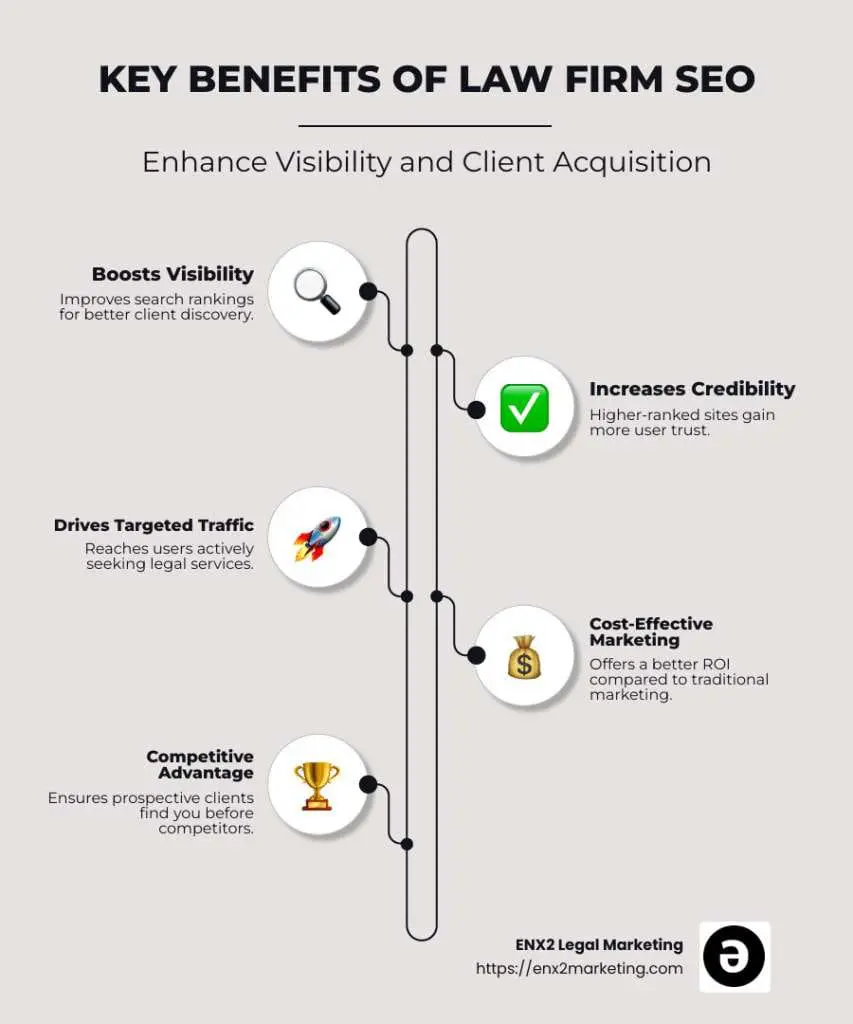
In today’s digital landscape, potential clients turn to search engines when they need legal services. Whether someone faces a personal injury case, requires business legal counsel, or needs family law assistance, their journey typically begins with a Google search. This reality makes SEO marketing for law firms not just beneficial—it’s essential for survival and growth in an increasingly competitive legal marketplace.
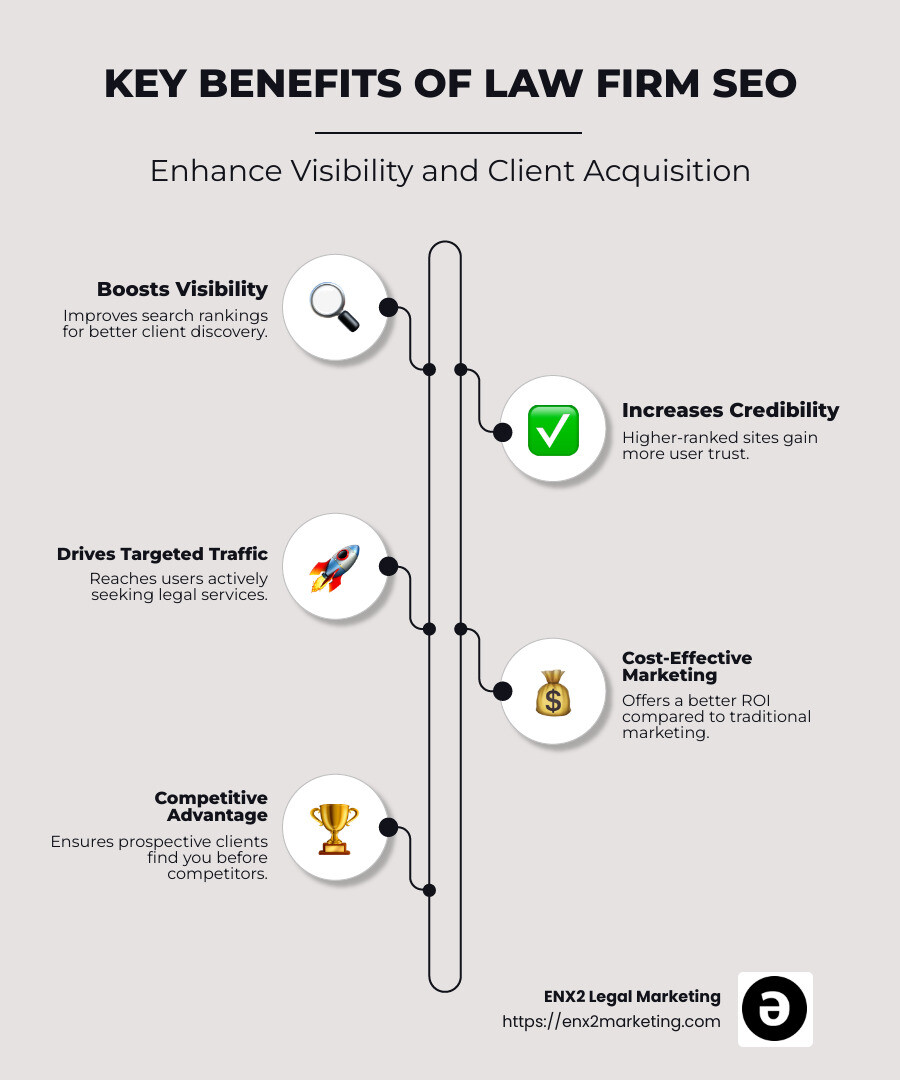
The legal industry has undergone a dramatic transformation in how clients discover and choose attorneys. Gone are the days when referrals and Yellow Pages advertisements dominated client acquisition. Today’s legal consumers conduct extensive online research before making contact with a law firm. They compare attorneys, read reviews, evaluate expertise, and assess credibility—all through digital channels.
This comprehensive guide reveals how law firms can harness the power of search engine optimization to build a robust online presence that attracts qualified leads and converts prospects into clients. You’ll discover proven strategies for keyword research, local SEO optimization, content marketing, technical website improvements, and reputation management. We’ll explore advanced techniques for competing in highly competitive legal markets while maintaining ethical standards and compliance with bar association regulations.
Whether you’re a solo practitioner looking to establish your digital footprint or a large firm seeking to dominate local search results, this guide provides actionable insights to transform your online visibility and drive sustainable business growth through strategic SEO marketing.
Understanding the Legal SEO Landscape
Featured Partner
Case Quota: Uses AI to help law firms with digital marketing and market dominance
Case Quota uses AI to help law firms with digital marketing and market dominance.
- It was founded by a former top Los Angeles consultant and aims to help law firms navigate the changing legal marketing landscape by implementing advanced digital strategies
- Onboard quickly with guided setup and white-glove support.
Request a walkthrough in minutes.
The legal industry presents unique digital marketing challenges that require specialized SEO approaches. Unlike other sectors, law firms must navigate strict advertising regulations, intense competition, and sophisticated client research behaviors. Understanding these dynamics forms the foundation for developing effective SEO strategies that generate qualified leads while maintaining professional compliance and ethical standards.
The Unique Challenges of Legal SEO
Bar association advertising regulations create the first major hurdle for legal SEO efforts. These rules vary significantly by jurisdiction and can impact everything from the language used in content to the types of claims firms can make about their success rates or expertise. For example, many states prohibit testimonials that could be considered misleading, while others restrict comparative statements about attorney qualifications. Firms must carefully balance aggressive SEO tactics with professional responsibility requirements, often requiring legal marketing compliance reviews before publishing content.
Competition intensity in legal markets often exceeds other industries by 300-400%, particularly in high-value practice areas like personal injury, DUI defense, and medical malpractice. Established firms invest heavily in SEO and pay-per-click advertising, creating significant barriers for new entrants. The cost-per-click for competitive legal keywords can reach $100-500, making organic search visibility crucial for sustainable marketing budgets.
Search Behavior Patterns for Legal Services
Legal consumers exhibit distinct search patterns that differ significantly from typical commercial queries. Emergency legal situations drive immediate search behavior, with users seeking quick answers and rapid response times within hours of an incident. These high-intent searches often include location-specific terms like “DUI lawyer near me” or “emergency custody attorney,” indicating ready-to-convert prospects who need immediate assistance.
Research-oriented searches represent another significant category, where potential clients spend 2-3 weeks evaluating options before making contact. These users typically progress through multiple search queries, from general legal information to specific attorney qualifications and firm comparisons. Understanding this progression helps firms create content funnels that capture users at various decision-making stages and nurture them toward consultation requests.
Local vs. National SEO Considerations
Most law firms serve specific geographic markets, making local SEO optimization crucial for 85% of legal practices. Local search algorithms prioritize proximity, relevance, and prominence when determining rankings for location-based queries. This creates opportunities for smaller firms to compete effectively against larger competitors by dominating their immediate service areas through targeted local content and citation strategies.
National SEO strategies apply to firms serving clients across multiple states or specializing in federal law matters like immigration, bankruptcy, or intellectual property. These firms must balance broad keyword targeting with location-specific optimization, often requiring more complex technical implementations and content strategies that address varying state laws and regulations.
Ethical and Regulatory Compliance
Professional responsibility considerations significantly impact SEO content creation and marketing tactics. Attorney advertising rules prohibit certain types of testimonials, success rate claims, and comparative statements that might be acceptable in other industries. For instance, stating “We win 95% of our cases” could violate advertising rules in many jurisdictions, requiring more careful language like “We have extensive experience in successful case resolution.”
These restrictions require careful content planning to ensure compliance while maintaining SEO effectiveness, often necessitating legal marketing specialists who understand both search optimization and professional conduct rules.
Keyword Research and Strategy for Legal Practices
Effective legal SEO begins with comprehensive keyword research that identifies search terms your potential clients actually use, not legal jargon attorneys prefer. This research forms the foundation for all content creation, website optimization, and digital marketing efforts. Understanding the gap between professional terminology and consumer language creates opportunities to capture high-intent traffic that competitors often miss.
Identifying High-Value Legal Keywords
Legal professionals often think in technical terms that differ significantly from consumer search behavior. For example, attorneys might focus on “personal injury litigation,” while potential clients search for “car accident lawyer” or “slip and fall attorney.” This disconnect creates opportunities for firms that align their SEO strategy with actual search patterns rather than professional preferences.
Primary keyword categories include practice area terms generating 10,000-50,000 monthly searches, location-based searches with 1,000-5,000 monthly searches, and problem-solving queries with 500-2,000 searches. Practice area keywords like “divorce attorney” face intense competition but offer broad reach. Location-based searches such as “personal injury lawyer Chicago” provide better conversion opportunities with 15-25% higher click-through rates than generic terms.
Long-tail keywords represent significant opportunities, with phrases like “how much does a divorce cost in California” indicating users seeking detailed information and potentially ready to engage legal services within 30-60 days of their initial search.
Competitive Keyword Analysis
Understanding competitor keyword strategies provides valuable insights for developing superior SEO approaches. Analyze which keywords drive traffic to competing law firms in your market, identifying gaps and opportunities in their strategies. Tools like SEMrush reveal that top-ranking legal websites typically target 500-1,500 keywords, with 60-70% being long-tail variations.
Focus on competitors who consistently appear in top three search results for your target keywords. Examine their content strategies, page structures, and optimization techniques to understand why they rank well. Look for keyword opportunities they may have missed, particularly emerging legal trends or underserved practice area niches that could generate 200-500 monthly searches with lower competition.
Seasonal and Trending Legal Keywords
Legal search patterns follow predictable seasonal trends that strategic firms can leverage for increased visibility. Tax law searches peak 400% during January-April, while family law queries increase 25-30% around holidays and back-to-school periods when family stress levels rise. Personal injury searches spike during winter months and holiday periods when accidents occur more frequently.
Trending legal topics present opportunities to capture timely search traffic, with new legislation or high-profile cases driving 1,000-10,000% increases in related search volume. Firms that quickly create relevant, authoritative content around trending topics can capture significant traffic and establish thought leadership positions before competitors react.
| Keyword Type | Example | Search Volume | Competition Level | Conversion Potential |
|---|---|---|---|---|
| Broad Practice Area | “Personal Injury Lawyer” | High (50K+) | Very High | Medium (2-3%) |
| Local + Practice Area | “DUI Attorney Denver” | Medium (5K) | High | High (8-12%) |
| Problem-Solving Query | “What to do after work injury” | Low-Medium (2K) | Medium | High (10-15%) |
| Long-tail Specific | “Best divorce lawyer for men in Miami” | Low (500) | Low-Medium | Very High (15-25%) |
Intent-Based Keyword Segmentation
Different search intents require distinct content and optimization strategies for maximum effectiveness. Informational queries like “how to file for bankruptcy” require educational content that builds trust and positions your firm as knowledgeable, typically generating 500-1,000 page views monthly but converting at 1-2% rates. These searches often occur 30-90 days before users are ready to hire an attorney.
Transactional keywords such as “hire personal injury lawyer” demand clear calls-to-action and compelling reasons to choose your firm, converting at 10-20% rates but generating lower search volumes. Navigational searches for your firm name or attorneys require optimized pages that reinforce your brand and expertise while capturing users who already know about your practice.
Local SEO Optimization for Law Firms
Local SEO optimization represents the most critical factor for law firm success, with 78% of location-based searches resulting in offline purchases within 24 hours. Unlike national businesses, law firms serve specific geographic markets where proximity and local reputation directly influence client decisions. Mastering local SEO techniques enables firms to dominate their service areas while competing effectively against larger regional or national competitors.
Google My Business Mastery
Google My Business optimization forms the foundation of successful local SEO, directly impacting 46% of all Google searches. A complete, accurate GMB profile significantly influences local search visibility and potential clients’ first impressions of your practice. Firms with optimized GMB listings receive 35% more website clicks and 42% more direction requests compared to incomplete profiles.
Professional photography showcases your office environment, team members, and practice areas effectively, with listings containing photos receiving 42% more requests for directions and 35% more click-throughs to websites. Include photos of your office exterior and interior, staff headshots, meeting rooms, and any awards or certifications. These visual elements build trust and credibility while improving engagement metrics that Google considers for local rankings.
Regular GMB posts keep your listing active and provide opportunities to highlight recent case successes, legal insights, and community involvement. Posts appear in your knowledge panel for 7 days and can influence click-through rates from search results by 15-20% when published consistently.
Citation Building and NAP Consistency
Name, Address, and Phone number consistency across all online directories directly impacts local search rankings by 25-30%. Inconsistent information confuses search engines and can harm your local SEO performance, with studies showing that NAP inconsistencies can reduce local rankings by 2-5 positions. Audit existing citations quarterly to ensure accuracy and consistency in how your firm’s information appears across 50-100 relevant directories.
Quality legal directories like Avvo, Martindale-Hubbell, and FindLaw provide valuable citation opportunities while offering additional marketing benefits. These industry-specific directories carry more weight for legal SEO than generic business directories, with legal-focused citations providing 3-5x more SEO value than general business listings. Focus on obtaining listings in directories that your potential clients actually use when searching for legal services.
Local Content Strategies
Creating location-specific content establishes your firm’s community connection while targeting local search queries that generate 15-25% higher conversion rates. Develop content around local legal issues, court procedures, and jurisdiction-specific laws that affect your potential clients. This approach demonstrates local expertise while capturing search traffic from location-based queries like “divorce laws in [city]” or “[state] DUI penalties.”
Community involvement content showcases your firm’s commitment to the local area while generating natural link opportunities from local organizations and news outlets. Write about local legal seminars you’ve attended, community events you’ve sponsored, or pro bono work you’ve performed. These stories humanize your firm while reinforcing local relevance signals that search engines value for local rankings.
Review Management and Reputation
Online reviews significantly impact both local search rankings and potential clients’ decision-making, with 88% of consumers trusting online reviews as much as personal recommendations. Positive reviews improve your GMB ranking factors while building trust and credibility with prospects. Firms with 50+ reviews typically rank 20-30% higher in local search results compared to those with fewer than 10 reviews.
Review response strategies should reflect your firm’s professionalism while demonstrating genuine care for client experiences. Thank clients for positive reviews while addressing any specific concerns mentioned, with response rates above 80% correlating with improved local search performance. For negative reviews, respond diplomatically within 24-48 hours and offer to discuss issues privately, showing potential clients that you take feedback seriously.
| Citation Source | Domain Authority | Legal Industry Focus | Client Usage | SEO Value |
|---|---|---|---|---|
| Google My Business | 100 | Universal | Very High | Critical |
| Avvo | 85 | Legal Specific | High | High |
| Martindale-Hubbell | 82 | Legal Specific | Medium | High |
| Yelp | 95 | Universal | High | Medium |
| Yellow Pages | 78 | Universal | Low | Low |
Content Marketing Strategies for Legal SEO
Content marketing serves as the cornerstone of effective legal SEO, providing opportunities to demonstrate expertise, build trust, and capture search traffic across the entire client journey. Legal content marketing requires balancing educational value with compliance requirements while addressing the specific concerns and questions potential clients have about legal processes. Strategic content creation can position your firm as the authoritative source for legal information in your practice areas.

Educational Content That Converts
Educational content builds trust and positions your firm as the go-to authority while capturing high-intent search traffic. Legal consumers conduct extensive research before hiring an attorney, with 67% reading 3-5 articles about their legal issue before making contact. Creating comprehensive guides that answer common questions demonstrates expertise while naturally incorporating target keywords and local search terms.
Successful educational content addresses specific client concerns with actionable information, such as “What to Expect During Your First Divorce Consultation” or “5 Steps to Take Immediately After a Car Accident.” These topics generate 200-500 monthly searches in local markets while converting at 8-12% rates when properly optimized with clear calls-to-action and contact information.
Long-form content performs particularly well in legal SEO, with articles exceeding 2,000 words ranking 35% higher than shorter pieces. Comprehensive legal guides covering topics like “Complete Guide to Child Custody in [State]” can generate 1,000-3,000 monthly organic visitors while establishing your firm as the definitive local resource.
Video Content and SEO Benefits
Video content provides significant SEO advantages while meeting modern consumer preferences for visual information. Legal topics can be complex and intimidating, making video explanations particularly valuable for potential clients. Videos increase time spent on your website by 88% on average, which positively impacts search engine rankings through improved user engagement metrics.
Create video content addressing frequently asked questions, explaining legal processes, or introducing your attorneys and staff. Videos titled “What Happens During a Personal Injury Lawsuit” or “Meet Our Family Law Team” generate strong engagement while building personal connections with potential clients. Optimize video content with transcripts, closed captions, and keyword-rich descriptions to maximize SEO benefits.
Host videos on your website rather than relying solely on YouTube to keep visitors on your domain longer. Embed videos in relevant blog posts and practice area pages to improve user experience and increase the likelihood of conversion from visitor to consultation request.
Blog Strategy and Topic Clusters
Strategic blog organization using topic clusters improves search engine rankings while providing comprehensive coverage of legal subjects. Topic clusters involve creating pillar content around broad subjects like “Personal Injury Law” and supporting it with cluster content covering specific subtopics like “Slip and Fall Cases,” “Medical Malpractice Claims,” and “Product Liability Lawsuits.”
This structure helps search engines understand your expertise depth while providing multiple entry points for potential clients at different stages of their research process. Pillar pages typically generate 2-5x more organic traffic than standalone articles while improving overall domain authority through internal linking strategies.
Plan blog content calendars around seasonal trends, local events, and emerging legal issues that affect your target audience. Consistent publishing schedules of 2-4 articles monthly demonstrate ongoing expertise while providing fresh content that search engines favor for rankings.
Moving forward, we’ll explore the technical aspects of website optimization that support your content marketing efforts and ensure maximum search engine visibility for your legal practice.
Content Marketing Strategies for Legal Websites
Content marketing serves as the backbone of successful SEO marketing for law firms, establishing expertise while attracting potential clients through valuable information. Legal consumers actively seek educational content to understand their situations before contacting attorneys. Strategic content creation positions your firm as a trusted authority while capturing organic search traffic across multiple practice areas and client concerns.
Educational Blog Content Creation
Comprehensive legal guides addressing common client questions drive significant organic traffic while establishing your firm’s expertise. Create detailed articles covering frequently asked questions in your practice areas, such as “What to Expect During a Personal Injury Settlement” or “Step-by-Step Guide to Filing for Bankruptcy.” These evergreen pieces consistently attract search traffic and demonstrate your knowledge to potential clients. Research shows that law firms publishing weekly blog content generate 67% more leads than those without active content strategies.
Include specific examples, timelines, and cost ranges when possible while maintaining ethical compliance. For instance, explain typical divorce proceedings by outlining each phase, expected duration, and required documentation. This detailed approach helps readers understand complex legal processes while positioning your firm as knowledgeable and transparent.
Video Content and Legal Explanations
Video content significantly increases engagement rates and time spent on your website, both crucial ranking factors for search engines. Create short explanatory videos addressing common legal questions, introducing your attorneys, or walking through your office space. Videos featuring attorneys explaining legal concepts in simple terms build trust and credibility while improving your website’s SEO performance. Legal websites with video content experience 41% higher click-through rates from search results.
Focus on creating authentic, professional videos that showcase your personality and expertise without appearing overly promotional. Simple smartphone videos discussing recent legal developments or explaining common misconceptions can perform exceptionally well when optimized properly with relevant titles, descriptions, and transcripts.
Case Studies and Success Stories
Detailed case studies demonstrate your firm’s capabilities while providing valuable content for potential clients researching similar situations. Share anonymized examples of successful outcomes, highlighting your strategic approach and problem-solving abilities. These narratives help potential clients understand how you work while building confidence in your expertise. Ensure all case studies comply with attorney-client privilege rules and bar association guidelines regarding advertising claims.
Structure case studies to include the initial challenge, your strategic approach, key milestones, and final outcomes. This format provides educational value while subtly demonstrating your firm’s effectiveness. Include relevant keywords naturally throughout these stories to improve search visibility for related queries.
FAQ Pages and Legal Resources
Comprehensive FAQ sections address common concerns while capturing long-tail search traffic from specific legal questions. Develop extensive FAQ pages for each practice area, covering everything from basic definitions to complex procedural questions. These pages often rank well for conversational search queries and voice search results. Organize FAQs logically with clear headings and concise answers that provide genuine value.
Create downloadable legal resources like checklists, templates, and guides that require email addresses to access. These lead magnets capture potential client information while providing immediate value. For example, offer a “Post-Accident Checklist” for personal injury prospects or a “Small Business Legal Compliance Guide” for corporate clients.
Technical SEO for Law Firm Websites
Technical SEO forms the foundation that enables all other optimization efforts to succeed effectively. Search engines must easily crawl, understand, and index your website before content and keywords can drive rankings. Law firm websites face unique technical challenges, including compliance requirements, security concerns, and the need for professional credibility that impacts user experience signals.
Website Speed and Performance Optimization
Page loading speed directly impacts both search rankings and potential client conversion rates, making performance optimization critical for legal websites. Google considers page speed a ranking factor, while users expect websites to load within three seconds or risk abandoning the site entirely. Legal websites averaging load times under 2.5 seconds experience 23% higher conversion rates compared to slower-loading competitors.
Implement image compression, browser caching, and content delivery networks (CDNs) to improve loading speeds across all devices. Optimize large images commonly found on legal websites, such as attorney headshots and office photos, without sacrificing quality. Use tools like Google PageSpeed Insights or GTmetrix to identify specific performance bottlenecks and track improvement metrics over time.
Mobile Responsiveness and User Experience
Mobile-first indexing means Google primarily uses your website’s mobile version for ranking and indexing decisions. Over 58% of legal service searches occur on mobile devices, making responsive design essential for capturing potential clients. Mobile-optimized legal websites show 34% better local search performance compared to desktop-only designs.
Ensure all website elements function seamlessly across devices, including contact forms, attorney bios, and practice area pages. Test navigation menus, button sizes, and text readability on various screen sizes. Mobile users often search for legal services during stressful situations, requiring intuitive interfaces that quickly connect them with relevant information and contact options.
SSL Security and Trust Signals
Secure HTTPS connections are mandatory for legal websites handling sensitive client information and influence search engine rankings. Google explicitly states that HTTPS serves as a ranking signal, while browsers display warning messages for unsecured sites that can deter potential clients. Legal websites with proper SSL certificates experience 15% higher trust ratings from visitors compared to unsecured sites.
Display professional trust signals throughout your website, including bar association memberships, security badges, and professional certifications. These elements build credibility while potentially improving click-through rates from search results. Include privacy policy links, secure contact forms, and clear data handling statements to address visitor security concerns.
Structured Data and Schema Markup
Schema markup helps search engines understand your website content while enabling rich snippets that improve search result visibility. Legal websites benefit from specific schema types including LocalBusiness, Attorney, and LegalService markup. Properly implemented structured data can increase click-through rates by up to 30% through enhanced search result displays.
Implement schema markup for attorney profiles, office locations, practice areas, and client reviews. This structured data enables features like knowledge panels, review stars, and business information directly in search results. Use Google’s Structured Data Testing Tool to validate implementations and identify opportunities for additional markup types.
| Technical Element | Impact on SEO | Implementation Difficulty | Client Impact | Priority Level |
|---|---|---|---|---|
| Page Speed | High | Medium | Very High | Critical |
| Mobile Responsiveness | Very High | High | Very High | Critical |
| SSL Security | Medium | Low | High | High |
| Schema Markup | Medium | High | Medium | Medium |
| Site Architecture | High | Medium | High | High |
Link Building and Authority Development
Link building remains one of the most challenging yet crucial aspects of SEO marketing for law firms. Quality backlinks from authoritative sources signal expertise and trustworthiness to search engines while driving referral traffic from relevant websites. Legal link building requires careful attention to ethical guidelines and professional standards that govern attorney marketing practices.
Professional Legal Directory Submissions
High-authority legal directories provide valuable backlinks while connecting your firm with potential clients actively seeking legal services. Focus on established directories like Avvo, Martindale-Hubbell, FindLaw, and Justia that carry significant domain authority and attract genuine legal consumers. These platforms often rank highly for legal search queries, providing additional visibility beyond direct SEO benefits. Quality legal directory listings can improve domain authority by 12-18 points within six months.
Complete profiles thoroughly with detailed attorney biographies, practice area descriptions, and professional credentials. Many directories allow additional content like articles, case studies, or legal insights that provide further optimization opportunities. Monitor directory performance through analytics to identify which platforms generate the most referral traffic and qualified leads.
Content-Based Link Earning Strategies
Creating exceptional legal content naturally attracts backlinks from other websites seeking authoritative sources and references. Develop comprehensive legal guides, research studies, or analysis of recent court decisions that other legal professionals and journalists want to cite. Original research on legal trends, survey data, or case outcome analysis often generates significant link opportunities from news outlets and industry publications.
Guest posting on reputable legal blogs and industry publications builds relationships while earning quality backlinks. Focus on providing genuine value rather than promotional content, sharing insights on legal developments, practice management, or client service innovations. Established legal publications prefer expert commentary and analysis over obvious marketing content.
Local Community and Business Partnerships
Strategic partnerships with local businesses and organizations create natural link opportunities while strengthening community connections. Sponsor local events, participate in chamber of commerce activities, or provide pro bono legal services for nonprofit organizations. These relationships often result in website mentions and backlinks from respected local sources.
Develop relationships with complementary professionals like accountants, real estate agents, and financial advisors who serve similar client bases. Cross-referral partnerships can lead to website links and joint content opportunities that benefit both parties while providing value to shared audiences.
Professional Association and Bar Participation
Active participation in bar associations and professional legal organizations provides authoritative backlink opportunities from highly trusted sources. Contribute to bar association publications, speak at legal conferences, or participate in committee work that results in website mentions and profile links. These associations carry exceptional domain authority and provide some of the most valuable links available to legal professionals.
Write articles for bar journals, participate in legal podcasts, or contribute to professional legal publications. These activities build thought leadership while generating high-quality backlinks from sources that search engines recognize as authoritative within the legal industry. Track these opportunities systematically to maximize their SEO impact over time.
Measuring and Tracking SEO Success
Effective measurement and tracking transform SEO marketing for law firms from guesswork into data-driven strategy optimization. Legal practices must monitor specific metrics that correlate with business growth, client acquisition, and return on investment. Understanding which SEO efforts generate qualified leads versus mere traffic helps allocate resources effectively while demonstrating value to firm leadership and partners.

Essential SEO Metrics for Law Firms
Organic search traffic serves as the foundation metric, but qualified lead generation provides the true measure of SEO success for legal practices. Track organic sessions, unique visitors, and page views while focusing on conversion metrics like contact form submissions, phone calls, and consultation requests. Legal websites typically see 2-4% conversion rates from organic traffic, with personal injury and criminal defense practices often achieving higher rates.
Monitor keyword rankings for primary practice area terms and local search phrases that drive business. Track both broad keywords like “personal injury lawyer” and long-tail phrases such as “car accident attorney downtown Chicago.” Use tools like Google Search Console, SEMrush, or Ahrefs to monitor ranking changes and identify optimization opportunities.
Google Analytics Configuration for Legal Websites
Proper Google Analytics setup enables detailed tracking of user behavior, conversion paths, and campaign effectiveness specific to legal marketing goals. Configure goal tracking for key actions like contact form completions, phone number clicks, and consultation scheduling. Set up enhanced ecommerce tracking if your firm offers paid consultations or legal document services online.
Create custom segments to analyze traffic from different sources, geographic locations, and user behaviors. Separate mobile and desktop traffic patterns to understand how potential clients interact with your website across devices. Legal consumers often research on mobile devices but convert on desktop computers, requiring different optimization strategies for each platform.
Local Search Performance Monitoring
Google My Business insights provide crucial data about local search performance, including how potential clients discover and interact with your business listing. Monitor search queries that trigger your listing, customer actions like website visits and direction requests, and photo views that indicate engagement levels. Local search visibility directly correlates with phone call volume for most law firms.
Track local keyword rankings separately from general organic rankings, as local results often differ significantly from standard search results. Monitor competitor local performance to identify opportunities and understand market dynamics in your service area.
ROI Calculation and Business Impact Assessment
Calculate SEO return on investment by tracking lead generation costs compared to traditional marketing channels like print advertising or referral programs. Average SEO-generated leads cost 61% less than traditional marketing leads while converting at higher rates. Track the complete client journey from initial organic search through case resolution to understand lifetime value attribution.
| Metric Category | Key Indicators | Tracking Frequency | Business Impact | Benchmark Range |
|---|---|---|---|---|
| Traffic Metrics | Organic sessions, unique visitors | Weekly | Medium | 20-40% monthly growth |
| Conversion Metrics | Form fills, phone calls | Daily | Very High | 2-5% conversion rate |
| Ranking Metrics | Keyword positions | Weekly | High | Top 10 for primary terms |
| Local Metrics | GMB views, actions | Weekly | High | 15-25% monthly growth |
| Revenue Metrics | Client acquisition cost | Monthly | Very High | 3:1 ROI minimum |
Establish monthly reporting processes that connect SEO metrics to business outcomes, helping firm leadership understand the value of continued SEO investment while identifying areas for strategy refinement and resource allocation optimization.
Content Marketing Strategies for Legal Professionals
Creating valuable, educational content positions law firms as trusted authorities while attracting potential clients through search engines. Legal content marketing requires balancing informational value with subtle marketing messages that comply with professional conduct rules. Successful legal content strategies focus on addressing common client questions and concerns while demonstrating expertise and building trust.
Educational Blog Content Development
Educational blog posts serve as the foundation of effective legal content marketing, providing opportunities to target specific keywords while delivering genuine value to potential clients. Focus on creating comprehensive guides that answer common legal questions in your practice areas. Topics like “Understanding the Divorce Process” or “Steps to Take After a Car Accident” attract high search volumes while positioning your firm as knowledgeable and helpful.
Long-form content typically performs better in search results and provides more opportunities for keyword optimization. Aim for articles between 1,500-3,000 words that thoroughly cover topics from multiple angles. Include practical tips, relevant case law references, and step-by-step guidance that readers can actually use. This approach builds trust while encouraging longer page visits that signal content quality to search engines.
Video Content and SEO Benefits
Video content increasingly dominates search results and provides unique opportunities for law firms to showcase expertise while improving SEO performance. Create educational videos addressing frequently asked questions, explaining complex legal processes, or providing commentary on recent legal developments. Videos often appear in featured snippets and can significantly increase click-through rates from search results.
Optimize video content for search by including detailed descriptions, relevant tags, and accurate transcripts. Upload videos to multiple platforms including YouTube, your website, and social media channels to maximize visibility. Video testimonials from satisfied clients (where permitted by bar rules) can be particularly effective for building trust and improving conversion rates.
Legal Resource Libraries
Comprehensive resource libraries establish your firm as a go-to source for legal information while creating numerous opportunities for internal linking and keyword targeting. Develop downloadable guides, checklists, and templates that provide immediate value to visitors. Resources like “Divorce Checklist for California Residents” or “Small Business Legal Compliance Guide” attract targeted traffic while capturing lead information through gated content strategies.
Organize resources by practice area and legal topic to create logical site architecture that search engines can easily crawl and understand. Each resource should target specific long-tail keywords while providing genuine utility that encourages sharing and linking from other websites.
Content Distribution and Amplification
Strategic content distribution amplifies your SEO efforts by increasing visibility, generating backlinks, and driving traffic from multiple sources. Share content across social media platforms, legal forums, and industry publications to maximize reach. Guest posting on reputable legal blogs and publications provides valuable backlinks while exposing your expertise to new audiences.
Email marketing to existing clients and prospects helps drive traffic to new content while encouraging engagement signals that benefit SEO. Include content summaries in newsletters with links back to full articles on your website. This strategy increases page views, time on site, and social sharing—all positive SEO signals.
Technical SEO for Law Firm Websites
Technical SEO forms the foundation that enables all other optimization efforts to succeed. Law firm websites must provide exceptional user experiences while meeting search engine requirements for crawling, indexing, and ranking. Technical issues can severely impact search visibility regardless of content quality or marketing efforts.
Website Speed and Performance Optimization
Page loading speed directly impacts both user experience and search engine rankings, making performance optimization critical for legal SEO success. Google considers page speed a ranking factor, and slow-loading pages experience higher bounce rates and lower conversion rates. Law firm websites often suffer from performance issues due to large images, complex forms, and resource-heavy plugins.
Implement image compression, browser caching, and content delivery networks (CDNs) to improve loading times. Optimize images by using appropriate file formats and sizes without sacrificing quality. Remove unnecessary plugins and scripts that slow page rendering. Regularly test website speed using tools like Google PageSpeed Insights and GTmetrix to identify and address performance bottlenecks.
Mobile Responsiveness and User Experience
Mobile-first indexing means Google primarily uses mobile versions of websites for ranking and indexing, making mobile optimization essential for law firms. Over 60% of legal searches occur on mobile devices, yet many law firm websites provide poor mobile experiences. Responsive design ensures your website functions properly across all devices while maintaining professional appearance and functionality.
Test mobile usability regularly using Google’s Mobile-Friendly Test tool and real device testing. Ensure contact forms, phone numbers, and call-to-action buttons work properly on mobile devices. Consider mobile-specific features like click-to-call buttons and simplified navigation that improve user experience for mobile visitors seeking immediate legal assistance.
Site Architecture and Internal Linking
Logical site architecture helps search engines understand your website structure while guiding visitors to relevant information efficiently. Create clear hierarchies with practice areas as main categories and specific services as subcategories. Use descriptive URLs that include relevant keywords and reflect your site structure logically.
Internal linking strategies distribute page authority throughout your website while helping visitors discover relevant content. Link from high-authority pages to newer content that needs ranking boosts. Use descriptive anchor text that includes relevant keywords naturally. Create topic clusters by linking related articles and resources together to establish topical authority in specific legal areas.
Schema Markup and Structured Data
Schema markup helps search engines understand your content context, potentially improving search result appearances through rich snippets and enhanced listings. Legal businesses can benefit from specific schema types including LocalBusiness, Attorney, and LegalService markup. These structured data implementations can result in enhanced search listings that include ratings, contact information, and practice area details.
Implement schema markup for key pages including attorney profiles, practice area pages, and contact information. Use Google’s Structured Data Testing Tool to verify proper implementation and identify opportunities for additional markup. Rich snippets can significantly improve click-through rates by making your listings more prominent and informative in search results.
| Technical SEO Factor | Impact Level | Implementation Difficulty | Time to See Results | Cost |
|---|---|---|---|---|
| Page Speed Optimization | High | Medium | 1-2 months | Low-Medium |
| Mobile Responsiveness | Critical | High | 2-3 months | Medium-High |
| SSL Certificate | Medium | Low | Immediate | Low |
| Schema Markup | Medium | Medium | 1-3 months | Low |
| Site Architecture | High | High | 3-6 months | High |
Measuring and Analyzing SEO Performance
Effective SEO requires continuous monitoring and analysis to understand what strategies work and where improvements are needed. Law firms must track relevant metrics that align with business goals rather than vanity metrics that don’t correlate with actual client acquisition and revenue generation.
Key Performance Indicators for Legal SEO
Tracking the right metrics provides insights into SEO effectiveness and helps guide strategic decisions for continuous improvement. Focus on metrics that directly correlate with business outcomes rather than generic SEO statistics. Organic traffic growth matters only if it translates into qualified leads and new client acquisitions for your practice areas.
Monitor keyword rankings for target terms, but prioritize tracking conversions from organic traffic. Measure consultation requests, phone calls, and form submissions generated through organic search. Track which practice areas generate the most valuable traffic and leads to guide content and optimization priorities. Local search visibility metrics like Google My Business views, calls, and direction requests provide valuable insights into local SEO performance.
Google Analytics and Search Console Setup
Proper analytics configuration provides the data foundation needed for informed SEO decision-making and performance optimization. Set up conversion tracking for key actions like contact form submissions, phone calls, and consultation bookings. Create custom segments to isolate organic traffic performance from other marketing channels.
Google Search Console provides invaluable insights into how Google views your website. Monitor search queries that drive traffic, identify pages with indexing issues, and track mobile usability problems. Use Search Console data to discover new keyword opportunities and identify content gaps that could be addressed through additional optimization efforts.
ROI Measurement and Client Attribution
Measuring SEO return on investment requires connecting organic traffic to actual client acquisitions and revenue generation. Track the complete client journey from initial search query through consultation booking and case retention. This attribution helps demonstrate SEO value to firm leadership while identifying the most profitable optimization strategies.
Implement call tracking numbers on your website to measure phone conversions from organic traffic. Use CRM integration to track which leads convert into paying clients and their lifetime value. Calculate cost per acquisition for SEO compared to other marketing channels to optimize budget allocation and strategy focus.
Competitive Analysis and Market Monitoring
Regular competitive analysis reveals market opportunities and helps identify strategies that drive competitor success. Monitor competitor keyword rankings, content strategies, and local search visibility to identify gaps and opportunities. Track when competitors launch new content or optimization campaigns that might impact your rankings.
Use competitive intelligence to guide content creation and optimization priorities. If competitors consistently rank well for specific keywords, analyze their strategies and create superior content that provides more value. Monitor industry trends and legal developments that might create new keyword opportunities or shift search behavior patterns.
FAQ
Q: How long does it take to see results from SEO marketing for law firms?

SEO results typically begin appearing within 3-6 months for law firms, with significant improvements often taking 6-12 months. Local SEO improvements may appear faster, especially for Google My Business optimization. Competitive practice areas like personal injury may require longer timeframes due to established competition and higher optimization requirements.
Q: What’s the average cost of SEO services for law firms?
Legal SEO services typically range from $2,000-$10,000 monthly depending on market competition, firm size, and scope of services. Solo practitioners might invest $1,500-$3,000 monthly, while large firms in competitive markets often spend $5,000-$15,000. DIY SEO efforts require significant time investment but can reduce costs for smaller practices with limited budgets.
Q: How do bar association rules affect law firm SEO strategies?
Bar association advertising rules significantly impact legal SEO content and claims. Attorneys cannot make guarantees about case outcomes, use misleading success rate statistics, or make comparative claims without substantiation. Content must comply with professional responsibility rules while remaining effective for search optimization and client attraction.
Q: Which practice areas benefit most from SEO marketing?
Personal injury, family law, criminal defense, and DUI practices typically see the highest SEO ROI due to high search volumes and client values. Business law and estate planning also benefit significantly from SEO, though with longer sales cycles. Specialized practices may have lower search volumes but often face less competition.
Q: Should law firms focus on local or national SEO strategies?
Most law firms should prioritize local SEO since legal services are typically location-specific. National SEO makes sense for firms handling federal cases, intellectual property, or serving clients across multiple states. Hybrid approaches work well for firms with local practices but national expertise in specialized areas.
Q: How important are online reviews for legal SEO?
Online reviews significantly impact both local search rankings and client decision-making. Positive reviews improve Google My Business visibility while building trust with potential clients. Review management should follow ethical guidelines while encouraging satisfied clients to share their experiences through appropriate channels and timing.
Q: What are the biggest SEO mistakes law firms make?
Common mistakes include neglecting local SEO optimization, creating thin content without substantial value, ignoring mobile user experience, and failing to track meaningful conversion metrics. Many firms also violate bar advertising rules through inappropriate claims or testimonials that can harm both SEO performance and professional standing.
Q: How do I measure SEO success for my law practice?
Focus on business metrics like consultation requests, qualified leads, and new client acquisitions rather than just traffic or rankings. Track phone calls, form submissions, and email inquiries generated through organic search. Monitor conversion rates from organic traffic and calculate return on investment based on actual client acquisitions.
Q: Can small law firms compete with large firms in SEO?
Small firms can effectively compete through focused local SEO, specialized content creation, and superior user experience. Large firms often struggle with complex site structures and generic content, creating opportunities for smaller practices to dominate local searches and niche practice areas through targeted optimization efforts.
Q: What’s the future of SEO marketing for law firms?
Legal SEO will increasingly emphasize user experience, mobile optimization, and artificial intelligence integration. Voice search optimization, video content, and local search features will become more important. Firms that adapt to evolving search behaviors and maintain ethical marketing practices while embracing new technologies will achieve the greatest long-term success.
Conclusion
SEO marketing for law firms represents a fundamental shift in how legal practices attract and convert potential clients in the digital age. The strategies outlined in this comprehensive guide provide a roadmap for establishing dominant online visibility that drives qualified leads and sustainable business growth. From foundational keyword research through advanced technical optimization, each element contributes to building a robust digital presence that competitors struggle to match.
The key takeaways for implementing successful legal SEO include:
- Local optimization drives immediate results – Focus on Google My Business, local citations, and community-focused content to capture nearby clients actively searching for legal services
- Content marketing builds long-term authority – Educational blog posts, resource libraries, and video content establish expertise while targeting valuable search queries
- Technical excellence enables all other efforts – Website speed, mobile responsiveness, and proper site architecture form the foundation that supports all optimization strategies
- Measurement guides continuous improvement – Track business metrics like consultation requests and client acquisitions rather than vanity metrics to optimize ROI and strategic focus
The legal industry’s digital transformation continues accelerating, with search engines becoming increasingly sophisticated in evaluating content quality, user experience, and local relevance. Law firms that embrace comprehensive SEO strategies while maintaining ethical standards position themselves for sustained competitive advantages. As artificial intelligence and voice search technologies evolve, the firms investing in solid SEO foundations today will adapt most successfully to future changes in search behavior and technology.
Partner with Case Quota for Success
The comprehensive SEO strategies covered in this guide—from local optimization and content marketing to technical implementation and performance measurement—require specialized expertise and consistent execution to achieve maximum results. Case Quota specializes in helping law firms navigate the complex landscape of legal SEO while ensuring full compliance with bar association advertising rules and professional conduct standards.
Our team handles everything from keyword research and competitive analysis to content creation and technical optimization, allowing you to focus on serving clients while we build your digital presence. We understand the unique challenges facing legal practices, including regulatory compliance, competitive market dynamics, and the need for measurable ROI that translates into actual client acquisitions.
Whether you’re a solo practitioner looking to establish local market dominance or a large firm seeking to optimize multiple practice areas across different markets, Case Quota provides the specialized legal SEO expertise needed to achieve your growth objectives. Visit https://casequota.com to discover how we can transform your online visibility and drive qualified leads through proven SEO marketing strategies tailored specifically for law firms.