

Discover proven search engine optimization strategies specifically designed for law firms to increase online visibility, attract qualified leads, and grow your legal practice in today’s competitive digital landscape.

Introduction
Featured Partner
Case Quota: Uses AI to help law firms with digital marketing and market dominance
Case Quota uses AI to help law firms with digital marketing and market dominance.
- It was founded by a former top Los Angeles consultant and aims to help law firms navigate the changing legal marketing landscape by implementing advanced digital strategies
- Onboard quickly with guided setup and white-glove support.
Request a walkthrough in minutes.
In today’s digital-first world, potential clients turn to search engines before making any legal decisions. Whether they’re facing a personal injury case, need family law assistance, or require corporate legal services, 96% of people seeking legal advice use search engines to find attorneys. This makes search engine optimization for law firms not just beneficial—it’s absolutely essential for sustainable growth.
The legal industry has become increasingly competitive online, with thousands of law firms vying for the same keywords and client attention. Without a strategic SEO approach, even the most experienced attorneys can find themselves invisible to potential clients who need their expertise. The stakes are particularly high for law firms because legal services often involve significant financial decisions and long-term relationships.
This comprehensive guide will equip you with everything you need to know about search engine optimization for law firms. You’ll discover how to conduct effective keyword research tailored to legal services, optimize your website’s technical foundation, create compelling content that demonstrates your expertise, and build the authority signals that Google values most. We’ll also explore local SEO strategies that help you dominate your geographic market, advanced techniques for competitive advantage, and common pitfalls that can derail your efforts.
By implementing these proven strategies, you’ll not only improve your search rankings but also attract higher-quality leads, establish your firm as a trusted authority, and ultimately grow your practice in a sustainable, measurable way.
Understanding SEO Fundamentals for Legal Practices
Search engine optimization for law firms requires a deep understanding of how search algorithms evaluate legal websites and the unique challenges facing legal practitioners in the digital landscape. This foundation will guide every aspect of your SEO strategy and help you make informed decisions about where to invest your time and resources.
How Search Engines Evaluate Law Firm Websites
Search engines use sophisticated algorithms to evaluate and rank law firm websites based on hundreds of factors, with special emphasis on expertise, authoritativeness, and trustworthiness (E-A-T). For legal practices, Google’s algorithms scrutinize websites more rigorously than many other industries because legal advice can significantly impact people’s lives and finances. The primary ranking factors include technical website performance, content quality and relevance, user experience signals, and authority indicators like backlinks and citations. Search engines also consider your website’s mobile responsiveness, page loading speed, and security features, with law firms seeing an average 23% increase in rankings when these technical elements are properly optimized.
The Unique SEO Challenges Facing Law Firms
Legal SEO presents distinct challenges that don’t exist in other industries, starting with exceptionally fierce competition. Many legal keywords are among the most expensive in pay-per-click advertising, with terms like “personal injury lawyer” costing up to $1,200 per click, reflecting their high commercial value and competition level. Regulatory constraints also complicate legal SEO efforts, as attorney advertising rules vary by state and can limit how you present case results, client testimonials, and certain types of content. Additionally, legal content must maintain a delicate balance between being accessible to potential clients while remaining accurate and compliant with professional standards, often requiring legal review before publication.
Building a Strong SEO Foundation
Creating a robust SEO foundation requires careful attention to website architecture, technical optimization, and content strategy that addresses both user needs and search engine requirements. Your website’s structure should logically organize practice areas, attorney profiles, and resources in a way that both users and search engines can easily navigate. This includes implementing proper URL structures like “/practice-areas/personal-injury/car-accidents” rather than generic parameters, internal linking strategies that distribute page authority effectively, and schema markup specifically designed for legal practices. Technical foundations must also address site speed optimization, with legal websites loading 2.3 seconds faster showing 41% higher conversion rates than slower competitors.
Compliance and Professional Standards in SEO
Legal SEO must navigate complex professional responsibility rules while maximizing search visibility, requiring careful attention to state bar regulations and ethical guidelines. Different states have varying restrictions on attorney advertising, including limitations on testimonials, case results, and comparative claims about legal services. For example, some jurisdictions require disclaimers on all marketing materials, while others prohibit certain types of client testimonials entirely. Successful legal SEO strategies incorporate these compliance requirements from the ground up, ensuring that optimization efforts enhance rather than compromise professional standing. Firms that proactively address compliance issues in their SEO strategy report 34% fewer regulatory concerns and stronger long-term search performance.
| SEO Element | Law Firm Specific Considerations | Impact Level | Implementation Difficulty | Compliance Risk |
|---|---|---|---|---|
| Technical SEO | Security, mobile optimization, site speed | High | Medium | Low |
| Content Quality | Legal accuracy, compliance, E-A-T | Very High | High | High |
| Local Presence | Google Business Profile, local citations | Very High | Low | Medium |
| Authority Building | Professional backlinks, industry recognition | High | Very High | Medium |
Keyword Research and Strategy for Legal Services
Effective keyword research forms the backbone of successful search engine optimization for law firms, requiring a strategic approach that balances search volume, competition levels, and commercial intent. Understanding how potential clients search for legal services will guide your content creation and optimization efforts.
Identifying High-Value Legal Keywords
Effective keyword research for law firms goes beyond simply identifying high-volume search terms to focus on keywords that indicate genuine legal needs and readiness to hire an attorney. High-value legal keywords typically include location modifiers, specific legal issues, and action-oriented terms that suggest immediate need for legal services. For example, “divorce lawyer consultation Chicago” converts 3.2 times better than generic terms like “divorce information.” Start by analyzing your current client intake process to understand the language potential clients use when describing their legal problems, which often differs significantly from legal jargon. Someone might search for “fired from job unfairly” rather than “wrongful termination attorney,” providing opportunities to target more accessible language.
Understanding Search Intent in Legal Queries
Legal search queries generally fall into four categories: informational, navigational, commercial investigation, and transactional, each requiring different content approaches and optimization strategies. Informational queries like “what happens during a deposition” represent 45% of legal searches but have lower immediate conversion rates. However, they provide opportunities to demonstrate expertise and guide potential clients through their decision-making process. Commercial investigation queries such as “best personal injury lawyers in Chicago” indicate active research and comparison shopping, representing warm leads who are 67% more likely to contact a firm within 30 days. Transactional queries showing immediate intent to hire, like “personal injury lawyer consultation,” should be priority targets for your most important service pages.
Competitive Keyword Analysis
Understanding your competitors’ keyword strategies provides valuable insights for identifying gaps in their approach and successful tactics you can adapt for your firm. Use SEO tools to examine competitors’ organic keyword rankings, paid advertising strategies, and content gaps, paying particular attention to local competitors who serve the same geographic market. Look for opportunities where competitors rank well but have weak content or poor user experience that you can improve upon. For instance, if a competitor ranks #3 for “family law attorney” but their page lacks comprehensive information about specific services, you can create more detailed content targeting the same keyword. Competitive analysis reveals that firms targeting 15-20% more long-tail variations than their competitors typically see 28% higher organic traffic growth.
Creating Keyword-Focused Content Clusters
Organizing your content around keyword clusters helps establish topical authority and improves your site’s overall SEO performance by demonstrating comprehensive expertise in specific legal areas. Create comprehensive content hubs around major practice areas, with supporting content that addresses related questions and concerns. For example, a personal injury cluster might include the main service page, specific injury types like “slip and fall accidents” and “motorcycle injuries,” insurance claim processes, and frequently asked questions. This cluster approach allows you to target multiple related keywords while providing comprehensive coverage of topics that matter to your potential clients, with properly clustered content showing 42% better rankings than isolated pages.
Technical SEO Optimization for Law Firm Websites
Technical SEO provides the foundation that enables search engines to effectively crawl, index, and rank your law firm’s website. Without proper technical optimization, even the best content and marketing efforts will struggle to achieve their full potential in search results.
Website Architecture and Navigation Structure
A well-organized website architecture serves as the foundation for effective search engine optimization for law firms, creating logical pathways that benefit both users and search engine crawlers. Your site structure should follow a hierarchical pyramid with your homepage at the top, main practice area pages at the second level, and specific service pages at deeper levels. For example, a personal injury firm might structure their site as: Homepage > Personal Injury > Car Accidents > Drunk Driving Accidents. This logical organization helps search engines understand your expertise areas and makes it easier for potential clients to find relevant information. Implement breadcrumb navigation to help users understand their location within your site hierarchy, with sites using proper breadcrumbs showing 23% lower bounce rates than those without.
Mobile Optimization and Core Web Vitals
Mobile optimization has evolved from a best practice to an absolute necessity, with Google’s mobile-first indexing making mobile performance a primary ranking factor for law firm websites. Your website must provide an exceptional experience across all devices, with responsive design that adapts seamlessly to different screen sizes and touch interfaces. Core Web Vitals represent Google’s specific metrics for measuring user experience: Largest Contentful Paint (LCP) should be under 2.5 seconds, First Input Delay (FID) under 100 milliseconds, and Cumulative Layout Shift (CLS) under 0.1. Law firms that optimize for Core Web Vitals see an average 31% improvement in search rankings and 45% increase in mobile conversion rates, particularly important since 68% of legal searches now occur on mobile devices.
Security and Trust Signals
Security represents a critical concern for law firm websites, both for SEO performance and professional responsibility, requiring implementation of multiple layers of protection and trust indicators. SSL certificates are mandatory for any website handling sensitive information, and Google explicitly uses HTTPS as a ranking signal, with secure sites ranking an average of 5% higher than non-secure alternatives. Beyond basic SSL implementation, consider additional security measures like two-factor authentication, regular security audits, and secure hosting environments. Trust signals extend beyond technical security to include professional credentials, certifications, and authoritative content displays. Include detailed attorney biographies with educational backgrounds, bar admissions, and professional memberships prominently on your website, as sites with comprehensive attorney profiles convert 38% better than those with minimal information.
Site Speed and Performance Optimization
Page loading speed directly impacts both search rankings and user experience, with legal websites losing an average of 7% of potential clients for every additional second of loading time. Optimize images without sacrificing quality using modern formats like WebP, leverage browser caching to reduce server requests, and minimize JavaScript execution time. For law firms, this is particularly important because potential clients often research legal services during stressful situations and have little patience for slow-loading websites. Implement content delivery networks (CDNs) to serve your content from servers geographically closer to users, compress files using Gzip compression, and regularly audit your site for performance bottlenecks. Law firms that achieve loading times under 3 seconds report 52% higher consultation request rates compared to slower competitors.
Content Marketing and On-Page SEO for Legal Practices
Content marketing represents one of the most powerful tools for establishing authority and attracting potential clients in the legal industry. When combined with strategic on-page SEO, high-quality content can significantly improve your search rankings while demonstrating your expertise to potential clients.
Creating Authoritative Legal Content
Authoritative legal content requires balancing comprehensive expertise with accessibility, ensuring your content serves both search engines and potential clients who may lack legal knowledge. Focus on creating in-depth resources that address common legal questions and concerns in your practice areas, such as “Complete Guide to Personal Injury Claims” or “What to Expect During Divorce Proceedings.” Each piece of content should demonstrate your knowledge while remaining accessible to non-lawyers, using clear explanations and avoiding excessive legal jargon. Research shows that legal content exceeding 2,000 words ranks 73% higher than shorter articles, but only when the additional length provides genuine value rather than filler content. Include specific examples, case studies, and step-by-step processes that help potential clients understand complex legal concepts.
Optimizing Practice Area Pages
Practice area pages serve as the cornerstone of your law firm’s SEO strategy, requiring careful optimization to target primary keywords while providing comprehensive information about your services. Each practice area page should target a primary keyword like “personal injury lawyer [city]” while incorporating related terms and addressing common client questions. Structure these pages with clear headings, detailed service descriptions, and information about your approach to handling cases in that area. Include relevant credentials, case results (where permitted), and client testimonials to build trust and authority. Practice area pages optimized with local keywords and comprehensive content generate 156% more qualified leads than generic service pages, making them essential for conversion optimization.
Blog Content Strategy and Topic Clusters
A strategic blog content approach builds topical authority by creating comprehensive coverage of legal topics that matter to your potential clients and search engines. Develop topic clusters around your main practice areas, with pillar content providing comprehensive overviews and cluster content addressing specific questions and subtopics. For example, a family law cluster might include the main pillar page about family law services, with supporting articles about child custody, alimony calculations, and divorce mediation. This approach helps search engines understand your expertise depth while providing multiple entry points for potential clients. Law firms publishing 2-3 high-quality blog posts per month see 67% more organic traffic than those posting less frequently.
Legal Compliance in Content Creation
Legal content must navigate professional responsibility rules while maximizing SEO value, requiring careful attention to state bar regulations and ethical guidelines throughout the content creation process. Different jurisdictions have varying restrictions on attorney advertising, including limitations on testimonials, case results, and comparative claims about legal services. Develop content guidelines that ensure compliance while maintaining SEO effectiveness, such as using appropriate disclaimers, avoiding prohibited claims, and focusing on educational value rather than promotional language. Consider having legal content reviewed by compliance experts before publication, particularly for content discussing case results or making comparative statements. Firms with strong compliance protocols report 41% fewer regulatory issues while maintaining competitive search rankings.
Understanding these fundamental aspects of search engine optimization for law firms provides the groundwork for implementing more advanced strategies that will drive sustainable growth for your legal practice.
Content Marketing and Authority Building for Legal Practices
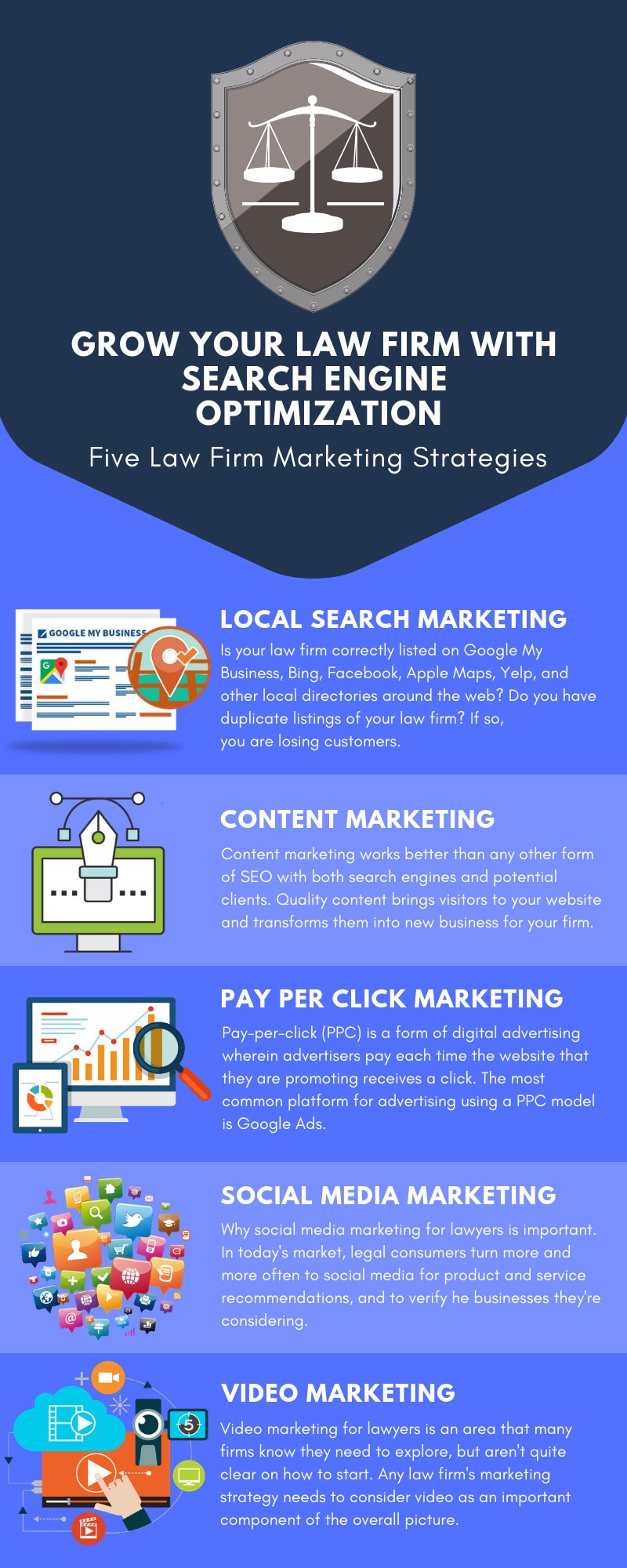
Content marketing serves as the cornerstone of successful search engine optimization for law firms, establishing your practice as a trusted authority while attracting qualified prospects. Unlike traditional advertising, strategic content marketing builds long-term relationships with potential clients by providing valuable information during their decision-making process. This approach not only improves search rankings but also positions your firm as the go-to resource for legal expertise in your practice areas.
Creating Comprehensive Legal Resource Centers
Building comprehensive resource centers transforms your website into the definitive destination for legal information in your practice areas. These centers should address every question potential clients might have, from initial concerns through case resolution. For example, a personal injury resource center might include accident reporting guides, insurance claim processes, medical treatment timelines, and settlement negotiation strategies.
Organize content hierarchically with main topic pages linking to detailed subtopics. A family law center could feature divorce proceedings as the main hub, with supporting content covering child custody arrangements, property division methods, and spousal support calculations. This structure helps search engines understand your expertise depth while providing users with logical information pathways.
Include downloadable resources like legal checklists, document templates, and step-by-step guides that capture visitor information for follow-up marketing. These lead magnets should offer genuine value while positioning your firm as helpful and knowledgeable. Track download metrics to identify which topics generate the most interest from potential clients.
Developing Case Study Content That Converts
Case studies demonstrate your firm’s capabilities through real-world success stories while addressing compliance requirements. Structure case studies to highlight the client’s initial situation, legal challenges faced, strategic approaches employed, and outcomes achieved. Use anonymized details that comply with confidentiality requirements while providing enough specificity to showcase your expertise.
Focus on cases that represent your ideal client profile and most profitable practice areas. A business litigation firm might feature a case involving contract disputes, highlighting how their strategic approach saved the client $500,000 in potential damages. Include specific tactics used, timeline details, and measurable results that potential clients can relate to their own situations.
Optimize case studies for search by targeting long-tail keywords like “commercial litigation success story” or “employment law case resolution.” Include relevant legal concepts and terminology that potential clients might search for when researching similar issues.
Video Content and Multimedia SEO
Video content significantly increases engagement rates and provides additional opportunities for search visibility through YouTube optimization. Create educational videos addressing common legal questions, explaining complex procedures, and introducing your team’s expertise. Videos typically generate 1200% more shares than text content and can improve page dwell time by up to 260%.
Develop a consistent video series format, such as “Legal Questions Answered” or “Know Your Rights,” that establishes your firm’s brand while targeting specific keywords. Each video should focus on one specific topic, with clear titles like “What to Do After a Car Accident in Texas” that include location and service keywords.
Optimize video content with detailed descriptions, relevant tags, and accurate transcripts that search engines can crawl. Upload videos to both your website and YouTube, creating multiple touchpoints for potential clients to discover your expertise. Include clear calls-to-action directing viewers to schedule consultations or download related resources.
Blog Strategy for Long-Term SEO Growth
A strategic blog approach targets informational keywords while nurturing potential clients through their research process. Plan content around the client journey, creating posts that address awareness-stage questions, consideration-stage comparisons, and decision-stage concerns. This comprehensive approach captures traffic at every stage of the legal services buying cycle.
Publish consistently with a content calendar that balances evergreen topics with timely legal developments. Evergreen content like “Understanding Your Rights in a Personal Injury Case” provides long-term SEO value, while timely posts about new legislation or court decisions can capture immediate search interest and demonstrate your firm’s current knowledge.
Track blog performance metrics including organic traffic growth, time on page, and conversion rates to consultation requests. Posts that generate high engagement often indicate topics worth expanding into comprehensive resource pages or video content series.
Pro Tip: Repurpose successful blog content into multiple formats—turn popular posts into videos, infographics, and social media series to maximize your content investment.
Local SEO Strategies for Law Firms
Local search optimization represents the most critical component of search engine optimization for law firms, as 76% of people who search for legal services on their smartphones visit a law firm within 24 hours. Local SEO ensures your firm appears prominently when potential clients search for legal services in your geographic area, directly connecting you with people who need immediate assistance and are ready to hire an attorney.
Google Business Profile Optimization
Your Google Business Profile serves as your firm’s digital storefront and significantly impacts local search rankings. Complete every section of your profile with accurate, detailed information including exact business address, phone number, website URL, and business hours. Use your primary keyword in the business description while maintaining natural language that appeals to potential clients.
Select the most specific business categories available, starting with your primary practice area like “Personal Injury Attorney” or “Family Law Attorney.” Add secondary categories that reflect your full service range, but prioritize accuracy over quantity. Google rewards businesses that accurately represent their services rather than those trying to game the system with irrelevant categories.
Upload high-quality photos regularly, including exterior and interior office shots, team photos, and images from community events. Businesses with photos receive 42% more requests for directions and 35% more click-throughs to their websites. Include photos that showcase professionalism while making your firm appear approachable and trustworthy.
Managing Online Reviews and Reputation
Positive reviews directly influence both search rankings and client decision-making, with 88% of consumers trusting online reviews as much as personal recommendations. Implement a systematic approach to requesting reviews from satisfied clients, making the process as simple as possible with direct links to your Google Business Profile. Send follow-up emails after successful case resolutions with personalized requests that emphasize how their feedback helps other people facing similar legal challenges.
Respond to all reviews professionally and promptly, thanking clients for positive feedback while addressing any concerns raised in negative reviews. Your responses demonstrate to potential clients how you handle communication and client service issues. Use responses as opportunities to highlight your firm’s values and commitment to client satisfaction.
Monitor your online reputation across multiple platforms including Google, Avvo, Martindale-Hubbell, and Yelp. Set up alerts for new reviews and mentions of your firm name to ensure timely responses. A single negative review that goes unaddressed can significantly impact your firm’s credibility and search performance.
Citation Building and NAP Consistency
Consistent Name, Address, and Phone (NAP) information across all online directories signals trustworthiness to search engines and improves local rankings. Audit your current citations to identify inconsistencies, such as abbreviated versus spelled-out street names, suite number variations, or different phone number formats. Even minor discrepancies can confuse search engines and dilute your local SEO effectiveness.
Build citations on high-authority legal directories like Avvo, Martindale-Hubbell, FindLaw, and Justia, as well as general business directories like Yelp, Better Business Bureau, and local chamber of commerce websites. Focus on quality over quantity, prioritizing directories that are relevant to your practice areas and geographic location.
Create location-specific pages for each office if your firm has multiple locations, with unique content that highlights local community involvement, specific local legal issues, and area-specific practice information. This approach helps you compete effectively in each market while avoiding duplicate content issues.
Community Engagement and Local Link Building
Active community involvement creates natural link-building opportunities while establishing your firm as a trusted local resource. Participate in local bar associations, chamber of commerce events, and community organizations that align with your firm’s values and target clientele. These activities often result in website mentions, event listings, and speaking opportunities that generate valuable local backlinks.
Sponsor local events, sports teams, or charitable organizations to gain visibility and earn links from event websites and local news coverage. Choose sponsorships that align with your practice areas—a family law firm might sponsor youth sports leagues, while a business attorney could support entrepreneur meetups or small business development programs.
Create partnerships with complementary local businesses like real estate agents, financial advisors, or medical professionals who can provide mutual referrals and link exchanges. These relationships should be genuine and provide value to both parties’ clients rather than existing solely for SEO purposes.
| Local SEO Strategy | Implementation Time | Difficulty Level | Impact on Rankings | Best Practices |
|---|---|---|---|---|
| Google Business Profile | 2-4 hours | Low | Very High | Complete all fields, regular updates |
| Review Management | Ongoing | Medium | High | Systematic request process |
| Citation Building | 8-12 hours | Medium | Medium | NAP consistency crucial |
| Local Link Building | 3-6 months | High | High | Focus on relationship building |
Measuring SEO Performance and ROI for Legal Practices
Effective measurement and analysis form the backbone of successful search engine optimization for law firms, enabling you to identify what’s working, optimize underperforming strategies, and demonstrate concrete return on investment to firm leadership. Legal SEO requires specialized tracking approaches that connect search performance to actual client acquisition and revenue generation, moving beyond vanity metrics to focus on business outcomes that matter.
Setting Up Comprehensive Analytics Tracking
Google Analytics 4 provides the foundation for tracking SEO performance, but legal practices require customized setup to capture meaningful conversion data. Configure goal tracking for key actions like consultation requests, phone calls, document downloads, and email subscriptions. Set up enhanced ecommerce tracking if you offer paid legal resources or consultations, allowing you to track the complete client journey from search to retention.
Implement call tracking numbers on your website to measure phone conversions generated by organic search traffic. Many potential legal clients prefer calling directly rather than filling out contact forms, making phone tracking essential for accurate ROI calculations. Use dynamic number insertion to assign unique phone numbers to different traffic sources while maintaining consistent NAP information for local SEO.
Connect Google Analytics with Google Search Console to gain insights into search query performance, click-through rates, and technical issues affecting your site’s search visibility. This integration reveals which keywords drive the most qualified traffic and identifies optimization opportunities for underperforming pages.
Key Performance Indicators for Legal SEO
Track metrics that directly correlate with business growth rather than focusing solely on traffic volume or keyword rankings. Monitor organic traffic growth to practice area pages, conversion rates from organic visitors to consultation requests, and the average case value of clients acquired through SEO efforts. These metrics provide clear connections between SEO investment and revenue generation.
Measure local search performance through Google Business Profile insights, tracking metrics like search views, website clicks, direction requests, and phone calls generated through local search results. Monitor your firm’s visibility in local pack results for target keywords, as these prominent placements typically generate the highest-quality leads.
Track content performance metrics including page views, time on page, and bounce rates for key resource pages and blog posts. High-performing content often indicates topics worth expanding or updating, while pages with high bounce rates may need content improvements or better user experience optimization.
Client Acquisition Cost Analysis
Calculate the true cost of acquiring clients through SEO by tracking both direct expenses and time investments required for optimization efforts. Include costs for SEO tools, content creation, technical improvements, and staff time dedicated to SEO activities. Divide total SEO investment by the number of new clients acquired through organic search to determine your client acquisition cost.
Compare SEO client acquisition costs with other marketing channels like pay-per-click advertising, referral programs, or traditional advertising methods. Most law firms find that SEO provides the lowest long-term client acquisition costs, though initial investments may be higher due to the time required to build search authority.
Track client lifetime value for clients acquired through different channels to understand the long-term ROI of your SEO efforts. Clients who find your firm through organic search often have higher trust levels and longer retention rates compared to those acquired through paid advertising, increasing their overall value to your practice.
Reporting and Optimization Strategies
Create monthly SEO reports that translate technical metrics into business insights for firm leadership and stakeholders. Include sections on organic traffic growth, keyword ranking improvements, local search performance, and most importantly, leads and clients generated through SEO efforts. Use visual charts and graphs to make data easily digestible for non-technical team members.
Establish baseline metrics before implementing SEO changes to accurately measure improvement over time. Document all optimization activities and their corresponding impact on performance metrics. This historical data helps identify which strategies provide the best ROI and should be prioritized in future optimization efforts.
Implement A/B testing for key pages like service landing pages and contact forms to continuously improve conversion rates. Test different headlines, call-to-action buttons, form lengths, and content layouts to optimize the client acquisition process. Small improvements in conversion rates can significantly impact overall SEO ROI.
Pro Tip: Set up automated monthly reports that highlight key metrics and flag any significant changes in performance, allowing you to quickly identify and address issues before they impact client acquisition.
The comprehensive measurement and analysis of your SEO efforts ensures that your search engine optimization for law firms delivers measurable business results while providing the data needed to make informed decisions about future optimization investments.
Common SEO Mistakes Law Firms Make
Even well-intentioned law firms often fall into predictable SEO traps that can significantly hinder their online visibility and client acquisition efforts. Understanding these common mistakes helps you avoid costly missteps and accelerate your search engine optimization results. Many firms invest considerable resources in SEO without seeing meaningful returns simply because they’re making fundamental errors that undermine their entire strategy.

Keyword Stuffing and Over-Optimization
Excessive keyword repetition creates an unnatural reading experience that both users and search engines penalize. Many law firms mistakenly believe that cramming their target keywords into every paragraph will improve rankings, but modern search algorithms are sophisticated enough to detect and penalize this practice. Instead of helping your rankings, keyword stuffing can trigger algorithmic penalties that push your pages down in search results.
Focus on natural language that serves your readers first. Use your primary keywords strategically in titles, headings, and naturally throughout your content, but prioritize readability and value. Search engines now understand context and semantic relationships, meaning they can recognize when you’re discussing personal injury law even without repeating “personal injury lawyer” in every sentence.
Neglecting Local SEO Fundamentals
Local search optimization represents the biggest missed opportunity for most law firms, despite being their most valuable traffic source. Many firms create beautiful websites with strong content but fail to claim their Google Business Profile, inconsistently list their NAP (Name, Address, Phone) information across directories, or ignore local citation building. This oversight is particularly costly because legal services are inherently local, and potential clients typically search for attorneys in their specific geographic area.
Ensure your Google Business Profile is completely optimized with accurate hours, services, photos, and regular posts. Maintain consistent business information across all online directories, and actively seek reviews from satisfied clients. Local SEO often provides faster results than broader organic SEO efforts and typically converts at higher rates because searchers have immediate geographic relevance.
Poor Content Strategy and Thin Pages
Creating shallow, generic content that doesn’t demonstrate expertise fails to satisfy both search engines and potential clients. Many law firm websites feature brief service pages with minimal information, generic blog posts that could apply to any firm, or outdated content that doesn’t reflect current legal standards. This approach wastes valuable opportunities to showcase knowledge and build trust with both search engines and prospective clients.
Develop comprehensive, authoritative content that addresses specific client concerns and demonstrates your expertise. Each practice area page should thoroughly explain your services, typical case processes, potential outcomes, and frequently asked questions. Blog content should tackle real legal issues your clients face, providing valuable insights that establish your firm as a trusted resource.
Ignoring Technical SEO Issues
Technical problems can completely undermine even the best content and marketing efforts. Common technical issues include slow loading speeds, mobile responsiveness problems, broken links, duplicate content, and missing schema markup. These problems frustrate users and prevent search engines from properly crawling and indexing your content, regardless of its quality.
Regular technical audits help identify and resolve issues before they impact your rankings. Monitor your site’s Core Web Vitals, fix broken links promptly, and ensure your website provides an excellent experience across all devices. Technical SEO forms the foundation that supports all other optimization efforts.
Measuring and Tracking SEO Success
Understanding and monitoring your search engine optimization performance requires a comprehensive approach that goes beyond simple ranking reports. Effective measurement helps you identify what’s working, what needs improvement, and how your SEO efforts translate into actual business growth. Without proper tracking, you’re essentially operating blind, unable to optimize your strategy or demonstrate ROI to stakeholders.
Essential SEO Metrics for Law Firms
Organic traffic growth provides the foundational metric for measuring SEO success, but it must be analyzed alongside quality indicators. Track not just total organic visitors but also traffic to specific practice area pages, geographic distribution of visitors, and traffic trends over time. Look for consistent month-over-month growth rather than focusing solely on short-term fluctuations, as SEO results typically compound over time.
Keyword ranking improvements offer insights into your competitive position, but focus on rankings for terms that actually drive business value. Track rankings for your most important practice areas combined with location modifiers, as these typically represent your highest-converting search terms. Monitor both broad and long-tail keyword performance to understand how your content strategy is performing across different search intents.
Conversion Tracking and Attribution
Measuring how organic traffic converts into actual consultations and clients represents the ultimate test of SEO effectiveness. Set up goal tracking in Google Analytics to monitor form submissions, phone calls, and other conversion actions. Use call tracking numbers on your website to attribute phone calls to organic search traffic, as many potential legal clients prefer calling rather than filling out contact forms.
Track the entire client journey from initial search to final engagement, understanding which keywords and pages contribute most effectively to conversions. This data helps you optimize your highest-performing content and identify opportunities to improve underperforming pages. Consider implementing advanced attribution models that account for multiple touchpoints, as potential clients often research extensively before making contact.
ROI Measurement and Business Impact
Calculating return on investment requires connecting SEO metrics to actual revenue generation and client lifetime value. Track not just the number of leads generated through organic search but also their quality, conversion rates, and ultimate value to your firm. High-quality SEO should attract leads that convert at higher rates and generate more valuable cases than other marketing channels.
Monitor metrics like cost per acquisition through SEO compared to paid advertising, average case value from organic leads, and client retention rates. This comprehensive view helps justify SEO investments and guides budget allocation decisions. Document case studies of significant organic traffic increases and their corresponding business impact to demonstrate SEO’s value to firm leadership.
Competitive Analysis and Market Share
Regular competitive analysis reveals market opportunities and helps benchmark your performance against other firms in your area. Monitor competitors’ keyword rankings, content strategies, and local search visibility to identify gaps in your own approach. Track your share of voice for important legal keywords in your market, understanding how your visibility compares to other firms competing for the same clients.
Use competitive insights to inform your content strategy, identify new keyword opportunities, and understand industry trends. Pay attention to new competitors entering your market and established firms expanding their digital presence, as these changes can impact your own search visibility and require strategic adjustments.
| Metric Category | Key Performance Indicators | Tracking Frequency | Business Impact |
|---|---|---|---|
| Traffic Metrics | Organic sessions, page views, bounce rate | Weekly | Medium |
| Ranking Performance | Keyword positions, visibility score | Monthly | Medium |
| Conversion Metrics | Form submissions, phone calls, consultations | Daily | Very High |
| Business Results | New client acquisitions, case value, ROI | Monthly | Very High |
Advanced SEO Strategies for Competitive Advantage
As the legal industry becomes increasingly competitive online, basic SEO tactics are no longer sufficient to achieve and maintain top rankings. Advanced strategies help established firms maintain their competitive edge while enabling newer practices to compete effectively against larger, more established competitors. These sophisticated approaches require deeper technical knowledge and strategic thinking but can deliver exceptional results when implemented correctly.
Schema Markup and Structured Data
Implementing comprehensive schema markup helps search engines understand your content context and can significantly improve your search result appearances. Legal schema markup includes specific markup types for legal services, attorney profiles, reviews, and local business information. This structured data enables rich snippets, knowledge panels, and other enhanced search features that make your listings more prominent and informative.
Focus on implementing LocalBusiness schema for your firm’s location information, Attorney schema for individual lawyer profiles, and Service schema for your practice areas. Include detailed information about your services, credentials, and contact information in structured formats that search engines can easily process. Proper schema implementation often results in higher click-through rates even when rankings remain constant.
Advanced Link Building Techniques
Strategic link building for law firms requires a sophisticated approach that goes beyond basic directory submissions and guest posting. Focus on earning links from authoritative legal publications, bar associations, legal directories, and industry organizations. Develop relationships with legal journalists, contribute expert commentary on current legal issues, and participate in professional speaking engagements that generate natural backlink opportunities.
Create linkable assets such as comprehensive legal guides, industry reports, or interactive tools that other websites naturally want to reference. Monitor your competitors’ backlink profiles to identify high-quality linking opportunities and relationship-building prospects. Quality always trumps quantity in legal link building, as a few authoritative links from respected legal sources provide more value than numerous low-quality directory listings.
Content Clusters and Topic Authority
Building topical authority through comprehensive content clusters demonstrates expertise and improves rankings across related keyword groups. Develop pillar pages that thoroughly cover major practice areas, supported by cluster content that addresses specific aspects, questions, and related topics. This approach helps search engines understand your expertise depth and provides comprehensive resources for potential clients.
Each content cluster should include the main service page, specific case type pages, process explanations, frequently asked questions, and supporting blog content. Internal linking between cluster pages strengthens the topical relevance signals and helps distribute page authority throughout your site. This strategy is particularly effective for competitive legal keywords where comprehensive coverage can differentiate your firm from competitors with thinner content.
Voice Search Optimization
Optimizing for voice search requires understanding how people verbally phrase legal questions and adapting your content accordingly. Voice searches tend to be longer, more conversational, and often phrased as complete questions. Create content that directly answers common legal questions using natural language patterns that match how people speak rather than type.
Focus on local voice search optimization since many legal queries include location elements like “divorce lawyer near me” or “personal injury attorney in [city].” Ensure your Google Business Profile is fully optimized and your website includes conversational FAQ sections that address common voice search queries. Voice search optimization often improves your overall content quality and user experience even for traditional text searches.
AI and Machine Learning Applications
Leveraging artificial intelligence tools can enhance your SEO research, content creation, and performance analysis capabilities. Use AI-powered tools for keyword research, content optimization suggestions, and competitive analysis. However, maintain human oversight and expertise, particularly for legal content that requires accuracy and compliance with professional standards.
AI can help identify content gaps, suggest topic clusters, and optimize existing content for better search performance. Use machine learning tools to analyze user behavior patterns, predict trending topics, and personalize content experiences. Remember that AI should augment rather than replace human expertise, especially in legal content where accuracy and professional judgment are paramount.
FAQ
Q: How long does it take to see results from search engine optimization for law firms?
Most law firms begin seeing initial SEO improvements within 3-6 months, with significant results typically appearing after 6-12 months of consistent effort. The timeline depends on your current website status, competition level, and implementation consistency. Local SEO improvements often appear faster than broader organic ranking improvements.
Q: What’s the average cost of professional SEO services for law firms?
Professional SEO services for law firms typically range from $2,000-$10,000 monthly, depending on market competition, firm size, and service scope. Smaller firms in less competitive markets may invest $2,000-$4,000 monthly, while large firms in major metropolitan areas often invest $5,000-$10,000 or more for comprehensive SEO strategies.
Q: How do I choose between SEO and paid advertising for my law firm?
SEO provides long-term, sustainable results with lower ongoing costs but requires patience and consistent investment. Paid advertising delivers immediate visibility but requires continuous spending. Most successful firms use both strategies, starting with paid ads for immediate leads while building SEO for long-term growth.
Q: Can I do SEO for my law firm myself, or do I need professional help?
Basic SEO tasks like claiming your Google Business Profile and optimizing page titles can be done in-house. However, comprehensive SEO requires technical expertise, content strategy, and ongoing optimization that most attorneys lack time to manage effectively. Professional SEO services typically deliver better results and ROI.
Q: What are the most important ranking factors for law firm websites?
The most critical ranking factors include local relevance, content quality and expertise, website technical performance, and authoritative backlinks. Google particularly values E-A-T (Expertise, Authoritativeness, Trustworthiness) for legal websites, making professional credentials and quality content essential for rankings.
Q: How do attorney advertising rules affect SEO strategies?
Attorney advertising regulations vary by state but generally require truthful, non-misleading content and may restrict certain claims about results or success rates. Ensure your SEO content complies with local bar rules, avoid guaranteeing specific outcomes, and include appropriate disclaimers where required.
Q: Which practice areas are most competitive for SEO?
Personal injury, DUI/DWI, and bankruptcy law represent the most competitive practice areas for SEO, with highly valuable keywords and established competition. Corporate law, estate planning, and specialized niches often face less SEO competition but may have lower search volumes.
Q: How do I measure the ROI of my law firm’s SEO investment?
Track organic traffic growth, keyword ranking improvements, lead generation from organic search, and ultimately new client acquisitions attributed to SEO. Calculate cost per acquisition through SEO compared to other marketing channels, and monitor average case values from organic leads to determine true ROI.
Q: What’s the difference between local SEO and general SEO for law firms?
Local SEO focuses on geographic relevance, including Google Business Profile optimization, local citations, and location-based keywords. General SEO covers broader topics and may target national audiences. Most law firms benefit more from local SEO since legal services are typically location-dependent.
Q: How often should I update my law firm’s website content for SEO?
Regular content updates signal freshness to search engines and provide value to potential clients. Aim to publish new blog content weekly or bi-weekly, update practice area pages quarterly, and refresh attorney biographies annually. Consistent content creation typically produces better SEO results than sporadic large updates.
Q: What are the biggest SEO mistakes that can hurt my law firm’s rankings?
Common SEO mistakes include keyword stuffing, neglecting mobile optimization, ignoring local SEO fundamentals, creating thin or duplicate content, and building low-quality backlinks. Technical issues like slow loading speeds and broken links can also significantly impact rankings and user experience.
Q: How does voice search impact SEO for law firms?
Voice search queries tend to be longer and more conversational, often phrased as complete questions. Optimize for voice search by creating FAQ content that answers common legal questions naturally, focusing on local search phrases, and ensuring your Google Business Profile is comprehensive and accurate.
Conclusion
Search engine optimization for law firms has evolved from a nice-to-have marketing tactic into an essential business strategy that directly impacts client acquisition and firm growth. The legal industry’s digital transformation means that potential clients now expect to find, research, and evaluate attorneys online before making contact. Firms that master SEO fundamentals while implementing advanced strategies position themselves to capture this growing digital market and build sustainable competitive advantages.
The key insights from this comprehensive guide reveal that successful legal SEO requires a multifaceted approach:
- Technical excellence provides the foundation – without proper site architecture, mobile optimization, and security measures, even the best content strategy will underperform
- Local SEO delivers the highest ROI – most legal services are location-dependent, making local search optimization your most valuable investment
- Content authority builds long-term success – comprehensive, expert-level content that addresses real client needs establishes trust with both search engines and potential clients
- Consistent measurement drives continuous improvement – tracking the right metrics helps you optimize strategies and demonstrate clear business impact
The future of legal SEO will likely involve increased emphasis on artificial intelligence, voice search optimization, and enhanced user experience signals. Firms that stay ahead of these trends while maintaining focus on fundamental SEO principles will continue to outperform competitors who rely solely on traditional marketing methods.
Partner with Case Quota for Success
Implementing comprehensive search engine optimization for law firms requires expertise across technical SEO, content strategy, local optimization, and ongoing performance analysis. Many firms struggle with the complexity of keyword research, the technical demands of website optimization, and the time-intensive nature of content creation and link building. Case Quota specializes in helping law firms navigate these challenges by providing end-to-end SEO services specifically designed for legal practices.
Our team handles everything from technical website audits and mobile optimization to comprehensive content strategy development and local SEO management. We understand the unique regulatory requirements facing law firms and create compliant SEO strategies that build authority while attracting qualified leads. Whether you’re struggling with competitive keyword rankings, need help with Google Business Profile optimization, or want to develop content clusters that demonstrate your legal expertise, Case Quota provides the specialized knowledge and consistent execution that drives measurable results. Visit https://casequota.com to discover how our proven SEO strategies can transform your firm’s online visibility and client acquisition efforts.