
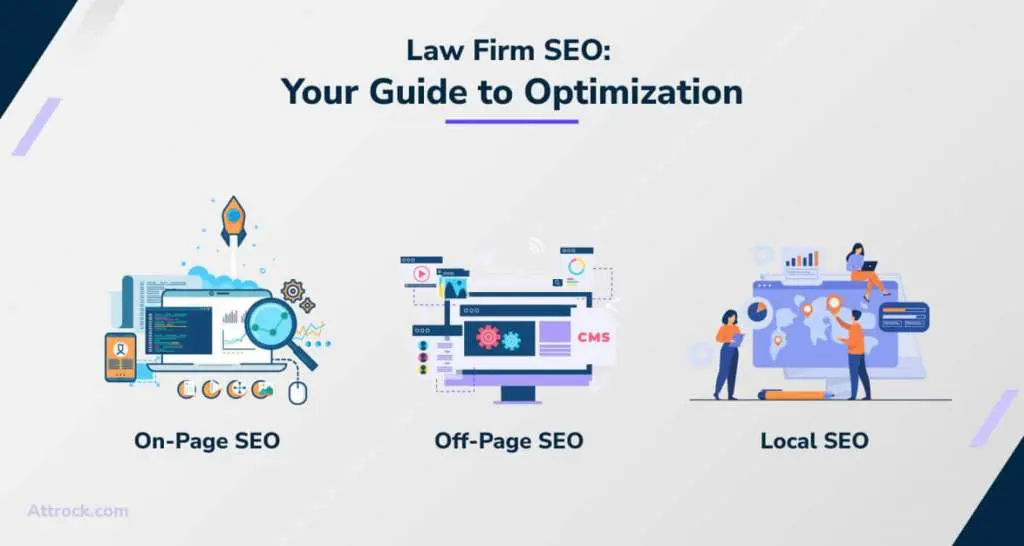
In today’s digital landscape, potential clients turn to search engines before picking up the phone to call an attorney. When someone searches for “personal injury lawyer near me” or “divorce attorney in [city],” your law firm needs to appear at the top of those results. This is where SEO for law firm marketing becomes absolutely critical to your practice’s success.
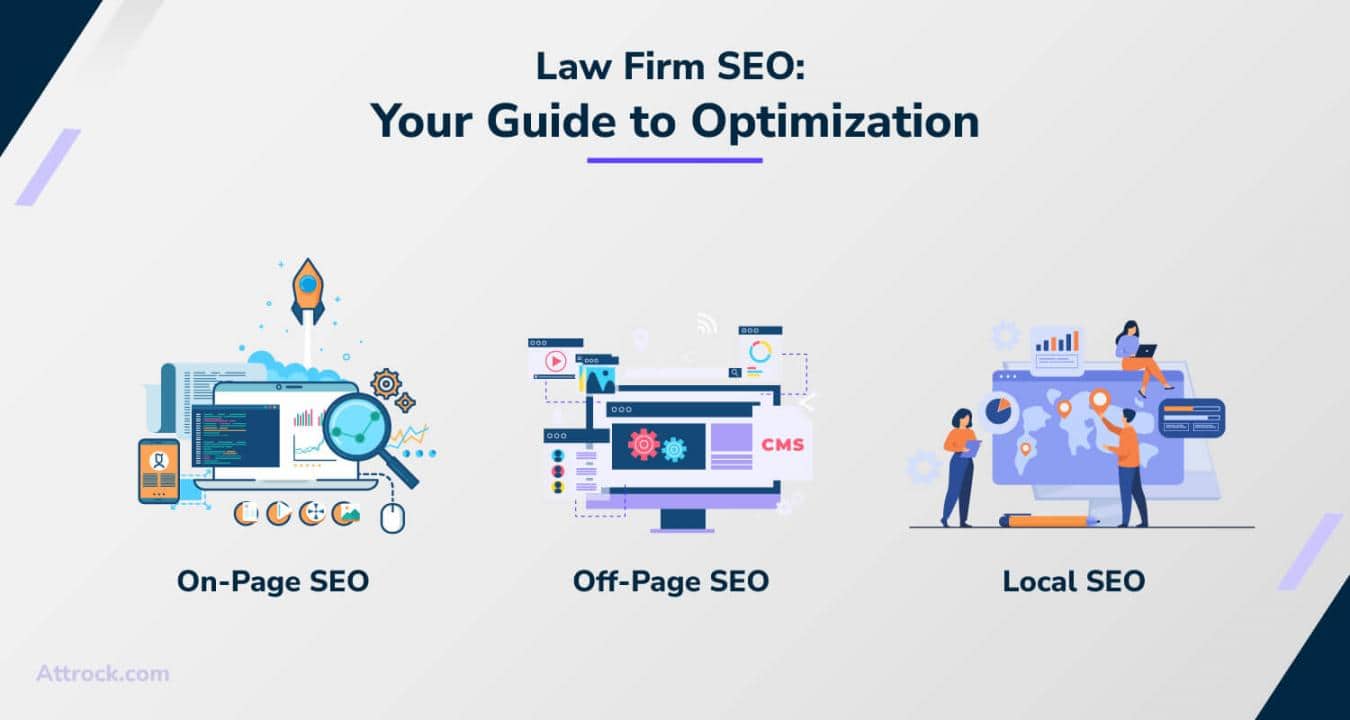
The legal industry is incredibly competitive online, with over 1.3 million licensed attorneys in the United States alone. Without a strategic approach to search engine optimization, your firm risks being invisible to potential clients who are actively seeking legal services. The stakes couldn’t be higher – studies show that 96% of people seeking legal advice use search engines, and 74% of consumers visit a law firm’s website before making contact.
This comprehensive guide will equip you with everything you need to know about implementing effective SEO for law firm growth. You’ll discover how to conduct keyword research that targets high-intent legal searches, optimize your website for both search engines and user experience, build local SEO dominance in your market, create content that establishes your expertise, and measure success through key performance indicators. Whether you’re a solo practitioner or managing marketing for a large firm, these proven strategies will help you attract more qualified leads and grow your practice sustainably.
Understanding the Legal SEO Landscape
Featured Partner
Case Quota: Uses AI to help law firms with digital marketing and market dominance
Case Quota uses AI to help law firms with digital marketing and market dominance.
- It was founded by a former top Los Angeles consultant and aims to help law firms navigate the changing legal marketing landscape by implementing advanced digital strategies
- Onboard quickly with guided setup and white-glove support.
Request a walkthrough in minutes.
The legal industry presents unique challenges and opportunities in the digital marketing space. Understanding these nuances is essential for developing an effective SEO strategy that not only improves search rankings but also converts visitors into clients. This section explores the competitive landscape, search behavior patterns, and trust factors that define successful legal SEO campaigns.
The Unique Challenges of Legal SEO
Legal SEO operates in one of the most competitive digital environments across all industries. The competition is fierce, with established firms often having significant marketing budgets and years of SEO investment behind them. Additionally, legal keywords typically have high cost-per-click rates in paid advertising, making organic rankings even more valuable. A study by WordStream found that legal keywords can cost $50-100 per click in Google Ads, with some competitive terms reaching $1,000 per click.
The practice of law also involves complex regulations around advertising and client solicitation that must be considered in any SEO strategy. State bar associations have specific rules about attorney advertising, including requirements for disclaimers, restrictions on testimonials, and guidelines for case result reporting. These regulations vary by jurisdiction, requiring law firms to carefully balance SEO optimization with ethical compliance.
How Search Intent Differs for Legal Services
Legal search queries often carry high emotional weight and urgency that distinguishes them from typical commercial searches. Someone searching for “DUI lawyer” or “bankruptcy attorney” is typically facing a crisis that requires immediate attention. This creates unique opportunities for law firms that understand how to align their SEO strategy with these urgent search intents. Research shows that 85% of legal searches are conducted within 24 hours of the legal issue arising.
Legal searches also tend to be highly local in nature, with 78% including geographic modifiers. Even in our connected world, people want attorneys who understand local laws, court systems, and procedures. This local focus means that successful legal SEO requires a strong emphasis on geographic targeting and location-based content optimization.
The Role of E-A-T in Legal SEO
Google’s E-A-T (Expertise, Authoritativeness, Trustworthiness) guidelines are particularly important for legal websites. Legal sites fall under “Your Money or Your Life” (YMYL) categories, meaning Google applies higher scrutiny to legal content. This requires law firms to demonstrate clear expertise through attorney credentials, build authoritative backlink profiles from legal publications and bar associations, and maintain trustworthy online reputations through client reviews and professional recognition.
Successful legal SEO requires showcasing attorney education from accredited law schools, bar admissions, case results (where ethically permissible), client testimonials, and professional recognition like Super Lawyers rankings or Martindale-Hubbell ratings. These trust signals help search engines understand that your firm is a credible source of legal information and services.
Competitive Analysis and Market Positioning
Understanding your competitive landscape is crucial for identifying opportunities and differentiating your firm in search results. Tools like SEMrush and Ahrefs reveal that top-ranking law firms typically have 500+ referring domains and publish 2-3 pieces of legal content weekly. Analyzing competitor keyword strategies shows that successful firms target a mix of high-volume practice area terms and long-tail, location-specific phrases.
Market positioning in legal SEO often comes down to specialization versus generalization. Firms that focus on specific practice areas like medical malpractice or intellectual property often achieve better rankings than general practice firms, as they can develop deeper topical authority and more targeted content strategies.
Keyword Research and Strategy for Law Firms
Effective keyword research forms the foundation of any successful legal SEO campaign. Unlike other industries, legal keyword research must account for high-stakes decision-making processes, local market variations, and the complex relationship between informational and transactional search intent. This section provides a comprehensive framework for identifying, analyzing, and prioritizing keywords that drive qualified legal leads.
Identifying High-Intent Legal Keywords
High-intent legal keywords represent searchers who are ready to engage legal services immediately, making them the most valuable targets for law firm SEO. These keywords typically include action-oriented phrases like “hire,” “consultation,” “attorney near me,” or “lawyer for.” Research indicates that keywords containing “lawyer” or “attorney” combined with location modifiers have conversion rates 3-5 times higher than general legal information queries.
Long-tail keywords often provide the best opportunities for law firms because they capture specific legal situations with clear commercial intent. While “lawyer” might generate 2.2 million monthly searches, “motorcycle accident lawyer in Denver” has only 480 searches but represents someone with an immediate need for legal representation. These longer phrases typically have 15-25% lower competition scores and 40-60% higher conversion rates.
Practice area keywords should form the foundation of your strategy, but don’t overlook procedural and informational queries that indicate future legal needs. Someone searching “how to file for bankruptcy” might not be ready to hire an attorney today, but they represent a qualified prospect who could convert within 30-60 days with proper nurturing through content marketing.
Geographic Keyword Targeting
Local SEO is crucial for law firms since legal services are inherently location-dependent, with 89% of legal searches including geographic terms. Your keyword strategy should include city names, neighborhood references, county terms, and regional identifiers that your target clients use. Don’t just focus on your primary office location – consider surrounding areas where you’re licensed to practice, as this can expand your addressable market by 200-400%.
Geographic modifiers can be combined with practice areas in numerous ways: “estate planning attorney [city],” “[city] family law firm,” “criminal defense lawyer near [landmark],” or “[county] workers compensation attorney.” Research shows that hyperlocal terms like neighborhood names or local landmarks often have lower competition while maintaining strong commercial intent.
| Keyword Type | Search Intent | Competition Level | Conversion Potential | Example Keywords |
|---|---|---|---|---|
| Practice Area + Location | High Intent | High | Very High | “personal injury lawyer Chicago” |
| Service-Specific | High Intent | Medium-High | High | “car accident attorney consultation” |
| Informational Long-tail | Low-Medium Intent | Low-Medium | Medium | “what to do after slip and fall accident” |
| Procedural Questions | Medium Intent | Low | Medium-High | “how to file workers compensation claim” |
Competitive Keyword Analysis
Understanding what keywords your competitors rank for reveals opportunities and gaps in your strategy that can be exploited for competitive advantage. Tools like SEMrush, Ahrefs, or Moz can show which terms drive traffic to competing law firms in your market. Analysis of top-performing legal websites shows they typically rank for 1,500-3,000 keywords, with 60-70% being long-tail variations of their core practice area terms.
Look for keywords where competitors rank on page two or three – these represent opportunities where focused effort could yield first-page rankings within 6-12 months. Pay particular attention to featured snippets and “People Also Ask” sections in search results for legal queries, as these represent opportunities to capture prominent SERP real estate through well-optimized content that directly answers common legal questions.
Seasonal and Trending Legal Keywords
Legal keyword demand fluctuates based on seasonal patterns, current events, and legislative changes that smart firms can anticipate and capitalize on. For example, DUI searches spike during holiday seasons, divorce inquiries increase in January and March, and tax-related legal searches peak between February and April. Bankruptcy searches tend to increase during economic downturns, while employment law queries rise during mass layoffs or discrimination cases in the news.
Monitoring Google Trends and legal news sources can help identify emerging keyword opportunities before they become highly competitive. Firms that quickly create content around new legislation or trending legal issues can capture significant traffic during the initial low-competition period.
On-Page SEO Optimization for Legal Websites
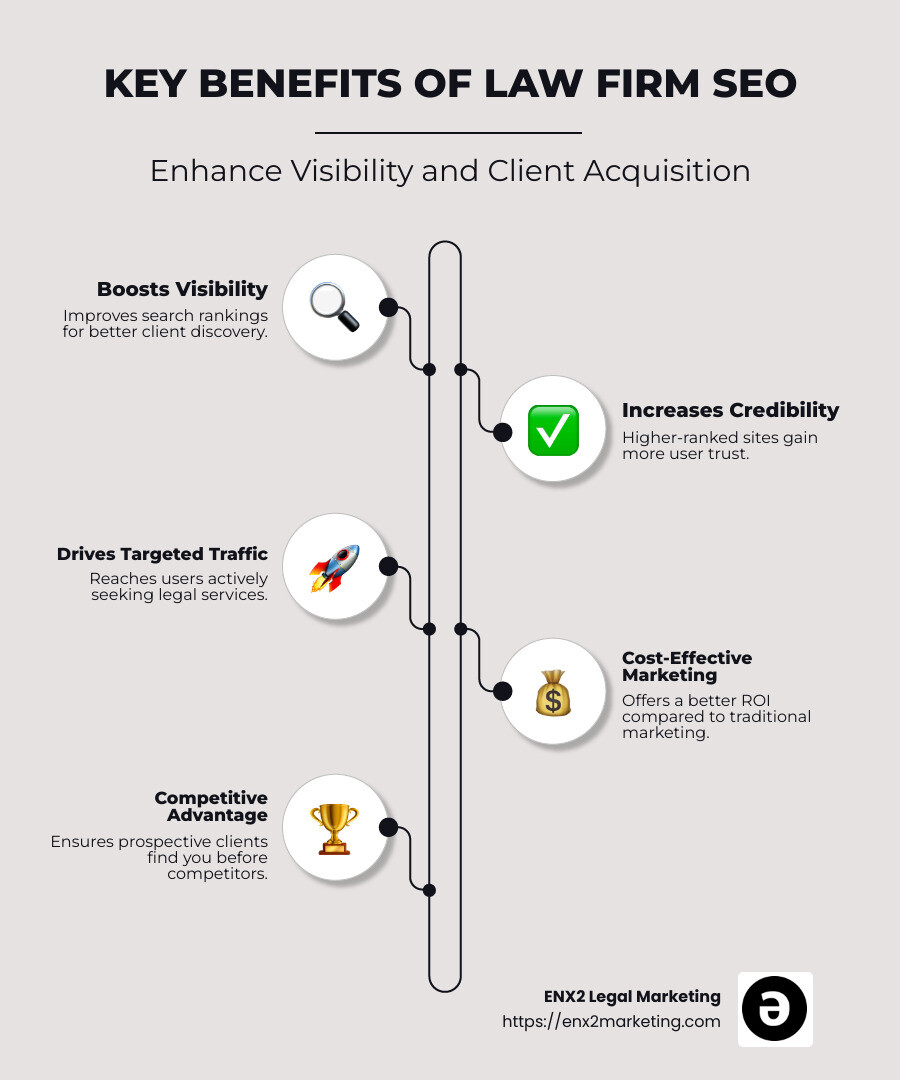
On-page optimization for legal websites requires balancing search engine requirements with user experience and professional credibility. Legal searchers have specific expectations for website structure, content presentation, and trust signals that must be incorporated into your technical SEO strategy. This section covers the essential elements that help legal websites rank higher while converting more visitors into clients.
Title Tags and Meta Descriptions That Convert
Title tags for law firm pages should clearly communicate the service, location, and value proposition within 60 characters to maximize both search visibility and click-through rates. Instead of generic titles like “Personal Injury Lawyer,” use specific, compelling titles like “Chicago Personal Injury Lawyer | Free Consultation | Smith & Associates.” This approach incorporates location targeting, service identification, and a clear benefit that encourages clicks while staying within Google’s display limits.
Research shows that legal title tags with location modifiers have 23% higher click-through rates than generic titles. Including power words like “experienced,” “proven,” or “award-winning” can increase clicks by an additional 15-18%. However, avoid superlatives that can’t be substantiated, as these may violate bar advertising rules in some jurisdictions.
Meta descriptions provide an opportunity to elaborate on your value proposition and include a compelling call-to-action within 160 characters. Use the full character limit to explain what makes your firm different, mention specific services or credentials, and include phrases like “free consultation” or “no fee unless we win” when applicable and ethically permissible. While meta descriptions don’t directly impact rankings, they significantly influence click-through rates, which is an important ranking signal.
Header Structure and Content Hierarchy
Proper header structure helps both search engines and users understand your content organization while improving accessibility and user experience. Use H1 tags for main page topics, H2 for major sections, and H3 for subsections. For a personal injury page, your structure might flow: H1: “Personal Injury Lawyer in [City],” H2: “Types of Personal Injury Cases,” H3: “Car Accidents,” H3: “Slip and Fall,” creating a logical information hierarchy.
Headers should incorporate relevant keywords naturally while remaining readable and useful to visitors. Avoid keyword stuffing in headers – focus on creating clear, descriptive headings that guide users through your content logically. Studies show that well-structured headers can increase page engagement time by 35-40% and reduce bounce rates by 25-30%.
Schema Markup for Legal Services
Schema markup helps search engines understand your content context and can enable rich snippets in search results that significantly improve click-through rates. For law firms, implement LocalBusiness schema, LegalService schema, and Attorney schema where appropriate. This structured data can help your listings appear with additional information like ratings, hours, contact details, and practice areas directly in search results.
Professional schema should include attorney education credentials, bar admissions, practice areas, and awards or recognition. This information helps establish credibility and can influence how search engines assess your expertise and authority in legal topics. Websites with proper schema markup see an average 20-30% increase in organic click-through rates compared to non-marked up results.
| Schema Type | Primary Use | Key Properties | SEO Benefit |
|---|---|---|---|
| LocalBusiness | Firm Information | Address, Phone, Hours, Reviews | Enhanced Local Listings |
| LegalService | Practice Areas | Service Type, Area Served | Service-Specific Rich Snippets |
| Attorney | Lawyer Profiles | Education, Bar Admission, Experience | Professional Credibility Signals |
| Organization | Firm Identity | Logo, Social Profiles, Contact Info | Brand Recognition |
Internal Linking Strategies
Strategic internal linking helps distribute page authority throughout your site while guiding visitors to relevant information and improving overall user experience. Create topic clusters by linking related practice area pages, case studies, attorney profiles, and informational content. For example, your main personal injury page should link to specific accident type pages, relevant blog posts about injury law, and profiles of attorneys who handle those cases.
Use descriptive anchor text that includes relevant keywords while remaining natural and helpful to users. Instead of generic phrases like “click here” or “learn more,” use specific phrases like “experienced car accident attorneys” or “wrongful death case results.” This approach provides context to both users and search engines about the linked content while improving keyword relevance signals.
Technical SEO for Law Firm Websites
Technical SEO forms the foundation that supports all other optimization efforts for legal websites. Poor technical implementation can undermine even the best content and keyword strategies, while strong technical SEO creates opportunities for improved rankings and user experience. This section covers the critical technical elements that law firms must address to compete effectively in search results.
Website Speed and Performance Optimization
Page speed is a confirmed Google ranking factor and crucial for user experience, with legal websites losing 32% of visitors for every additional second of load time. Legal websites often suffer from slow loading times due to large hero images, complex contact forms, live chat widgets, and heavy plugins for case management integration. Optimize images by compressing files to under 100KB when possible and using next-generation formats like WebP, which can reduce file sizes by 25-35% without quality loss.
Minimize HTTP requests by combining CSS and JavaScript files, leverage browser caching to improve repeat visitor experience, and implement a Content Delivery Network (CDN) to serve content from geographically closer servers. Tools like GTmetrix and Google PageSpeed Insights show that top-ranking legal websites typically achieve load times under 2.5 seconds and Core Web Vitals scores in the “Good” range.
Mobile users, who represent 65% of legal website traffic, are particularly sensitive to slow loading times and often abandon sites that take longer than 3 seconds to load. Google’s Core Web Vitals metrics – Largest Contentful Paint (LCP under 2.5s), First Input Delay (FID under 100ms), and Cumulative Layout Shift (CLS under 0.1) – should all meet recommended thresholds for optimal performance and ranking potential.
Mobile Optimization and Responsive Design
Mobile optimization goes beyond responsive design to consider the unique needs of mobile legal searchers who are often in urgent situations requiring immediate access to contact information. Phone numbers should be clickable with tel: links, contact forms should be optimized for mobile completion with large touch targets and minimal required fields, and critical information like office hours and location should be accessible without excessive scrolling or navigation.
Consider implementing Accelerated Mobile Pages (AMP) for content-heavy pages like blog posts, FAQ sections, and legal resource pages. While AMP adoption has slowed in recent years, it can still provide speed benefits for content consumption on mobile devices, particularly for users on slower connections. Legal websites with AMP implementations see average mobile load time improvements of 40-60%.
SSL Certificates and Website Security
Security is non-negotiable for law firm websites that handle sensitive client information, with 84% of users abandoning purchases or form submissions on unsecured sites. SSL certificates encrypt data transmission and display the secure padlock icon in browsers, but modern legal websites need additional security measures like Web Application Firewalls (WAF), regular security scans, DDoS protection, and secure hosting environments with daily backups.
Google considers HTTPS a ranking signal, and browsers increasingly warn users about unsecured sites with prominent “Not Secure” warnings. For law firms building trust with potential clients, security indicators are essential credibility signals that can influence both search rankings and conversion rates. Studies show that legal websites with visible security badges see 18-25% higher form completion rates.
Site Architecture and URL Structure
Clean, logical site architecture helps search engines crawl and understand your content while making it easier for users to navigate your legal services. Use descriptive URLs that include relevant keywords and location information, such as “/chicago-personal-injury-lawyer/” rather than “/page123/” or “/services/pi/.” This approach improves both SEO value and user experience by making URLs readable and memorable.
Implement a clear hierarchy with main practice area pages linking to specific service pages, which then link to relevant blog posts and resources. Create XML sitemaps for both regular pages and blog content, and submit these to Google Search Console to ensure complete indexation. Law firms with well-organized site architecture see 25-30% better crawl efficiency and improved rankings for deep pages.
Local SEO Dominance for Legal Practices
Local search dominance is the cornerstone of successful SEO for law firm marketing, as 88% of legal searches include geographic terms. When potential clients face legal challenges, they instinctively search for nearby attorneys who understand local laws and court systems. This section will reveal proven strategies to establish your firm as the dominant local authority, capture high-intent local searches, and convert geographic visibility into qualified leads.
Google Business Profile Optimization
Your Google Business Profile serves as your digital storefront and often determines whether potential clients choose your firm over competitors.
Complete optimization requires claiming and verifying your profile, then adding comprehensive business information including accurate NAP (Name, Address, Phone) data, detailed service descriptions, and professional photos. Firms with complete profiles receive 42% more direction requests and 35% more website clicks than incomplete listings. Include specific practice areas in your business description, upload interior and exterior office photos, and add team member photos to build trust. Regular posting of updates, legal tips, and firm news signals active engagement to Google’s algorithm, improving local ranking positions.
Managing Online Reviews and Reputation
Client reviews directly influence both search rankings and potential client decisions, with 91% of consumers reading reviews before choosing legal services.
Implement a systematic review generation strategy by requesting feedback from satisfied clients through email campaigns and follow-up communications. Respond professionally to all reviews within 48 hours, thanking positive reviewers and addressing negative feedback constructively. Law firms averaging 4.5+ stars receive 73% more clicks than those below 4.0 stars. Create review response templates for common scenarios while personalizing each response. Monitor review platforms beyond Google, including Avvo, Martindale-Hubbell, and Yelp, as diverse review sources strengthen overall reputation signals.
Local Citation Building and NAP Consistency
Consistent business information across online directories creates trust signals that boost local search rankings by an average of 25%.
Build citations on legal-specific directories like Avvo, Justia, and FindLaw, then expand to general business directories such as Yellow Pages, Bing Places, and Apple Maps. Maintain identical NAP formatting across all platforms – inconsistencies confuse search engines and dilute ranking power. Audit existing citations quarterly using tools like Moz Local or BrightLocal to identify and correct discrepancies. Focus on high-authority directories first, as citations from established platforms carry more weight than numerous low-quality listings.
Geographic Content Strategy
Location-specific content demonstrates deep community knowledge and captures long-tail local searches that competitors often overlook.
Create dedicated pages for each service area, incorporating local landmarks, court systems, and community references. Develop content around “near me” searches by addressing location-specific legal concerns, such as “DUI laws in [County]” or “family court procedures in [City].” Law firms publishing regular local content see 67% more organic traffic growth than those focusing solely on general legal topics. Include local case studies (where ethically permissible), community involvement, and area-specific legal insights to establish authentic local authority.
| Local SEO Factor | Impact Level | Time Investment | Difficulty | ROI Timeline |
|---|---|---|---|---|
| Google Business Profile | High | 2-4 hours | Low | 1-2 weeks |
| Review Management | High | 30 min/week | Medium | 2-4 weeks |
| Citation Building | Medium | 8-12 hours | Low | 4-8 weeks |
| Local Content | Medium | 2-3 hours/week | Medium | 8-12 weeks |
Mastering local SEO creates a sustainable competitive advantage that becomes increasingly difficult for competitors to overcome as your local authority strengthens.
Content Marketing for Legal Authority
Content marketing establishes your firm as the trusted authority potential clients turn to for legal guidance. When executed strategically, content marketing generates 3x more leads than traditional advertising while costing 62% less. This approach builds long-term relationships with prospects who may not need legal services immediately but will remember your expertise when legal issues arise. Quality content also attracts valuable backlinks and social shares that strengthen your overall SEO performance.
Blog Content Strategy and Topics
Strategic blog content addresses client pain points while demonstrating expertise across your practice areas, resulting in 55% more website visitors for active legal blogs.
Develop content pillars around your main practice areas, then create supporting articles that address common client questions, legal procedures, and recent law changes. High-performing legal blog topics include “What to do after [specific incident],” “How much does [legal service] cost,” and “Common mistakes in [legal situation].” Publish 2-3 comprehensive articles weekly, focusing on evergreen topics that remain relevant over time. Include local angles when possible, such as “Understanding [State] divorce laws” or “Recent changes to [City] traffic ordinances.”
Video Content for Legal Services
Video content increases engagement by 1200% and helps potential clients connect with attorneys personally before making contact.
Create educational videos explaining complex legal concepts in accessible language, attorney introduction videos that build trust and credibility, and FAQ videos addressing common client concerns. Case study videos (following ethical guidelines) demonstrate successful outcomes and problem-solving approaches. Live Q&A sessions on social platforms position attorneys as approachable experts. Video content receives 50x more organic reach than text-only posts and significantly improves time-on-site metrics that influence search rankings.
Legal Resource Creation
Comprehensive legal resources like guides, checklists, and templates position your firm as the go-to authority while generating valuable lead magnets.
Develop detailed guides covering complex legal processes, such as “Complete guide to filing for bankruptcy” or “Estate planning checklist for new parents.” Create downloadable resources that capture lead information while providing genuine value. Interactive tools like settlement calculators or legal timeline generators engage visitors and encourage return visits. Resource pages consistently rank well for informational searches and attract natural backlinks from other websites referencing your materials.
Content Distribution and Promotion
Creating excellent content is only half the battle – strategic distribution amplifies reach and maximizes SEO impact.
Share content across multiple channels including social media platforms, legal forums, and professional networks like LinkedIn. Guest posting on established legal publications and industry blogs builds authoritative backlinks while expanding your audience. Email newsletters keep past and potential clients engaged with your latest insights. Repurpose long-form content into multiple formats: transform blog posts into infographics, podcast episodes, and social media series to maximize content ROI and reach different audience preferences.
Link Building Strategies for Law Firms
Quality backlinks remain one of the strongest ranking factors in Google’s algorithm, with authoritative links from reputable sources significantly boosting search visibility. For law firms, link building requires a strategic approach that balances SEO benefits with professional ethics and bar association guidelines. Successful legal link building focuses on earning links through valuable content, professional relationships, and community involvement rather than manipulative tactics that could harm your reputation.
Building Relationships with Legal Publications
Establishing connections with legal journalists and publication editors creates ongoing opportunities for high-authority backlinks and thought leadership positioning.
Research legal publications that cover your practice areas, from national outlets like Law360 and Legal News to local bar journals and community publications. Pitch story ideas that provide genuine value to their readers, such as analysis of recent court decisions, commentary on legislative changes, or insights into legal trends. Successful pitches result in quotes, bylined articles, or expert commentary that includes natural backlinks to your firm. Publications prefer attorneys who can explain complex legal concepts clearly and meet tight deadlines consistently.
Guest Posting and Thought Leadership
Strategic guest posting on relevant platforms builds authority while attracting potential clients and referral sources.
Identify blogs, industry websites, and professional publications that accept guest contributions from legal professionals. Focus on platforms where your target clients and referral sources consume content. Write comprehensive, educational articles that showcase expertise without appearing overly promotional. Include a professional bio with a natural link back to your website. Guest posts on established legal websites can drive significant referral traffic while providing valuable SEO benefits through contextual backlinks.
Professional Association and Directory Links
Membership in professional organizations and legal directories provides immediate credibility signals and valuable backlink opportunities.
Join relevant bar associations, practice area organizations, and professional groups that offer member directory listings with website links. Premium memberships often include enhanced profiles with multiple link opportunities. Participate actively in organization events, committees, and publications to maximize visibility and networking potential. Directory links from established legal organizations carry significant authority weight and help establish professional credibility with both search engines and potential clients.
Community Involvement and Local Links
Active community participation generates natural backlinks while building local reputation and referral relationships.
Sponsor local events, participate in community organizations, and support charitable causes that align with your firm’s values. Many community websites, event pages, and nonprofit organizations link to sponsors and supporters. Speak at local business groups, chambers of commerce, and community events to build relationships that often result in website mentions and links. Local news coverage of community involvement frequently includes backlinks to participating businesses and professionals.
| Link Source | Authority Level | Acquisition Difficulty | Time Investment | Long-term Value |
|---|---|---|---|---|
| Legal Publications | Very High | High | 4-6 hours/pitch | Excellent |
| Guest Posts | Medium-High | Medium | 3-4 hours/post | Good |
| Professional Directories | Medium | Low | 1-2 hours | Good |
| Community Links | Medium | Low-Medium | Ongoing | Excellent |
Measuring SEO Success and ROI for Legal Marketing
Effective measurement transforms SEO from an expense into a quantifiable investment that drives business growth. Law firms that track the right metrics can optimize their strategies continuously, allocate resources effectively, and demonstrate clear ROI to stakeholders. Success measurement goes beyond rankings to encompass lead quality, conversion rates, and revenue attribution. This comprehensive approach ensures your SEO efforts align with business objectives and deliver measurable results.
Key Performance Indicators for Legal SEO
Tracking the right KPIs provides actionable insights that guide optimization decisions and prove SEO value to firm leadership.
Primary metrics include organic traffic growth, keyword ranking improvements, and local search visibility increases. However, business-focused metrics matter more: qualified leads generated, consultation requests, and client acquisition costs. Track phone calls, contact form submissions, and chat interactions separately to understand which channels drive the highest-quality prospects. Monitor average case values from SEO-generated leads compared to other marketing channels. Firms typically see 15-25% of total leads coming from organic search within 6-12 months of consistent SEO implementation.
Setting Up Analytics and Tracking
Proper analytics configuration captures the data needed to optimize performance and demonstrate ROI effectively.
Install Google Analytics 4 with enhanced ecommerce tracking to monitor goal completions and conversion paths. Set up Google Search Console to track keyword performance, click-through rates, and technical issues. Configure call tracking numbers for different marketing channels to attribute phone leads accurately. Use UTM parameters for all marketing campaigns to isolate SEO performance from other traffic sources. Heat mapping tools like Hotjar reveal user behavior patterns that inform website optimization decisions.
ROI Calculation and Reporting
Clear ROI calculations translate SEO performance into business language that firm partners and decision-makers understand.
Calculate SEO ROI by comparing total program costs (including tools, content creation, and management time) against revenue generated from SEO-attributed clients. Track client lifetime value, not just initial case values, as satisfied clients often provide referrals and repeat business. Create monthly reports showing traffic trends, ranking improvements, lead generation, and revenue attribution. Include competitive analysis showing market share gains and visibility improvements relative to competing firms in your market.
Long-term SEO Strategy Adjustment
Successful SEO requires ongoing refinement based on performance data, algorithm updates, and changing market conditions.
Review performance quarterly to identify high-performing content and underperforming pages that need optimization. Adjust keyword targeting based on actual search volume and conversion data rather than initial estimates. Expand successful content topics and eliminate or improve content that doesn’t drive results. Stay current with Google algorithm updates and adjust strategies accordingly. Plan 12-18 months ahead, as SEO results compound over time and require sustained effort to achieve maximum impact.
Content Marketing and Link Building for Law Firms

Content marketing serves as the foundation for successful SEO for law firm growth, establishing expertise while attracting high-quality backlinks. Legal content must balance accessibility for potential clients with the depth needed to demonstrate professional competence. The key lies in creating resources that address real client concerns while showcasing your firm’s knowledge and experience.
Creating High-Value Legal Content
Successful legal content addresses specific client pain points while demonstrating your expertise and authority. Focus on creating comprehensive guides that answer common questions in your practice areas. For example, a personal injury firm might develop detailed resources about insurance claim processes, while a family law practice could create guides about divorce procedures in your state.
Case studies and success stories provide powerful content opportunities, though they must comply with ethical guidelines and client confidentiality requirements. When permissible, anonymized case examples help potential clients understand your approach and results. Always include disclaimers about past results not guaranteeing future outcomes.
Video content increasingly dominates search results and social media engagement. Consider creating attorney introduction videos, FAQ sessions, or educational content about legal processes. Video content often receives higher engagement rates and can help humanize your firm while building trust with potential clients.
Strategic Link Building Approaches
Quality backlinks from authoritative sources significantly impact your law firm’s search rankings and credibility. Focus on earning links from legal directories, bar associations, local business organizations, and relevant publications. Avoid low-quality link schemes that could result in search engine penalties.
Guest posting on legal blogs, contributing to industry publications, and participating in legal forums can generate valuable backlinks while establishing thought leadership. When writing guest content, ensure it provides genuine value to readers rather than serving as thinly veiled promotional material.
Local link building opportunities include sponsoring community events, participating in charitable activities, and building relationships with complementary businesses like accountants, real estate agents, and financial advisors. These relationships often result in natural referral links and cross-promotional opportunities.
Measuring Content Performance
Track content metrics that align with business objectives, focusing on engagement, lead generation, and conversion rates. Monitor time on page, bounce rates, and pages per session to understand how visitors interact with your content. High-quality legal content should keep visitors engaged and encourage them to explore additional pages.
Lead generation metrics include contact form submissions, phone calls, and consultation requests generated by specific content pieces. Use Google Analytics goals and conversion tracking to identify which content types and topics drive the most qualified leads for your practice.
Measuring SEO Success and ROI
Measuring SEO success for law firms requires tracking metrics that directly correlate with business growth and client acquisition. Unlike e-commerce sites that can track immediate sales, legal services involve longer decision cycles and higher-value transactions. Your measurement strategy must account for these unique characteristics while providing actionable insights for optimization.
Key Performance Indicators for Legal SEO
Organic traffic growth provides the foundation for all other SEO metrics, but quality matters more than quantity. Track overall organic traffic trends, but pay closer attention to traffic from high-intent keywords related to your practice areas. A 10% increase in traffic for “personal injury lawyer [city]” is more valuable than a 50% increase in traffic for general legal information queries.
Keyword ranking improvements should focus on terms that drive qualified leads. Track rankings for your target practice area and location-based keywords, monitoring both improvements and any declines that might indicate competitive pressure or algorithm changes. Use tools like SEMrush or Ahrefs to track ranking positions and identify opportunities for improvement.
Local search visibility metrics include Google My Business impressions, clicks, and calls. These metrics directly impact your ability to capture local legal searches and should be monitored weekly. Pay attention to how your listings perform compared to competitors in your market area.
Conversion Tracking and Attribution
Proper conversion tracking reveals which SEO efforts generate actual clients, not just website visitors. Set up goal tracking in Google Analytics for key actions like contact form submissions, phone calls, and consultation requests. Use unique phone numbers for different marketing channels to accurately attribute calls to SEO efforts.
Client acquisition costs from SEO should be calculated by dividing your SEO investment by the number of new clients generated through organic search. This metric helps justify continued SEO investment and optimize budget allocation across different strategies and tactics.
| Metric Category | Key Indicators | Measurement Frequency | Success Benchmarks |
|---|---|---|---|
| Traffic Quality | Organic sessions, bounce rate, pages per session | Weekly | 20%+ monthly growth, <60% bounce rate |
| Keyword Performance | Target keyword rankings, search visibility | Weekly | Top 10 rankings for priority terms |
| Local Presence | GMB impressions, clicks, calls | Weekly | Consistent top 3 local pack presence |
| Conversion Metrics | Form submissions, phone calls, consultations | Daily | 2-5% conversion rate from organic traffic |
ROI Calculation and Reporting
Calculate SEO ROI by comparing the lifetime value of clients acquired through organic search against your total SEO investment. Legal clients often have high lifetime values, making even modest SEO success highly profitable. Track not just immediate consultations but actual retained clients and case values when possible.
Monthly reporting should include traffic trends, ranking improvements, local search performance, and lead generation metrics. Present data in business terms that non-marketing stakeholders can understand, focusing on client acquisition and revenue impact rather than technical SEO metrics.
Advanced SEO Strategies for Competitive Markets
Competitive legal markets require sophisticated SEO approaches that go beyond basic optimization tactics. Established law firms often dominate search results through years of SEO investment, requiring newer or smaller firms to identify unique opportunities and execute advanced strategies to gain market share.
Competitor Gap Analysis
Identify content and keyword opportunities your competitors haven’t fully exploited to find your path to page one rankings. Use tools like Ahrefs or SEMrush to analyze competitor content strategies, identifying topics they’ve covered superficially or missed entirely. Look for long-tail keyword opportunities where you can create more comprehensive, valuable content.
Technical SEO audits of competitor sites often reveal weaknesses you can exploit. Common issues include slow page speeds, poor mobile optimization, or inadequate local SEO implementation. By addressing these issues on your own site while competitors lag behind, you can gain competitive advantages.
Niche Specialization Strategies
Dominating specific legal niches or geographic areas often proves more effective than competing broadly against established firms. Consider focusing on underserved practice areas, specific client demographics, or geographic regions where competition is less intense. A firm specializing in elder law or immigration might face less competition than general practice attorneys.
Industry-specific content strategies can help establish niche authority. For example, a firm focusing on startup legal services might create comprehensive resources about business formation, intellectual property, and venture capital regulations. This specialized focus helps build authority in specific search verticals.
Voice Search Optimization
Voice search queries for legal services often use conversational, question-based formats that require different optimization approaches. Optimize for natural language queries like “What should I do after a car accident?” or “How much does a divorce lawyer cost?” Create FAQ-style content that directly answers these spoken queries.
Featured snippet optimization becomes crucial for voice search success, as many voice assistants read featured snippet content as answers. Structure content with clear questions and concise answers that Google can easily extract and display as featured snippets.
FAQ
Q: How long does it take to see results from SEO for law firm marketing efforts?
SEO for law firms typically shows initial improvements within 3-6 months, with significant results appearing after 6-12 months of consistent effort. Legal markets are highly competitive, requiring patience and sustained investment. Early wins often come from local SEO improvements and long-tail keyword rankings.
Q: What’s the average cost of implementing effective SEO for a law firm?
Professional SEO services for law firms range from $3,000-$15,000+ monthly, depending on market competitiveness and firm size. Smaller firms might start with $2,000-$5,000 monthly budgets, while large firms in major markets often invest $10,000+ monthly. DIY approaches require significant time investment but lower cash costs.
Q: Should law firms focus on Google Ads or SEO for better results?
Both strategies serve different purposes in legal marketing. Google Ads provide immediate visibility and quick lead generation, while SEO builds long-term organic presence and credibility. Most successful law firms use integrated approaches, with SEO providing sustainable growth and PPC filling immediate gaps.
Q: How do ethical rules affect SEO strategies for law firms?
Legal advertising regulations vary by state but generally require truthful, non-misleading content and proper disclaimers. Avoid guaranteed outcome claims, maintain client confidentiality in case studies, and ensure all content complies with your state bar’s advertising rules. When in doubt, consult your bar association’s guidelines.
Q: What are the most important local SEO factors for law firms?
Google My Business optimization, consistent NAP (name, address, phone) information across directories, local keyword targeting, and genuine client reviews drive local SEO success. Location-specific landing pages and local content creation also boost geographic search visibility significantly.
Q: How often should law firms update their website content for SEO?
Regular content updates signal freshness to search engines and provide value to visitors. Aim for new blog posts weekly or bi-weekly, quarterly practice area page updates, and annual comprehensive content audits. Breaking legal news and regulation changes provide timely content opportunities.
Q: What’s the biggest SEO mistake law firms make?
Keyword stuffing and over-optimization remain common mistakes, along with neglecting mobile optimization and local SEO fundamentals. Many firms also fail to track conversions properly, making it difficult to measure ROI and optimize strategies effectively.
Q: How do law firms compete against large legal directories in search results?
Focus on long-tail, location-specific keywords where directories have less authority. Create comprehensive, locally-relevant content that directories can’t match. Build strong local SEO presence and encourage direct client reviews to compete with directory listings.
Q: What role do client reviews play in law firm SEO?
Client reviews significantly impact both search rankings and conversion rates. Positive reviews improve local search visibility, provide fresh content, and build trust with potential clients. Implement systematic review request processes and respond professionally to all feedback.
Q: How can small law firms compete with large firms’ SEO budgets?
Focus on niche specialization, local market dominance, and high-quality content creation rather than trying to compete broadly. Long-tail keyword strategies, community involvement, and personal relationship building can level the playing field against larger competitors.
Q: What technical SEO issues most commonly affect law firm websites?
Slow page speeds, poor mobile optimization, missing SSL certificates, and inadequate schema markup frequently hurt legal website performance. Many law firm sites also suffer from duplicate content issues and poor internal linking structures that limit SEO effectiveness.
Q: How important is social media for law firm SEO?
While social signals don’t directly impact search rankings, social media drives traffic, builds brand awareness, and creates opportunities for content promotion and link building. LinkedIn particularly benefits professional legal practices, while Facebook and Twitter can support local SEO efforts.
Conclusion
Implementing effective SEO for law firm growth represents one of the most sustainable and profitable marketing investments legal practices can make. Throughout this comprehensive guide, we’ve explored how strategic search engine optimization transforms law firms from invisible competitors into dominant market leaders who consistently attract high-quality clients through organic search.
The key takeaways for successful legal SEO include:
- Keyword research must target high-intent, location-specific searches that indicate immediate legal needs rather than general information seeking
- Technical optimization and mobile performance directly impact both search rankings and client conversion rates in an increasingly mobile-first legal marketplace
- Local SEO dominance through Google My Business optimization and community engagement provides the foundation for capturing geographic market share
- Content marketing that demonstrates expertise while addressing client concerns builds the authority and trust signals search engines reward with higher rankings
The legal SEO landscape continues evolving toward greater emphasis on user experience, local relevance, and demonstrable expertise. Firms that embrace comprehensive SEO strategies now position themselves for sustained growth as competition intensifies and potential clients increasingly rely on search engines for legal service discovery.
Partner with Case Quota for Success
The SEO strategies, technical optimizations, and content marketing approaches outlined in this guide require significant expertise and consistent execution to deliver results. From conducting comprehensive keyword research and implementing technical SEO improvements to developing content strategies and building authoritative backlink profiles, successful legal SEO demands specialized knowledge and dedicated resources. Case Quota specializes in helping law firms navigate these complex requirements, providing end-to-end SEO services specifically designed for legal practices. Our team handles everything from local search optimization and Google My Business management to content creation and conversion tracking, allowing you to focus on serving clients while we drive qualified leads to your practice. Visit https://casequota.com to discover how our proven SEO strategies can transform your law firm’s online presence and accelerate sustainable client growth.