

Small Business Sustainability and Growth Strategies
In the ever-evolving landscape of commerce, small business sustainability and growth strategies have become pivotal for success. Today, more than ever, small businesses need to prioritize sustainable growth to compete and thrive. This involves implementing practical strategies that not only promote sustainability but also drive growth.
With increasing concern for environmental and social issues, consumers and partners are placing higher demands on businesses to operate responsibly. Balancing these demands with growth can position small businesses favorably in the market, leading to long-term success. This article will explore practical, educational, and encouraging strategies for small businesses to sustainably expand and flourish.
Practical Small business sustainability and growth strategies
Sustainability is more than a moral choice. It lowers costs, reduces risk, and builds customer trust. Therefore, small businesses that adopt practical green measures position themselves to grow. This section outlines realistic sustainability strategies. It focuses on battery recycling, hazardous waste reduction, and partnerships with certified recycling facilities.
Why this matters
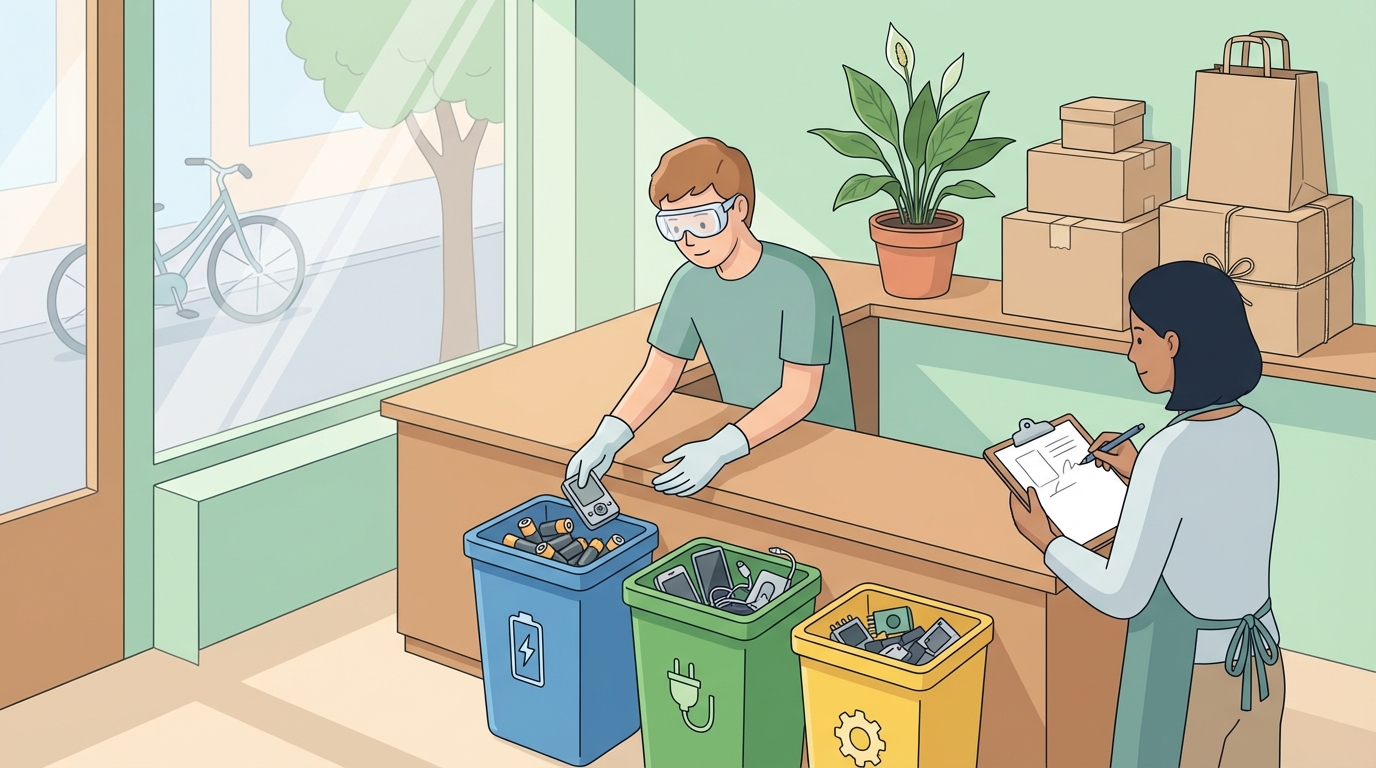
- Recycling batteries minimizes hazardous waste and conserves valuable resources. As a result, businesses support renewable energy and the circular economy. Batteries contain toxic materials that can harm people and the environment if disposed incorrectly. Common recyclable battery chemistries include lead-acid, lithium-ion, and nickel-cadmium. For detailed federal guidance, see the EPA battery collection and labeling page.
Actionable setup and handling tips
- Establish accessible collection points with clearly labeled bins. Also, place bins where staff and customers can find them easily.
- Create a regular maintenance and pickup schedule. This prevents overflow and safety hazards.
- Segregate batteries by chemistry. For example, separate lithium-ion from lead-acid batteries.
- Require personal protective equipment like gloves and goggles for staff handling batteries. In addition, store batteries in well-ventilated areas.
- Train employees on safe handling and emergency response. Use short drills and refresher sessions quarterly.
- Use clear labeling and signage to comply with emerging EPA guidelines. Also, document collection volumes for reporting and green marketing.
- Join a takeback program such as Call2Recycle to streamline recycling and compliance.
Partnering with certified recycling facilities
Partnering with certified recyclers ensures proper disposal and strengthens your green reputation. Certified facilities follow state and federal rules, which reduces liability. Therefore, select vendors with verifiable certifications and references. In addition, ask for certificates of recycling and chain-of-custody documentation. This transparency helps with eco-labeling, sustainability reporting, and green marketing.
Measure and communicate progress
- Track metrics such as batteries collected, hazardous waste reduced, and materials recovered.
- Report progress to customers and stakeholders to build trust and attract eco-conscious buyers.
By applying these steps, small businesses can cut hazardous waste, save money, and grow responsibly. Thus, sustainability becomes a driver of long-term growth and resilience.
Small business sustainability and growth strategies for the senior services sector
The senior services sector offers strong growth potential because populations are aging globally. Therefore, entrepreneurs can build businesses that meet real community needs. This section outlines actionable service ideas and steps to grow responsibly. It covers market research, business planning, funding options, and common challenges with solutions.
Market opportunity and research steps
- Identify local demographics and demand using public data and surveys. For national trends, consult AARP research to understand aging patterns and needs.
- Map competitor services and pricing. Then, spot gaps such as specialized transport or social engagement programs.
- Talk to caregivers and families. Their feedback reveals service priorities and pain points.
- Run a small pilot to validate assumptions. Use results to refine service offerings and pricing.
Service ideas with practical notes
- Home care agencies
- Offer non-medical in-home care, personal care, and homemaking. Also, scale by hiring trained caregivers.
- Use digital scheduling and telehealth partnerships to improve efficiency and margins.
- Senior transportation services
- Provide rides to appointments, errands, and social events. Moreover, consider accessible vehicles and background-checked drivers.
- Partner with local clinics and community centers for steady referrals.
- Social engagement programs
- Run adult day programs, activity groups, and virtual meetup sessions. These reduce isolation and improve health outcomes.
- Offer respite packages and caregiver support services to broaden revenue streams.
Business planning and operations
- Develop a clear mission and target audience statement. Then, outline services, pricing, and growth milestones.
- Choose an appropriate legal structure such as an LLC or partnership. Also, register and secure necessary permits.
- Create an operational plan covering staffing, training, and quality assurance. Employee training should be ongoing and measurable.
- Build a marketing plan with SEO, local listings, and community outreach to attract clients.
Funding options and financial tips
- Explore small business loans and SBA programs for startup capital: SBA funding programs.
- Consider bootstrapping, crowdfunding, and local grants. Also, search for health and social services grants.
- Maintain tight cash flow controls and conservative margin forecasts. Moreover, prioritize staff payroll and insurance costs.
Challenges and practical solutions
- Regulatory compliance can be complex. Therefore, consult local licensing boards and retain a compliance checklist.
- Workforce shortages pose hiring challenges. To address this, offer competitive pay, flexible schedules, and training incentives.
- Quality control must be consistent. Use client feedback loops, mystery shopper checks, and standard operating procedures.
Motivational close
Starting a senior services business can be meaningful and profitable. With solid research, a clear plan, and responsible hiring, you can grow sustainably. Moreover, your service can improve lives and build strong community ties.
Use this quick comparison to choose strategies that fit your goals and capacity. For example, start with battery recycling if you handle hazardous materials. However, pair operational changes with marketing to grow sustainably.
| Strategy Type | Description | Benefits | Key Considerations |
|---|---|---|---|
| Battery recycling | Establish collection points; segregate by chemistry; join takeback programs | Reduces hazardous waste; conserves resources; supports renewable energy | Follow EPA best practices here; consider Call2Recycle here; use PPE and ventilated storage |
| Eco-labeling and green marketing | Obtain certifications; use eco-labels; highlight sustainability in messaging | Builds trust; differentiates brand; can support premium pricing | Verify claims with third-party certifiers; track lifecycle impacts |
| Market research | Collect local demographic data; run surveys and pilots; analyze demand | Tailors services; improves product market fit; reduces launch risk | Use industry research such as AARP for senior trends here; test pricing locally |
| Business planning and operations | Create a business plan; choose legal structure; set SOPs and quality controls | Clarifies strategy; eases funding; supports scalable operations | Register permits and insurance; document processes and KPIs |
| Digital marketing and local SEO | Build an SEO site; manage local listings; run targeted ads and email campaigns | Increases visibility; drives steady leads; supports retargeting | Track ROI and conversion metrics; use geo-targeted PPC for local reach |
| Employee training and safety | Provide regular training; require PPE; run emergency drills | Reduces incidents; improves retention; ensures compliance | Train on safe handling of hazardous items; document training logs |
| Funding and grants | Explore loans, SBA programs, crowdfunding, and local grants | Secures capital to scale; diversifies funding sources | See SBA loan options here; plan conservative cash flow |
Integrating small business sustainability and growth strategies is no longer optional for small businesses. Instead, it is a practical route to resilience and market advantage. By combining eco-friendly operations, such as battery recycling and hazardous waste reduction, with clear growth plans you build durable value. Moreover, buyers reward businesses that act responsibly and transparently.
Start with small, measurable steps and scale over time. For example, set up collection points, train staff on safe handling, and track recycled volumes. Then, layer on business planning, market research, and targeted digital marketing to reach the right customers. Likewise, eco-labeling and green marketing amplify your work and attract eco-conscious buyers.
Sustainability and growth reinforce each other. Therefore, focusing on both lowers risk, improves margins, and strengthens brand reputation. However, navigating regulations, permits, and local compliance can feel complex. To reduce friction, document processes and seek expert support when needed.
If you want specialized marketing help, consider a firm that adapts big law strategies to smaller teams. Case Quota is a specialized legal marketing agency that helps small and mid-sized law firms achieve market dominance using big law strategies. Visit Case Quota to learn how targeted messaging, geo-targeted campaigns, and reputation work can amplify growth. Their experience helps you translate sustainability wins into measurable market results.
You do not have to do this alone. With clear steps, consistent tracking, and the right partners you can grow sustainably. Above all, stay practical, stay persistent, and measure what matters.
Frequently Asked Questions (FAQs)
What is the easiest way to start a recycling program at my small business?
Start small and stay consistent. First, audit what you dispose of and quantify volumes. Then set up clearly labeled collection points. Also join a takeback program like Call2Recycle to simplify logistics and compliance. Train staff on safe handling and use personal protective equipment. Finally schedule regular pickups and document amounts for reporting and green marketing.
Which battery types should my business recycle and why?
Recycle common chemistries such as lead-acid, lithium-ion, and nickel-cadmium. These batteries contain toxic materials that can harm people and the environment if disposed of incorrectly. Therefore recycling reduces hazardous waste and conserves resources. For federal guidance, review the EPA battery collection and labeling recommendations at EPA Guidelines.
How can I fund sustainable growth and expansion?
Use a mix of funding sources. Start with bootstrapping to prove concept. Then pursue small business loans or SBA programs when you need capital. See loan options at SBA Loans. Also consider crowdfunding and local grants, especially for health and social services startups. Track conservative cash flow forecasts and prioritize payroll and insurance to stay solvent.
How do I handle regulatory and compliance challenges?
Begin by researching local and state rules for waste, transport, and care services. Next build a compliance checklist and update it regularly. Because laws change, consult licensing boards or a compliance advisor when needed. Partner with certified recycling facilities that provide chain-of-custody documentation. This reduces liability and strengthens your sustainability claims.
When should I hire professional marketing help to grow sustainably?
Hire pro help when you need faster traction or lack in-house expertise. For example, specialized agencies can run geo-targeted PPC, video testimonial campaigns, and retargeting to boost leads. Case Quota provides legal marketing services that adapt big law strategies for smaller teams. As a result, you can translate sustainability wins into measurable market growth.