

SEO for AI agents: Why SEO matters for law firms in 2026
SEO for AI agents is now a central part of legal marketing and technical strategy. Law firms face a search landscape where AI assistants synthesize results. As a result, traditional page one thinking no longer suffices. Therefore firms must adapt content, schema, and site architecture to support agent traversal. This introduction outlines why search visibility and AI optimization matter for 2026 and beyond.
The evolving role of AI assistants
AI assistants now act as intermediaries between users and the web. They gather content, synthesize answers, and present concise guidance. Because users increasingly rely on these agents, visibility depends on how well agents can parse your content. Agents prefer structured, semantically dense material. Consequently law firms should deliver content that is both authoritative and machine friendly.
Why law firms should prioritize search visibility
Search visibility still drives client intake and brand authority. However agents can bypass traditional links and surface content through synthesis. Therefore a firm that ranks well in agent signals will win referral opportunities. Prioritizing visibility also supports direct engagement. For example clear service pages and well structured FAQs lead to higher conversion rates.
Practical technical priorities
- Use structured data and schema to make your content machine readable.
- Format answers with clear summaries followed by supporting detail.
- Increase semantic density while avoiding thin or duplicated content.
- Audit hosting and domain quality because neighborhood signals affect trust.
- Interlink logically so agents can follow context and provenance.
Forward looking considerations
Moreover agents will gain more autonomy over time. As a result firms will need standing guidelines for agent interactions. These include authorized actions and data privacy constraints. Firms should therefore plan both content and governance strategies. Meanwhile monitoring agent referrals and perceived authority will become core SEO metrics.
Conclusion
This article will explore practical steps for optimizing law firm sites for AI agents and AEO. It will provide technical checklists and tactical examples for teams to implement in 2026.
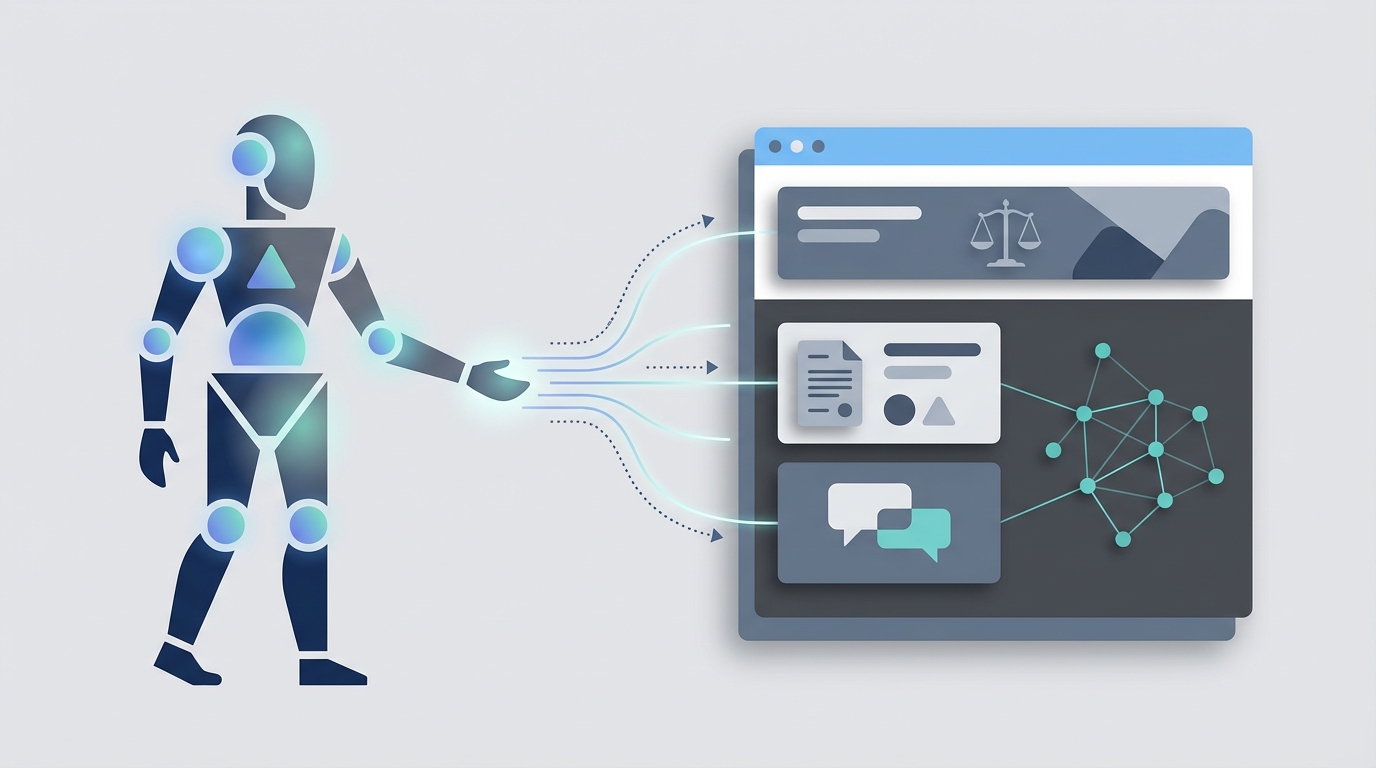
Challenges with free subdomain hosting and domain infrastructure for law firms
Free subdomain hosting and cheap top level domains create practical SEO risks for law firms. Because legal practices rely on trust and authority, any domain neighborhood that signals low quality can reduce search visibility. Below we explain the core problems, cite expert guidance, and offer focused mitigations for teams working on SEO for AI agents.
Why free subdomain hosting attracts spam and low quality content
A free subdomain environment often becomes a magnet for low effort sites. Consequently malicious actors and low quality publishers cluster there. As John Mueller observed, “A free subdomain hosting service attracts a lot of spam & low-effort content. It’s a lot of work to maintain a high quality bar for a website, which is hard to qualify if nobody’s getting paid to do that.” (Source). Because search engines view sites in context, this neighborhood effect matters.
Key issues
- Spam density because many free hosts allow rapid mass publishing. For evidence, see large-scale analyses of phishing on free hosts (Source).
- Noise over signal because low quality content drowns legitimate signals.
- Reputation bleed where the host’s overall quality drags individual pages down.
How neighborhood signals harm search visibility and agent traversal
Search engines and AI agents evaluate pages in context. Therefore a law firm domain living in a spammy neighborhood risks lower trust signals. Moreover agents that synthesize answers rely on provenance and structured signals. As James LePage noted, “Agents will use the same infrastructure the web already has. I find it interesting how much money is flowing into AIO and GEO startups when the underlying way agents retrieve information is by using existing search indexes.” (Source). Because of this, clear provenance and clean domain infrastructure help both organic rankings and agent visibility.
Cheap TLDs and the Public Suffix List complications
Cheap top level domains face problems similar to free subdomains. Consequently domain ecosystems filled with low-quality content create trust issues. In addition, adding domains to the Public Suffix List can produce unexpected technical and email problems. See the practical guidance on PSL implications (Source). Because law firms need reliable communications, these risks matter.
Practical mitigations for law firms
- Host on reputable domains and avoid free subdomain providers whenever possible.
- Audit domain neighborhood signals and check historical abuse reports.
- Use structured schema, canonicalization, and strict interlinking to improve semantic density.
- Monitor agent referrals and synthetic answer placement as part of SEO KPIs.
- When constrained, build direct traffic and community engagement before chasing broad search visibility.
Taken together, these steps help protect brand trust. Therefore law firms can maintain search visibility and prepare for AI driven discovery.
Hosting options comparison for SEO impact
Quick comparison of hosting options and their SEO implications. However, choose a reputable domain when possible.
| Hosting option | SEO impact | Risk of spam association | Control over content quality | Relevance for AI agents’ indexing and retrieval |
|---|---|---|---|---|
| Free subdomain hosting | Low to negative. Neighborhood noise reduces trust. | High. Often populated by spam and low-effort sites. | Low. Limited moderation and shared responsibility. | Poor. Agents may deprioritize content from noisy hosts. |
| Cheap top level domains (cheap TLDs) | Variable. Can rank, but ecosystem often has low quality content. | High to medium. Cheap TLDs attract low-quality publishers. | Medium. More control than subdomains, but quality issues remain. | Mixed. Structured signals help, yet provenance may be weak. |
| Premium brand domains (branded TLD or established domain) | High. Strong brand signals and trust improve rankings. | Low. Reputation reduces spam association. | High. Full control and strict content governance. | Strong. Clear provenance and schema make agent indexing reliable. |
| Dedicated hosting or managed hosting (VPS, cloud, or managed WordPress) | High. Better performance and uptime support SEO. | Low to medium. Depends on host security and neighbor sites. | High. You control environment and content standards. | High. Fast, structured sites help agent retrieval and parsing. |
Related keywords and synonyms
- free subdomain hosting, cheap TLDs, premium domains
- spam, search visibility, domain infrastructure
- schema structured data, semantic density, interlinking
- direct traffic, community engagement, agent traversal
Practical steps for optimizing law firm sites for AI agents and AEO
Design with agents in mind. Therefore treat each page as both a human readable resource and a machine friendly data source. Because agents synthesize answers from many sources, your site must provide clear provenance and parsable structure.
Schema and structured data
Use schema to expose entity relationships and intent. For legal content, add LocalBusiness, LegalService, and FAQPage schema where appropriate. Also mark attorney profiles with Person and ProfessionalRole properties. Schema helps agents find facts quickly and trust your site as a source. For implementation reference use the official vocabulary at schema.org and follow best practices for nested properties.
Semantic density and content design
Increase semantic density by packing each section with precise, relevant facts. However avoid stuffing keywords. Instead write compact paragraphs that answer single questions. Use summaries first, then supporting detail. For example begin with a one or two sentence summary, then add a short bulleted list, then provide case examples or steps. This progressive disclosure helps agents present a concise answer with clear paths to depth.
Structured markdown and intentional organization
Format content using structured markdown or clean HTML semantics. Use headings in logical order and label sections clearly. Consequently agents can traverse the document and extract the summary blocks first. Additionally prefer ordered lists for procedures and FAQ style blocks for common queries. This approach makes your content easier for agents to parse and synthesize.
Interlinking and provenance
Interlink related service pages, case studies, and attorney bios with contextual anchor text. As a result agents follow provenance chains and verify authority. Use canonical tags and consistent URL patterns to avoid fragmentation. Moreover maintain an HTML sitemap and an XML sitemap to improve discoverability for crawlers and agents.
Long tail keyword optimization and topical depth
Prioritize long tail keyword optimization to capture specific user intents. Long tail pages often supply the exact phrasing agents use when matching queries. Build clusters of pages around core legal topics and connect them via pillar pages. Therefore you create topical authority and semantic context that agents prefer.
Technical steps for reliable indexing
- Ensure fast page speed and stable uptime because performance affects indexing.
- Expose clear contact data and verified ownership to strengthen trust.
- Provide machine readable licenses and terms where required.
- Implement robust robots rules and test with live crawls.
- Offer an API or structured data endpoints for partner integrations when appropriate.
Monitoring, metrics, and iterative testing
Track agent referrals and synthetic answer placements as SEO metrics. Use server logs to detect agent crawls and record the paths they follow. Because agent behavior changes, run periodic audits and A B tests on summary blocks and schema markup. James LePage observed that agents use existing search infrastructure and that publishers must focus on structured, accessible content to be useful to agents. See his insights for context at James LePage’s Insights.
Governance and content policy
Create editorial rules for agent consumption. For example define what facts an agent may surface and what requires human verification. As a result you maintain ethical boundaries and reduce liability. Finally combine technical work with policy to make your site both discoverable and responsible for AI driven distribution.
CONCLUSION
SEO for AI agents is now a core discipline for law firms in 2026. AI assistants and AEO reshape how users find legal advice. Therefore firms must treat search visibility as a technical product and a business asset. They should optimize for schema, semantic density, and clear provenance.
AI assistants synthesize answers from multiple sources. As a result, agents favor structured, authoritative, and well-linked content. Firms that adopt AEO principles will increase referral exposure and qualified leads. In addition, long-tail keyword optimization and intentional content organization reduce reliance on fragile rankings.
From a technical standpoint, prioritize machine readable markup and fast, secure hosting. Use LocalBusiness, LegalService, and FAQPage schema along with structured markdown. Also monitor agent referrals, server logs, and synthetic answer placements to measure impact. James LePage’s insight applies because agents use existing search indexes, so structured accessibility wins.
Case Quota helps small and mid-sized law firms implement these Big Law strategies. Their team combines legal marketing expertise with technical SEO and AEO governance. For help achieving market dominance, visit Case Quota.
Act now because agent-driven search accelerates. Start auditing schemas and hosting now to gain early advantage. Firms that invest in SEO for AI agents will secure visibility and client pipelines in 2026 and beyond.
Frequently Asked Questions (FAQs)
What does SEO for AI agents mean and why is it important for law firms?
SEO for AI agents means optimizing content for AI intermediaries. These agents synthesize web content into concise answers. Therefore you must expose structured facts, clear provenance, and semantic density. Use schema to declare entities and relationships. For implementation reference see schema.org. As a result agents can parse and trust your pages more easily.
Can free subdomain hosting harm my law firm’s search visibility?
Yes. Free subdomain hosting often attracts spam and low effort content. John Mueller warns that these hosts make maintaining high quality harder (source). Consequently neighborhood signals may drag your pages down. If constrained, build direct traffic and community engagement first. Also audit historical abuse reports before choosing a host.
What practical AEO steps should firms take now?
AEO means Agent Experience Optimization and it focuses on machine consumption. Start with schema for LocalBusiness, LegalService, and FAQPage. Increase semantic density by answering single queries in short summaries. Then add supporting detail and interlink related pages. Prioritize long tail keyword optimization to capture specific intents. Finally test variations of summary blocks and measure agent referrals.
How will AI assistants change rankings and referral pathways in 2026?
AI assistants will synthesize content rather than show raw links. As a result they will favor clear summaries, reliable provenance, and structured data. Agents use existing search indexes, so traditional ranking signals still matter. However agent placements will create new referral paths outside classic SERPs. Therefore track synthetic answer placements and server logs to detect agent behavior.
Where should a small or mid sized law firm start this year?
Begin with a technical audit and a hosting review. Verify schema and implement FAQ blocks on priority pages. Improve page speed and mobile UX because performance affects indexing. Also create a content map for long tail topics and interlink them. In addition, set governance rules for agent surfaced content, and iterate based on referral metrics and tests.