

Remarketing Lists to Boost PPC Performance
Remarketing Lists to Boost PPC Performance are a high impact lever for law firms running paid search campaigns. By reengaging visitors who already showed interest, firms recover wasted budget and increase conversions. Because first party data fuels smarter targeting, you can bid more confidently on qualified users. For law firms, this matters because client value and lifetime revenue often exceed the first case. Therefore, well built remarketing lists improve bid efficiency, reduce cost per acquisition, and raise ROI.
However, remarketing only works when lists serve a clear purpose for bidding, messaging, or exclusions. This guide outlines ten practical lists and four strategies tailored to law firms’ buyer journeys. You will learn setup steps for YouTube and Google Ads, RLSAs, duration recommendations, and bid tactics. As a result, you can stretch ad spend further while capturing higher quality leads. Read on to turn passive visitors into consults and loyal clients. Start with small tests and measure impact.
What Are Remarketing Lists to Boost PPC Performance?
Remarketing lists are audience segments built from users who previously interacted with your site or content. For law firms, they capture high intent signals like page views, form starts, and video watches. Because these lists use first-party data, they reflect real client interest. As a result, you can bid and message more precisely.
Why these lists matter for PPC performance
Remarketing lists improve PPC performance by changing how you bid, whom you target, and what you say. First, you can raise bids for users who already showed interest. For example, increasing bids on qualified users often yields higher conversion rates. Second, you can exclude past purchasers to stop wasting budget. Third, you can tailor creative and offers to match a user’s stage in the funnel.
Data driven insights and evidence
Industry coverage shows clear benefits. Search Engine Journal outlines multiple remarketing list strategies that boost ad efficiency and conversions. Read the article here: Search Engine Journal. Google’s developer documentation explains how remarketing tags and first-party signals work together. See details here: Google Developer Documentation.
Use cases that drive performance
- Cart abandoners: target users who left mid-conversion with short durations like one, three, and seven days.
- Micro converters: reengage users who completed small actions, then push higher value asks.
- Past purchasers: exclude or cross-sell to improve acquisition efficiency.
- YouTube engaged viewers: build lists from video engagement for awareness-to-action follow ups.
Strategic impacts on bidding and targeting
Remarketing lists change your bidding mix. Therefore, they guide bid adjustments and budget allocation. For example, use observation mode in Google Ads to increase a bid by 10 to 25 percent for high-intent lists. Furthermore, RLSAs let search ads capture warm searchers at lower CPA. As a result, campaigns convert more efficiently with less wasted spend.
Key quote to remember
“Remarketing lists continue to be one of the more dependable tools inside PPC accounts, especially for search campaigns.” Use lists with a purpose tied to bidding, exclusions, or messaging. Without that purpose, remarketing becomes underutilized. When used intentionally, remarketing lists become a primary lever for better ROI and smarter spend.
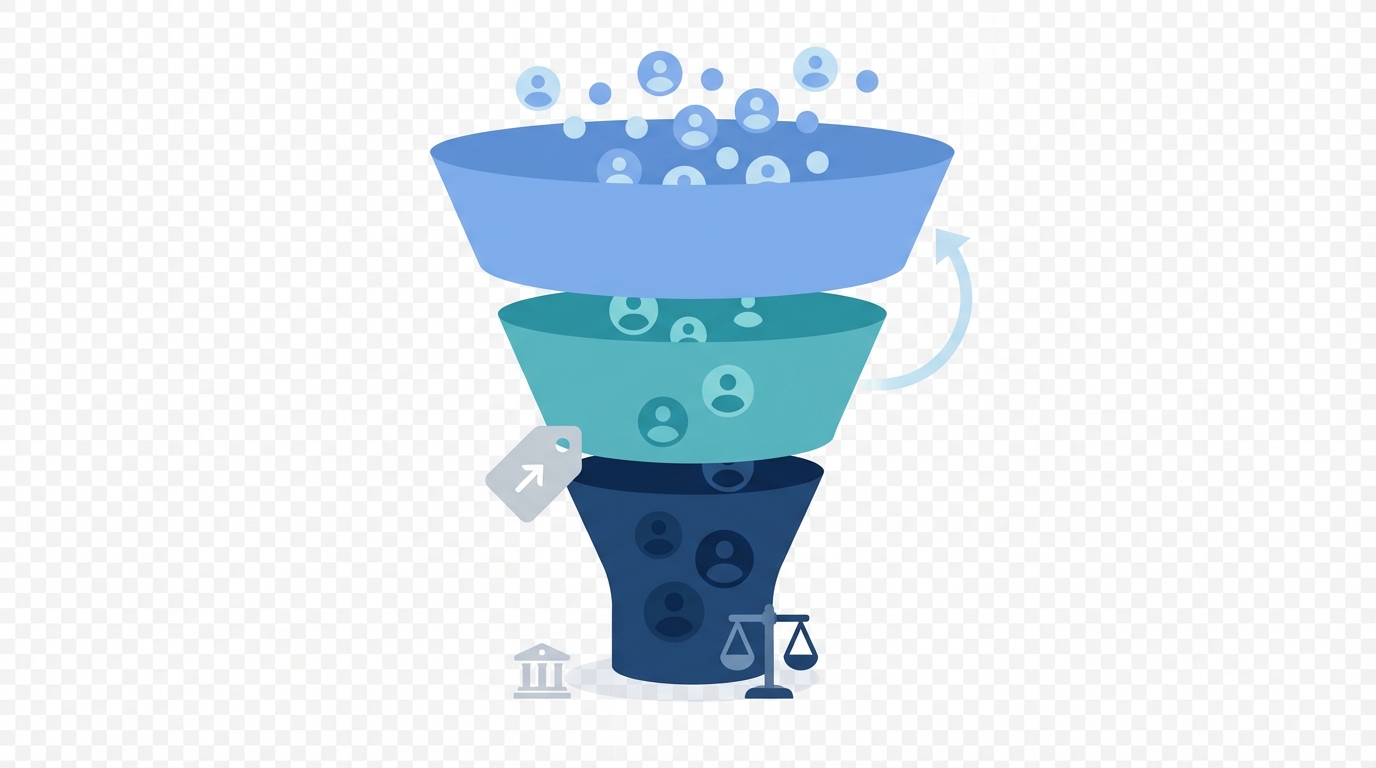
Remarketing Lists to Boost PPC Performance: YouTube remarketing lists
YouTube remarketing lists let law firms retarget users who engaged with video content. These lists collect first-party data from viewer actions. For example, you can build audiences from users who watched 50 percent of a video. You can also use viewers who liked, commented, or subscribed as high intent signals.
How YouTube lists fit into PPC strategies for law firms
YouTube Ads work well at the top of the funnel. However, they also feed the middle and bottom funnel when paired with remarketing lists. Therefore, create sequences that move viewers from awareness to consult. First, serve short educational videos. Next, retarget engaged viewers with consideration ads. Finally, use search remarketing to capture intent and convert.
Step-by-step setup in Google Ads
- Sign in to Google Ads.
- Click Tools.
- Under Shared Library select Audience Manager.
- Click the plus button.
- Choose YouTube users as the source.
- Pick a linked channel or video.
- Set membership duration and save.
Google provides developer guidance for audience segments here: Audience Segments Guide. For practical remarketing list strategies, see this industry guide: PPC Ad Performance Guide.
Practical targeting tips
- Use multiple engagement thresholds like viewed 25 percent and 50 percent. This creates layered intent lists.
- For awareness lists, set longer durations. For cart abandoners or near-conversion users, use one, three, and seven day lists.
- Exclude past clients from acquisition campaigns to save budget.
Bid and campaign tactics
Use observation mode to test bid adjustments before applying strict targeting. For high intent viewers, raise bids by 10 to 25 percent. For example, try a 15 percent bid increase on viewers who watched 50 percent of a video. Combine YouTube lists with RLSAs to capture warm searchers at lower CPA. Also, use frequency caps to avoid ad fatigue and maintain brand trust.
Measurement and sequencing
Track micro conversions like contact form starts and call clicks. Then, feed winning segments into lookalike audiences. As a result, your PPC performance improves because you bid and message more precisely.
| Strategy type | Audience segment | Recommended list duration | Bid adjustment tips | Primary PPC goals |
|---|---|---|---|---|
| Cart abandoners | Users who left mid conversion | 1-day, 3-day, 7-day | Raise bids 15% for short windows | Conversion, recover lost revenue |
| Past purchasers | Users who bought before | Exclude from acquisition; 90-day to 365-day cross-sell lists | Lower bids for new acquisition; raise selectively for upsell | Retention and cross-sell |
| Lookalike audiences | New users similar to best customers | N/A (seeded from high-value lists) | Expand bids moderately; focus on target CPA | Acquisition and scale |
| YouTube engaged viewers | Users who watched 25% to 50% or more | 30-day to 365-day depending on funnel | Try +10% to +15% on 50% viewers; combine with RLSAs | Awareness to consideration |
| Micro-converters | Users who completed low-value actions | 14-day to 90-day | Increase bids 10% to 20% on observation; push conversion creative | Nudge users to convert |
Conclusion
Remarketing Lists to Boost PPC Performance deliver predictable lift when used intentionally. For law firms, they inform bidding, targeting, and exclusions. Therefore, they let you spend smarter and convert higher-value leads. As a result, campaigns waste less budget and generate more consults.
Use lists to shape bid strategies and messages. For example, raise bids on high intent segments and exclude past purchasers. Moreover, layer YouTube remarketing lists with RLSAs to move users through the funnel. However, remember to test durations like one, three, and seven days for cart abandoners.
Focus measurement on micro conversions first. Then, scale winning lists into lookalikes and broader acquisition. Also, set clear goals for each audience so your bid adjustments reflect value. Finally, iterate quickly and keep frequency caps to avoid ad fatigue.
If you want strategic help, Case Quota provides legal marketing playbooks designed for small and mid-sized law firms. Their approach mirrors big law tactics while staying practical for smaller teams. Visit Case Quota to learn how they can help you dominate local search and maximize lifetime client value.
Start with small experiments and expand what works. Because legal search cycles vary, test creative, bids, and durations. As a result, you will improve ROI within months.
Frequently Asked Questions (FAQs)
What are remarketing lists and why do they matter for PPC performance?
Remarketing lists are audience groups built from visitors who interacted with your site or content. For law firms, these lists use first-party data to surface users with higher intent. As a result, you can target and bid more precisely. Therefore, remarketing lists reduce wasted spend and improve conversion rates.
How do YouTube remarketing lists work for law firms?
YouTube remarketing lists collect viewers based on engagement. For example, you can capture users who watched 25 percent or 50 percent of a video. Then, retarget them across Google Ads and YouTube Ads. This approach moves users from awareness to consideration. Also, tie video engagement to search RLSAs to capture intent.
What list durations and segments should I use for cart abandoners and purchasers?
Use short windows for cart abandoners such as 1-day, 3-day, and 7-day lists. For purchasers, maintain longer cross-sell lists from 90 days to 365 days. However, exclude past purchasers from acquisition campaigns to save budget. Additionally, seed lookalike audiences from high-value purchaser lists.
How should I adjust bids and messaging with remarketing lists?
Start in observation mode to test bid adjustments. For high-intent lists, raise bids 10 percent to 25 percent. For instance, try a 15 percent bid increase on users who watched half a key video. Then, tailor creative to match the user’s funnel stage and expected value.
How do I measure success and scale winning remarketing tactics?
Track micro-conversions first like form starts and call clicks. Next, measure CPA and lifetime value by audience. If lists reduce CPA and raise lead quality, scale them into lookalike audiences. Finally, iterate durations, bid rules, and ad frequency to sustain performance.