

In the competitive world of legal services, finding low-cost marketing tactics that effectively attract clients is crucial. One such powerful tool is to harness the potential of referral programs and LLC formation for small businesses. Within the first few years of operation, many entrepreneurs find themselves navigating the challenges of scaling up, dealing with legal requirements, and growing their customer base. This is where strategic referral programs come into play. They serve as an indispensable component of a thriving business, leveraging the power of word-of-mouth and client trust. Forbes notes that referred clients are often more loyal and generate higher lifetime value for businesses.
Simultaneously, understanding the nuts and bolts of LLC formation is equally essential for small businesses aiming to establish a strong legal foundation with limited liability. By mastering the process of creating an LLC, business owners can protect their personal assets while also enhancing operational efficiency. Renowned platforms like LegalZoom provide insights and services to facilitate smooth LLC formation, discussing relevant steps such as filing Articles of Organization, selecting a registered agent, and obtaining an EIN from the IRS.
Referral programs and LLC formation are not just add-ons; they are integral to a comprehensive strategy for growth and protection. Using referral incentives like those successfully employed by Dropbox or Stitch Fix, businesses can significantly boost customer acquisition and retention. Meanwhile, the strategic incorporation of an LLC provides a solid backbone for legal protection and potential tax benefits. Therefore, mastering these elements can pave the way for sustainable success and minimal stress in managing a legal business operation.
Understanding Referral Programs
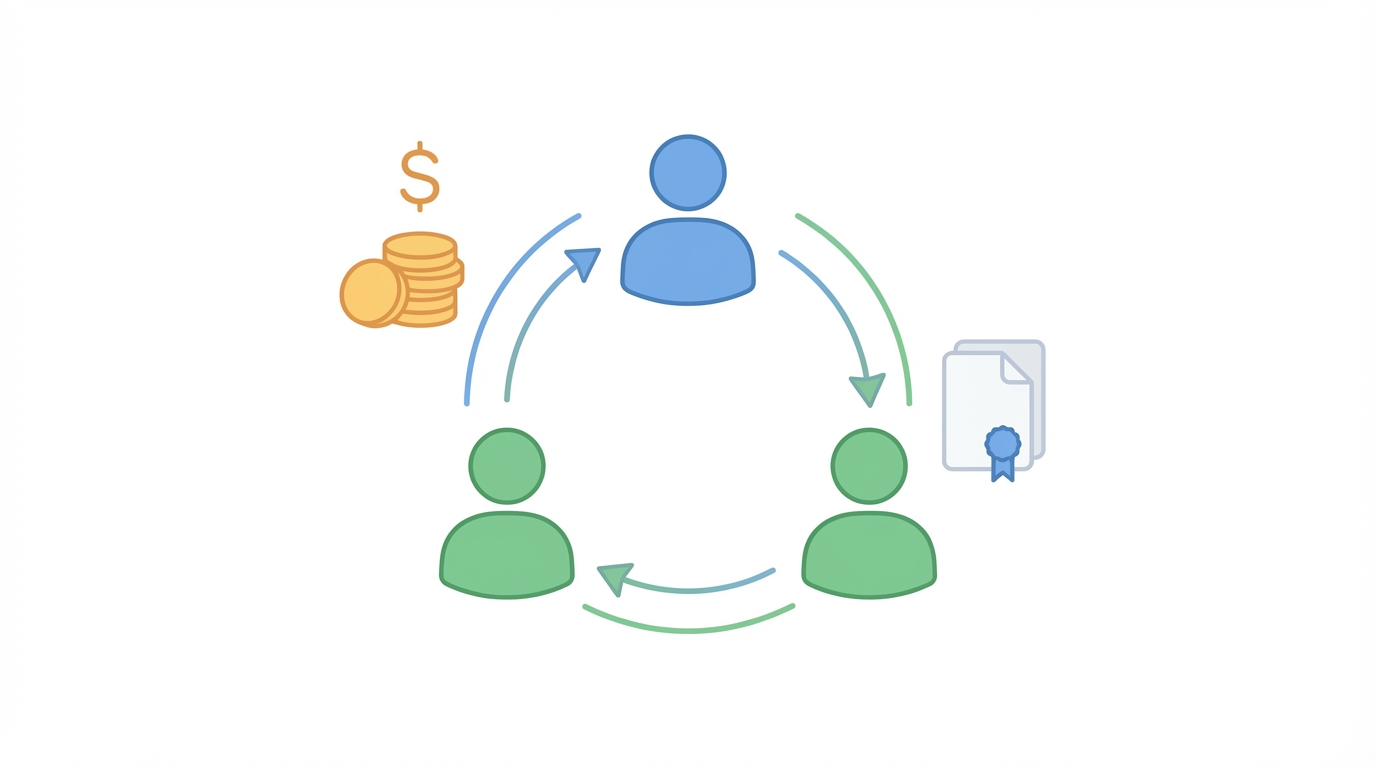
Referral programs are marketing strategies that leverage satisfied customers to bring in new clientele. These programs are built on trust and familiarity, as proven by statistics showing that 92% of consumers trust referrals from people they know Gitnux. Leveraging this powerful tool effectively can significantly boost business growth and client acquisition.
Types of Incentives in Referral Programs
- Double-sided Rewards: Both the referrer and the new customer benefit. For example, Dropbox increased its sign-ups by 3900% by offering additional storage space to both parties.
- Non-cash Rewards: These convert about 25% better than cash payouts. Companies like Quip use subscription perks to engage their customer base more effectively.
- Cash Rewards: Google Workspace provides cash incentives, offering up to $23 per user referred in their program.
Impact on Client Acquisition
- Referral customers have a 37% higher retention rate Rivo. This means they stay longer and engage more, resulting in better lifetime value and return on investment.
- By creating an attractive incentive structure, companies like T-Mobile provide up to $650 in prepaid rewards for successful referrals.
- Stitch Fix offers credits to both referrer and referee, making it beneficial for both parties.
The Role of LLC Formation
Forming a Limited Liability Company (LLC) provides critical business structure benefits that complement referral programs. An LLC offers limited liability protection, which shields personal assets, and often allows for pass-through taxation.
Benefits of LLC Formation
- Legal Protection and Tax Advantages: Ensures personal assets are kept separate and protected. States like Delaware and Wyoming are popular for LLC formation due to favorable laws.
- Operational Flexibility: With an LLC, you can enjoy the flexibility of operating as a sole proprietorship while still gaining protection.
- Ease of Setup: Filing the Articles of Organization through services like LegalZoom simplifies the process, including obtaining an EIN from the IRS IRS EIN Info.
Both referral programs and LLC formation are vital strategies for small businesses aiming to thrive. While referral programs accelerate customer acquisition and retention through effective trust-based marketing, LLCs provide the robust legal structure necessary to support and manage that growth efficiently.
| Step Name | Description | Typical Costs | Important Notes |
|---|---|---|---|
| Choose a unique LLC name | Ensure the name includes LLC or Limited Liability Company and check availability with your Secretary of State | $0 to $50 for name reservation; varies by state | State rules vary; avoid restricted words and trademark conflicts |
| Designate a registered agent | Appoint an individual or commercial service to accept legal notices and official mail | $0 if you act as agent; $100 to $300 per year for a registered agent service | Required in most states; service improves privacy and reliability |
| File Articles of Organization | File the state formation document that creates your LLC; include registered agent and business address | Filing fees vary widely; New Mexico example about $50; many states range $50 to $500 | Must include LLC or Limited Liability Company in name; processing times and fees vary by state |
| Draft an Operating Agreement | Create internal rules for ownership, management, and profit distribution | $0 if you draft your own; $100 to $500 for attorney help or templates | Not always required by state; strongly recommended to prevent disputes |
| Obtain an EIN | Apply for an Employer Identification Number from the IRS for taxes, payroll, and hiring | Free from the IRS | Needed to open business bank accounts and file federal taxes |
| Open a business bank account | Separate personal and business finances to preserve liability protection | Bank fees vary; some accounts have monthly charges or minimums | Keep clear records to maintain corporate veil and simplify accounting |
| Register for state taxes and licenses | Register for sales tax, employer taxes, and local permits as required | Fees vary by state and license; some registrations are free | Check with the Secretary of State and local agencies early |
| Maintain annual reports and compliance | File required annual reports, pay franchise taxes, and update state records | Example New Mexico annual report about $25; other states may charge more | Missing filings can lead to penalties or administrative dissolution |
States commonly chosen include Delaware, Wyoming, and New Mexico. Choose based on fees, privacy, and business goals.
Referral programs and LLC formation for small businesses: setup checklist
Start with a clear goal because goals guide every decision. Choose specific KPIs like cost per acquisition and lifetime value. Create referral links that map each referrer to a new client. Use simple, sharable links in email and social posts. Offer double-sided incentives so both parties feel rewarded. For example, Dropbox used tiered storage rewards and boosted sign-ups by 3900% (see Dropbox case studies). Non-cash rewards convert about 25% better than cash, so use credits or exclusive perks where possible.
Set up a tracking system before launch. Track conversion rate, CAC, and LTV in a dashboard. Integrate referral data with your CRM or analytics platform. This lets you spot high-performing referrers and underperforming channels. As a result, you can reallocate marketing spend to what works.
When you form an LLC, align legal steps with your referral program. File Articles of Organization early and get an EIN from the IRS at IRS EIN application. An LLC separates personal assets and simplifies contracts with partners and referrers. Therefore, you avoid personal liability when scaling referral incentives.
Referral programs and LLC formation for small businesses: track, measure, and optimize
Use these practical steps to optimize performance and keep costs low
- Create tiered rewards to encourage multiple referrals. This increases lifetime value and engagement.
- Prefer non-cash incentives like credits or exclusive services because they often drive better conversions. See Quip for example incentive approaches.
- Add fraud checks and usage caps to prevent abuse and control budget.
- Send automated reminders and status updates to referrers to keep momentum.
Manage LLC formation costs and compliance
- Compare registered agent options. Acting as your own agent saves money, but professional agents cost about $100 to $300 per year and add privacy and reliability.
- Estimate filing and annual fees up front because state costs vary widely. For example, New Mexico and Wyoming often have low filing fees.
- Draft an operating agreement to define revenue sharing and referral payouts. This reduces disputes and sets clear expectations.
- Keep calendars for annual reports and tax filings to avoid penalties.
Use LegalZoom or similar services for stepwise help when you need speed or legal templates. Legally sound structure and a well tracked referral program reduce CAC and improve LTV. As a result, you scale faster without large marketing budgets.
Low-cost marketing and a solid legal structure drive small firm success. Referral programs and LLC formation work together to lower acquisition costs. Moreover, they build client trust, predictable pipelines, and a legal backbone for growth. Start small, test offers frequently, and scale what proves cost effective.
Referrals build trust; 92% of people trust personal recommendations. Referred customers show 37% higher retention, which increases lifetime value. Therefore, measure CAC and LTV to assess program profitability with precise analytics. Use referral links and dashboards to identify top referrers and improve incentives.
Forming an LLC shields personal assets and clarifies contractual relationships with referrers. Draft an operating agreement that defines referral payouts and dispute resolution. Also, compare registered agent services to balance cost, privacy, and reliability. Keep a compliance calendar to avoid penalties and preserve liability protection.
Case Quota helps small and mid-sized law firms apply replicable Big Law strategies. They design referral systems, advise on non-cash incentives, and manage LLC setup. Their team pairs data-driven marketing with legal compliance to protect your growth. Visit Case Quota to learn more and start a custom plan today. Act now to pair low-cost referrals with legal stability and scale faster today.
Frequently Asked Questions (FAQs)
Do I need an LLC to start a business?
No. You can start without an LLC. However, forming an LLC provides personal liability protection. Therefore, many owners form an LLC early to separate personal and business assets. Also, an LLC often simplifies contracts and banking.
Can I create an LLC without a business?
Yes. You can create an LLC before you begin operations. For example, many owners reserve a name and file Articles of Organization first. As a result, you gain legal protection while you plan or test ideas.
What is the KPI of Referral Program?
Key performance indicators include cost per acquisition, conversion rate, referral rate, and lifetime value. Also track retention because referred customers show higher loyalty. For example, referred customers exhibit about 37 percent higher retention. Therefore, monitor CAC and LTV to judge program profitability.
What steps will you take next?
Start with goals and a tracking plan. First, define KPIs and set referral incentives. Second, build referral links and integrate them with analytics. Third, test offers and scale what works. Meanwhile, consider forming an LLC to formalize operations and protect owners.
How do referral programs and LLC formation for small businesses relate?
Referral programs grow client acquisition through trusted recommendations. Because 92 percent of people trust referrals from contacts, these programs lower marketing cost. Meanwhile, LLC formation provides a legal framework for those programs. For example, an operating agreement can define referral payouts and dispute resolution. Also, an LLC helps manage taxes and contracts when you reward referrers.
If you need help, consult a legal marketing firm that understands both client acquisition and business formation. Acting now clarifies risk, improves KPIs, and makes growth predictable.