

PPC remarketing and Google Analytics (GA4) optimization for Law Firms
PPC remarketing and Google Analytics (GA4) optimization lets law firms turn prior interest into measurable client actions. By combining targeted remarketing lists with GA4 insights, firms can cut wasted ad spend and focus on users who already showed intent. Because legal searches often reflect urgent needs, remarketing helps reconnect potential clients. Moreover, GA4 reveals which paid paths lead to real consultations and calls.
This introduction outlines why a data first approach matters and how to implement it practically. First, remarketing lists let you reengage visitors based on specific behavior. Second, GA4 shows how paid traffic actually contributes to conversions. Therefore, you can prioritize high value users and adjust bids and messaging accordingly. As a result, campaigns become more efficient and defensible when reporting to stakeholders.
In the sections ahead you will learn concrete steps for building remarketing audiences, tagging pages, and using five GA4 reports that matter most. You will also find examples for segmenting cart abandoners, setting observation only tests, and tuning bid adjustments. Finally, the guide emphasizes first party data, measurement hygiene, and quick tests you can run this week. Together, these tactics make PPC more accountable and scalable for law firms seeking measurable growth.
PPC remarketing and Google Analytics (GA4) optimization strategies
For law firms, remarketing turns prior interest into repeat engagement and measurable leads. Because legal searches often signal urgent intent, remarketing lists let you prioritize high value users. Therefore you can reduce wasted ad spend and focus budget on people who already showed interest.
Actionable remarketing tactics for law firms
- Create intent based remarketing lists using page behavior and micro conversions. For example, add visitors who read fees pages or downloaded intake forms to high intent lists. As a result, you can bid more aggressively for those users.
- Test Audience types with Observation Only before committing. Add new lists to Search campaigns as Observation Only to see lift without excluding broader reach. This approach prevents wasted spend while proving value to stakeholders.
- Use RLSA to layer remarketing lists onto search queries. With RLSA, you keep search relevance and apply bid adjustments for returning visitors. A good rule is to increase bids by 10 to 20 percent for qualified users, depending on CPA targets.
- Segment cart abandoners and other near converts by membership duration. Create 1 day, 3 day, and 7 day lists and tailor messaging by urgency. Also consider a separate Search campaign for cart abandoners and set Maximize Conversion Value bidding for revenue focus.
- Exclude past clients from acquisition paths to avoid wasted clicks. Add your Purchasers list as an exclusion on new client campaigns to improve efficiency. This simple exclusion often improves ROAS quickly.
- Use YouTube remarketing lists and lookalike audiences to expand reach. Start from engaged video viewers and scale with similar audiences once first party data shows return.
- Apply dynamic remarketing where appropriate. For firms with service bundles, dynamic ads can show relevant service pages based on prior site interactions.
Measurement and implementation notes
- Link GA4 audiences and export them to Google Ads to power lists. See Google Ads audience segments documentation at Google Ads Audience Segments Documentation and GA4 audience export at GA4 Audience Export for setup steps.
- Monitor paid contribution with GA4 and use the Conversion Paths report to validate multi touch behavior. For broader targeting context, review best practices at Search Engine Journal PPC Guide.
Quotes to keep decisions grounded
Brooke Osmundson says, “Remarketing allows you to act on what users have already done, rather than relying entirely on inferred intent or broad audience definitions.”
Tom Capper advises, “The real impact of remarketing does not come from how many lists you create. It comes from how intentionally those lists shape your bidding, targeting, and messaging decisions.”
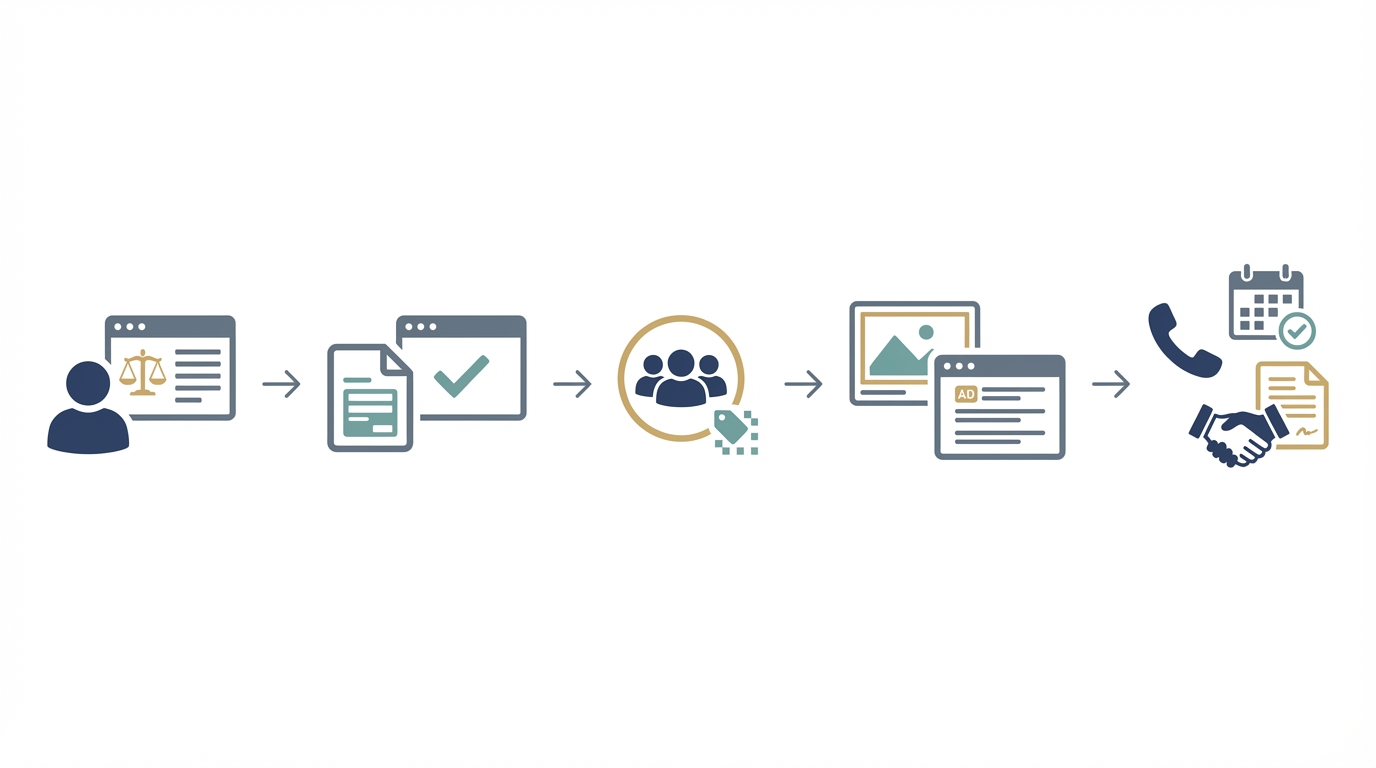
PPC remarketing and Google Analytics (GA4) optimization: GA4 techniques for law firms
Google Analytics 4 provides signal and structure that improve PPC decisions. For law firms, this data helps you prioritize paying users. Therefore, your remarketing and bidding get smarter and more accountable. Use GA4 to move from guesses to measured actions.
Key GA4 reports and how to use them
-
GA4 Audiences report
Build custom audiences from behaviors and events. For example, tag users who view fee pages or download intake forms. Next, export these audiences to Google Ads to power remarketing lists. Use the audience export guide for setup: audience export guide. As a result, you can target high intent segments precisely.
-
Site Search (view_search_results)
Enable and track the view_search_results event. Capture the search_term parameter to see what prospects search on your site. Then, create audiences from high intent queries. For instance, searches for “divorce lawyer near me” indicate urgent needs. For technical details, see the GA4 events reference: GA4 events reference.
-
Referrals report (Traffic Acquisition)
Review referral sources to spot valuable offsite partners. Add session source/medium to default channel grouping to analyze referring domains. If a local news site sends qualified traffic, consider a co-marketing or backlink strategy. For PPC context and targeting options, see related best practices at PPC targeting options.
-
Conversion Paths report
Use Advertising > Attribution > Conversion paths to inspect multi touch journeys. This report shows how paid clicks interact with other channels. Therefore, you can credit paths that include brand search and display. As a result, you may justify bid adjustments for early funnel touchpoints.
-
Conversion Events report
Mark critical events as conversions in Admin. Typical events include contact form submits, phone clicks, and booked consultations. Then, use the Events report to audit conversion quality. For example, filter by source to find which paid campaigns generate real consultations.
Practical tactics and measurement hygiene
- Prioritize first party data because third party signals may weaken. Next, sync GA4 audiences to Google Ads quickly. Then, test lists with Observation Only before large bid changes.
- Monitor micro conversions such as phone clicks and form starts. Because micro conversions predict final consults, they inform bid adjustment strategies. For example, increase bids by 10 to 15 percent for users who viewed pricing pages.
- Use Conversion Paths to spot common sequences. If many clients first watch a YouTube video, create a YouTube remarketing list. Then, layer RLSA on search to capture returning searchers.
By focusing on these GA4 reports, law firms can tighten targeting, cut wasted spend, and steer PPC toward measurable client outcomes.
PPC remarketing and Google Analytics (GA4) optimization: Quick comparison table
| Feature/Metric | Description | Benefits for Law Firms | Best Use Case |
|---|---|---|---|
| Remarketing lists (site behavior) | Lists built from page visits and micro conversions. Examples include fee pages and intake form downloads. | Reduce wasted ad spend. Prioritize high intent users. Improve ROAS. | Reengage visitors who viewed pricing or downloaded intake forms. Export audiences to Google Ads via GA4 for targeting: audience export basics |
| RLSA (Remarketing Lists for Search Ads) | Layer remarketing lists onto search queries. Change bids and messaging for known users. | Keep search relevance. Increase bid efficiency. Capture returning searchers. | Increase bids by 10 to 20 percent for qualified users on non branded and branded queries. See setup guidance at audience segments getting started |
| Cart abandoners (separate Search campaign) | Target users who started a booking or intake but did not complete it. Segment lists by membership duration. | Recover near conversions. Reduce lost consultations. Improve conversion value. | Run a dedicated Search campaign set to Maximize Conversion Value bidding for revenue focus. Use 1 day, 3 day, 7 day segments for tailored offers. |
| YouTube remarketing lists | Build audiences from video engagement in Audience Manager. Then export to Ads for targeting. | Pre qualify users with video. Scale with lookalike audiences. Increase top funnel awareness. | Use for storytelling and pre qualification. Start with engaged viewers, then expand to similar audiences. |
| Dynamic Remarketing Ads | Ads that show service pages based on prior interactions. Use a feed for services or packages. | Increase relevance and CTR. Personalize messaging to previous behavior. | Best for firms with multiple service bundles or practice areas. Pair with Google Ads tag for accurate signals. |
| Google Ads tag and tracking | The tag collects first party data and links Ads to GA4. It enables audiences and conversion import. | Improves audience accuracy. Enhances attribution. Supports audience exports. | Install site wide before building lists. Then validate events in GA4 and export audiences. See audience export: audience export basics |
| GA4 Audiences report | View custom audiences in Reports > User > User Attributes > Audiences. Create lists from events and behavior. | Reveal high intent segments. Feed remarketing lists. Inform bid adjustment decisions. | Build audiences from micro conversions like form starts and pricing page views. Export to Google Ads. |
| Site Search (view_search_results) | Track on site queries via the view_search_results event and search_term parameter. | Surface urgent intent keywords. Find service level demand. Improve landing pages and ad copy. | Create audiences from high intent searches, for example “divorce lawyer near me”. Technical ref: events reference |
| Referrals report (Traffic Acquisition) | Shows session source and referring domains with session source/medium added. | Identify partner sites that send qualified traffic. Support co marketing and backlink efforts. | If a local news site sends conversions, consider partnerships or targeted ads on that channel. Best practices: PPC ad targeting options |
| Conversion Paths report | Shows multi touch journeys across channels at Advertising > Attribution > Conversion paths. | Attribute credit across channels. Justify bid adjustments and channel spend. | Use to validate sequences that include paid search, display, and YouTube. Then adjust bids and budgets accordingly. |
| Conversion Events report | Lists events and which are marked as conversions. Events must be explicitly toggled as conversions in Admin. | Audit conversion quality. Filter by source to find which paid campaigns drive consults. | Mark phone clicks, form submits, and booked consultations as conversions. Then audit and optimize campaigns. |
CONCLUSION
Integrating PPC remarketing and Google Analytics (GA4) optimization transforms law firm advertising into a measurable growth engine. It combines remarketing lists, RLSA, and first-party data to reduce wasted spend and raise lead quality. As a result, you can prioritize high-intent users and justify bid adjustments with clear data.
GA4 reports reveal which paid paths produce consultations and actual revenue. Therefore, teams trade guesswork for decisions based on Conversion Paths and Audiences data. You can test lists with Observation Only, segment cart abandoners, and tune bids by micro conversions. This practical approach improves ROI and makes spend defensible to stakeholders.
Small and mid-sized firms need a partner that applies Big Law tactics at scale. Case Quota helps firms do exactly that with focused PPC and measurement playbooks. They translate GA4 signals into remarketing segments and bid strategies that scale. Because they focus on legal client journeys, results come faster and stay consistent.
Start by auditing your GA4 setup and exporting audiences to Google Ads. Then run Observation Only tests and segment top intent lists for immediate wins. Use these insights to grow client volume, lower cost per consult, and win market share. Reach out to a specialist to build a roadmap this quarter.
Frequently Asked Questions (FAQs)
How does PPC remarketing and Google Analytics (GA4) optimization work for law firms?
Remarketing uses lists of past visitors to reengage users with relevant ads. GA4 provides first party signals and reports that identify high intent behaviors. Together, they let you target users who viewed fee pages, started intake forms, or searched on site. As a result, you reduce wasted spend and increase qualified leads.
What is the quickest way to start with remarketing and keep risk low?
First, install the Google Ads tag and validate key GA4 events. Next, create basic audiences from high intent actions like form starts or pricing page views. Then add those audiences to Search campaigns as Observation Only to test lift without narrowing reach. If performance improves, apply bid adjustments gradually.
Which GA4 reports should I check to improve PPC performance?
Start with the GA4 Audiences report to capture high intent segments. Also use Site Search (view_search_results) to find urgent keywords people use on your site. Review the Referrals report to spot partner sites that send conversions. Use the Conversion Paths report to credit multi touch journeys. Finally, audit the Conversion Events report to ensure you mark phone calls, form submits, and bookings as conversions.
How can I reduce wasted ad spend with remarketing tactics?
Segment audiences by behavior and recency, for example 1 day, 3 day, and 7 day cart abandoners. Exclude past clients from acquisition campaigns to stop redundant clicks. Use RLSA to increase bids for returning searchers, and consider a dedicated cart abandoner campaign set to Maximize Conversion Value. These steps improve efficiency quickly.
What tests and metrics prove remarketing is working?
Run Observation Only A/B tests and measure changes in conversion rate and cost per consult. Track micro conversions like phone clicks and form starts because they predict final consults. Also monitor Conversion Paths to see if paid touchpoints appear in winning sequences. If CPA and conversion quality improve, scale the lists and increase bids incrementally.