

PPC campaigns: global consistency and top ad networks
PPC campaigns: global consistency and top ad networks matter for law firms that run ads across borders. Firms face pressure to keep brand voice uniform while adapting to local rules. However, balancing consistency and local relevance often creates friction in operations. Because legal services rely on trust, both localized copy and brand alignment matter equally. This introduction previews pragmatic strategies for picking networks and managing multi-region campaigns.
Choosing the right ad networks influences reach and intent. Google Ads and the Google Display Network drive broad search and display demand. Meanwhile, Microsoft Advertising on Bing adds desktop search volume in specific markets. Also, social networks like Meta and LinkedIn supply precise demographic targeting for client acquisition. Therefore, law firms must map networks to regional search behavior, budgets, and compliance needs. This mapping applies to international PPC plans.
Maintaining global consistency raises several challenges. For example, what resonates in the U.S. may fall flat in Germany or Australia. Moreover, local regulatory hurdles and language differences require a localization strategy, not wholesale reinvention. As a result, multi-agency coordination and a shared creative playbook become essential. Hybrid centralization works best where headquarters sets standards and local teams adapt messaging.
In the sections that follow, we use data and operational frameworks to guide decisions. We will compare network strengths, outline campaign structure options, and show reporting techniques for central oversight. Also, we include testing tactics such as A/B experiments and AI-driven optimization to scale campaigns. Ultimately, this guide helps marketing managers pick networks, preserve brand consistency, and run efficient multi-region PPC campaigns.
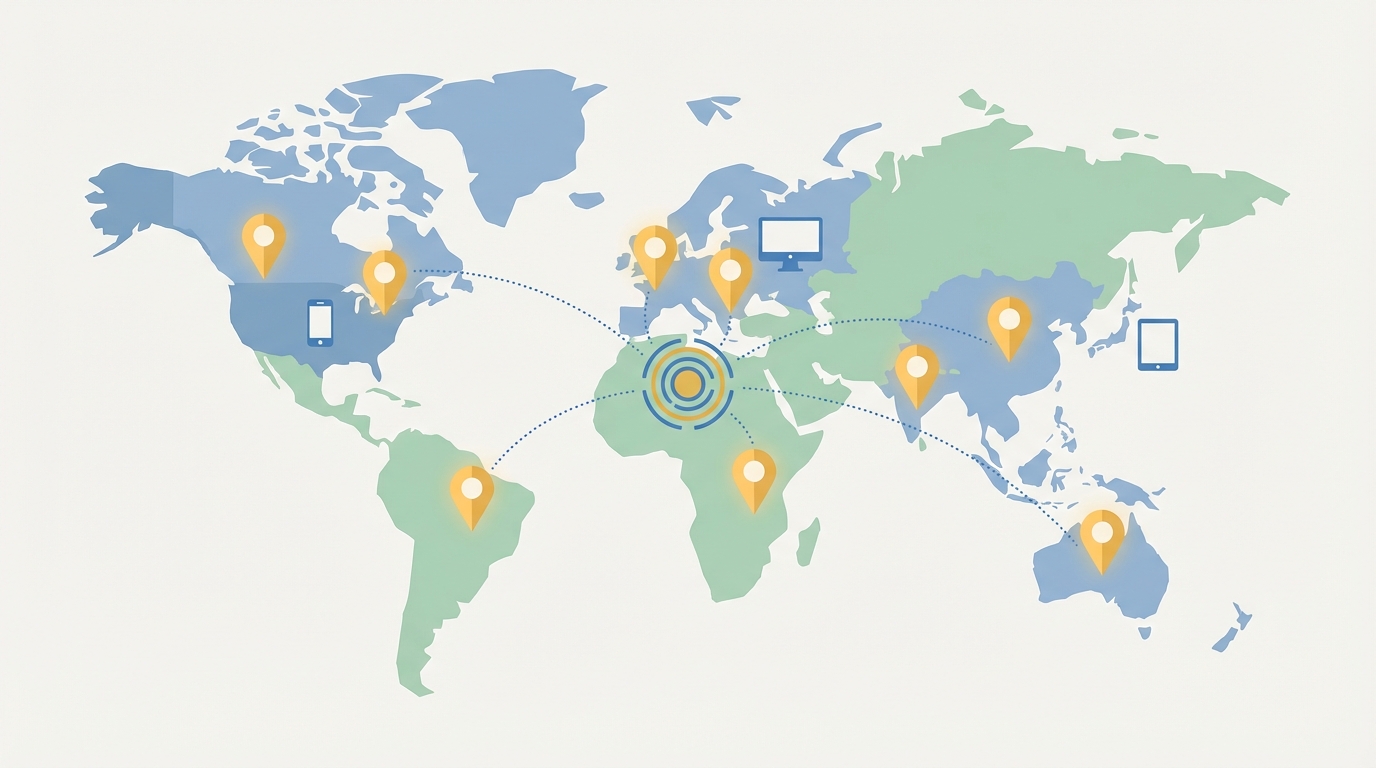
PPC campaigns: global consistency and top ad networks — practical challenges
Achieving consistent global PPC campaigns creates real operational and strategic friction. For one, localization versus reinvention demands clear rules. Because local markets differ, teams must translate intent and not just language. As Brooke Osmundson warns, “Consistency, or lack of, is a real problem.” Therefore, firms should protect core brand signals while enabling local relevance.
Localization versus reinvention
Localization must preserve brand while adapting messaging. However, full reinvention wastes lift and weakens brand equity. Use a shared creative playbook that lists nonnegotiables such as logo treatment, legal disclaimers, tone, and primary CTAs. Then allow variations for headlines, native-language copy, images, and offers. Also, run A/B testing to validate local changes before scaling.
Multi-agency coordination and ownership
Coordination breaks down without clear ownership. Consequently, set single points of contact and SLAs for creative, legal review, and reporting. Use centralized naming conventions and shared dashboards for transparency. Moreover, hybrid centralization helps; central teams set strategy while local teams execute. As Lisa Raehsler puts it, “Your job as a marketing manager is to set the strategic foundation while giving local teams enough flexibility to adapt.” This balance reduces duplicated work and speeds decision making.
Regulatory hurdles and compliance risk
Legal advertising rules vary by country and region. For example, disclosure rules or banned claims require localized assets. Therefore, maintain a compliance matrix tied to each market. Also, require preflight legal checks and maintain versioned asset libraries. Finally, document acceptable substitutions to speed approvals.
Network and measurement differences
Top ad networks behave differently by region and channel. Google Display Network reaches over two million websites, videos, and apps, which affects inventory and creative dimensions. See Google Display Network Explained for details. Meanwhile, Microsoft Advertising offers distinct desktop search reach and planning tools at Microsoft Advertising Planning Tools. Also, LinkedIn’s business audience size matters for B2B targeting. See LinkedIn Business Audience Insights.
Practical checklist for teams
- Define brand nonnegotiables and local flex areas
- Create a compliance matrix per market
- Standardize campaign structure and naming
- Share dashboards and weekly health checks
- Use A/B testing, central reporting, and AI-driven optimization
In sum, international PPC requires process, not guesswork. Therefore, combine central standards with local testing to sustain brand consistency and campaign performance across regions.
| Network | Reach | Audience type | Ad formats | Pricing options | Unique features | Ideal use cases |
|---|---|---|---|---|---|---|
| Google Ads | Global; highest search volume and broad display reach | High intent searchers and broad consumer segments | Search, responsive search, display (GDN), video, discovery, app | CPC, CPM, CPA, smart bidding for conversions | Strong intent signals, vast inventory, automated bidding and audience signals | Lead generation, local intent queries, multi-region search campaigns |
| Bing (Microsoft Advertising) | Strong desktop search share; useful in some markets | Older, higher income desktop users and Edge audience | Search, shopping ads, audience ads, native | CPC, CPM, CPA; often lower CPCs than Google in certain verticals | Better desktop and Windows integration; Linked data from Microsoft services | Supplemental search demand and markets with high Edge usage |
| Meta Ads (Facebook Instagram) | Massive social reach across platforms and formats | Broad demographics, strong retargeting and lookalikes | Image, video, carousel, collection, reels, stories | CPC, CPM, CPA, auction and automated bidding | Powerful retargeting with Meta Pixel and detailed demographic signals | Brand awareness, retargeting, and client education campaigns |
| LinkedIn Ads | Large professional network; strong B2B reach | Decision makers, professionals, company and job-level targeting | Sponsored content, InMail, text ads, dynamic ads | CPC, CPM, lead gen forms; typically higher CPCs | Native professional targeting and account-based marketing features | Business law, corporate services, referral and enterprise client acquisition |
| TikTok Ads | Rapidly growing global reach with younger skew | Gen Z and younger millennials; high engagement | Short video in-feed, branded effects, top view, spark ads | CPM, CPC, auction; emphasis on creative performance | High organic amplification and creative-first formats | Consumer-facing legal niches, brand building, and awareness in younger demos |
| Amazon Advertising | High purchase intent on Amazon commerce properties | Active buyers and people researching purchases | Sponsored products, sponsored brands, display, video | CPC, CPM; cost-per-sale options for vendors | Point-of-purchase intent and rich shopping signals | Legal services tied to transactions, document sales, or published legal guides |
| X Ads (Twitter) | Real-time conversation reach and trend amplification | Engaged news seekers, influencers, conversational audiences | Promoted posts, images, video, carousels, trends | CPC, CPM, promoted trends; auction-based | Real-time targeting and conversational context for messaging | Thought leadership, crisis communications, and rapid engagement campaigns |
| Pinterest Ads | Planning and inspiration audience, strong in lifestyle contexts | Predominantly planning-oriented users; higher female skew | Promoted pins, video pins, shopping pins, carousels | CPC, CPM, cost per engagement; seasonal bidding | Strong for planning intent and visual discovery | Estate planning, family law, and lifestyle legal niches where planning drives demand |
| Reddit Ads | Topic specific community reach across 100,000 communities | Highly engaged niche audiences and interest groups | Promoted posts, display, video, native community ads | CPM, CPC; community targeting options | Deep contextual targeting by subreddit and authentic engagement | Niche practice areas, reputation building, community outreach, and research |
| Apple Search Ads | High-intent App Store searchers and premium mobile users | Mobile users searching for apps and services | App Store search ads and creative variations | Cost per tap, CPA for downloads; keyword bids | Direct app-store intent and high quality mobile audience | Law firms with client intake apps, mobile-first services, or subscription apps |
PPC campaigns: global consistency and top ad networks — strategies to manage multi-region campaigns
Central reporting and measurement
Set a single source of truth for performance data. Use a central dashboard that pulls data from each network. For example, aggregate Google, Microsoft, Meta, and LinkedIn data into one view. Also, schedule weekly rollups and monthly deep dives. Because networks report differently, normalize metrics before you compare them. Use consistent definitions for lead, conversion, and assisted conversion.
Tip: map search intent and demographic targeting to each KPI. For technical guidance, consult Microsoft Advertising insights at Microsoft Advertising insights. Also review localization and keyword guidance from Search Engine Journal at Search Engine Journal.
Shared creative playbook and localization
Create a shared creative playbook that lists brand nonnegotiables. Then define local flex areas such as headline variations and offers. Also include native-language copy templates and image libraries. Use A/B testing to validate local changes before scaling. For ideas on testing, see HubSpot’s landing page experiments at HubSpot’s landing page experiments.
Ownership models and hybrid centralization
Adopt a hybrid centralization model. Under this model, central teams own strategy, naming conventions, and reporting. Local teams own creative adaptation and legal compliance. Consequently, this model balances governance with speed. Establish SLAs and single points of contact for approvals. Moreover, document acceptable substitutions to avoid legal delays.
Leverage PPC automation and AI-driven search experiences
Use automated bidding and responsive assets where networks support them. AI-driven features help scale keyword coverage and match user intent. However, monitor automation with human checks. Also, run periodic manual audits to catch localization errors. In addition, use scripts and rules to enforce budget caps by region.
Operational checklist for multi-region campaigns
- Standardize campaign naming and folder structures
- Build a central dashboard with normalized metrics
- Maintain a compliance and asset version matrix
- Run A/B tests for headlines, CTAs, and landing pages
- Use demographic targeting and search intent segments
- Leverage automated bidding with guardrails
In practice, start small and scale proven variants. Therefore, prioritize markets with the highest intent signals. As a result, you will protect brand consistency while gaining local relevance and efficiency.
Conclusion
PPC campaigns: global consistency and top ad networks require a strategic balance between global standards and local execution. Law firms must protect brand signals while adapting to search intent and local rules. Because legal markets depend on trust, localization must preserve tone and compliance. However, teams should avoid full reinvention that fragments equity. Therefore, adopt a hybrid centralization model with clear ownership and SLAs.
Use central reporting to normalize metrics and enable faster decisions. Also, implement a shared creative playbook that defines nonnegotiables and local flex areas. Run A/B testing for headlines, CTAs, and landing pages to prove hypotheses before scaling. Leverage PPC automation and AI driven search experiences to increase efficiency, but monitor performance with human audits. In addition, use scripts and rules to enforce budget caps by region.
Case Quota helps small and mid sized law firms apply Big Law strategies to achieve market dominance. As a specialized legal marketing agency, Case Quota builds compliant, scalable PPC frameworks. They combine central governance and localized execution to drive leads and protect brand consistency. For help planning multi region campaigns and choosing the right networks, visit Case Quota. Contact them to start a focused audit and roadmap. Start with a strategic audit today.
Frequently Asked Questions (FAQs)
How do I balance global consistency with local relevance in PPC campaigns?
Start with a shared creative playbook that defines brand nonnegotiables. Then allow local flex areas for language, offers, and imagery. Use hybrid centralization so headquarters sets strategy and local teams adapt execution. Also run A/B testing to validate local variants. Because search intent varies by market, combine demographic targeting with native-language copy and strict compliance checks.
Which ad networks should law firms prioritize for multi-region campaigns?
Prioritize networks that match intent and audience. Use Google Ads for high intent search and broad reach. Add Bing Microsoft Advertising where desktop searches matter. Use LinkedIn Ads for corporate and referral targets. Use Meta Ads for retargeting and client education. Also consider Apple Search Ads if you offer a client intake app. Finally map budget to intent signals and regional performance data.
How should I measure performance across networks and regions?
Create a single source of truth with central reporting. Normalize metrics and define lead and conversion consistently. Use UTM parameters and conversion tracking across landing pages. Also include assisted conversions to credit multi touch paths. Schedule weekly rollups and monthly deep dives. As a result, you can compare networks and optimize by search intent and demographic targeting.
How do I manage regulatory and compliance risk in different markets?
Build a compliance matrix for every region and practice area. Require preflight legal review for copy and offers. Maintain versioned asset libraries and documented acceptable substitutions. Use local counsel for market specific rules. Also include SLAs for approvals to avoid campaign delays and preserve brand consistency.
Can PPC automation and AI replace local teams?
Automation scales bidding and covers keyword breadth. However, AI cannot fully replace local cultural nuance and legal compliance. Use automated bidding and responsive assets with guardrails. Also schedule manual audits to catch localization errors. In practice, combine AI driven search experiences with human review to protect brand and boost performance.
If you need a practical audit or a structured roadmap, apply these steps incrementally. Start with markets that show highest intent. Then scale proven ad networks and creative variants.