

opt-in strategy: why law firms must earn permission to grow
An opt-in strategy defines how a firm asks clients for permission to communicate. Because trust powers law firm relationships, this strategy matters more than ever. For example, the opt-in moment acts as a key performance indicator for brand engagement. Therefore law firms that focus on clarity and consent convert higher quality leads and build lasting client value.
Trust and data privacy sit at the center of any modern opt-in plan. However, not all firms collect only what they need. In practice, 65% of brands ask for a phone number during sign-up, yet only 28% of consumers feel comfortable giving that number. As a result, teams must balance data needs with clear privacy promises and simple consent flows.
Automation and omnichannel design amplify results when used correctly. For instance, best-in-class brands use full automation three times more often than peers, and only 20% of marketers fully automate email and text campaigns today. Therefore law firms can gain an edge by combining email, SMS, and welcome series to capture intent. Because tracking sign-up sources remains weak for many marketers, firms that instrument sources will measure real return on marketing spend.
This introduction previews a practical, data-driven approach to opt-ins for legal practices. It will cover list quality, privacy-first messaging, automated welcome and upsell flows, and omnichannel opt-in moments. Ultimately, adopting an optimized opt-in strategy helps firms secure consent, protect client data, and scale efficient marketing with measurable outcomes.
How Mailchimp Insights Improve Your opt-in strategy
Mailchimp research surfaces practical steps law firms can apply to lift client sign-up conversion. First, the data shows a mismatch between what firms request and what users share. For example, 65% of brands request phone numbers during sign-up, yet only 28% of consumers feel comfortable supplying that data. Therefore firms that ask for less capture more trust and more opt-ins. You can read the full Mailchimp report here: Mailchimp Report.
Design an opt-in strategy around trust and privacy
Trust and data privacy influence the opt-in moment more than channel choice. Because legal services demand confidentiality, law firms must lead with transparent privacy promises. Follow these steps:
- Simplify forms and ask only for essential fields. As a result, users feel safer and complete sign-up flows more often.
- Display a short privacy line that links to your policy. This improves perceived safety and conversion.
- Use age-aware messaging for Gen Z and Boomers. For instance, 39% of Gen Z expect brands to obey privacy laws, versus 19% of Baby Boomers. These differences affect phrasing and consent language.
Use Mailchimp signals to prioritize high-intent moments
Mailchimp highlights that timing matters. Consumers are more likely to opt in during browsing or at checkout. Therefore capture opt-ins at these high-intent moments. Also, instrument sign-up sources so you can attribute conversions. Currently, only about one third of marketers feel confident tracking sources. Improved tracking reveals which content drives the best clients.
Improve list quality with email and SMS best practices
Less than a third of marketers call their lists very high quality. Moreover, brands with superior automation are three times more likely to maintain excellent lists. To boost list quality:
- Offer clear value on sign-up, such as a legal checklist or guide.
- Separate email and SMS consent so users choose channels they prefer.
- Limit phone number requests unless you explain the purpose, because only 28% of people are comfortable sharing numbers.
Data highlights
- 65% of brands ask for phone numbers during sign-up Source
- 8% of marketers report opt-in rates above 20% according to Mailchimp research
- Brands that automate fully are three times more likely to have high quality contact lists
“As tracking and re-targeting become more complex, the opt-in stands out as one of the few moments when a brand can earn a direct relationship – with permission.”
In short, apply Mailchimp insights to build an opt-in strategy focused on trust, minimal data collection, and automation. Doing so improves conversion and produces clients who value the relationship for the long term.
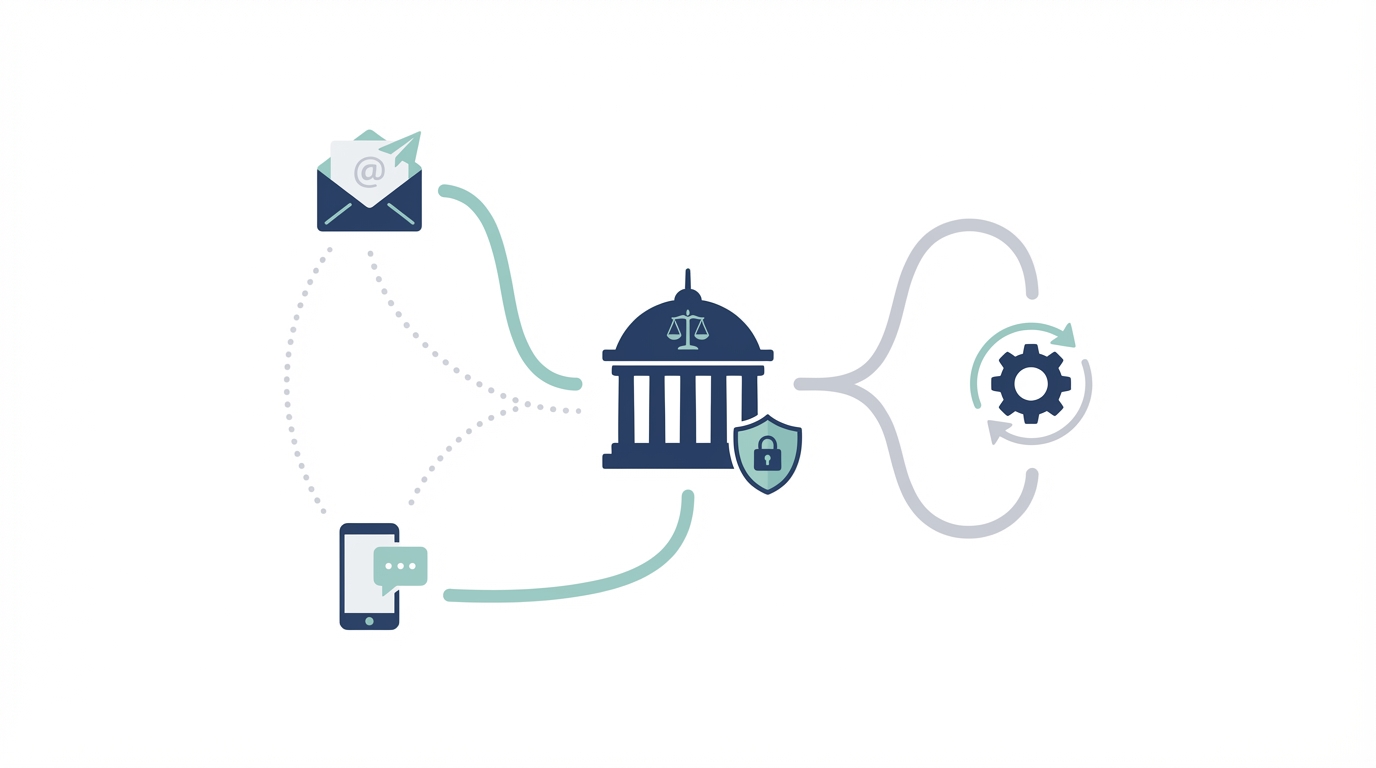
Building omnichannel opt-in strategy for law firms
Omnichannel opt-ins combine email, SMS, and automation to create cohesive client journeys. Because legal clients value clarity and privacy, this approach raises engagement and trust. For example, brands that use full automation are three times more likely to keep high quality lists. Therefore law firms should design flows that respect consent and deliver clear value.
Benefits of omnichannel opt-ins
- Higher engagement across channels because messages reach clients where they prefer.
- Increased automation rates because firms can trigger sequences by behavior and time.
- More personalized communication through segmentation and dynamic content.
- Stronger measurement of high intent actions when you track sign up sources properly.
Key components of an opt-in strategy
- Welcome series that confirms consent and sets expectations. For example, send an email within minutes and a confirming SMS when users opt in to texts.
- Upsell flows that introduce paid services or consultations after a trust building period. Use progressive profiling to collect minimal extra data.
- Channel specific consent that separates email and SMS choices. This reduces friction because users control each permission.
- Privacy first messaging that links to your policy and explains data use. This builds trust at the opt-in moment, which acts as a key performance indicator for engagement.
Practical steps and tracking
- Start simple and ask only essential fields. Since 65 percent of brands ask for a phone number, many users hesitate. Meanwhile only 28 percent feel comfortable sharing a number. Therefore limit phone requests unless you show clear purpose.
- Instrument sign up sources so you can attribute conversions. Currently only about one third of marketers feel confident tracking sources. As a result, tracking reveals which content and pages produce high intent leads.
- Automate welcome and follow up sequences. Note that only 20 percent of marketers fully automate email and text campaigns today. Firms that automate can scale client intake and nurture without extra staff.
Measurement and optimization
Track list quality, opt-in conversion rates, and downstream revenue. For context, less than one third of marketers call their lists very high quality and only eight percent report opt-in rates above twenty percent. Therefore test form length, channel offers, and privacy language. Use the Mailchimp opt-in research as a guide: Mailchimp Opt-In Research and this summary: Barchart Summary.
“As tracking and re targeting become more complex, the opt-in stands out as one of the few moments when a brand can earn a direct relationship with permission.”
Implementing an omnichannel opt-in strategy creates clearer consent, stronger lists, and measurable client growth.
SEO, Content, and Marketing Integration for opt-in strategy
| Focus Area | Primary Benefits | Key Features | AI and Local Impact |
|---|---|---|---|
| SEO | More organic visibility; higher local traffic | Local citations; schema; fast pages | Signals relevance to AI; boosts map packs |
| Content | Builds authority; answers client questions | FAQs; guides; case studies | Supplies AI snippets; improves featured answers |
| Measurable Marketing | Tracks ROI; raises opt-in conversion | UTM tracking; dashboards; A/B tests | Feeds performance data to AI; informs local bids |
| Integrated Approach | Better conversion; stronger list quality | Coordinated campaigns; omnichannel funnels | Aligns signals for AI; improves personalization |
Why this matters for opt-ins
Integrated SEO, content, and measurable marketing delivers the right traffic and the right message at the opt-in moment. Search optimization brings high intent visitors, while content reduces friction and answers legal questions that encourage permission. Measurable marketing shows which pages and offers convert so you can test forms and privacy language. Finally, aligning signals makes AI-assisted discovery more likely to surface your firm for local, intent-rich queries, which raises opt-in rates and list quality.
Conclusion: opt-in strategy that wins for law firms
An effective opt-in strategy is the backbone of modern client acquisition for law firms. Because legal work relies on trust, firms must earn permission before engaging clients. Privacy assurances and minimal data collection build that trust quickly. Meanwhile omnichannel approaches combine email, SMS, and automation to meet clients where they are.
Data shows the opt-in moment predicts long term engagement, therefore optimize it as a KPI. For example, brands that automate fully are three times more likely to keep high quality lists. Test form length, privacy language, and channel choice to lift opt-in conversion rates. As a result, you gain higher quality leads and measurable ROI.
Case Quota helps small and mid sized law firms dominate local markets by applying Big Law strategies at scale. We build privacy first opt-ins, omnichannel funnels, and automated welcome and upsell flows. Because our playbooks focus on measurable outcomes, firms see faster client intake and lower cost per acquisition. Visit Case Quota to start a tailored assessment and roadmap.
Start by treating the opt-in as a strategic moment, not a formality. Therefore adopt trust led messaging, smart automation, and precise tracking. Contact Case Quota to convert permission into profitable client relationships. Together, you can scale marketing like Big Law and win locally.
Importantly, track sign-up sources to improve channel ROI and refine messaging. As a result, your campaigns deliver more qualified inquiries and higher lifetime value. Moreover, integrating SEO and content aligns organic discovery with opt-in funnels for AI search. Therefore Case Quota pairs legal marketing expertise with technical execution to accelerate growth.
Frequently Asked Questions (FAQs)
What is an opt-in strategy and why does it matter for law firms?
An opt-in strategy is a plan for how you request client permission to communicate. It defines which channels you use and what data you collect. Because trust drives legal relationships, this strategy affects client acquisition directly. The opt-in moment also acts as a key performance indicator for brand engagement. Therefore firms that get this right convert higher quality leads and build longer client lifecycles.
How can law firms balance data collection with data privacy to increase opt-ins?
Start by asking only for essential fields. For example, collect email first and add progressive profiling later. Also display a short privacy line that links to your policy. This reduces friction and boosts perceived safety. For context, 65% of brands ask for phone numbers at sign-up, yet only 28% of people feel comfortable sharing them. Therefore explain why you need a phone number before you request it: Read more here.
Should we ask for phone numbers or focus on email first?
Separate email and SMS consent to respect choice. Email gives broad reach and supports long form content. SMS delivers high immediacy and open rates. However only 28% of consumers feel comfortable giving phone numbers. So request numbers only when you will use them. Also explain SMS use cases and frequency to increase opt-ins.
What role do omnichannel flows and automation play in conversion?
Omnichannel flows combine email, SMS, and automation into a consistent journey. They increase engagement because messages arrive where clients prefer. Use a welcome series to confirm consent and set expectations. Then deploy upsell flows after trust builds. Note that only 20% of marketers fully automate email and text campaigns today. Brands that automate fully are three times more likely to keep high quality lists. Automation scales intake while keeping personalization.
How should law firms measure and optimize opt-in performance?
Track opt-in rates, list quality, sign-up sources, and downstream revenue. Use UTM tags and analytics to attribute traffic. A/B test form length, privacy language, and channel offers. Also benchmark against Mailchimp best practices to improve outcomes: Explore best practices.