

Building a personalized marketing strategy for law firms: segmentation, A/B testing and omnichannel tactics
Personalized marketing gives law firms a way to connect with clients at scale. Because clients expect tailored experiences, relevance drives trust and results. Therefore, firms that segment audiences, test messages, and unify channels win. This article lays out segmentation, A/B testing, and omnichannel tactics to help you compete.
First, segmentation helps you target practice areas and client intent precisely. Next, A/B testing reveals which messages increase consultations and conversions. Also, omnichannel tactics ensure consistent experiences across email, web, and mobile. Together these strategies raise engagement, retention, and lifetime value for legal practices.
We will show how to collect first party and zero party data ethically. Then, you will learn practical segmentation models for corporate and consumer matters. Additionally, we cover A/B test design, metrics, and pitfalls to avoid. You will also see omnichannel workflows that tie email, SMS, and retargeting together. As a result, your firm can deliver timely, relevant messages that convert.
This guide blends data driven tactics with legal marketing best practices. Therefore, marketing leads will become higher quality and more likely to convert. Finally, we offer templates and test ideas to jumpstart campaigns fast. Read on to build an efficient, measurable personalized marketing engine for your firm.
By the end, you will have a roadmap for tests and scalable personalization. Moreover, we explain how to measure ROI and link results to practice revenue. Because law firms operate under strict privacy rules, we include compliance tips. Start here and transform one time contacts into long term client relationships.
Why personalized marketing starts with segmentation
Segmentation is the foundation of any effective personalized marketing program. Because clients come with different needs, segmentation helps firms map messages to intent. Therefore, you deliver relevant content to potential clients and referrers. Over 80% of consumers expect personalized experiences, so relevance drives trust and conversion. In fact, personalized email campaigns can boost open rates by 26% and personalization can increase customer lifetime value by up to 30%.
Segmentation reduces wasted spend. As a result, firms see higher engagement and better intake metrics. Also, segmentation enables segmentation-based personalization that supports cross-selling across practice areas. For example, a client who consulted on a contract dispute may need compliance counsel next. By tracking that journey, you can send timely, tailored outreach.
Segment types for personalized marketing and how to use first-party and zero-party data
Use clear segment types to tailor messages and channels. First-party data gives direct insight into client behavior. Zero-party data gives explicit preferences clients opt to share. Together they power data-driven insights and better targeting.
Common segment types and triggers
- Practice area interest for corporate, family, or personal injury cases
- Case stage such as awareness, consultation, active matter, or retention
- Client value and lifetime potential
- Referral source and channel attribution
- Behavioral triggers like page views, form fills, or call logs
Data sources for segmentation
- First-party data from your CRM and client intake forms
- Zero-party data from preference centers and surveys
- Website analytics and session recordings
- Email engagement and open rates
- Call logs and appointment history
- Billing and matter history
Benefits of segmentation-based personalization
- Higher conversion rates through tailored messages
- Improved client retention and lifetime value
- More efficient ad spend and lower CPA
- Better cross-sell and upsell success
- Clearer ROI tracking for marketing spend
Quotes on personalization and data
“Personalization in marketing is vital for brands aiming to connect meaningfully with their audiences,” says Linda Taylor. Because data drives relevance, firms must collect what matters and act fast. Also, Amazon demonstrates this approach: “An example of a customized experience in marketing is Amazon’s recommendation engine.”
This proof shows that even complex service firms can apply similar tactics.
For additional research on data and personalization, see HubSpot for compiled stats and practical tips at HubSpot. Also review Deloitte for strategic guidance on personalization and retail media at Deloitte.
Start by mapping segments to content and channels. Then, test messages to see what works and scale winners across channels.
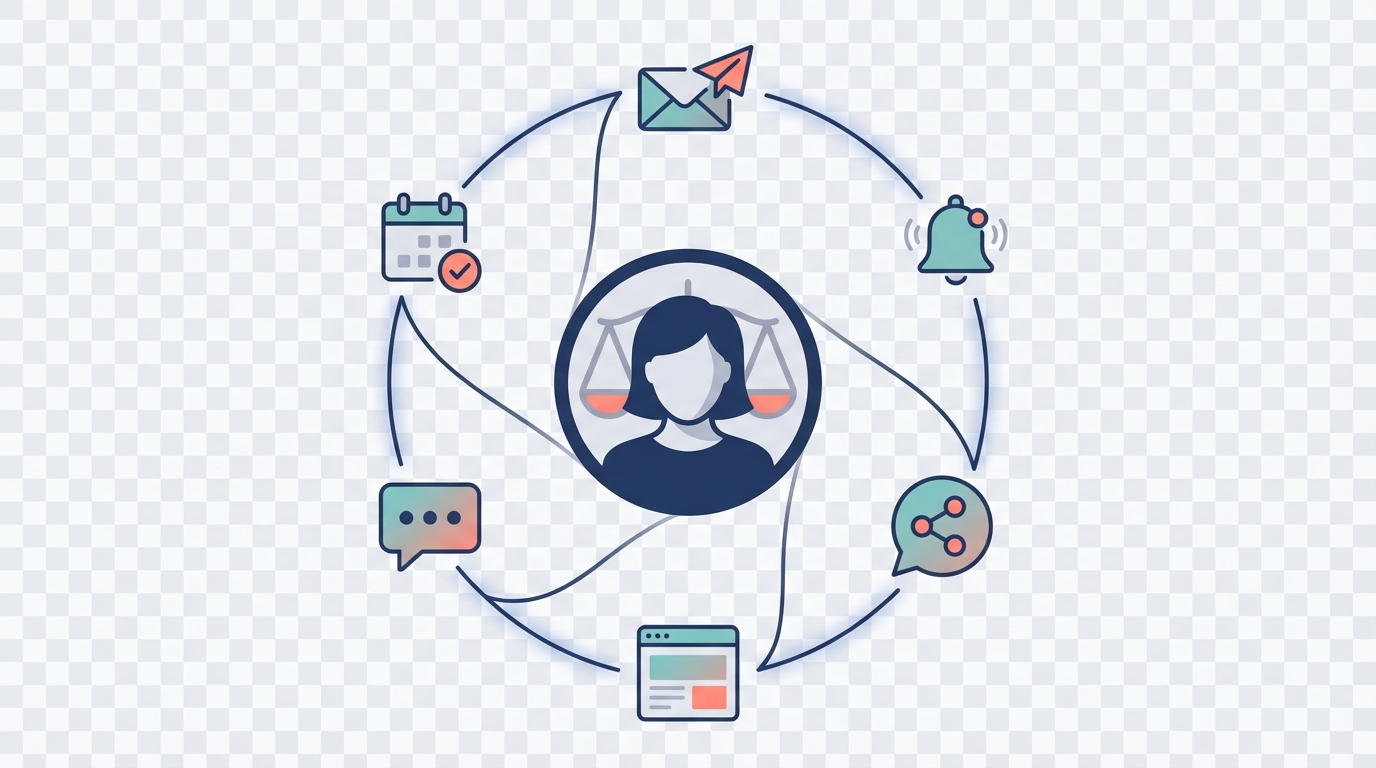
Image description: Simple, modern illustration showing a central client persona connected to icons for email, push notifications, social media, website, SMS, and calendar. A subtle scales of justice motif adds legal context without text.
A/B testing in personalized marketing
A/B testing proves what resonates with potential clients. Because law firms serve diverse needs, testing refines personalized marketing messages. Therefore you can find the copy and offers that increase consultations and form completions. A simple test can compare two subject lines or two landing page layouts. For example, personalized email campaigns can boost open rates by 26 percent, so testing subject lines matters.
How A/B testing works for legal marketing
A B test runs two or more versions of an asset. Then you split traffic evenly and measure outcomes. Measure open rates for email and conversion rates for landing pages. Also track downstream metrics like consultation bookings and retention. As a result, you learn which variant drives the highest value for your firm.
Real world legal test examples
- Test subject lines that reference a practice area versus outcome focused subject lines. This shows what drives open rates.
- Test call to action text such as Book a free consultation versus Request case review. This shows which phrasing improves conversion rates.
- Test offers like a free intake call versus a reduced fixed fee. This informs client acquisition cost.
- Test landing page layouts with a short form versus a multi step form. This reveals tradeoffs between lead volume and lead quality.
Key benefits of A B testing
- Improved customer engagement through evidence based messaging
- Higher conversion rates across email and landing pages
- Lower acquisition costs because you scale winners
- Better retention by optimizing onboarding and follow up
- Data driven decision making for budget allocation
Best practices for meaningful tests
- Define a clear hypothesis before you test
- Test one variable at a time for clean results
- Ensure sufficient sample size and run time
- Use primary metrics like conversion rates and open rates
- Tie test winners to revenue and client lifetime value
For practical guidance on experiment design, see HubSpot at HubSpot. For more A B test ideas and tactics, review Optimizely at Optimizely. Both guides offer action steps that legal marketers can adapt.
Start with low risk tests and iterate. Next, scale winners across segments and channels. Because personalization compounds, these experiments improve client acquisition and long term value.
Comparing personalized marketing channels
Below is a quick comparison of key personalized marketing channels for law firms. Use these channels together for omnichannel personalization because each adds unique value.
| Channel | Benefits | Effectiveness statistics | Ideal use cases |
|---|---|---|---|
| Email campaigns | High reach; precise segmentation; supports event-triggered messaging; low cost per contact | Personalized email campaigns can boost open rates by 26 percent; personalization can increase customer lifetime value up to 30 percent | Welcome sequences; case updates; nurture workflows; re engagement and cross sell |
| Push notifications | Immediate attention; high timeliness; good for real time personalization | Timely offers via push can boost purchase likelihood up to 96 percent; 96 percent of consumers respond better to personalized messages | Appointment reminders; urgent case alerts; post intake follow up |
| Geolocation based offers | Contextual relevance; local targeting; drives foot traffic for local offices | Location based offers increase relevance and conversion; 66 percent of customers expect firms to understand their needs | Local seminars; office open days; location specific outreach |
| Loyalty programs | Encourages repeat engagement; supports cross selling; builds long term value | Personalization linked strategies can raise retention by about 20 percent and increase upsell rates by 15 percent | Client referral incentives; milestone communications; VIP legal services programs |
Conclusion
Personalized marketing changes how law firms win and keep clients. By combining segmentation, A/B testing, and omnichannel tactics, firms deliver relevant messages that convert. Over 80 percent of consumers expect tailored experiences, and personalization can lift client retention by roughly 20 percent. Also, personalized email campaigns can boost open rates by 26 percent, while customer lifetime value can rise by up to 30 percent.
Begin with clear segments and simple experiments. Then use A/B tests to validate subject lines, offers, and landing pages. Next, scale winners across email, push, SMS, and location based channels. As a result, you lower acquisition costs and increase lead quality. Because these steps rely on first party data and data driven insights, your improvements become measurable.
Case Quota specializes in legal marketing for small and mid sized firms. We translate Big Law tactics into practical, compliant programs that drive local market share. Visit Case Quota to explore services, success stories, and tailored packages. Furthermore, our team helps you design tests, build segments, and run omnichannel workflows that protect client privacy.
If you want predictable growth, personalize your outreach and measure outcomes. Contact Case Quota to start testing fast and scale what works. Together, you can convert one time inquiries into long term client relationships.
Frequently Asked Questions (FAQs)
What is personalized marketing and why does my law firm need it?
Personalized marketing means tailoring messages and offers to individual client needs. Because over 80% of consumers expect personalized experiences, relevance builds trust. As a result, firms can increase engagement and conversion rates. Personalized outreach also reduces wasted ad spend. For example, targeted email and event triggered messaging can lift open rates and response. Moreover, personalization can raise customer lifetime value by up to 30 percent and boost retention by roughly 20 percent.
How does segmentation work for law firms and what data should we use?
Segmentation groups prospects and clients by shared traits or behavior. Use practice area interest, case stage, referral source, and lifetime value as segments. Also collect first party data from intake forms and CRMs. In addition, use zero party data from preference surveys to capture client intent. Together these data sources power segmentation based personalization and data driven insights. Therefore you can deliver the right content at the right time.
How can A/B testing improve our marketing performance?
A/B testing compares two versions of a message or page to find a winner. Test subject lines, call to action text, landing pages, and offers. Because personalized email campaigns can boost open rates by 26 percent, testing subject lines matters. Also test pricing or free consultation offers to measure acquisition cost. When you run controlled tests, conversion rates and retention usually improve. Consequently, your firm makes data driven decisions and scales what works.
Which channels should we prioritize for omnichannel personalized marketing?
Prioritize channels that match client behavior and case urgency. Email provides broad reach and strong segmentation. Push and SMS help with timely reminders and urgent alerts. Geolocation offers support local events and office visits. Loyalty programs encourage repeat engagement and referrals. For example, timely push messages can raise response likelihood dramatically. Therefore mix channels for consistent omnichannel personalization and improved client experience.
How do we measure ROI and stay compliant with privacy rules?
Track open rates, conversion rates, consultation bookings, and lifetime value. Then tie those metrics to revenue and retention. Also run attribution tests to see which channels drive the most value. For compliance, collect only necessary first party data and document consent. Moreover, use transparent preference centers so clients control their data. Finally, maintain secure storage and follow local privacy laws to protect client confidentiality.
If you need quick help, apply these tactics in small experiments. Afterwards, scale winners across segments and channels to grow predictably.