

Busy schedules and shifting preferences mean your clients are searching for legal help from their smartphones, not just their desktops. This shift puts small and mid-size Southern California firms at a disadvantage unless their websites deliver a seamless mobile experience. By prioritizing mobile optimization, you ensure fast loading, easy navigation, and accessible information that strengthens your firm’s credibility and keeps potential clients engaged where larger competitors often excel.
Table of Contents
- Defining Mobile Optimization For Law Firms
- Key Features Of Mobile-Optimized Law Sites
- How Mobile Optimization Impacts Legal SEO
- Common Pitfalls And How To Avoid Them
- Maximizing Client Engagement On Mobile Devices
Key Takeaways
| Point | Details |
|---|---|
| Importance of Mobile Optimization | Mobile optimization is essential for law firms to offer seamless client experiences across devices, directly affecting client acquisition and retention. |
| Technical Considerations | Key features like responsive design, fast loading speeds, and simplified navigation must be prioritized to enhance user experience. |
| Impact on SEO | Mobile optimization influences search engine rankings, making it critical to align with Google’s mobile-first indexing for better visibility. |
| Common Pitfalls | Law firms should avoid issues such as slow page loads and complex navigation to maintain client engagement and satisfaction. |
Defining Mobile Optimization for Law Firms
Mobile optimization for law firms represents a strategic approach to transforming digital client experiences through responsive, user-friendly website design. At its core, mobile optimization ensures that legal websites function seamlessly across smartphones, tablets, and various mobile devices, adapting to different screen sizes and user interaction patterns.
The primary goal of mobile optimization is to create an intuitive, accessible digital environment that meets potential clients where they are – on mobile devices. Mobile website adaptation has become critical as more individuals search for legal services through smartphones. This approach involves several key technical and design considerations:
- Responsive design that automatically adjusts layout
- Fast page loading speeds
- Touch-friendly navigation menus
- Readable text without zooming
- Easily clickable contact buttons
- Simplified forms for mobile data entry
Successful mobile optimization goes beyond mere technical implementation. It represents a fundamental understanding that potential clients expect immediate, frictionless access to legal information. Modern law firms must recognize that a poor mobile experience can instantly drive away prospective clients, potentially losing valuable business opportunities.
The mobile experience directly impacts several critical aspects of client acquisition and retention:
- First impressions of professional credibility
- Ease of initial contact and communication
- Perceived responsiveness and accessibility
- Overall perception of technological competence
Mobile user experience has become a key differentiator in a competitive legal marketplace. Firms that invest in sophisticated, user-friendly mobile design demonstrate their commitment to client convenience and modern communication standards.
Here’s a summary of how mobile optimization features benefit law firms:
| Feature | Purpose | Impact on Law Firms |
|---|---|---|
| Responsive Design | Adjusts layout for any device | Ensures professional impression, boosts engagement |
| Fast Loading Speeds | Reduces page load time | Enhances client satisfaction, lowers bounce rates |
| Simplified Navigation | Easy access to key info | Increases contact inquiries, reduces frustration |
| Click-to-Call Buttons | One-tap phone contact | Streamlines client outreach, improves response rate |
Pro tip: Conduct monthly mobile usability testing to ensure your law firm’s website remains responsive and user-friendly across all device types and screen sizes.
Key Features of Mobile-Optimized Law Sites
Mobile-optimized law firm websites require sophisticated design elements that create seamless digital experiences for potential clients searching for legal services on mobile devices. Mobile website performance depends on several critical technical and user experience factors that transform how legal professionals connect with clients.
The fundamental features of an effective mobile-optimized law site include:
- Responsive design that adapts instantly to different screen sizes
- Ultra-fast page loading speeds
- Large, easy-to-read typography
- Simple, thumb-friendly navigation menus
- Prominent contact buttons
- Click-to-call functionality
- Streamlined contact forms
- Legible content without requiring zooming
Successful mobile optimization transcends technical implementation. It represents a strategic approach to digital client engagement that acknowledges how modern legal consumers interact with online information. Law firms must design mobile experiences that feel intuitive, professional, and effortlessly accessible.
The technical architecture of mobile-optimized sites involves several sophisticated considerations:
- Minimize large image file sizes
- Implement efficient caching strategies
- Use compressed CSS and JavaScript
- Enable browser-side rendering
- Prioritize critical content loading
User experience remains paramount in mobile design. Law firms that create frictionless mobile interactions demonstrate technological sophistication and client-centered thinking. By prioritizing mobile optimization, legal practices signal their commitment to accessibility and modern communication standards.

Pro tip: Regularly test your law firm’s mobile website on multiple devices and screen sizes to ensure consistent performance and user experience.
How Mobile Optimization Impacts Legal SEO
Mobile optimization has become a critical factor in determining search engine rankings for law firms, fundamentally transforming digital visibility and client acquisition strategies. Mobile SEO performance now represents a decisive element in how legal websites compete for online prominence.
The primary SEO impacts of mobile optimization include:
- Alignment with Google’s mobile-first indexing
- Improved page loading speeds
- Enhanced user engagement metrics
- Reduced bounce rates
- Higher search result rankings
- Increased organic traffic
- Better mobile user experience signals
Modern search algorithms prioritize mobile-friendly websites, making technical optimization more than just a design consideration. Law firms that fail to adapt risk significant visibility penalties, potentially losing critical client acquisition opportunities. Search engines now evaluate multiple mobile-specific factors that directly influence ranking potential.
The most crucial SEO ranking signals for mobile-optimized law sites involve:
- Responsive design adaptability
- Page load time under 3 seconds
- Touch-friendly navigation elements
- Readable content without zooming
- Compressed multimedia assets
Search engine algorithms continuously evolve to prioritize mobile user experience. Law firms must recognize that mobile optimization is no longer optional but a fundamental requirement for maintaining competitive digital visibility. Strategic mobile design directly translates into improved search rankings and increased client engagement potential.
Pro tip: Conduct quarterly mobile SEO audits to identify and address potential optimization gaps that could impact your law firm’s search engine performance.
Common Pitfalls and How to Avoid Them
Mobile website optimization presents numerous challenges for law firms seeking to create compelling digital experiences. Website optimization strategies require careful navigation of technical and design complexities that can potentially undermine client engagement and search engine performance.
The most critical mobile optimization pitfalls for law firms include:
- Slow page loading speeds
- Non-responsive design elements
- Overcomplicated navigation menus
- Unreadable text on smaller screens
- Excessive pop-ups and interstitials
- Poor image compression
- Lack of clear call-to-action buttons
- Inconsistent content formatting
Law firms frequently encounter technical obstacles that compromise their mobile user experience. These challenges often stem from outdated website architectures, inadequate technical understanding, or budget constraints that limit comprehensive digital transformation. The consequences extend beyond mere aesthetic issues, directly impacting client acquisition and search engine rankings.
To effectively mitigate mobile optimization challenges, law firms should focus on:
- Conducting comprehensive mobile performance audits
- Implementing responsive design frameworks
- Optimizing image and multimedia assets
- Simplifying navigation structures
- Prioritizing content readability
- Ensuring consistent cross-device experiences
- Monitoring performance metrics regularly
User experience design demands continuous attention and strategic refinement. Successful law firms recognize that mobile optimization is an ongoing process requiring consistent investment in technical infrastructure and user-centric design principles.
The table below contrasts common mobile pitfalls with effective solutions:
| Pitfall | Consequence | Solution |
|---|---|---|
| Slow Page Loads | High abandonment, loss of clients | Optimize images, use caching |
| Small Touch Targets | User frustration, missed contacts | Design larger interactive elements |
| Complex Forms | Drop-offs during contact | Use shorter, mobile-friendly forms |
| Excessive Pop-Ups | Distracts users, SEO penalties | Limit intrusive elements, use banners sparingly |
Pro tip: Invest in professional mobile usability testing to identify and resolve potential user experience barriers before they impact client engagement.
Maximizing Client Engagement on Mobile Devices
Client engagement represents the critical cornerstone of successful mobile experiences for law firms. Mobile client interaction strategies require a nuanced approach that prioritizes user accessibility and seamless communication pathways.
Effective mobile engagement strategies for law firms include:
- One-tap contact options
- Streamlined consultation request forms
- Clear, concise service information
- Immediate click-to-call functionality
- Interactive FAQ sections
- Quick load times
- Personalized content recommendations
- Location-based service offerings
- Secure communication channels
Successful mobile engagement transcends technical implementation. Law firms must create digital environments that feel intuitive, responsive, and genuinely client-focused. This means designing experiences that anticipate potential client needs, reduce friction, and make legal service exploration feel effortless and approachable.
The most critical elements of mobile client engagement involve:
- Creating frictionless initial contact points
- Providing immediate value through accessible content
- Ensuring visual and functional consistency
- Implementing responsive design principles
- Minimizing technical barriers to communication
- Offering multiple contact method options
- Maintaining professional visual branding
User experience design demands a holistic understanding of client psychology and technological capabilities. Successful law firms recognize that mobile engagement is about creating emotional connections through digital interfaces that feel welcoming, trustworthy, and efficient.
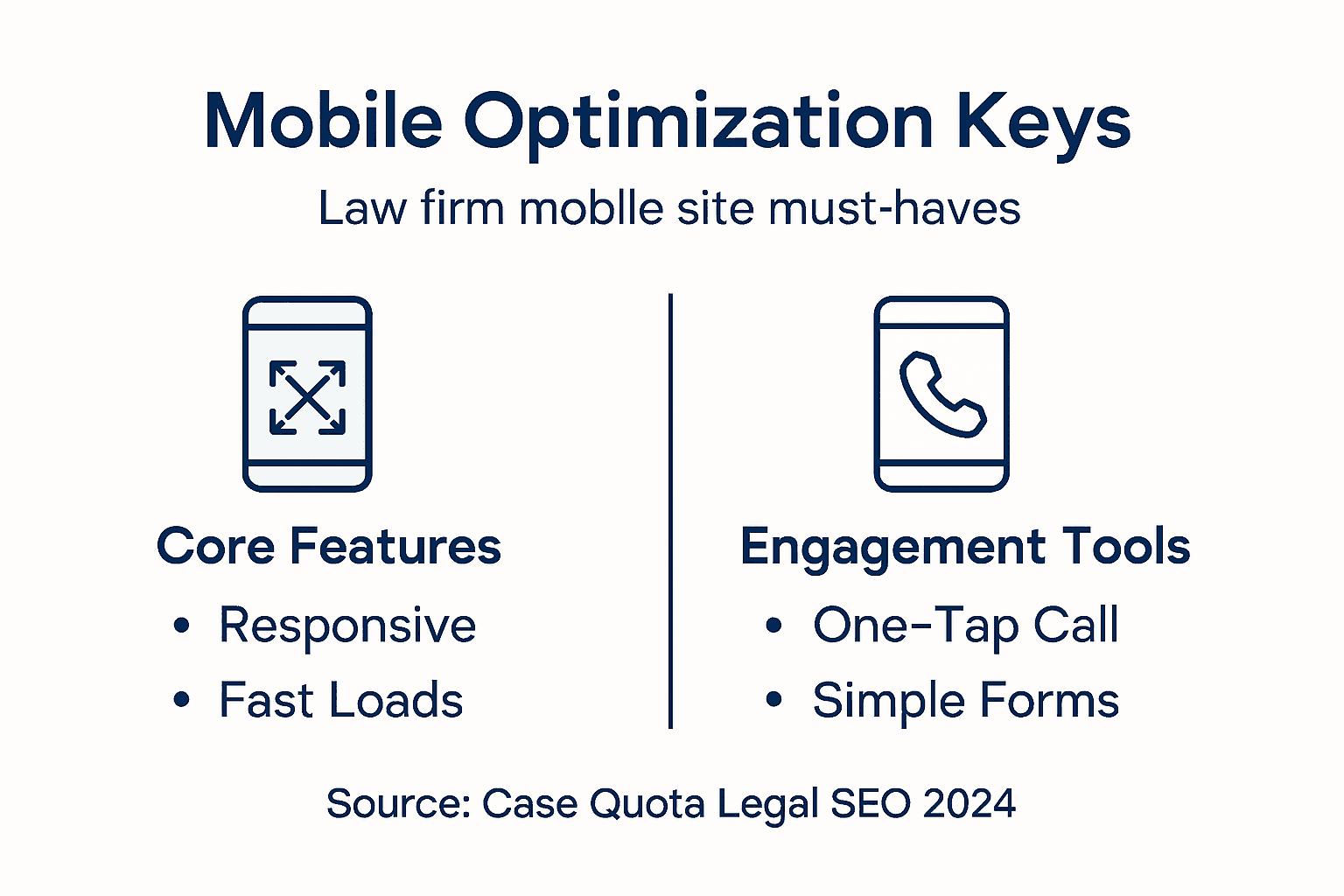
Pro tip: Implement user journey mapping to identify and eliminate potential mobile interaction barriers that might discourage potential clients from reaching out.
Empower Your Law Firm with Mobile Optimization and Client Engagement Strategies
The article highlights the critical challenge law firms face in delivering seamless mobile experiences that not only boost client engagement but also improve SEO and overall digital visibility. Many firms struggle with slow loading times, complicated navigation, and ineffective mobile forms that drive potential clients away. At Case Quota we understand these pain points and specialize in transforming these challenges into growth opportunities through SEO-optimized web design, mobile-friendly digital marketing, and tailored client engagement solutions specifically crafted for legal practices.
Our proven strategies focus on key concepts like responsive design, fast page loading speeds, and one-tap contact options that directly address the needs discussed in the article. By partnering with experts who have 15 years of digital marketing experience and dedicated legal marketing knowledge, your law firm can overcome common pitfalls and stand out in a competitive Southern California market.
Ready to boost your mobile presence and convert more visitors into clients right now

Discover how Case Quota’s specialized services can transform your law firm’s mobile optimization and client engagement. Visit our website to learn more and schedule a consultation. Take the first step toward unlocking more client connections through smarter mobile marketing today.
Frequently Asked Questions
What is mobile optimization for law firms?
Mobile optimization for law firms involves designing websites that function seamlessly on mobile devices, ensuring a responsive, user-friendly experience for potential clients.
How does mobile optimization impact client acquisition for law firms?
A well-optimized mobile site enhances user engagement, reduces bounce rates, and improves first impressions, all of which can lead to increased client inquiries and conversions.
What are the key features of a mobile-optimized law firm website?
Key features include responsive design, fast loading speeds, simplified navigation, clear call-to-action buttons, and mobile-friendly contact forms.
Why is mobile optimization essential for legal SEO?
Mobile optimization is crucial for SEO as search engines prioritize mobile-friendly websites. It affects rankings, user engagement metrics, and ultimately, the visibility of law firms online.
Recommended
- Why Optimize Law Firm Websites for Client Growth | Case Quota
- 7 Law Firm Website Best Practices for Greater Client Growth | Case Quota
- Legal Website Optimization: Boosting Law Firm Growth
- How to Improve Law Firm Website for More Clients Fast – Case Quota
- Signature Law: London Lawyers for Family, Property & Wills