
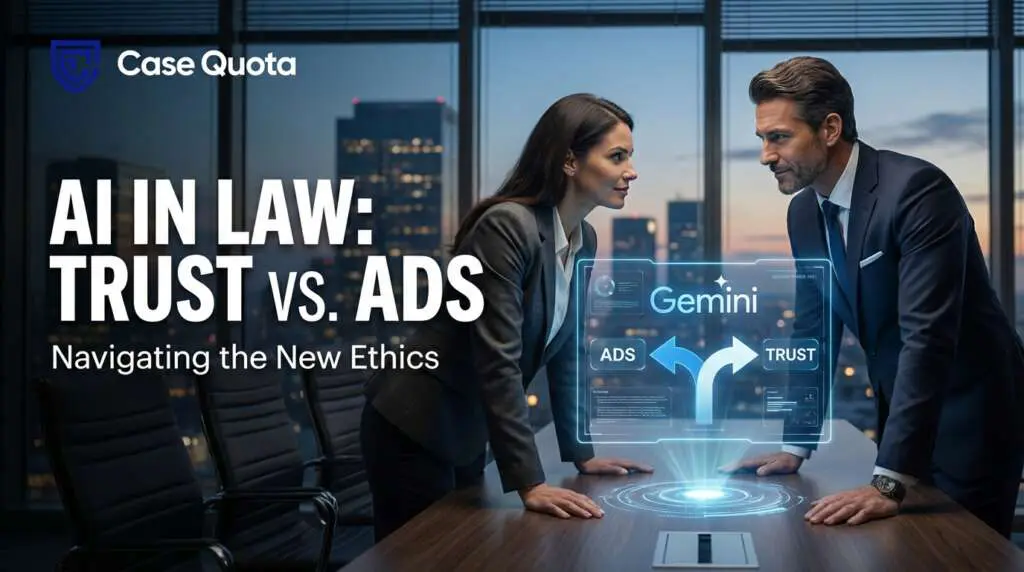
Google Gemini ads and the future of trust in AI assistants
Google Gemini ads have become a focal point in debates about advertising in AI assistants. Because Google’s leadership has publicly said it currently plans no advertising inside the Gemini AI assistant, the move reshapes how firms should think about paid visibility. However, the absence of ads does not mean the end of ad-driven reach. Instead, it forces law firms to rethink where and how they win attention in a shifting search and assistant landscape.
Demis Hassabis framed the issue around trust, and therefore it matters for legal marketers. He argued that an assistant must feel unbiased and helpful first. As a result, inserting ads could undermine that trust. For law firms, trust is the currency of client intake. Consequently, an assistant that avoids monetization by ad placements changes the competitive dynamics for lead generation.
In practice, Gemini’s no-ads stance challenges conventional PPC and display strategies. Law firms can no longer assume assistants will route intent to paid placements. Instead, they must focus on organic authority signals, thoughtful content design, and conversational SEO for the Gemini AI assistant and similar tools. Furthermore, firms should prepare to capture referral flows from AI summaries and overview features, because users may prefer concise, ad-free recommendations when seeking legal help.
This introduction sets up an analytical look at three core topics. First, we will explore how trust and assistant design influence user behavior. Second, we will compare search results, AI Overviews, and assistant responses for legal queries. Third, we will outline practical strategy shifts for law firms, including content architecture, schema use, and reputation signals. Ultimately, the Gemini ads question is more than a product decision. It is a signal about user expectations and the ethical limits of monetizing helpful AI tools. Therefore, law firms that adjust early can turn this change into a competitive advantage.

Why Google’s no-ads stance for Gemini matters for trust
Demis Hassabis has been clear about Google Gemini ads. He said, “We don’t have any current plans to do it ourselves.” Moreover, he framed the question as one of confidence in the assistant. As he put it, “There is a question about how does ads fit into that model, where you want to have trust in your assistant.” These remarks signal a deliberate choice. Google is prioritizing perceived neutrality and usefulness over immediate ad revenue. For law firms, that choice reshapes expectations about where users will see recommendations and sponsored content.
First, assistants differ from search engines in intent and presentation. In search, ads appear alongside results because intent is explicit. However, in an assistant, responses can feel personal and definitive. Therefore, adding ads risks eroding trust. As a result, users may treat assistant answers as unbiased guidance. If ads enter that space, users could doubt the assistant’s objectivity. That concern explains why Google has publicly pushed back on reports that it will monetize Gemini. In December 2025, Google Ads VP Dan Taylor disputed an Adweek claim and said the report was “inaccurate” and that there were “no current plans” to add ads to the Gemini app. For context, read the Search Engine Journal coverage at Search Engine Journal.
Second, the trust tradeoff has strategic implications. Law firms rely on credibility and reputation to win clients. Consequently, when users consult an AI assistant for legal concerns, they expect impartial guidance. Therefore, firms must invest in signals that assistants and AI Overviews surface organically. For example, structured data, authoritative content, and strong review profiles all matter more if paid placements do not appear in assistant responses. Importantly, Google has already introduced ads into AI Overviews in traditional search. That rollout shows a split approach: Google experiments with ads in certain AI features while keeping Gemini app experiences ad-free for now. See TechCrunch’s reporting on AI Overviews at TechCrunch.
Finally, competitive dynamics will shift across platforms. OpenAI is testing ads in ChatGPT’s free and Go tiers, so law firms will face different ad environments across assistants. For that reason, firms should map where users seek legal help and adapt accordingly. For a deeper look at ChatGPT ad testing, review TechCrunch’s article at TechCrunch.
In short, Google’s public no-ads stance on Gemini stresses trust and usefulness. Consequently, law firms must prioritize organic authority and reputation. As a result, they can remain visible to users even when assistants avoid monetized placements.
Advertising comparison: Gemini vs ChatGPT vs AI Overviews
The table below compares current ad presence, monetization plans, trust effects, and rollout timing.
| Aspect | Google Gemini (Gemini AI assistant) | OpenAI ChatGPT | Google AI Overviews |
|---|---|---|---|
| Current ad presence | No ads in the Gemini app; leadership says no current plans. | Ads are being tested for free and Go tiers for U.S. adults. | Ads began appearing in AI Overviews in October 2024 and expanded. |
| Monetization plans | No current plans to monetize in-app; priority is trust and neutrality. | Testing indicates a move toward ad monetization across tiers. | Fully monetized in overview features; Google reports revenue parity with search. |
| User trust impact | High priority on perceived neutrality; ads could erode trust quickly. | Ads may reduce perceived objectivity; implementation will matter. | Lower trust risk because overviews sit in a search context users expect ads. |
| Rollout timeline | No announced timeline; executives reiterated no current plans in late 2025. | Testing scheduled to begin in coming weeks for targeted users. | Rolled out October 2024 and continued expansion through 2025 and 2026. |
| Typical placement format | Conversational responses with no ad slots inside the assistant. | Ads within chat threads or as tier-based placements. | Ads shown alongside AI Overviews and search result panels. |
| Implication for law firms | Prioritize organic authority, structured data, and reputation signals. | Prepare to test targeted ads where ChatGPT includes paid placements. | Continue PPC while optimizing content for AI Overviews and snippets. |
How law firms should adapt advertising strategy when Gemini avoids ads
Google’s decision to keep Gemini free of in-app advertising changes the rules for legal marketers. Because Gemini aims to preserve trust, law firms cannot rely on direct paid placements inside the assistant. Therefore, firms must shift budgets and tactics toward channels and signals that AI assistants are likely to surface. This approach will protect visibility while respecting user expectations about neutrality and helpfulness.
Prioritize trust and reputation over interruptive ads
Trust matters more than ever when users ask an assistant for legal guidance. For example, people expect answers that feel impartial and credible. Consequently, law firms should invest in reputation signals that assistants trust. Focus on authoritative content, client reviews, legal citations, and consistent NAP listings. As a result, assistants are more likely to surface your firm organically when users ask legal questions.
Optimize for advertising in AI assistants through content and structure
Because Gemini avoids ads, firms must win through organic authority and conversational SEO. First, create short, clear answers to common legal questions. Second, use schema markup and structured data to signal expertise. Third, publish FAQ pages and plain-language guides that assistants can paraphrase. These steps improve your chances of being cited by AI Overviews and assistant responses.
Tactical checklist for small and mid-sized firms
- Audit top landing pages for clarity and trust signals. Include client reviews and credentials.
- Add legal schema, FAQ schema, and attorney structured data.
- Produce concise, authoritative Q and A pages for common queries.
- Build local citations and keep contact details accurate across directories.
- Encourage verified reviews on Google and niche legal directories.
Balance paid channels where they still matter
Although Gemini may not host ads, other AI surfaces and search features still accept paid placements. For instance, Google’s AI Overviews now include ads in search contexts. See the TechCrunch report at TechCrunch. Therefore, keep a tactical PPC budget for search and overview placements. Also, monitor ChatGPT ad testing and be ready to test ads there when it fits your intake model. For reference, review the ChatGPT ad testing report at TechCrunch.
Measure signals assistants use
Track organic visibility differently. Measure featured citations, AI summaries, and referral clicks from AI-driven pages. Also, monitor brand mentions in AI Overviews and assistant transcripts. Because Google Ads VP Dan Taylor emphasized no current plans for Gemini monetization, firms have time to adapt. For additional context, see Search Engine Journal.
Look ahead: shape future norms with ethical marketing
Finally, adopt respectful strategies that align with user expectations about privacy and impartiality. In time, advertising in AI assistants may reappear in different forms. However, firms that lead with trust, transparent messaging, and helpful content will win client confidence. Consequently, they will maintain visibility across both ad and non-ad AI environments.
Conclusion
Google Gemini ads remain notable because Google publicly says it has no current plans to add ads to the Gemini AI assistant. This stance highlights trust as the core design principle for assistants. Therefore law firms should treat assistant responses as high-trust touchpoints, not ad inventory. As a result, marketing must shift toward authority and transparency.
Focus on organic authority and reputation signals. Prioritize content that answers user questions clearly. Use schema markup, verified reviews, and legal citations. These signals increase the chance assistants will cite your firm. Also maintain tactical PPC budgets for AI Overviews and search where ads still appear.
Adopt cautious advertising in AI assistants. Because users expect impartial guidance, avoid aggressive, interruptive tactics. Instead use helpful, privacy-aware outreach. Consequently you build client trust and protect brand reputation when assistants expand.
Prepare for a mixed future. OpenAI and other platforms may add ads sooner. Therefore map user journeys across assistants and search. Test ads where platforms allow, but prioritize long-term trust investments. For law firms, trust converts better than clicks.
If you need help adapting, Case Quota helps law firms scale with Big Law strategies. They focus on reputation, structured content, and intake systems that work in AI-driven markets.
Start with an audit of queries that drive legal intent. Then refine content, reviews, and schema. Finally, train intake teams to convert AI-driven referrals into consults. This practical stance wins trust and clients.
In short, Google Gemini’s no-ads stance demands strategic shifts. Prioritize trust, organic authority, and measured paid testing. Consequently your firm will remain visible, credible, and ready for change.
Frequently Asked Questions (FAQs)
What is Google’s position on Google Gemini ads?
Google has publicly said it has no current plans to place ads inside the Gemini AI assistant. Demis Hassabis emphasized trust and usefulness as primary goals. Therefore Google treats the assistant as a high-trust surface. However, the company continues to test ads in other AI features.
Why does the no-ads stance matter for trust in AI assistants?
Assistants deliver conversational, often definitive answers. Because of that, users expect impartial guidance. If ads appeared inside the assistant, users might doubt objectivity. As a result, trust in your assistant would decline. For law firms, trust directly affects client intake and conversion.
Does that mean Gemini will never run ads?
Not necessarily. Google leaders have reiterated there are no current plans. Dan Taylor called earlier reporting inaccurate. However, product priorities can change as the market evolves. Therefore firms should monitor announcements while planning for a mostly ad-free Gemini experience today.
How should law firms adjust advertising in AI assistants and related channels?
Shift from direct paid placements toward organic authority. First, build concise, plain-language answers to common legal questions. Second, use structured data, legal schema, and FAQ markup. Third, collect verified reviews and local citations to boost reputation signals. Also optimize for conversational SEO so assistants can surface your content. Finally, keep a tactical PPC budget for search and AI Overviews where ads still appear.
How do Gemini, ChatGPT, and Google AI Overviews compare for advertisers?
Gemini currently emphasizes an ad-free assistant experience and high trust. OpenAI is testing ads in ChatGPT across free and Go tiers. Google’s AI Overviews already show ads alongside search. Consequently advertisers will face mixed environments. Therefore map user intent across platforms and test where paid placements exist, while always prioritizing trust and reputation.