
Generative Engine Optimization (GEO) AI Ready SEO Playbook for Law Firms
Generative Engine Optimization (GEO) is not an optional upgrade. Law firms must adapt now to the AI driven shift in search. Because AI answers change where clients find legal help, firms risk losing visibility. Moreover, early adopters gain outsized market share and higher intent traffic. This guide explains why GEO matters and how small to mid sized law firms can win.
In this playbook you will find practical steps. First, we outline a baseline audit to measure current AI visibility and citation risk. Next, we show content restructuring techniques that help AI systems surface your firm as an authoritative answer. Then, we cover schema and structured data that feed AI engines with clean signals. After that, you will learn how to set up GA4 AI referral tracking and integrate AI referrals into CRM workflows. Finally, we explain measurement frameworks that prove ROI over months and years.
GEO adds an extra visibility layer that traditional SEO cannot guarantee. As a result, it amplifies organic search and improves conversion. AI referred visitors convert at higher rates, therefore optimizing for citations delivers more valuable leads. Because AI engines evaluate entity authority, you will need third party coverage, entity rich content, and consistent schema to earn citations. Thus, GEO requires both technical fixes and strategic content work.
This introduction will get you up to speed without overwhelming you. However, the detailed playbook that follows will include templates and checklists. You will get immediate action items for a two to four week sprint. Moreover, we map foundational improvements that produce compounding authority in three to six months. The goal is clear. Build an AI resilient presence that captures high intent traffic and converts it into clients.
Read on to learn tactical steps, measurement templates, and governance practices tailored to law firms. The next sections balance quick wins with sustainable growth. As a result, your firm can dominate local markets while preparing for future AI changes.
What is Generative Engine Optimization (GEO)?
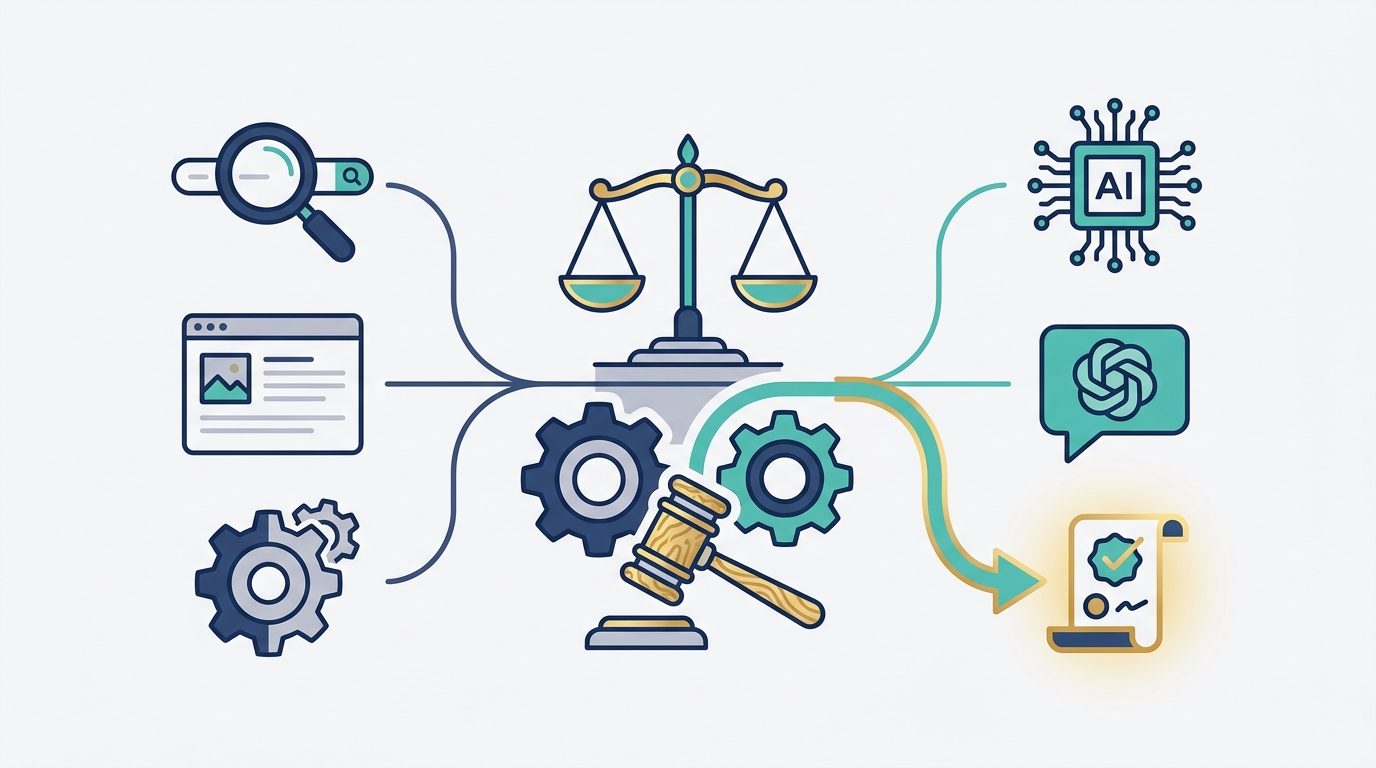
Generative Engine Optimization (GEO) is the practice of shaping your web presence to win visibility in AI powered answers and conversational search. GEO focuses on structured signals, concise direct answers, and entity authority. As a result, it adds a new visibility layer beyond traditional organic search. AI engines may surface your firm in an AI Overview, a chat response, or a summarized citation. Therefore GEO helps law firms reach high intent prospects earlier in their decision journey.
GEO does not replace existing SEO work. “GEO is not a replacement for SEO. It amplifies it.” However, it changes priorities. For example, AI systems reward clear facts, trusted citations, and reliable entity data. Because of this, law firms must feed AI engines consistent signals through schema and third party coverage.
How GEO complements and amplifies traditional SEO
GEO strengthens traditional SEO in predictable ways. First, it increases the chances your content appears in AI citations and conversational answers. Second, it improves the quality of referrals you receive. Third, it requires technical hygiene that benefits organic rankings as well.
Key integration concepts include:
- Structured data and schema markup to surface firm information for AI engines, such as attorney bios and office locations. This helps with accuracy and AI citations.
- Direct answer openings and FAQ schema to give AI concise, extractable responses. As a result, AI systems can pull short, authoritative snippets from your pages.
- Entity authority through third party coverage, legal directories, and citations. Therefore, consistent mentions across trusted sites help you earn AI trust.
- Content restructuring to surface answers up front, include temporal markers, and use clear headings. This practice helps both human readers and AI parsers.
Why law firms should prioritize entity authority and structured data
AI engines do not read your content like humans. Instead, they rely on signals and citations to build safe answers. As a result, the firms that appear most often in AI responses tend to have strong entity signals. To build those signals, invest in structured data, rich attorney profiles, and verified directory listings. Moreover, secure third party mentions in reputable publications to boost credibility.
For practical context, review Google’s updates on AI Overviews to see how search ties AI summaries to web sources: Google AI Search Overview. Also, use tools like HubSpot’s AEO Grader to gauge current AI visibility: HubSpot AEO Grader.
Quick GEO action checklist for law firms
- Run a baseline audit for AI presence and citation gaps.
- Restructure top performing pages to include direct answers and FAQ schema.
- Add core schema for organization, attorney, and local businesses.
- Build entity authority with third party citations and news mentions.
- Track AI referrals in GA4 and map leads to CRM workflows.
GEO brings a practical advantage. Because AI referred traffic converts at higher rates, optimizing for AI visibility can raise lead quality. Therefore, GEO should sit alongside your SEO program, not apart from it.
| Category | Traditional SEO | Generative Engine Optimization (GEO) |
|---|---|---|
| Visibility Channels | Search engine results pages organic listings and local packs. | AI Overviews, conversational answers, chat assistants, and enhanced citation snippets. |
| Traffic Quality | Broad intent, discovery traffic. However, intent varies widely by query. | Higher intent and more qualified. Studies show AI referred traffic has much higher intent (about 58 percent). |
| Conversion Rates | Solid conversions from users who click through organic listings. Conversion varies by page. | Often higher quality leads. AI referred traffic can convert up to 4.4 times higher than traditional organic search. |
| Measurement Metrics | Organic sessions, CTR, rankings, backlinks, bounce rate, goal conversions. | Citation frequency, AI share of voice, source quality, brand sentiment, conversion from AI referrals. Track AI referrals in GA4 and CRM. |
| Timeline for Results | Months for clear gains; depends on competition and links. | Tiered timeline: initial gains in 2 to 4 weeks; foundational improvements in 1 to 3 months; authority compounding in 3 to 6+ months. |
| Content Optimization Techniques | Keyword focused content, long form articles, meta optimization, link building. | Direct answer openings, FAQ schema, structured data, temporal markers, entity rich profiles, third party citations. |
| Risk and Opportunity | Risk of lower visibility as AI answers evolve; needs ongoing link building. | Opportunity to capture a new visibility layer. Yet 26 percent of brands had zero mentions in AI Overviews, so action is urgent. |
| How They Work Together | Drives baseline traffic and ranking authority. | Amplifies that authority into AI citations and conversational answers. Therefore GEO should sit alongside SEO, not replace it. |
Quick note: GEO builds on SEO foundations by adding structured data and entity signals. As a result, law firms gain higher quality referrals and more direct client intent.
Practical steps for law firms to implement Generative Engine Optimization (GEO)
Start small, iterate fast, and measure early. Generative Engine Optimization (GEO) combines SEO fundamentals with AI signals. Therefore, law firms can secure AI visibility while protecting organic rankings. Below is a step by step guide focused on immediate wins and sustainable gains.
1. Run a baseline audit
- Inventory top performing pages and high converting content.
- Identify pages with clear answer intent and strong existing rankings.
- Audit structured data and directory mentions to find entity authority gaps.
- Measure current AI visibility using tools like HubSpot’s AEO Grader: HubSpot AEO Grader.
Why this matters: initial GEO wins often appear in 2 to 4 weeks. However, you need a baseline to measure improvement.
2. Content restructuring and direct answers
- Place a concise direct answer at the top of each target page.
- Use short paragraphs and clear headings so AI can extract snippets.
- Add temporal markers and step by step language for legal process pages.
- Restructure FAQ sections into clear Q and A pairs. Use FAQ schema to make answers machine readable. For schema guidance, see the FAQPage spec: FAQPage schema.
Use case: a personal injury firm turns a long article into a short direct answer plus expanded sections. As a result, AI citations can pull the short answer for conversational responses.
3. Implement core schema markup
- Add Organization, LocalBusiness, Person and FAQPage schema where relevant.
- Include attorney profiles with awards, bar admissions, and education fields.
- Keep markup accurate across all office locations and pages.
Because AI engines rely on structured data, this step raises your chance of accurate AI citations.
4. GA4 AI referral tracking and attribution
- Tag AI driven links or tools with campaign parameters where possible.
- Create a GA4 report segment for AI referral traffic and map it to conversion goals.
- Push AI referral events into your CRM to attribute leads.
Tip: track referral quality and conversion rates separately. AI referred traffic often converts at much higher rates than organic traffic.
5. Build entity authority
- Secure third party coverage on legal publications and local press.
- Verify profiles in legal directories and knowledge panels.
- Encourage consistent NAP and attorney name usage across sites.
Because the top brands dominate AI citations, third party mentions boost your trust signals.
6. CRM integration and lead routing
- Map AI referral events to intake workflows in your CRM.
- Prioritize AI referred leads for follow up because of higher intent.
- Add source tags so you can optimize for channels that deliver quality leads.
Timeline and staged sprint plan
- Week 1 to 4: Baseline, restructure 2 to 5 priority pages, deploy FAQ schema.
- Month 1 to 3: Roll out core schema across site, add attorney structured profiles, start GA4 AI referral tracking.
- Month 3 to 6 plus: Focus on third party coverage, authority building, and measurement refinement.
Take action now. Small changes to content restructuring, schema markup, GA4 AI referral tracking, and entity authority can deliver early GEO gains. Over time, these changes compound into a stronger AI presence and better client leads.
CONCLUSION
Generative Engine Optimization (GEO) represents a strategic shift for law firm marketing. It layers AI visibility on top of traditional organic search. Because AI engines provide conversational answers, firms that ignore GEO face reduced visibility. However, firms that act now can capture earlier, higher quality referrals and stronger client intent.
GEO amplifies existing SEO programs rather than replacing them. Therefore, keep investing in backlinks and on-page relevance. At the same time, add structured data and FAQ schema to feed AI engines clear signals. As a result, you increase your chance of earning AI citations and conversational mentions.
Content restructuring matters practically and quickly. For example, add concise direct answers at the top of pages and convert FAQ sections into FAQPage schema. Also, build robust attorney profiles with verified citations and consistent NAP. Because AI systems value entity authority, third party coverage boosts your credibility and citation frequency.
Measure what matters to prove ROI and improve performance. Track AI referrals in GA4 and tag leads inside your CRM for end to end attribution. Also monitor citation frequency, AI share of voice, source quality, and conversion rates from AI referrals. Over time, these metrics show whether GEO drives better client outcomes.
If you need help applying these tactics at scale, consult specialists who know legal marketing. Case Quota applies high level strategies used by Big Law to help small and mid sized firms dominate markets. Visit Case Quota for tailored GEO strategies and implementation support. They design content restructuring, schema rollout, and AI referral tracking tailored to legal practices.
Start with a small sprint and iterate fast. Initial GEO wins can appear in two to four weeks, while authority compounds over months. Therefore, treat GEO as a long term growth channel built on SEO fundamentals. In short, GEO is a practical way for law firms to win AI driven visibility and better client leads.
Frequently Asked Questions (FAQs)
What is Generative Engine Optimization (GEO)?
Generative Engine Optimization (GEO) prepares your web presence to appear in AI generated answers and conversational search. It focuses on structured data, direct answers, and entity authority. GEO layers AI visibility on top of traditional SEO. As a result, it helps law firms reach high intent prospects earlier in their journey.
How does GEO differ from traditional SEO?
Traditional SEO optimizes rankings on search engine results pages. GEO optimizes for AI citations, conversational answers, and chat assistants. Therefore GEO emphasizes schema markup, FAQ schema, and concise extractable answers. However, GEO relies on SEO foundations and amplifies them, rather than replacing them.
How quickly will my firm see GEO results?
Initial benefits can appear in two to four weeks. Foundational improvements typically show within one to three months. Authority and citation compounding often require three to six months or more. Because AI referred traffic converts at higher rates, early gains can improve lead quality quickly.
What technical fixes should we prioritize first?
Start with content restructuring and FAQ schema. Add Organization, LocalBusiness, Person and FAQPage schema per https://schema.org/FAQPage. Create concise direct answers at page tops so AI can extract snippets. Implement consistent attorney profiles and verified directory listings. Finally, set up GA4 AI referral tracking and route AI leads into your CRM.
How should we measure GEO ROI?
Track citation frequency and AI share of voice, not only sessions. Also monitor source quality and brand sentiment. Use GA4 segments for AI referrals and push events into CRM for lead attribution. Review Google’s updates on AI Overviews for context: https://blog.google/products/search/ai-mode-search/. For a quick visibility check, try HubSpot’s AEO Grader: https://www.hubspot.com/aeo-grader/ai-search-tool?utm_source=openai.