

GA4 AI Assistant Traffic Tracking for Law Firms
GA4 AI assistant traffic tracking matters more for law firm paid campaigns than many marketers realize. Accurate measurement separates wasted spend from real leads. Law firms pay high bids for legal intent keywords, so even small misattribution can skew ROI. Therefore, you need clear signals about where leads originate.
Paid campaigns now face an extra layer of complexity because AI assistants can intercept and synthesize search intent. As a result, traditional source medium tags may miss AI-assisted referrals. This gap can send valuable conversion credit to unknown sources. Because budgets are tight, marketers must track AI assistant traffic precisely.
Google Analytics 4 recently added native handling for AI assistant referrals which changes how we classify traffic. For example, GA4 assigns an AI Assistant default channel and it tags traffic with medium ai assistant. This update reduces the need for fragile regex and custom channel groups. However, you should still verify classification against your own click level data.
In this guide we analyze why accurate AI assistant traffic measurement matters for law firm paid search and paid social. We also show practical steps to adapt existing GA4 setups and Google Ads tagging. Moreover, we walk through validation tactics, reporting templates, and experiments to protect campaign performance. By the end, you will know how to reconcile AI-assisted traffic with conversion tracking. You will also know how to optimize spend with confidence.
This introduction targets growth leaders at law firms and PPC managers. For example, we cover attribution windows, event design, and campaign label hygiene. Finally, we outline tests and dashboards you can deploy this quarter.
GA4 AI assistant traffic tracking: what Google added
Google updated Analytics to recognize AI chatbots as a traffic source. As a result GA4 now creates a default channel group named AI Assistant. In addition GA4 sets the medium value to ai-assistant. It also applies a campaign label of (ai-assistant) to those sessions. Because Google detects known referrers the update reduces manual tagging for many cases.
Recognized referrers include ChatGPT Gemini and Claude. However Google has not published a full list. Therefore some assistants may not be grouped yet. For that reason you should monitor patterns in your referrer data. Moreover expect occasional changes as new assistants appear and Google refines rules.
How GA4 classifies AI assistant traffic and what it means
GA4 uses referrer signals to identify AI assistant visits. When a recognized assistant sends a click GA4 assigns medium ai-assistant. Then the session lands in the AI Assistant default channel group. Finally GA4 marks campaign as (ai-assistant). Because this flow is native it appears in default channel reports without custom regex.
This change simplifies reporting. However it does not remove edge cases. For example sessions without referrer headers may still show as Direct. In addition some in app browsers strip referrers. Therefore do not assume perfect coverage.
For technical background see Search Engine Journal and a practical walkthrough at GA4 Optimizer. These resources explain tagging behavior and limitations in more detail.
Implications for law firms running paid campaigns
Law firms bid high for conversion intent keywords. As a result even small misattribution can distort ROI and bid decisions. If AI assistant traffic captures clicks your paid campaign reports may undercount value. Therefore you must validate whether conversions credited to Paid Search or AI Assistant match session level data.
Recommended actions
- Validate referrer patterns in GA4 and raw server logs regularly
- Run a custom channel group to detect AI traffic side by side with Google native grouping
- Tag paid creative with explicit UTM parameters to protect campaign attribution
- Monitor Direct and Unassigned channels for sudden changes because that can hide AI referrals
- Build a dashboard that compares ai-assistant sessions to paid performance across conversion events
Running a custom channel group remains a good safeguard. Meanwhile adapt custom rules to align with Google naming conventions. This approach gives you control and confirmation while native tracking matures.
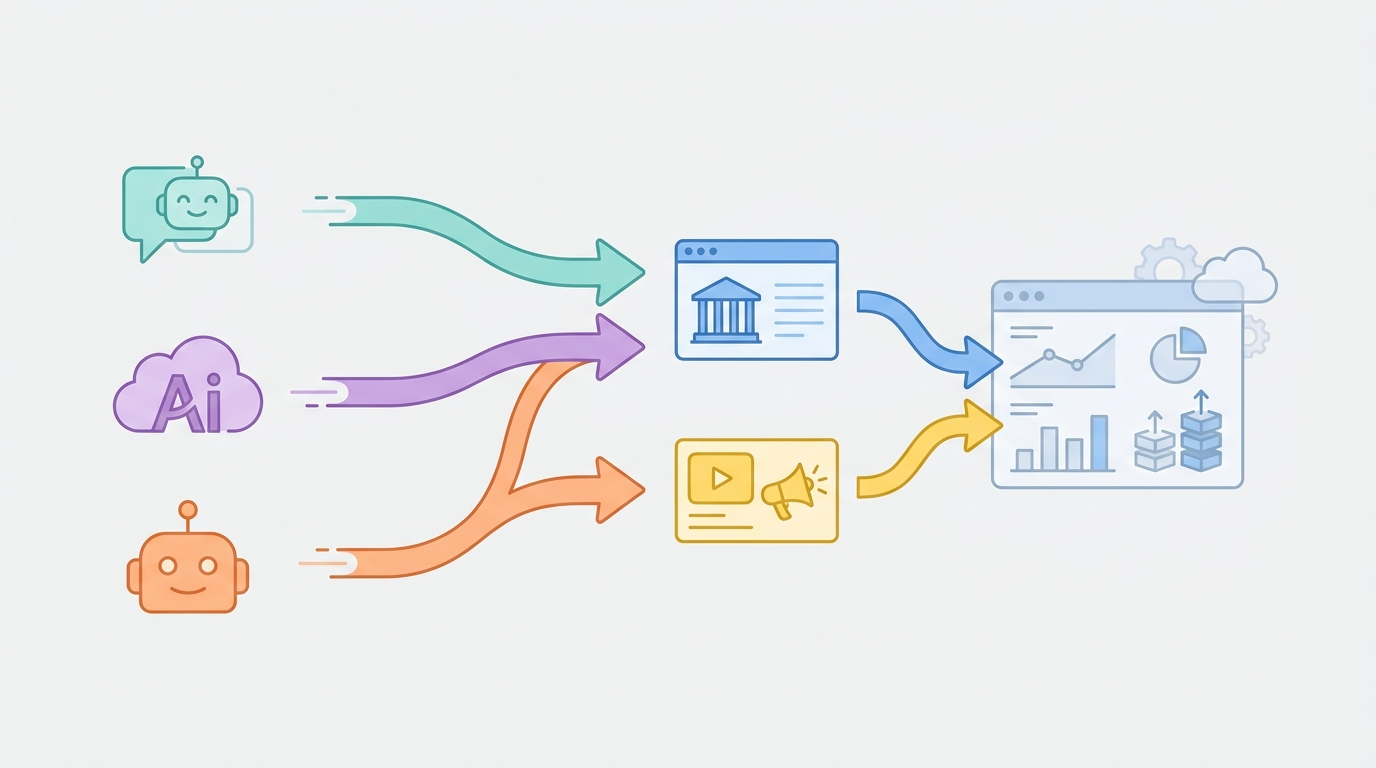
How accurate GA4 AI assistant traffic tracking changes law firm paid measurement
Accurate tracking of AI assistant traffic directly affects how law firms measure campaign performance. Because law firms bid heavily on high intent keywords, small attribution errors magnify cost per acquisition. Therefore understanding where clicks originate matters for both budget allocation and bid strategy.
Previously law firms faced several blind spots. Many AI assistants did not pass clear referrer headers. As a result visits often appeared as Direct or Unassigned. Moreover custom regex rules were fragile and required constant maintenance. Because of these gaps, paid search conversions sometimes looked weaker than they were. In turn teams reduced bids or shifted budgets based on incomplete data.
Google’s GA4 update helps close that gap. GA4 now groups recognized AI chatbots into an AI Assistant default channel. It also sets medium to ai-assistant and applies a campaign label of (ai-assistant). As a result you can see AI traffic in channel reports without complex workarounds. For background read the Search Engine Journal announcement.
Recommended analytical approach
- Reconcile session level data with click level logs to confirm GA4 classification. Because GA4 relies on referrer signals, verification reduces surprises.
- Run a parallel custom channel group to validate Google signals. Meanwhile adapt your regex rules to align with Google naming conventions as they evolve. For a practical setup guide see GA Optimizer.
- Protect paid attribution with explicit UTM parameters on ad creative. This prevents accidental reclassification when assistants forward links.
- Build dashboards that compare ai-assistant traffic to Paid Search across conversion events. Then analyze differences in conversion quality and average order value.
Benefits for law firm campaigns
- Better attribution clarity which improves bid decisions and budget allocation.
- Faster detection of traffic shifts because AI referral data surfaces in default channel reports.
- Less maintenance overhead since GA4 handles recognized referrers natively.
- Improved cross channel comparisons that reveal whether AI assistants cannibalize paid clicks.
Remaining challenges and caveats
- Coverage is not perfect because some assistant referrers remain undisclosed. Therefore expect gaps and momentum changes.
- In app browsers and privacy measures can still strip referrer data. As a result some AI referrals will show as Direct.
- Small measurement noise persists; do not pivot budgets on single data points.
Industry voices and tactical context
Kevin Indig summed up industry relief when GA4 added the AI Assistant channel by saying “Was about time! Literally complained about this on stage yesterday” in response to the update. See the coverage at Search Engine Journal.
Jeff Schwerdt highlights the practical upside of AI when used properly. He notes that AI can enhance processes and give teams time back. See his reflections at LinkedIn.
Taken together these signals show one clear path forward. Validate GA4 ai-assistant classification. Then run controlled experiments before altering bids. This approach protects lead volume and preserves campaign performance while tracking standards stabilize.
| Tracking Method | Key Features | Advantages | Disadvantages | Suitability for Law Firm Paid Campaigns |
|---|---|---|---|---|
| Traditional referrer based rules and regex | Uses referrer headers and custom regex to identify assistants | Low cost; familiar to analytics teams; flexible rules | Fragile; high maintenance; misses stripped referrers; prone to false negatives | Short term stopgap. Use when GA4 not available, but validate often |
| UTM tagging plus server click logs | Adds explicit UTM parameters and compares GA4 with server logs | Strong attribution control; resilient to referrer loss; forensic validation | Requires dev effort; depends on consistent tagging; extra storage and processing | Highly suitable. Use for high value ads and landing pages to protect paid attribution |
| Custom Channel Group in GA4 | User defined channel grouping with regex and referrer lists | Full control; can run side by side with Google native channel; quick to iterate | Maintained manually; may diverge from Google’s native naming; needs updates as new assistants appear | Recommended as a parallel check. Good for QA during tracking transition |
| GA4 native AI Assistant channel (ai-assistant medium) | Google auto-groups recognized chatbots into AI Assistant default channel and tags campaign as (ai-assistant) | Native reporting in default channels; less manual upkeep; scales as Google updates referrer list | Coverage not exhaustive; depends on referrer signals; black box rules from Google | Best long term baseline. Pair with UTMs and custom channel checks for law firm campaigns |
Conclusion: Why law firms must adopt GA4 AI assistant traffic tracking
Adopting GA4 AI assistant traffic tracking matters for law firms with paid campaigns. Because law firms pay premium bids for intent driven keywords, small attribution errors can escalate CPA. Therefore accurate classification of AI assistant referrals protects budget and lead volume. Moreover GA4’s native AI Assistant channel simplifies reporting and reduces fragile maintenance overhead.
GA4 brings clear advantages. First, it auto tags recognized chatbots with medium ai-assistant and groups them under AI Assistant. Second, it applies a campaign label of (ai-assistant) for clearer segmentation. As a result you can spot shifts between Paid Search and AI assisted clicks faster. Meanwhile legacy approaches required custom regex and heavy validation.
Practical next steps for paid campaign teams
- Validate GA4 ai-assistant sessions against click level logs and server records, because verification reduces surprises.
- Maintain parallel custom channel rules during transition, and therefore retain control over edge cases.
- Enforce explicit UTM tagging on high value ads so paid attribution remains resilient.
- Build dashboards that compare conversion quality for ai-assistant versus Paid Search.
Challenges remain but they are manageable. For example referrer stripping in some browsers will still cause Direct classification. However running UTMs and server reconciliations mitigates that risk. In addition Google may update its recognized referrer list, so remain adaptable.
Case Quota specializes in legal marketing and advanced analytics for small and mid sized law firms. We help firms implement GA4 changes, design attribution tests, and protect paid campaign ROI. If you want help modernizing tracking and optimizing paid spend, visit Case Quota to learn more and request a consultation.
Adopt GA4 AI assistant tracking now. Then validate, test, and optimize. This approach preserves leads and ensures smarter bidding over time.
Frequently Asked Questions (FAQs)
What is GA4 AI assistant traffic tracking?
GA4 AI assistant traffic tracking is Google’s native method for identifying visits that originate from recognized AI chatbots. GA4 groups those sessions into a default channel named AI Assistant. It also sets medium to ai-assistant and applies a campaign label of (ai-assistant). For example ChatGPT, Gemini, and Claude appear in GA4 reports when recognized. This native handling reduces manual regex work but still relies on referrer signals.
Why does GA4 AI assistant traffic tracking matter for law firm paid campaigns?
Law firms bid heavily on high intent keywords. As a result small attribution errors can inflate cost per acquisition. Therefore tracking AI assistant referrals matters for budget allocation and bidding. Accurate identification reveals whether assistants are redirecting paid clicks or adding new visitors. It also shows conversion quality differences between Paid Search and AI assisted visitors. As a result teams can optimize bids and landing pages with more confidence.
How do law firms implement and validate GA4 AI assistant tracking?
Start by updating GA4 to the latest default channel settings. Next, enforce explicit UTM tagging on all paid creative. Then run a parallel custom channel group to validate Google’s classification. Finally, reconcile GA4 sessions with server click logs or ad click data. Validation steps prevent misattribution and uncover edge cases. Repeat checks weekly during the transition period because Google’s rules may change.
How does GA4 native tracking differ from previous methods?
Previously teams relied on fragile regex and referrer rules. Those methods missed stripped referrers and required constant maintenance. By contrast GA4 auto-groups recognized assistants. Therefore native tracking reduces upkeep and surfaces AI traffic in default reports. However, coverage is not exhaustive. Some in-app browsers and privacy settings still hide referrers. Consequently, you should combine GA4 with UTMs and server logs.
What are immediate best practices law firms should follow?
Maintain explicit UTM tagging on ads. Run custom channel groups side by side for QA. Reconcile click level logs with GA4 session data. Build dashboards comparing ai-assistant to Paid Search conversions. Test attribution changes with controlled bid experiments before large reallocations. Together these steps protect lead volume and improve ROI.