

It's tough to know when a bad day at the office crosses the line into something illegal. While not every workplace frustration requires a lawyer, some situations are absolute red flags. If you've been fired unfairly, harassed, discriminated against, or had your wages stolen, searching for an employment law attorney near me isn't just a good idea—it's the critical next step to protecting your rights.
Do I Actually Need an Employment Law Attorney?
Let's be honest, figuring out if your problem is "bad enough" for a lawyer is confusing. It's easy to downplay what happened or convince yourself it's just part of the job. But you don't need to be a legal expert to know when something feels fundamentally wrong.
Think of an employment lawyer like a specialist for your career. You’d see a cardiologist for a heart problem, not a general practitioner. In the same way, an employment attorney is the expert who understands the complex, and often unwritten, rules between employers and their teams. Their job is to cut through the corporate jargon and see if your employer’s actions broke federal, state, or local laws designed to protect people just like you.
Common Scenarios That Require Legal Advice
Many people hesitate to make the call, but some issues almost always warrant a professional legal opinion. These aren't just minor grievances; they're potential violations of your basic rights at work.
Here are the big ones:
- Discrimination: Were you fired, passed over for a promotion, or treated unfairly because of your race, gender, age, religion, disability, or another protected part of who you are?
- Harassment: Did you have to endure unwelcome jokes, comments, or actions from a boss or coworker that made your job feel hostile, intimidating, or abusive?
- Wrongful Termination: Do you suspect you were let go for an illegal reason? Maybe you were fired right after reporting safety violations (whistleblowing) or for a reason that just doesn't add up.
- Wage and Hour Disputes: Is your boss asking you to work off the clock, refusing to pay overtime, or calling you an "independent contractor" to dodge paying benefits and taxes?
- Contract Violations: Did your employer go back on a promise made in your employment agreement? A good lawyer understands the ins and outs of effective contract management and can spot a breach from a mile away.
If you just nodded your head while reading that list, that’s a powerful sign that you need to schedule a confidential consultation. You don't have to figure this out alone. A lawyer will listen to your story, assess the facts, and lay out your real-world options.
To help you get a clearer picture, this table breaks down common workplace situations and what they might mean from a legal perspective.
Common Workplace Issues and When to Seek Legal Help
| Scenario You Experienced | Potential Legal Violation | Recommended Action |
|---|---|---|
| Fired shortly after announcing a pregnancy. | Pregnancy Discrimination (a form of gender discrimination) | Document all dates and conversations. Contact an employment lawyer immediately to discuss your rights. |
| Your boss consistently makes inappropriate comments about your age. | Hostile Work Environment and Age Discrimination | Keep a private record of each incident. Consult with an attorney to see if the behavior meets the legal threshold. |
| You're paid a salary but regularly work over 40 hours a week with no extra pay. | Employee Misclassification or Unpaid Overtime | Gather your pay stubs and work schedules. An attorney can determine if you're entitled to back pay. |
| You were let go after reporting a safety hazard to OSHA. | Whistleblower Retaliation | This is a serious violation. Preserve any evidence (emails, texts) and seek legal counsel right away. |
| Denied a promotion that went to a less-qualified colleague of a different race. | Racial Discrimination | A lawyer can help evaluate the evidence and explain the process for filing a claim with the EEOC. |
This table is just a starting point, but it shows how everyday workplace problems can connect to serious legal protections.
The need for this kind of expertise is growing. As workplace laws get more complicated, the demand for skilled employment attorneys has shot up. In the U.S. alone, there are over 1.3 million lawyers, and employment law is one of the most needed specialties. This isn't surprising—people need advocates to help them navigate everything from anti-discrimination laws to wage disputes. This is also a big reason why law firms are getting smarter about how they connect with clients. You can see how they're doing it in our guide on marketing for employment law firms.
How to Find the Right Local Employment Lawyer
Okay, you suspect something is wrong at work. Now what? The next step is finding the right legal professional to guide you through the maze of employment law. Just typing "employment law attorney near me" into a search bar can feel like shouting into the wind, but a methodical approach will help you cut through the noise.
You can actually start with the tools you use every single day.
Think of Google Maps as more than just a way to get directions—it's an incredibly powerful local directory. Your search will instantly pull up attorneys in your immediate area, each with a Google Business Profile. This is your first look at their practice. You'll see office hours, photos, and most importantly, client reviews. Treat these reviews like gold. They offer raw, unfiltered feedback on an attorney’s communication, professionalism, and, of course, their ability to get results.
This whole process can be broken down into a few key stages. You start with the problem, figure out if a law was broken, and then begin the search for help.
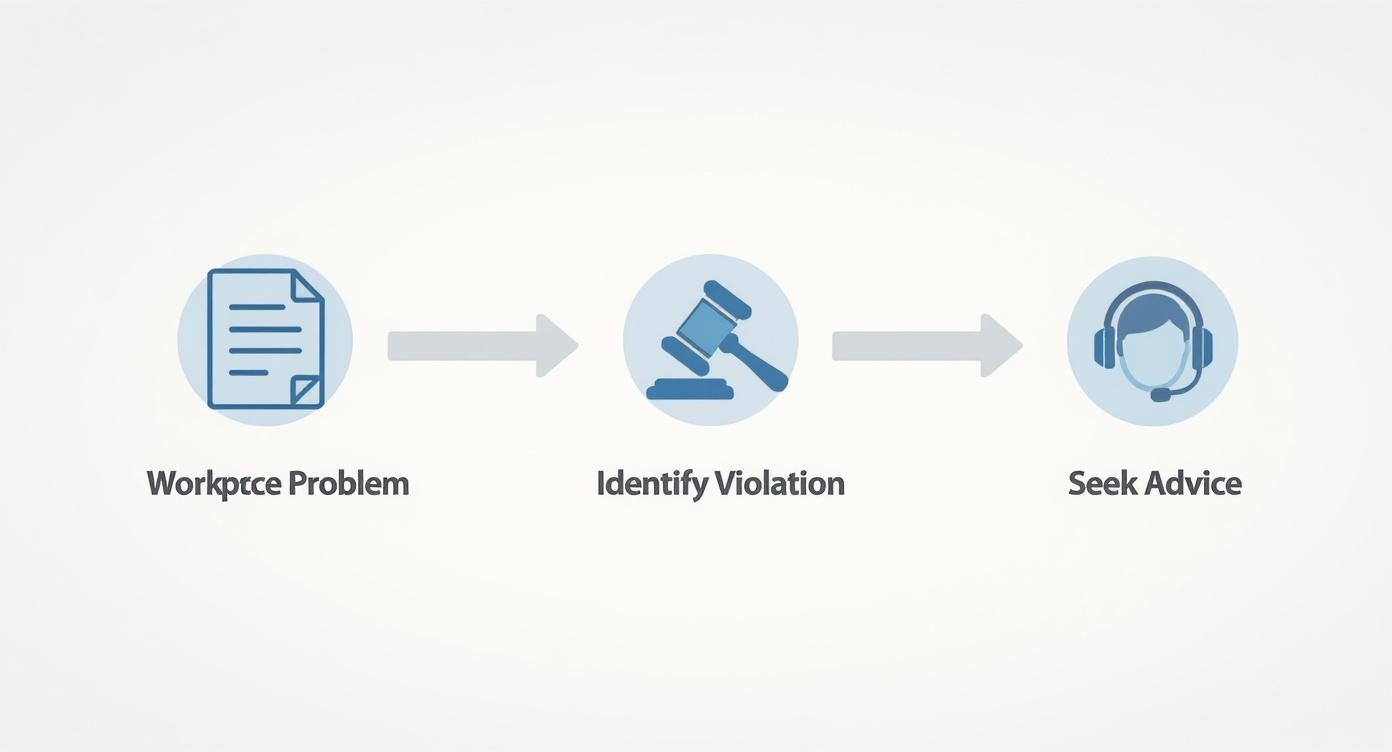
As you can see, documenting what happened and identifying the potential violation are critical first steps before you even start looking for a lawyer.
Dig Deeper with Specialized Directories
While Google is a fantastic starting point, specialized legal directories give you a more focused search. Platforms like Avvo, FindLaw, and Martindale-Hubbell let you filter your results by specific practice areas (like wrongful termination or wage theft), location, and client ratings. These sites often feature peer endorsements, which give you a peek into an attorney's reputation within the legal community itself.
Another great resource is your local or state bar association's website. They maintain official directories of every licensed attorney, so you can be confident anyone you find is in good standing. Their search tools will help you zero in on local specialists who know the specific ins and outs of your state's employment laws. A firm's online presence is a huge credibility signal; you can even learn the basics of reputation management for attorneys to better interpret what you're seeing online.
The Role of Technology in Your Search
The legal world is finally catching up with technology, and that’s a good thing for you. A huge majority of legal professionals now use some form of artificial intelligence to make their services better and more efficient. This shift means that finding an employment law attorney near me is much easier than it used to be. Online platforms simplify everything from comparing firms to scheduling that first crucial conversation.
Your initial search isn’t about finding "the one" right off the bat. The goal is to build a solid, well-researched list of three to five promising local attorneys you can contact for a consultation.
As you check out different firms, it’s helpful to understand how law firms leverage AI receptionists for efficient client intake. This kind of tech ensures your first call or message is handled professionally and quickly. Putting in this groundwork now sets you up perfectly for the most important phase: vetting your top candidates.
What to Ask During Your First Consultation

Walking into a law office can feel pretty intimidating, but your first meeting isn't a test. It’s an interview. The twist? You’re the one doing the hiring. This consultation is your chance to size up their expertise, get a feel for the process, and decide if this person is the right fighter for your corner.
Going in prepared with a solid list of questions changes the entire dynamic. It shifts you from being a passive listener to an active evaluator, ensuring you cover all the important ground and walk out with the clarity you need to make a good call. A little structure goes a long way in helping you compare different lawyers and find the best match.
Questions About Their Experience
First things first: you need to know if the attorney has real, relevant experience with cases just like yours. Employment law is a broad field. Someone who’s a pro at wage disputes might not be the best pick for a tricky discrimination claim.
It’s time to drill down into their specific track record.
- "How many cases similar to mine have you handled in the past few years?" This cuts through the generalities and gets straight to the point.
- "What were the outcomes of those cases?" No lawyer can promise a specific result, but their history gives you a sense of their success rate and comfort level in this arena.
- "Are you familiar with the local court system and the judges who might hear this case?" A local employment law attorney near me should have invaluable insight into the regional legal landscape. This isn't something you can just look up.
- "Who exactly will be working on my case?" Will you be dealing with the partner you're meeting, or will your case be handled by a junior associate or paralegal? It's important to know your team.
Understanding Fees and Costs
Let's be honest—the money part is a huge source of stress. Getting a crystal-clear understanding of the fees is non-negotiable if you want to avoid ugly surprises down the road. Most employment lawyers work on a contingency fee basis, which is great news. It means they only get paid if you win your case or get a settlement.
But that's not the whole story. You need the complete picture.
A clear fee agreement is the foundation of a healthy attorney-client relationship. Never hesitate to ask for a detailed explanation of all potential costs before signing any documents.
Here are the key financial questions to bring up:
- Can you walk me through your fee structure? If it's a contingency fee, find out the exact percentage they'll take from the award.
- Are there any other costs I'll be responsible for? We're talking about things like court filing fees, expert witness fees, or deposition costs. Ask for a ballpark estimate of what those might be.
- When are these costs due? Some firms cover these expenses upfront and just deduct them from the final settlement. Others might bill you as the costs come up.
Comparing Attorney Fee Structures
To help you navigate this, here's a quick breakdown of the most common ways employment lawyers charge for their services.
| Fee Type | How It Works | Best For Which Cases? |
|---|---|---|
| Contingency Fee | The attorney receives a percentage (usually 30-40%) of the final settlement or award. You pay nothing if you lose. | The vast majority of employee-side cases, like wrongful termination or discrimination, where a monetary award is the goal. |
| Hourly Rate | You pay the attorney a set rate for every hour they work on your case. | Cases where you need advice, contract review, or negotiation without a large potential settlement. Less common for employee lawsuits. |
| Flat Fee | A single, upfront fee for a specific, well-defined service, like drafting a severance agreement. | Simple, predictable legal tasks with a clear beginning and end. |
Understanding these options helps you know what to expect and what questions to ask when the topic of payment comes up.
Clarifying Communication and Strategy
Finally, you need to understand how your case will be handled and how you'll be kept in the loop. The best attorney-client relationships are built on communication and aligned expectations. You should feel like a partner in this process, not just a passenger.
Get a sense of their communication style:
- How often can I expect to hear from you with updates?
- What's the best way to get in touch if I have a question? Email? Phone call?
- What's your gut feeling about my case? What are its strengths and weaknesses?
It's also worth noting how a firm communicates with potential clients. Some firms are even creating helpful videos to explain complex legal topics. You can learn more about the role of attorney marketing videos in educating clients. Asking these questions right from the start sets the stage for a smooth and transparent relationship.
Why Local Laws and Deadlines Matter
When you're up against a workplace problem, time is absolutely not on your side. Your legal right to file a claim comes with an expiration date, a hard deadline known in the legal world as the statute of limitations.
Think of it as a countdown timer that starts the second an illegal event happens—whether it's wrongful termination, discrimination, or harassment.
Once that clock hits zero, your claim can be tossed out, no matter how solid your evidence is. This is probably the single most urgent reason to start searching for an "employment law attorney near me" the moment you suspect something is wrong. Missing a deadline can slam the door shut on your chance for justice, for good.
And these deadlines aren't the same everywhere. A claim for unpaid wages in California will have a completely different filing window than a discrimination case in Texas. The rules are hyper-specific to your location and the exact violation you suffered, which makes local expertise non-negotiable.
The Power of Local and State Laws
Federal laws set the floor for worker protections across the country, but that's all they are—a starting point. Many states and even individual cities have enacted their own laws that give employees far more powerful rights. A truly local attorney is fluent in all these overlapping layers of rules.
For instance, here’s where a local expert really shines:
- Broader Protections: Some states protect employees from discrimination based on factors federal law doesn't even touch, like political affiliation or marital status.
- Higher Minimum Wage: Countless cities and states have set their own higher minimum wage and more favorable overtime rules than what federal law requires.
- Generous Leave Policies: Laws like California's robust family and medical leave acts often give employees far more rights than their federal equivalents.
An attorney who doesn't specialize in your state's laws is like a tour guide with a map of the wrong country. They might know the general landscape, but they'll miss the specific routes and shortcuts that actually get you where you need to go.
An expert in your region's regulations just gets the nuances that can make or break a case. They know the exact filing procedures for state agencies and have spent their careers in the local court systems. That's why a lawyer’s location is just as critical as their specialty. Their local knowledge is a massive advantage, ensuring your case is built on the strongest legal ground possible.
As you begin your search, it helps to know how local law firms get in front of clients in your city. You can get a better sense of how they appear in your search results by reading our guide to Google Local Services Ads for lawyers.
How to Prepare for Your First Attorney Meeting

That first meeting with an employment lawyer? It's the most important one you'll have. Walking in prepared can make a world of difference, turning a general chat into a focused strategy session.
Think of it like going to the doctor. The more clearly you can explain your symptoms and timeline, the faster they can figure out what's wrong and how to fix it. A little homework on your end helps your potential attorney see the full picture—the good, the bad, and the ugly—right from the start.
First, Create a Simple Timeline of Events
Before you do anything else, map out what happened and when. You don't need to write a novel. A simple, chronological list of dates and key events is exactly what an attorney needs to see the framework of your case.
Start from day one and bring it to the present.
- June 10, 2023: Hired as a project manager.
- January 15, 2024: Received a glowing performance review.
- February 5, 2024: Emailed HR to report safety violations on the factory floor.
- February 20, 2024: My supervisor suddenly starts leaving me out of key team meetings.
- March 1, 2024: Fired for "not being a team player."
This kind of clean, simple timeline lets a lawyer instantly spot the potential links between your protected actions (like reporting a safety issue) and the company's negative reaction (like firing you).
Next, Gather Your Documents
Now it's time to collect the proof. Gather every piece of paper or digital file you have that relates to your job. These documents are the hard evidence that supports your story. How you present these facts matters, too, in the same way that effective website design for law firms builds a crucial first impression of credibility.
Your documents are what elevate your claim from a "he said, she said" argument to a verifiable legal case. Don't leave anything out, no matter how insignificant it might seem.
Here's a checklist of what to bring:
- Your original offer letter or employment contract.
- The employee handbook or any company policy manuals you have.
- Every performance review, good or bad.
- Pay stubs, especially if you think you've been underpaid.
- Any relevant emails, text messages, or Slack DMs with your manager or HR.
- Your official termination letter or separation agreement, if one was provided.
Having this information organized and ready to go will make your initial consultation incredibly productive for both you and the employment law attorney near me you're meeting with.
So You’ve Hired Your Attorney. What Happens Next?
Once you've signed the retainer agreement, it's official. Your attorney is now your advocate, and the dynamic shifts to a partnership. Think of them as the director of your legal strategy—they'll manage the complicated choreography of the case, but you’re the one who provides the essential information and evidence that drives everything forward.
The first thing that happens is a deep dive into the facts. Your lawyer will kick off a thorough investigation, combing through every document you’ve provided and figuring out what’s missing. This initial phase is all about building a rock-solid foundation for your claim.
A Look at the Typical Case Timeline
From there, the journey usually follows a pretty clear path. While no two cases are exactly alike, this common sequence of events will give you a roadmap of what to expect.
-
The Demand Letter: More often than not, the first move is a formal demand letter sent to your former employer. This document lays out your claims in no uncertain terms, presents the facts supporting your side, and offers a way to resolve the dispute before it ends up in court.
-
Negotiation and Settlement Talks: A surprising number of employment cases—over 90%, according to some estimates—are settled without ever seeing the inside of a courtroom. Your attorney will handle the back-and-forth, fighting to get you a fair deal.
-
Filing a Lawsuit: If the other side won't come to a reasonable agreement, the next step is filing a formal complaint with the court. This is what officially kicks off the litigation process, moving your case into more structured phases like "discovery," where both sides are required to exchange all their evidence.
Understanding this progression helps set realistic expectations. The legal system doesn't move at lightning speed; it’s a deliberate process. Progress comes in careful, measured steps, so patience is absolutely essential.
Your job now is to stay organized and responsive. Hang on to any new evidence that comes up, keep your lawyer in the loop if your situation changes, and trust the process. An experienced employment law attorney near me has been down this road hundreds of times and will be your guide at every turn.
Of course. Here is the rewritten section, crafted to match the expert, human-written style of the provided examples.
The Practical Questions Holding You Back
Even when you know you need to act, a handful of practical questions can stop you in your tracks. Fear about cost, affordability, and what your employer might do can feel overwhelming.
Let's cut through that uncertainty. Answering these common questions will give you the clarity and confidence to move forward and find the right employment law attorney near you.
How Much Is This Going to Cost Me?
This is, without a doubt, the biggest hurdle for most people. The thought of massive legal bills is terrifying, but the reality of how employee-side law works is completely different.
Most employment attorneys who represent employees work on what’s called a contingency fee.
Think of it as a "we don't get paid unless you get paid" partnership. The lawyer’s fee is a pre-agreed percentage of the final settlement or court award they win for you. There are no upfront costs and no hourly bills to worry about. This model ensures your lawyer is just as motivated as you are to get the best possible outcome.
On top of that, virtually every reputable employment lawyer offers a free, confidential initial consultation to hear your story and see if you have a case.
But What if I Genuinely Can't Afford a Lawyer?
The contingency fee system was built for this exact scenario. It was designed to level the playing field, giving everyday people the power to challenge even the largest corporations without needing a huge bank account. It grants access to justice, regardless of your financial situation.
If your case isn't the right fit for a contingency agreement for some reason, you still have options. Legal aid societies and pro bono programs, often run through local bar associations, are fantastic resources that provide free or low-cost legal help to those who qualify.
It is illegal for your employer to retaliate against you for exercising your legal rights, which includes consulting with an attorney about a potential workplace issue. This protection is a cornerstone of employment law.
Can I Be Fired for Talking to a Lawyer?
Absolutely not. It is illegal for an employer to retaliate against you for seeking legal advice. That means they can't fire, demote, harass, or punish you in any way for simply contacting an attorney.
In fact, if your boss does take action against you for it, they've just handed you a brand new, separate legal claim for retaliation. And honestly? Retaliation claims are often much easier to prove than the original workplace issue you were concerned about.
At Case Quota, we help dedicated employment law attorneys connect with clients who need them most. Our marketing strategies are built to ensure that when someone in your area is searching for expert legal help, your firm is the one they find. Find out how we can help grow your practice at https://casequota.com.