
SEO essentials for law firms: duplicate URLs and product feed optimization
Mastering duplicate URLs and product feed optimization is essential for law firms that want consistent organic visibility. In technical SEO, small errors can cause big visibility gaps. Therefore, law firms must treat URL canonicalization and feed quality as strategic priorities. This introduction explains why controlling duplicate content and optimizing product like service feeds matters for legal brands.
Search engines choose one version to index when multiple URLs show the same content. As a result, inconsistent signals confuse indexing and dilute link equity. However, Google will often pick a canonical version, but you should guide it with rel="canonical", redirects, and sitemap consistency. Because law firms list practice areas, attorney profiles, and downloadable resources, duplicate URLs appear often.
Key challenges law firms face with duplicate content and product feeds include
- Content duplication across attorney bios, practice area summaries, and PDF downloads that create multiple URLs.
- Inconsistent canonical signals such as mixed
rel="canonical"tags, conflicting 301 redirects, and divergent internal links. - Crawl waste because search engines spend budget on duplicates instead of core pages.
- Feed mismatches when structured data, price, or availability differ from live site values.
- Taxonomy and categorization gaps that cause service listings to be lost or cannibalized.
To succeed you must act with precision. First, audit URL variations and align redirects and canonical tags. Next, ensure product or service feed attributes match structured data and live content. Finally, monitor Search Console and feed reports to confirm indexation and feed health. As law firms move toward AI driven discovery, clean feeds and canonical discipline will directly affect how agents cite your services. Therefore, mastering duplicate URLs and product feed optimization is not optional; it is a foundational SEO capability for competitive legal brands. Read on to get tactical steps and clear checklists.
Understanding Duplicate URLs and Product Feed Optimization
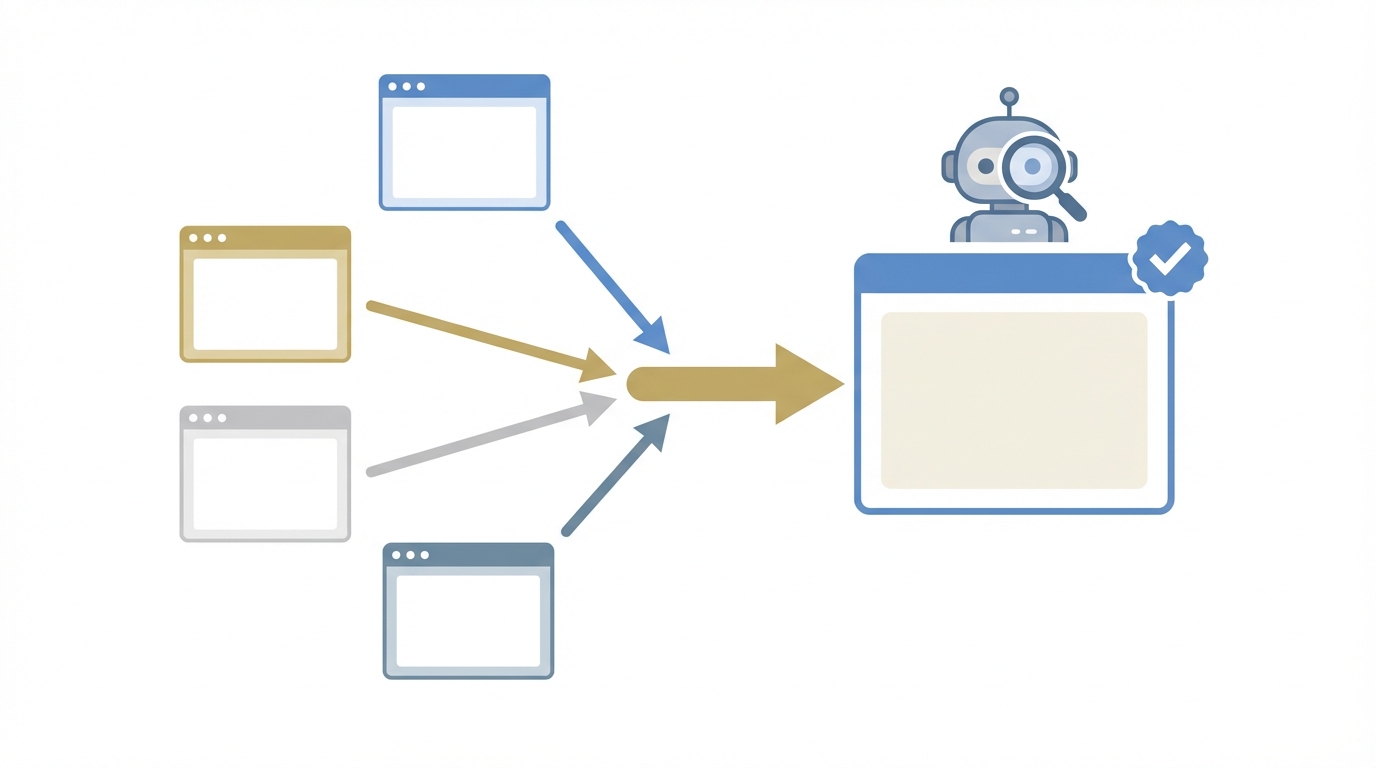
Duplicate URLs and product feed optimization intersect at the technical layer of SEO where clarity matters. For law firms, duplicate URLs commonly arise from attorney profiles, practice area pages, event listings, and downloadable PDFs. When one page appears at several addresses, search engines decide which URL to index. Google notes that it will canonicalize to the most complete and useful page and will crawl that page more regularly while crawlers visit duplicates less often to reduce load. Therefore, intentionally signaling your preference prevents search engines from choosing unpredictably.
Why duplicates happen on law firm sites
- Multiple paths to the same content such as
/attorneys/jane-doe,/team/jane-doe, and/profiles/jane-doe - Query parameters for tracking or sorting that create URL variants
- Printer friendly pages, session IDs, and faceted navigation that duplicate content
- PDFs and downloadable resources hosted under different directories
Technical signals that guide canonicalization
- rel=”canonical” link element: Use this tag to declare the preferred URL. It acts as a strong hint and consolidates indexing signals when implemented consistently. Reference: Google’s documentation on canonicalization
- 301 redirects: Permanent redirects pass link equity and remove the duplicate URL from indexing over time. Use 301 redirects when a page has permanently moved or when older versions should be retired.
- Internal linking: Point navigation and in-content links to your preferred canonical URL. Because internal links distribute authority, inconsistent internal linking confuses the choice of canonical.
- Sitemap and robots consistency: Ensure your XML sitemap lists canonical URLs and that robots directives do not block the canonical version.
Google’s operational approach
- There is no penalty for having multiple URLs with identical content; nearly all sites have them. However, Google will select one URL to keep in its index. Therefore, you should express clear preferences through canonical tags, redirects, and consistent sitemaps.
Practical examples for law firms
- Attorney bios: Choose a single canonical path for each lawyer and update internal directory links to that path. If you previously had multiple profile URLs, implement 301 redirects from the old URLs to the canonical one.
- Practice area pages: If you expose the same practice overview in both a service page and an attorney profile, use rel=”canonical” on the non-preferred instance or consolidate the content into one centerpiece page.
- Event pages and PDF resources: Host the master copy on a canonical URL and use structured data on the HTML page linking to the PDF. Avoid indexing duplicate PDFs by blocking them in robots or using noindex when appropriate.
Monitoring and validating canonical decisions
- Use Search Console and crawling tools to confirm which URL Google indexed. Google Search Console and the Shopping tab listings enhancements provide signals and reporting for product and feed visibility: Google Search Blog on Shopping tab
- Audit server logs and crawl reports to detect duplicate crawl patterns. If duplicates are being crawled frequently, adjust canonical signals or redirects.
- Validate structured data and product feed alignment because inconsistent feed attributes can create de facto duplicates when agents or merchants read conflicting data. See Google product structured data guidelines.
Summary
Duplicate URLs are common, and Google can handle them. However, you should avoid leaving decisions to chance. Use rel=”canonical”, 301 redirects, consistent internal linking, and accurate sitemaps to guide Google to the versions you prefer. As search moves toward AI and agentic commerce, maintaining canonical discipline will protect visibility and ensure your firm’s services and offerings appear correctly in both traditional and feed-driven discovery.
The evolution and importance of duplicate URLs and product feed optimization
Product feeds moved from paid-channel tools to central search infrastructure. “Product feeds are evolving into core search infrastructure, shaping how ecommerce brands appear across organic, shopping, and AI-driven discovery.” Therefore, law firms should treat feeds as strategic assets. As search became more conversational in 2023, feeds grew in influence across discovery layers.
Google’s Merchant Center and Search Console updates made feed visibility more transparent in 2023. For example, Google added enhancements to the Shopping tab Listings report. As a result, teams can better understand how products appear in Merchant Center and where feed issues occur. See more at Search Engine Journal.
Structured data anchors feed data to the live site and to agents. Therefore, align your structured data with feed attributes like price and availability. When mismatches occur, listings can be disapproved. For technical guidance, review Google’s product structured data documentation: Google Developers.
Taxonomy, GTINs, and strong attribute sets increase match quality. For instance, GTINs and google_product_category values improve relevancy for product queries. However, for legal services, map practice areas to consistent categories and service identifiers. In addition, complete attribute sets such as service_type, location, and availability prevent cannibalization and reduce loss in discovery.
Agentic commerce and AI-driven discovery will rely heavily on high-quality feeds. As one note puts it, “Product feeds are no longer just paid media assets; they are core search infrastructure that directly impacts organic shopping visibility and AI-driven discovery.” Moreover, conversational agents will cite concise, factual feed attributes when recommending services. For a broader view of feed shifts and ChatGPT product feed ideas, see Go Data Feed.
Benefits of disciplined product feed optimization
- Better visibility across Google Shopping and organic shopping surfaces
- Fewer disapprovals due to data mismatches and structured data conflicts
- Improved click-through and user trust because attributes match reality
- Reduced cannibalization through clear taxonomy and category mapping
- Readiness for AI-driven referrals and agentic commerce recommendations
Practical feed steps for law firms
- Treat key service pages as product-like entries with unique IDs. Next, align structured data to feed attributes. Then, ensure URLs are canonical and feed values match site values.
- Use consistent taxonomy and descriptive, keyword-rich titles for high-intent queries. Also, include location and appointment availability where applicable.
- Monitor Merchant Center and Search Console reports daily where possible, and fix mismatches quickly.
In short, duplicate URLs and product feed optimization must work together. Align canonical discipline with feed hygiene to protect visibility in traditional search, Google Shopping, and emerging AI-driven discovery.
| Technical SEO Signal | Definition | Purpose in SEO | Benefit to law firms managing duplicate URLs and product feed optimization |
|---|---|---|---|
| Internal linking | How pages on the site link to each other. | Directs authority to preferred pages for indexing. Therefore crawlers learn which pages matter most. | Consolidates link equity, clarifies canonical choices, and reduces the chance that Google picks an unintended URL. |
| rel=”canonical” | HTML link element that declares the preferred URL. | Signals to search engines which URL to index. See Google guidance. | Prevents Google from choosing unpredictably, consolidates ranking signals, and reduces duplicate crawl waste. |
| Sitemap consistency | XML list of site URLs that matches canonical versions. | Helps crawlers discover and prioritize canonical pages. As a result, indexation aligns with your preferences. | Reduces crawl budget waste and speeds indexation of core practice area and attorney pages. |
| 301 redirects | Server side permanent redirect from an old URL to a new URL. | Passes link authority and retires duplicate addresses. Therefore legacy or alternate URLs transfer equity to the canonical URL. | Removes obsolete URLs from the index while preserving rankings and referral value. |
| Structured data alignment | Matching schema markup to feed attributes and live site values. | Provides machine readable facts for Merchant Center and agents. See product schema details. | Prevents feed disapprovals, ensures price and availability match, and makes services agent ready for AI driven discovery. |
| Taxonomy and categorization | Consistent category and attribute mapping for services or products. | Improves relevancy and prevents entries from being lost or cannibalized in feeds. Next, agents and shopping systems can match queries more accurately. | Keeps service listings discoverable across Google Shopping and AI driven recommendations and reduces internal competition between pages. |
CONCLUSION
Mastering duplicate URLs and product feed optimization is a strategic imperative for law firm SEO. When you control canonical signals and align feeds, your site becomes easier to crawl and index. As a result, you preserve link equity and reduce crawl waste. Therefore, disciplined technical work turns small fixes into measurable visibility gains.
Start with a clear canonical strategy. Use rel=”canonical”, consistent 301 redirects, and a canonical-first sitemap. Next, align structured data and feed attributes so search systems and agents see the same facts. Because feeds increasingly power AI-driven discovery, consistency matters more than ever.
The benefits are both tactical and strategic:
- Improved indexation and fewer duplicate entries in search results
- Stronger organic performance for priority practice areas and attorney pages
- Reduced risk of feed disapprovals and mismatched listings
- Better readiness for Google Shopping, Merchant Center, and AI referrals
However, achieving these wins requires process and governance. Assign ownership for canonical decisions and feed updates. Also, schedule regular audits of sitemaps, redirects, and structured data. Finally, monitor Search Console and Merchant Center to catch mismatches early.
For small and mid-sized firms, adopting Big Law tactics pays off. Case Quota is a specialized legal marketing agency that helps small and mid-sized law firms achieve market dominance. They apply high-level strategies similar to those used by Big Law firms. If you want expert support, consider working with Case Quota to professionalize canonical discipline and feed hygiene.
Call to action
Visit Case Quota to learn more and request a consultation.
In short, duplicate URLs and product feed optimization are not separate tasks. Instead, they form a single technical foundation for modern legal search visibility. Act now to lock in that foundation. With clear signals and clean feeds, your firm will win more organic opportunities and appear accurately in the next wave of AI-driven discovery.
Frequently Asked Questions (FAQs)
Will multiple URLs with the same content penalize my law firm site?
No. There’s no penalty or ranking demotion simply for having multiple URLs with identical content. However, Google will pick one URL to keep in its index. Therefore you should express clear preferences using canonical signals, redirects, and consistent sitemaps. As a result, you avoid unpredictable indexing decisions.
How should I signal the preferred URL to search engines?
Use a combination of rel=”canonical”, 301 redirects, internal linking, and sitemap consistency. First, add a rel=”canonical” tag on duplicate pages that points to the preferred URL. Next, implement 301 redirects for permanently moved pages. Also, link internally to your canonical URL and list it in the XML sitemap. Because these signals act as hints, they guide Google toward the page you want crawled most regularly.
Do product feeds matter for law firm SEO?
Yes. Product feeds are evolving into core search infrastructure. Product feeds shape visibility across organic, shopping, and AI-driven discovery. Therefore law firms that use feed-like records for services benefit when structured data and feed attributes match. In short, feeds are no longer just paid media assets; they impact organic discovery and agent recommendations.
What quick steps fix duplicate URLs and feed mismatches?
Start with an audit. Then do these steps:
- Map duplicates and choose a canonical version
- Apply rel=”canonical” where appropriate
- Set 301 redirects for retired URLs
- Normalize internal links and update the sitemap
- Align structured data with feed values and taxonomy
- Use unique IDs for service entries and monitor for mismatches
How do I monitor canonical and feed health?
Use Search Console, crawling tools, and server logs. Also check Merchant Center and feed reports if you publish feeds. Monitor index status and crawl frequency because “the canonical page will be crawled most regularly; duplicates are crawled less frequently.” Finally, adopt governance for ongoing audits, because a lot of technical SEO is about consistent signals and monitoring.