

Content frameworks outdated by AI and data
If you still run a 2019 content playbook, pause and read this. The rise of generative AI and expansive data has made many frameworks obsolete. For law firms, this shift is urgent because search behavior and platform distribution changed fast. As a result, tactics that once won featured snippets now repel AI summaries.
However, modern firms face three core challenges. First, AI Overviews and ChatGPT now reshape what users see before they click. Second, multi-channel signals from LinkedIn, YouTube, and comment-driven ecosystems reward engagement over static pages. Third, richer datasets and emotion models force different storytelling and measurement. Therefore, a page built for search in 2019 may rank poorly today.
Specifically, this piece will survey what broke and why. It will show how to move from snapshot thinking to living frameworks. Moreover, it will explain practical steps to make pages click-worthy beyond bland summaries. You will learn how to design content that works for humans and AI agents.
Consequently, expect a data-driven, cautionary analysis. I will call out specific failures in featured snippet playbooks. Then I will provide updated frameworks that use AI Overviews, emotion signals, and distribution-first planning. Because law firms manage reputation and risk, these changes matter more than ever. They affect client intake, local visibility, and thought leadership.
Next, read on for a structured deep dive. Each section will include examples, metrics, and tactical checklists. By the end, you will know what to stop doing and what to rebuild. Stay critical, and prepare to update your framework with fresh data.
Content frameworks outdated by AI and data
Traditional content frameworks from 2019 no longer match how people find legal services. ChatGPT, AI Overviews, and Gemini-embedded search changed the front door to content. As a result, pages built for featured snippet wins often lose in modern SERPs.
"Your content framework was right when you built it. The mistake is treating it as finished, and your featured snippet playbook is now working against you," says Greg Jarboe. This warning is practical and urgent for law firms. Therefore, firms must assess the gap between old tactics and current signals.
Key reasons the 2019 playbook fails now
- AI agents summarize and answer queries without sending users to pages. Consequently, organic clicks can fall sharply.
- AI Overviews pull concise facts from multiple sources. As a result, long summaries get collapsed into single answers.
- ChatGPT-style assistants prefer consolidated, high-confidence snippets. Therefore, shallow summary pages become invisible.
- Gemini-embedded search blends web results with multimodal signals. This change rewards pages that offer unique, verifiable assets.
- Data sets have expanded, including emotion modeling and distribution metrics. As a result, the snapshot approach fails compared with living frameworks.
What breaks in practice
- Featured snippet optimizations that targeted a 40-word top no longer guarantee visibility. Instead, AI Overviews may use that same copy to answer queries.
- Snapshot vs conclusions issues surface more often. In other words, a static conclusion looks less credible than a documented snapshot. Therefore, the page loses trust.
Implications for law firms
Law firms must shift from checklist SEO to iterative content design. First, prioritize primary research and unique assets. Second, implement data-driven updates so content evolves with AI signals. Third, measure distribution across channels rather than page rank alone. Moreover, treat content as an active system. Finally, document what changed and why for compliance and reputation.
This section shows why content frameworks outdated by AI and data need redesign. Next, we will map practical frameworks that handle AI summaries, multi-channel distribution, and trust signals.
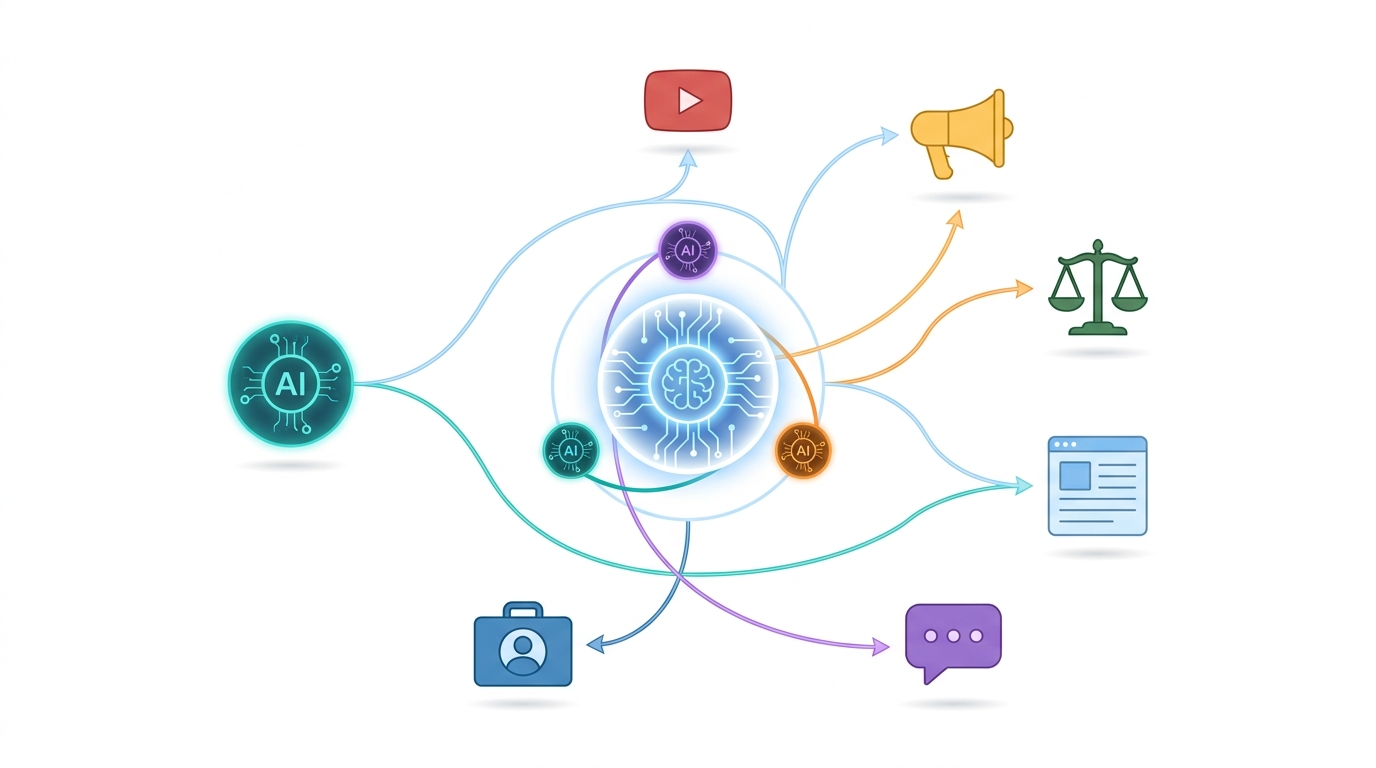
Modernizing law firm content strategies beyond summaries
Law firm pages must do more than restate legal concepts. Today, AI agents and platform distribution reshape attention. Therefore, firms must design pages that compel clicks and sustain trust. Below are clear tactics to turn thin summaries into click-worthy assets.
Why summaries fail
- AI Overviews and ChatGPT often use short summaries to answer queries. As a result, users may never reach your page.
- Featured snippet hacks aimed at a 40-word lead now create copy that AI scrapers extract. Consequently, the page loses distinctiveness.
- Rich emotional signals matter more than before. For example, research on 39 emotions helps explain what content resonates across formats. See the Search Engine Journal guide for context: 39 emotions to use in advertising.
Practical tactics to build click-worthy pages
- Lead with unique assets. First, publish primary research, case studies, or proprietary data. Second, include downloadable tools or calculators. These assets force citations and links.
- Use narrative hooks and emotion signals. Because people respond to stories, start with a brief case vignette. Then, link findings to practical steps. For guidance on emotional framing, see: 39 emotions to use in advertising.
- Design layered content. Above the fold, give one clear answer. Below, add depth with evidence, links, and client examples. Therefore, AI can cite the snippet, and humans can still click for more.
- Make modular sections for syndication. As a result, other channels can repurpose parts of your page easily. Use clear headings, pull quotes, and data tables.
Multi-channel synergy
- Leverage LinkedIn momentum. Entrepreneurship growth on LinkedIn rose nearly 70% year over year. Therefore, publish summaries on LinkedIn and link back to the deeper page: LinkedIn Tools to Help Small Businesses Scale Up.
- Use YouTube to host explainer videos. Then, embed the video on the page to increase time on site.
- Run digital PR campaigns that earn links. For instance, distribution-first campaigns sometimes produce digital PR campaigns earning 1,000+ links. Consequently, your authority improves across AI signals.
Quotes to guide the mindset
“Test small, then scale what the data rewards,” says Taylor Borden.
“Enchantment matters; make content that persuades and delights,” adds Guy Kawasaki.
Measurement and iteration
- Track clicks that come after AI citations. Then, measure engagement on the landing page.
- Set a cadence for data-driven updates. Because datasets grow, update pages quarterly.
- Prioritize distribution metrics, not rank alone. Finally, treat content as a system that evolves with AI and human signals.
This approach moves law firms from passive summaries to active, multi-channel assets. As a result, you will reclaim visibility and generate better leads.
Comparison: 2019 Content Frameworks versus AI and Data-Driven Strategies
| Framework Aspect | 2019 Content Framework | AI and Data-Driven Update | Impact on Law Firm Marketing |
|---|---|---|---|
| Data sets and signals | Small, static samples; manual keyword lists; limited emotion data | Large, evolving data; emotion models; AI Overviews and AI Max inputs | Therefore, firms must adopt continuous data collection to stay relevant and credible |
| Targeting and user intent | Broad personas and keyword intent buckets | Intent inferred by AI agents and multimodal signals like Gemini | As a result, targeting must use intent snippets and behavioral cues for accuracy |
| Content structure | Summary-first, 40-word leads aimed at featured snippet capture | Layered, modular pages with unique assets and primary research | Consequently, pages convert better and resist being cannibalized by AI summaries |
| Emotional engagement | Sparse emotional mapping; checklist tones | Rich emotion modeling based on 39+ emotion signals | Because emotions drive clicks, law firms should use case stories and empathy hooks |
| Cross-channel integration | Channel siloing; separate SEO, social, PR efforts | Distribution-first design for LinkedIn, YouTube, PR, and site syndication | Therefore, multi-channel synergy boosts visibility and referral traffic by design |
| Measurement and cadence | Quarterly SEO audits and static roadmaps | Real-time metrics, data-driven updates, and snapshot-driven tests | As a result, update cycles shorten and ROI becomes clearer |
| SEO tactics and featured snippet playbook | Optimize for short snippets and exact-match answers | Design for AI citations, snapshots vs conclusions, and citationable assets | Consequently, legacy featured snippet tactics may hurt organic click-throughs |
| Risk, compliance, and trust | Static disclaimers and infrequent updates | Transparent sourcing, change logs, and audit trails for AI agents | Therefore, law firms reduce reputational risk and improve compliance |
This table shows why Content frameworks outdated by AI and data need fresh design, distributed assets, and ongoing measurement.
Conclusion
Content frameworks outdated by AI and data no longer serve law firms at scale. The era of static checklists and 40-word leads has ended. Therefore, firms must adopt living frameworks that combine primary research, modular design, and distribution-first thinking.
This article traced how ChatGPT, AI Overviews, and Gemini-embedded search altered intent signals and reduced organic click-through. Because AI agents synthesize answers, shallow summaries lose value. As a result, law firms should prioritize citationable assets, emotional storytelling, and cross-channel syndication. Moreover, update cycles must shorten and rely on real-time metrics.
Practically, update content quarterly, embed multimedia, and run distribution-first digital PR campaigns. Then, measure referrals, engagement, and post-AI click behavior instead of rank alone. Finally, document changes and maintain audit trails for compliance and reputation.
If you manage a small or mid-sized firm and need help modernizing your content strategy, Case Quota specializes in legal marketing. Case Quota helps law firms design AI-aware pages, run link-driven PR, and build multi-channel systems that convert. Visit their site for tailored services.
Move deliberately but urgently. Update your framework with data, not dogma. Keep testing, and treat each page as an evolving asset that must earn attention from humans and AI agents alike.
Frequently Asked Questions (FAQs)
Why are Content frameworks outdated by AI and data?
AI agents like ChatGPT and AI Overviews synthesize answers from many pages. As a result, users often see concise answers before clicking. Therefore, a 2019 summary-first page may not attract traffic. Gemini-embedded search adds multimodal signals that change intent inference. Consequently, law firms must plan for AI citations and snapshots vs conclusions.
Will updating our content hurt SEO?
No. When you update with data-driven updates, you improve relevance. However, avoid minor edits that are purely cosmetic. Instead, add unique assets, primary research, and modular sections. This reduces the risk of being cannibalized by featured snippets. Moreover, transparent sourcing helps AI agents trust your content.
How often should we refresh legal pages?
Aim for quarterly updates as a baseline. First, track signals that matter. Then, prioritize pages with high impressions, low clicks, or AI citations. Next, run snapshot-driven tests to validate changes. Finally, keep a change log for compliance.
What tactics make pages click-worthy beyond basic summaries?
– Publish original research and case studies.
– Embed videos, calculators, and client stories.
– Create modular sections for syndication.
– Use emotional hooks based on the 39 emotion models.
– Coordinate LinkedIn posts and YouTube explainers for distribution.
These tactics support digital PR campaigns earning 1,000+ links. As a result, pages earn referrals and AI citations.
How do we measure success with AI and multi-channel distribution?
Track clicks after AI citations, time on page, and referral traffic. Also measure LinkedIn engagement and comment-driven signals. For example, posting weekly can increase profile views by up to four times. In addition, monitor link acquisition from PR and syndication. Finally, use those metrics to guide ongoing updates.
If you still worry about risk, test changes in a staging environment. Then roll out the winners. Stay data-driven, and treat each page as an evolving asset.