

Community marketing for law firms: grow clients by building community and competitive intelligence
Community marketing connects people around shared needs and trusted expertise. For law firms, community marketing means creating owned spaces where clients, referrers, and prospects interact. In those spaces, firms build trust, collect feedback, and surface client needs. As a result, firms convert leads faster and keep clients longer, which improves lifetime value.
Building community is only half the work because competitive intelligence completes the picture. Competitive intelligence helps firms track competitor positioning, service gaps, and content opportunities. Therefore firms can tailor messaging, design legal products, and set pricing strategically. Moreover, combining community signals with market intelligence lowers acquisition costs and strengthens retention.
Today, legal buyers expect human conversation and peer validation. Because of that, law firms that foster belonging win more referrals and repeat work. Data shows community driven loyalty improves retention and advocacy, and peer to peer support reduces service costs. This article explains practical steps to launch and scale community programs. It shows how to measure engagement and integrate competitive intelligence tools into your marketing stack.
You will get tactical guidance on choosing owned platforms and third party networks. It covers creating ambassador and advocacy programs, capturing actionable insights, and linking community activity to CRM and lifecycle marketing. In addition, we highlight tools and metrics to monitor share of voice, sentiment, and competitor moves. Finally, the playbook focuses on simple experiments you can run in weeks. Your firm will see measurable ROI fast. Get started today.
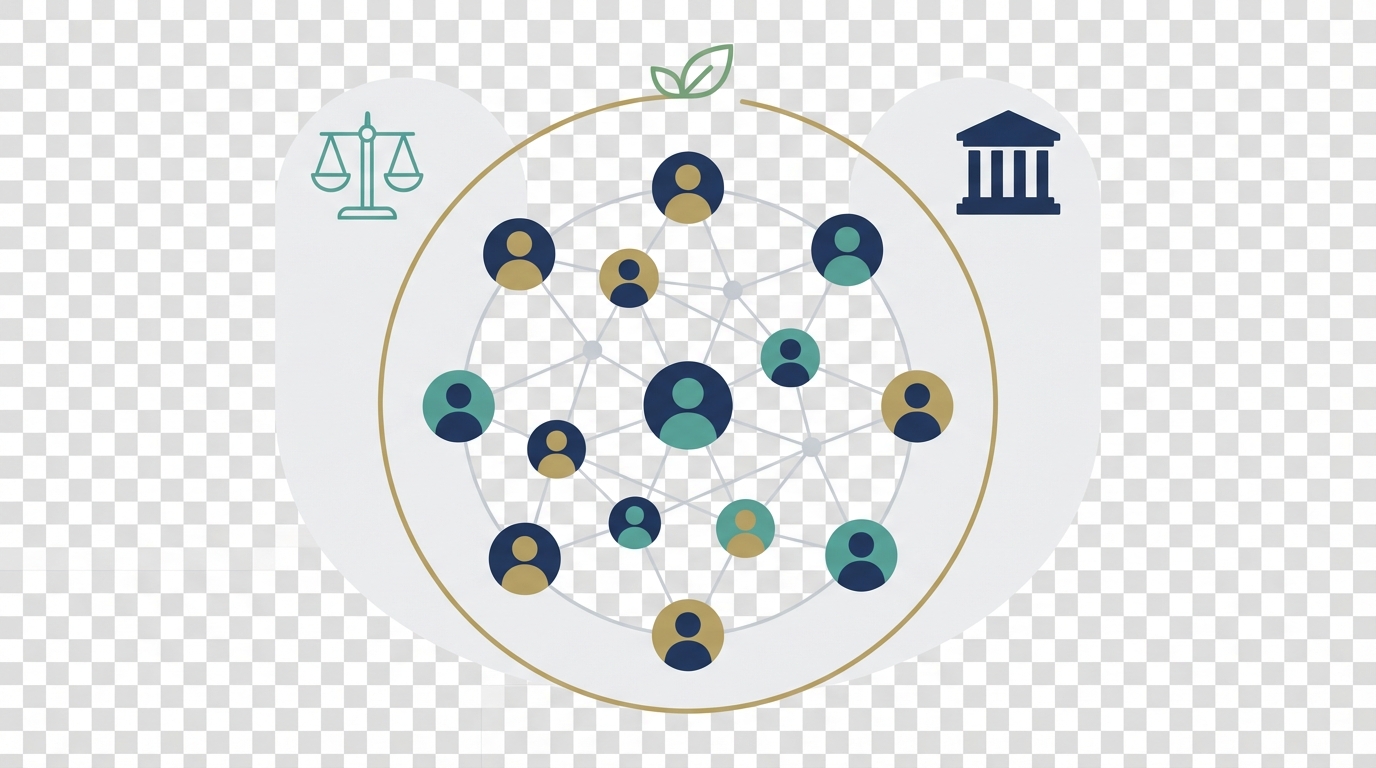
Unpacking the Benefits of Community Marketing for Law Firms
Law firms are no longer just about billable hours; they are about building relationships and trust. Community marketing stands out as a modern strategy to achieve these goals effectively and affordably. Below, we delve into its many benefits, backed by compelling data.
Enhancing Client Loyalty and Trust
Community marketing fosters client trust and loyalty through meaningful interactions and human-generated content. Data shows that:
- 40.1% of consumers are likelier to remain loyal to a brand after engaging in an online community.
- 67% of consumers feel a stronger connection to brands via community interactions than via traditional social media.
- Firms emphasizing “trust” see repeat purchases become 2.3 times more likely.
This is especially pertinent for law firms where trust is paramount. Engaged clients not only stay longer but also become advocates for the firm.
Lowering Costs
One significant advantage of community marketing is its ability to reduce costs:
- Peer-to-peer support within communities can significantly reduce support costs. In one example, peer-generated answers in a healthcare community reduced support tickets by almost 30%.
- Community-driven initiatives also unveil user-generated content, further lowering marketing expenses.
Improving Client Engagement
Community marketing propels client engagement by creating spaces for interaction, feedback, and relationship-building:
- Clients involved in community programs report heightened engagement, which translates to stronger brand loyalty.
- Engaged clients provide valuable insights and feedback, enhancing service offerings.
Streamlined Marketing Efforts
Community platforms streamline marketing and outreach efforts:
- By integrating community activity with Customer Relationship Management (CRM) systems, firms can better target their most engaged clients for upsell and cross-sell opportunities.
- This integration with CRM and lifecycle marketing means law firms can personalize their engagement with clients, improving client satisfaction and loyalty.
Data-Informed Strategies
Community marketing not only generates insights from client interactions but also supports strategic decision-making through data produced:
- Market intelligence from community interactions helps firms tailor services and anticipate client needs.
- This data-driven approach ensures that law firms stay ahead in a competitive environment.
Tools and Platforms Supporting Community Marketing
Success in community marketing requires utilizing the right tools.
- Google Search Console supports community marketing by offering insights into how frequently site content appears in Google searches.
- Platforms like Sprout Social and Brand24 assist in monitoring community interactions, ensuring that law firms remain engaged and responsive to their community’s needs.
In summary, community marketing offers numerous advantages for law firms, from building trust and reducing costs to improving client engagement. Implementing robust community marketing strategies can significantly enhance a firm’s competitive edge, ultimately driving growth and client satisfaction.
| Platform | Pricing (examples) and link | Key features | Approx user base or scale | Unique benefits for law firms |
|---|---|---|---|---|
| HubSpot Community | Pricing and tiers: see HubSpot Pricing | CRM integration; community templates; lifecycle automation; customer service tools | Widely used by SMBs and midmarket marketing teams globally | Lets firms link community activity directly to contacts and matters; supports automated nurture and client lifecycle tracking |
| Semrush One | Starter $165.17/month; Pro+ $248.17/month; Advanced $455.67/month; Semrush Pricing | SEO, content gap analysis, market research, social monitoring, competitor reports | Large SEO and marketing user base, agencies and in-house teams | Helps firms find content opportunities, monitor competitor positioning, and support content-led community growth |
| Ahrefs | Starter $29/month; Lite $129/month; Standard $249/month; Advanced $449/month; Enterprise $1,499/month; Ahrefs Pricing | Backlink analysis; Site Explorer; keyword research; content explorer | Popular with SEO professionals and content teams | Strong for auditing law firm content authority and backlink opportunities to boost search-driven community discovery |
| Moz | Starter $49/month; Standard $99/month; Medium $179/month; Large $299/month; Moz Pricing | Local SEO; on-page optimization; rank tracking | Trusted by local businesses and agencies | Useful for local citation management and local search visibility for practice area communities |
| Sprout Social | Standard $199/month; Professional $299/month; Advanced $399/month (annual examples); Sprout Social Pricing | Social publishing; listening; reporting; engagement inbox | Used by social teams and agencies | Centralizes firm social channels, schedules community posts, and tracks engagement metrics across networks |
| Brand24 | Individual $149/month; Team $249/month; Pro $299/month; Business $499/month; Enterprise $1,499/month; Brand24 Pricing | Brand monitoring; mention alerts; sentiment and influencer tracking | Favoured by PR and marketing teams | Monitors mentions of the firm, partners, and competitors; surfaces referral and reputation signals from communities |
| Mary Technology | U.S self-serve platform with free 100 page credits for new users; see Mary Technology | AI-powered fact extraction; fact objects; collaborative timelines; case-centric search | Reported 2,000+ lawyers globally using the platform (per company) | Tailored to litigation and dispute workflows; reduces manual fact extraction and saves 50–90% of time, making community and case intelligence actionable |
Related keywords and semantic topics: community marketing; customer advocacy; client retention; peer-to-peer support; CRM integration; lifecycle marketing; engagement rate; advocacy programs; owned platforms; competitive intelligence.
How competitive intelligence powers community marketing for law firms
Competitive intelligence complements community marketing by turning conversations into strategy. Community signals show client needs. Competitive data reveals where competitors underperform. Together they guide productisation, pricing, and messaging.
Start by mapping the information you need. Ask which competitors attract the clients you want. Determine which topics spark the most questions in your community. Then decide which tools will surface those signals efficiently.
Practical tools to link community marketing signals to market moves
Use SEO and competitor tools to find content and keyword gaps. For example, Semrush uncovers high-value keywords and competitor content themes. SpyFu helps you see competitor paid search and organic tactics. Brand24 surfaces social mentions and sentiment. Ahrefs tracks backlink opportunities and content authority. In practice:
- Run a monthly Semrush audit to find content gaps and service pages to promote. Link: Semrush Pricing
- Use SpyFu to monitor competitor ad copy and PPC keywords. Link: SpyFu Pricing
- Monitor brand mentions and referral conversations with Brand24. Link: Brand24 Pricing
- Audit backlink profiles with Ahrefs to identify partner or referral sites. Link: Ahrefs Pricing
These tools provide quantitative context. As a result, community managers can prioritize topics that attract new clients and referrals.
Tactical workflows that combine community marketing and competitive intelligence
Build simple workflows that connect channels and teams. For example:
- Feed community questions into a shared spreadsheet. Tag recurring themes.
- Run keyword research on those themes in Semrush. Prioritise articles or FAQs.
- Track competitor responses with SpyFu. Duplicate high-performing tactics, but localise your angle.
- Use Brand24 to spot real-time complaints and referral opportunities.
This workflow reduces guesswork. Moreover it helps legal teams move from reactive posts to proactive product offers.
Measuring impact and proving ROI
Measure both engagement and business outcomes. Key metrics include:
- Community engagement rate and active members
- Referral volume originating from community channels
- Organic traffic uplift from SEO-targeted posts
- Competitive share of voice on key practice area terms
Because trusted relationships drive repeat business, community programs boost retention. Remember that 66% of companies say community positively impacts retention. Also, 40.1% of consumers are likelier to stay loyal after community engagement.
Expert perspectives and data-driven benefits
“When done with meaning, engagement, and purpose, we see that customers convert faster, stay longer with a brand or business, and refer more often,” says Nicole van Zanten. Therefore focus on purposeful engagement, not vanity metrics.
“Understand what customers are talking about, what tensions exist, and what parallel interests show up,” she adds. That context tells firms what they actually build for.
Daniel Lord-Doyle highlights the need for traceable sources. He warns that AI outputs must link back to original facts. His point matters because legal work requires audit trails and reliable evidence.
Finally, use Google Search Console as a free reality check. It shows which community-driven pages gain impressions and clicks. Link: Google Search Console
By combining community marketing with competitive intelligence, law firms gain a practical edge. They surface client problems, measure competitor moves, and turn insights into prioritized content and services. As a result, firms win more referrals and reduce acquisition costs.
Conclusion: turn community marketing and competitive intelligence into growth
Community marketing and competitive intelligence together reshape how law firms attract and retain clients. Community marketing builds trust, encourages peer advocacy, and reduces support costs. Competitive intelligence identifies gaps, sharpens messaging, and reveals channels where prospects gather. As a result, firms convert leads faster and increase lifetime value.
Focus on owned communities and measurable experiments. Start small with a pilot community or a targeted LinkedIn Group. Then use tools like Semrush, SpyFu, Brand24, and Google Search Console to prioritise content and monitor competitor moves. Because of that, you will invest in activities that demonstrably drive referrals and organic traffic.
Measure both engagement and business outcomes. Track active members, referral volume, organic traffic uplift, and share of voice. In addition, capture qualitative signals from community conversations to guide service design and pricing. These steps make community marketing a repeatable growth channel for legal firms.
If you want specialist help, Case Quota works with small and mid sized law firms. They combine legal industry knowledge with high level marketing strategy to win market dominance. Case Quota helps firms design community programs, implement competitive intelligence workflows, and measure ROI efficiently.
Ready to scale your firm with community led growth and smarter market intelligence? Visit Case Quota to learn more and start a conversation: Case Quota.
Frequently Asked Questions (FAQs)
What is community marketing and why does it matter for law firms?
Community marketing builds owned spaces where clients, referrers, and prospects interact. For law firms, it creates trust and repeat business. Because 40.1% of consumers are likelier to stay loyal after community engagement, firms can increase retention and referral volume. Therefore community marketing becomes a long-term growth channel.
How does community marketing lower costs and improve client engagement?
Communities enable peer-to-peer support. As a result, firms reduce support costs and scale answers without extra staff. For example, one healthcare community cut support tickets by nearly 30%. Community content also supplies human-generated content that builds trust, because 55% of social users trust such content more.
Which tools should law firms use for community marketing and competitive intelligence?
Use a mix of platforms. Semrush and Ahrefs reveal content opportunities and backlink gaps. SpyFu exposes competitor PPC and ad copy. Brand24 tracks mentions and sentiment across communities and social media. Google Search Console gives first-party data on what pages attract organic traffic. For litigation workflows, Mary Technology accelerates fact extraction and case intelligence.
How do I measure ROI from community marketing and competitive intelligence?
Track both engagement and business metrics. Monitor active members, engagement rate, and referral volume. Measure organic traffic uplift from targeted content and share of voice on priority practice terms. Also link community activity to CRM revenue reports to attribute new matters or retained clients.
Will community marketing create ethical or confidentiality risks for law firms?
Community programs require clear rules. Always set privacy guidelines and avoid discussing client details. Use private channels for sensitive matters and secure authentication for members. Train moderators and maintain audit trails, because legal work demands provenance. When properly managed, communities add value without compromising ethics.